Download Free Sample
Kindly complete the form below to receive a free sample of this Report
Asthma and COPD Drugs Market Research Report: Size, Share, Trend Analysis By Drug Class (Bronchodilators, Corticosteroids, Combination Drugs, Leukotriene Modifiers), By Route of Administration (Inhalation, Oral, Injection, Nasal), By Applications (Asthma, Chronic Obstructive Pulmonary Disease, Allergic Rhinitis, Pulmonary Hypertension), By Patient Group (Adult, Pediatric, Geriatric) and By Regional (North America, Europe, South America, Asia Pacific, Middle East and Africa) - Growth Outlook & Industry Forecast 2025 To 2035
According to Market Research Future analysis, the Asthma and COPD Drugs Market Size was valued at USD 35.35 Billion in 2024 and the market is projected to grow from USD 36.48 Billion in 2025 to USD 49.99 Billion by 2035, registering a CAGR of 3.2% during the forecast period (2025–2035). North America led the market with over 42.43% share, generating around USD 15 billion in revenue.
The Asthma and COPD Drugs Market is primarily driven by the rising global prevalence of chronic respiratory diseases, increasing air pollution exposure, and growing adoption of advanced therapies, including biologics, enhancing disease management and expanding demand for effective long-term treatment solutions worldwide.
According to World Health Organization, over 262 million people suffer from asthma globally, while COPD remains a leading cause of death. Institute for Health Metrics and Evaluation highlights increasing respiratory disease burden, supporting sustained demand for advanced therapeutic interventions and improved disease management.
The Asthma and COPD Drugs Market is experiencing a transformative shift towards innovative therapies and integrated care solutions.
| 2024 Market Size | 35.35 (USD Billion) |
| 2035 Market Size | 49.99 (USD Billion) |
| CAGR (2025 - 2035) | 3.2% |
The Asthma and COPD Drugs Market is currently experiencing a dynamic evolution, driven by a confluence of factors including rising prevalence rates, advancements in drug formulations, and an increasing emphasis on personalized medicine. These developments are shaping prominent market trends across global healthcare systems. The growing awareness of respiratory diseases has led to heightened demand for effective therapeutic options, prompting pharmaceutical companies to innovate and expand their product portfolios.
Furthermore, the integration of digital health technologies into treatment regimens appears to enhance patient adherence and outcomes, thereby influencing overall market analysis outcomes. Regulatory bodies are also playing a pivotal role in shaping the landscape, as they establish guidelines that encourage the development of novel therapies while ensuring safety and efficacy. In addition, the competitive landscape of the asthma and copd drugs market is marked by strategic collaborations and partnerships among key players.
These alliances often focus on research and development initiatives aimed at addressing unmet medical needs. The market seems poised for further expansion, as ongoing clinical trials and research endeavors may yield new treatment modalities. Overall, the asthma and copd drugs market reflects a complex interplay of innovation, regulatory influence, and evolving patient needs, suggesting a promising trajectory for the future of respiratory care.
The emergence of biologic therapies is transforming the treatment paradigm for asthma and COPD. These advanced medications target specific pathways involved in the inflammatory process, offering tailored solutions for patients with severe forms of these diseases. As understanding of the underlying mechanisms improves, the adoption of biologics is likely to increase, strengthening long-term growth prospects of the asthma and copd drugs market.
According to Centers for Disease Control and Prevention, chronic respiratory diseases significantly impact millions, driving demand for advanced targeted therapies. European Centre for Disease Prevention and Control highlights increasing adoption of precision medicine approaches, supporting biologics development for improved outcomes in severe asthma and COPD cases.
The integration of digital health technologies into the management of asthma and COPD is gaining traction. Mobile applications and telehealth services are being utilized to monitor patient adherence and provide real-time feedback. This trend may enhance patient engagement and empower individuals to take control of their health, ultimately improving treatment outcomes and supporting expansion in the copd and asthma drug devices market.
Pan American Health Organization reports growing use of digital health tools in chronic disease management, improving patient monitoring and adherence. UNICEF supports digital health expansion globally, enhancing accessibility and strengthening healthcare delivery systems, positively influencing respiratory disease management outcomes.
There is a growing emphasis on preventive care strategies within the Asthma and COPD Drugs Market. Healthcare providers are increasingly advocating for early intervention and proactive management to mitigate disease progression. This shift towards prevention may lead to the development of new therapeutic approaches and educational initiatives aimed at reducing the burden of respiratory diseases, further accelerating market trends.
According to World Health Organization, preventive healthcare strategies can significantly reduce chronic disease burden. Global Fund to Fight AIDS, Tuberculosis and Malaria emphasizes investment in prevention programs, strengthening healthcare systems and supporting early intervention approaches, which positively impact respiratory disease control and treatment demand globally.
Innovations in drug delivery systems are transforming the landscape of the Asthma and COPD Drugs Market. The emergence of smart inhalers, nebulizers, and other advanced delivery mechanisms enhances the efficacy of medications while improving patient compliance. For instance, smart inhalers equipped with digital technology can track usage patterns and provide feedback to patients, thereby promoting adherence to prescribed regimens.
This technological evolution not only optimizes therapeutic outcomes but also fosters a more engaged patient population. As these advanced delivery systems gain traction, they are expected to significantly influence the market dynamics, driving demand for new and existing asthma and COPD medications.
Enhanced awareness and education initiatives regarding asthma and COPD are pivotal in shaping the Asthma and COPD Drugs Market. Public health campaigns and educational programs are increasingly informing patients about the importance of early diagnosis and effective management of these conditions. This heightened awareness is likely to lead to increased diagnosis rates and, consequently, a greater demand for asthma and COPD medications.
Furthermore, healthcare providers are becoming more proactive in discussing treatment options with patients, which may result in improved adherence to prescribed therapies. As awareness continues to grow, the market is expected to expand, driven by an informed patient population seeking effective treatment solutions.
Regulatory bodies are playing a crucial role in fostering innovation within the Asthma and COPD Drugs Market. Initiatives aimed at expediting the approval process for new therapies, particularly those addressing unmet medical needs, are becoming more prevalent. For instance, fast-track designations and priority review pathways are being utilized to bring novel treatments to market more swiftly.
This supportive regulatory environment encourages pharmaceutical companies to invest in research and development, knowing that their innovative solutions may receive timely approval. As a result, the market is likely to benefit from a steady influx of new therapies, enhancing treatment options for patients.
The rising incidence of asthma and chronic obstructive pulmonary disease (COPD) is a primary driver for the Asthma and COPD Drugs Market. According to recent estimates, approximately 300 million individuals suffer from asthma, while COPD affects around 250 million people worldwide. This growing patient population necessitates the development and availability of effective therapeutic options.
As awareness of respiratory diseases increases, healthcare systems are compelled to allocate more resources towards managing these conditions. Consequently, pharmaceutical companies are investing heavily in research and development to create innovative drugs that cater to the needs of this expanding demographic. This trend is likely to continue, further propelling the growth of the market.
The Asthma and COPD Drugs Market is witnessing a surge in investment directed towards respiratory drug research. Pharmaceutical companies are increasingly recognizing the potential for lucrative returns in this sector, leading to heightened funding for clinical trials and drug development. In recent years, the market has seen a proliferation of novel therapies, including biologics and small molecules, aimed at addressing unmet medical needs.
This influx of capital is likely to accelerate the pace of innovation, resulting in a broader array of treatment options for patients. As a consequence, the market is poised for substantial growth, driven by the continuous introduction of new therapies.
The drug class segment showcases varied distribution among its core components. Bronchodilators command the largest Asthma and COPD Drugs Market share with 54%, attributed to their essential role in alleviating asthma and COPD symptoms. These drugs relax the muscles in the airways, greatly assisting patients in breathing more comfortably and contributing significantly to total share. In contrast, combination drugs holds 28% share, which merge bronchodilators with corticosteroids, are experiencing rapid adoption, highlighting their growing relevance in treatment regimens and strengthening insights derived from ongoing market analysis.
Bronchodilators (Dominant) vs. Combination Drugs (Emerging)
Bronchodilators are considered the dominant force within the asthma and COPD drug classes due to their longstanding efficacy in immediate symptom relief. They include short-acting and long-acting beta-agonists, enabling patients to manage their conditions effectively. Conversely, combination drugs are on the rise, integrating multiple therapeutic mechanisms that enhance patient compliance and result in better management of chronic conditions. This emerging segment supports innovation within the expanding market.
The 'Route of Administration' segment is crucial in understanding patient preferences and treatment efficacy. Currently, inhalation dominates the Asthma and COPD Drugs Market, with a 61% share, due to its direct delivery to the lungs, leading to rapid therapeutic effects and improved patient adherence. This method holds the largest market share, reflecting its established position and strong presence within the broader copd and asthma drug devices market.
Inhalation (Dominant) vs. Oral (Emerging)
Inhalation remains the dominant route of administration in the management of asthma and COPD, offering targeted therapy that minimizes systemic side effects. Inhalers, nebulizers, and other inhalation devices are popular among patients, facilitating ease of use and portability. Conversely, the oral route is emerging due to its convenience and high patient acceptance, particularly for those apprehensive about inhalation devices. Advances in drug formulation and delivery technologies are propelling oral medications' growth, reinforcing positive asthma and copd drugs market trends. This growing acceptance indicates a shift in treatment paradigms, suggesting future development opportunities for oral therapies in Asthma and COPD.
The market is characterized by diverse applications, with asthma taking the lead by holding the largest Asthma and COPD Drugs Market share at 57% among the therapies. COPD follows closely with a 29% share, reflecting significant interest due to its increasing global prevalence. Other notable applications include Allergic Rhinitis and Pulmonary Hypertension, which, although smaller, contribute meaningfully to the market dynamics, driven by the growing awareness of respiratory conditions and the need for effective treatment options.
Asthma (Dominant) vs. COPD (Emerging)
Asthma represents the dominant application within the market, benefiting from a well-established treatment framework and a broad patient population. The advancements in medication, particularly biologics and targeted therapies, empower effective control of asthma symptoms, enhancing patient compliance. On the other hand, COPD is recognized as the fastest-growing application due to escalating diagnosis rates linked to environmental factors and the aging population. Innovations in therapeutic strategies for COPD are rapidly evolving, facilitating an influx of novel drugs that address the disease more effectively, creating a competitive dynamic between these two significant segments.
The patient group segment is primarily dominated by the adult demographic, which accounts for a significant portion of the market share. Adults face a higher prevalence of asthma and COPD, which directly correlates with the strong demand for treatment options tailored to their needs. Pediatric patients, while comprising a smaller share, are experiencing rapid growth due to increased awareness, earlier diagnosis, and the introduction of specialized pediatric formulations.
Adult (Dominant) vs. Pediatric (Emerging)
The adult segment is characterized by a broad range of available treatments, including inhalers, nebulizers, and oral medications, designed to manage severe and chronic conditions effectively. This segment has established therapeutic protocols that ensure adherence to treatment regimens, providing comprehensive care. On the other hand, the pediatric segment is gaining momentum as healthcare providers focus on developing tailored therapies suitable for young patients. Enhanced formulations and ongoing research into the specific needs of children are likely to capitalize on this emerging market, offering a new avenue of growth and expertise.
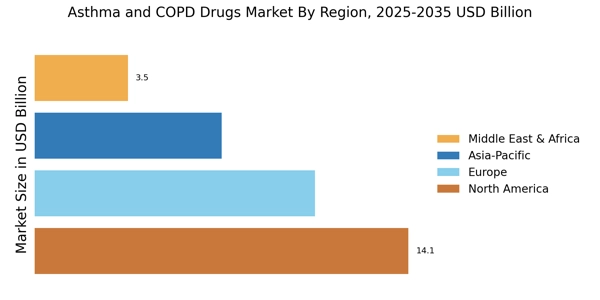
North America leads in the Asthma and COPD Drugs Market Size, accounting for over 42.43% of the global revenue in 2024, primarily due to advanced healthcare infrastructure and increased prevalence of respiratory diseases. The United States holds approximately 34% share, valued at USD 12.02 Billion, driven by high disease prevalence and strong adoption of advanced biologics, while Canada accounts for 8% share, valued at USD 2.83 Billion, supported by expanding healthcare access.
Europe Asthma and COPD Drugs Market size was valued at USD 10.5 billion in 2024, making it the second-largest regional market with a 29.70% share, reflecting robust investments in healthcare and Research and Development initiatives. Germany holds 9% share valued at USD 3.18 Billion, driven by strong pharmaceutical infrastructure, while the United Kingdom accounts for 8% share valued at USD 2.83 Billion, supported by increasing respiratory disease management programs.
Asia Pacific generated a notable valuation of 5.0 USD billion in 2024, anticipated to grow to 9.0 USD billion, fueled by rising awareness and access to medical services in developing nations. South America, valued at 3.0 USD billion in 2024 and rising to 4.0 USD billion, faces challenges in healthcare access but is progressively expanding its market share. The Middle East and Africa represents a smaller segment at 1.85 USD billion in 2024, likely to reach 4.5 USD billion by 2035, influenced by population growth and an increasing focus on healthcare improvements.
The Asthma and COPD Drugs Market is characterized by a robust competitive landscape driven by the growing prevalence of respiratory diseases and increasing awareness regarding their management. Leading pharmaceutical companies are focused on enhancing their product offerings and expanding their market reach to address the diverse needs of patients. The market is increasingly characterized by innovation, with companies investing heavily in research and development to bring forth novel therapies and treatment options.
The competitive dynamics are further shaped by factors such as regulatory frameworks, pricing strategies, and collaborations among key players in the industry. Companies that can effectively navigate these challenges are likely to maintain a strong presence in the market. Novartis has established a robust position in the global market for asthma and COPD medications by leveraging innovative therapies and forming strategic alliances.
The portfolio features notable treatments like Ultibro Breezhaler and Seebri Breezhaler, focusing on essential elements of chronic respiratory diseases. Furthermore, the partnership with Roche regarding Xolair continues to influence the severe asthma market. Supported by a robust research pipeline and an extensive global presence, Novartis is actively seeking opportunities to enhance respiratory care, while also expanding its focus into wider biopharmaceutical sectors.
Its dedication to enhancing patient access and adapting to changing treatment requirements solidifies its status as a significant entity in the asthma and COPD pharmaceutical arena. Chiesi Farmaceutici has established a significant presence in the global asthma and COPD pharmaceuticals market, particularly through its emphasis on inhalation therapies and fixed-dose combination treatments. Chiesi is recognized for its dedication to tackling respiratory diseases, with key products like Foster and Trimbow being extensively utilized to effectively manage chronic asthma and COPD symptoms.
The organization has achieved significant advancements in increasing its market presence through strategic innovation and global expansion, enabling it to serve a diverse patient demographic across Europe, Asia, and developing markets. Chiesi demonstrates a strong dedication to research and development, especially in formulation science and delivery devices, which guarantees a consistent flow of innovative respiratory therapies. Furthermore, the organization highlights solutions that prioritize patients and promotes sustainable healthcare practices, thereby enhancing its global standing in the asthma and COPD pharmaceuticals sector.



The Asthma and COPD Drugs Market size is projected to reach USD 49.99 billion by 2035, growing at a CAGR of 3.2%, driven by increasing prevalence, advancements in drug formulations, and rising healthcare expenditures.
New opportunities lie in:
By 2035, the market is expected to achieve robust growth, reflecting evolving patient needs and innovative treatment options.
| MARKET SIZE 2024 | 35.35(USD Billion) |
| MARKET SIZE 2025 | 36.48(USD Billion) |
| MARKET SIZE 2035 | 49.99(USD Billion) |
| COMPOUND ANNUAL GROWTH RATE (CAGR) | 3.2% (2025 - 2035) |
| REPORT COVERAGE | Revenue Forecast, Competitive Landscape, Growth Factors, and Trends |
| BASE YEAR | 2024 |
| Market Forecast Period | 2025 - 2035 |
| Historical Data | 2019 - 2024 |
| Market Forecast Units | USD Billion |
| Key Companies Profiled | GlaxoSmithKline (GB), Boehringer Ingelheim (DE), AstraZeneca (GB), Novartis (CH), Teva Pharmaceutical Industries (IL), Merck & Co. (US), Sanofi (FR), Roche (CH), Pfizer (US) |
| Segments Covered | Drug Class, Route of Administration, Applications, Patient Group, Regional |
| Key Market Opportunities | Advancements in personalized medicine enhance treatment efficacy in the market. |
| Key Market Dynamics | Rising demand for innovative therapies drives competition and regulatory scrutiny in the market. |
| Countries Covered | North America, Europe, APAC, South America, MEA |
The projected market valuation for the Asthma and COPD Drugs Market in 2035 is 49.99 USD Billion.
Corticosteroids had the highest valuation in 2024 at 12.0 USD Billion, projected to grow to 15.0 USD Billion by 2035.
Bronchodilators are projected to grow from 10.0 USD Billion in 2024 to 13.5 USD Billion by 2035.
Inhalation is expected to see the most growth, increasing from 12.0 USD Billion in 2024 to 16.0 USD Billion by 2035.
The market size for chronic obstructive pulmonary disease drugs in 2024 was 15.0 USD Billion.
The market for pediatric asthma and COPD drugs was 8.0 USD Billion in 2024, compared to 7.35 USD Billion for geriatric patients.
Key players in the Asthma and COPD Drugs Market include GlaxoSmithKline, Boehringer Ingelheim, AstraZeneca, and Novartis.
The projected valuation for combination drugs is expected to rise from 8.0 USD Billion in 2024 to 10.0 USD Billion by 2035.



Kindly complete the form below to receive a free sample of this Report

“This is really good guys. Excellent work on a tight deadline. I will continue to use you going forward and recommend you to others. Nice job”


“Thanks. It’s been a pleasure working with you, please use me as reference with any other Intel employees.”


“Thanks for sending the report it gives us a good global view of the Betaïne market.”


“Thank you, this will be very helpful for OQS.”


“We found the report very insightful! we found your research firm very helpful. I'm sending this email to secure our future business.”


“I am very pleased with how market segments have been defined in a relevant way for my purposes (such as "Portable Freezers & refrigerators" and "last-mile"). In general the report is well structured. Thanks very much for your efforts.”


“I have been reading the first document or the study, ,the Global HVAC and FP market report 2021 till 2026. Must say, good info! I have not gone in depth at all parts, but got a good indication of the data inside!”


“We got the report in time, we really thank you for your support in this process. I also thank to all of your team as they did a great job.”


“The Automotive 48V ECU Components Procurement Intelligence Study” was a complex project, but the Market Research Future (MRFR) team handled it with quality, agility, and customer-centricity. They delivered all requested data on time and within the agreed scope. The team, including Shubhendra Anand and Rahul Gotadki, was always readily available to clarify questions and swiftly implement necessary adjustments, driving the project to a successful conclusion within a very demanding timeframe.
I would also like to specifically commend Akshay Agarwal for his responsiveness and support at every stage—from our initial inquiry on May 6th through to final delivery on June 18th. His dedication made the entire process seamless.”



