Download Free Sample
Kindly complete the form below to receive a free sample of this Report
China Sewing Bags Market Size, Share, Industry Trend & Analysis Research Report By Type (Tote Bags, Backpacks, Shoulder Bags, Travel Bags), By Material (Fabric, Leather, Synthetic, Canvas), By Application (Personal Use, Professional Use, Educational Use) and By Distribution Channel (Online Retail, Offline Retail, Wholesale)-Forecast to 2035
As per Market Research Future analysis, the China sewing bags market size was estimated at 412.1 $ Million in 2024. The China sewing bags market is projected to grow from 430.81 $ Million in 2025 to 671.58 $ Million by 2035, exhibiting a compound annual growth rate (CAGR) of 4.5% during the forecast period 2025 - 2035
The China sewing bags market is experiencing a transformative shift towards sustainability and customization.
| 2024 Market Size | 412.1 (USD Million) |
| 2035 Market Size | 671.58 (USD Million) |
| CAGR (2025 - 2035) | 4.54% |
Vera Bradley (US), Tote Bag Factory (US), Kipling (BE), L.L. Bean (US), Patagonia (US), Osprey (US), The North Face (US), Eastpak (BE)
Our Impact
Enabled $4.3B Revenue Impact for Fortune 500 and Leading Multinationals
Partnering with 2000+ Global Organizations Each Year
30K+ Citations by Top-Tier Firms in the Industry
The sewing bags market is currently experiencing a dynamic evolution, driven by various factors including consumer preferences and technological advancements. As individuals increasingly seek personalized and functional accessories, the demand for diverse styles and materials is on the rise. This shift appears to be influenced by a growing awareness of sustainability, prompting manufacturers to explore eco-friendly materials and production methods. Additionally, the integration of innovative designs and features, such as multifunctionality and portability, is becoming more prevalent, catering to the needs of modern consumers. Moreover, the market landscape is characterized by a competitive environment, with numerous players striving to capture market share. This competition fosters creativity and innovation, leading to the introduction of unique products that appeal to different segments of the population. The influence of social media and online platforms also plays a crucial role in shaping consumer choices, as brands leverage these channels to showcase their offerings and engage with potential buyers. Overall, the sewing bags market is poised for continued growth, reflecting the evolving tastes and preferences of consumers in the current landscape.
There is a noticeable trend towards sustainability within the sewing bags market. Manufacturers are increasingly adopting eco-friendly materials and practices, responding to consumer demand for environmentally responsible products. This shift not only aligns with global sustainability goals but also enhances brand loyalty among environmentally conscious consumers.
Customization is becoming a key driver in the sewing bags market. Consumers are seeking unique products that reflect their personal style and preferences. Brands are responding by offering customizable options, allowing customers to select colors, patterns, and features, thereby enhancing the overall shopping experience.
The integration of technology into the sewing bags market is gaining traction. Innovations such as smart features, including built-in charging ports and RFID protection, are appealing to tech-savvy consumers. This trend indicates a shift towards multifunctional products that cater to the needs of modern lifestyles.
The sewing bags market in China is benefiting from the burgeoning DIY culture, which has gained traction among various demographics. This trend is particularly popular among younger consumers who seek to express their creativity through personalized sewing projects. The rise of social media platforms has facilitated the sharing of DIY tutorials and ideas, further fueling interest in sewing. As a result, the market for sewing bags is projected to grow by approximately 15% annually as more individuals engage in sewing as a hobby. This cultural shift not only increases demand for sewing bags but also encourages local artisans and small businesses to enter the sewing bags market, thereby diversifying the product offerings available to consumers.
The sewing bags market in China is witnessing a significant transformation due to the rise of online retailing. E-commerce platforms have made it easier for consumers to access a wide variety of sewing bags, often at competitive prices. In 2025, online sales are expected to represent over 40% of total market sales, driven by the convenience of shopping from home and the availability of diverse product options. This shift is prompting traditional retailers to enhance their online presence, thereby increasing competition within the sewing bags market. As a result, consumers benefit from better pricing and a broader selection of products, which may further stimulate market growth.
The sewing bags market in China is significantly influenced by evolving fashion trends. As fashion cycles change, so do consumer preferences for styles, colors, and materials in sewing bags. In recent years, there has been a noticeable shift towards minimalist designs and multifunctional bags that cater to both aesthetic and practical needs. This trend is expected to drive a 20% increase in demand for sewing bags that align with current fashion sensibilities. The sewing bags market must remain agile to adapt to these trends, ensuring that manufacturers can meet the dynamic demands of fashion-conscious consumers.
The sewing bags market in China is experiencing a notable shift towards eco-friendly products. As consumers become increasingly aware of environmental issues, there is a growing preference for sustainable materials. This trend is reflected in the rising sales of bags made from organic cotton, recycled polyester, and other biodegradable materials. In 2025, it is estimated that the market for eco-friendly sewing bags could account for approximately 30% of total sales. This shift not only aligns with consumer values but also encourages manufacturers to innovate in sustainable practices, thereby enhancing their market position. The sewing bags market is thus likely to see a significant transformation as brands adapt to these changing consumer preferences.
The sewing bags market in China is poised for growth due to increased government support for local manufacturing initiatives. Policies aimed at promoting domestic production and reducing reliance on imports are encouraging local businesses to invest in the sewing bags market. This support includes financial incentives, training programs, and infrastructure development, which collectively enhance the competitiveness of local manufacturers. As a result, the market is expected to grow by approximately 10% over the next few years, as local brands gain market share and consumers increasingly favor domestically produced goods. The sewing bags market is thus likely to benefit from this favorable regulatory environment.
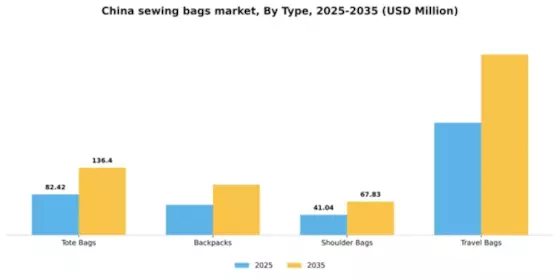
In the China sewing bags market, Tote Bags hold the largest market share, favored for their versatility and functionality in both casual and professional settings. Following closely are Backpacks, which have gained a significant foothold due to their practical design and appeal to younger demographics. Shoulder Bags and Travel Bags also contribute to the market but occupy smaller shares, indicating varied consumer preferences. The growth trend for Backpacks is particularly noteworthy, propelled by increased adoption among students and young professionals. This segment is benefiting from a focus on comfort, style, and utility, leading to innovative designs and sustainable materials. As urban living continues to rise, so does the need for practical and stylish bag solutions, favoring these two segments in particular.
Tote Bags (Dominant) vs. Backpacks (Emerging)
Tote Bags are characterized by their large open compartments and durable construction, making them ideal for a wide range of uses from grocery shopping to daily commuting. Often made from eco-friendly materials, they cater to environmentally conscious consumers. Their dominance in the market is strengthened by evolving fashion trends that embrace functionality combined with style. In contrast, Backpacks are rapidly emerging, appealing to younger consumers seeking practicality without sacrificing aesthetics. The rise in outdoor activities and travel has increased demand for backpacks, particularly those with ergonomic features. They are available in various styles, enhancing their appeal to diverse age groups and lifestyle needs, marking them as a crucial segment in the competitive landscape.
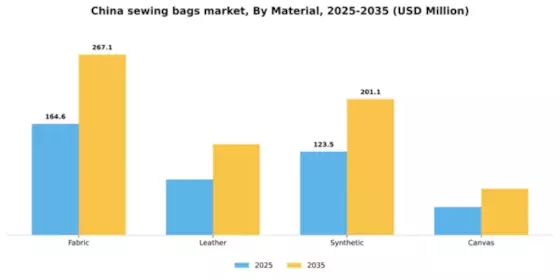
The market share distribution within the segment showcases Fabric as the dominant material, accounting for a significant share in the China sewing bags market. Synthetic materials, while currently smaller in share, are rapidly gaining traction due to their versatility and tailored applications. Leather and Canvas materials hold intermediate positions, catering to niche markets that prefer durability and aesthetics. Growth trends indicate a shift towards synthetic materials as companies prioritize innovation and functionality in their designs. The increasing consumer demand for eco-friendly alternatives will also drive the synthetic and canvas segments forward. Additionally, advancements in manufacturing technologies are enhancing the appeal of synthetic and fabric materials, making them attractive options for consumers in the competitive market landscape.
Fabric (Dominant) vs. Synthetic (Emerging)
Fabric is characterized by its broad range of textures and usability, making it a staple in the China sewing bags market. Its dominance is fueled by traditional preferences for durability and tactile quality. In contrast, the synthetic segment is emerging swiftly due to its lightweight properties and resistance to wear and tear, appealing to a younger demographic seeking practicality. Innovations in sustainable synthetic fabric are poised to further elevate its market position, attracting eco-conscious consumers. As both segments evolve, fabric retains its stronghold while synthetic materials adapt to meet changing consumer needs, indicating a dynamic interplay of traditional and modern preferences in this market.
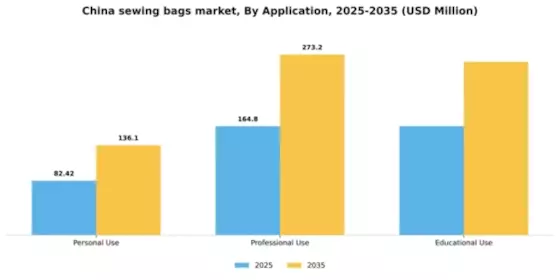
In the China sewing bags market, the application segment is notably diversified, with personal use holding the largest share. This segment capitalizes on the growing trend of customization and personalization among consumers, driven by the desire for unique fashion statements. Professional use follows closely, representing a significant portion of the market as well, fueled by increasing industry demand for durable and functional products tailored for specific professional needs. The growth trends in the application segment are influenced by rising disposable incomes and changing lifestyles among consumers. Factors such as an increasing emphasis on sustainability and environmentally friendly materials are also driving the expansion of professional use as businesses seek more eco-conscious solutions. As a result, the China sewing bags market is witnessing a robust shift in preferences, aligning with broader global trends toward personalized and functional products.
Personal Use (Dominant) vs. Professional Use (Emerging)
The dominant personal use segment in the China sewing bags market reflects consumers' preferences for style, uniqueness, and customization. This segment thrives on the diversity of designs and materials, catering to individuals who prioritize aesthetic appeal in their daily accessories. In contrast, the emerging professional use segment is gaining momentum as businesses increasingly seek specialized solutions for their operational needs. This segment focuses on functionality, durability, and branding, with products designed to withstand the rigors of professional environments. Both segments showcase the versatility and adaptability of sewing bags in meeting varying consumer demands, highlighting a broader trend towards tailored solutions in the market.
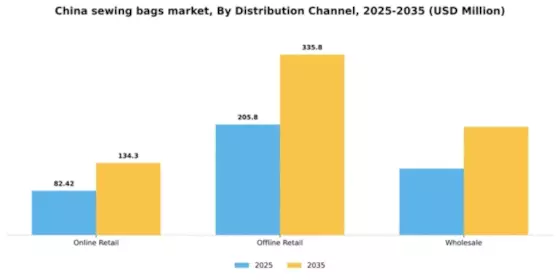
In the China sewing bags market, the distribution channels present a diverse landscape, with online retail commanding a significant share of the market. This channel has gained prominence due to its convenience and accessibility, appealing to a broad customer base that increasingly prefers shopping from home. Conversely, offline retail, while holding a smaller market share, is showing rapid growth as consumers seek tactile experiences and immediate product availability, contributing to its rising popularity. Growth trends within the distribution channel segment are largely driven by evolving consumer preferences and technological advancements. The online retail segment is being propelled by improvements in logistics and an increase in consumers' online shopping habits. Offline retail benefits from the resurgence of physical stores where customers can physically interact with products before making purchases. The wholesale channel continues to play a crucial role, particularly for bulk buyers, maintaining steady demand in various sectors.
Online Retail (Dominant) vs. Offline Retail (Emerging)
Online retail in the China sewing bags market has established itself as the dominant distribution channel, significantly benefiting from the digital transformation and changing shopping behaviors of consumers. This channel offers a wide range of products, ease of access, and often competitive pricing, catering to a tech-savvy demographic. In contrast, offline retail represents an emerging segment, gaining traction as consumers often prefer the sensory experience of in-store shopping. This channel is characterized by its ability to provide immediate gratification and personalized customer service, attracting consumers who are increasingly aware of product quality and brand experience. Both channels play distinct yet complementary roles in meeting the diverse needs of consumers.
Get more detailed insights about China Sewing Bags Market Request Free Sample
The sewing bags market in China is characterized by a dynamic competitive landscape, driven by evolving consumer preferences and increasing demand for functional yet stylish products. Key players such as Vera Bradley (US), Kipling (BE), and Patagonia (US) are strategically positioned to leverage their brand equity and innovative designs. Vera Bradley (US) focuses on expanding its product lines to include eco-friendly materials, which resonates with the growing sustainability trend among consumers. Kipling (BE) emphasizes its heritage of playful designs while enhancing its digital presence, thereby appealing to a younger demographic. Patagonia (US) continues to champion environmental responsibility, integrating sustainable practices into its supply chain, which not only strengthens its brand image but also aligns with consumer values.The business tactics employed by these companies reflect a commitment to localizing manufacturing and optimizing supply chains to enhance efficiency. The market structure appears moderately fragmented, with several players vying for market share. However, the collective influence of these key players fosters a competitive environment where innovation and sustainability are paramount. This fragmentation allows for niche brands to emerge, catering to specific consumer segments, while larger companies leverage their scale to dominate the market.
In October Patagonia (US) announced a partnership with a local Chinese textile manufacturer to produce a new line of sustainable bags. This strategic move not only reduces transportation costs but also aligns with the company's commitment to local sourcing and environmental stewardship. By collaborating with local manufacturers, Patagonia (US) enhances its supply chain resilience while appealing to eco-conscious consumers in China.
In September Kipling (BE) launched a digital marketing campaign targeting Gen Z consumers, utilizing social media influencers to promote its latest collection. This initiative reflects a broader trend of brands engaging with younger audiences through digital platforms, thereby increasing brand visibility and driving sales. Kipling's focus on digital transformation is likely to enhance its competitive positioning in a market that increasingly values online engagement.
In August Vera Bradley (US) unveiled a new collection made entirely from recycled materials, showcasing its commitment to sustainability. This initiative not only differentiates the brand in a crowded market but also responds to consumer demand for environmentally friendly products. By prioritizing sustainability, Vera Bradley (US) positions itself as a leader in responsible fashion, potentially attracting a loyal customer base that values ethical consumption.
As of November the competitive trends in the sewing bags market are increasingly defined by digitalization, sustainability, and the integration of advanced technologies. Strategic alliances among companies are shaping the landscape, enabling them to pool resources and expertise to innovate more effectively. The shift from price-based competition to a focus on innovation, technology, and supply chain reliability is evident, suggesting that future differentiation will hinge on a brand's ability to adapt to these trends and meet the evolving expectations of consumers.


In recent months, the China Sewing Bags Market has seen notable developments. In March 2023, Jiangsu Hualian Group Co announced a strategic partnership to enhance its production capabilities, focusing on innovative sewing techniques and materials. Meanwhile, Dongguan New Times Bag Co has reported a surge in demand for eco-friendly bags, indicating a growing trend towards sustainability in the industry. Notably, in May 2023, Wenzhou Dongfang Bags Co successfully acquired a local competitor, which is expected to increase its market share significantly.
In addition, the overall market valuation for companies like Tianjin Mingyi Trading Co and Shenzhen Qianrong Technology Co has shown positive growth, driven by rising consumer preferences for customized and high-quality products. Over the past few years, Zhejiang Aoxing Industry and Trade Co has expanded its international footprint, targeting markets in Southeast Asia and North America. Furthermore, the focus on Research and Development for innovative materials by Hangzhou Tianyuan Technology Co reflects a strong commitment to enhancing product offerings within the sector, responding to evolving consumer demands amid a dynamic economic landscape.
The Sewing Bags Market in China is projected to grow at a 4.54% CAGR from 2025 to 2035, driven by rising consumer demand and innovative designs.
New opportunities lie in:
By 2035, the market is expected to achieve robust growth, reflecting evolving consumer preferences.
| MARKET SIZE 2024 | 412.1(USD Million) |
| MARKET SIZE 2025 | 430.81(USD Million) |
| MARKET SIZE 2035 | 671.58(USD Million) |
| COMPOUND ANNUAL GROWTH RATE (CAGR) | 4.54% (2025 - 2035) |
| REPORT COVERAGE | Revenue Forecast, Competitive Landscape, Growth Factors, and Trends |
| BASE YEAR | 2024 |
| Market Forecast Period | 2025 - 2035 |
| Historical Data | 2019 - 2024 |
| Market Forecast Units | USD Million |
| Key Companies Profiled | Vera Bradley (US), Tote Bag Factory (US), Kipling (BE), L.L. Bean (US), Patagonia (US), Osprey (US), The North Face (US), Eastpak (BE) |
| Segments Covered | Type, Material, Application, Distribution Channel |
| Key Market Opportunities | Growing demand for eco-friendly materials in the sewing bags market presents significant opportunities. |
| Key Market Dynamics | Rising demand for eco-friendly materials drives innovation in the sewing bags market, reshaping consumer preferences. |
| Countries Covered | China |
The overall market valuation was $412.1 Million in 2024.
The projected market valuation for 2035 is $671.58 Million.
The expected CAGR for the sewing bags market during the forecast period 2025 - 2035 is 4.54%.
The Travel Bags segment had the highest valuation in 2024 at $227.07 Million.
The projected value for the Tote Bags segment by 2035 is $136.43 Million.
In 2024, the Professional Use application segment was valued at $164.84 Million, while the Personal Use segment was valued at $82.42 Million.
The Offline Retail distribution channel is projected to have the highest value in 2035 at $335.79 Million.
The Synthetic material segment is expected to grow the most by 2035, with a projected value of $201.12 Million.
Key players in the sewing bags market include Vera Bradley, Tote Bag Factory, Kipling, L.L. Bean, Patagonia, Osprey, The North Face, and Eastpak.
The valuation of the Canvas material segment in 2024 was $41.7 Million.



Kindly complete the form below to receive a free sample of this Report

“This is really good guys. Excellent work on a tight deadline. I will continue to use you going forward and recommend you to others. Nice job”


“Thanks. It’s been a pleasure working with you, please use me as reference with any other Intel employees.”


“Thanks for sending the report it gives us a good global view of the Betaïne market.”


“Thank you, this will be very helpful for OQS.”


“We found the report very insightful! we found your research firm very helpful. I'm sending this email to secure our future business.”


“I am very pleased with how market segments have been defined in a relevant way for my purposes (such as "Portable Freezers & refrigerators" and "last-mile"). In general the report is well structured. Thanks very much for your efforts.”


“I have been reading the first document or the study, ,the Global HVAC and FP market report 2021 till 2026. Must say, good info! I have not gone in depth at all parts, but got a good indication of the data inside!”


“We got the report in time, we really thank you for your support in this process. I also thank to all of your team as they did a great job.”


“The Automotive 48V ECU Components Procurement Intelligence Study” was a complex project, but the Market Research Future (MRFR) team handled it with quality, agility, and customer-centricity. They delivered all requested data on time and within the agreed scope. The team, including Shubhendra Anand and Rahul Gotadki, was always readily available to clarify questions and swiftly implement necessary adjustments, driving the project to a successful conclusion within a very demanding timeframe.
I would also like to specifically commend Akshay Agarwal for his responsiveness and support at every stage—from our initial inquiry on May 6th through to final delivery on June 18th. His dedication made the entire process seamless.”



