Download Free Sample
Kindly complete the form below to receive a free sample of this Report
Global Hormone Replacement Therapy Market Research Report: Size, Share, Trend Analysis By Applications (Menopause Treatment, Hormonal Imbalance Treatment, Transgender Hormone Therapy, Age-Related Hormonal Decline), By Hormone Type (Estrogen, Testosterone, Progesterone, Thyroid Hormones), By Route of Administration (Oral, Transdermal, Injectable, Implantable), By End Users (Hospitals, Outpatient Clinics, Home Care) and By Regional (North America, Europe, South America, Asia Pacific, Middle East and Africa) - Growth Outlook & Industry Forecast 2025 To 2035
As per Market Research Future analysis, the Hormone Replacement Therapy Market was estimated at 23.85 USD Billion in 2024. The Hormone Replacement Therapy industry is projected to grow from 25.16 USD Billion in 2025 to 43.03 USD Billion by 2035, exhibiting a compound annual growth rate (CAGR) of 5.51% during the forecast period 2025 - 2035
The Hormone Replacement Therapy Market is experiencing robust growth driven by demographic shifts and evolving treatment paradigms.
| 2024 Market Size | 23.85 (USD Billion) |
| 2035 Market Size | 43.03 (USD Billion) |
| CAGR (2025 - 2035) | 5.51% |
AbbVie (US), Bayer (DE), Pfizer (US), Mylan (US), Teva (IL), HRA Pharma (FR), Amgen (US), Novo Nordisk(DK), Eli Lilly (US)
Our Impact
Enabled $4.3B Revenue Impact for Fortune 500 and Leading Multinationals
Partnering with 2000+ Global Organizations Each Year
30K+ Citations by Top-Tier Firms in the Industry
The Hormone Replacement Therapy Market is currently experiencing a notable evolution, driven by a combination of factors including an aging population and increasing awareness regarding hormonal health. As individuals seek to alleviate symptoms associated with hormonal imbalances, the demand for various therapeutic options appears to be on the rise. This market encompasses a range of products, including estrogen, progesterone, and testosterone therapies, which are utilized to address conditions such as menopause, andropause, and other hormonal deficiencies. Furthermore, advancements in delivery methods, such as transdermal patches and bioidentical hormones, seem to enhance patient compliance and satisfaction, thereby potentially expanding the market's reach. In addition to demographic shifts, the Hormone Replacement Therapy Market is influenced by evolving healthcare policies and a growing emphasis on preventive care. Healthcare providers are increasingly recognizing the importance of personalized treatment plans, which may lead to a more tailored approach in hormone therapies. This trend suggests a shift towards integrating hormonal health into broader wellness strategies, potentially fostering a more holistic view of patient care. As research continues to unveil the complexities of hormonal interactions, the market is likely to adapt, offering innovative solutions that align with the needs of diverse populations.
The increasing number of older adults is a primary driver of the Hormone Replacement Therapy Market. As individuals age, they often experience hormonal changes that can lead to various health issues. This demographic shift necessitates effective treatment options to manage symptoms associated with aging, thereby propelling market growth.
Innovations in hormone therapies, including the development of bioidentical hormones and improved delivery systems, are reshaping the Hormone Replacement Therapy Market. These advancements may enhance efficacy and patient adherence, making treatments more appealing to those seeking relief from hormonal imbalances.
There is a growing trend towards preventive healthcare, which emphasizes the importance of maintaining hormonal balance as a component of overall wellness. This shift encourages healthcare providers to incorporate hormone therapies into broader health strategies, potentially expanding the market's scope and accessibility.
Supportive regulatory frameworks are playing a crucial role in the growth of the Hormone Replacement Therapy Market. Governments and health authorities are increasingly recognizing the importance of hormone therapies in managing various health conditions. This recognition has led to the establishment of guidelines and policies that facilitate the approval and accessibility of hormone replacement products. Moreover, regulatory bodies are actively promoting research and development in this field, which is likely to result in the introduction of new and innovative therapies. As a consequence, the Hormone Replacement Therapy Market is expected to benefit from a more favorable regulatory environment that encourages investment and innovation.
The rising incidence of hormonal disorders is a critical factor propelling the Hormone Replacement Therapy Market. Conditions such as hypothyroidism, polycystic ovary syndrome, and menopause-related symptoms are becoming increasingly prevalent, necessitating effective treatment solutions. According to recent estimates, millions of individuals are affected by these disorders, leading to a heightened demand for hormone replacement therapies. This trend is particularly pronounced among aging populations, where hormonal changes are more common. Consequently, healthcare providers are focusing on offering comprehensive treatment plans that include hormone replacement options, thereby driving growth within the Hormone Replacement Therapy Market.
The rising awareness regarding hormonal health is a pivotal driver for the Hormone Replacement Therapy Market. As individuals become more informed about the implications of hormonal imbalances, there is a growing demand for therapies that address these issues. Educational campaigns and health initiatives have contributed to this awareness, leading to an increase in consultations with healthcare professionals. This trend is particularly evident among women experiencing menopause, where the need for effective management of symptoms has become a priority. Consequently, the Hormone Replacement Therapy Market is witnessing a surge in demand for tailored treatment options that cater to the specific needs of patients, thereby enhancing overall quality of life.
The growing preference for personalized medicine is reshaping the Hormone Replacement Therapy Market. Patients are increasingly seeking treatments that are tailored to their unique hormonal profiles and health conditions. This shift towards individualized care is prompting healthcare providers to adopt more sophisticated diagnostic tools and treatment protocols. As a result, the Hormone Replacement Therapy Market is witnessing a rise in customized hormone therapies that cater to specific patient needs. This trend not only enhances treatment efficacy but also fosters patient satisfaction, as individuals feel more empowered in their healthcare decisions.
Technological advancements in treatment delivery systems are significantly influencing the Hormone Replacement Therapy Market. Innovations such as transdermal patches, subcutaneous implants, and advanced oral formulations have improved the efficacy and convenience of hormone therapies. These developments not only enhance patient compliance but also minimize side effects associated with traditional methods. For instance, the introduction of bioidentical hormones has gained traction, as they are perceived to be more compatible with the human body. As a result, the Hormone Replacement Therapy Market is likely to expand, driven by the increasing adoption of these advanced delivery systems that promise better therapeutic outcomes.
In the Hormone Replacement Therapy Market, Menopause Treatment holds the largest market share, dominating the application segment. This category caters to a broad demographic, reflecting a significant need for alleviating symptoms related to menopause such as hot flashes, mood swings, and sleep disturbances. Hormonal Imbalance Treatment also occupies a notable share, addressing various hormonal issues for both women and men, while Age-Related Hormonal Decline complements this by providing solutions for mature adults. Transgender Hormone Therapy, though currently smaller in share, is rapidly gaining traction as societal acceptance increases and healthcare access improves, indicating a shift in treatment priorities within the market.
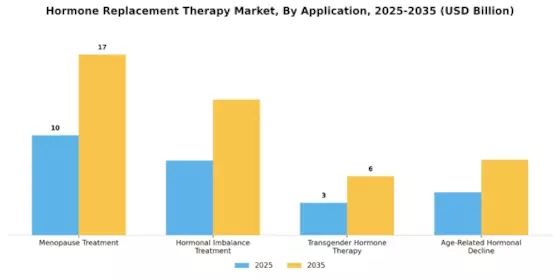
Menopause Treatment (Dominant) vs. Transgender Hormone Therapy (Emerging)
Menopause Treatment stands as the dominant application in the Hormone Replacement Therapy Market, primarily due to the growing awareness and prevalence of menopause among women. This category addresses significant health issues arising from hormonal changes and offers various therapeutic options that are increasingly being recommended by healthcare providers. In contrast, Transgender Hormone Therapy is emerging as a vital segment, drawing attention from both policymakers and the medical community. This therapy is tailored to meet the unique needs of transgender individuals, helping them align their physical appearance with their gender identity. The increasing acceptance of transgender rights and enhanced healthcare access are key factors propelling the growth of this segment, with more practitioners specializing in comprehensive hormonal care.
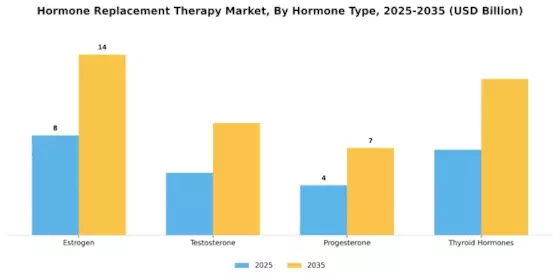
In the Hormone Replacement Therapy Market, the Estrogen segment holds the largest market share, primarily driven by its broad application in alleviating symptoms related to menopause and various hormonal imbalances in women. Estrogen therapies, including various formulations, cater to a sizeable demographic, thereby reinforcing their dominant position. On the other hand, the Testosterone segment is emerging rapidly, propelled by increasing awareness and acceptance of testosterone therapy among men for conditions like Low Testosterone Syndrome, positioning it as one of the fastest-growing segments within the market.
Testosterone (Dominant) vs. Progesterone (Emerging)
Testosterone therapy is a driving force in the Hormone Replacement Therapy Market, particularly appealing to aging men experiencing hormonal decline. The testosterone segment offers significant promise due to its growing recognition for treating male health issues, promoting not just physical well-being but also mental health benefits. In contrast, Progesterone therapy, while considered an emerging segment, plays a pivotal role in female hormonal health by balancing estrogen levels and addressing issues such as endometriosis. Although currently smaller, the Progesterone segment shows potential for growth as awareness regarding its benefits for women's health increases, particularly for conditions related to reproductive health.
In the Hormone Replacement Therapy Market, the distribution of market share among the different routes of administration shows that Oral administration holds the largest share, making it the preferred choice for many patients due to its convenience and ease of use. Transdermal administration, while currently smaller in share compared to Oral, is emerging rapidly as a viable alternative, particularly favored for its non-invasive application and steady hormone release.
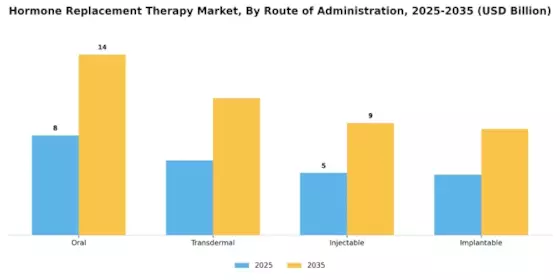
Administration Route: Oral (Dominant) vs. Transdermal (Emerging)
Oral administration remains the dominant route in the Hormone Replacement Therapy Market, appealing to patients for its practicality and accessibility. Tablets and capsulesare widely prescribed, thus reinforcing their prevalence. On the other hand, Transdermal delivery systems, such as patches and gels, are gaining momentum as an emerging alternative. This growth is driven by their ability to offer steady hormone delivery with minimal side effects. Both routes cater to different patient preferences, yet Oral administration currently leads in acceptance, while Transdermal is positioned to capture increasing market interest.
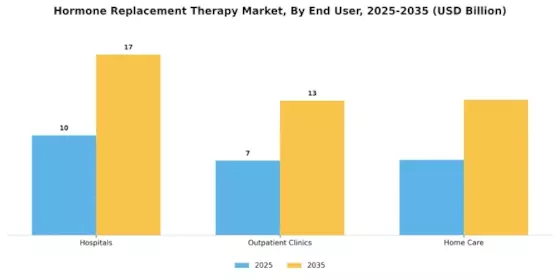
The Hormone Replacement Therapy Market shows a diverse distribution among its end users. Hospitals currently hold the largest share, leveraging their extensive facilities and access to a wide patient base. Outpatient clinics are gaining ground rapidly, attributed to patients' preference for less invasive treatments and the convenience these clinics offer, while home care services account for a smaller but significant portion of the market, focusing on personalized therapy and patient comfort. Growth trends indicate a shift towards outpatient clinics due to rising consumer demand for more accessible treatment options and the increasing number of specialized clinics. Simultaneously, home care is on the rise, propelled by technological advancements in telemedicine and monitoring, enhancing patient engagement and adherence to therapy regimens while reducing the need for hospital visits.
Hospitals (Dominant) vs. Home Care (Emerging)
Hospitals remain the dominant end user in the Hormone Replacement Therapy Market due to their comprehensive resources, experienced medical personnel, and ability to handle complex cases that require intensive care. They provide a wide range of hormone therapy treatments, ensuring patients receive holistic care. In contrast, home care is emerging as a viable alternative, driven by advances in technology that allow for effective remote monitoring and support. Home care focuses on individualized patient experience, promoting comfort and convenience while also allowing patients to engage actively in their treatment journeys. This segment is characterized by flexibility, lower costs, and a growing preference among patients for receiving treatment in familiar environments.
Get more detailed insights about Hormone Replacement Therapy Market Request Free Sample
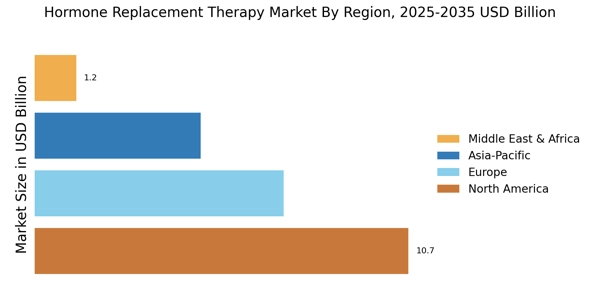
North America is the largest market for Hormone Replacement Therapy Market (HRT), accounting for approximately 45% of the global market share. The growth is driven by an aging population, increasing awareness of menopause management, and favorable reimbursement policies. Regulatory support from agencies like the FDA has also catalyzed market expansion, ensuring the availability of safe and effective therapies. The United States leads the North American market, with significant contributions from Canada. Key players such as AbbVie, Pfizer, and Mylan dominate the landscape, offering a range of innovative products. The competitive environment is characterized by ongoing research and development, with companies focusing on personalized therapies to meet diverse patient needs. This dynamic HRT market is expected to continue its growth trajectory through 2025.
Europe is witnessing a significant shift in the Hormone Replacement Therapy Market, holding approximately 30% of the global share. The growth is fueled by increasing awareness of menopause-related health issues and supportive healthcare policies across various countries. Regulatory frameworks, such as those from the European Medicines Agency (EMA), are enhancing the safety and efficacy of HRT products, thereby boosting consumer confidence. Leading countries in this region include Germany, France, and the UK, where the demand for HRT is rising. Major players like Bayer and HRA Pharma are actively involved in expanding their product offerings. The competitive landscape is marked by collaborations and partnerships aimed at developing innovative therapies. As the HRT market evolves, the focus on patient-centric solutions is expected to drive further growth in the coming years.
Asia-Pacific is emerging as a significant player in the Hormone Replacement Therapy Market, accounting for about 20% of the global share. The region's growth is driven by increasing awareness of women's health issues, rising disposable incomes, and a growing aging population. Countries like Japan and Australia are leading the charge, supported by favorable healthcare policies that encourage the adoption of HRT solutions. The market for HRT in Japan is rapidly evolving due to the growing healthcare infrastructure. In this competitive landscape, key players such as Novo Nordisk and Eli Lilly are expanding their presence through strategic partnerships and localized product offerings. The HRT market is characterized by a mix of established pharmaceutical companies and new entrants, all vying for a share of the growing demand. As awareness and acceptance of HRT continue to rise, the Asia-Pacific region is poised for substantial growth in the coming years.
The Middle East and Africa region represents an untapped market for Hormone Replacement Therapy Market (HRT), currently holding about 5% of the global share. The growth potential is significant, driven by increasing healthcare access, rising awareness of women's health issues, and a growing emphasis on preventive healthcare. Regulatory bodies are beginning to establish frameworks that support the introduction of HRT products, which is expected to catalyze market growth. Countries like South Africa and the UAE are at the forefront of this emerging market, with local players and international companies exploring opportunities. The competitive landscape is evolving, with a focus on education and awareness campaigns to promote HRT. As healthcare infrastructure improves, the region is likely to see a surge in demand for HRT solutions, paving the way for future growth.
The Hormone Replacement Therapy Market is currently characterized by a dynamic competitive landscape, driven by increasing awareness of hormonal health and the rising prevalence of hormone-related disorders. Key players such as AbbVie (US), Bayer (DE), and Pfizer (US) are strategically positioned to leverage their extensive research capabilities and established market presence. AbbVie (US) focuses on innovation in hormone therapies, particularly in developing personalized treatment options, while Bayer (DE) emphasizes partnerships with healthcare providers to enhance patient access to therapies. Pfizer (US) is actively pursuing digital transformation initiatives to streamline patient engagement and improve treatment adherence, collectively shaping a competitive environment that prioritizes patient-centric solutions.In terms of business tactics, companies are increasingly localizing manufacturing to reduce costs and enhance supply chain efficiency. The market appears moderately fragmented, with several players vying for market share, yet the influence of major companies remains substantial. This competitive structure allows for a diverse range of products and services, catering to varying patient needs and preferences, while also fostering innovation through competition.In August AbbVie (US) announced a strategic partnership with a leading telehealth provider to enhance access to hormone replacement therapies. This collaboration aims to integrate telemedicine into the treatment process, potentially increasing patient engagement and adherence to therapy regimens. The strategic importance of this move lies in its alignment with the growing trend of digital health solutions, which could significantly improve patient outcomes and expand AbbVie's market reach.In September Bayer (DE) launched a new line of bioidentical hormone therapies, targeting a niche segment of the market that seeks natural alternatives. This product launch is indicative of Bayer's commitment to innovation and responsiveness to consumer preferences for more natural treatment options. By diversifying its product portfolio, Bayer not only strengthens its competitive position but also addresses the evolving demands of patients seeking personalized healthcare solutions.In October Pfizer (US) unveiled a new AI-driven platform designed to optimize hormone therapy management for healthcare providers. This platform aims to enhance decision-making processes by providing real-time data analytics and patient insights. The strategic significance of this initiative lies in its potential to revolutionize treatment protocols, thereby improving patient outcomes and solidifying Pfizer's role as a leader in the digital transformation of healthcare.As of October current competitive trends in the Hormone Replacement Therapy Market are increasingly defined by digitalization, sustainability, and the integration of artificial intelligence. Strategic alliances are becoming more prevalent, as companies recognize the value of collaboration in enhancing innovation and expanding market reach. Looking ahead, competitive differentiation is likely to evolve from traditional price-based competition to a focus on innovation, technology integration, and supply chain reliability, underscoring the importance of delivering high-quality, patient-centered solutions.




The Global Hormone Replacement Therapy Market has witnessed significant developments recently, particularly in response to rising awareness of menopausal health and increasing hormonal imbalances within both genders. Notably, in August 2023, Pfizer expanded its offerings in the market with the launch of a new combination product targeted at post-menopausal symptoms, highlighting the company’s ongoing Research and Development efforts. Merck and Co. has also enhanced its portfolio through strategic collaborations aimed at improving patient adherence to hormone therapy regimens.
Regarding mergers and acquisitions, in September 2023, AbbVie acquired a tech-based startup focusing on digital health solutions that facilitate hormone therapy management, further consolidating its foothold in the market. Growth in market valuation has been notable, with companies like Eli Lilly and Company and Novartis reporting substantial revenue increases attributed to new product launches and innovative delivery methods.
Over the past year, Boehringer Ingelheim has also invested heavily in Research and Development, establishing itself as a key player in the evolving landscape of hormone replacement therapies, which is expected to further drive market dynamics and profitability in the industry.
The Hormone Replacement Therapy Market is projected to grow at a 5.51% CAGR from 2025 to 2035, driven by increasing awareness, aging populations, and advancements in treatment options.
New opportunities lie in:
By 2035, the market is expected to be robust, reflecting substantial growth and innovation.
| MARKET SIZE 2024 | 23.85(USD Billion) |
| MARKET SIZE 2025 | 25.16(USD Billion) |
| MARKET SIZE 2035 | 43.03(USD Billion) |
| COMPOUND ANNUAL GROWTH RATE (CAGR) | 5.51% (2025 - 2035) |
| REPORT COVERAGE | Revenue Forecast, Competitive Landscape, Growth Factors, and Trends |
| BASE YEAR | 2024 |
| Market Forecast Period | 2025 - 2035 |
| Historical Data | 2019 - 2024 |
| Market Forecast Units | USD Billion |
| Key Companies Profiled | AbbVie (US), Bayer (DE), Pfizer (US), Mylan (US), Teva (IL), HRA Pharma (FR), Amgen (US), Novo Nordisk (DK), Eli Lilly (US) |
| Segments Covered | Applications, Hormone Type, Route of Administration, End Users, Regional |
| Key Market Opportunities | Integration of personalized medicine and telehealth in the Hormone Replacement Therapy Market. |
| Key Market Dynamics | Rising consumer awareness drives demand for personalized Hormone Replacement Therapy solutions amid evolving regulatory landscapes. |
| Countries Covered | North America, Europe, APAC, South America, MEA |
The Hormone Replacement Therapy Market is projected to reach a valuation of 43.03 USD Billion by 2035.
In 2024, the market valuation of the Hormone Replacement Therapy Market was 23.85 USD Billion.
The expected CAGR for the Hormone Replacement Therapy Market during the forecast period 2025 - 2035 is 5.51%.
Key players in the Hormone Replacement Therapy Market include AbbVie, Bayer, Pfizer, Mylan, Teva, HRA Pharma, Amgen, Novo Nordisk, and Eli Lilly.
In 2024, the Menopause Treatment segment had the highest valuation at 9.54 USD Billion.
The Hormonal Imbalance Treatment segment is projected to grow from 7.12 USD Billion in 2024 to 12.95 USD Billion by 2035.
The Estrogen hormone type is projected to reach a valuation of 14.5 USD Billion by 2035.
The Oral route of administration is expected to have the highest market value, projected at 14.5 USD Billion by 2035.
The Home Care segment is projected to reach a market size of 12.93 USD Billion by 2035.
The Transgender Hormone Therapy segment is projected to grow from 3.09 USD Billion in 2024 to 5.63 USD Billion by 2035, indicating a notable increase but lower than other segments.


Kindly complete the form below to receive a free sample of this Report

“This is really good guys. Excellent work on a tight deadline. I will continue to use you going forward and recommend you to others. Nice job”


“Thanks. It’s been a pleasure working with you, please use me as reference with any other Intel employees.”


“Thanks for sending the report it gives us a good global view of the Betaïne market.”


“Thank you, this will be very helpful for OQS.”


“We found the report very insightful! we found your research firm very helpful. I'm sending this email to secure our future business.”


“I am very pleased with how market segments have been defined in a relevant way for my purposes (such as "Portable Freezers & refrigerators" and "last-mile"). In general the report is well structured. Thanks very much for your efforts.”


“I have been reading the first document or the study, ,the Global HVAC and FP market report 2021 till 2026. Must say, good info! I have not gone in depth at all parts, but got a good indication of the data inside!”


“We got the report in time, we really thank you for your support in this process. I also thank to all of your team as they did a great job.”


“The Automotive 48V ECU Components Procurement Intelligence Study” was a complex project, but the Market Research Future (MRFR) team handled it with quality, agility, and customer-centricity. They delivered all requested data on time and within the agreed scope. The team, including Shubhendra Anand and Rahul Gotadki, was always readily available to clarify questions and swiftly implement necessary adjustments, driving the project to a successful conclusion within a very demanding timeframe.
I would also like to specifically commend Akshay Agarwal for his responsiveness and support at every stage—from our initial inquiry on May 6th through to final delivery on June 18th. His dedication made the entire process seamless.”


.png?v=1777014012)
