Medical Ventilator Market (2026 - 2035)

Medical Ventilator Market Research Report By Product Type (Invasive Ventilators, Non-Invasive Ventilators, Portable Ventilators, High-Frequency Ventilators), By Mode of Operation (Volume Control, Pressure Control, Assist-Control, Spontaneous Ventilation), By Application (Intensive Care Unit, Emergency Care, Homecare, Transport Ventilation), By End Use (Hospitals, Ambulatory Surgical Centers, Home Healthcare, Long-term Care Facilities) and By Regional (North America, Europe, South America, Asia Pacific, Middle East and Africa) - Growth & Industry Forecast 2025 To 2035
ID: MRFR/MED/0224-CR
225 Pages
Rahul Gotadki, Kinjoll Dey
Last Updated: July 13, 2026
Medical Ventilator Market
Market Size
Forecast Period2026-2035
CAGR (2026-2035)6.35%
2025 Market SizeUSD 3.28 Billion
2035 Market SizeUSD 6.07 Billion
Key Players
Medtronic plc
Philips Healthcare
Drägerwerk AG
GE HealthCare
Hamilton Medical AG
Getinge AB
Opportunities
  • AI-Powered Ventilator Software Platforms
  • Emerging Market Health System Buildouts
  • Ventilator-as-a-Service Business Models

Medical Ventilator Market Summary

The Medical Ventilator Market was valued at USD 3.28 Billion in 2025 and is projected to grow from USD 3.49 Billion in 2026 to USD 6.07 Billion by 2035, registering a CAGR of 6.35% across the forecast period. This trajectory is anchored in the persistent global burden of chronic respiratory disease — an estimated 605 million cases recorded worldwide in 2025 according to the sources [1] — alongside sustained government investment in critical care preparedness. National health systems in over forty countries have updated pandemic-readiness frameworks since 2022, with combined ventilator procurement budgets exceeding USD 2.1 billion through 2028 [2].

The Medical Ventilator Market is shifting from emergency stockpiling toward planned infrastructure upgrades. Legacy analog ventilators in mid-tier hospitals are being replaced by digitally connected, algorithm-driven platforms capable of adaptive pressure delivery and remote clinician oversight. The European Commission's EU4Health Programme allocated EUR 580 million to cross-border ICU capacity building through 2027, while India's Ayushman Bharat Digital Mission has earmarked INR 1,600 crore for critical care equipment modernization across district hospitals [3][4].

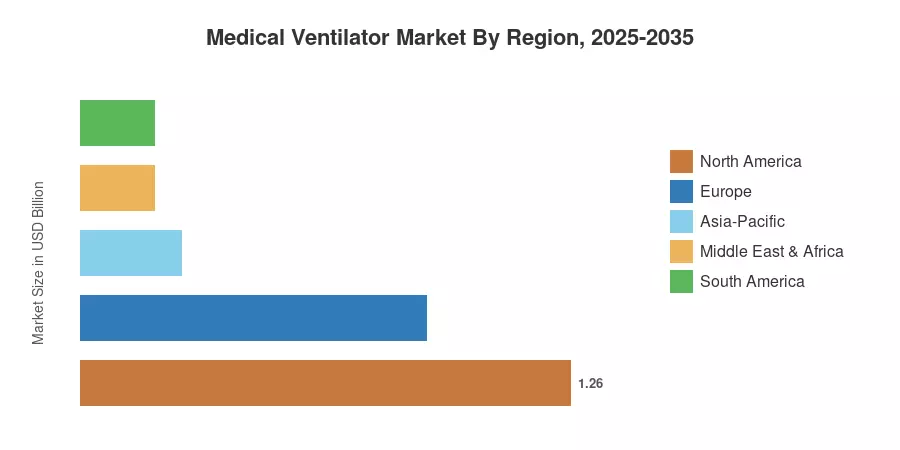
North America commands the largest share of the Medical Ventilator Market at approximately 38.5% of 2025 revenue, driven by dense hospital infrastructure and high per-capita critical care spending. Asia-Pacific is the fastest-growing region with a projected CAGR of 7.82%, propelled by government health-system expansion in China and India. Europe holds the second-largest position at roughly a 27.2% share, supported by harmonized CE-MDR device regulations and aging population dynamics. The decade ahead will see competition intensify around software-defined ventilation platforms and decentralized care delivery models.


Key Report Takeaways

• By Product Type

  • Critical care ventilators accounted for approximately 47.2% of the Medical Ventilator Market share in 2025, reflecting entrenched demand across tertiary hospitals and academic medical centers.
  • Transport and portable ventilators are projected to record the fastest segment CAGR at 7.18% through 2035, fueled by emergency medical services modernization and growing pre-hospital care protocols.

• By Interface

  • Invasive ventilation represented roughly 69.2% of the Medical Ventilator Market in 2025, driven by high-acuity ICU patient volumes and surgical recovery applications.
  • Non-invasive ventilation is expected to expand at a 6.90% CAGR during 2026–2035, supported by sleep-disordered breathing management and COPD exacerbation protocols.

• By Technology

  • Conventional ventilators held an estimated 59.2% share of the Medical Ventilator Market in 2025, though their dominance is gradually eroding.
  • Intelligent and closed-loop ventilators posted the highest expected CAGR at 7.62% through 2035, as hospitals seek automated weaning and lung-protective algorithms.

• By End User

  • Hospitals represented around 70.1% of demand in the Medical Ventilator Market in 2025.
  • Home care settings are projected to grow fastest at a 7.96% CAGR over 2026–2035, as payer models increasingly favor outpatient respiratory management.

• By Region

  • North America leads the Medical Ventilator Market with a 38.5% revenue share, while Asia-Pacific is set to record the highest regional CAGR at 7.82%.


Medical Ventilator Market Size and Forecast (2021–2035)

Market Research Future's sizing methodology triangulates bottom-up revenue estimates from manufacturer financial disclosures, distributor shipment data, and procurement databases with top-down calibration against WHO equipment registries and national health authority purchase orders. Historical figures reflect audited data; forecast values apply a calibrated compound annual growth rate adjusted for structural demand shifts and regulatory catalysts.
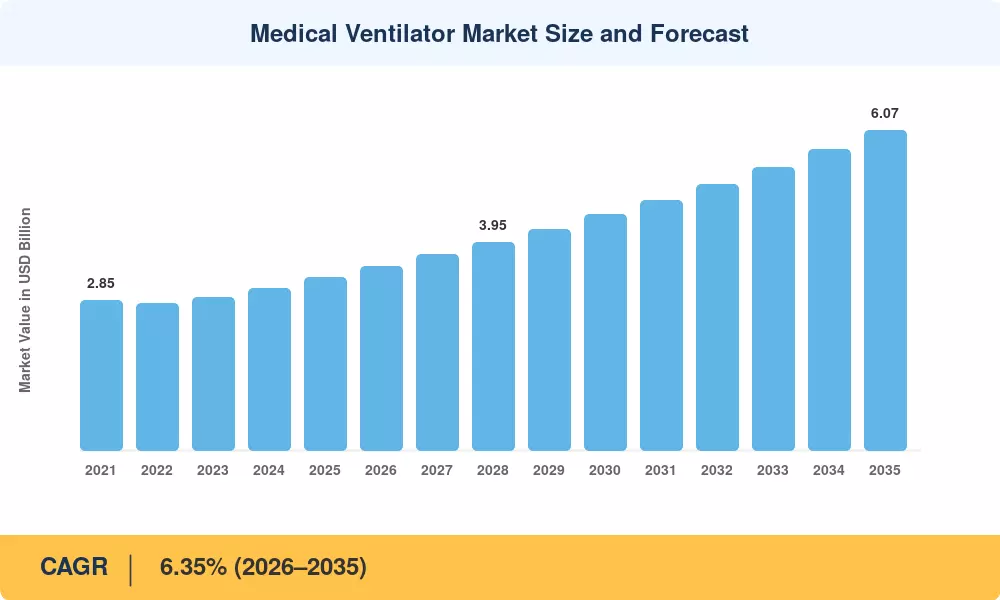
Medical Ventilator Market Size and Forecast
Our Impact
Enabled $4.3B Revenue Impact for Fortune 500 and Leading Multinationals
Partnering with 2000+ Global Organizations Each Year
30K+ Citations by Top-Tier Firms in the Industry

Driver Impact Analysis

Driver ~% Impact on CAGR Geographic Relevance Impact Timeline
Rising chronic respiratory disease prevalence ~22% Global Long-term (≥4 yr)
ICU bed expansion and modernization programs ~18% Asia-Pacific, MEA Medium-term (2–4 yr)
Home care and decentralized respiratory management ~16% North America, Europe Medium-term (2–4 yr)
Intelligent ventilation and AI-driven weaning ~14% North America, Europe Long-term (≥4 yr)
Pandemic preparedness stockpiling mandates ~12% Global Short-term (≤2 yr)
Neonatal care infrastructure investment ~10% Asia-Pacific, South America Medium-term (2–4 yr)
Reimbursement expansion for respiratory devices ~8% North America Short-term (≤2 yr)


Chronic Respiratory Disease Burden

The WHO and Global Burden of Disease Collaborative estimate that COPD cases alone will rise 23% between 2020 and 2050, with disproportionate impact on women and populations in low- and middle-income countries [1]. This structural demand floor ensures that the Medical Ventilator Market maintains baseline growth independent of acute crisis events. Countries with aging demographics — Japan, Germany, Italy — face compound pressure from both COPD and age-related respiratory decline, creating predictable replacement and expansion cycles for hospital ventilator fleets.

ICU Capacity Expansion Programs

China's 14th Five-Year Health Plan allocated CNY 130 billion for county-level hospital renovations, which stipulated minimum ICU-to-bed ratios that directly correspond to ventilator procurement [4]. Similarly, the National Health Mission of India intends to establish 50,000 new ICU spaces by 2028. These government-led initiatives offer the Medical Ventilator Market extended procurement runways that are less susceptible to fluctuations in private-sector budgets.


Home Respiratory Management Shift

The United States' out-of-pocket barriers for chronic ventilator-dependent patients have been reduced as a result of Medicare's expanded coverage of home ventilation under the 21st Century Cures Act 2.0 provisions. In Germany, the DiGA framework now includes digital respiratory monitoring as a reimbursable prescription pathway [7][11]. A second growth vector for the Medical Ventilator Market is established by the transition to home-based care, in addition to hospital procurement.


Intelligent Ventilation Adoption

Closed-loop ventilation systems that automatically adjust tidal volumes and PEEP settings based on real-time lung compliance data are transitioning from academic pilots to mainstream FDA clearances. Across randomized trials, the unplanned extubation rates have been reduced by 18–25% with Hamilton Medical's IntelliVent-ASV and Medtronic's adaptive support modes [6][10]. These platforms are increasingly perceived by hospital systems as investments in quality development rather than capital luxuries.


Restraints Impact Analysis

The restraint impacts below reflect estimated drag on headline growth. These percentages are directional, derived from procurement delay analysis and regulatory barrier modeling, and should not be subtracted directly from the CAGR.

Restraint ~% Drag on CAGR Geographic Relevance Impact Timeline
High capital cost and budget constraints ~-20% LMICs, South America Long-term (≥4 yr)
Regulatory fragmentation across jurisdictions ~-16% Global Medium-term (2–4 yr)
Skilled respiratory therapist shortages ~-14% Asia-Pacific, MEA Long-term (≥4 yr)
Post-pandemic inventory overhang ~-12% North America, Europe Short-term (≤2 yr)
Cybersecurity and data privacy concerns ~-8% North America, Europe Medium-term (2–4 yr)


Capital Cost Barriers in Resource-Limited Settings

A single high-acuity ventilator can cost USD 25,000–50,000 before installation, training, and maintenance contracts. In sub-Saharan Africa, where per-capita health expenditure averages USD 41 annually, these price points effectively exclude public hospitals from upgrading beyond basic resuscitators [13]. The Medical Ventilator Market faces structural penetration ceilings in regions where capital budgets cannot absorb premium device pricing without concessionary financing or donor support.

Regulatory Fragmentation

Medical device approval pathways vary substantially across jurisdictions. A ventilator cleared through FDA's 510(k) pathway must undergo separate conformity assessment under the EU's MDR 2017/745, ANVISA registration in Brazil, and CDSCO approval in India — each with distinct clinical evidence requirements and timelines ranging from 6 to 24 months [14]. This fragmentation slows global product rollouts and disproportionately affects smaller manufacturers unable to maintain parallel regulatory teams.

Respiratory Therapist Workforce Gap

The American Association for Respiratory Care projected a 15% shortfall in qualified respiratory therapists across US hospitals by 2027, while Southeast Asian nations face even steeper gaps [15]. Advanced ventilator features lose clinical value when bedside operators lack training to interpret adaptive modes. This workforce constraint indirectly dampens upgrade demand within the Medical Ventilator Market.


Medical Ventilator Market Opportunities

AI-Powered Ventilator Software Platforms

Machine learning models trained on millions of patient-ventilator interaction data points can optimize breath delivery in real time, reducing ventilator-induced lung injury and shortening weaning duration. Vendors that build proprietary data lakes from installed device fleets will generate recurring software revenue through predictive analytics subscriptions, creating a second monetization layer beyond hardware sales.

Emerging Market Health System Buildouts

Sub-Saharan Africa currently operates fewer than 2,000 functional ventilators for a population exceeding 1.2 billion. The African Development Bank's health infrastructure program targets USD 3 billion in medical equipment deployment through 2030 [13][9]. Cost-effective, tropicalized ventilator models designed for intermittent power supply and high-humidity environments represent a greenfield opportunity in the Medical Ventilator Market.

Ventilator-as-a-Service Business Models

Subscription and pay-per-use leasing models reduce the initial procurement barriers for mid-tier hospitals, thereby transforming capital expenditure into predictable operating expenditure. In certain European markets, Getinge and Dräger have both implemented managed equipment services, which include maintenance, software updates, and replacement guarantees, as part of multi-year contracts.


Neonatal and Pediatric Segment Expansion

Neonatal ventilators require specialized flow delivery and tidal volume precision that adult platforms cannot provide. With neonatal ICU admission rates rising across South and Southeast Asia — driven by expanded maternal health coverage — this underserved segment offers above-average margins for specialized manufacturers.

Telehealth-Integrated Home Ventilation

Remote patient monitoring platforms that integrate ventilator performance telemetry with electronic health records allow clinicians to manage chronic ventilator-dependent patients without in-person visits. CMS reimbursement codes for remote respiratory monitoring (CPT 94005 and successors) have expanded twice since 2023, de-risking this model for US-based providers [7][11].


Medical Ventilator Market Future Outlook

AI-Autonomous Ventilation Management

By 2030, closed-loop ventilator systems guided by artificial intelligence are expected to manage over 40% of routine ventilation adjustments in high-income country ICUs. These systems continuously analyze respiratory mechanics, blood gas trends, and patient sedation levels to autonomously titrate ventilator settings. The FDA's predetermined change control plan framework — introduced under the 2024 AI/ML action plan — provides a regulatory pathway for adaptive algorithms to evolve post-market [6][10].

Platform Economics and Recurring Revenue

The Medical Ventilator Market is transitioning from one-time hardware sales to platform-based business models. Manufacturers embedding cellular connectivity and cloud analytics into devices can generate per-patient-per-day software revenue, predictive maintenance fees, and population health dashboards. Industry analysts estimate that software and services could represent 20–25% of total ventilator-related revenue by 2032, up from less than 8% in 2024 [5].

Sustainability and Circular Economy Pressure

European Green Deal requirements will increasingly apply to medical device manufacturers, mandating lifecycle assessments, recyclability targets, and carbon footprint disclosures for hospital equipment. Ventilator manufacturers investing in modular designs — where electronic boards, sensors, and housings can be independently refurbished — will gain procurement advantages in environmentally conscious health systems. Philips and Dräger have both published device circularity roadmaps targeting 2030 milestones [17].

Decentralized Critical Care Delivery

The traditional model of concentrating ventilators in large urban hospitals is yielding to a distributed network approach. Telehealth-enabled portable devices, hub-and-spoke ICU management models, and mobile critical care units are extending respiratory support into rural communities, disaster zones, and skilled nursing facilities. The WHO's 2024 framework for essential critical care equipment explicitly recommends portable ventilator deployment in primary care facilities across lower-middle-income countries [12][15].


Medical Ventilator Market Segmentation

By Product Type

Segment Metric Primary Demand Driver
Critical Care 47.2% share (2025) Tertiary hospital ICU fleet replacement
Neonatal USD 0.38 Billion (2025) NICU expansion in developing regions
Transport and Portable 7.18% CAGR (2026–2035) EMS modernization and disaster preparedness
Home Care USD 0.42 Billion (2025) Chronic ventilator-dependent patient management


Critical care ventilators remain the backbone of the Medical Ventilator Market, installed across surgical suites, medical ICUs, and post-anesthesia care units in virtually every acute care hospital globally. These high-acuity platforms command price points between USD 20,000 and USD 50,000 per unit and generate substantial aftermarket revenue through consumables and maintenance contracts. The installed base in North American and European hospitals is entering a replacement cycle, as devices procured during the 2020–2021 pandemic surge approach end-of-warranty status.

Transport and portable ventilators represent the fastest-expanding product category, driven by emergency medical services seeking lightweight, battery-powered devices for pre-hospital stabilization. Military procurement also contributes to this segment, as defense ministries invest in field-deployable respiratory equipment.

By Interface

Segment Metric Primary Demand Driver
Invasive 69.2% share (2025) High-acuity ICU and surgical recovery
Non-Invasive 6.90% CAGR (2026–2035) COPD management and sleep-disordered breathing


Invasive ventilation dominates the Medical Ventilator Market because critically ill patients requiring endotracheal intubation represent the highest-revenue application. Non-invasive interfaces — including bilevel positive airway pressure masks and high-flow nasal cannula systems — are gaining ground as clinical evidence supports their use in early-stage respiratory failure, reducing intubation rates and ICU length of stay.

By Technology

Segment Metric Primary Demand Driver
Conventional 59.2% share (2025) Cost-effective and widely understood platforms
Intelligent/Closed-Loop 7.62% CAGR (2026–2035) Automated weaning and lung-protective algorithms
Turbine-Based USD 0.31 Billion (2025) Compressed-gas-free operation for portability


Conventional ventilators built on pneumatic gas-blending technology still equip the majority of the global installed base. Their operational familiarity and lower cost make them the default choice for facilities without advanced respiratory therapy teams. Intelligent and closed-loop systems, however, are capturing incremental purchasing share in high-income markets where clinical quality metrics increasingly drive procurement decisions.

By End User

Segment Metric Primary Demand Driver
Hospitals 70.1% share (2025) Central ICU and surgical suite requirements
Home Care Settings 7.96% CAGR (2026–2035) Payer shift toward outpatient management
Ambulatory Surgical Centers USD 0.12 Billion (2025) Growth in outpatient procedures under sedation
Emergency Providers 6.58% CAGR (2026–2035) Pre-hospital care protocol expansion


Hospitals dominate end-user demand in the Medical Ventilator Market and will continue to do so through 2035. Home care settings represent the most compelling growth opportunity as reimbursement frameworks mature and remote monitoring technology enables safe management of chronic ventilator-dependent patients outside institutional settings.


Regional Market Share Analysis

Region Metric Primary Investment Themes
North America 38.5% share (2025) ICU modernization, home ventilation reimbursement
Europe 27.2% share (2025) MDR compliance, cross-border critical care networks
Asia-Pacific 7.82% CAGR (2026–2035) Hospital bed expansion, neonatal infrastructure
South America USD 0.19 Billion (2025) Public health system upgrades, pandemic preparedness
Middle East & Africa 5.7% share (2025) PPP hospital projects, workforce development
Total USD 3.28 Billion (2025)

The Medical Ventilator Market exhibits clear regional stratification, with mature markets prioritizing technology upgrades and emerging regions focused on capacity expansion.


North America

Country Metric Key Driver
US 82.4% of regional share Medicare ventilator reimbursement expansion
Canada 10.8% of regional share Provincial ICU capacity mandates
Mexico 6.42% CAGR IMSS hospital modernization program


The US remains the single largest country market, underpinned by over 96,000 ICU beds and the highest per-capita respiratory therapy staffing ratios globally. CMS reimbursement updates in 2024 expanded coverage for home ventilator equipment, opening a secondary revenue channel outside acute care. Canada's provinces have collectively invested CAD 1.8 billion in critical care infrastructure since 2022 [2][11].

Europe

Country Metric Key Driver
Germany 24.6% of regional share Aging population and pulmonology leadership
UK 6.18% CAGR NHS long-term plan respiratory investment
France 18.2% of regional share EU4Health cross-border procurement
Italy USD 0.11 Billion (2025) Post-COVID ICU rebuilding
Spain 5.94% CAGR Regional health authority equipment refresh
Nordic Countries 8.5% of regional share Digital health and connected device adoption
Russia 5.48% CAGR Federal hospital equipment renewal programs
Rest of Europe 14.1% of regional share Harmonized MDR regulatory framework


Germany anchors European demand through its dense network of university hospitals and strong respiratory medicine tradition. The EU Medical Device Regulation (MDR 2017/745) transition — fully enforced since May 2024 — has created a temporary procurement pause as manufacturers re-certify devices, but it also elevates barriers to entry that benefit established players with regulatory infrastructure [3][14].

Asia-Pacific

Country Metric Key Driver
China 34.8% of regional share 14th Five-Year Health Plan hospital expansion
India 8.42% CAGR Ayushman Bharat ICU mandates
Japan 21.3% of regional share Super-aging society respiratory demand
South Korea 6.95% CAGR Smart hospital initiatives
ASEAN USD 0.08 Billion (2025) Public health infrastructure investment
Rest of Asia-Pacific 5.74% CAGR Rural healthcare access programs


Asia-Pacific represents the most dynamic growth corridor for the Medical Ventilator Market. China's mandate to achieve 6 ICU beds per 100,000 population by 2027 — up from 3.6 in 2022 — directly translates to ventilator procurement at scale. India's district hospital upgrades under the National Health Mission are creating first-time ventilator deployments in facilities that previously lacked any respiratory support capability [4].

South America

Country Metric Key Driver
Brazil 58.4% of regional share SUS public health system upgrades
Argentina 5.82% CAGR Provincial hospital equipment renewal
Rest of South America USD 0.04 Billion (2025) International development aid programs


Brazil dominates the South American landscape through its Unified Health System (SUS), which serves over 150 million citizens and has prioritized respiratory care equipment following COVID-era shortages. Argentine provinces have secured Inter-American Development Bank financing for hospital equipment modernization, though currency volatility continues to complicate procurement cycles [13].

Middle East & Africa

Country Metric Key Driver
Saudi Arabia 28.5% of regional share Vision 2030 healthcare city projects
UAE 6.68% CAGR Medical tourism infrastructure
South Africa 19.4% of regional share Public-private partnership hospitals
Egypt 6.12% CAGR Universal health insurance rollout
Rest of MEA USD 0.05 Billion (2025) WHO and AfDB equipment programs


Saudi Arabia's Vision 2030 healthcare investments — including five new medical cities — are creating concentrated procurement opportunities for premium ventilator systems. Across sub-Saharan Africa, the gap between available ventilators and population needs remains the widest globally, representing both a humanitarian challenge and a long-term commercial opportunity for cost-optimized device manufacturers [9][13].


Medical Ventilator Market By Region, 2025-2035

Competitive Benchmarking

The Medical Ventilator Market exhibits medium concentration, with the top five manufacturers collectively holding an estimated 52–58% of global revenue. The Herfindahl-Hirschman Index sits in the 900–1,200 range, indicating a moderately competitive environment where established multinational medtech firms coexist with specialized respiratory device companies. Differentiation increasingly hinges on software capabilities, clinical evidence portfolios, and service network density rather than hardware specifications alone.

Company Est. Revenue Share Range Key Offerings Strategic Positioning
Medtronic plc ~10–14% Puritan Bennett 980, adaptive support platforms Broadest global distribution; strong US hospital penetration
Philips Healthcare ~9–13% Trilogy Evo, V60 Plus, connected care ecosystem Leading home ventilation brand; software-driven differentiation
Drägerwerk AG ~8–12% Evita V800, Savina 300 Select Premium ICU focus; strong European service network
GE HealthCare ~7–10% CARESCAPE R860, Engström platform Integrated monitoring-ventilation workflow
Hamilton Medical AG ~6–9% Hamilton C6, IntelliVent-ASV technology Pioneer in adaptive closed-loop ventilation
Getinge AB (Maquet) ~5–8% Servo-u, Servo-n neonatal Strong neonatal franchise; managed services model
ResMed Inc. ~4–7% Astral, Lumis series, AirView cloud Dominant home/sleep respiratory platform
Mindray Medical ~3–6% SV800, SV300 series Cost-competitive positioning across emerging markets
Vyaire Medical ~2–4% AVEA, LTV2 series Mid-tier hospital and transport segments
Smiths Medical (ICU Medical) ~2–4% Pneupac, paraPAC series Portable and emergency ventilation specialist


Recent News & Developments


  • Philips Healthcare (January 2025): Launched the Trilogy Evo Universal platform integrating hospital-to-home ventilation transition with cloud-based respiratory monitoring, targeting chronic obstructive pulmonary disease management pathways [7].


  • Getinge (April 2024): Introduced a managed equipment services subscription model for its Servo ventilator line across five European markets, converting capital expenditure to operating expenditure for hospital buyers [5].


  • US FDA (September 2023): Published updated guidance on predetermined change control plans for AI/ML-enabled ventilator software, clarifying the regulatory pathway for continuously learning respiratory algorithms [6].


Medical Ventilator Market Report Scope

Parameter Detail
Market Scope Global Medical Ventilator Market covering hardware, software, and associated services
Study Period 2021–2035
CAGR 6.35% (2026–2035)
Base Year Value USD 3.28 Billion (2025)
Forecast Endpoint USD 6.07 Billion (2035)
Fastest Growing Segments Transport & Portable (by product), Intelligent/Closed-Loop (by technology), Home Care (by end user)
Companies Profiled 10 major players including Medtronic, Philips, Drägerwerk, GE HealthCare, Hamilton Medical, Getinge, ResMed, Mindray, Vyaire Medical, Smiths Medical
Valuation Currency USD Billion


FAQs

What clinical evidence should procurement teams evaluate when comparing closed-loop ventilator platforms?
Prioritize peer-reviewed trials demonstrating reductions in ventilator-induced lung injury and unplanned extubation rates. Hamilton Medical's IntelliVent-ASV platform has the largest published evidence base, spanning 14 randomized controlled trials across multiple ICU populations [10].
How do ventilator-as-a-service subscription models affect total cost of ownership for mid-sized hospitals?
Subscription models shift capital expenditure to predictable monthly operating costs, typically reducing five-year total cost of ownership by 12–18% when maintenance and software upgrades are bundled [19]. Hospitals also avoid technology obsolescence risk.
What cybersecurity standards apply to network-connected ventilators in the United States?
FDA requires premarket cybersecurity documentation under Section 524B of the FD&C Act, and NIST SP 800-183 provides the reference framework [16]. Procurement teams should verify that vendors maintain a software bill of materials and a coordinated vulnerability disclosure process.
Which portable ventilator specifications matter most for pre-hospital emergency use?
Battery runtime exceeding four hours, weight under 5 kg, and MIL-STD-810G ruggedization certification are critical thresholds for ambulance and aeromedical applications [12]. Turbine-based gas delivery eliminates compressed-cylinder dependency.
How are reimbursement changes in the US reshaping the home ventilator segment?
CMS expanded Medicare coverage for home ventilation equipment in 2024, reducing patient copayment barriers and enabling longer home-based management [11]. This policy directly accelerates device placements outside acute care settings.
What role does 3D printing play in ventilator manufacturing cost reduction?
Additive manufacturing currently applies to rapid prototyping and low-volume custom components rather than serial production. Cost savings are most significant in neonatal interfaces and patient circuit connectors where small-batch customization justifies higher per-unit additive costs [18].
How should health systems in tropical climates specify ventilator environmental tolerances?
Devices must meet IEC 60601-1 standards for operation at 40°C ambient temperature and 95% relative humidity without performance degradation [12]. Integrated HEPA filtration and corrosion-resistant housings are essential for equatorial deployment environments.    
Author
Author
Author Profile
Rahul Gotadki LinkedIn
Research Manager
He holds an experience of about 9+ years in Market Research and Business Consulting, working under the spectrum of Life Sciences and Healthcare domains. Rahul conceptualizes and implements a scalable business strategy and provides strategic leadership to the clients. His expertise lies in market estimation, competitive intelligence, pipeline analysis, customer assessment, etc.
Co-Author
Co-Author Profile
Kinjoll Dey LinkedIn
Senior Research Analyst
He is an extremely curious individual currently working in Healthcare and Medical Devices Domain. Kinjoll is comfortably versed in data centric research backed by healthcare educational background. He leverages extensive data mining and analytics tools such as Primary and Secondary Research, Statistical Analysis, Machine Learning, Data Modelling. His key role also involves Technical Sales Support, Client Interaction and Project management within the Healthcare team. Lastly, he showcases extensive affinity towards learning new skills and remain fascinated in implementing them.

Research Approach


Secondary Research

The secondary research process involved comprehensive analysis of regulatory databases, peer-reviewed medical journals, clinical publications, and authoritative health organizations. Key sources included the US Food & Drug Administration (FDA) Center for Devices and Radiological Health, European Medicines Agency (EMA) Medical Device Coordination Group, International Electrotechnical Commission (IEC) 60601 standards database, World Health Organization (WHO) Medical Device Regulatory Systems, National Institutes of Health (NIH) National Heart, Lung, and Blood Institute (NHLBI), American Thoracic Society (ATS), European Respiratory Society (ERS), Society of Critical Care Medicine (SCCM), American Association for Respiratory Care (AARC), National Center for Health Statistics (NCHS) Healthcare Utilization Data, Centers for Medicare & Medicaid Services (CMS) Device Payment Data, EU Eurostat Healthcare Equipment Statistics, Organisation for Economic Co-operation and Development (OECD) Health Statistics, and national medical device regulatory authorities from key markets (Health Canada, TGA Australia, PMDA Japan, NMPA China). These sources were used to collect device approval data, respiratory disease epidemiology, ICU admission statistics, clinical safety studies, pricing benchmarks, and market landscape analysis for invasive ventilators, non-invasive ventilators, portable ventilators, and high-frequency ventilators.


Primary Research

In order to gather both qualitative and quantitative insights, supply-side and demand-side stakeholders were interviewed during the primary research process. CEOs, VPs of Product Development, heads of regulatory affairs, and commercial directors from OEMs and manufacturers of medical ventilators were examples of supply-side sources. Critical care doctors, pulmonologists, respiratory therapists, ICU nursing directors, biomedical equipment managers, and procurement leaders from hospitals, ambulatory surgery centers, home healthcare providers, and long-term care facilities were among the demand-side sources. Primary research obtained information on clinical adoption trends, pricing tactics, and reimbursement dynamics in addition to validating market segmentation and product pipeline deadlines.

Primary Respondent Breakdown:

By Designation: C-level Primaries (32%), Director Level (30%), Others (38%)

By Region: North America (32%), Europe (30%), Asia-Pacific (28%), Rest of World (10%)


Market Size Estimation

Global market valuation was derived through revenue mapping and device deployment analysis. The methodology included:

Identification of 40+ key manufacturers across North America, Europe, Asia-Pacific, and Latin America

Product mapping across invasive ventilators, non-invasive ventilators, portable ventilators, and high-frequency ventilator categories

Analysis of reported and modeled annual revenues specific to ventilator portfolios

Coverage of manufacturers representing 75-80% of global market share in 2024

Extrapolation using bottom-up (device installations × ASP by country/setting) and top-down (manufacturer revenue validation) approaches to derive segment-specific valuations

Download Free Sample

Kindly complete the form below to receive a free sample of this Report

Download PDF ×

We do not share your information with anyone. However, we may send you emails based on your report interest from time to time. You may contact us at any time to opt-out.
















