×
Request Free Sample ×

Kindly complete the form below to receive a free sample of this Report

* Please use a valid business email

Leading companies partner with us for data-driven Insights

clients tt-cursor
Hero Background

Point of Care Testing Women Health Market

ID: MRFR/HC/58150-CR
337 Pages
Rahul Gotadki
July 2025

Point-of-Care Testing for Women Health Market Research Report Information by Product (Instruments/Devices, Reagents & Kits, Consumables), by Age (Adolescent, Adult, Geriatric), by Sample Type (Serum, Plasma, Whole Blood, Urine, Others), by Test Type (Testosterone Test, Estradiol Test, Anti-Müllerian Hormone Test, Prolactin Test, Progesterone Test, Follicle-stimulating Hormone Test, Luteinizing Hormone Test, β-hCG Test, Others), by Technology (Colloidal Gold Lateral Flow Assays, Fluorescence Immunoassays, Lab-on-a-Chip, Others), by Applic... read more

Share:
Download PDF ×

We do not share your information with anyone. However, we may send you emails based on your report interest from time to time. You may contact us at any time to opt-out.

Point of Care Testing Women Health Market  Infographic
Purchase Options

Point of Care Testing Women Health Market Summary

As per MRFR analysis, the Point of Care Testing Women Health Market was estimated at 17.84 USD Billion in 2024. The Point of Care Testing Women Health industry is projected to grow from 19.33 USD Billion in 2025 to 38.45 USD Billion by 2035, exhibiting a compound annual growth rate (CAGR) of 7.19 during the forecast period 2025 - 2035.

Key Market Trends & Highlights

The Point of Care Testing Women Health Market is experiencing robust growth driven by technological advancements and a shift towards home testing solutions.

  • Technological advancements are enhancing the accuracy and efficiency of point of care testing devices.
  • The North American market remains the largest, while the Asia-Pacific region is recognized as the fastest-growing market for women's health testing.
  • Pregnancy testing continues to dominate the market, whereas infectious disease testing is emerging as the fastest-growing segment.
  • Rising prevalence of women health issues and increased focus on preventive healthcare are key drivers propelling market expansion.

Market Size & Forecast

2024 Market Size 17.84 (USD Billion)
2035 Market Size 38.45 (USD Billion)
CAGR (2025 - 2035) 7.19%

Major Players

Abbott Laboratories (US), Roche Diagnostics (CH), Siemens Healthineers (DE), Becton Dickinson and Company (US), Thermo Fisher Scientific (US), Quidel Corporation (US), Hologic, Inc. (US), Cepheid (US), F. Hoffmann-La Roche AG (CH)

Point of Care Testing Women Health Market Trends

The Point of Care Testing Women Health Market is currently experiencing a notable evolution, driven by advancements in technology and an increasing emphasis on personalized healthcare. This market encompasses a range of diagnostic tests that can be performed at or near the site of patient care, facilitating timely decision-making and treatment. The growing awareness of women's health issues, coupled with the demand for rapid and accurate testing solutions, appears to be propelling the market forward. Furthermore, the integration of digital health technologies, such as mobile applications and telemedicine, is likely enhancing the accessibility and efficiency of point-of-care testing, thereby improving patient outcomes. In addition, the Point of Care Testing Women Health Market is witnessing a shift towards home-based testing solutions. This trend seems to be fueled by the desire for convenience and privacy among women seeking health assessments. As healthcare systems adapt to meet the needs of patients, the development of user-friendly devices and tests that can be utilized in non-clinical settings is becoming increasingly prevalent. Overall, the market is poised for growth, with innovations in testing methodologies and a focus on empowering women to take charge of their health, suggesting a promising future for point-of-care testing in women's health.

Technological Advancements

The Point of Care Testing Women Health Market is benefiting from rapid technological innovations. New devices and testing methods are emerging, enhancing the accuracy and speed of diagnostics. These advancements are likely to improve patient experiences and outcomes, as they facilitate immediate results and informed decision-making.

Shift Towards Home Testing

There is a discernible trend towards home-based testing solutions within the Point of Care Testing Women Health Market. Women increasingly prefer the convenience and privacy of conducting tests at home. This shift may lead to the development of more user-friendly devices that cater to this growing demand.

Integration of Digital Health Solutions

The integration of digital health technologies is transforming the Point of Care Testing Women Health Market. Mobile applications and telehealth services are enhancing the accessibility of testing, allowing women to manage their health more effectively. This trend indicates a move towards a more connected and patient-centered healthcare approach.

Point of Care Testing Women Health Market Drivers

Government Initiatives and Funding

Government initiatives and funding significantly influence the Global Point-of-Care Testing for Women Health Market Industry. Many countries are implementing policies to enhance women's health services, including increased funding for research and development of point-of-care testing technologies. For instance, various health departments are allocating resources to improve access to testing in underserved areas. Such initiatives not only promote the adoption of point-of-care testing but also ensure that women receive timely and effective healthcare. As these programs expand, they are expected to drive market growth and improve health outcomes for women globally.

Increased Focus on Preventive Healthcare

The Global Point-of-Care Testing for Women Health Market Industry is benefiting from a growing emphasis on preventive healthcare. Governments and health organizations are increasingly advocating for regular health screenings and early detection of diseases. This trend is evident in initiatives aimed at promoting awareness about women's health issues and the importance of routine testing. As a result, more women are seeking point-of-care testing services, which offer convenience and immediate results. This shift towards preventive measures is likely to bolster market growth, as it aligns with the broader healthcare objective of reducing disease burden.

Technological Advancements in Diagnostic Tools

Technological innovations play a crucial role in the Global Point-of-Care Testing for Women Health Market Industry. The development of advanced diagnostic tools, such as portable devices and rapid testing kits, enhances the efficiency and accuracy of health assessments. For example, the introduction of molecular diagnostic tests has improved the detection rates of various infections and conditions. These advancements not only facilitate quicker results but also empower women to take charge of their health. As technology continues to evolve, it is expected that the market will witness sustained growth, driven by the demand for innovative testing solutions.

Growing Demand for Home-Based Testing Solutions

The Global Point-of-Care Testing for Women Health Market Industry is witnessing a surge in demand for home-based testing solutions. As women increasingly seek convenience and privacy in managing their health, home testing kits for conditions like pregnancy, ovulation, and sexually transmitted infections are becoming more popular. This trend is supported by advancements in technology that allow for accurate and reliable results from home. The market is projected to grow from 17.7 USD Billion in 2024 to 33.7 USD Billion by 2035, with a CAGR of 6.05% from 2025 to 2035, reflecting the increasing preference for accessible healthcare options.

Rising Prevalence of Women-Specific Health Conditions

The Global Point-of-Care Testing for Women Health Market Industry is experiencing growth due to the increasing prevalence of women-specific health conditions such as cervical cancer, breast cancer, and sexually transmitted infections. For instance, the World Health Organization reports that cervical cancer remains a leading cause of cancer-related deaths among women globally. This rising incidence necessitates timely and accurate diagnostic tools, which point-of-care testing provides. As awareness of these conditions grows, the demand for accessible testing solutions is likely to increase, contributing to the market's expansion.

Market Segment Insights

By Application: Pregnancy Testing (Largest) vs. Infectious Disease Testing (Fastest-Growing)

In the Point of Care Testing Women Health Market, Pregnancy Testing holds the largest share, benefiting from widespread adoption and cultural acceptance. This segment's significance is evidenced by its integration into routine healthcare practices, prompting women to seek immediate results for pregnancy status. On the other hand, Infectious Disease Testing is rapidly gaining traction, driven by heightened awareness of women's health issues and the increasing prevalence of sexually transmitted infections (STIs). Both segments contribute significantly to the overall market landscape, but with varying emphases on patient needs and healthcare initiatives. Growth trends indicate that the market for Point of Care Testing in women's health is evolving, particularly in infectious disease testing. The surge in demand is propelled by technological advancements, which enhance test sensitivity and reduce turnaround times. Moreover, public health campaigns aimed at educating women about STIs contribute to fostering a proactive approach to health. The increasing emphasis on personalized healthcare and the growing acceptance of home testing kits are also influencing shifts in the segment dynamics, ensuring that both Pregnancy and Infectious Disease Testing remain cornerstones of women's health management.

Pregnancy Testing (Dominant) vs. Fertility Testing (Emerging)

Pregnancy Testing is positioned as a dominant force in the Point of Care Testing Women Health Market, characterized by its widespread familiarity and established protocols in healthcare settings. This segment offers reliable, quick results, satisfying the immediate inquiries of women regarding their pregnancy status. With the growing trend toward home testing solutions, this segment is poised to maintain its leading status. Conversely, Fertility Testing is an emerging area, gaining momentum as awareness surrounding reproductive health increases. This segment appeals to women seeking to manage their fertility proactively. Its growth is bolstered by technological innovations that allow for more accurate assessments of ovulation and fertility potential. As societal norms evolve and more women prioritize family planning, Fertility Testing is expected to carve a significant niche within the market.

By End Use: Home Care (Largest) vs. Hospitals (Fastest-Growing)

In the Point of Care Testing Women Health Market, the end-use segment comprises different settings such as Home Care, Hospitals, Clinics, and Laboratories. Among these, Home Care has emerged as the largest segment, attracting a significant share of the market. This preference can be attributed to the convenience it offers and the rising trend of self-testing, empowering women to manage their health conditions from the comfort of their homes. Hospitals, on the other hand, represent the fastest-growing segment, owing to the increasing demand for immediate diagnostic results and improved patient outcomes that point of care testing facilities provide. As the healthcare landscape evolves, the need for rapid testing in hospitals is accentuated. Growth in this segment is primarily driven by the expansion of diagnostic capabilities and technological advancements that enhance testing accuracy and turnaround times. Additionally, the aging population and heightened awareness regarding women's health issues are propelling the demand for point of care testing within hospital settings, creating opportunities for innovation and investment in this sector.

Home Care (Dominant) vs. Hospitals (Emerging)

Home Care serves as the dominant segment in the Point of Care Testing Women Health Market, as it aligns with the growing consumer preference for personalized healthcare solutions that can be conducted independently. This segment thrives on the accessibility of home-testing kits and the increasing trend towards preventive healthcare, allowing women to monitor their health conveniently. In contrast, Hospitals are emerging rapidly within this market, fueled by a rising focus on patient-centric care and the integration of advanced diagnostic technologies. The healthcare industry is witnessing a significant shift towards point of care testing in hospitals, which not only caters to immediate diagnostic needs but also enhances patient management and treatment processes. As such, the adoption of point of care testing in these various environments underscores the dynamic evolution of women's health diagnostics.

By Product Type: Blood Glucose Meters (Largest) vs. Rapid Diagnostic Tests (Fastest-Growing)

The Point of Care Testing Women Health Market is segmented by product type, wherein Blood Glucose Meters hold the largest market share due to their critical role in monitoring glucose levels for women with diabetes. This category is closely followed by Ovulation Test Kits, which are increasingly popular as women take a proactive approach to reproductive health. Urine Test Strips and Rapid Diagnostic Tests also contribute significantly to market dynamics, catering to a variety of diagnostic needs in women's health.

Blood Glucose Meters (Dominant) vs. Rapid Diagnostic Tests (Emerging)

Blood Glucose Meters represent a dominant force in the Point of Care Testing Women Health Market, driven by their essential function in diabetes management. These devices are favored for their accuracy and ease of use, making them a staple for women requiring regular monitoring. On the other hand, Rapid Diagnostic Tests are emerging rapidly, appealing to the growing demand for quick and efficient testing methods in various health conditions, including sexually transmitted diseases and infectious diseases. This segment's innovation and ability to deliver results in real-time position it as a strong contender for future market growth.

By Technology: Lateral Flow Assays (Largest) vs. Molecular Diagnostics (Fastest-Growing)

In the Point of Care Testing Women Health Market, the technology segment showcases a competitive landscape. Lateral Flow Assays currently hold the largest market share, driven by their simplicity, rapid results, and cost-effectiveness. Following closely are Immunoassays and Microfluidics, which contribute significantly to the market dynamics with their unique applications, particularly in infectious disease detection and chronic condition monitoring. Molecular Diagnostics, while smaller in share, is quickly gaining traction due to its accuracy and the increasing demand for advanced testing capabilities. The growth trends in this segment are largely influenced by technological advancements and rising healthcare demands. The increased prevalence of women-specific health issues and a shift towards decentralized healthcare are propelling the adoption of these technologies. Lateral Flow Assays benefit from a broad range of applications in various settings, while Molecular Diagnostics is becoming the choice for more precise outcomes, especially in genetic testing and infectious diseases, positioning these technologies at the forefront of the market's evolution.

Technology: Lateral Flow Assays (Dominant) vs. Molecular Diagnostics (Emerging)

Lateral Flow Assays dominate the Point of Care Testing Women Health Market due to their user-friendly design and rapid response times. These tests are widely utilized for conditions such as pregnancy diagnoses and infectious diseases, making them a staple in point-of-care settings. Their effectiveness in providing immediate results empowers healthcare providers and enhances patient satisfaction. On the other hand, Molecular Diagnostics represents an emerging trend, offering cutting-edge solutions with unparalleled sensitivity and specificity. This technology, although not yet as widely adopted as Lateral Flow Assays, is rising rapidly due to its ability to detect specific pathogens and genetic markers. The growth of Molecular Diagnostics is driven by an increasing focus on personalized medicine and the need for accurate health assessments, catering specifically to women's health needs.

By Distribution Channel: Pharmacies (Largest) vs. Online Retail (Fastest-Growing)

In the Point of Care Testing Women Health Market, the distribution channels exhibit distinct market share distributions. Pharmacies have emerged as the largest channel, catering to a significant portion of consumers due to their accessibility and trusted brand reputation. On the other hand, online retail channels, while smaller in share, have been rapidly gaining traction among tech-savvy customers seeking convenience and instant product availability.

Pharmacies (Dominant) vs. Online Retail (Emerging)

Pharmacies serve as the dominant distribution channel for the Point of Care Testing Women Health Market, thanks to their established presence and ability to offer personalized consultations. They provide a wide range of products, creating a sense of trust and reliability among consumers. In contrast, online retail is emerging as a significant challenger, appealing to younger demographics who prefer the ease of purchasing from home. This channel benefits from advancements in e-commerce and tailored marketing strategies, catering to the growing demand for discreet and convenient healthcare solutions. As more consumers embrace digitalization, online retail is expected to experience sustained growth.

Get more detailed insights about Point of Care Testing Women Health Market

Regional Insights

North America : Market Leader in Innovation

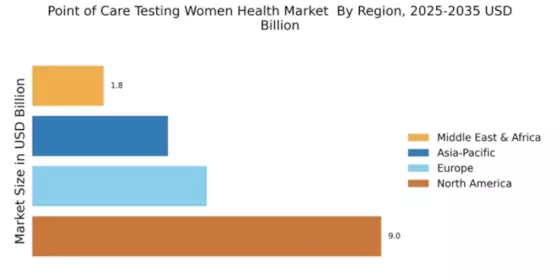
North America is poised to maintain its leadership in the Point of Care Testing Women Health Market, holding a market size of $9.0 billion in 2025. Key growth drivers include increasing awareness of women's health issues, technological advancements, and supportive regulatory frameworks. The demand for rapid and accurate testing solutions is surging, driven by the need for timely diagnosis and treatment options. Regulatory bodies are actively promoting innovations that enhance patient care and accessibility. The competitive landscape is robust, with the U.S. leading the charge, supported by major players like Abbott Laboratories, Roche Diagnostics, and Hologic, Inc. These companies are investing heavily in R&D to develop cutting-edge solutions tailored for women's health. The presence of established healthcare infrastructure and a focus on preventive care further solidify North America's position as a market leader, ensuring sustained growth in the coming years.

Europe : Emerging Market with Potential

Europe is witnessing a significant transformation in the Point of Care Testing Women Health Market, with a market size of $4.5 billion projected for 2025. Factors such as increasing healthcare expenditure, a growing aging population, and rising awareness of women's health issues are driving this growth. Regulatory initiatives aimed at improving healthcare access and quality are also contributing to the market's expansion, fostering innovation and adoption of new technologies. Leading countries in this region include Germany, France, and the UK, where key players like Siemens Healthineers and Roche Diagnostics are making substantial investments. The competitive landscape is characterized by a mix of established companies and emerging startups, all vying for market share. The European market is expected to benefit from collaborative efforts between public and private sectors, enhancing the overall healthcare ecosystem. "The European Commission emphasizes the importance of innovative healthcare solutions to improve women's health outcomes," European Commission, 2023.

Asia-Pacific : Rapidly Growing Market

The Asia-Pacific region is rapidly emerging as a key player in the Point of Care Testing Women Health Market, with a projected market size of $3.5 billion by 2025. This growth is fueled by increasing healthcare investments, rising awareness of women's health issues, and a shift towards decentralized healthcare solutions. Governments are implementing policies to enhance healthcare access, which is further driving demand for point-of-care testing technologies. Countries like China, India, and Japan are at the forefront of this growth, with significant contributions from local and international players. Companies such as Becton Dickinson and Quidel Corporation are expanding their presence in the region, focusing on innovative solutions tailored to local needs. The competitive landscape is evolving, with a mix of established firms and new entrants, all aiming to capture the growing demand for women's health testing solutions. The region's diverse healthcare landscape presents both challenges and opportunities for market players.

Middle East and Africa : Emerging Market Opportunities

The Middle East and Africa region is gradually emerging in the Point of Care Testing Women Health Market, with a market size of $1.84 billion anticipated by 2025. Key growth drivers include increasing healthcare investments, rising awareness of women's health issues, and government initiatives aimed at improving healthcare access. The demand for point-of-care testing solutions is growing, particularly in remote and underserved areas, where traditional healthcare infrastructure may be lacking. Countries like South Africa and the UAE are leading the charge, with local and international players working to establish a foothold in this evolving market. Companies are focusing on developing affordable and accessible testing solutions tailored to the unique needs of women in the region. The competitive landscape is characterized by a mix of established firms and new entrants, all striving to meet the growing demand for women's health testing solutions. "The WHO emphasizes the need for improved healthcare access in underserved regions," World Health Organization, 2023.

Key Players and Competitive Insights

The Point of Care Testing Women Health Market is characterized by a dynamic competitive landscape, driven by the increasing demand for rapid diagnostic solutions and the growing emphasis on women's health. Key players such as Abbott Laboratories (US), Roche Diagnostics (CH), and Siemens Healthineers (DE) are strategically positioned to leverage innovation and technological advancements. Abbott Laboratories (US) focuses on enhancing its product portfolio through continuous research and development, while Roche Diagnostics (CH) emphasizes strategic partnerships to expand its market reach. Siemens Healthineers (DE) is investing in digital transformation initiatives, which collectively shape a competitive environment that prioritizes agility and responsiveness to market needs.

The market structure appears moderately fragmented, with several players vying for market share. Key business tactics include localizing manufacturing to reduce costs and optimize supply chains, which is crucial in maintaining competitive pricing. The collective influence of these major players fosters a competitive atmosphere where innovation and operational efficiency are paramount.

In November 2025, Abbott Laboratories (US) announced the launch of a new point-of-care testing device specifically designed for early detection of cervical cancer. This strategic move is significant as it aligns with the growing focus on preventive healthcare measures for women, potentially enhancing Abbott's market position and addressing an urgent health need.

In October 2025, Roche Diagnostics (CH) expanded its collaboration with a leading telehealth provider to integrate remote monitoring capabilities into its point-of-care testing solutions. This initiative is likely to enhance patient access to testing and improve health outcomes, reflecting Roche's commitment to innovation in women's health diagnostics.

In September 2025, Siemens Healthineers (DE) unveiled a new AI-driven analytics platform aimed at optimizing the workflow of point-of-care testing in clinical settings. This development underscores Siemens' focus on integrating advanced technologies to streamline operations and improve diagnostic accuracy, which may provide a competitive edge in the market.

As of December 2025, current trends in the Point of Care Testing Women Health Market indicate a strong shift towards digitalization, sustainability, and AI integration. Strategic alliances are increasingly shaping the landscape, enabling companies to pool resources and expertise. The competitive differentiation is likely to evolve from traditional price-based competition to a focus on innovation, technology, and supply chain reliability, suggesting that companies that prioritize these areas may secure a more favorable position in the market.

Key Companies in the Point of Care Testing Women Health Market market include

Industry Developments

August 2023 Clearblue introduces the first at-home product to indicate a woman’s menopause stage. The Clearblue Menopause Stage Indicator combines urine FSH measurements with age and cycle history to determine her likely menopause stage.

August 2020 Swiss Precision Diagnostics (SPD) has adopted Matrix Gemini LIMS to enhance the management of pregnancy studies. The system streamlines volunteer sample collection, laboratory testing, and clinical biobank operations, making data more accessible and processes more efficient.

Future Outlook

Point of Care Testing Women Health Market Future Outlook

The Point of Care Testing Women Health Market is projected to grow at a 7.19% CAGR from 2024 to 2035, driven by technological advancements, increasing awareness, and demand for rapid diagnostics.

New opportunities lie in:

  • Development of portable diagnostic devices for home use
  • Integration of AI-driven analytics for personalized health insights
  • Expansion of telehealth services for remote patient monitoring

By 2035, the market is expected to be robust, driven by innovation and increased accessibility.

Market Segmentation

Point of Care Testing Women Health Market End Use Outlook

  • Home Care
  • Hospitals
  • Clinics
  • Laboratories

Point of Care Testing Women Health Market Technology Outlook

  • Lateral Flow Assays
  • Microfluidics
  • Molecular Diagnostics
  • Immunoassays

Point of Care Testing Women Health Market Application Outlook

  • Pregnancy Testing
  • Infectious Disease Testing
  • Hormonal Level Testing
  • Chronic Disease Management
  • Fertility Testing

Point of Care Testing Women Health Market Product Type Outlook

  • Blood Glucose Meters
  • Ovulation Test Kits
  • Urine Test Strips
  • Rapid Diagnostic Tests

Point of Care Testing Women Health Market Distribution Channel Outlook

  • Online Retail
  • Pharmacies
  • Direct Sales
  • Healthcare Institutions

Report Scope

MARKET SIZE 202417.84(USD Billion)
MARKET SIZE 202519.33(USD Billion)
MARKET SIZE 203538.45(USD Billion)
COMPOUND ANNUAL GROWTH RATE (CAGR)7.19% (2024 - 2035)
REPORT COVERAGERevenue Forecast, Competitive Landscape, Growth Factors, and Trends
BASE YEAR2024
Market Forecast Period2025 - 2035
Historical Data2019 - 2024
Market Forecast UnitsUSD Billion
Key Companies ProfiledAbbott Laboratories (US), Roche Diagnostics (CH), Siemens Healthineers (DE), Becton Dickinson and Company (US), Thermo Fisher Scientific (US), Quidel Corporation (US), Hologic, Inc. (US), Cepheid (US), F. Hoffmann-La Roche AG (CH)
Segments CoveredApplication, End Use, Product Type, Technology, Distribution Channel
Key Market OpportunitiesIntegration of advanced digital health technologies enhances accessibility in the Point of Care Testing Women Health Market.
Key Market DynamicsRising demand for rapid diagnostics drives innovation and competition in the Point of Care Testing Women Health market.
Countries CoveredNorth America, Europe, APAC, South America, MEA

Leave a Comment

FAQs

How much is the Point-of-Care Testing for Women Health Market?

USD 17.69 Billion is the Point-of-Care Testing for Women Health Market in 2024

Which Test Type holds the largest market share?

The β-hCG Test segment by Test Type holds the largest market share and grows at a CAGR of 8.32 % during the forecast period.

Which region holds the largest market share in the Point-of-Care Testing for Women Health Market?

North America holds the largest market share in the Point-of-Care Testing for Women Health Market.

Who are the prominent players in the Point-of-Care Testing for Women Health Market?

Swiss Precision Diagnostics GmbH- Clearblue, Wondfo, Church & Dwight Co., Inc.-First Response, Hangzhou Singclean Medical Products Co., Ltd., W.H.P.M., Inc., SEKISUI Diagnostics, INNOVITA Biological Technology Co., Ltd., Yangzhou VIOMED, Cofoe Medical Technology Co., Ltd., Chungdo Pharm Co., Ltd., are prominent players in the Point-of-Care Testing for Women Health Market.

Which Application segment led the Point-of-Care Testing for Women Health Market?

The Pregnancy Testing segment dominated the market in 2024.

Download Free Sample

Kindly complete the form below to receive a free sample of this Report

Compare Licence

×
Features License Type
Single User Multiuser License Enterprise User
Price $4,950 $5,950 $7,250
Maximum User Access Limit 1 User Upto 10 Users Unrestricted Access Throughout the Organization
Free Customization
Direct Access to Analyst
Deliverable Format
Platform Access
Discount on Next Purchase 10% 15% 15%
Printable Versions