Download Free Sample
Kindly complete the form below to receive a free sample of this Report
South America Embolic Protection Devices Market Research Report: Size, Share, Trend Analysis By Types (Distal Filter Device, Distal Occlusion Device, Proximal Occlusion Device), By Material (Nitinol, Polyurethane), By Usage (Disposable Device, Reusable Device), By Applications (Cardiovascular Diseases, Neurovascular Diseases, Peripheral Vascular Diseases), By End Users (Hospitals and Clinics, Ambulatory Surgical Centers, Specialty Centers) and By Regional (Brazil, Mexico, Argentina, Rest of South America) - Growth Outlook & Industry Forecast 2025 To 2035
As per Market Research Future analysis, the South America embolic protection devices market size was estimated at 35.77 USD Million in 2024. The South America embolic protection-devices market is projected to grow from 38.82 USD Million in 2025 to 88.0 USD Million by 2035, exhibiting a compound annual growth rate (CAGR) of 8.5% during the forecast period 2025 - 2035
The South America embolic protection-devices market is poised for growth driven by increasing health awareness and technological advancements.
| 2024 Market Size | 35.77 (USD Million) |
| 2035 Market Size | 88.0 (USD Million) |
| CAGR (2025 - 2035) | 8.53% |
Medtronic (US), Boston Scientific (US), Abbott Laboratories (US), Terumo Corporation (JP), Cardinal Health (US), B. Braun Melsungen AG (DE), Edwards Lifesciences Corporation (US), Stryker Corporation (US)
Our Impact
Enabled $4.3B Revenue Impact for Fortune 500 and Leading Multinationals
Partnering with 2000+ Global Organizations Each Year
30K+ Citations by Top-Tier Firms in the Industry
The embolic protection-devices market in South America is currently experiencing notable growth, driven by an increasing prevalence of cardiovascular diseases and a rising awareness of the importance of preventive measures during surgical procedures. The region's healthcare infrastructure is gradually improving, which facilitates better access to advanced medical technologies. Furthermore, the collaboration between local manufacturers and international companies appears to enhance the availability of innovative products tailored to meet the specific needs of South American patients. This trend suggests a potential for increased adoption of embolic protection devices in various medical settings, including hospitals and specialized clinics. In addition, regulatory bodies in South America are becoming more supportive of the introduction of new medical technologies, which may lead to a more favorable environment for the embolic protection-devices market. The focus on improving patient outcomes and reducing complications during procedures is likely to drive demand for these devices. As healthcare professionals become more educated about the benefits of embolic protection, the market may witness a shift towards more sophisticated and effective solutions. Overall, the outlook for the embolic protection-devices market in South America appears promising, with several factors contributing to its growth and development.
The increasing incidence of cardiovascular diseases in South America is a primary driver for the embolic protection-devices market. As more individuals are diagnosed with conditions requiring surgical intervention, the demand for devices that prevent embolic events during these procedures is likely to rise. This trend indicates a growing recognition of the need for effective protective measures in surgical settings.
Innovations in medical technology are significantly impacting the embolic protection-devices market. The development of new materials and designs enhances the efficacy and safety of these devices. As healthcare providers in South America adopt these advancements, the market may experience a shift towards more sophisticated solutions that cater to the unique needs of patients.
Regulatory bodies in South America are increasingly supportive of new medical technologies, which may facilitate easier market access for embolic protection devices. This trend suggests that as regulations become more favorable, manufacturers may find it easier to introduce innovative products, thereby expanding the market and improving patient care.
Investment in healthcare infrastructure across South America is positively impacting the embolic protection-devices market. Governments and private entities are increasingly allocating funds to enhance healthcare facilities, improve medical technology, and expand access to advanced medical treatments. This investment is likely to facilitate the adoption of embolic protection devices, as hospitals and clinics upgrade their equipment and procedures. For instance, Brazil and Argentina have seen substantial investments in healthcare, which may lead to improved surgical outcomes and increased utilization of embolic protection devices. As healthcare infrastructure continues to develop, the market is expected to benefit from enhanced availability and accessibility of these critical devices.
Technological innovations in medical devices are significantly influencing the embolic protection-devices market in South America. Advances in materials, design, and functionality are leading to the development of more effective and user-friendly embolic protection devices. Innovations such as bioresorbable materials and improved delivery systems are enhancing the performance of these devices, making them more appealing to healthcare providers. As the market evolves, it is anticipated that these technological advancements will drive growth, with an expected increase in market size by approximately 15% over the next five years. The continuous evolution of technology in the medical field is likely to create new opportunities for the embolic protection-devices market, as healthcare professionals seek the latest solutions to improve patient outcomes.
The growing awareness of cardiovascular health in South America is driving the embolic protection-devices market. Educational campaigns and health initiatives are emphasizing the importance of early detection and prevention of cardiovascular diseases. This heightened awareness is likely to lead to increased demand for embolic protection devices, as healthcare providers and patients seek effective solutions to mitigate risks during procedures such as angioplasty. The market is projected to grow at a CAGR of approximately 8% over the next five years, reflecting the rising focus on cardiovascular health. As more individuals become informed about the risks associated with cardiovascular conditions, the adoption of embolic protection devices is expected to rise, thereby enhancing the overall market landscape.
The rising incidence of stroke and related conditions in South America is a key driver for the embolic protection-devices market. Stroke remains one of the leading causes of morbidity and mortality in the region, prompting healthcare providers to seek effective preventive measures. The use of embolic protection devices during procedures such as carotid artery stenting is becoming increasingly common as a means to reduce the risk of stroke. Recent studies indicate that the incidence of stroke in South America is approximately 100 per 100,000 individuals, highlighting the urgent need for effective solutions. This growing concern is likely to propel the demand for embolic protection devices, as healthcare systems prioritize strategies to combat stroke and its complications.
The aging population in South America is contributing significantly to the embolic protection-devices market. As individuals age, the prevalence of cardiovascular diseases tends to increase, leading to a higher number of surgical interventions. This demographic shift is expected to result in a greater demand for embolic protection devices, as they play a crucial role in preventing complications during surgeries. According to recent statistics, the population aged 65 and older is projected to reach 12% by 2030 in South America, which may lead to an increase in surgical procedures requiring embolic protection. Consequently, the market is likely to expand as healthcare systems adapt to the needs of an older population, emphasizing the importance of these devices in surgical settings.
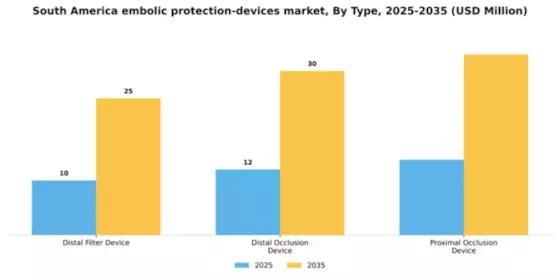
In the South America embolic protection-devices market, the market share distribution among the types shows that the Distal Filter Device holds the largest share, driven by its established efficacy and brand recognition within the medical community. This device is preferred for its reliability in capturing embolic debris, thereby enhancing patient safety during procedures. In comparison, the Proximal Occlusion Device, while currently smaller in market share, is rapidly gaining traction due to advancements in technology and an increase in minimally invasive surgical procedures that favor its use.
The growth trends for these devices indicate a pronounced shift towards innovative solutions that enhance patient outcomes and procedural efficiency. The rising number of cardiovascular interventions combined with increasing investments in healthcare technologies are significant drivers of this segment. Additionally, the growing awareness among healthcare providers regarding the importance of embolic protection devices in minimizing procedural risks contributes to the overall growth, with the Proximal Occlusion Device leading in terms of growth rate and acceptance within surgical practices.
Distal Filter Device (Dominant) vs. Proximal Occlusion Device (Emerging)
The Distal Filter Device is currently the dominant force within the segment, characterized by its robust design and proven track record. Its effectiveness in capturing emboli makes it a preferred choice for medical professionals, ensuring patient safety and efficacy during surgeries. On the other hand, the Proximal Occlusion Device is emerging as a competitive entity within the market. Although it holds a smaller share, its advanced features and suitability for minimally invasive procedures highlight its potential for growth. As healthcare providers seek to adopt more efficient solutions, the Proximal Occlusion Device is increasingly being recognized for its role in reducing procedural complications, thereby capturing interest from both practitioners and patients alike.
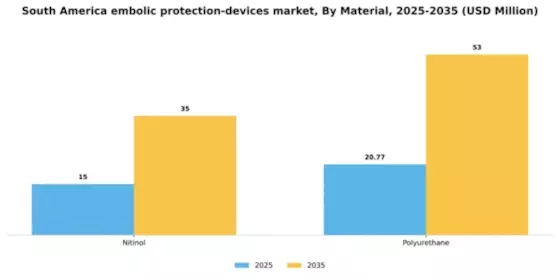
In the South America embolic protection-devices market, Nitinol has established itself as the largest material segment, holding a significant portion of the overall market share. The unique properties of Nitinol, such as its excellent flexibility and shape memory, make it particularly suited for various medical applications, contributing to its dominant position. In contrast, Polyurethane is emerging rapidly, gaining traction among manufacturers due to its versatility and biocompatibility, making it appealing for innovative device designs.
Growth trends indicate a robust trajectory for both segments, driven by an increasing demand for advanced embolic protection devices. Nitinol's established reputation and performance attributes bolster its sustained growth, while Polyurethane's adoption is spurred by technological advancements and a push towards lighter, more effective materials. The burgeoning healthcare sector in South America, coupled with rising procedural volumes, supports the expansion of both material segments, signaling a vibrant market ahead.
Material: Nitinol (Dominant) vs. Polyurethane (Emerging)
Nitinol is recognized as the dominant material in embolic protection devices due to its superior mechanical properties, including flexibility and the ability to return to its original shape after deformation. This characteristic is critical in ensuring effective blood flow protection during interventional procedures. The existing market infrastructure supports Nitinol’s use extensively, as it is already well-accepted among healthcare professionals. Conversely, Polyurethane represents an emerging force, known for its lightweight nature and enhanced biocompatibility. It is increasingly favored in innovative applications where adaptability and patient comfort are paramount. The shift towards minimally invasive procedures amplifies the need for advanced materials like Polyurethane, positioning it as a key player in future developments.
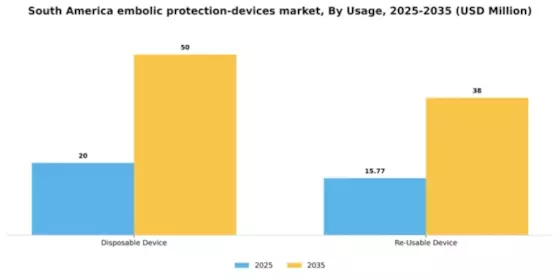
In the South America embolic protection-devices market, the distribution of usage segments reflects a clear preference for disposable devices, which command a significant share due to their convenience and the increasing focus on infection control. This shift in preference has resulted in disposable devices becoming the largest segment, attracting a wide array of end-users including hospitals and surgical centers that prioritize single-use solutions for better patient safety and operational efficiency.
Conversely, re-usable devices are emerging rapidly, with innovative designs and advancements in sterilization methods driving their adoption. These devices are favored for their economic advantages and sustainability, appealing to healthcare institutions looking to reduce costs in the long term. The growing trend towards eco-friendly healthcare practices is also bolstering the growth of the re-usable device segment, making it the fastest-growing category within usage segments in this market.
Device Type: Disposable (Dominant) vs. Re-Usable (Emerging)
Disposable devices are currently positioned as the dominant segment within usage types, primarily due to their convenience and low risk of cross-contamination, making them highly appealing to healthcare providers in South America. These devices are designed for single use, effectively addressing hygiene and safety concerns which are paramount in surgical procedures. On the other hand, re-usable devices represent an emerging segment, gaining traction thanks to advancements in material technology and sterilization processes. Their cost-effectiveness and reduced environmental impact make them attractive alternatives, particularly for established healthcare facilities aiming to balance cost against quality of care. As market dynamics evolve, both segments are expected to coexist, catering to diverse needs within the healthcare landscape.
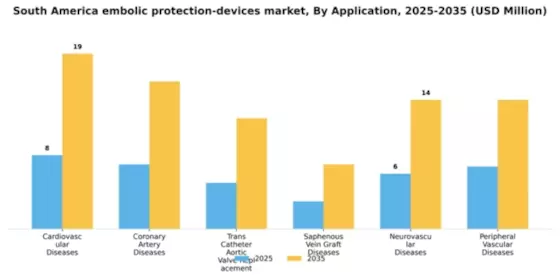
In the South America embolic protection-devices market, the distribution of market share among application segments reveals that cardiovascular diseases hold the largest portion due to the growing prevalence of heart conditions. Coronary artery diseases and saphenous vein graft diseases also contribute significantly, reflecting the focus on enhancing treatment options for these prevalent ailments. Peripheral vascular diseases follow closely, while neurovascular diseases are emerging as a vital segment poised for growth.
The growth trends indicate a rising awareness and better diagnostic capabilities leading to increased demand for embolic protection devices, particularly for neurovascular diseases, which is recognized as the fastest-growing segment. Factors driving this growth include advancements in technology, the increase in minimally invasive procedures, and the aging population that is more susceptible to vascular diseases. The emphasis on innovative solutions to prevent complications during surgeries is further fueling demand across all application segments.
Cardiovascular Diseases (Dominant) vs. Neurovascular Diseases (Emerging)
Cardiovascular diseases are characterized by a high incidence of conditions such as heart attacks and strokes, making them the dominant application segment in the market. This category benefits from significant investment in research and awareness campaigns focusing on early detection and treatment options. Conversely, neurovascular diseases are emerging, driven by advancements in embolic protection technologies and a growing patient population requiring treatment for strokes and other brain-related vascular issues. Both segments show distinct characteristics in terms of treatment approaches and patient management, yet share a common goal of improving patient outcomes and reducing procedural risks.
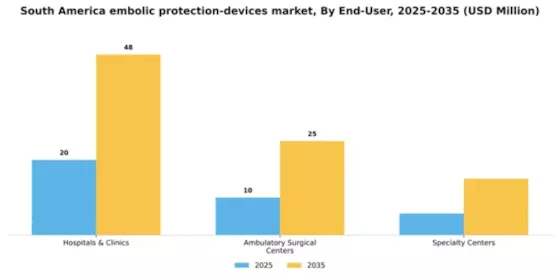
In the embolic protection devices market, Hospitals & Clinics hold the largest market share, significantly surpassing other segments such as Ambulatory Surgical Centers and Specialty Centers. These institutions are primary users of such devices, leveraging them for high-acuity procedures and a range of cardiovascular surgeries, which contributes to their preeminent market standing. Ambulatory Surgical Centers, while currently smaller in share, are gaining traction and expected to contribute to the growing demand for embolic protection devices as outpatient surgeries increase in prevalence.
Growth in this segment is driven by rising surgical procedures and increasing awareness regarding embolic risks among healthcare providers. Technological advancements also play a crucial role, allowing for enhanced device design and efficacy. The shift towards value-based care is prompting investments in embolic protection technologies, particularly in Ambulatory Surgical Centers, which are rapidly expanding their offerings and attracting a larger patient base seeking minimally invasive options.
Hospitals & Clinics (Dominant) vs. Ambulatory Surgical Centers (Emerging)
Hospitals & Clinics remain the dominant players in the embolic protection devices market, characterized by their comprehensive healthcare services and high patient traffic. They are equipped with advanced technology and infrastructure to perform complex surgeries, thus relying heavily on embolic protection devices for improved patient outcomes. In contrast, Ambulatory Surgical Centers are emerging with a focus on cost-effective and efficient care, allowing patients to undergo procedures without prolonged hospital stays. Their growth is attributed to increased adoption of minimally invasive techniques and an expansion of surgical capabilities, making them attractive for patients and insurers alike. The rivalry between these segments underscores a shift in the healthcare landscape, directed towards efficiency and patient satisfaction.
Get more detailed insights about South America Embolic Protection Devices Market Request Free Sample
Brazil holds a significant market share of 15.0% in the embolic protection devices sector, valued at approximately $300 million. Key growth drivers include an increasing prevalence of cardiovascular diseases and a rising geriatric population. Demand trends indicate a shift towards minimally invasive procedures, supported by government initiatives promoting advanced healthcare technologies. Regulatory policies are becoming more favorable, enhancing the market's growth potential. Infrastructure improvements in healthcare facilities further bolster industrial development.
Mexico accounts for 8.5% of the South American embolic protection devices market, valued at around $170 million. The market is driven by increasing healthcare expenditure and a growing awareness of cardiovascular health. Demand is rising for advanced medical devices, supported by government policies aimed at improving healthcare access. The regulatory environment is becoming more streamlined, encouraging foreign investments and innovations in medical technology.
Argentina holds a market share of 6.27%, valued at approximately $120 million in the embolic protection devices market. Key growth drivers include a rising incidence of heart diseases and government initiatives to enhance healthcare infrastructure. Demand for high-quality medical devices is increasing, with a focus on local manufacturing and partnerships with international firms. Regulatory frameworks are evolving to support innovation and improve patient care.
The Rest of South America represents a market share of 6.0%, valued at about $110 million. Growth is driven by varying healthcare needs across countries, with increasing investments in medical technology. Demand trends show a rising interest in embolic protection devices, particularly in urban areas. Regulatory policies differ significantly, impacting market entry for foreign players. Infrastructure development is uneven, affecting overall market dynamics.

The embolic protection-devices market in South America is characterized by a competitive landscape that is increasingly shaped by innovation, strategic partnerships, and regional expansion. Key players such as Medtronic (US), Boston Scientific (US), and Abbott Laboratories (US) are actively pursuing strategies that emphasize technological advancements and market penetration. Medtronic (US), for instance, has focused on enhancing its product portfolio through continuous innovation, which appears to be a critical driver of its competitive edge. Meanwhile, Boston Scientific (US) has been investing in strategic partnerships to bolster its market presence, indicating a trend towards collaborative growth in the sector. These strategies collectively contribute to a dynamic competitive environment, where companies are not only vying for market share but also striving to lead in technological advancements.In terms of business tactics, companies are increasingly localizing manufacturing and optimizing supply chains to enhance operational efficiency. The market structure is moderately fragmented, with several players competing for dominance. This fragmentation allows for a diverse range of products and innovations, yet it also necessitates that companies differentiate themselves through unique value propositions. The collective influence of key players is significant, as their strategies often set the tone for market trends and consumer expectations.
In October Medtronic (US) announced the launch of a new embolic protection device designed to improve patient outcomes during cardiovascular procedures. This strategic move underscores Medtronic's commitment to innovation and its focus on addressing unmet clinical needs. The introduction of this device is likely to enhance its competitive positioning in the market, as it aligns with the growing demand for advanced medical technologies.
In September Boston Scientific (US) entered into a partnership with a local South American firm to expand its distribution network. This collaboration is expected to enhance Boston Scientific's reach and accessibility in the region, potentially increasing its market share. Such strategic alliances are indicative of a broader trend where companies seek to leverage local expertise to navigate regulatory landscapes and consumer preferences more effectively.
In August Abbott Laboratories (US) unveiled a new digital platform aimed at streamlining the integration of its embolic protection devices into clinical workflows. This initiative reflects a growing emphasis on digital transformation within the industry, as companies recognize the importance of technology in enhancing operational efficiency and patient care. Abbott's focus on digital solutions may provide it with a competitive advantage as healthcare systems increasingly adopt technology-driven approaches.
As of November current trends in the embolic protection-devices market are heavily influenced by digitalization, sustainability, and the integration of artificial intelligence (AI). Strategic alliances are becoming more prevalent, as companies recognize the value of collaboration in driving innovation and expanding market reach. Looking ahead, competitive differentiation is likely to evolve, with a shift from price-based competition towards a focus on innovation, technological advancements, and supply chain reliability. This transition suggests that companies that prioritize these aspects will be better positioned to thrive in an increasingly complex and competitive landscape.





Recent developments in the South America Embolic Protection Devices Market have shown significant growth in demand, driven by an increase in cardiovascular diseases and a rising aging population. In February 2023, Medtronic launched its latest embolic protection device targeted specifically at the South American market, focusing on enhancing patient outcomes during cardiac procedures. Meanwhile, Edwards Lifesciences has been expanding its market presence in Brazil, introducing innovative solutions that cater to local healthcare needs.
A notable acquisition occurred in June 2023, when Abbott Laboratories acquired a regional competitor to strengthen its product portfolio in embolic protection devices, a move confirmed by multiple state media outlets.
Additionally, Cook Medical and Terumo Corporation are collaborating on innovative R&D projects to create advanced devices tailored for the unique anatomy of South American patients. Boston Scientific has also seen an upsurge in its market valuation, contributing to a more competitive landscape. Over the past few years, the emphasis on healthcare infrastructure improvements and government initiatives in countries like Brazil and Argentina has bolstered the distribution of embolic protection devices, making them more accessible to healthcare providers and patients alike.
The Embolic Protection Devices Market is projected to grow at an 8.53% CAGR from 2025 to 2035, driven by technological advancements and increasing cardiovascular procedures.
New opportunities lie in:
By 2035, the market is expected to achieve substantial growth and innovation.
| MARKET SIZE 2024 | 35.77(USD Million) |
| MARKET SIZE 2025 | 38.82(USD Million) |
| MARKET SIZE 2035 | 88.0(USD Million) |
| COMPOUND ANNUAL GROWTH RATE (CAGR) | 8.53% (2025 - 2035) |
| REPORT COVERAGE | Revenue Forecast, Competitive Landscape, Growth Factors, and Trends |
| BASE YEAR | 2024 |
| Market Forecast Period | 2025 - 2035 |
| Historical Data | 2019 - 2024 |
| Market Forecast Units | USD Million |
| Key Companies Profiled | Medtronic (US), Boston Scientific (US), Abbott Laboratories (US), Terumo Corporation (JP), Cardinal Health (US), B. Braun Melsungen AG (DE), Edwards Lifesciences Corporation (US), Stryker Corporation (US) |
| Segments Covered | Type, Material, Usage, Application, End-User |
| Key Market Opportunities | Emerging technologies in embolic protection-devices market enhance patient outcomes and drive regional market growth. |
| Key Market Dynamics | Rising demand for minimally invasive procedures drives innovation in embolic protection devices across South America. |
| Countries Covered | Brazil, Mexico, Argentina, Rest of South America |
The projected market valuation for the South America embolic protection-devices market is $88.0 Million by 2035.
The market valuation in 2024 for the South America embolic protection-devices market was $35.77 Million.
The expected CAGR for the South America embolic protection-devices market during the forecast period 2025 - 2035 is 8.53%.
Key players in the South America embolic protection-devices market include Medtronic, Boston Scientific, Abbott Laboratories, Terumo Corporation, Cardinal Health, B. Braun Melsungen AG, Edwards Lifesciences Corporation, and Stryker Corporation.
The main types of embolic protection devices include Distal Filter Devices, Distal Occlusion Devices, and Proximal Occlusion Devices.
The valuation range for Distal Occlusion Devices in 2024 was between $12.0 Million and $30.0 Million.
Common materials used in the production of embolic protection devices include Nitinol and Polyurethane.
The expected market performance for disposable devices is projected to range from $20.0 Million to $50.0 Million.
Applications driving the demand for embolic protection devices include Cardiovascular Diseases, Coronary Artery Diseases, and Neurovascular Diseases.
Significant end-user segments in the South America embolic protection-devices market include Hospitals & Clinics, Ambulatory Surgical Centers, and Specialty Centers.



Kindly complete the form below to receive a free sample of this Report

“This is really good guys. Excellent work on a tight deadline. I will continue to use you going forward and recommend you to others. Nice job”


“Thanks. It’s been a pleasure working with you, please use me as reference with any other Intel employees.”


“Thanks for sending the report it gives us a good global view of the Betaïne market.”


“Thank you, this will be very helpful for OQS.”


“We found the report very insightful! we found your research firm very helpful. I'm sending this email to secure our future business.”


“I am very pleased with how market segments have been defined in a relevant way for my purposes (such as "Portable Freezers & refrigerators" and "last-mile"). In general the report is well structured. Thanks very much for your efforts.”


“I have been reading the first document or the study, ,the Global HVAC and FP market report 2021 till 2026. Must say, good info! I have not gone in depth at all parts, but got a good indication of the data inside!”


“We got the report in time, we really thank you for your support in this process. I also thank to all of your team as they did a great job.”


“The Automotive 48V ECU Components Procurement Intelligence Study” was a complex project, but the Market Research Future (MRFR) team handled it with quality, agility, and customer-centricity. They delivered all requested data on time and within the agreed scope. The team, including Shubhendra Anand and Rahul Gotadki, was always readily available to clarify questions and swiftly implement necessary adjustments, driving the project to a successful conclusion within a very demanding timeframe.
I would also like to specifically commend Akshay Agarwal for his responsiveness and support at every stage—from our initial inquiry on May 6th through to final delivery on June 18th. His dedication made the entire process seamless.”



