Specialty Medical Chairs Market

Key Players: Stryker Corporation, Hill-Rom / Baxter International, Midmark Corporation, Fresenius Medical Care, Steris Corporation, Invacare Corporation, Merivaara Corporation, Champion Manufacturing

Specialty Medical Chairs Market

Specialty Medical Chairs Market Research Report By Application (Orthopedic, Dental, Dialysis, Psychiatric, Physical Therapy), By Chair Type (Examination Chairs, Procedure Chairs, Reclining Chairs, Wheelchair Accessible Chairs), By Material (Plastic, Metal, Wood, Vinyl, Foam), By End User (Hospitals, Clinics, Home Care, Rehabilitation Centers) and By Regional (North America, Europe, South America, Asia Pacific, Middle East and Africa) - Growth & Industry Forecast 2025 To 2035
ID: MRFR/MED/6151-HCR
160 Pages
Vikita Thakur, Rahul Gotadki
Last Updated: June 22, 2026

Specialty Medical Chairs Market Summary

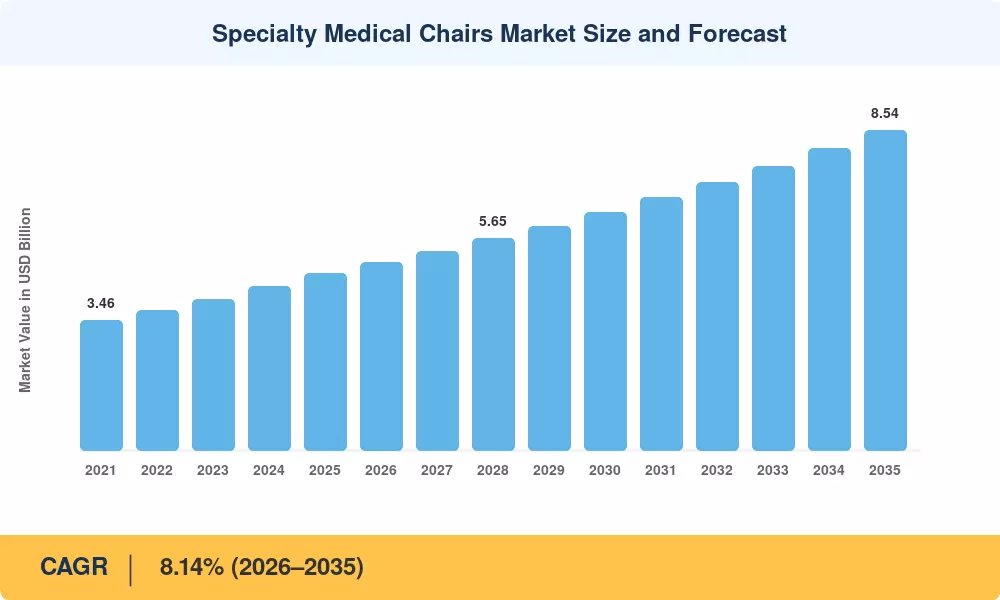
The Global Specialty Medical Chairs Market size was valued at USD 4.73 Billion in 2025, and the market is projected to grow from USD 5.04 Billion in 2026 to USD 8.54 Billion by 2035, registering a CAGR of 6.04% during the forecast period 2026–2035. Two converging forces are accelerating this expansion: aging populations requiring prolonged outpatient treatments and a decisive policy push by payers and regulators toward ambulatory-first care delivery models. The U.S. Centers for Medicare & Medicaid Services (CMS) alone shifted an estimated USD 11.2 billion in procedural reimbursement from inpatient to outpatient settings between 2022 and 2025, directly increasing demand for purpose-built seating across day-surgery, infusion, and dialysis facilities [2].

The Specialty Medical Chairs Market is experiencing a technology change with fully electric programmable platforms embedded with IoT sensors replacing legacy hydraulic and manual-adjust units. These next-gen chairs automate Trendelenburg positioning, height adjustment and tilt sequencing, decreasing room turnover times by as much as 22% and reducing caregiver musculoskeletal injuries that account for about a third of nursing lost-time incidents [3]. The Joint Commission published pressure-injury criteria in 2024 that are forcing hospitals to replace old inventory with sensor-equipped devices that can digitally capture patient repositioning events [4].


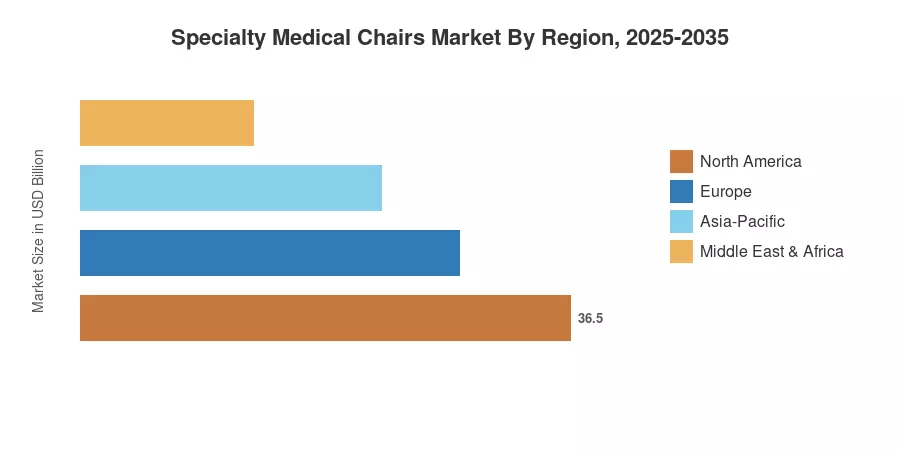
The Specialty Medical Chairs Market in North America holds around 39.2% of the worldwide market share, owing to high per capita healthcare expenditure and tight ergonomic compliance regulations. Asia-Pacific is the fastest expanding market at 8.14% CAGR driven by hospital capacity expansion in India, China and ASEAN countries. Next up is Europe, with EU Medical Device Regulation (MDR) enhancements that demand fleet-wide equipment renewals. The next decade will be rewarding for manufacturers that build cybersecurity compliance, flexible upgrade paths and predictive maintenance into their product strategy.


Key Report Takeaways

• By Product Type

  • Examination chairs accounted for 40.7% of the Specialty Medical Chairs Market revenue in 2025, led by primary-care and diagnostic facility procurement cycles.
  • Treatment chairs are expanding at a 7.84% CAGR through 2035, propelled by rising outpatient chemotherapy and infusion volumes.

• By End User

  • Hospitals represented 39.8% of total spending in 2025, anchored by surgical suite and emergency department replacement programs.
  • Ambulatory surgery and day-care centers are the fastest-growing end-user segment at a 9.95% CAGR, reflecting reimbursement migration.

• By Technology

  • Fully electric programmable models captured 41.4% of the Specialty Medical Chairs Market technology spend in 2025, supported by workforce safety mandates.

• By Geography

  • North America led the Specialty Medical Chairs Market with a 39.2% share in 2025.
  • Asia-Pacific is advancing at an 8.14% CAGR, the fastest among all regions through 2035.


Specialty Medical Chairs Market Size and Forecast (2021–2035)

Market Research Future’s sizing methodology combines a bottom-up revenue model based on manufacturer shipments and facility procurement databases with a top-down validation against healthcare capital expenditure benchmarks released by the WHO and OECD through a triangulation approach. Historical estimates (2021–2024) are based on audited company filings and customs trade data, while projected forecasts (2026–2035) take into account population aging indices, reimbursement policy trajectories and planned hospital development pipelines[5].
Specialty Medical Chairs Market Size and Forecast
Our Impact
Enabled $4.3B Revenue Impact for Fortune 500 and Leading Multinationals
Partnering with 2000+ Global Organizations Each Year
30K+ Citations by Top-Tier Firms in the Industry

Driver Impact Analysis

Driver ~% Impact on CAGR Geographic Relevance Impact Timeline
Aging population & chronic disease burden ~18% Global Long-term (≥4 yr)
Outpatient reimbursement migration ~16% North America, Europe Short-term (≤2 yr)
Electric/programmable chair adoption ~14% Global Medium-term (2–4 yr)
Caregiver safety & ergonomic mandates ~12% North America, Europe Short-term (≤2 yr)
Healthcare infrastructure investment in emerging economies ~10% Asia-Pacific, MEA Long-term (≥4 yr)
Cybersecurity & IoT compliance requirements ~8% North America, Europe Medium-term (2–4 yr)
Ambulatory surgical center proliferation ~7% Global Medium-term (2–4 yr)


Aging Population and Chronic Disease Burden

The WHO projects that adults aged 60 and over will reach 2.1 billion globally by 2050, up from 1.4 billion in 2025 [10]. Chronic conditions — diabetes, cancer, renal failure — require repeated outpatient sessions in dialysis units, infusion bays, and chemotherapy suites where specialty seating is foundational equipment. In the United States alone, the number of Medicare beneficiaries receiving outpatient infusion services grew 14% between 2021 and 2024, translating directly into procurement orders for programmable treatment chairs [2].

Outpatient Reimbursement Migration

CMS's 2024 Outpatient Prospective Payment System (OPPS) rule expanded site-neutral payment policies to 68 additional procedure codes, incentivizing health systems to shift surgical and therapeutic volumes out of hospital inpatient departments [2]. This structural realignment creates a capital-equipment multiplier: every new ambulatory surgery center requires 8–15 specialty chairs on average, compared with 3–5 chairs per inpatient surgical suite that it replaces. The Specialty Medical Chairs Market benefits directly as facilities scale outpatient capacity.

Caregiver Safety and Ergonomic Regulations

OSHA estimates that musculoskeletal disorders account for 33% of all nursing-related workplace injuries, costing the US healthcare system USD 7.4 billion annually in workers' compensation and lost productivity [3]. Electric chairs with programmable height and Trendelenburg positioning eliminate manual patient-lifting events that trigger the majority of these injuries. Hospitals facing elevated insurance premiums are accelerating replacement cycles to achieve compliance with updated OSHA ergonomic guidelines and Joint Commission safe-patient-handling standards [4].

IoT Integration and Cybersecurity Mandates

The FDA's 2023 cybersecurity guidance for connected medical devices requires premarket submissions to include a software bill of materials (SBOM) and demonstrate patch-management capability [7]. Specialty chairs with embedded pressure sensors and Wi-Fi connectivity now fall within this regulatory scope. Manufacturers offering over-the-air firmware updates and modular sensor upgrade pathways are winning procurement evaluations, particularly in US hospital systems where IT governance committees hold veto power over capital equipment purchases.


Restraints Impact Analysis

Restraint ~% Impact on CAGR Geographic Relevance Impact Timeline
High upfront capital costs ~-12% Emerging markets, small clinics Long-term (≥4 yr)
Electronic component supply-chain constraints ~-8% Global Short-term (≤2 yr)
Reimbursement complexity & coverage gaps ~-7% North America, Asia-Pacific Medium-term (2–4 yr)
Cybersecurity compliance burden ~-5% North America, Europe Medium-term (2–4 yr)
Extended replacement cycles in budget-constrained facilities ~-4% South America, MEA Long-term (≥4 yr)


High Upfront Capital Costs

A fully electric programmable examination chair with IoT sensors can cost USD 8,000–25,000 per unit — three to five times the price of a basic hydraulic model [11]. Small and mid-size clinics in developing economies often cannot justify this outlay when operating on thin margins and limited access to equipment financing. The Specialty Medical Chairs Market faces a price sensitivity ceiling that concentrates premium product adoption in high-income healthcare systems and slows penetration in regions where manual chairs remain functionally adequate.

Electronic Component Supply-Chain Constraints

Semiconductor shortages that peaked in 2022–2023 have eased but continue to create lead-time volatility for microcontrollers, motor drivers, and sensor modules critical to electric chair manufacturing. Tier-2 and tier-3 medical device OEMs lack the purchasing leverage to secure allocation guarantees from chipmakers, resulting in order backlogs that can stretch delivery timelines to 16–20 weeks versus the historical 6–8-week norm. This supply-side friction caps near-term unit growth in the Specialty Medical Chairs Market despite strong underlying demand.


Specialty Medical Chairs Market Opportunities

Ambulatory Surgery Center Build-Out

The US ASC market continues to grow, with over 6,000 Medicare-certified centers currently operational. The ongoing expansion of these facilities provides a predictable, long-term pipeline for specialized treatment seating. Manufacturers that emphasize ergonomic efficiency, modularity, and rapid-cleaning surfaces are best positioned to capture share in this expanding segment.


AI-Enabled Predictive Positioning and Maintenance

Government-led health infrastructure programs are driving significant procurement opportunities. In India, the Ayushman Bharat Digital Mission continues to scale, with over 900 million ABHA health accounts created as of 2026, facilitating a more connected and modernized primary care network. Similarly, China’s ongoing healthcare infrastructure upgrades create massive procurement opportunities for modernized examination equipment in county-level hospitals.


Emerging Market Healthcare Expansion

The global obesity epidemic continues to reshape equipment requirements. With the World Obesity Federation projecting that over 1.5 billion adults will live with obesity by 2035, demand for bariatric-rated seating—capable of supporting higher weight capacities (e.g., 450+ kg) and providing wider dimensions—is becoming a standard requirement for comprehensive healthcare facilities rather than a niche request.


Chair-as-a-Service and Leasing Models

Healthcare facilities under capital budget pressure are increasingly receptive to operating-lease and per-procedure pricing models that convert chair procurement from capex to opex [11]. Equipment-as-a-service arrangements bundled with preventive maintenance and firmware updates provide manufacturers with predictable revenue, improve customer retention, and lower adoption barriers for smaller clinics. The Specialty Medical Chairs Market stands to benefit from this business-model shift as leasing penetration, currently below 12% of new placements, grows toward 25% by 2030.

Bariatric and Specialty Population Configurations

Rising obesity prevalence — the WHO projects 1.3 billion adults will be obese by 2035 — is driving demand for reinforced chairs rated to 450 kg and above with wider seat dimensions and enhanced positioning actuators [15]. Bariatric-configured specialty chairs command 35–45% price premiums over standard models, offering manufacturers margin expansion while addressing a clinically underserved segment of the Specialty Medical Chairs Market.


Specialty Medical Chairs Market Future Outlook

AI-Driven Autonomous Positioning

The integration of machine learning into specialty medical seating is an emerging area of clinical innovation. Future systems are expected to utilize sensor-based data to assist in patient positioning, aiming to streamline clinical workflows and improve ergonomic outcomes for both patients and clinicians. Manufacturers are increasingly prioritizing software-defined features that can integrate with existing Electronic Health Record (EHR) systems to optimize preparation time and enhance procedural consistency.


Platform Economics and Recurring Revenue

Manufacturers are evolving their business models from pure hardware sales toward connected platform ecosystems. By leveraging IoT-enabled chairs as endpoints in a clinical network, companies are exploring recurring revenue opportunities, such as predictive maintenance contracts and data-driven utilization analytics. This shift reflects a broader industry trend toward "Equipment-as-a-Service," aimed at increasing equipment uptime and deepening long-term customer engagement.


Sustainability and Circular-Economy Mandates

The EU's proposed Ecodesign for Sustainable Products Regulation, expected to cover medical furniture by 2028, will require manufacturers to publish product environmental footprints and design for disassembly and material recovery [22]. Circular-economy strategies — including refurbishment programs, modular component replacement, and recycled-material casings — will become procurement evaluation criteria. Companies that establish certified take-back and remanufacturing programs will secure preference in public-tender scoring across European markets.

Decentralized Care and Home-Health Expansion

The pandemic-era acceleration of hospital-at-home programs has created an emerging adjacent segment for the Specialty Medical Chairs Market. CMS's Acute Hospital Care at Home waiver, extended through 2025 with permanent authorization under legislative review, enables complex infusion and monitoring procedures in residential settings [2]. Compact, patient-operated specialty chairs designed for home environments represent a nascent but fast-growing product category that could account for 8–10% of total market revenue by 2035.


Specialty Medical Chairs Market Segmentation

By Product Type

Segment Key Metric Primary Demand Driver
Examination Chairs 40.7% share (2025) Primary-care and diagnostic facility procurement
Treatment Chairs 7.84% CAGR (2026–2035) Outpatient infusion and chemotherapy growth [2]
Dental Chairs USD 0.73 billion (2025) Dental practice modernization cycles
Dialysis Chairs 7.12% CAGR (2026–2035) ESRD prevalence and dialysis center expansion [10]
Other Specialty Chairs USD 0.42 billion (2025) Ophthalmic, podiatric, and ENT applications


Examination chairs remain the largest product category in the Specialty Medical Chairs Market, deployed across virtually every clinical environment from general practice offices to hospital emergency departments. Treatment chairs are gaining momentum as the fastest-growing segment, driven by the structural shift of infusion therapy, minor surgical procedures, and chemotherapy administration from inpatient to ambulatory settings. Healthcare facilities are procuring programmable treatment chairs rated for 6–8-hour patient sessions, equipped with articulating armrests and integrated IV pole mounts.

By End User

Segment Key Metric Primary Demand Driver
Hospitals 39.8% share (2025) Fleet replacement under safety standards [4]
Ambulatory Surgery & Day-Care Centers 9.95% CAGR (2026–2035) CMS reimbursement migration [2]
Clinics & Dental Practices USD 0.88 billion (2025) Private-practice equipment refresh
Home Healthcare 8.42% CAGR (2026–2035) Hospital-at-home program expansion [2]
Others USD 0.21 billion (2025) Research institutions, military medical


Hospitals account for the largest share of the Specialty Medical Chairs Market by end user, driven by ongoing capital replacement programs across emergency departments, surgical preparation areas, and outpatient treatment bays. Ambulatory surgery and day-care centers represent the fastest-growing end user, as reimbursement parity policies make outpatient delivery economically advantageous for a widening range of procedures. The home healthcare segment is emerging as a notable growth vector, with compact specialty chairs designed for residential infusion therapy gaining traction.

By Technology

Segment Key Metric Primary Demand Driver
Fully Electric Programmable 41.4% share (2025) Ergonomic mandates, IoT integration [3][7]
Semi-Electric 5.76% CAGR (2026–2035) Mid-tier facility adoption
Hydraulic USD 0.82 billion (2025) Cost-sensitive emerging-market demand [11]
Manual 3.94% CAGR (2026–2035) Basic examination settings


Fully electric programmable chairs dominate the technology landscape in the Specialty Medical Chairs Market, commanding premium pricing justified by measurable reductions in caregiver injury rates and room turnover times. These models integrate pressure-mapping sensors, motorized positioning across multiple axes, and connectivity modules for EHR data exchange. Semi-electric models — offering electric back and height adjustment with manual leg positioning — occupy a growing mid-market niche, particularly appealing to multi-provider clinics balancing functionality against budget constraints.


Regional Market Share Analysis

Region Key Metric Primary Investment Themes
North America 39.2% share (2025) ASC proliferation, Joint Commission compliance
Europe USD 1.32 billion (2025) EU MDR upgrades, ergonomic workplace directives
Asia-Pacific 8.14% CAGR (2026–2035) Hospital capacity build-out, government health missions
South America 5.82% CAGR (2026–2035) Public hospital modernization, SUS equipment refresh
Middle East & Africa USD 0.32 billion (2025) Medical tourism hubs, Vision 2030 programs
Total USD 4.73 billion (2025)

The Specialty Medical Chairs Market exhibits a regionally stratified demand structure. North America and Europe account for the majority of revenue, driven by mature healthcare systems with established replacement cycles and strict regulatory standards. Asia-Pacific represents the primary growth frontier, supported by hospital construction programs and expanding insurance coverage. South America and the Middle East & Africa remain smaller but present accelerating pockets of demand tied to public-health infrastructure investment.


North America

Country Key Metric Key Driver
United States 78.4% of regional share CMS outpatient expansion, ASC growth [2]
Canada 7.16% CAGR Provincial hospital renovation funding [16]
Mexico USD 0.09 billion (2025) IMSS facility modernization [17]


North America's dominance in the Specialty Medical Chairs Market reflects the region's outsized healthcare capital expenditure, which exceeded USD 320 billion in 2024 [2]. The US drives over three-quarters of regional revenue, with purchasing concentrated in health system GPO contracts that standardize on electric programmable platforms. Canada's federal infrastructure bank allocated CAD 2.1 billion to health facility upgrades in 2024, while Mexico's IMSS system is mid-cycle through a 5-year equipment modernization program targeting 1,400 primary-care clinics [16][17].

Europe

Country Key Metric Key Driver
Germany 24.2% of regional share Krankenhaus reform & DRG alignment [6]
United Kingdom 6.48% CAGR NHS New Hospitals Program [18]
France USD 0.17 billion (2025) Ségur de la Santé digital health investments [6]
Italy 5.92% CAGR PNRR healthcare infrastructure funding [19]
Spain USD 0.10 billion (2025) Regional health authority procurement [6]
Nordic Countries 6.21% CAGR Ergonomic workplace mandates [3]
Russia USD 0.06 billion (2025) Federal healthcare modernization [8]
Rest of Europe 5.68% CAGR EU MDR compliance-driven replacement [6]


The EU Medical Device Regulation, fully enforced since May 2024, compels healthcare facilities to verify that all in-service equipment carries a valid CE marking under the new classification framework [6]. This regulatory reset is triggering fleet-wide replacement cycles across Germany, France, and the Nordics, where chairs older than 10 years frequently lack the documentation required for MDR re-certification. The UK's New Hospitals Program targets 40 new facilities by 2030, each representing a greenfield procurement event for the Specialty Medical Chairs Market [18].

Asia-Pacific

Country Key Metric Key Driver
China 32.6% of regional share 14th Five-Year Plan hospital upgrades [8]
India 9.24% CAGR Ayushman Bharat health center rollout [14]
Japan USD 0.14 billion (2025) Super-aging population, geriatric care [10]
South Korea 7.86% CAGR National Health Insurance expansion [8]
ASEAN USD 0.08 billion (2025) Medical tourism facility investment
Rest of Asia-Pacific 7.42% CAGR Rural health infrastructure programs [14]


Asia-Pacific is the fastest-growing region in the Specialty Medical Chairs Market, driven by government-funded hospital construction at an unprecedented scale. China plans to add 14,000 county-level hospital beds by 2027 under its 14th Five-Year Plan, while India's target of 150,000 health and wellness centers by 2030 represents the largest single-country primary-care buildout globally [8][14]. Japan's geriatric-care sector, serving a population where 30% of citizens are over 65, creates steady demand for ergonomic examination and dialysis chairs designed for elderly patients [10].

South America

Country Key Metric Key Driver
Brazil 56.8% of regional share SUS public hospital equipment replacement [17]
Argentina 5.54% CAGR Provincial health system upgrades [17]
Rest of South America USD 0.04 billion (2025) IDB-funded facility programs [17]


Brazil's Unified Health System (SUS) serves 160 million citizens and operates over 6,500 public hospitals where examination and treatment chairs average 12–15 years of service life [17]. A World Bank-supported modernization initiative launched in 2023 channels USD 1.8 billion toward primary-care equipment replacement through 2028, positioning Brazil as the key growth node for the Specialty Medical Chairs Market in South America.

Middle East & Africa

Country Key Metric Key Driver
Saudi Arabia 34.4% of regional share Vision 2030 healthcare city projects
UAE 7.62% CAGR Medical tourism and JCI accreditation
South Africa USD 0.04 billion (2025) NHI pilot program procurement [21]
Egypt 6.48% CAGR Universal health insurance rollout [21]
Rest of MEA USD 0.06 billion (2025) AfDB health infrastructure grants [21]


Saudi Arabia's Vision 2030 includes five medical cities and over 20 new hospitals, each purpose-built with modern clinical infrastructure. The UAE leverages JCI accreditation mandates to drive equipment standardization across private hospital groups competing for international patient volumes. South Africa's National Health Insurance pilot, launched in 2024, is introducing standardized equipment lists for 3,500 public clinics — a significant procurement pipeline for the Specialty Medical Chairs Market [21].


Specialty Medical Chairs Market By Region, 2025-2035

Competitive Benchmarking

The Specialty Medical Chairs Market is moderately concentrated, with the top 5 manufacturers accounting for an estimated share of 38-44% of the market and an HHI of 850-1,100, indicating a competitive yet structurally fragmented industry. Differentiation techniques are based on three axes: programmable positioning technology, IoT sensor integration and service contract ecosystems. The smaller OEM's have a niche in regional segments with specific form factors like bariatric, pediatric or dentistry. At the same time, the global companies use GPO ties and many product offerings to win enterprise-level contracts.

Company Est. Revenue Share Range Key Offerings for Specialty Medical Chairs Market Strategic Positioning
Stryker Corporation ~8–12% Surgical chairs, powered procedure tables Premium positioning, hospital GPO partnerships
Hill-Rom / Baxter International ~7–10% Treatment chairs, smart bed ecosystem Connected-care platform integration
Midmark Corporation ~5–8% Examination chairs, dental operatories Mid-market leader, primary-care focus
Fresenius Medical Care ~4–7% Dialysis chairs, renal care seating Vertical integration with dialysis services
Steris Corporation ~4–6% Procedural chairs, surgical support Infection-prevention design leadership
Invacare Corporation ~3–5% Clinical recliners, rehabilitation seating Post-acute and long-term care specialization
Merivaara Corporation ~3–5% Examination chairs, surgical tables Nordic ergonomic design, EU MDR compliance
Champion Manufacturing ~2–4% Treatment recliners, infusion chairs US ambulatory care center penetration
Medical Technology Industries ~2–4% Podiatric and ENT chairs Specialty-niche engineering
Promotal (Groupe Médipréma) ~2–3% Examination and gynecology chairs European public-tender positioning


Recent News & Developments


  • Midmark Corporation (October 2024): Midmark announced in 2024 that its 626 Barrier-Free Examination Chair meets updated US Access Board standards for accessible medical equipment.


  • US FDA (April 2024): Published updated cybersecurity guidance extending SBOM requirements to connected clinical furniture, including specialty chairs with wireless sensor modules [7].
  • Joint Commission (January 2024): Finalized revised pressure-injury prevention standards requiring documented repositioning events for patients seated more than two hours, driving demand for sensor-equipped chairs [4].


Specialty Medical Chairs Market Report Scope

Parameter Detail
Market Scope Specialty Medical Chairs Market — global coverage
Study Period 2021–2035
CAGR Period 2026–2035
Market Size (2025) USD 4.73 billion
Market Size (2035) USD 8.54 billion
CAGR 6.04%
Fastest Growing Segment Ambulatory Surgery & Day-Care Centers (by end user); Treatment Chairs (by product type)
Companies Profiled 10 (Stryker, Hill-Rom/Baxter, Midmark, Fresenius, Steris, Invacare, Merivaara, Champion, MTI, Promotal)
Valuation Currency USD billion


FAQs

How do procurement cycles differ between public and private hospitals for specialty chair purchases?

Public hospitals typically operate on 3–5-year capital equipment budgets aligned with fiscal cycles, requiring competitive tendering. Private facilities purchase on shorter replacement triggers driven by patient-experience scores and accreditation timelines [4].

What cybersecurity certifications should buyers verify before purchasing IoT-enabled specialty chairs?

Buyers should confirm FDA SBOM compliance, IEC 62443 industrial cybersecurity certification, and documented patch-management capability. These ensure firmware vulnerability response within mandated disclosure windows [7].

How does chair weight capacity influence purchasing decisions in the Specialty Medical Chairs Market?

Standard chairs rated to 180 kg cover most patient populations, but bariatric models rated to 320–450 kg command 35–45% price premiums. Facilities with high bariatric census rates increasingly standardize on higher-capacity platforms [15].

What total cost of ownership factors beyond purchase price affect the Specialty Medical Chairs Market?

Maintenance contracts, upholstery replacement, actuator servicing, and software subscription fees can add 30–40% over a chair's 8–10-year service life. Leasing models increasingly bundle these costs [11].

How do infection-control requirements influence specialty chair material selection?

Antimicrobial vinyl and seamless upholstery joints are now standard specifications in acute-care settings. Chairs must withstand hospital-grade disinfectants without material degradation across thousands of cleaning cycles [4].

What role do group purchasing organizations play in the Specialty Medical Chairs Market?

GPOs negotiate volume pricing for 70–80% of US hospital equipment purchases, consolidating demand and standardizing product specifications. Manufacturers outside GPO contracts face significant market access barriers [2].

How are modular upgrade pathways changing replacement cycle economics in the Specialty Medical Chairs Market?

Modular designs allow motor, sensor, and upholstery replacements without full chair disposal, extending service life by 3–5 years. This reduces lifecycle cost by an estimated 25% versus full-unit replacement [11].    
Author
Author
Author Profile
Vikita Thakur LinkedIn
Senior Research Analyst
She holds an experience of about 5+ years in market research and business consulting projects for sectors such as life sciences, medical devices, and healthcare IT. She possesses a robust background in data analysis, market estimation, competitive intelligence, pipeline analysis market trend identification, and consumer behavior insights. Her expertise lies in technical Sales support, client interaction and project management, designing and implementing market research studies, conducting competitive analysis, and synthesizing complex data into actionable recommendations that drive business growth.
Co-Author
Co-Author Profile
Rahul Gotadki LinkedIn
Research Manager
He holds an experience of about 9+ years in Market Research and Business Consulting, working under the spectrum of Life Sciences and Healthcare domains. Rahul conceptualizes and implements a scalable business strategy and provides strategic leadership to the clients. His expertise lies in market estimation, competitive intelligence, pipeline analysis, customer assessment, etc.

Research Approach


Secondary Research

The secondary research process involved comprehensive analysis of regulatory databases, healthcare infrastructure publications, medical device standards, and authoritative healthcare organizations. Key sources included the US Food & Drug Administration (FDA) 510(k) Premarket Notification Database and Medical Device Reporting (MDR), European Commission Medical Device Regulation (EU MDR 2017/745) and notified body certifications, Centers for Medicare & Medicaid Services (CMS) HCPCS codes and reimbursement databases, Centers for Disease Control and Prevention (CDC) National Health Statistics Reports on healthcare facility capacity, World Health Organization (WHO) Medical Device Information System, ISO (International Organization for Standardization) standards for medical furniture (ISO 13485, ISO 14971), ECRI Institute Health Devices Database, American Hospital Association (AHA) Annual Survey Database, American Dental Association (ADA) Survey Center data, American Physical Therapy Association (APTA) practice profile surveys, National Kidney Foundation (NKF) dialysis facility reports, National Institutes of Health (NIH) rehabilitation engineering databases, NHS England Medical Devices and Equipment listings, Eurostat Healthcare Database, and national health ministry procurement reports from key markets. These sources were used to collect regulatory approval data, hospital bed-to-chair ratios, facility accreditation standards, reimbursement coding, patient demographic trends, and market landscape analysis for examination chairs, procedure chairs, dialysis chairs, and rehabilitation seating technologies.


Primary Research

Qualitative and quantitative insights were obtained by interviewing supply-side and demand-side stakeholders during the primary research process. From medical chair manufacturers, mobility equipment OEMs, and healthcare furniture distributors, supply-side sources comprised CEOs, VPs of Product Development, regulatory affairs chiefs, and commercial directors. Hospital facility managers, clinic procurement directors, dialysis center medical directors, orthopedic department leaders, dental practitioners, home care equipment coordinators, and rehabilitation center administrators comprised demand-side sources. Market segmentation was validated, product pipeline timelines were confirmed, and insights regarding facility adoption patterns, GPO (Group Purchasing Organization) contracting dynamics, and reimbursement feasibility were obtained through primary research.

Primary Respondent Breakdown:

• By Designation: C-level Primaries (32%), Director Level (30%), Others (38%)

• By Region: North America (32%), Europe (30%), Asia-Pacific (28%), Rest of World (10%)


Market Size Estimation

Global market valuation was derived through revenue mapping and unit volume analysis. The methodology included:

• Identification of over 40 prominent manufacturers in North America, Europe, Asia-Pacific, and Latin America who specialize in medical seating and rehabilitation equipment

• Product mapping across examination chairs, procedure chairs, dialysis chairs, orthopedic chairs, and psychiatric chairs by material composition (plastic, metal, foam, vinyl)

• Analysis of reported and modeled annual revenues specific to specialty medical chair portfolios and replacement cycles

• Coverage of manufacturers representing 65-70% of global market share in 2024, including Invacare, Hill-Rom, Stryker, Medline, and Arjo

• Extrapolation using bottom-up (unit volume × Average Selling Price by country/setting) and top-down (manufacturer revenue validation and distributor markup analysis) approaches to derive segment-specific valuations across hospital, clinic, and home care channels

Download Free Sample

Kindly complete the form below to receive a free sample of this Report

Download PDF ×

We do not share your information with anyone. However, we may send you emails based on your report interest from time to time. You may contact us at any time to opt-out.
















