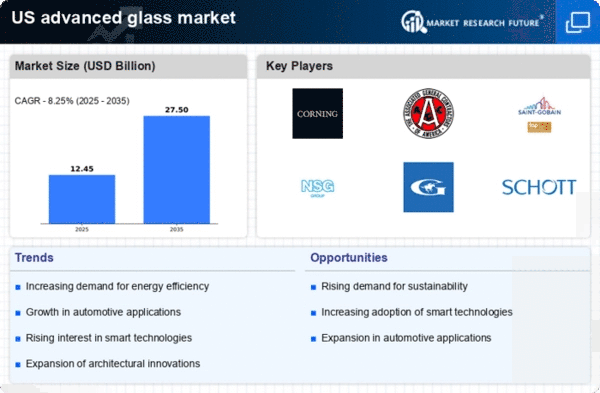
The advanced glass market is characterized by a dynamic competitive landscape, driven by innovation, sustainability, and technological advancements. Key players such as Corning Inc (US), AGC Inc (JP), and Guardian Glass (US) are at the forefront, each adopting distinct strategies to enhance their market positioning. Corning Inc (US) focuses on cutting-edge research and development, particularly in specialty glass applications, while AGC Inc (JP) emphasizes global expansion and diversification of its product offerings. Guardian Glass (US) is increasingly investing in sustainable manufacturing processes, which aligns with the growing demand for eco-friendly materials. Collectively, these strategies contribute to a competitive environment that is both collaborative and competitive, as companies seek to leverage their strengths to capture market share.In terms of business tactics, companies are increasingly localizing manufacturing to reduce lead times and optimize supply chains. This approach not only enhances operational efficiency but also allows for greater responsiveness to regional market demands. The competitive structure of the advanced glass market appears moderately fragmented, with several key players exerting influence while also facing competition from emerging firms. The collective actions of these major companies shape the market dynamics, fostering an environment where innovation and strategic partnerships are paramount.
In October Corning Inc (US) announced a significant investment in a new manufacturing facility dedicated to advanced display glass technologies. This move is expected to bolster their production capabilities and meet the rising demand for high-performance displays in consumer electronics. The strategic importance of this investment lies in its potential to enhance Corning's competitive edge in a rapidly evolving market, positioning the company as a leader in display technology.
In September AGC Inc (JP) launched a new line of energy-efficient glass products aimed at the architectural sector. This initiative reflects AGC's commitment to sustainability and innovation, catering to the increasing demand for energy-saving solutions in building materials. The introduction of these products is likely to strengthen AGC's market presence and appeal to environmentally conscious consumers and businesses alike.
In August Guardian Glass (US) entered into a strategic partnership with a leading technology firm to develop smart glass solutions that integrate AI capabilities. This collaboration is poised to revolutionize the way glass products are utilized in smart buildings, enhancing energy efficiency and user experience. The strategic significance of this partnership lies in its potential to position Guardian Glass at the forefront of the smart glass market, aligning with current trends towards digitalization and intelligent building solutions.
As of November the advanced glass market is witnessing trends that emphasize digitalization, sustainability, and the integration of AI technologies. Strategic alliances are increasingly shaping the competitive landscape, enabling companies to pool resources and expertise to drive innovation. Looking ahead, it appears that competitive differentiation will evolve from traditional price-based competition to a focus on technological advancements, innovative solutions, and reliable supply chains. This shift underscores the importance of adaptability and forward-thinking strategies in maintaining a competitive edge in the advanced glass market.