Rising Awareness of Heart Health
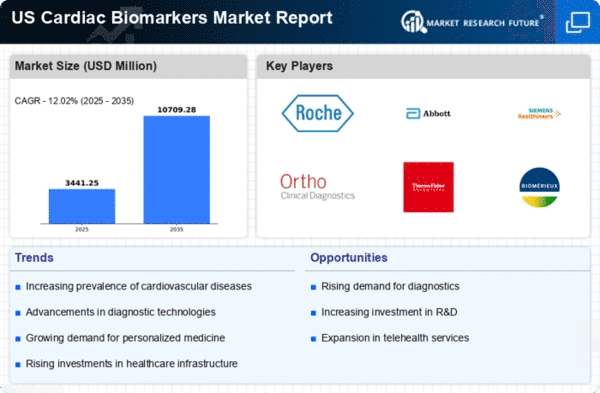
Public awareness campaigns focusing on heart health are contributing to the growth of the cardiac biomarkers market. As individuals become more informed about the risks associated with cardiovascular diseases, there is a heightened demand for preventive screening and diagnostic testing. Educational initiatives by health organizations are encouraging people to seek regular check-ups and screenings, which in turn drives the need for cardiac biomarkers. The cardiac biomarkers market is likely to see increased utilization of these tests as patients proactively manage their heart health. This trend not only supports early detection but also promotes a culture of preventive healthcare, ultimately leading to improved health outcomes and reduced healthcare costs.
Advancements in Biomarker Research
Ongoing research and development in the field of cardiac biomarkers are propelling the market forward. Innovations in biomarker discovery, including the identification of novel proteins and genetic markers, are enhancing diagnostic accuracy and expanding the range of available tests. The cardiac biomarkers market benefits from these advancements, as they lead to the development of more sensitive and specific assays. For instance, the introduction of high-sensitivity troponin tests has revolutionized the diagnosis of myocardial infarction, allowing for earlier detection and intervention. As research continues to unveil new biomarkers, the market is expected to experience substantial growth, with an increasing number of diagnostic products entering the market, thereby improving patient care and outcomes.
Growing Demand for Point-of-Care Testing
The shift towards point-of-care testing (POCT) is significantly influencing the cardiac biomarkers market. Healthcare providers are increasingly adopting POCT due to its ability to deliver rapid results, which is crucial in emergency settings. This trend is particularly relevant in the context of cardiac care, where timely diagnosis can be life-saving. The cardiac biomarkers market is witnessing a surge in the development of portable and user-friendly testing devices that can be utilized in various settings, including hospitals, clinics, and even at home. The convenience and efficiency of POCT are likely to drive market growth, as patients and providers alike seek solutions that enhance the speed and accessibility of cardiac diagnostics.
Rising Incidence of Cardiovascular Diseases
The increasing prevalence of cardiovascular diseases in the US is a primary driver for the cardiac biomarkers market. According to the American Heart Association, cardiovascular diseases account for approximately 697,000 deaths annually, representing about 1 in every 5 deaths. This alarming statistic underscores the urgent need for effective diagnostic tools, including cardiac biomarkers, to facilitate early detection and management of heart conditions. As healthcare providers seek to improve patient outcomes, the demand for innovative biomarker tests is likely to rise. The cardiac biomarkers market is thus positioned for growth, as these tests enable clinicians to assess risk, guide treatment decisions, and monitor disease progression, ultimately contributing to better healthcare delivery and patient management.
Increased Investment in Healthcare Infrastructure
Investment in healthcare infrastructure in the US is a significant driver for the cardiac biomarkers market. As hospitals and clinics expand their capabilities, there is a growing emphasis on integrating advanced diagnostic technologies, including cardiac biomarkers. This trend is supported by government initiatives aimed at improving healthcare access and quality. The cardiac biomarkers market stands to benefit from these investments, as healthcare facilities upgrade their laboratories and diagnostic equipment to accommodate new biomarker tests. Furthermore, increased funding for research and development in the healthcare sector is likely to foster innovation, leading to the introduction of new and improved cardiac biomarker assays that enhance patient care.