×
Request Free Sample ×

Kindly complete the form below to receive a free sample of this Report

* Please use a valid business email

Leading companies partner with us for data-driven Insights

clients tt-cursor
Hero Background

US Digital Biomarkers Market

ID: MRFR/HC/14352-HCR
100 Pages
Rahul Gotadki
October 2025

US Digital Biomarkers Market Research Report By Application (Chronic Disease Management, Mental Health Monitoring, Personalized Medicine, Drug Development, Clinical Trials), By Technology (Wearable Devices, Mobile Health Applications, Remote Patient Monitoring, Telehealth Solutions), By End Use (Healthcare Providers, Pharmaceutical Companies, Research Organizations, Insurance Companies) and By Data Source (Physiological Data, Behavioral Data, Psychological Data, Genetic Data) - Forecast to 2035

Share:
Download PDF ×

We do not share your information with anyone. However, we may send you emails based on your report interest from time to time. You may contact us at any time to opt-out.

US Digital Biomarkers Market Infographic
Purchase Options

US Digital Biomarkers Market Summary

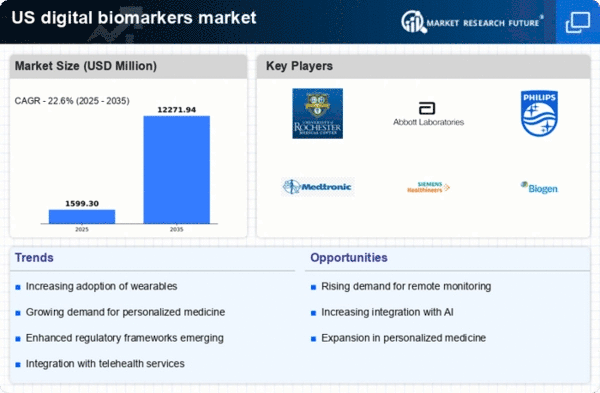
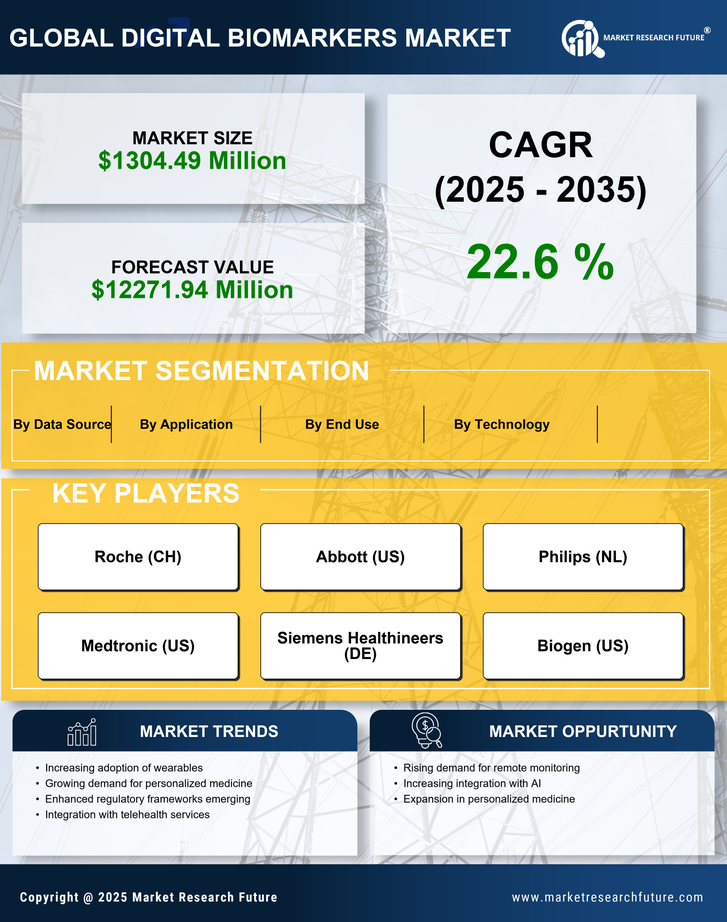
As per MRFR analysis, the US digital biomarkers market size was estimated at 1304.49 USD Million in 2024. The US digital biomarkers market is projected to grow from 1599.3 USD Million in 2025 to 12271.94 USD Million by 2035, exhibiting a compound annual growth rate (CAGR) of 22.6% during the forecast period 2025 - 2035.

Key Market Trends & Highlights

The US digital biomarkers market is poised for substantial growth driven by technological advancements and evolving healthcare needs.

  • The integration of Artificial Intelligence is transforming data analysis and patient monitoring in the digital biomarkers market.
  • Regulatory developments are facilitating the adoption of digital health solutions, enhancing market accessibility.
  • Telehealth adoption is accelerating the use of digital biomarkers, particularly in remote patient management.
  • Rising demand for personalized medicine and advancements in wearable technology are key drivers propelling market expansion.

Market Size & Forecast

2024 Market Size 1304.49 (USD Million)
2035 Market Size 12271.94 (USD Million)
CAGR (2025 - 2035) 22.6%

Major Players

Roche (CH), Abbott (US), Philips (NL), Medtronic (US), Siemens Healthineers (DE), Biogen (US), GSK (GB), Novartis (CH), Johnson & Johnson (US)

US Digital Biomarkers Market Trends

The digital biomarkers market is experiencing a notable transformation. This transformation is driven by advancements in technology and an increasing emphasis on personalized healthcare. Digital biomarkers, which encompass a range of data collected through digital devices, are becoming integral in monitoring health conditions and enhancing patient outcomes. The integration of artificial intelligence and machine learning into these technologies appears to facilitate more accurate data analysis, potentially leading to improved treatment protocols. Furthermore, the growing acceptance of telehealth solutions is likely to bolster the adoption of digital biomarkers, as patients and healthcare providers seek innovative ways to manage health remotely. In addition, regulatory bodies are beginning to establish frameworks that support the development and validation of digital biomarkers. This regulatory clarity may encourage investment and innovation within the sector, as companies seek to create reliable and effective digital health solutions. As the digital biomarkers market continues to evolve, it seems poised to play a crucial role in the future of healthcare, offering new avenues for disease prevention, management, and overall health improvement. The ongoing collaboration between technology firms and healthcare providers may further enhance the capabilities and applications of digital biomarkers, ultimately benefiting patients and practitioners alike.

Integration of Artificial Intelligence

The incorporation of artificial intelligence into the digital biomarkers market is reshaping how health data is analyzed and interpreted. AI algorithms can process vast amounts of data, identifying patterns that may not be visible to human analysts. This capability enhances the precision of health monitoring and can lead to more tailored treatment plans for individuals.

Regulatory Developments

Recent regulatory initiatives are establishing guidelines for the use of digital biomarkers in clinical settings. These developments aim to ensure the safety and efficacy of digital health technologies, fostering trust among healthcare providers and patients. As regulations become clearer, companies may find it easier to navigate the market landscape.

Telehealth Adoption

The rise of telehealth services is significantly impacting the digital biomarkers market. As more patients engage with healthcare providers remotely, the demand for digital monitoring tools is likely to increase. This trend suggests a shift towards more proactive health management, where digital biomarkers play a central role in ongoing patient care.

US Digital Biomarkers Market Drivers

Advancements in Wearable Technology

The digital biomarkers market is significantly influenced by advancements in wearable technology. Devices such as smartwatches and fitness trackers are increasingly capable of collecting real-time health data, which can be utilized as digital biomarkers. This trend is indicative of a broader movement towards continuous health monitoring, allowing for proactive management of chronic conditions. The wearable technology market is expected to surpass $60 billion by 2025, suggesting a strong correlation with the growth of the digital biomarkers market. As consumers become more health-conscious and technology-savvy, the integration of wearables into healthcare systems is likely to enhance the utility of digital biomarkers, thereby driving market expansion.

Rising Demand for Personalized Medicine

The digital biomarkers market is experiencing a notable surge in demand for personalized medicine. This trend is driven by the increasing recognition of the need for tailored treatment plans that cater to individual patient profiles. As healthcare providers seek to enhance patient outcomes, the integration of digital biomarkers into clinical practice appears to be a viable solution. According to recent estimates, the market for personalized medicine is projected to reach approximately $350 billion by 2025, indicating a robust growth trajectory. This shift towards personalized approaches is likely to propel the digital biomarkers market, as these tools provide critical insights into patient-specific responses to therapies, thereby facilitating more effective treatment strategies.

Increased Focus on Preventive Healthcare

The digital biomarkers market benefits from a heightened focus on preventive healthcare. As healthcare systems shift from reactive to proactive models, the demand for tools that can predict health issues before they escalate is growing. Digital biomarkers play a crucial role in this paradigm shift, offering insights that can lead to early interventions. The preventive healthcare market is projected to reach $200 billion by 2025, reflecting a significant opportunity for the digital biomarkers market. This emphasis on prevention not only improves patient outcomes but also reduces healthcare costs, making digital biomarkers an attractive option for healthcare providers and payers alike.

Growing Investment in Digital Health Solutions

The digital biomarkers market witnesses a surge in investment in digital health solutions. Venture capital funding and public-private partnerships are increasingly directed towards innovative technologies that leverage digital biomarkers for improved health outcomes. In 2025, investments in digital health are expected to exceed $20 billion, highlighting the growing recognition of the potential of these technologies. This influx of capital is likely to accelerate the development and commercialization of digital biomarkers, fostering innovation and expanding their applications across various therapeutic areas. As stakeholders recognize the value of data-driven healthcare, the digital biomarkers market is poised for substantial growth.

Regulatory Support for Digital Health Innovations

Regulatory support for digital health innovations positively impacts the digital biomarkers market. Regulatory bodies are increasingly establishing frameworks that facilitate the approval and integration of digital biomarkers into clinical practice. This support is crucial for ensuring the safety and efficacy of these tools, thereby enhancing their acceptance among healthcare providers. In recent years, the FDA has introduced guidelines that streamline the approval process for digital health technologies, which is likely to encourage further investment and development in the digital biomarkers market. As regulatory environments become more conducive to innovation, the market is expected to expand, offering new opportunities for stakeholders.

Market Segment Insights

By Application: Chronic Disease Management (Largest) vs. Mental Health Monitoring (Fastest-Growing)

The market share distribution within the application segment of the US digital biomarkers market shows that chronic disease management is the largest contributor, reflecting the increasing prevalence of chronic conditions and the demand for continuous monitoring solutions. Meanwhile, mental health monitoring is quickly gaining traction, driven by growing awareness of mental health issues and the need for effective interventions. This shift illustrates changing consumer preferences towards personalized healthcare solutions. In terms of growth trends, chronic disease management is expected to continue dominating, supported by technological advancements and an aging population. Conversely, mental health monitoring is recognized as the fastest-growing area within the segment, spurred by innovations in digital technology and increasing investments in mental health initiatives. Other applications like personalized medicine and drug development are also expected to contribute significantly but are currently overshadowed by these two fields.

Chronic Disease Management (Dominant) vs. Mental Health Monitoring (Emerging)

Chronic disease management is a dominant application within the US digital biomarkers market, characterized by its robust utilization in monitoring conditions such as diabetes, hypertension, and heart disease. This segment leverages devices and apps to provide real-time data, enhancing patient engagement and outcomes. In contrast, mental health monitoring is an emerging application that is witnessing rapid growth due to heightened attention towards mental well-being. This segment focuses on tools for tracking emotional states, facilitating timely intervention and support. Both applications showcase the versatility and potential of digital biomarkers while appealing to different aspects of health management.

By Technology: Wearable Devices (Largest) vs. Mobile Health Applications (Fastest-Growing)

In the US digital biomarkers market, wearable devices hold the largest market share, significantly outperforming other segments. Their popularity stems from the convenience they offer for continuous health monitoring, allowing users to track vital metrics in real-time. On the other hand, mobile health applications are quickly gaining traction and are recognized as the fastest-growing segment, driven by the increasing smartphone penetration and the push for personalized healthcare solutions. As healthcare continues to evolve, remote patient monitoring solutions also play a pivotal role, addressing the need for more proactive and efficient patient care. The rise of telehealth solutions further complements this trend, offering virtual interactions that enhance accessibility to healthcare providers. The combination of these technology-driven approaches is reshaping the landscape, fostering innovative health management practices that cater to a tech-savvy population.

Wearable Devices: Dominant vs. Mobile Health Applications: Emerging

Wearable devices have become a dominant force in the US digital biomarkers market, with their ability to provide real-time health insights and encourage proactive health management. They offer features such as heart rate tracking, sleep monitoring, and activity logs, appealing to consumers seeking to enhance their wellness journey. Meanwhile, mobile health applications are emerging as a critical player in this landscape, thanks to their integration capabilities with wearables and extensive data analysis functionalities. They facilitate user engagement and personalized health feedback, effectively harnessing the power of digital technology to improve health outcomes. Together, these segments illustrate the dynamic interplay between established and emerging technologies in healthcare.

By End Use: Healthcare Providers (Largest) vs. Pharmaceutical Companies (Fastest-Growing)

In the US digital biomarkers market, Healthcare Providers hold the largest share, driven by the increasing adoption of digital health solutions in clinical practice. This segment encompasses various healthcare settings, including hospitals and outpatient facilities, that utilize digital biomarkers for patient monitoring and diagnosis. Pharmaceutical Companies follow closely, leveraging digital biomarkers to enhance drug development processes and patient engagement strategies. Both segments are crucial in shaping the overall market landscape, with Healthcare Providers currently taking the lead. Growth in the US digital biomarkers market is largely propelled by advancements in technology and an increasing focus on personalized medicine. Healthcare Providers are increasingly integrating digital biomarkers into their daily operations, thereby optimizing patient care and improving outcomes. Meanwhile, Pharmaceutical Companies are rapidly adopting these innovative solutions to streamline research processes, leading to the emergence of new treatment opportunities. This dual approach has stimulated competition and collaboration across sectors, favoring accelerated market growth.

Healthcare Providers: Dominant vs. Pharmaceutical Companies: Emerging

Healthcare Providers are characterized as the dominant force within the US digital biomarkers market, leveraging technology to improve patient outcomes through effective monitoring and diagnostic tools. They utilize digital biomarkers to track patient health, enabling timely interventions and personalized treatment plans. This segment's leadership is supported by the growing number of healthcare facilities adopting digital health technologies. In contrast, Pharmaceutical Companies represent an emerging segment that is quickly evolving. They capitalize on digital biomarkers for more efficient drug development and performance tracking, focusing on enhancing patient engagement. Their innovative approaches, in conjunction with Healthcare Providers, facilitate a dynamic market environment where both segments continuously adapt to technological advances and shifting patient needs.

By Data Source: Physiological Data (Largest) vs. Genetic Data (Fastest-Growing)

The US digital biomarkers market exhibits a diverse distribution among various data sources, with physiological data currently holding the largest market share. This segment benefits from its extensive application in health monitoring and disease management, facilitating a significant portion of market transactions. Behavioral and psychological data are also notable contributors, but they trail behind physiological metrics, reflecting a growing integration of technology in personal health. Growth trends reveal that genetic data is emerging as the fastest-growing segment within the US digital biomarkers market. This surge is driven by advancements in genomic research and personalized medicine, which have heightened consumer interest and investment in genetic solutions. Moreover, increased accessibility of genetic testing technologies and ongoing regulatory support further bolster this segment's growth, positioning it for substantial future gains.

Physiological Data: Dominant vs. Genetic Data: Emerging

Physiological data is recognized as the dominant force within the US digital biomarkers market due to its foundational role in health analytics and monitoring. This type of data encompasses vital signs, biometric data, and other physical measurements that are critical for real-time health assessments. In contrast, genetic data is becoming increasingly prominent as an emerging category, fueled by the demand for personalized healthcare solutions. Genetic biomarkers enable tailored treatment and preventive measures, leveraging genetic insights for disease risk assessment and management. As research continues to unveil the complexities of the human genome, genetic data is projected to grow rapidly, indicating a shift towards precision medicine.

Get more detailed insights about US Digital Biomarkers Market

Key Players and Competitive Insights

The digital biomarkers market is currently characterized by a dynamic competitive landscape, driven by rapid technological advancements and increasing demand for personalized healthcare solutions. Key players such as Roche (CH), Abbott (US), and Medtronic (US) are strategically positioning themselves through innovation and partnerships. Roche (CH) focuses on integrating digital health solutions with its existing diagnostics portfolio, enhancing patient monitoring capabilities. Abbott (US) emphasizes the development of wearable devices that provide real-time health data, while Medtronic (US) is advancing its digital health platforms to improve chronic disease management. Collectively, these strategies foster a competitive environment that prioritizes technological integration and patient-centric solutions.

In terms of business tactics, companies are increasingly localizing manufacturing and optimizing supply chains to enhance operational efficiency. The market appears moderately fragmented, with several players vying for market share. However, the influence of major companies is substantial, as they leverage their resources to drive innovation and establish strategic partnerships, thereby shaping the overall market structure.

In October 2025, Roche (CH) announced a collaboration with a leading tech firm to develop an AI-driven platform for remote patient monitoring. This strategic move is likely to enhance Roche's capabilities in digital health, allowing for more accurate and timely interventions in patient care. The integration of AI into their existing systems may significantly improve patient outcomes and streamline healthcare processes.

In September 2025, Abbott (US) launched a new wearable device designed to monitor glucose levels continuously. This innovation not only reinforces Abbott's commitment to diabetes management but also positions the company as a leader in the digital health space. The device's ability to provide real-time data could potentially transform how patients manage their conditions, thereby increasing Abbott's market share in the digital biomarkers sector.

In August 2025, Medtronic (US) expanded its digital health offerings by acquiring a startup specializing in telehealth solutions. This acquisition is indicative of Medtronic's strategy to enhance its digital ecosystem, allowing for more comprehensive patient management. By integrating telehealth capabilities, Medtronic may improve access to care and patient engagement, which are critical in today's healthcare landscape.

As of November 2025, current trends in the digital biomarkers market include a strong emphasis on digitalization, sustainability, and the integration of AI technologies. Strategic alliances are increasingly shaping the competitive landscape, enabling companies to pool resources and expertise. Looking ahead, competitive differentiation is expected to evolve, with a shift from price-based competition to a focus on innovation, technological advancements, and supply chain reliability. This transition underscores the importance of developing unique solutions that address the specific needs of patients and healthcare providers.

Key Companies in the US Digital Biomarkers Market market include

Industry Developments

Recent developments in the US Digital Biomarkers Market have shown significant activity and growth, particularly with major players like Apple and Fitbit enhancing their health monitoring capabilities. In September 2023, Apple announced updates to its health features to integrate digital biomarkers more effectively into its ecosystem. Meanwhile, Pear Therapeutics is making strides in the addiction treatment space, focusing on digital therapeutics. From a merger and acquisition perspective, ERT announced in August 2023 that it would acquire Biostat to expand its digital health offerings, which underscores the increasing consolidation in the sector.

Additionally, AliveCor has been gaining attention due to its innovative ECG monitoring technology, expanding its market presence.

In terms of market valuation, the US Digital Biomarkers Market reached approximately $7.3 billion in 2023, driven by growing consumer demand for personalized healthcare solutions and advancements in digital health technologies. Recent years have seen a surge in Telehealth services, particularly during the COVID-19 pandemic, leading to increased investment in digital biomarker solutions to improve patient care and enhance chronic disease management. With a focus on outcomes and efficiency, companies such as Omada Health and DarioHealth are poised to capitalize on emerging opportunities in the digital health landscape.

Future Outlook

US Digital Biomarkers Market Future Outlook

The Digital Biomarkers Market is projected to grow at a 22.6% CAGR from 2024 to 2035, driven by advancements in technology, increasing healthcare demands, and personalized medicine.

New opportunities lie in:

  • Development of AI-driven analytics platforms for real-time health monitoring.
  • Partnerships with wearable device manufacturers for integrated health solutions.
  • Expansion into telehealth services utilizing digital biomarkers for remote patient management.

By 2035, the digital biomarkers market is expected to achieve substantial growth and innovation.

Market Segmentation

US Digital Biomarkers Market End Use Outlook

  • Healthcare Providers
  • Pharmaceutical Companies
  • Research Organizations
  • Insurance Companies

US Digital Biomarkers Market Technology Outlook

  • Wearable Devices
  • Mobile Health Applications
  • Remote Patient Monitoring
  • Telehealth Solutions

US Digital Biomarkers Market Application Outlook

  • Chronic Disease Management
  • Mental Health Monitoring
  • Personalized Medicine
  • Drug Development
  • Clinical Trials

US Digital Biomarkers Market Data Source Outlook

  • Physiological Data
  • Behavioral Data
  • Psychological Data
  • Genetic Data

Report Scope

MARKET SIZE 2024 1304.49(USD Million)
MARKET SIZE 2025 1599.3(USD Million)
MARKET SIZE 2035 12271.94(USD Million)
COMPOUND ANNUAL GROWTH RATE (CAGR) 22.6% (2024 - 2035)
REPORT COVERAGE Revenue Forecast, Competitive Landscape, Growth Factors, and Trends
BASE YEAR 2024
Market Forecast Period 2025 - 2035
Historical Data 2019 - 2024
Market Forecast Units USD Million
Key Companies Profiled Roche (CH), Abbott (US), Philips (NL), Medtronic (US), Siemens Healthineers (DE), Biogen (US), GSK (GB), Novartis (CH), Johnson & Johnson (US)
Segments Covered Application, Technology, End Use, Data Source
Key Market Opportunities Integration of artificial intelligence in digital biomarkers enhances personalized healthcare solutions.
Key Market Dynamics Technological advancements drive innovation in digital biomarkers, enhancing patient monitoring and personalized healthcare solutions.
Countries Covered US

Leave a Comment

FAQs

What is the expected market value of the US Digital Biomarkers Market in 2024?

The US Digital Biomarkers Market is expected to be valued at 950.0 USD Million in 2024.

What is the projected market value of the US Digital Biomarkers Market by 2035?

By 2035, the US Digital Biomarkers Market is projected to reach a value of 3500.0 USD Million.

What is the expected compound annual growth rate (CAGR) for the US Digital Biomarkers Market from 2025 to 2035?

The expected CAGR for the US Digital Biomarkers Market from 2025 to 2035 is 12.586%.

Which application segment is forecasted to have the highest market value in 2035?

The Chronic Disease Management segment is forecasted to have the highest market value, reaching 1090.0 USD Million in 2035.

What is the market size of the Mental Health Monitoring application in 2024?

The Mental Health Monitoring application is valued at 200.0 USD Million in 2024.

Who are the major players in the US Digital Biomarkers Market?

Major players in the market include Apple, Pear Therapeutics, Proteus Digital Health, and Omada Health among others.

What is the expected market size for Personalized Medicine in 2035?

The Personalized Medicine application is expected to reach a market size of 900.0 USD Million by 2035.

What is the market value of the Drug Development application in 2024?

The Drug Development application is valued at 150.0 USD Million in 2024.

How much is the Clinical Trials application expected to grow by 2035?

The Clinical Trials application is expected to grow to 260.0 USD Million by 2035.

What are the growth drivers for the US Digital Biomarkers Market?

Growth drivers for the market include advancements in technology, increasing demand for personalized healthcare, and rising prevalence of chronic diseases.

Download Free Sample

Kindly complete the form below to receive a free sample of this Report

Compare Licence

×
Features License Type
Single User Multiuser License Enterprise User
Price $4,950 $5,950 $7,250
Maximum User Access Limit 1 User Upto 10 Users Unrestricted Access Throughout the Organization
Free Customization
Direct Access to Analyst
Deliverable Format
Platform Access
Discount on Next Purchase 10% 15% 15%
Printable Versions