×
Request Free Sample ×

Kindly complete the form below to receive a free sample of this Report

* Please use a valid business email

Leading companies partner with us for data-driven Insights

clients tt-cursor
Hero Background

US Folate Market

ID: MRFR/FnB/13255-HCR
128 Pages
Snehal Singh
October 2025

US Folate Market Research Report: By Application (Food Fortification, Dietary Supplements, Pharmaceuticals, Animal Feed), By Form (Powder, Tablet, Liquid, Granule), By Source (Synthetic, Natural) and By End Use (Pregnant Women, Children, Adults, Elderly) - Forecast to 2035

Share:
Download PDF ×

We do not share your information with anyone. However, we may send you emails based on your report interest from time to time. You may contact us at any time to opt-out.

US Folate Market Infographic
Purchase Options

US Folate Market Summary

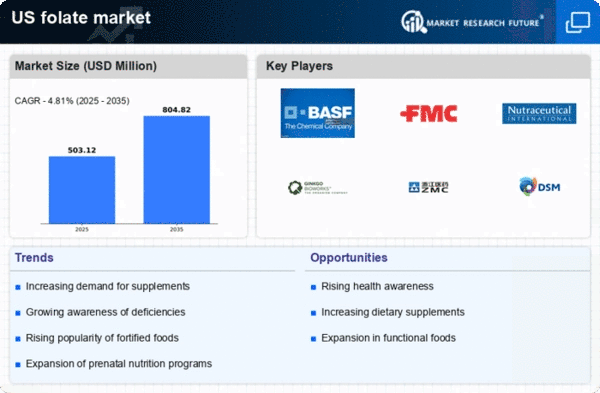
As per MRFR analysis, the US folate market Size was estimated at 480.03 USD Million in 2024. The US folate market is projected to grow from 503.12 USD Million in 2025 to 804.82 USD Million by 2035, exhibiting a compound annual growth rate (CAGR) of 4.81% during the forecast period 2025 - 2035.

Key Market Trends & Highlights

The US folate market is experiencing a positive trajectory driven by health consciousness and dietary trends.

  • Rising health awareness among consumers is propelling the demand for folate-rich products.
  • The largest segment in the US folate market is nutritional supplements, reflecting a shift towards preventive health measures.
  • Fortification initiatives are gaining momentum, particularly in the fastest-growing segment of plant-based foods.
  • Key market drivers include increased demand for nutritional supplements and government regulations promoting folate intake.

Market Size & Forecast

2024 Market Size 480.03 (USD Million)
2035 Market Size 804.82 (USD Million)
CAGR (2025 - 2035) 4.81%

Major Players

BASF SE (DE), FMC Corporation (US), Nutraceutical International Corporation (US), Ginkgo BioWorks (US), Zhejiang Medicine Co., Ltd. (CN), DSM Nutritional Products (CH), Bayer AG (DE), Merck KGaA (DE)

US Folate Market Trends

The folate market is currently experiencing notable growth, driven by increasing awareness of the health benefits associated with folate consumption. Folate, a vital B-vitamin, plays a crucial role in DNA synthesis and repair, making it essential for cellular function and overall health. As consumers become more health-conscious, the demand for folate-rich foods and supplements is on the rise. This trend is further supported by recommendations from health authorities advocating for adequate folate intake, particularly among pregnant women and individuals with specific health conditions. Additionally, the fortification of food products with folate is becoming more prevalent, reflecting a proactive approach to public health. Moreover, the folate market is influenced by evolving dietary preferences, with a growing inclination towards plant-based diets. This shift is likely to enhance the demand for natural sources of folate, such as leafy greens, legumes, and fortified cereals. The increasing popularity of functional foods, which offer health benefits beyond basic nutrition, is also contributing to the expansion of this market. As the landscape of dietary supplements continues to evolve, manufacturers are likely to innovate and diversify their product offerings to cater to the changing needs of consumers. Overall, the folate market appears poised for continued growth as awareness and demand for this essential nutrient increase.

Rising Health Awareness

There is a noticeable increase in consumer awareness regarding the health benefits of folate. This trend is likely to drive demand for folate-rich foods and supplements, as individuals seek to improve their overall health and well-being.

Fortification Initiatives

Food fortification initiatives are becoming more common, with various products being enriched with folate. This approach aims to address public health concerns related to folate deficiency, particularly among vulnerable populations.

Plant-Based Diet Trends

The growing popularity of plant-based diets is influencing the folate market. As consumers shift towards these diets, the demand for natural folate sources, such as vegetables and legumes, is expected to rise.

US Folate Market Drivers

Government Regulations and Recommendations

Government regulations and dietary recommendations play a crucial role in shaping the folate market in the US. The Food and Drug Administration (FDA) has established guidelines for folate intake, particularly for pregnant women, to prevent neural tube defects in infants. These regulations encourage food manufacturers to fortify products with folate, thereby increasing its consumption among the general population. As a result, the folate market benefits from a structured framework that promotes awareness and accessibility. Furthermore, public health campaigns aimed at educating consumers about the importance of folate in their diets are likely to enhance market growth. The emphasis on folate fortification in staple foods could lead to a significant increase in overall folate intake, further driving demand within the market.

Consumer Preference for Natural Ingredients

In the folate market, there is a discernible shift towards natural and organic ingredients. Consumers are becoming more discerning about the products they consume, favoring those that are free from synthetic additives and preservatives. This trend is particularly evident in the dietary supplement sector, where natural folate sources, such as those derived from leafy greens and legumes, are gaining popularity. The demand for clean-label products is prompting manufacturers to reformulate their offerings to align with consumer preferences. As a result, the folate market is likely to see an increase in the availability of organic folate supplements and fortified foods. This shift towards natural ingredients not only caters to health-conscious consumers but also aligns with broader trends in sustainability and environmental responsibility.

Increased Demand for Nutritional Supplements

The folate market in the US is experiencing a notable surge in demand for nutritional supplements. This trend is largely driven by a growing awareness of the importance of vitamins and minerals in maintaining overall health. According to recent data, the dietary supplement sector has seen an annual growth rate of approximately 8% over the past few years. Consumers are increasingly seeking folate supplements to support prenatal health, cardiovascular function, and overall well-being. This heightened interest in health and wellness is likely to propel the folate market further, as more individuals prioritize their nutritional intake. Additionally, the rise of e-commerce platforms has made it easier for consumers to access a variety of folate products, thereby expanding the market reach and availability of these essential supplements.

Rising Prevalence of Nutritional Deficiencies

The folate market is also influenced by the rising prevalence of nutritional deficiencies among the US population. Reports indicate that a significant portion of the population does not meet the recommended daily intake of folate, which can lead to various health issues. This deficiency is particularly concerning among specific demographics, such as pregnant women and the elderly. As awareness of these deficiencies grows, there is a corresponding increase in the demand for folate-rich foods and supplements. Health professionals are increasingly recommending folate supplementation to address these gaps, which could potentially lead to a more robust folate market. The focus on addressing nutritional deficiencies is likely to drive innovation in product development, with manufacturers creating fortified foods and supplements tailored to meet the needs of consumers.

Technological Advancements in Food Processing

Technological advancements in food processing are significantly impacting the folate market. Innovations in food fortification techniques and preservation methods are enabling manufacturers to enhance the folate content in various food products without compromising quality. For instance, advancements in microencapsulation technology allow for the stable incorporation of folate into functional foods, thereby improving its bioavailability. This is particularly relevant as consumers seek convenient and effective ways to increase their folate intake. The integration of technology in food production is likely to lead to the development of new products that cater to the evolving preferences of health-conscious consumers. As these technological improvements continue to emerge, they may provide a competitive edge to companies operating within the folate market, fostering growth and expansion.


Market Segment Insights

By Application: Dietary Supplements (Largest) vs. Food Fortification (Fastest-Growing)

In the US folate market, the application segment is dominated by Dietary Supplements, which holds the largest share of the market. This segment significantly influences the overall dynamics of folate usage, catering to a diverse consumer base that prioritizes health and nutritional needs. On the other hand, Food Fortification is rapidly gaining traction among manufacturers and consumers alike, driven by rising health awareness and governmental initiatives that promote fortified foods in diets. The growth trends in the application segment reveal a robust trajectory, with Dietary Supplements maintaining its stronghold due to continuous innovation in formulations and a focus on health benefits. Conversely, the Food Fortification segment is expected to exhibit remarkable growth, fueled by increasing demand for functional foods and rising health concerns in the population, making it a pivotal area for future investment in the US folate market.

Dietary Supplements (Dominant) vs. Pharmaceuticals (Emerging)

Dietary Supplements are recognized as the dominant application in the folate sector, accounting for a substantial portion of market activity. This segment benefits from a growing trend toward preventive healthcare, with consumers increasingly turning to supplements to address nutritional deficiencies. On the other hand, Pharmaceuticals represent an emerging segment within the folate space, benefitting from advancements in medical research that underline the importance of folate in various therapeutic areas. With ongoing innovations and the need for targeted therapies, Pharmaceuticals hold potential for significant growth, driven by an expanding understanding of folate's role in health management.

By Form: Tablet (Largest) vs. Powder (Fastest-Growing)

In the US folate market, the segment values are represented by tablets, powders, liquids, and granules. Tablets hold the largest market share due to their convenience and established consumer preference, while powders are emerging rapidly as the fastest-growing segment. The demand for powders is primarily driven by health-conscious consumers who prefer customizable dosage forms and are increasingly incorporating folate supplements into their dietary regimes. The growth trends in this segment reflect a shift towards more flexible and user-friendly supplement formats, with many users seeking alternatives to traditional pills. This trend is fueled by innovative product formulations and a rising awareness about the importance of folate in daily nutrition, leading to increased adoption of powdered folate products, particularly among fitness enthusiasts and younger demographics looking for easy integration into their routines.

Tablet: Dominant vs. Powder: Emerging

Tablets are the dominant form in the folate segment, known for their long shelf life, ease of transport, and precise dosages, making them a preferred choice among consumers. They are widely available in pharmacies and health stores and have a strong brand presence, which contributes to their leadership position in the market. Conversely, powdered folate products are emerging as a popular alternative due to their versatility, allowing users to mix them into various beverages and meals. This format appeals especially to younger consumers and those seeking an on-the-go solution. As manufacturers innovate and improve the taste and solubility of these powders, their market share is expected to grow, reflecting changing consumer preferences.

By Source: Synthetic (Largest) vs. Natural (Fastest-Growing)

In the US folate market, the distribution of market share shows that synthetic sources are the dominant segment, capturing a significant portion of the market. This is primarily due to the extensive use of synthetic folate in fortified foods and supplements, appealing to a large consumer base seeking reliable dietary sources. In contrast, natural sources of folate, derived from whole foods like leafy greens and legumes, hold a smaller share yet are gaining traction as consumer preferences shift towards more organic and naturally sourced ingredients. The growth trends for these segments indicate a robust increase in the demand for natural sources, which are perceived as healthier options. Factors driving this trend include a rising awareness about the benefits of natural nutrients, ongoing dietary shifts towards whole foods, and increased consumer interest in clean label products. As a result, natural folate is becoming the fastest-growing segment, appealing particularly to health-conscious consumers who prioritize nutrition derived from natural sources over synthetic alternatives.

Source: Synthetic (Dominant) vs. Natural (Emerging)

Synthetic folate, often recognized for its stability and bioavailability, remains the dominant source in the US folate market. It is widely used in various supplements and fortified foods, making it familiar to consumers. Many manufacturers favor synthetic folate due to its cost-effectiveness and ease of incorporation into products. On the other hand, natural folate is emerging as a vital segment, characterized by its sourcing from nutrient-rich foods. With growing interest in holistic health and wellness, consumers are gravitating towards natural sources, translating to increased innovation in product offerings. This shift is indicative of the broader trend prioritizing natural ingredients in dietary choices, positioning natural folate for substantial growth in the market.

By End Use: Pregnant Women (Largest) vs. Children (Fastest-Growing)

In the US folate market, the distribution of end use segments reveals that pregnant women hold the largest share due to the critical role folate plays in prenatal health. Children represent a significant portion as well, reflecting the growing awareness of the importance of folate in early development stages. Adults and the elderly are also noteworthy segments, yet they constitute a smaller share of the overall market demand. Growth trends in this segment are largely driven by increased education around maternal health and child nutrition. As healthcare professionals emphasize the importance of folate for pregnant women and children, demand is surging. Additionally, the rise in lifestyle diseases among adults and the elderly highlights the need for folate supplementation among these demographics, contributing to a more robust market presence across the board.

Pregnant Women: Dominant vs. Children: Emerging

The segment of pregnant women remains dominant in the US folate market, attributed to the essential role folate plays during pregnancy in preventing neural tube defects. This demographic benefits from targeted health campaigns and numerous supplement options specifically designed for prenatal care. On the other hand, the children segment is emerging rapidly as awareness grows among parents regarding the significance of folate for cognitive development and overall health. This shift is fostering innovation in formulations tailored for children, such as gummies or chewables that make it easier to incorporate folate into their diets. As both segments continue to evolve, they significantly shape the market landscape, driven by health trends and consumer preferences.

Get more detailed insights about US Folate Market

Key Players and Competitive Insights

The folate market exhibits a dynamic competitive landscape characterized by a blend of innovation, strategic partnerships, and regional expansion. Key players such as BASF SE (DE), FMC Corporation (US), and Ginkgo BioWorks (US) are actively shaping the market through their distinct operational focuses. BASF SE (DE) emphasizes innovation in product development, particularly in bioavailable folate formulations, which positions it favorably against competitors. Meanwhile, FMC Corporation (US) is leveraging its extensive supply chain capabilities to enhance distribution efficiency, thereby improving market access. Ginkgo BioWorks (US) is pioneering the integration of biotechnology in folate production, which not only enhances product quality but also aligns with sustainability trends. Collectively, these strategies contribute to a competitive environment that is increasingly focused on technological advancement and sustainability.

The business tactics employed by these companies reflect a concerted effort to optimize operations and adapt to market demands. Localizing manufacturing has become a prevalent strategy, allowing firms to reduce lead times and enhance responsiveness to regional market needs. The folate market appears moderately fragmented, with a mix of established players and emerging biotech firms. This structure enables a diverse range of products and innovations, although the influence of key players remains substantial in shaping market trends and consumer preferences.

In October 2025, BASF SE (DE) announced a strategic partnership with a leading health supplement brand to co-develop a new line of folate-enriched products aimed at pregnant women. This collaboration is significant as it not only expands BASF's product portfolio but also enhances its market penetration in the prenatal nutrition segment, which is experiencing growing demand. The partnership underscores the importance of aligning product offerings with consumer health trends, particularly in the context of maternal health.

In September 2025, FMC Corporation (US) launched a new initiative focused on sustainable sourcing of raw materials for folate production. This initiative is crucial as it addresses increasing consumer demand for environmentally responsible products. By committing to sustainable practices, FMC positions itself as a leader in corporate responsibility, which may enhance brand loyalty and attract environmentally conscious consumers.

In August 2025, Ginkgo BioWorks (US) secured a multi-million dollar investment to expand its biomanufacturing capabilities for folate production. This investment is pivotal as it allows Ginkgo to scale its innovative production processes, potentially reducing costs and increasing output efficiency. The move reflects a broader trend towards biotechnological advancements in the folate market, which could redefine production methodologies and enhance competitive positioning.

As of November 2025, the folate market is increasingly influenced by trends such as digitalization, sustainability, and the integration of artificial intelligence in production processes. Strategic alliances are becoming more prevalent, enabling companies to pool resources and expertise to drive innovation. Looking ahead, competitive differentiation is likely to evolve from traditional price-based strategies to a focus on technological innovation, supply chain reliability, and sustainable practices. This shift suggests that companies that prioritize these areas may gain a competitive edge in an increasingly discerning market.

Key Companies in the US Folate Market market include

Industry Developments

In the US Folate Market, recent developments have been marked by increasing demand for folate in dietary supplements and its recognition in functional foods. Companies like BASF and DSM are emphasizing research initiatives on the health benefits of folate, particularly its role in prenatal care and cardiovascular health. In terms of growth, the US Folate Market has witnessed a significant uptick, with market valuations projected to rise due to heightened consumer awareness and shifting dietary preferences towards fortified products.

A noteworthy merger in this sector occurred in June 2023, when Nutraceutical International Corporation acquired a portfolio of brands from Alkem Labs, strengthening its position in the folate supplement segment. Companies like Ginkgo BioWorks and Lonza are also advancing their biotechnological capabilities, allowing for more efficient production of folate compounds. In the past few years, the market has experienced notable shifts, particularly with increased regulatory attention on dietary supplements, prompting brands such as Nature's Way and Swisse to enhance quality controls and transparency in their offerings.

As the market evolves, innovation in product formulations and a focus on sustainability will likely shape future growth trajectories.

Future Outlook

US Folate Market Future Outlook

The Folate Market is projected to grow at a 4.81% CAGR from 2024 to 2035, driven by increasing health awareness and dietary supplementation trends.

New opportunities lie in:

  • Development of fortified food products targeting specific demographics
  • Expansion of e-commerce platforms for folate supplements
  • Investment in research for innovative folate delivery systems

By 2035, the folate market is expected to achieve robust growth and increased market penetration.

Market Segmentation

US Folate Market Form Outlook

  • Powder
  • Tablet
  • Liquid
  • Granule

US Folate Market Source Outlook

  • Synthetic
  • Natural

US Folate Market End Use Outlook

  • Pregnant Women
  • Children
  • Adults
  • Elderly

US Folate Market Application Outlook

  • Food Fortification
  • Dietary Supplements
  • Pharmaceuticals
  • Animal Feed

Report Scope

MARKET SIZE 2024 480.03(USD Million)
MARKET SIZE 2025 503.12(USD Million)
MARKET SIZE 2035 804.82(USD Million)
COMPOUND ANNUAL GROWTH RATE (CAGR) 4.81% (2024 - 2035)
REPORT COVERAGE Revenue Forecast, Competitive Landscape, Growth Factors, and Trends
BASE YEAR 2024
Market Forecast Period 2025 - 2035
Historical Data 2019 - 2024
Market Forecast Units USD Million
Key Companies Profiled BASF SE (DE), FMC Corporation (US), Nutraceutical International Corporation (US), Ginkgo BioWorks (US), Zhejiang Medicine Co., Ltd. (CN), DSM Nutritional Products (CH), Bayer AG (DE), Merck KGaA (DE)
Segments Covered Application, Form, Source, End Use
Key Market Opportunities Growing demand for fortified foods and supplements drives innovation in the folate market.
Key Market Dynamics Rising consumer awareness of health benefits drives demand for fortified folate products in the US market.
Countries Covered US

Leave a Comment

FAQs

What is the expected market size of the US Folate Market in 2024?

The US Folate Market is expected to be valued at 418.25 million USD in 2024.

What growth rate can be anticipated for the US Folate Market between 2025 and 2035?

The market is projected to experience a compound annual growth rate (CAGR) of 6.168 percent from 2025 to 2035.

What will be the market size of the US Folate Market by 2035?

By 2035, the US Folate Market is anticipated to reach a value of 807.93 million USD.

What are the primary applications driving the US Folate Market?

The key applications include food fortification, dietary supplements, pharmaceuticals, and animal feed.

What is the market size for dietary supplements within the US Folate Market in 2024?

The dietary supplements segment of the US Folate Market is valued at 167.23 million USD in 2024.

Who are some of the major players in the US Folate Market?

Key players include BASF, Zhejiang NHU Company, Ginkgo BioWorks, and Nature's Way among others.

What is the size of the food fortification application in 2024?

The food fortification application is expected to be valued at 104.58 million USD in 2024.

Which application segment is projected to see the highest growth by 2035?

The dietary supplements segment is expected to see significant growth, reaching 322.81 million USD by 2035.

What size is the pharmaceuticals segment of the US Folate Market expected to be in 2024?

The pharmaceuticals segment is anticipated to be valued at 132.58 million USD in 2024.

What is the expected value of the animal feed application by 2035?

By 2035, the animal feed application segment is projected to reach a value of 23.3 million USD.

Download Free Sample

Kindly complete the form below to receive a free sample of this Report

Compare Licence

×
Features License Type
Single User Multiuser License Enterprise User
Price $4,950 $5,950 $7,250
Maximum User Access Limit 1 User Upto 10 Users Unrestricted Access Throughout the Organization
Free Customization
Direct Access to Analyst
Deliverable Format
Platform Access
Discount on Next Purchase 10% 15% 15%
Printable Versions