Download Free Sample
Kindly complete the form below to receive a free sample of this Report
US Hand Sanitizer Market Size, Share, Industry Trend & Analysis Research Report By Product Type (Gels, Liquids, Sprays), By End User (Households, Commercials/Institutions, Hospitals & Healthcare centers) andBy Distribution Channel (Store-Based, Non-Store-Based)- Forecast to 2035
As per analysis, the US hand sanitizer market Size was estimated at 416.25 USD Million in 2024. The US hand sanitizer market is projected to grow from 450.63 USD Million in 2025 to 996.76 USD Million by 2035, exhibiting a compound annual growth rate (CAGR) of 8.2% during the forecast period 2025 - 2035
The US hand sanitizer market is experiencing a notable shift towards eco-friendly and health-focused products.
| 2024 Market Size | 416.25 (USD Million) |
| 2035 Market Size | 996.76 (USD Million) |
| CAGR (2025 - 2035) | 8.26% |
Procter & Gamble (US), Unilever (GB), Reckitt Benckiser (GB), GOJO Industries (US), Henkel (DE), Kimberly-Clark (US), Ecolab (US), 3M (US)
Our Impact
Enabled $4.3B Revenue Impact for Fortune 500 and Leading Multinationals
Partnering with 2000+ Global Organizations Each Year
30K+ Citations by Top-Tier Firms in the Industry
The hand sanitizer market is currently experiencing a notable evolution, driven by heightened awareness of hygiene and the increasing demand for convenient sanitization solutions. Consumers are increasingly prioritizing health and safety, leading to a surge in the adoption of hand sanitizers across various settings, including homes, workplaces, and public spaces. This shift appears to be influenced by a growing understanding of the importance of maintaining cleanliness, particularly in environments where germs and bacteria are prevalent. Furthermore, the market is witnessing a diversification of product offerings, with manufacturers introducing a range of formulations, scents, and packaging options to cater to diverse consumer preferences. In addition to the expanding product variety, the hand sanitizer market is also seeing a rise in eco-friendly and natural formulations. As consumers become more environmentally conscious, there is a noticeable trend towards products that utilize sustainable ingredients and packaging. This shift suggests that brands are adapting to meet the evolving expectations of their customer base, which increasingly values sustainability alongside efficacy. Overall, the hand sanitizer market is poised for continued growth, driven by innovation and a commitment to meeting consumer needs in a rapidly changing landscape.
There is a growing trend towards eco-friendly hand sanitizers, as consumers seek products that align with their values regarding sustainability. Brands are responding by developing formulations that utilize natural ingredients and environmentally responsible packaging.
The hand sanitizer market is witnessing a diversification in product types, including gels, foams, and wipes. This variety caters to different consumer preferences and usage scenarios, enhancing convenience and accessibility.
An increasing emphasis on health and wellness is shaping consumer choices in the hand sanitizer market. Products that promote skin health, such as those with moisturizing properties, are gaining popularity as consumers seek effective yet gentle sanitization options.
The expansion of retail channels significantly impacts the hand sanitizer market, as consumers gain easier access to a variety of products. Retailers, including pharmacies, supermarkets, and online platforms, are increasingly stocking hand sanitizers, catering to the growing demand. This trend is reflected in the market data, which indicates that online sales of hand sanitizers have surged by 15% in the past year alone. The hand sanitizer market is thus poised for further growth as more retail outlets recognize the profitability of offering diverse hand sanitizer options to consumers.
The hand sanitizer market benefits from robust regulatory support and established standards that ensure product safety and efficacy. Regulatory bodies, such as the FDA, have implemented guidelines that govern the formulation and labeling of hand sanitizers. This regulatory framework not only enhances consumer trust but also encourages manufacturers to innovate and improve their products. The hand sanitizer market is likely to see an increase in compliance-driven innovations, which could lead to a 10% rise in market value over the next few years as companies strive to meet these standards.
The hand sanitizer market is experiencing a notable surge due to increasing consumer awareness regarding hygiene practices. This heightened consciousness is largely driven by educational campaigns and public health initiatives that emphasize the importance of hand hygiene in preventing illness. As a result, consumers are more inclined to purchase hand sanitizers, leading to a projected growth rate of approximately 8% annually in the market. The hand sanitizer market is thus witnessing a shift in consumer behavior, with individuals prioritizing products that promote cleanliness and safety in their daily lives.
Innovations in formulation and packaging are driving the hand sanitizer market forward, as manufacturers seek to differentiate their products in a competitive landscape. New formulations that include moisturizing agents or natural ingredients are becoming popular, appealing to health-conscious consumers. Additionally, eco-friendly packaging solutions are gaining traction, aligning with consumer preferences for sustainable products. The hand sanitizer market is likely to see a 12% increase in sales attributed to these innovations, as they not only enhance user experience but also address environmental concerns.
The hand sanitizer market is witnessing increased usage in institutional settings such as schools, hospitals, and workplaces. These environments are prioritizing hygiene protocols, leading to a higher demand for hand sanitizers as a preventive measure against infections. Market analysis suggests that institutional sales could account for up to 30% of total hand sanitizer sales in the coming years. The hand sanitizer market is thus adapting to this trend by offering bulk purchasing options and specialized products tailored for institutional use, further driving market growth.
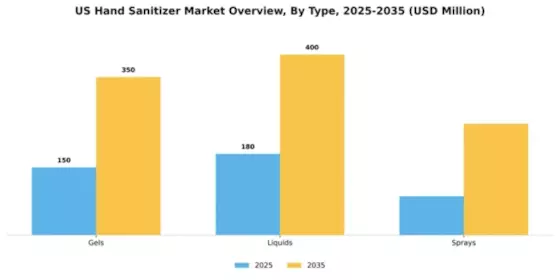
In the US hand sanitizer market, the segment values exhibit a varied distribution of market share. Gels dominate the segment, holding the largest share due to their widespread acceptance and convenience for consumers, especially in public spaces. Liquids, while also popular, tend to have a smaller footprint compared to gels but are preferred in specific settings such as healthcare facilities. Sprays, although they represent a smaller share currently, are rapidly gaining traction amongst consumers who favor their ease of application and portability. The growth trends in the segment show that sprays are emerging as the fastest-growing product variety, driven by changes in consumer preferences towards more convenient and travel-friendly options. The surge in demand for personal care products that are easy to use and carry, especially during public health concerns, has propelled the growth of sprays. Additionally, innovations in formulation and packaging are further stimulating this growth, indicating a shift towards multifunctional products in the market.
Gels (Dominant) vs. Sprays (Emerging)
Gels are the dominant type in the US hand sanitizer market, offering a thick, viscous consistency that promotes a satisfying application experience. Their effectiveness against germs coupled with user-friendliness has solidified their position as the preferred choice among consumers. Brands are also innovating within this segment to include various scents and skin-moisturizing ingredients to enhance their appeal. In contrast, sprays are emerging as a popular choice among consumers looking for quick and easy sanitization options, especially on-the-go. They offer convenience and often come in compact packaging. The transition towards more portable and versatile formats suggests a significant behavioral shift, with sprays carving out a notable niche as they adapt to meet modern consumer demands.
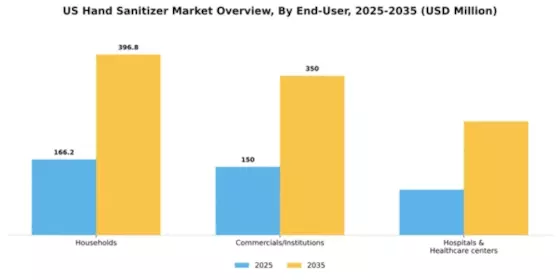
In the US hand sanitizer market, households represent the largest segment, with significant consumption driven by increased hygiene awareness and convenience. This segment captures a substantial market share as consumers prioritize health and sanitation in daily life. On the other hand, hospitals and healthcare centers are rapidly growing due to stringent hygiene protocols and the need for infection control measures in medical environments, indicating a shift towards higher demand in these sectors. The growth trends for the end-user segment are influenced by several factors, including public health campaigns and the rise of infectious diseases. Households continue to expand their usage of hand sanitizers as part of their daily routines, while hospitals and healthcare centers are seeing a surge in demand fueled by regulatory pressures and the increasing prevalence of healthcare-associated infections. This dynamic creates unique opportunities for brands targeting these distinctly different user bases.
Households (Dominant) vs. Hospitals & Healthcare Centers (Emerging)
The households segment stands out as the dominant force in the US hand sanitizer market, characterized by a wide variety of products catering to diverse consumer preferences. This segment is heavily influenced by consumer behavior toward health and cleanliness, with many households integrating hand sanitizers into their everyday routines. In contrast, hospitals and healthcare centers represent an emerging segment, primarily driven by the need for effective infection control and adherence to safety protocols. These facilities require high-quality, clinically effective products that ensure a safe environment for both patients and staff, leading to innovative developments tailored for institutional use. Together, these segments reflect the varying demands and characteristics within the market.
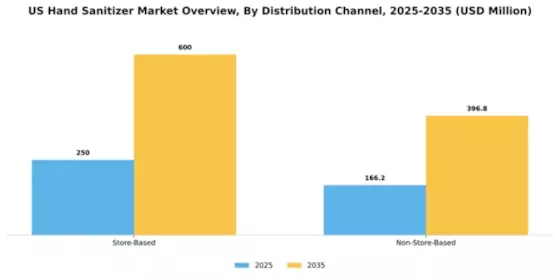
In the US hand sanitizer market, the Store-Based distribution channel is the largest segment, commanding a significant portion of the overall market share due to its established presence in pharmacies, grocery stores, and supermarkets. Customers often prefer the convenience of purchasing hand sanitizer in physical locations where they can see the product and make immediate purchasing decisions. In contrast, the Non-Store-Based channel is witnessing rapid growth, driven by the increasing popularity of e-commerce platforms and online shopping, especially in the wake of changing consumer behavior influenced by the pandemic. The growth trends for the Non-Store-Based segment are particularly notable, as this channel has been gaining traction among consumers seeking door-to-door delivery and greater product variety. This shift is fueled by the rise of digital marketing strategies and the accessibility of online retail platforms, making it easier for brands to reach a wider audience. As consumers become more comfortable with online shopping, the Non-Store-Based channel is expected to grow at a faster rate than its Store-Based counterpart, driven by convenience and accessibility.
Store-Based (Dominant) vs. Non-Store-Based (Emerging)
Store-Based distribution remains dominant in the US hand sanitizer market, largely due to the strategic placement of products in high-footfall areas of retail environments. This segment thrives on impulsive buying behaviors, with consumers often purchasing sanitizers as add-on items during their trips to essential retail outlets. Features such as in-store promotions and immediate availability contribute to its market strength. Conversely, the Non-Store-Based channel is emerging as a vital player, leveraging technology and consumer trends favoring online shopping. This segment is characterized by diverse product offerings and competitive pricing, making it appealing to a tech-savvy demographic that values convenience. Retailers are investing in user-friendly online interfaces to enhance customer experience, establishing a strong foothold that allows for sustained growth in this segment.
Get more detailed insights about US Hand Sanitizer Market Request Free Sample
The hand sanitizer market exhibits a dynamic competitive landscape characterized by a blend of established players and emerging brands. Key growth drivers include heightened consumer awareness regarding hygiene, regulatory support for sanitization products, and an increasing demand for convenient, on-the-go solutions. Major companies such as Procter & Gamble (US), GOJO Industries (US), and Reckitt Benckiser (GB) are strategically positioned to leverage innovation and sustainability in their product offerings. Procter & Gamble (US) focuses on expanding its product line with eco-friendly formulations, while GOJO Industries (US) emphasizes its commitment to quality and efficacy, particularly through its Purell brand. Reckitt Benckiser (GB) is enhancing its market presence through strategic partnerships and digital marketing initiatives, collectively shaping a competitive environment that prioritizes consumer trust and product reliability.In terms of business tactics, companies are increasingly localizing manufacturing to mitigate supply chain disruptions and optimize logistics. The market structure appears moderately fragmented, with a mix of large multinational corporations and smaller niche players. This fragmentation allows for diverse product offerings, yet the influence of key players remains substantial, as they set industry standards and consumer expectations.
In October Procter & Gamble (US) announced the launch of a new line of biodegradable hand sanitizers, reflecting a strategic pivot towards sustainability. This move not only aligns with growing consumer preferences for environmentally friendly products but also positions the company as a leader in responsible manufacturing practices. The introduction of these products is likely to enhance brand loyalty and attract environmentally conscious consumers.
In September GOJO Industries (US) expanded its distribution network by partnering with major retail chains across the US. This strategic action aims to increase accessibility to its Purell brand, which is already synonymous with quality in hand sanitization. By enhancing its distribution capabilities, GOJO Industries (US) is poised to capture a larger market share and respond more effectively to consumer demand.
In August Reckitt Benckiser (GB) launched a digital marketing campaign aimed at educating consumers about the importance of hand hygiene. This initiative not only reinforces the brand's commitment to public health but also utilizes data analytics to tailor messaging to specific demographics. Such targeted marketing efforts are likely to enhance consumer engagement and drive sales in a competitive market.
As of November current competitive trends indicate a strong emphasis on digitalization, sustainability, and the integration of AI technologies in product development and marketing strategies. Strategic alliances are increasingly shaping the landscape, enabling companies to pool resources and expertise. Looking ahead, competitive differentiation is expected to evolve from traditional price-based competition towards innovation, technological advancements, and supply chain reliability. Companies that prioritize these aspects are likely to secure a competitive edge in the hand sanitizer market.

The US Hand Sanitizer Market has seen significant developments recently, primarily driven by ongoing public health concerns. Companies such as Purell, Gojo Industries, and Germx have witnessed an increase in demand due to heightened awareness of hygiene practices. As of October 2023, Procter and Gamble announced the expansion of their hand sanitizer product line, aiming to enhance accessibility and improve formulations. Henkel and Ecolab have also introduced new eco-friendly sanitizing products that resonate well with environmentally conscious consumers.
In terms of mergers and acquisitions, Reckitt Benckiser completed its acquisition of a minority stake in Open Book Extracts in August 2023, aimed at integrating innovative ingredient sourcing for their sanitizing solutions. Moreover, the market dynamics have shifted as both Colgate-Palmolive and Unilever ramp up their production capabilities to meet surging demand, reflecting a broader trend of rapid scaling in the hygiene sector since the onset of the COVID-19 pandemic in early 2020.
This surge in valuations and investments across the hand sanitizer market underlines the ongoing commitment to public health safety and consumer preferences for effective hygiene products in the United States.
The Hand Sanitizer Market is projected to grow at an 8.26% CAGR from 2025 to 2035, driven by increased hygiene awareness, regulatory support, and innovation in formulations.
New opportunities lie in:
By 2035, the hand sanitizer market is expected to achieve robust growth and diversification.
| MARKET SIZE 2024 | 416.25(USD Million) |
| MARKET SIZE 2025 | 450.63(USD Million) |
| MARKET SIZE 2035 | 996.76(USD Million) |
| COMPOUND ANNUAL GROWTH RATE (CAGR) | 8.26% (2025 - 2035) |
| REPORT COVERAGE | Revenue Forecast, Competitive Landscape, Growth Factors, and Trends |
| BASE YEAR | 2024 |
| Market Forecast Period | 2025 - 2035 |
| Historical Data | 2019 - 2024 |
| Market Forecast Units | USD Million |
| Key Companies Profiled | Procter & Gamble (US), Unilever (GB), Reckitt Benckiser (GB), GOJO Industries (US), Henkel (DE), Kimberly-Clark (US), Ecolab (US), 3M (US) |
| Segments Covered | Type, End-User, Distribution Channel |
| Key Market Opportunities | Emerging demand for eco-friendly formulations and innovative packaging in the hand sanitizer market. |
| Key Market Dynamics | Rising consumer demand for eco-friendly formulations drives innovation in the hand sanitizer market. |
| Countries Covered | US |
The market valuation was $416.25 Million in 2024.
The projected valuation for 2035 is $996.76 Million.
The expected CAGR is 8.26% during the forecast period 2025 - 2035.
The market segments include gels, liquids, and sprays.
In 2024, gels were valued at $150.0 Million, liquids at $180.0 Million, and sprays at $86.25 Million.
The primary end-user segments are households, commercials/institutions, and hospitals & healthcare centers.
In 2024, households were valued at $166.25 Million, commercials at $150.0 Million, and hospitals at $100.0 Million.
The distribution channels include store-based and non-store-based.
In 2024, store-based distribution was valued at $250.0 Million, while non-store-based was valued at $166.25 Million.
Key players include Procter & Gamble, Unilever, Reckitt Benckiser, GOJO Industries, Henkel, Kimberly-Clark, Ecolab, and 3M.



Kindly complete the form below to receive a free sample of this Report

“This is really good guys. Excellent work on a tight deadline. I will continue to use you going forward and recommend you to others. Nice job”


“Thanks. It’s been a pleasure working with you, please use me as reference with any other Intel employees.”


“Thanks for sending the report it gives us a good global view of the Betaïne market.”


“Thank you, this will be very helpful for OQS.”


“We found the report very insightful! we found your research firm very helpful. I'm sending this email to secure our future business.”


“I am very pleased with how market segments have been defined in a relevant way for my purposes (such as "Portable Freezers & refrigerators" and "last-mile"). In general the report is well structured. Thanks very much for your efforts.”


“I have been reading the first document or the study, ,the Global HVAC and FP market report 2021 till 2026. Must say, good info! I have not gone in depth at all parts, but got a good indication of the data inside!”


“We got the report in time, we really thank you for your support in this process. I also thank to all of your team as they did a great job.”


“The Automotive 48V ECU Components Procurement Intelligence Study” was a complex project, but the Market Research Future (MRFR) team handled it with quality, agility, and customer-centricity. They delivered all requested data on time and within the agreed scope. The team, including Shubhendra Anand and Rahul Gotadki, was always readily available to clarify questions and swiftly implement necessary adjustments, driving the project to a successful conclusion within a very demanding timeframe.
I would also like to specifically commend Akshay Agarwal for his responsiveness and support at every stage—from our initial inquiry on May 6th through to final delivery on June 18th. His dedication made the entire process seamless.”



