×
Request Free Sample ×

Kindly complete the form below to receive a free sample of this Report

Leading companies partner with us for data-driven Insights

clients tt-cursor
Hero Background

Vanilla Salt Market

ID: MRFR/FnB/36632-HCR
128 Pages
Sakshi Gupta
October 2025

Vanilla Salt Market Research Report By Application (Food Industry, Cosmetic Industry, Pharmaceuticals, Beverage Industry), By Type (Flavored Vanilla Salt, Organic Vanilla Salt, Smoked Vanilla Salt), By Distribution Channel (Online Retail, Supermarkets, Specialty Stores, Convenience Stores), By Packaging Type (Sachets, Bottles, Bulk Packaging) and By Regional (North America, Europe, South America, Asia Pacific, Middle East and Africa) - Forecast to 2035

Share:
Download PDF ×

We do not share your information with anyone. However, we may send you emails based on your report interest from time to time. You may contact us at any time to opt-out.

Vanilla Salt Market Infographic
Purchase Options

Vanilla Salt Market Summary

As per MRFR analysis, the Vanilla Salt Market Size was estimated at 1.137 USD Billion in 2024. The Vanilla Salt industry is projected to grow from 1.182 in 2025 to 1.752 by 2035, exhibiting a compound annual growth rate (CAGR) of 4.01 during the forecast period 2025 - 2035.

Key Market Trends & Highlights

The Vanilla Salt Market is experiencing a dynamic shift towards gourmet and health-conscious offerings.

  • The demand for gourmet products is driving growth in the Vanilla Salt Market, particularly in North America.
  • Health-conscious consumer trends are influencing the popularity of organic Vanilla Salt Market, which is the fastest-growing segment.
  • Innovation in product offerings is evident as manufacturers explore unique flavor combinations and sustainable sourcing.
  • Rising popularity of gourmet seasonings and health and wellness trends are key drivers propelling market expansion in both the food and beverage industries.

Market Size & Forecast

2024 Market Size 1.137 (USD Billion)
2035 Market Size 1.752 (USD Billion)
CAGR (2025 - 2035) 4.01%

Major Players

Maldon Salt Company (GB), Celtic Sea Salt (US), Himalayan Chef (PK), SaltWorks (US), The Spice Lab (US), Fleur de Sel (FR), La Baleine (FR), Morton Salt (US)

Vanilla Salt Market Trends

The Vanilla Salt Market is currently experiencing a notable evolution, driven by a growing consumer preference for gourmet and artisanal products. This shift appears to stem from an increasing awareness of flavor enhancement and the desire for unique culinary experiences. As consumers seek to elevate their cooking, vanilla salt, with its distinctive taste profile, is gaining traction among both home cooks and professional chefs. Furthermore, the market seems to be influenced by the rising trend of health-conscious eating, where natural and organic ingredients are favored over synthetic alternatives. This inclination towards clean-label products is likely to bolster the demand for vanilla salt, as it is perceived as a healthier seasoning option. In addition, the Vanilla Salt Market is witnessing a surge in innovative product offerings. Manufacturers are exploring various blends and formulations, incorporating different types of salts and flavorings to cater to diverse consumer preferences. This creativity in product development may enhance market competitiveness and attract a broader audience. Moreover, the increasing popularity of online retail channels is facilitating greater accessibility to vanilla salt products, allowing consumers to discover and purchase these unique seasonings with ease. Overall, the Vanilla Salt Market appears poised for continued growth, driven by evolving consumer tastes and innovative marketing strategies.

Growing Demand for Gourmet Products

The Vanilla Salt Market is seeing an increase in demand for gourmet and artisanal products. Consumers are increasingly interested in unique flavors and high-quality ingredients, which enhances the appeal of vanilla salt as a premium seasoning option.

Health-Conscious Consumer Trends

There is a noticeable trend towards health-conscious eating, with consumers favoring natural and organic ingredients. This shift is likely to drive the demand for vanilla salt, as it is perceived as a healthier alternative to traditional seasonings.

Innovation in Product Offerings

Manufacturers in the Vanilla Salt Market are actively exploring innovative blends and formulations. This creativity in product development may attract a wider audience and enhance market competitiveness.

Vanilla Salt Market Drivers

Health and Wellness Trends

In recent years, the Vanilla Salt Market has been influenced by the rising health and wellness trends among consumers. There is a growing awareness of the importance of natural ingredients and the avoidance of artificial additives. Vanilla salt, often perceived as a healthier alternative to traditional table salt, is gaining traction among health-conscious individuals. The market for natural seasonings is projected to grow, with consumers increasingly opting for products that align with their dietary preferences. This shift is likely to propel the Vanilla Salt Market forward, as it caters to the demand for clean-label products that promote well-being.

Sustainability and Ethical Sourcing

Sustainability and ethical sourcing are becoming pivotal factors in the Vanilla Salt Market. Consumers are increasingly concerned about the environmental impact of their purchases and are favoring products that are sustainably sourced. This trend is prompting manufacturers to adopt more responsible practices, such as sourcing vanilla from fair trade suppliers. The emphasis on sustainability not only appeals to eco-conscious consumers but also enhances brand loyalty. As the demand for ethically produced goods continues to rise, the Vanilla Salt Market is likely to see growth driven by companies that prioritize sustainability in their operations.

E-commerce Growth and Online Retailing

The Vanilla Salt Market is benefiting from the rapid growth of e-commerce and online retailing. With the increasing reliance on digital platforms for shopping, consumers are more inclined to purchase specialty products like vanilla salt online. This shift has opened new avenues for market expansion, allowing manufacturers to reach a broader audience. Data indicates that online sales of gourmet food products have surged, with e-commerce expected to account for a significant portion of total sales in the coming years. The Vanilla Salt Market is poised to capitalize on this trend, as more consumers seek convenience and variety in their purchasing options.

Rising Popularity of Gourmet Seasonings

The Vanilla Salt Market is experiencing a notable surge in demand for gourmet seasonings. Consumers are increasingly seeking unique flavor profiles to enhance their culinary experiences. This trend is driven by a growing interest in cooking at home, where individuals experiment with diverse ingredients. According to recent data, the gourmet seasoning segment has seen a compound annual growth rate of approximately 5% over the past few years. As consumers become more adventurous, the Vanilla Salt Market stands to benefit from this shift towards premium and artisanal products, which are perceived as higher quality and more flavorful than standard options.

Culinary Innovation and Product Development

The Vanilla Salt Market is witnessing a wave of culinary innovation and product development. Manufacturers are exploring new applications for vanilla salt, expanding its use beyond traditional seasoning. This includes incorporation into baked goods, desserts, and even beverages, which broadens its appeal. The introduction of flavored vanilla salts, such as those infused with herbs or spices, is also gaining popularity. This diversification is expected to attract a wider consumer base, thereby enhancing market growth. As culinary trends evolve, the Vanilla Salt Market is likely to adapt, offering innovative products that meet the changing preferences of consumers.
Market Segment Insights

By Application: Food Industry (Largest) vs. Beverage Industry (Fastest-Growing)

The Vanilla Salt Market exhibits significant application diversity, with the Food Industry holding the largest share. This sector utilizes vanilla salt for enhancing flavors in gourmet dishes, seasoning, and baking, driving substantial demand. In contrast, the Beverage Industry is rapidly gaining traction as manufacturers experiment with vanilla-infused beverages, presenting novel flavor profiles that cater to evolving consumer preferences. As a result, both sectors reflect unique market dynamics that showcase their respective strengths and contributions to market growth.

Food Industry: Dominant vs. Beverage Industry: Emerging

The Food Industry stands as the dominant force in the Vanilla Salt Market, with brands leveraging the unique flavor-enhancing properties of vanilla salt to elevate their culinary offerings. This sector encompasses a range of application areas from gourmet cooking to baking, catering to both commercial and home cook segments. On the other hand, the Beverage Industry is emerging as a significant player, embracing vanilla salt to create distinctive drink experiences, driving innovation and engaging the expanding market of flavored beverages. As consumers increasingly seek unique taste experiences, the Beverage Industry's potential for growth is becoming pronounced, highlighting the versatility and adaptability of vanilla salt across various applications.

By Type: Flavored Vanilla Salt Market (Largest) vs. Organic Vanilla Salt Market (Fastest-Growing)

In the Vanilla Salt Market, Flavored Vanilla Salt Market holds a dominating position, capturing the largest share among various types available. Its unique blended flavors appeal to gourmet cooks and home chefs alike, leading to widespread adoption in the culinary world. Conversely, Organic Vanilla Salt Market, while relatively smaller in overall market presence, is experiencing rapid growth, driven by increasing consumer demand for organic and natural food products. This demand reflects a broader trend towards healthy eating and cleaner labels, making it a segment to watch. The growth trajectory of the Vanilla Salt Market is influenced by changing consumer preferences towards flavorful seasonings and health-conscious choices. Flavored Vanilla Salt Market benefits from its versatility, being used in a variety of dishes, from sweet to savory, which enhances its market appeal. Organic Vanilla Salt Market is also gaining traction as consumers become more aware of the benefits associated with organic ingredients. These trends suggest a bright outlook for both segments, with flavored options maintaining high popularity while organic varieties continue to expand their footprint.

Flavored Vanilla Salt Market (Dominant) vs. Smoked Vanilla Salt Market (Emerging)

Flavored Vanilla Salt Market is recognized as the dominant player in the Vanilla Salt Market due to its diverse taste profiles that cater to a wide range of culinary applications. This type of vanilla salt is highly popular among chefs and food enthusiasts, effectively enhancing dishes with its unique flavors. On the other hand, Smoked Vanilla Salt Market is an emerging category that is gaining attention. It combines the sweet notes of vanilla with the rich, savory essence of smoke, appealing to consumers looking for innovative flavor combinations. The growth of the smoked variety is fueled by the increasing trend towards gourmet cooking and experimentation with flavors, positioning it as an exciting segment within the market.

By Distribution Channel: Online Retail (Largest) vs. Supermarkets (Fastest-Growing)

The Vanilla Salt Market shows a diversified distribution channel landscape with Online Retail leading the charge. This channel has gained considerable traction due to its convenience, variety, and growing consumer preference for online shopping. Supermarkets, while not the largest, are noted for their significant presence and contribution to the market, serving as a primary point of purchase for many consumers seeking Vanilla Salt Market. As shopping habits evolve, both channels are experiencing distinct growth dynamics. Online Retail benefits from advances in technology and consumer behavior shifts, while Supermarkets appeal through their physical presence and in-store promotions. Specialty Stores and Convenience Stores are also key players, yet they command smaller shares of the market, indicating room for growth in niche segments of the Vanilla Salt Market.

Online Retail (Dominant) vs. Specialty Stores (Emerging)

Online Retail stands out as the dominant distribution channel, leveraging e-commerce platforms to reach a broader audience. This segment is characterized by its expansive product variety and competitive pricing, appealing to tech-savvy consumers who value convenience. In contrast, Specialty Stores represent an emerging segment, focusing on high-quality, artisanal products often preferred by gourmet cooks and health-conscious consumers. While Specialty Stores typically cater to a niche market, their emphasis on quality and unique offerings allows them to carve out a dedicated customer base. The growth of both segments is driven by changing consumer preferences, with Online Retail benefiting from the ease of access, while Specialty Stores enhance customer experience through personalized service and expert recommendations.

By Packaging Type: Bottles (Largest) vs. Sachets (Fastest-Growing)

In the Vanilla Salt Market, the packaging type segment is characterized by three key values: Sachets, Bottles, and Bulk Packaging. Bottles currently hold the largest share within the market, favored by consumers for their convenience, resealability, and effective protection against moisture. Sachets, on the other hand, are increasingly popular for single-use applications, particularly in food service and retail, contributing to their rapid growth as an emerging packaging choice in the market. Bulk Packaging, while serving specific industrial applications, maintains a steady but smaller niche presence, catering primarily to bulk users and manufacturers. The growth trends in the Vanilla Salt Market packaging type segment are driven by consumer preferences for convenience and sustainability. Bottles continue to dominate due to their effectiveness in maintaining product quality and consumer familiarity, while Sachets are becoming more prominent as demand for on-the-go packaging solutions rises. Furthermore, innovations in sachet design and materials are enhancing their appeal, positioning them as a flexible and eco-friendly option for various applications. Bulk Packaging remains essential for large-scale operations but faces competition from emerging, more attractive packaging types that resonate better with modern consumer values.

Bottles: Dominant vs. Sachets: Emerging

Bottles dominate the Vanilla Salt Market as a favored packaging choice due to their practicality and resealable nature, ensuring prolonged freshness of the product. They cater to a wide audience, from household consumers to gourmet chefs, making them versatile in application. Meanwhile, Sachets emerge as a compelling alternative, particularly appealing to the fast-paced lifestyle of consumers seeking convenience and portion control. The lightweight and compact design of sachets not only enhances user experience but also contributes to reduced packaging waste. As consumer preferences evolve towards sustainability, the demand for Sachets is poised to soar, complementing Bottles in catering to assorted market needs while fostering innovation in packaging solutions.

Get more detailed insights about Vanilla Salt Market

Regional Insights

North America : Market Leader in Vanilla Salt Market

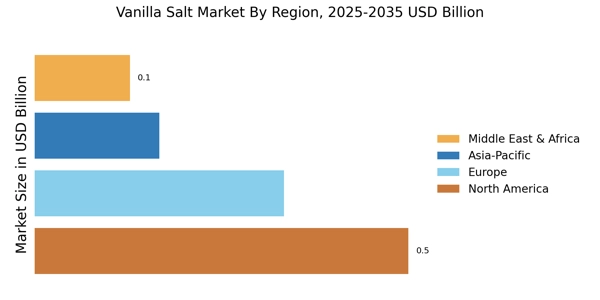
North America is the largest market for vanilla salt, holding approximately 45% of the global share. The region's growth is driven by increasing consumer interest in gourmet cooking and natural flavor enhancers. Regulatory support for organic and natural products further fuels demand, with initiatives promoting clean labeling and transparency in food sourcing. The U.S. leads this market, followed closely by Canada, which contributes around 15% to the overall market share. The competitive landscape in North America features key players such as Morton Salt, SaltWorks, and The Spice Lab, which are known for their innovative product offerings. The presence of established distribution channels and a growing trend towards artisanal and specialty foods enhance market dynamics. As consumers increasingly seek unique culinary experiences, the demand for premium products like vanilla salt is expected to rise significantly in the coming years.

Europe : Emerging Trends in Europe

Europe is witnessing a notable increase in the vanilla salt market, accounting for approximately 30% of the global share. The growth is driven by rising health consciousness among consumers and a shift towards natural flavoring agents. Countries like France and Germany are at the forefront, with France alone contributing about 12% to the market. Regulatory frameworks in the EU promote organic and sustainable food practices, which are pivotal in shaping consumer preferences. Leading countries in Europe include France, Germany, and the UK, with a competitive landscape featuring brands like Fleur de Sel and La Baleine. The market is characterized by a mix of traditional and modern players, with a growing emphasis on artisanal production methods. As consumers become more adventurous in their culinary pursuits, the demand for unique flavor profiles, including vanilla salt, is expected to rise, further enhancing market growth.

Asia-Pacific : Emerging Powerhouse in Vanilla Salt Market

The Asia-Pacific region is emerging as a significant player in the vanilla salt market, holding about 15% of the global share. The growth is primarily driven by increasing disposable incomes and changing dietary preferences towards gourmet and specialty foods. Countries like Australia and Japan are leading this trend, with Australia contributing approximately 7% to the market. Regulatory support for food safety and quality standards is also enhancing consumer confidence in premium products. In the competitive landscape, key players such as Himalayan Chef are making strides in the market, focusing on natural and organic offerings. The region's diverse culinary traditions are fostering a growing interest in unique flavor combinations, including vanilla salt. As the market matures, the demand for high-quality, artisanal products is expected to rise, positioning Asia-Pacific as a vital growth area for vanilla salt.

Middle East and Africa : Untapped Potential in Vanilla Salt Market

The Middle East and Africa region is gradually recognizing the potential of the vanilla salt market, currently holding about 10% of the global share. The growth is driven by increasing urbanization and a rising trend towards gourmet cooking among affluent consumers. Countries like South Africa and the UAE are leading this market, with South Africa contributing around 5% to the overall share. Regulatory initiatives aimed at improving food quality and safety are also playing a crucial role in market development. The competitive landscape is still developing, with local and international players vying for market share. Key players are beginning to introduce innovative products that cater to the growing demand for unique culinary experiences. As consumer awareness increases and the market matures, the potential for vanilla salt in this region is expected to expand significantly, driven by both local and global trends.

Vanilla Salt Market Regional Image

Key Players and Competitive Insights

The Vanilla Salt Market is currently characterized by a dynamic competitive landscape, driven by increasing consumer interest in gourmet and specialty salts. This market is moderately fragmented, with several key players vying for market share through various strategic initiatives. Companies such as Maldon Salt Company (GB), SaltWorks (US), and The Spice Lab (US) are at the forefront, each adopting distinct operational focuses. For instance, Maldon Salt Company (GB) emphasizes its heritage and quality, while SaltWorks (US) is known for its extensive product range and innovative flavor combinations. The Spice Lab (US) leverages digital marketing and e-commerce to reach a broader audience, indicating a trend towards digital transformation in the sector. Collectively, these strategies contribute to a competitive environment that prioritizes quality, innovation, and consumer engagement.

In terms of business tactics, companies are increasingly localizing manufacturing and optimizing supply chains to enhance efficiency and reduce costs. The Vanilla Salt Market's structure appears to be moderately fragmented, with a mix of established brands and emerging players. This fragmentation allows for diverse product offerings, catering to various consumer preferences. The collective influence of key players is significant, as they set trends and standards that smaller companies often follow, thereby shaping the overall market dynamics.

In August 2025, Maldon Salt Company (GB) announced the launch of a new line of flavored salts, including a vanilla-infused variant aimed at gourmet chefs and home cooks alike. This strategic move not only diversifies their product portfolio but also aligns with the growing trend of flavor innovation in the culinary space. By tapping into the gourmet segment, Maldon Salt Company (GB) positions itself to capture a larger share of the market, appealing to consumers seeking unique culinary experiences.

In September 2025, SaltWorks (US) unveiled a partnership with a leading organic food retailer to distribute its premium vanilla salt products. This collaboration is strategically significant as it enhances SaltWorks' market reach and aligns with the increasing consumer demand for organic and natural products. By partnering with established retailers, SaltWorks (US) is likely to bolster its brand visibility and credibility, further solidifying its position in the competitive landscape.

In July 2025, The Spice Lab (US) launched an innovative online platform that allows consumers to customize their own salt blends, including options for vanilla salt. This initiative reflects a growing trend towards personalization in food products, catering to the unique tastes of consumers. By embracing technology and consumer engagement, The Spice Lab (US) not only differentiates itself from competitors but also fosters brand loyalty among its customer base.

As of October 2025, the Vanilla Salt Market is witnessing trends that emphasize digitalization, sustainability, and the integration of artificial intelligence in product development and marketing strategies. Strategic alliances are increasingly shaping the competitive landscape, enabling companies to leverage each other's strengths for mutual benefit. Looking ahead, it appears that competitive differentiation will evolve, with a notable shift from price-based competition to a focus on innovation, technology, and supply chain reliability. Companies that can effectively navigate these trends are likely to emerge as leaders in the Vanilla Salt Market.

Key Companies in the Vanilla Salt Market market include

Industry Developments

Recent developments in the Vanilla Salt Market have showcased significant activities among key players. Sensient Technologies has made strides in product innovation, enhancing its vanilla salt offerings with organic certifications to address growing consumer demand for natural ingredients. Meanwhile, Terra Firma Foods is focusing on expanding distribution channels to reach a broader customer base. In the corporate realm, Cargill has been actively engaging in partnerships to strengthen its supply chain, which may positively influence pricing strategies and product availability.

Unilever and McCormick are witnessing growth in market valuation due to their robust marketing practices and innovative flavor profiles that include vanilla salt, affirming consumer preference for gourmet ingredients. Notably, the portion of the market controlled by Olam International has seen considerable growth, reflecting a strong consumer trend toward gourmet and specialty salts. While no significant mergers or acquisitions were reported among the specified companies recently, the competitive landscape remains dynamic with ongoing strategic initiatives aimed at capturing market share and enhancing product portfolios in the rapidly evolving consumer environment.

The overall market continues to evolve, with these developments impacting growth trajectories and consumer preferences in the vanilla salt segment.

Future Outlook

Vanilla Salt Market Future Outlook

The Vanilla Salt Market is projected to grow at a 4.01% CAGR from 2024 to 2035, driven by rising consumer interest in gourmet products and health benefits.

New opportunities lie in:

  • Developing premium product lines targeting gourmet chefs and culinary enthusiasts.
  • Expanding distribution channels through e-commerce platforms for wider market reach.
  • Collaborating with health food brands to create innovative seasoning blends.

By 2035, the Vanilla Salt Market is expected to achieve robust growth, reflecting evolving consumer preferences.

Market Segmentation

Vanilla Salt Market Type Outlook

  • Flavored Vanilla Salt
  • Organic Vanilla Salt
  • Smoked Vanilla Salt

Vanilla Salt Market Application Outlook

  • Food Industry
  • Cosmetic Industry
  • Pharmaceuticals
  • Beverage Industry

Vanilla Salt Market Packaging Type Outlook

  • Sachets
  • Bottles
  • Bulk Packaging

Vanilla Salt Market Distribution Channel Outlook

  • Online Retail
  • Supermarkets
  • Specialty Stores
  • Convenience Stores

Report Scope

MARKET SIZE 20241.137(USD Billion)
MARKET SIZE 20251.182(USD Billion)
MARKET SIZE 20351.752(USD Billion)
COMPOUND ANNUAL GROWTH RATE (CAGR)4.01% (2024 - 2035)
REPORT COVERAGERevenue Forecast, Competitive Landscape, Growth Factors, and Trends
BASE YEAR2024
Market Forecast Period2025 - 2035
Historical Data2019 - 2024
Market Forecast UnitsUSD Billion
Key Companies ProfiledMarket analysis in progress
Segments CoveredMarket segmentation analysis in progress
Key Market OpportunitiesGrowing consumer preference for natural flavor enhancers drives innovation in the Vanilla Salt Market.
Key Market DynamicsRising consumer preference for gourmet flavors drives demand for premium vanilla salt products in culinary applications.
Countries CoveredNorth America, Europe, APAC, South America, MEA

Leave a Comment

FAQs

What is the current market valuation of the Vanilla Salt Market?

The Vanilla Salt Market was valued at 1.137 USD Billion in 2024.

What is the projected market size for the Vanilla Salt Market by 2035?

The market is projected to reach 1.752 USD Billion by 2035.

What is the expected CAGR for the Vanilla Salt Market during the forecast period?

The expected CAGR for the Vanilla Salt Market from 2025 to 2035 is 4.01%.

Which segments are driving the Vanilla Salt Market's growth?

The Food Industry and Beverage Industry are key segments, with valuations of 0.5 and 0.287 USD Billion respectively in 2024.

What types of Vanilla Salt are available in the market?

The market includes Flavored Vanilla Salt, Organic Vanilla Salt, and Smoked Vanilla Salt, with respective valuations of 0.455, 0.382, and 0.3 USD Billion in 2024.

How is the Vanilla Salt Market distributed across different channels?

In 2024, Supermarkets led the distribution channel with a valuation of 0.455 USD Billion, followed by Online Retail at 0.227 USD Billion.

What packaging types are prevalent in the Vanilla Salt Market?

Bottles and Bulk Packaging are significant, with valuations of 0.455 and 0.455 USD Billion respectively in 2024.

Who are the key players in the Vanilla Salt Market?

Key players include Maldon Salt Company, Celtic Sea Salt, Himalayan Chef, and SaltWorks among others.

What is the growth potential for Organic Vanilla Salt in the coming years?

Organic Vanilla Salt is projected to grow from 0.382 USD Billion in 2024 to a higher valuation by 2035.

How does the Vanilla Salt Market compare to other specialty salt markets?

The Vanilla Salt Market, with its unique applications, appears to be carving a niche, potentially outperforming other specialty salts in specific segments.

Download Free Sample

Kindly complete the form below to receive a free sample of this Report

Compare Licence

×
Features License Type
Single User Multiuser License Enterprise User
Price $4,950 $5,950 $7,250
Maximum User Access Limit 1 User Upto 10 Users Unrestricted Access Throughout the Organization
Free Customization
Direct Access to Analyst
Deliverable Format
Platform Access
Discount on Next Purchase 10% 15% 15%
Printable Versions