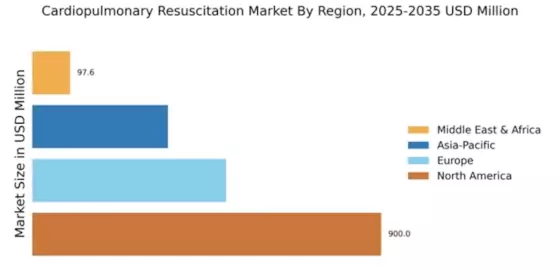
世界の心肺蘇生市場規模は2024年に18億4,761万米ドルと評価され、市場は2025年の20億5,643万米ドルから2035年までに59億9,991万米ドルに成長すると予測されており、2025年から2035年の予測期間中に11.3%のCAGRを記録します。北米は 48.71% 以上のシェアで市場をリードし、約 9 億ドルの収益を生み出しました。
緊急時への備えに対する意識の高まり、心肺蘇生訓練の取り組みの拡大、心臓緊急事態の増加、自動体外式除細動器の進歩により、心肺蘇生技術の需要が高まり、救命効果を向上させるとともに、世界中で幅広い導入を支援しています。
WHO によると、心血管疾患により年間約 1,790 万人が死亡しており、これは世界の死亡者数の 32% に相当し、広範な心肺蘇生訓練、緊急対応システム、高度な蘇生技術の必要性が強化されています。
主要な市場動向とハイライト
心肺蘇生市場は、意識の高まりと技術の進歩によって力強い成長を遂げています。
- 北米は 2024 年に世界の CPR 市場収益の 48.71% を占め、地域のリーダーシップを維持しました。
- ヨーロッパは 2024 年に 5 億米ドルを生み出し、世界市場シェアの約 27.06% に貢献しました。
- 自動体外式除細動器は、パブリックアクセスの取り組みの拡大に支えられ、52%近くのシェアを占めました。
- 心血管疾患により年間 1,790 万人が死亡しており、CPR トレーニングと緊急事態への備えの需要が高まっています。
市場規模と予測
| 2024年の市場規模 | 1847.61 (USD Million) |
| 2035年の市場規模 | 5999.91 (USD Million) |
| CAGR (2025 - 2035) | 11.3% |
| 2024 年に最大の地域市場シェアを獲得 | 北米 |
主要なプレーヤー
ZOLL Medical Corporation (米国)、Philips Healthcare (NL)、Medtronic (米国)、Stryker Corporation (米国)、Cardiac Science Corporation (米国)、Laerdal Medical (NO)、Physio-Control (米国)、Becker's Hospital Review (米国) などの企業がこの市場の主要な参加者です。