
×
Hero Background
English
Chinese
French
Japanese
Korean
German
Spanish

Cervical dystonia Market Trends

ID: MRFR/Pharma/0907-HCR
85 Pages
Rahul Gotadki
October 2025

Cervical Dystonia Market Research Report Information By Drug Type (Torticollis, Retrocollis, Laterocollis, Others), By Treatment (Oral Therapy, Intravenous, Surgery, Others), By End-User (Hospital, Clinics, Others) And By Region (North America, Europe, Asia-Pacific, And Rest Of The World) –Market Forecast Till 2035

Share:
Download PDF ×

We do not share your information with anyone. However, we may send you emails based on your report interest from time to time. You may contact us at any time to opt-out.

Cervical dystonia Market Infographic
Purchase Options

Market Trends

Key Emerging Trends in the Cervical dystonia Market

A prevailing pattern in the cervical dystonia market is the broad utilization of botulinum toxin treatments. Botulinum toxin injections, like Botox and Dysport, have become standard medicines for overseeing muscle fits and unusual head postures in cervical dystonia patients. The viability and somewhat low aftereffects add to the ubiquity of this remedial methodology. The market is seeing progressions in treatment rules for cervical dystonia. Clinical experts are refining conventions for the organization of botulinum toxin, improving measurements and infusion procedures to upgrade treatment results. These rules are instrumental in standardizing care and working on the general adequacy of cervical dystonia management. The market is seeing the development of oral prescriptions for cervical dystonia. Medications, for example, trihexyphenidyl and tetrabenazine are being investigated as option or adjunctive treatments to botulinum toxin injections. These oral drugs offer extra choices for patients and may assume a part in comprehensive treatment procedures. Deep Brain Stimulation (DBS) is acquiring consideration as an expected remedial choice for cervical dystonia. Neurostimulation methods, including DBS, include embedding cathodes in explicit brain locales to modify brain movement. Continuous examination is assessing the wellbeing and viability of DBS in overseeing cervical dystonia side effects. Multidisciplinary care groups are turning out to be more vital in cervical dystonia management. Nervous system specialists, actual advisors, clinicians, and different experts team up to address the assorted parts of the condition. This all-encompassing methodology intends to work on overall quiet prosperity and useful results. Genetic examination and accuracy medication are acquiring noticeable quality in cervical dystonia research. Researching genetic variables adding to the advancement of dystonia may prompt designated treatments considering individual hereditary profiles. This pattern holds guarantee for more exact and customized treatment methodologies. Regardless of progresses, challenges continue guaranteeing admission to consideration for cervical dystonia. Restricted accessibility of experienced healthcare suppliers, particularly in specific locales, may defeat ideal conclusion and proper management. Tending to these entrance difficulties is fundamental for streamlining patient results.


Author
Rahul Gotadki
Assistant Manager

He holds an experience of about 7+ years in Market Research and Business Consulting, working under the spectrum of Life Sciences and Healthcare domains. Rahul conceptualizes and implements a scalable business strategy and provides strategic leadership to the clients. His expertise lies in market estimation, competitive intelligence, pipeline analysis, customer assessment, etc. In addition to the above, his other responsibility includes strategic tracking of high growth markets & advising clients on the potential areas of focus they could direct their business initiatives

Leave a Comment

FAQs

What is the projected growth of the Cervical Dystonia market?

The Cervical Dystonia market is the expected increase in total market value of 0.5 USD billion over a defined forecast period 2025–2035. It is driven by factors such as demand trends, technological advances, regulatory changes, and geographic expansion.

What is the size of the Cervical Dystonia market?

Cervical Dystonia market size was valued at approximately 0.23 billion USD in 2024. This figure will reach 0.5 billion USD covering all regions (America, Europe, Asia, MEA and ROW), focusing its segments / services / distribution channels till 2035.

What is the CAGR of the Cervical Dystonia market?

Cervical Dystonia market is expected to grow at a CAGR of 7.3% between 2025 and 2035.

How much will the Cervical Dystonia market be worth by 2035?

Cervical Dystonia market is expected to be worth of 0.5 billion USD, reflecting growth driven by usage, technology and global demands by the end of 2035.

How will the Cervical Dystonia market perform over the next 10 years?

Over the next 10 years the Cervical Dystonia market is expected to shift from usd billion 0.23 to 0.5 billion USD, led by adoption of advanced tech, demographic trends, regulatory approvals, with potential headwinds from 2025 to 2035.

Which Region held the largest market share in the Cervical Dystonia market?

North America had the largest share of the market

Market Summary

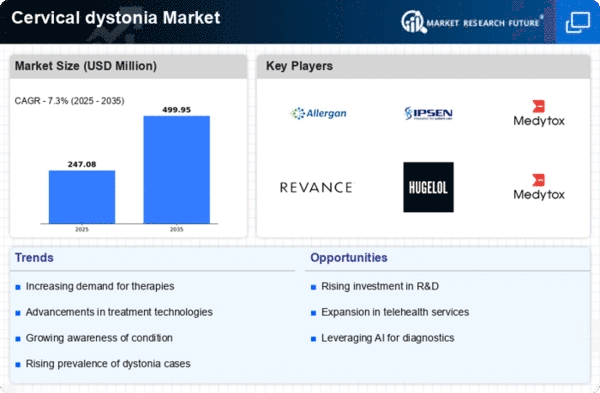
As per MRFR analysis, the Cervical dystonia Market Size was estimated at 230.27 USD Million in 2024. The Cervical dystonia industry is projected to grow from 247.08 in 2025 to 499.95 by 2035, exhibiting a compound annual growth rate (CAGR) of 7.3 during the forecast period 2025 - 2035.

Key Market Trends & Highlights

The Cervical Dystonia Market is experiencing significant growth driven by advancements in treatment and increased awareness.

  • North America remains the largest market for cervical dystonia treatments, primarily due to its advanced healthcare infrastructure.
  • The Asia-Pacific region is emerging as the fastest-growing market, fueled by rising healthcare access and awareness.
  • Botulinum toxin injection continues to dominate the market, while oral medications are witnessing the fastest growth in adoption.
  • Key market drivers include the rising prevalence of cervical dystonia and technological advancements in treatment options.

Market Size & Forecast

2024 Market Size 230.27 (USD Million)
2035 Market Size 499.95 (USD Million)
CAGR (2025 - 2035) 7.3%
Largest Regional Market Share in 2024 North America

Major Players

<p>Allergan (US), Ipsen (FR), Medytox (KR), Revance Therapeutics (US), Hugel (KR), Medytox (US), Evolus (US), Sientra (US)</p>

Market Trends

The Cervical dystonia Market is currently experiencing a notable evolution, driven by advancements in treatment options and increased awareness of the condition. This disorder, characterized by involuntary muscle contractions in the neck, has garnered attention from both healthcare professionals and patients alike. As a result, there is a growing demand for effective therapies, including botulinum toxin injections and physical therapy. The market landscape is further influenced by ongoing research aimed at understanding the underlying mechanisms of cervical dystonia, which may lead to innovative treatment modalities in the near future. Moreover, the rising prevalence of cervical dystonia, coupled with an aging population, appears to be propelling the market forward. Healthcare providers are increasingly focusing on personalized treatment approaches, which may enhance patient outcomes. Additionally, the integration of telemedicine in managing chronic conditions, including cervical dystonia, suggests a shift towards more accessible care options. This trend could potentially reshape how patients interact with healthcare systems, making it easier for them to receive timely interventions and support. Overall, the Cervical dystonia Market is poised for growth, reflecting a dynamic interplay of factors that may redefine treatment paradigms and improve quality of life for those affected by this condition.

Advancements in Treatment Modalities

The Cervical dystonia Market is witnessing a surge in innovative treatment options, particularly with the development of new formulations of botulinum toxin. These advancements may enhance efficacy and reduce side effects, thereby improving patient compliance and satisfaction. Furthermore, ongoing clinical trials are exploring alternative therapies, such as neuromodulation techniques, which could offer additional avenues for managing this complex disorder.

Increased Awareness and Diagnosis

There is a growing recognition of cervical dystonia among healthcare professionals and the general public, which may lead to earlier diagnosis and intervention. Educational campaigns and support groups are playing a crucial role in disseminating information about the condition, potentially resulting in a higher number of patients seeking treatment. This trend could contribute to a more robust market as more individuals become aware of available therapies.

Telemedicine Integration

The integration of telemedicine into the management of cervical dystonia is emerging as a transformative trend. This approach allows patients to access specialized care from the comfort of their homes, which may be particularly beneficial for those with mobility challenges. As telehealth services expand, they could facilitate ongoing monitoring and support, ultimately enhancing the overall management of cervical dystonia.

Cervical dystonia Market Market Drivers

Market Growth Projections

The Global Cervical Dystonia Market Industry is projected to experience robust growth over the next decade. With an estimated market value of 0.23 USD Billion in 2024, the industry is expected to expand significantly, reaching approximately 0.5 USD Billion by 2035. This growth trajectory is underpinned by a compound annual growth rate of 7.4% from 2025 to 2035. The increasing prevalence of cervical dystonia, advancements in treatment options, and supportive government policies are key factors contributing to this upward trend. The market's potential for innovation and improved patient outcomes positions it favorably for future developments.

Growing Geriatric Population

The aging population is a significant driver of the Global Cervical Dystonia Market Industry. As individuals age, the likelihood of developing neurological disorders, including cervical dystonia, increases. This demographic shift is expected to lead to a higher prevalence of the condition, thereby driving demand for effective treatments. With the market projected to reach 0.5 USD Billion by 2035, the growing geriatric population presents a substantial opportunity for healthcare providers and pharmaceutical companies. Addressing the needs of this demographic will be crucial in shaping the future of cervical dystonia management.

Rising Awareness and Education

The Global Cervical Dystonia Market Industry is benefiting from increased awareness and educational initiatives aimed at both healthcare professionals and the general public. Campaigns focusing on the symptoms, diagnosis, and treatment options for cervical dystonia are crucial in reducing the stigma associated with the disorder. As more individuals recognize the signs and seek medical help, the demand for treatment options is likely to rise. This heightened awareness is expected to contribute to a compound annual growth rate of 7.4% from 2025 to 2035, indicating a growing market as more patients are diagnosed and treated effectively.

Supportive Government Policies

Government initiatives and policies aimed at improving healthcare access and funding for neurological disorders are positively impacting the Global Cervical Dystonia Market Industry. Various countries are implementing programs to enhance research funding and support for patients suffering from cervical dystonia. These policies not only facilitate better access to treatments but also encourage pharmaceutical companies to invest in research and development. As a result, the market is likely to experience sustained growth, with the potential for new therapies to emerge, thereby enhancing patient care and outcomes in the coming years.

Advancements in Treatment Options

Innovations in treatment modalities are significantly influencing the Global Cervical Dystonia Market Industry. The introduction of botulinum toxin injections, which have become a standard treatment, showcases the evolution of therapeutic approaches. Additionally, emerging therapies such as deep brain stimulation and oral medications are gaining traction. These advancements not only enhance patient outcomes but also expand the market by attracting new patients. The projected growth from 2024 to 2035, with an estimated market value of 0.5 USD Billion by 2035, suggests that ongoing research and development will play a crucial role in shaping the future landscape of cervical dystonia treatments.

Increasing Prevalence of Cervical Dystonia

The Global Cervical Dystonia Market Industry is witnessing a notable increase in the prevalence of cervical dystonia, which is a neurological movement disorder characterized by involuntary muscle contractions. As awareness grows, more individuals are being diagnosed, contributing to market expansion. In 2024, the market is valued at approximately 0.23 USD Billion, reflecting the rising demand for effective treatment options. This trend is expected to continue as the population ages and the incidence of neurological disorders rises. The increasing number of patients seeking medical intervention is likely to drive the market further, indicating a robust growth trajectory.

Market Segment Insights

By Treatment Type: Botulinum Toxin Injection (Largest) vs. Oral Medications (Fastest-Growing)

<p>In the Cervical Dystonia market, Botulinum Toxin Injection holds the largest share, driven by its effectiveness as a treatment option, which has made it a go-to solution for many patients. Over the years, this segment has consistently outperformed alternatives, primarily due to its established efficacy in managing symptoms, resulting in strong physician recommendations and patient adherence. Meanwhile, Oral Medications are rapidly gaining traction and are considered the fastest-growing segment, appealing to patients seeking convenient and less invasive treatment options.</p>

<p>Botulinum Toxin Injection (Dominant) vs. Oral Medications (Emerging)</p>

<p>Botulinum Toxin Injection remains the dominant treatment for Cervical Dystonia, recognized for its high efficacy in reducing muscle contractions and providing substantial relief to patients. As it acts directly on the neuromuscular junction, patients often experience significant symptom alleviation following treatment. In contrast, Oral Medications are considered an emerging alternative, often utilized by those who may prefer non-invasive routes. While they have shown promise in mitigating symptoms, their adoption is slower due to varying effectiveness among individuals. This segment is experiencing increased interest as research continues to explore new formulations and combinations that could enhance patient outcomes.</p>

By Patient Demographics: Age Group (Largest) vs. Gender (Fastest-Growing)

<p>In the Cervical dystonia market, the age group segment dominates, particularly among individuals aged 40-60 years who represent a significant portion of patients suffering from this condition. Meanwhile, there is a notable increase in prevalence among younger patients, particularly those in their 30s, who are increasingly being diagnosed with cervical dystonia due to greater awareness and better diagnostic methods. This demographic spread emphasizes the need for tailored treatment options based on age-related considerations. The growth trends within this segment indicate a shift towards younger patients being diagnosed with cervical dystonia. Enhanced awareness campaigns and improved access to healthcare resources have contributed to this emerging trend. Additionally, as more individuals become informed about cervical dystonia, earlier diagnosis is expected to lead to more proactive treatment approaches, potentially shifting the demographic balance further in favor of younger individuals, thus shaping market dynamics for healthcare providers and pharmaceutical companies alike.</p>

<p>Age Group (Dominant) vs. Gender (Emerging)</p>

<p>The Age Group segment stands out as the dominant force in the Cervical dystonia market, with individuals aged 40-60 years accounting for most diagnosed cases. This demographic is often targeted for treatment options, as they typically experience more severe symptoms that require medical intervention. On the other hand, the Gender segment is emerging as a vital area of growth, with increasing attention on how cervical dystonia may manifest differently between men and women. Women are more commonly diagnosed with this condition, which is spurring targeted marketing efforts and the development of gender-specific treatment strategies. This dual focus allows organizations to cater to an expanding patient base, ensuring that both groups receive adequate support and treatment.</p>

By Disease Severity: Moderate (Largest) vs. Severe (Fastest-Growing)

<p>In the Cervical Dystonia Market, the distribution of disease severity shows that the moderate segment holds the largest market share, highlighting the prevalence of this condition among patients. Moderate cervical dystonia, characterized by noticeable but not debilitating symptoms, is often the most diagnosed form. Following closely, the severe segment has witnessed significant attention and growing recognition among healthcare providers and patients, contributing to a robust and dynamic market landscape. As the understanding of cervical dystonia improves, the growth trends for the severe segment are notably pronounced. Increased awareness, advancements in therapeutic options, and better diagnosis are key drivers behind the expansion of the severe segment. The emergence of innovative treatments and patient advocacy has further propelled this segment, making it the fastest-growing area in the market.</p>

<p>Moderate (Dominant) vs. Severe (Emerging)</p>

<p>The moderate severity of cervical dystonia is characterized by distinctive muscle contractions that lead to abnormal postures, yet the symptoms remain manageable. This segment represents a significant portion of diagnosed cases and drives a continued focus on conventional treatment options. On the other hand, the severe segment, marked by more intense muscle contractions and debilitating symptoms, is gaining momentum as treatment modalities evolve and expand. The introduction of advanced therapies and a better understanding of patient needs has positioned the severe segment as an emerging powerhouse within the cervical dystonia market, promising to capture the attention of both patients and healthcare providers.</p>

By Healthcare Setting: Hospital (Largest) vs. Outpatient Clinic (Fastest-Growing)

<p>In the Cervical dystonia market, the healthcare setting segment is characterized by distinct distribution among hospitals, outpatient clinics, home care, and rehabilitation centers. Hospitals dominate the market due to their comprehensive resources, specialized services, and access to advanced technologies. Meanwhile, outpatient clinics represent a rapidly growing segment, driven by an increase in patient demand for accessible and less invasive treatment options, allowing for quicker patient turnover and treatment.</p>

<p>Hospital (Dominant) vs. Outpatient Clinic (Emerging)</p>

<p>Hospitals play a crucial role within the Cervical dystonia treatment landscape, providing a wide range of services, including diagnostics, therapeutic interventions, and multidisciplinary care. The scale and expertise of hospital settings often facilitate access to specialists and advanced treatment methodologies. In contrast, outpatient clinics have emerged as a significant alternative, catering to patients seeking convenience and immediate care without the need for hospitalization. These clinics are adept at employing less invasive treatments, thus appealing to an increasing population that favors outpatient care. The growth of outpatient clinics reflects a broader trend towards personalized and efficient healthcare delivery.</p>

Get more detailed insights about Cervical Dystonia Market Research Report Forecast to 2035

Regional Insights

North America : Market Leader in Innovation

North America is poised to maintain its leadership in the cervical dystonia market, holding a significant market size of $115.14M in 2025. The region benefits from advanced healthcare infrastructure, high awareness of cervical dystonia, and a growing demand for effective treatment options. Regulatory support and favorable reimbursement policies further drive market growth, making it a hub for innovation in therapeutic solutions. The competitive landscape in North America is robust, featuring key players such as Allergan, Revance Therapeutics, and Evolus. The U.S. is the leading country, accounting for the majority of the market share, driven by increasing patient populations and ongoing clinical research. The presence of established pharmaceutical companies enhances the region's capacity for rapid product development and market penetration.

Europe : Emerging Market with Growth Potential

Europe's cervical dystonia market is projected to grow, with a market size of $70.08M in 2025. The region is characterized by increasing healthcare expenditure and a rising prevalence of neurological disorders. Regulatory frameworks, such as the European Medicines Agency's guidelines, are facilitating the introduction of innovative therapies, thus enhancing patient access to effective treatments. Leading countries in Europe include France, Germany, and the UK, where significant investments in healthcare infrastructure are evident. Key players like Ipsen and Medytox are actively involved in expanding their product offerings. The competitive landscape is evolving, with a focus on developing new formulations and delivery methods to improve patient outcomes. The market is expected to witness increased collaboration between pharmaceutical companies and healthcare providers.

Asia-Pacific : Rapidly Growing Market Segment

The Asia-Pacific region is emerging as a significant player in the cervical dystonia market, with a market size of $38.05M in 2025. Factors such as increasing awareness of cervical dystonia, rising healthcare investments, and a growing aging population are driving demand for effective treatment options. Regulatory bodies are also becoming more supportive of innovative therapies, which is expected to further boost market growth. Countries like South Korea and Japan are at the forefront of this growth, with key players such as Medytox and Hugel leading the charge. The competitive landscape is characterized by a mix of local and international companies, focusing on research and development to introduce new therapies. As the market matures, collaborations and partnerships are likely to increase, enhancing the overall treatment landscape for cervical dystonia.

Middle East and Africa : Untapped Market Opportunities

The Middle East and Africa region presents untapped opportunities in the cervical dystonia market, with a market size of $7.0M in 2025. The region is witnessing gradual improvements in healthcare infrastructure and increasing awareness of neurological disorders. However, challenges such as limited access to advanced treatments and varying regulatory environments may hinder rapid growth. Nonetheless, ongoing efforts to enhance healthcare access are expected to drive market expansion. Countries like South Africa and the UAE are beginning to invest more in healthcare, creating a conducive environment for market growth. The presence of key players is still limited, but there is potential for new entrants to capture market share. As awareness and access improve, the cervical dystonia market in this region is likely to see significant growth in the coming years.

Key Players and Competitive Insights

The Cervical dystonia Market is characterized by a dynamic competitive landscape, driven by advancements in treatment modalities and increasing awareness of the condition. Key players such as Allergan (US), Ipsen (FR), and Revance Therapeutics (US) are at the forefront, each adopting distinct strategies to enhance their market presence. Allergan (US) focuses on innovation through the development of new formulations and delivery methods for its botulinum toxin products, while Ipsen (FR) emphasizes strategic partnerships to expand its global reach. Revance Therapeutics (US) appears to be leveraging its proprietary DaxibotulinumtoxinA injection, which may offer longer-lasting effects, thus positioning itself as a leader in treatment efficacy. Collectively, these strategies contribute to a competitive environment that is increasingly centered on product differentiation and enhanced patient outcomes.

In terms of business tactics, companies are localizing manufacturing and optimizing supply chains to improve efficiency and reduce costs. The market structure is moderately fragmented, with several players vying for market share. This fragmentation allows for a variety of treatment options, but also intensifies competition among key players. The collective influence of these companies shapes pricing strategies and market accessibility, ultimately impacting patient care.

In November 2025, Allergan (US) announced a collaboration with a leading telehealth provider to enhance patient access to its cervical dystonia treatments. This strategic move is significant as it aligns with the growing trend of digital health solutions, potentially increasing patient engagement and adherence to treatment protocols. By integrating telehealth services, Allergan (US) may improve patient outcomes and expand its market reach.

In October 2025, Ipsen (FR) launched a new educational initiative aimed at healthcare professionals to raise awareness about cervical dystonia and its treatment options. This initiative is crucial as it not only positions Ipsen (FR) as a thought leader in the space but also fosters stronger relationships with healthcare providers. By enhancing knowledge and understanding of the condition, Ipsen (FR) could drive demand for its products and improve patient care.

In September 2025, Revance Therapeutics (US) secured a partnership with a major pharmaceutical distributor to enhance its supply chain capabilities. This partnership is likely to streamline distribution processes and ensure timely access to its innovative treatments. Such strategic actions may bolster Revance's competitive edge by improving product availability and responsiveness to market demands.

As of December 2025, current trends in the Cervical dystonia Market include a pronounced shift towards digitalization and the integration of AI technologies in treatment protocols. Strategic alliances are increasingly shaping the competitive landscape, allowing companies to pool resources and expertise. The evolution of competitive differentiation appears to be moving away from price-based competition towards a focus on innovation, technology, and supply chain reliability. This shift suggests that companies that prioritize research and development, alongside robust partnerships, may be better positioned to thrive in the future.

Key Companies in the Cervical dystonia Market market include

Industry Developments

  • Q2 2024: Ipsen receives FDA approval for expanded indication of Dysport® (abobotulinumtoxinA) for the treatment of cervical dystonia in pediatric patients Ipsen announced that the U.S. FDA has approved Dysport® for the treatment of cervical dystonia in pediatric patients aged two years and older, expanding its market reach in the U.S. for this neurological disorder.
  • Q1 2024: Merz Therapeutics launches Xeomin® (incobotulinumtoxinA) in Japan for cervical dystonia Merz Therapeutics announced the commercial launch of Xeomin® for the treatment of cervical dystonia in Japan, marking its entry into the Japanese market for this indication.
  • Q2 2024: Revance Therapeutics announces positive topline results from Phase 3 clinical trial of DaxibotulinumtoxinA for Injection in cervical dystonia Revance Therapeutics reported positive topline results from its Phase 3 clinical trial evaluating DaxibotulinumtoxinA for Injection in patients with cervical dystonia, supporting future regulatory submissions.
  • Q1 2024: AbbVie completes acquisition of Cerevel Therapeutics to expand neuroscience portfolio AbbVie finalized its acquisition of Cerevel Therapeutics, strengthening its pipeline in neurological disorders including cervical dystonia.
  • Q2 2024: Ipsen and Medtronic announce partnership to develop new neuromodulation therapies for movement disorders Ipsen and Medtronic entered a strategic partnership to co-develop neuromodulation therapies targeting movement disorders, including cervical dystonia.
  • Q1 2025: Eli Lilly announces $150 million investment in new neuroscience R&D facility Eli Lilly revealed plans to invest $150 million in a new research and development facility focused on neurological disorders, including cervical dystonia, to accelerate drug discovery and development.
  • Q2 2024: FDA grants orphan drug designation to Addex Therapeutics’ ADX71441 for cervical dystonia Addex Therapeutics received orphan drug designation from the U.S. FDA for its investigational compound ADX71441 for the treatment of cervical dystonia.
  • Q1 2024: Ipsen opens new manufacturing facility in Ireland to support global supply of Dysport® Ipsen inaugurated a new manufacturing facility in Ireland dedicated to producing Dysport®, enhancing its global supply capabilities for cervical dystonia treatment.
  • Q2 2025: Merz Pharma appoints new CEO to lead global expansion in neurology Merz Pharma announced the appointment of a new CEO, with a strategic focus on expanding its neurology Devices business, including cervical dystonia therapeutics.
  • Q1 2025: Revance Therapeutics secures $80 million in Series C funding to advance cervical dystonia pipeline Revance Therapeutics raised $80 million in Series C funding to support the development and commercialization of its cervical dystonia treatment candidates.
  • Q2 2024: FDA approves new formulation of botulinum toxin for cervical dystonia The U.S. FDA approved a new formulation of botulinum toxin for the treatment of cervical dystonia, providing patients with an additional therapeutic option.
  • Q1 2025: Lundbeck announces partnership with University of California for cervical dystonia research Lundbeck entered a research partnership with the University of California to advance understanding and treatment options for cervical dystonia.

Future Outlook

Cervical dystonia Market Future Outlook

<p>The Cervical dystonia Market is projected to grow at a 7.3% CAGR from 2024 to 2035, driven by advancements in treatment options and increasing awareness.</p>

New opportunities lie in:

  • <p>Development of telehealth platforms for remote patient monitoring</p>
  • <p>Investment in innovative botulinum toxin formulations</p>
  • <p>Expansion of patient education programs to enhance treatment adherence</p>

<p>By 2035, the market is expected to achieve substantial growth, reflecting evolving treatment paradigms.</p>

Market Segmentation

Cervical dystonia Market Treatment Type Outlook

  • Botulinum Toxin Injection
  • Oral Medications
  • Physical Therapy
  • Surgical Procedures

Cervical dystonia Market Disease Severity Outlook

  • Mild
  • Moderate
  • Severe
  • Chronic

Cervical dystonia Market Healthcare Setting Outlook

  • Hospital
  • Outpatient Clinic
  • Home Care
  • Rehabilitation Center

Cervical dystonia Market Patient Demographics Outlook

  • Age Group
  • Gender
  • Socioeconomic Status
  • Geographic Location

Report Scope

MARKET SIZE 2024230.27(USD Million)
MARKET SIZE 2025247.08(USD Million)
MARKET SIZE 2035499.95(USD Million)
COMPOUND ANNUAL GROWTH RATE (CAGR)7.3% (2024 - 2035)
REPORT COVERAGERevenue Forecast, Competitive Landscape, Growth Factors, and Trends
BASE YEAR2024
Market Forecast Period2025 - 2035
Historical Data2019 - 2024
Market Forecast UnitsUSD Million
Key Companies ProfiledAllergan (US), Ipsen (FR), Medytox (KR), Revance Therapeutics (US), Hugel (KR), Medytox (US), Evolus (US), Sientra (US)
Segments CoveredTreatment Type, Patient Demographics, Disease Severity, Healthcare Setting
Key Market OpportunitiesAdvancements in neuromodulation therapies present new avenues in the Cervical dystonia Market.
Key Market DynamicsRising demand for innovative therapies drives competition and regulatory scrutiny in the cervical dystonia market.
Countries CoveredNorth America, Europe, APAC, South America, MEA

FAQs

What is the projected growth of the Cervical Dystonia market?

The Cervical Dystonia market is the expected increase in total market value of 0.5 USD billion over a defined forecast period 2025–2035. It is driven by factors such as demand trends, technological advances, regulatory changes, and geographic expansion.

What is the size of the Cervical Dystonia market?

Cervical Dystonia market size was valued at approximately 0.23 billion USD in 2024. This figure will reach 0.5 billion USD covering all regions (America, Europe, Asia, MEA and ROW), focusing its segments / services / distribution channels till 2035.

What is the CAGR of the Cervical Dystonia market?

Cervical Dystonia market is expected to grow at a CAGR of 7.3% between 2025 and 2035.

How much will the Cervical Dystonia market be worth by 2035?

Cervical Dystonia market is expected to be worth of 0.5 billion USD, reflecting growth driven by usage, technology and global demands by the end of 2035.

How will the Cervical Dystonia market perform over the next 10 years?

Over the next 10 years the Cervical Dystonia market is expected to shift from usd billion 0.23 to 0.5 billion USD, led by adoption of advanced tech, demographic trends, regulatory approvals, with potential headwinds from 2025 to 2035.

Which Region held the largest market share in the Cervical Dystonia market?

North America had the largest share of the market

  1. INTRODUCTION
    1. DEFINITION
    2. SCOPE OF STUDY
      1. RESEARCH OBJECTIVE
      2. ASSUMPTIONS & LIMITATIONS
    3. MARKET STRUCTURE:
  2. RESEARCH METHODOLOGY
    1. RESEARCH PROCESS:
    2. PRIMARY RESEARCH
    3. SECONDARY RESEARCH:
  3. MARKET DYNAMICS
    1. DRIVERS
    2. RESTRAINTS
    3. OPPORTUNITIES
    4. MACROECONOMIC INDICATORS
  4. MARKET FACTOR ANALYSIS
    1. PORTERS FIVE FORCES MODEL
    2. BARGAINING POWER OF SUPPLIERS
    3. BARGAINING POWER OF BUYERS
    4. THREAT OF NEW ENTRANTS
    5. THREAT OF SUBSTITUTES
    6. INTENSITY OF RIVALRY
  5. GLOBAL CERVICAL DYSTONIA MARKET, BY DRUG TYPE
    1. TORTICOLLIS
    2. RETROCOLLIS
    3. LATEROCOLLIS
    4. OTHERS
  6. GLOBAL CERVICAL DYSTONIA MARKET, BY TREATMENT
    1. ORAL THERAPY
    2. INTRAVENOUS
    3. SURGERY
    4. OTHER
  7. GLOBAL CERVICAL DYSTONIA MARKET, BY END USER
    1. HOSPITAL
    2. CLINICS
    3. OTHER
  8. GLOBAL CERVICAL DYSTONIA MARKET, BY REGION
    1. INTRODUCTION
    2. NORTH AMERICA
      1. US
      2. CANADA
    3. EUROPE
      1. WESTERN EUROPE
      2. EASTERN EUROPE
    4. ASIA
      1. JAPAN
      2. CHINA
      3. INDIA
      4. AUSTRALIA
      5. REPUBLIC OF KOREA
    5. REST OF ASIA-PACIFIC
    6. MIDDLE EAST & AFRICA
  9. COMPETITIVE LANDSCAPE
    1. MAJOR STRATEGIES ADOPTED BY MARKET PLAYERS
      1. STRATEGIC PARTNERSHIP
      2. MERGER & ACQUISITION
  10. COMPANY PROFILE
    1. ALLERGAN
      1. OVERVIEW
      2. PRODUCT OVERVIEW
      3. FINANCIALS
      4. KEY DEVELOPMENTS
    2. SOLSTICE NEUROSCIENCES LLC
      1. OVERVIEW
      2. PRODUCT OVERVIEW
      3. FINANCIALS
      4. KEY DEVELOPMENTS
    3. IPSEN BIOPHARMACEUTICALS INC
      1. OVERVIEW
      2. PRODUCT OVERVIEW
      3. FINANCIALS
      4. STRATEGY
      5. KEY DEVELOPMENT
    4. REVANCE THERAPEUTICS INC.
      1. OVERVIEW
      2. PRODUCT OVERVIEW
      3. FINANCIALS
      4. KEY DEVELOPMENTS
    5. MERZ INC
      1. OVERVIEW
      2. PRODUCT OVERVIEW
      3. FINANCIALS
      4. KEY DEVELOPMENTS
    6. OTHERS
    7. "

Cervical Dystonia Market Segmentation Cervical Dystonia Drug Type Outlook (USD Billion, 2018-2032)

Torticollis

Retrocollis

Laterocollis

Others

Cervical Dystonia Treatment Outlook (USD Billion, 2018-2032)

Oral Therapy

Intravenous

Surgery

Others

Cervical Dystonia End-User Outlook (USD Billion, 2018-2032)

Hospital

Clinics

Others

Cervical Dystonia Regional Outlook (USD Billion, 2018-2032)

North AmericaOutlook (USD Billion, 2018-2032)

North America Cervical Dystonia by Drug type

Torticollis

Retrocollis

Laterocollis

Others

North America Cervical Dystonia by Treatment

Oral Therapy

Intravenous

Surgery

Others

North America Cervical Dystonia by End-User

Hospital

Clinics

Others

US Outlook (USD Billion, 2018-2032)

US Cervical Dystonia by Drug type

Torticollis

Retrocollis

Laterocollis

Others

US Cervical Dystonia by Treatment

Oral Therapy

Intravenous

Surgery

Others

US Cervical Dystonia by End-User

Hospital

Clinics

Others

CANADA Outlook (USD Billion, 2018-2032)

CANADA Cervical Dystonia by Drug type

Torticollis

Retrocollis

Laterocollis

Others

CANADA Cervical Dystonia by Treatment

Oral Therapy

Intravenous

Surgery

Others

CANADA Cervical Dystonia by End-User

Hospital

Clinics

Others

Europe Outlook (USD Billion, 2018-2032)

Europe Cervical Dystonia by Drug type

Torticollis

Retrocollis

Laterocollis

Others

Europe Cervical Dystonia by Treatment

Oral Therapy

Intravenous

Surgery

Others

Europe Cervical Dystonia by End-User

Hospital

Clinics

Others

Germany Outlook (USD Billion, 2018-2032)

Germany Cervical Dystonia by Drug type

Torticollis

Retrocollis

Laterocollis

Others

Germany Cervical Dystonia Treatment

Oral Therapy

Intravenous

Surgery

Others

Germany Cervical Dystonia by End-User

Hospital

Clinics

Others

France Outlook (USD Billion, 2018-2032)

France Cervical Dystonia by Drug type

Torticollis

Retrocollis

Laterocollis

Others

France Cervical Dystonia by Treatment

Oral Therapy

Intravenous

Surgery

Others

France Cervical Dystonia by End-User

Hospital

Clinics

Others

UK Outlook (USD Billion, 2018-2032)

UK Cervical Dystonia by Drug type

Torticollis

Retrocollis

Laterocollis

Others

UK Cervical Dystonia by Treatment

Oral Therapy

Intravenous

Surgery

Others

UK Cervical Dystonia by End-User

Hospital

Clinics

Others

ITALY Outlook (USD Billion, 2018-2032)

ITALY Cervical Dystonia by Drug type

Torticollis

Retrocollis

Laterocollis

Others

ITALY Cervical Dystonia by Treatment

Oral Therapy

Intravenous

Surgery

Others

ITALY Cervical Dystonia by End-User

Hospital

Clinics

Others

SPAIN Outlook (USD Billion, 2018-2032)

Spain Cervical Dystonia by Drug type

Torticollis

Retrocollis

Laterocollis

Others

Spain Cervical Dystonia by Treatment

Oral Therapy

Intravenous

Surgery

Others

Spain Cervical Dystonia by End-User

Hospital

Clinics

Others

Rest Of Europe Outlook (USD Billion, 2018-2032)

Rest Of Europe Cervical Dystonia by Drug type

Torticollis

Retrocollis

Laterocollis

Others

REST OF EUROPE Cervical Dystonia by Treatment

Oral Therapy

Intravenous

Surgery

Others

REST OF EUROPE Cervical Dystonia by End-User

Hospital

Clinics

Others

Asia-Pacific Outlook (USD Billion, 2018-2032)

Asia-Pacific Cervical Dystonia by Drug type

Torticollis

Retrocollis

Laterocollis

Others

Asia-Pacific Cervical Dystonia by Treatment

Oral Therapy

Intravenous

Surgery

Others

Asia-Pacific Cervical Dystonia by End-User

Hospital

Clinics

Others

China Outlook (USD Billion, 2018-2032)

China Cervical Dystonia by Drug type

Torticollis

Retrocollis

Laterocollis

Others

China Cervical Dystonia by Treatment

Oral Therapy

Intravenous

Surgery

Others

China Cervical Dystonia by End-User

Hospital

Clinics

Others

Japan Outlook (USD Billion, 2018-2032)

Japan Cervical Dystonia by Drug type

Torticollis

Retrocollis

Laterocollis

Others

Japan Cervical Dystonia by Treatment

Oral Therapy

Intravenous

Surgery

Others

Japan Cervical Dystonia by End-User

Hospital

Clinics

Others

India Outlook (USD Billion, 2018-2032)

India Cervical Dystonia by Drug type

Torticollis

Retrocollis

Laterocollis

Others

India Cervical Dystonia by Treatment

Oral Therapy

Intravenous

Surgery

Others

India Cervical Dystonia by End-User

Hospital

Clinics

Others

Australia Outlook (USD Billion, 2018-2032)

Australia Cervical Dystonia by Drug type

Torticollis

Retrocollis

Laterocollis

Others

Australia Cervical Dystonia by Treatment

Oral Therapy

Intravenous

Surgery

Others

Australia Cervical Dystonia by End-User

Hospital

Clinics

Others

Rest of Asia-Pacific Outlook (USD Billion, 2018-2032)

Rest of Asia-Pacific Cervical Dystonia by Drug type

Torticollis

Retrocollis

Laterocollis

Others

Rest of Asia-Pacific Cervical Dystonia by Treatment

Oral Therapy

Intravenous

Surgery

Others

Rest of Asia-Pacific Cervical Dystonia by End-User

Hospital

Clinics

Others

Rest of the World Outlook (USD Billion, 2018-2032)

Rest of the World Cervical Dystonia by Drug type

Torticollis

Retrocollis

Laterocollis

Others

Rest of the World Cervical Dystonia by Treatment

Oral Therapy

Intravenous

Surgery

Others

Rest of the World Cervical Dystonia by End-User

Hospital

Clinics

Others

Middle East Outlook (USD Billion, 2018-2032)

Middle East Cervical Dystonia by Drug type

Torticollis

Retrocollis

Laterocollis

Others

Middle East Cervical Dystonia by Treatment

Oral Therapy

Intravenous

Surgery

Others

Middle East Cervical Dystonia by End-User

Hospital

Clinics

Others

Africa Outlook (USD Billion, 2018-2032)

Africa Cervical Dystonia by Drug type

Torticollis

Retrocollis

Laterocollis

Others

Africa Cervical Dystonia by Treatment

Oral Therapy

Intravenous

Surgery

Others

Africa Cervical Dystonia by End-User

Hospital

Clinics

Others

Latin America Outlook (USD Billion, 2018-2032)

Latin America Cervical Dystonia by Drug type

Torticollis

Retrocollis

Laterocollis

Others

Latin America Cervical Dystonia by Treatment

Oral Therapy

Intravenous

Surgery

Others

Latin America Cervical Dystonia by End-User

Hospital

Clinics

Others

Infographic

Free Sample Request

Kindly complete the form below to receive a free sample of this Report

Get Free Sample

Customer Strories

Compare Licence

×
Features License Type
Single User Multiuser License Enterprise User
Price $4,950 $5,950 $7,250
Maximum User Access Limit 1 User Upto 10 Users Unrestricted Access Throughout the Organization
Free Customization
Direct Access to Analyst
Deliverable Format
Platform Access
Discount on Next Purchase 10% 15% 15%
Printable Versions