×
Hero Background
English
Chinese
French
Japanese
Korean
German
Spanish

Fungal Endocarditis Market Trends

ID: MRFR/LS/3679-HCR
85 Pages
Rahul Gotadki
October 2025

Fungal Endocarditis Market Research Report Information: By Type of Fungus (Candida, Aspergillus), Diagnosis (Blood Test, X-Ray, Echocardiography, Electrocardiogram), Treatment (Antifungal Medication, Surgery, Combined Treatment), End User - Global Forecast till 2035

Share:
Download PDF ×

We do not share your information with anyone. However, we may send you emails based on your report interest from time to time. You may contact us at any time to opt-out.

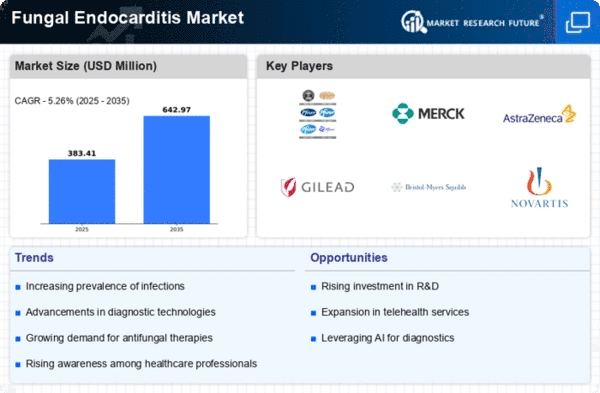
Fungal Endocarditis Market Infographic
Purchase Options

Market Trends

Key Emerging Trends in the Fungal Endocarditis Market

The Fungal Endocarditis market is seeing growth because of the expanded rate of invasive fungal diseases, including fungal endocarditis. Factors like a developing maturing population, higher pervasiveness of immunocompromised circumstances, and expanded utilization of invasive operations add to the rising rate, driving the interest for demonstrative and treatment arrangements in the market. Diagnosing fungal endocarditis presents difficulties, prompting a pattern in the market focused in on working on symptomatic devices. Early location is basic for compelling management, and the market is answering with developments in symptomatic imaging, sub-atomic diagnostics, and biomarker distinguishing proof to empower speedier and more exact ID of fungal endocarditis cases. The market is encountering progressions in antifungal treatments tailored for the treatment of fungal endocarditis. Research endeavors are coordinated towards the advancement of novel antifungal specialists with further developed viability, diminished aftereffects, and more extensive range inclusion, tending to the requirement for more successful treatment choices. The development of antifungal obstruction is a striking pattern in the Fungal Endocarditis market. As opposition turns into a worry, there is an expanded spotlight on grasping the components of impediment and growing new antifungal medications or combination treatments to battle safe strains, guaranteeing proceeded with viability in treatment. Imaging advances assume an urgent part in diagnosing and observing fungal endocarditis. The market is seeing the incorporation of cutting-edge imaging modalities, for example, echocardiography, CT checks, and atomic imaging for more exact perception of cardiovascular designs and early identification of fungal endocarditis-related inconveniences.

Author
Rahul Gotadki
Assistant Manager

He holds an experience of about 7+ years in Market Research and Business Consulting, working under the spectrum of Life Sciences and Healthcare domains. Rahul conceptualizes and implements a scalable business strategy and provides strategic leadership to the clients. His expertise lies in market estimation, competitive intelligence, pipeline analysis, customer assessment, etc. In addition to the above, his other responsibility includes strategic tracking of high growth markets & advising clients on the potential areas of focus they could direct their business initiatives

Leave a Comment

FAQs

What is the growth rate of the global fungal endocarditis market?

The global fungal endocarditis market can expand at 5.43% CAGR from 2024 to 2032.

Name the major driver of the global fungal endocarditis market?

Massive number of cases of Candida fungal endocarditis is the major driver of the global fungal endocarditis market.

Which region can dominate in the global fungal endocarditis market?

The Americas can dominate the global fungal endocarditis market due to increasing awareness among the populace.

Which is the second largest region in global fungal endocarditis market?

Europe is the second largest region in the global fungal endocarditis market.

Name the biggest players of the global fungal endocarditis market?

Sanofi, Enzon Pharmaceuticals, Inc., Merck & Co., Sigma-Aldrich, Eli Lily and Company, Pfizer, GlaxoSmithKline plc, Abbott Laboratories, Bayer AG, Astellas Pharma, Inc., and Novartis AG are notable players of the global fungal endocarditis market.

Market Summary

As per MRFR analysis, the Fungal Endocarditis Market Size was estimated at 364.25 USD Million in 2024. The Fungal Endocarditis industry is projected to grow from 387.58 USD Million in 2025 to 642.97 USD Million by 2035, exhibiting a compound annual growth rate (CAGR) of 5.26 during the forecast period 2025 - 2035.

Key Market Trends & Highlights

The Fungal Endocarditis Market is poised for growth driven by rising incidences and advancements in healthcare.

  • The market is witnessing a rising incidence of fungal infections, particularly in North America, which remains the largest market.
  • Advancements in diagnostic technologies are enhancing the accuracy and speed of fungal endocarditis detection, especially in hospital settings.
  • Integration of telehealth solutions is becoming increasingly prevalent, particularly in the Asia-Pacific region, which is the fastest-growing market.
  • Rising awareness of fungal endocarditis and an increase in immunocompromised patients are key drivers propelling market growth.

Market Size & Forecast

2024 Market Size 364.25 (USD Million)
2035 Market Size 642.97 (USD Million)
CAGR (2025 - 2035) 5.26%
Largest Regional Market Share in 2024 North America

Major Players

<p>Pfizer Inc (US), Merck & Co (US), Astellas Pharma Inc (JP), Gilead Sciences Inc (US), Bristol-Myers Squibb Company (US), Novartis AG (CH), Roche Holding AG (CH), AbbVie Inc (US), Johnson & Johnson (US)</p>

Market Trends

The Fungal Endocarditis Market is currently experiencing a notable evolution, driven by a combination of factors including advancements in diagnostic techniques and an increasing awareness of fungal infections. The rise in immunocompromised patients, due to various underlying health conditions, has led to a heightened incidence of fungal endocarditis. This condition, characterized by the infection of the heart valves, poses significant treatment challenges, necessitating innovative therapeutic approaches. As healthcare providers strive to improve patient outcomes, the demand for effective antifungal agents and comprehensive treatment protocols is likely to grow. Furthermore, ongoing research into the pathophysiology of fungal infections may yield new insights, potentially transforming the management of this complex disease. In addition, the Fungal Endocarditis Market is influenced by the expanding role of telemedicine and digital health solutions. These technologies facilitate remote monitoring and consultations, thereby enhancing patient access to specialized care. As healthcare systems adapt to these changes, the integration of telehealth services may improve early detection and timely intervention for fungal endocarditis. Moreover, collaborations between pharmaceutical companies and research institutions are expected to foster the development of novel therapies, addressing the unmet needs within this niche market. Overall, the Fungal Endocarditis Market appears poised for growth, driven by innovation and a commitment to improving patient care.

Rising Incidence of Fungal Infections

The increasing prevalence of fungal infections, particularly among immunocompromised individuals, is a key driver in the Fungal Endocarditis Market. This trend highlights the need for enhanced diagnostic and treatment options to address the growing patient population.

Advancements in Diagnostic Technologies

Innovations in diagnostic methodologies are transforming the landscape of the Fungal Endocarditis Market. Enhanced imaging techniques and molecular diagnostics are enabling earlier detection, which is crucial for effective management of this serious condition.

Integration of Telehealth Solutions

The adoption of telehealth services is reshaping patient care in the Fungal Endocarditis Market. Remote consultations and monitoring are improving access to specialists, facilitating timely interventions and potentially better outcomes for patients.

Fungal Endocarditis Market Market Drivers

Rising Incidence of Fungal Infections

The increasing prevalence of fungal infections globally appears to drive the Global Fungal Endocarditis Market Industry. Factors such as immunocompromised patients, including those with diabetes, HIV, and cancer, contribute to this rise. In 2024, the market is projected to reach 0.45 USD Billion, reflecting the urgent need for effective treatment options. As awareness of fungal infections grows, healthcare providers are likely to enhance diagnostic capabilities, further propelling market growth. This trend suggests a potential increase in the number of diagnosed cases, which may lead to a greater demand for antifungal therapies and interventions.

Market Segment Insights

By Application: Diagnosis (Largest) vs. Treatment (Fastest-Growing)

<p>The Fungal Endocarditis Market is primarily segmented by application into Diagnosis, Treatment, and Prevention. Among these, Diagnosis holds the largest share, driven by the increasing prevalence of fungal infections and the need for accurate and timely identification. The rise in awareness about fungal endocarditis has further bolstered the demand for advanced diagnostic modalities, helping healthcare professionals in making informed clinical decisions. Meanwhile, Treatment is emerging as the fastest-growing segment, attributed to the introduction of innovative antifungal therapies and a surge in the development of combination treatments aimed at improving patient outcomes.</p>

<p>Diagnosis: Diagnostics (Dominant) vs. Treatment (Emerging)</p>

<p>In the Fungal Endocarditis Market, Diagnosis is the dominant application segment, characterized by a diverse range of testing methods including laboratory tests and imaging techniques. Enhanced diagnostic accuracy and the implementation of rapid testing methodologies play a crucial role in driving this segment forward. On the other hand, Treatment is gaining traction as an emerging segment, primarily due to the launch of novel antifungal agents and therapies that effectively target resistant fungal strains. The focus on personalized medicine and tailored treatment regimens is expected to further stimulate growth in this area, aligning with the overall trend towards improving patient management in fungal infections.</p>

By End Use: Hospitals (Largest) vs. Home Care (Fastest-Growing)

<p>In the Fungal Endocarditis Market, hospitals dominate the end-use segment, accounting for a significant portion of the overall market share due to their advanced facilities and comprehensive treatment options. Clinics also hold a vital role, offering outpatient services that cater to early detection and treatment. However, home care services are emerging swiftly, driven by a growing preference for at-home treatment options and the increasing incidence of fungal infections that require long-term management.</p>

<p>Hospitals (Dominant) vs. Home Care (Emerging)</p>

<p>Hospitals serve as the cornerstone of the Fungal Endocarditis treatment landscape, providing specialized care, state-of-the-art diagnostic tools, and robust patient support systems. Their prominence stems from their ability to handle complex cases requiring intensive care. Conversely, home care is making notable strides, characterized by personalized treatment plans and the convenience of care in familiar settings. This emerging segment benefits from advancements in telehealth and mobile health technologies, enabling closer monitoring of patients while reducing hospital readmissions. With the rising trend towards personalized medicine, home care services are gaining traction among patients seeking less invasive treatment options.</p>

By Pathogen Type: Candida (Largest) vs. Aspergillus (Fastest-Growing)

<p>In the Fungal Endocarditis Market, Candida holds a significant share, being the leading pathogen type associated with endocarditis cases. Due to its widespread presence and high virulence, Candida has become the largest contributor to the overall market. In contrast, Aspergillus, though currently smaller in market share, is emerging rapidly, attracting increased attention due to rising incidences and awareness of its pathogenic impacts.</p>

<p>Candida (Dominant) vs. Aspergillus (Emerging)</p>

<p>Candida serves as the dominant pathogen in the Fungal Endocarditis Market, primarily due to its opportunistic nature and prevalence in immunocompromised patients. This pathotype causes significant morbidity, making it a crucial area of focus for healthcare providers. Conversely, Aspergillus is gaining momentum as an emerging pathogen in this space. With increased environmental exposure and recognition of its role in severe infections, its growth trajectory is supported by heightened diagnostic capabilities and therapeutic advancements.</p>

By Diagnosis Method: Blood Culture (Largest) vs. Molecular Techniques (Fastest-Growing)

<p>In the Fungal Endocarditis Market, diagnostic methods are pivotal for timely treatment and improved patient outcomes. Blood cultures, being the largest segment, dominate the market due to their established reliability and effectiveness in detecting fungal pathogens. Serological tests hold a smaller share, yet they play a crucial role in supporting diagnosis when blood cultures yield inconclusive results. Meanwhile, molecular techniques are gaining traction and are expected to capture a growing portion of the market, especially as advancements in technology reduce testing times and enhance accuracy.</p>

<p>Blood Culture (Dominant) vs. Molecular Techniques (Emerging)</p>

<p>Blood culture remains the dominant diagnosis method in the Fungal Endocarditis Market, revered for its comprehensive ability to isolate and identify pathogens from patient samples, thereby leading to informed treatment decisions. However, molecular techniques are emerging rapidly, leveraging innovative methods like PCR to detect fungal DNA with high sensitivity and specificity. These techniques are particularly advantageous in cases where traditional cultures fail or are delayed. As healthcare systems increasingly adopt rapid diagnostic tools, molecular techniques' significance is expected to rise, providing healthcare professionals with timely results for effective intervention.</p>

By Treatment Type: Antifungal Therapy (Largest) vs. Surgical Intervention (Fastest-Growing)

<p>In the Fungal Endocarditis Market, the treatment type segment is dominated by Antifungal Therapy, which holds the largest market share. This category includes various antifungal medications specifically developed for managing and treating fungal infections, which have been essential in addressing this life-threatening condition. Surgical Intervention follows as an emerging segment, increasingly gaining traction among healthcare providers due to its effectiveness in severe cases where antifungal therapy alone may not suffice. Supportive Care, while crucial for patient recovery, has a relatively minor market share compared to the other treatment types.</p>

<p>Antifungal Therapy (Dominant) vs. Surgical Intervention (Emerging)</p>

<p>Antifungal Therapy remains the dominant treatment approach in the Fungal Endocarditis Market, leveraging a range of effective medications that target fungal pathogens. Recent advancements in drug formulations and the rising prevalence of fungal infections have reinforced the importance of this treatment category. In contrast, Surgical Intervention is emerging as a critical option, particularly for patients whose conditions do not adequately respond to pharmacological treatments. This segment is characterized by innovative surgical techniques and improved patient outcomes, attracting a growing number of clinicians to opt for invasive solutions when necessary. Both segments are essential, with antifungal therapy maintaining a strong presence while surgical interventions are on the rise, reflecting a dynamic response to evolving patient needs.</p>

Get more detailed insights about Fungal Endocarditis Market Research Report- Global forecast till 2035

Regional Insights

North America : Market Leader in Innovation

North America is poised to maintain its leadership in the Fungal Endocarditis market, holding a significant market share of 182.12M in 2024. The region benefits from advanced healthcare infrastructure, high R&D investments, and a growing prevalence of fungal infections. Regulatory support from agencies like the FDA further catalyzes market growth, ensuring rapid approval of innovative therapies and treatments. The increasing awareness of fungal endocarditis and its implications drives demand for effective solutions. The competitive landscape in North America is robust, featuring key players such as Pfizer Inc, Merck & Co, and Gilead Sciences. These companies are at the forefront of developing novel antifungal therapies, leveraging cutting-edge research and technology. The presence of established healthcare systems and a high level of healthcare expenditure contribute to the region's market strength. As the market evolves, partnerships and collaborations among these key players are expected to enhance treatment options and improve patient outcomes.

Europe : Emerging Market with Potential

Europe is witnessing a growing interest in the Fungal Endocarditis market, with a market size of 95.25M in 2024. Factors such as an aging population, increased incidence of immunocompromised patients, and rising awareness of fungal infections are driving demand. Regulatory frameworks in the EU, including the European Medicines Agency (EMA), are supportive of innovative treatments, facilitating quicker access to new therapies. This regulatory environment is crucial for fostering growth in the sector. Leading countries in Europe, such as Germany, France, and the UK, are key players in the market, supported by a strong pharmaceutical industry. Major companies like Novartis AG and Roche Holding AG are actively involved in research and development, focusing on antifungal agents. The competitive landscape is characterized by collaborations between pharmaceutical firms and research institutions, enhancing the development of effective treatments for fungal endocarditis. The market is expected to expand as healthcare providers increasingly recognize the importance of addressing this condition.

Asia-Pacific : Emerging Powerhouse in Healthcare

The Asia-Pacific region is emerging as a significant player in the Fungal Endocarditis market, with a market size of 70.0M in 2024. The growth is driven by increasing healthcare expenditure, a rising prevalence of fungal infections, and improving healthcare infrastructure. Countries like Japan and Australia are leading the charge, supported by government initiatives aimed at enhancing healthcare access and quality. Regulatory bodies are also becoming more proactive in approving new treatments, which is crucial for market expansion. In the competitive landscape, key players such as Astellas Pharma and Gilead Sciences are focusing on developing innovative antifungal therapies tailored to the needs of the region. The presence of a large patient population and increasing awareness of fungal diseases are further propelling market growth. As the region continues to develop, collaborations between local and international companies are expected to enhance treatment options and improve patient care in the fight against fungal endocarditis.

Middle East and Africa : Resource-Rich Frontier

The Middle East and Africa region, with a market size of 16.88M in 2024, presents both challenges and opportunities in the Fungal Endocarditis market. The growth is hindered by limited healthcare infrastructure and access to advanced treatments. However, increasing awareness of fungal infections and the need for effective therapies are driving demand. Regulatory bodies are beginning to recognize the importance of addressing fungal diseases, which may lead to improved access to treatments in the future. Countries like South Africa and the UAE are at the forefront of market development, with growing investments in healthcare. The competitive landscape is still developing, with fewer key players compared to other regions. However, local pharmaceutical companies are beginning to emerge, focusing on affordable treatment options. As the region's healthcare systems improve, the market for fungal endocarditis is expected to grow, driven by both local and international collaborations.

Key Players and Competitive Insights

The Fungal Endocarditis Market is characterized by a competitive landscape that is increasingly shaped by innovation, strategic partnerships, and a focus on addressing unmet medical needs. Key players such as Pfizer Inc (US), Merck & Co (US), and Gilead Sciences Inc (US) are actively engaged in enhancing their product portfolios and expanding their market reach. Pfizer Inc (US) has been particularly focused on developing novel antifungal therapies, which appears to be a response to the rising incidence of fungal infections in immunocompromised patients. Meanwhile, Merck & Co (US) has been investing in research collaborations aimed at improving treatment outcomes for fungal endocarditis, indicating a strategic emphasis on innovation and clinical efficacy.

The market structure is moderately fragmented, with several players vying for market share through various business tactics. Companies are increasingly localizing manufacturing to reduce costs and optimize supply chains, which may enhance their competitive positioning. The collective influence of these key players suggests a dynamic environment where collaboration and innovation are paramount for success.

In November 2025, Gilead Sciences Inc (US) announced a partnership with a leading biotechnology firm to co-develop a new antifungal agent specifically targeting resistant strains of fungi. This strategic move is likely to bolster Gilead's position in the market, as it aligns with the growing need for effective treatments against resistant infections. The collaboration may also facilitate faster development timelines and improved access to innovative therapies.

In October 2025, Merck & Co (US) launched a new clinical trial for a combination therapy aimed at treating fungal endocarditis in high-risk patients. This initiative underscores Merck's commitment to addressing the complexities of fungal infections and could potentially lead to significant advancements in treatment protocols. The trial's outcomes may influence future treatment guidelines and enhance Merck's reputation as a leader in infectious disease management.

In September 2025, Astellas Pharma Inc (JP) expanded its global footprint by entering into a strategic alliance with a European pharmaceutical company to enhance its distribution capabilities for antifungal products. This move is indicative of Astellas' strategy to penetrate new markets and improve accessibility to its therapies, which may ultimately drive revenue growth and market share.

As of December 2025, the Fungal Endocarditis Market is witnessing trends that emphasize digitalization, sustainability, and the integration of artificial intelligence in drug development. Strategic alliances are increasingly shaping the competitive landscape, allowing companies to pool resources and expertise. The shift from price-based competition to a focus on innovation and technology is evident, as firms prioritize the development of advanced therapies and reliable supply chains to differentiate themselves in a crowded market.

Key Companies in the Fungal Endocarditis Market market include

Industry Developments

Future Outlook

Fungal Endocarditis Market Future Outlook

<p>The Fungal Endocarditis Market is projected to grow at a 5.26% CAGR from 2024 to 2035, driven by increasing incidence rates, advancements in diagnostics, and rising awareness.</p>

New opportunities lie in:

  • <p>Development of targeted antifungal therapies for resistant strains.</p>
  • <p>Expansion of telemedicine platforms for remote patient monitoring.</p>
  • <p>Investment in advanced diagnostic tools for early detection.</p>

<p>By 2035, the market is expected to achieve substantial growth, reflecting evolving healthcare needs.</p>

Market Segmentation

Fungal Endocarditis Market End Use Outlook

  • Hospitals
  • Clinics
  • Home Care

Fungal Endocarditis Market Application Outlook

  • Diagnosis
  • Treatment
  • Prevention

Fungal Endocarditis Market Pathogen Type Outlook

  • Candida
  • Aspergillus
  • Cryptococcus

Fungal Endocarditis Market Treatment Type Outlook

  • Antifungal Therapy
  • Surgical Intervention
  • Supportive Care

Fungal Endocarditis Market Diagnosis Method Outlook

  • Blood Culture
  • Serological Tests
  • Molecular Techniques

Report Scope

MARKET SIZE 2024364.25(USD Million)
MARKET SIZE 2025387.58(USD Million)
MARKET SIZE 2035642.97(USD Million)
COMPOUND ANNUAL GROWTH RATE (CAGR)5.26% (2024 - 2035)
REPORT COVERAGERevenue Forecast, Competitive Landscape, Growth Factors, and Trends
BASE YEAR2024
Market Forecast Period2025 - 2035
Historical Data2019 - 2024
Market Forecast UnitsUSD Million
Key Companies ProfiledPfizer Inc (US), Merck & Co (US), Astellas Pharma Inc (JP), Gilead Sciences Inc (US), Bristol-Myers Squibb Company (US), Novartis AG (CH), Roche Holding AG (CH), AbbVie Inc (US), Johnson & Johnson (US)
Segments CoveredApplication, End Use, Pathogen Type, Diagnosis Method, Treatment Type
Key Market OpportunitiesAdvancements in antifungal therapies and diagnostics enhance treatment options in the Fungal Endocarditis Market.
Key Market DynamicsRising prevalence of fungal infections drives demand for innovative treatment options in the Fungal Endocarditis Market.
Countries CoveredNorth America, Europe, APAC, South America, MEA

FAQs

What is the growth rate of the global fungal endocarditis market?

The global fungal endocarditis market can expand at 5.43% CAGR from 2024 to 2032.

Name the major driver of the global fungal endocarditis market?

Massive number of cases of Candida fungal endocarditis is the major driver of the global fungal endocarditis market.

Which region can dominate in the global fungal endocarditis market?

The Americas can dominate the global fungal endocarditis market due to increasing awareness among the populace.

Which is the second largest region in global fungal endocarditis market?

Europe is the second largest region in the global fungal endocarditis market.

Name the biggest players of the global fungal endocarditis market?

Sanofi, Enzon Pharmaceuticals, Inc., Merck &amp; Co., Sigma-Aldrich, Eli Lily and Company, Pfizer, GlaxoSmithKline plc, Abbott Laboratories, Bayer AG, Astellas Pharma, Inc., and Novartis AG are notable players of the global fungal endocarditis market.

  1. Definition
    1. Scope of the Study
      1. Research Objective
      2. Assumptions
      3. Limitations
    2. Introduction
    3. Primary Research
    4. Secondary research
    5. Market Size Estimation
    6. Drivers
    7. Restrains
    8. Opportunities
    9. Challenges
    10. Macroeconomic Indicators
    11. Technology Trends & Assessment
    12. Porter’s Five Forces Analysis
      1. Bargaining Power of Suppliers
      2. Bargaining Power of Buyers
      3. Threat of New Entrants
      4. Threat of Substitutes
      5. Intensity of Rivalry
    13. Value Chain Analysis
    14. Investment Feasibility Analysis
    15. Pricing Analysis
  2. Chapter 6. Global Fungal Endocarditis Market, by Type of Causative Agent
    1. Introduction
    2. Candida species
      1. Market Estimates & Forecast, 2022-2030
    3. Aspergillus species
      1. Market Estimates & Forecast, 2022-2030
    4. Histoplasma capsulatum
      1. Market Estimates & Forecast, 2022-2030
  3. Chapter 7. Global Fungal Endocarditis Market, by Diagnosis
    1. Introduction
    2. Physical Examination
      1. Market Estimates & Forecast, 2022-2030
    3. Blood Test
      1. Market Estimates & Forecast, 2022-2030
    4. X-ray
      1. Market Estimates & Forecast, 2022-2030
    5. Echocardiography
      1. Market Estimates & Forecast, 2022-2030
    6. Electrocardiogram
      1. Market Estimates & Forecast, 2022-2030
  4. Chapter 8. Global Fungal Endocarditis Market, by treatment
    1. Introduction
    2. Antifungal Medication
      1. Market Estimates & Forecast, 2022-2030
    3. Surgery
      1. Market Estimates & Forecast, 2022-2030
    4. Combined Treatment
      1. Market Estimates & Forecast, 2022-2030
  5. Chapter 9. Global Fungal Endocarditis Market, by End User
    1. Introduction
    2. Hospital
      1. Market Estimates & Forecast, 2022-2030
    3. Clinics
      1. Market Estimates & Forecast, 2022-2030
    4. Diagnostic Centers
      1. Market Estimates & Forecast, 2022-2030
    5. Others
      1. Market Estimates & Forecast, 2022-2030
  6. Chapter 10. Global Fungal Endocarditis Market, by Region
    1. Introduction
    2. Americas
      1. North America
      2. South America
    3. Europe
      1. Western Europe
      2. Eastern Europe
    4. Asia Pacific
      1. Japan
      2. China
      3. India
      4. Australia
      5. Republic of Korea
      6. Rest of Asia Pacific
    5. The Middle East & Africa
      1. United Arab Emirates
      2. Saudi Arabia
      3. Oman
      4. Kuwait
      5. Qatar
      6. Rest of the Middle East & Africa
    6. Chapter 11 Company Landscape
    7. Introduction
    8. Market Share Analysis
    9. Key Development & Strategies
      1. Key Developments
    10. Chapter 12 Company Profiles
    11. Pfizer
      1. Company Overview
      2. Type of Causative Agents Overview
      3. Financials
      4. SWOT Analysis
    12. Merck & Co.
      1. Company Overview
      2. Type of Causative Agents Overview
      3. Financial Overview
      4. Key Developments
      5. SWOT Analysis
    13. Sanofi
      1. Company Overview
      2. Type of Causative Agents Overview
      3. Financial Overview
      4. Key Development
      5. SWOT Analysis
    14. Astellas Pharma, Inc.
      1. Company Overview
      2. Type of Causative Agents/Business Segment Overview
      3. Financial Overview
      4. Key Development
      5. SWOT Analysis
    15. GlaxoSmithKline plc
      1. Company Overview
      2. Type of Causative Agents Overview
      3. Financial overview
      4. Key Developments
    16. Novartis AG
      1. Company Overview
      2. Type of Causative Agents Overview
      3. Financial Overview
      4. Key Developments
    17. ENZON PHARMACEUTICALS
      1. Overview
      2. Type of Causative Agents Overview
      3. Financials
      4. Key Developments
      5. SWOT Analysis
    18. Others
    19. Chapter 13 MRFR Conclusion
    20. Key Findings
      1. From CEO’s View Point
      2. Unmet Needs of the Market
    21. Key Companies to Watch
    22. Prediction of Fungal Endocarditis industry
    23. Chapter 14 Appendix
  7. LIST OF TABLES
  8. Fungal Endocarditis Industry Synopsis, 2022-2030
  9. Fungal Endocarditis Market Estimates and Forecast, 2022-2030, (USD Million)
  10. Fungal Endocarditis Market by Region, 2022-2030, (USD Million)
  11. Fungal Endocarditis Market by Type of Causative Agent, 2022-2030, (USD Million)
  12. Fungal Endocarditis Market by Diagnosis, 2022-2030, (USD Million)
  13. Fungal Endocarditis Market by Treatment, 2022-2030, (USD Million)
  14. Fungal Endocarditis Market by End Users, 2022-2030, (USD Million)
  15. North America Fungal Endocarditis Market by Type of Causative Agent, 2022-2030, (USD Million)
  16. North America Fungal Endocarditis Market by Diagnosis, 2022-2030, (USD Million)
  17. North America Fungal Endocarditis Market by Treatment, 2022-2030, (USD Million)
  18. North America Fungal Endocarditis Market by End Users, 2022-2030, (USD Million)
  19. US Fungal Endocarditis Market by Type of Causative Agent, 2022-2030, (USD Million)
  20. US Fungal Endocarditis Market by Diagnosis, 2022-2030, (USD Million)
  21. US Fungal Endocarditis Market by Treatment, 2022-2030, (USD Million)
  22. US Fungal Endocarditis Market by End Users, 2022-2030, (USD Million)
  23. Canada Fungal Endocarditis Market by Type of Causative Agent, 2022-2030, (USD Million)
  24. Canada Fungal Endocarditis market by Diagnosis, 2022-2030, (USD Million)
  25. Canada Fungal Endocarditis Market by Treatment, 2022-2030, (USD Million)
  26. Canada Fungal Endocarditis market by End Users, 2022-2030, (USD Million)
  27. South America Fungal Endocarditis Market by Type of Causative Agent, 2022-2030, (USD Million)
  28. South America Fungal Endocarditis Market by Diagnosis, 2022-2030, (USD Million)
  29. South America Fungal Endocarditis Market by Treatment, 2022-2030, (USD Million)
  30. South America Fungal Endocarditis Market by End Users, 2022-2030, (USD Million)
  31. Europe Fungal Endocarditis Market by Type of Causative Agent, 2022-2030, (USD Million)
  32. Europe Fungal Endocarditis Market by Diagnosis, 2022-2030, (USD Million)
  33. Europe Fungal Endocarditis Market by Treatment, 2022-2030, (USD Million)
  34. Europe Fungal Endocarditis Market by End Users, 2022-2030, (USD Million)
  35. Western Europe Fungal Endocarditis Market by Type of Causative Agent, 2022-2030, (USD Million)
  36. Western Europe Fungal Endocarditis Market by Diagnosis, 2022-2030, (USD Million)
  37. Western Europe Fungal Endocarditis Market by Treatment, 2022-2030, (USD Million)
  38. Western Europe Fungal Endocarditis Market by End Users, 2022-2030, (USD Million)
  39. Eastern Europe Fungal Endocarditis Market by Type of Causative Agent, 2022-2030, (USD Million)
  40. Eastern Europe Fungal Endocarditis market by Diagnosis, 2022-2030, (USD Million)
  41. Eastern Europe Fungal Endocarditis Market by Treatment, 2022-2030, (USD Million)
  42. Eastern Europe Fungal Endocarditis Market by End Users, 2022-2030, (USD Million)
  43. Asia Pacific Fungal Endocarditis Market by Type of Causative Agent, 2022-2030, (USD Million)
  44. Asia Pacific Fungal Endocarditis Market by Diagnosis, 2022-2030, (USD Million)
  45. Asia Pacific Fungal Endocarditis Market by Treatment, 2022-2030, (USD Million)
  46. Asia Pacific Fungal Endocarditis market by End Users, 2022-2030, (USD Million)
  47. Middle East & Africa Fungal Endocarditis Market by Type of Causative Agent, 2022-2030, (USD Million)
  48. Middle East & Africa Fungal Endocarditis Market by Diagnosis, 2022-2030, (USD Million)
  49. Middle East & Africa Fungal Endocarditis Market by Treatment, 2022-2030, (USD Million)
  50. Middle East & Africa Fungal Endocarditis market by End Users, 2022-2030, (USD Million)
  51. LIST OF FIGURES
  52. Research Process
  53. Segmentation for Fungal Endocarditis Market
  54. Segmentation Market Dynamics for Fungal Endocarditis Market
  55. Global Fungal Endocarditis market Share, by Type of Causative Agent 2020
  56. Global Fungal Endocarditis market Share, by Diagnosis 2020
  57. Global Fungal Endocarditis market Share, by Treatment 2020
  58. Global Fungal Endocarditis market Share, by End Users, 2020
  59. Global Fungal Endocarditis market Share, by Region, 2020
  60. North America Fungal Endocarditis market Share, by Country, 2020
  61. Europe Fungal Endocarditis market Share, by Country, 2020
  62. Asia Pacific Fungal Endocarditis market Share, by Country, 2020
  63. Middle East & Africa Fungal Endocarditis market Share, by Country, 2020
  64. Global Fungal Endocarditis market: Company Share Analysis, 2020 (%)
  65. Pfizer: Key Financials
  66. Pfizer Segmental Revenue
  67. Pfizer: Geographical Revenue
  68. Merck & Co.: Key Financials
  69. Merck & Co.: Segmental Revenue
  70. Merck & Co.: Geographical Revenue
  71. Sanofi: Key Financials
  72. Sanofi: Segmental Revenue
  73. Sanofi: Geographical Revenue
  74. Astellas Pharma, Inc.: Key Financials
  75. Astellas Pharma, Inc.: Segmental Revenue
  76. Astellas Pharma, Inc.: Geographical Revenue
  77. GlaxoSmithKline plc: Key Financials
  78. GlaxoSmithKline plc: Segmental Revenue
  79. GlaxoSmithKline plc Geographical Revenue
  80. Novartis AG: Key Financials
  81. Novartis AG: Segmental Revenue
  82. Novartis AG: Geographical Revenue
  83. ENZON PHARMACEUTICALS: Key Financials
  84. ENZON PHARMACEUTICALS: Segmental Revenue
  85. ENZON PHARMACEUTICALS: Geographical Revenue

Fungal Endocarditis Market Segmentation

Market Segmentation Overview

  • Detailed segmentation data will be available in the full report
  • Comprehensive analysis by multiple parameters
  • Regional and country-level breakdowns
  • Market size forecasts by segment
Infographic

Free Sample Request

Kindly complete the form below to receive a free sample of this Report

Get Free Sample

Customer Strories

Compare Licence

×
Features License Type
Single User Multiuser License Enterprise User
Price $4,950 $5,950 $7,250
Maximum User Access Limit 1 User Upto 10 Users Unrestricted Access Throughout the Organization
Free Customization
Direct Access to Analyst
Deliverable Format
Platform Access
Discount on Next Purchase 10% 15% 15%
Printable Versions