Download Free Sample
Kindly complete the form below to receive a free sample of this Report
Human Vaccines Market Research Report By Vaccine Type (Inactivated, Live Attenuated, Subunit, Recombinant, Toxoid), By Application (Preventive Vaccines, Therapeutic Vaccines, Travel Vaccines, Influenza Vaccines), By Administration Route (Intramuscular, Subcutaneous, Oral, Intradermal), By Target Diseases (Infectious Diseases, Oncological Diseases, Autoimmune Diseases) and By Regional (North America, Europe, South America, Asia Pacific, Middle East and Africa) -Forecast to 2035
As per MRFR analysis, the Human Vaccines Market Size was estimated at 666.04 USD Million in 2024. The Human Vaccines industry is projected to grow from 704.14 in 2025 to 1228.11 by 2035, exhibiting a compound annual growth rate (CAGR) of 5.72% during the forecast period 2025 - 2035.
The Human Vaccines Market is experiencing robust growth driven by technological advancements and increasing health awareness.
| 2024 Market Size | 666.04 (USD Million) |
| 2035 Market Size | 1228.11 (USD Million) |
| CAGR (2025 - 2035) | 5.72% |
Pfizer (US), Moderna (US), Johnson & Johnson (US), Sanofi (FR), GlaxoSmithKline (GB), Merck & Co. (US), AstraZeneca (GB), Novartis (CH), Bayer (DE)
Our Impact
Enabled $4.3B Revenue Impact for Fortune 500 and Leading Multinationals
Partnering with 2000+ Global Organizations Each Year
30K+ Citations by Top-Tier Firms in the Industry
The Human Vaccines Market is currently experiencing a dynamic evolution, driven by various factors that influence both supply and demand. The increasing awareness of vaccine-preventable diseases, coupled with advancements in biotechnology, appears to be propelling the development of novel vaccines. Furthermore, the global emphasis on public health initiatives and immunization programs suggests a growing commitment to enhancing vaccine accessibility and distribution. This trend is likely to foster collaboration among governments, healthcare organizations, and pharmaceutical companies, thereby creating a more integrated approach to vaccine development and delivery. In addition, the Human Vaccines Market is witnessing a shift towards personalized medicine, where vaccines are tailored to individual genetic profiles. This approach may enhance vaccine efficacy and safety, potentially leading to higher acceptance rates among populations. Moreover, the rise of digital health technologies, including telemedicine and mobile health applications, indicates a transformation in how vaccination information is disseminated and how individuals engage with healthcare providers. As these trends continue to unfold, the Human Vaccines Market is poised for substantial growth, reflecting a broader commitment to global health and disease prevention.
The Human Vaccines Market is seeing significant innovations in vaccine technology, including mRNA and viral vector platforms. These advancements may lead to more effective and faster vaccine development processes, enhancing the ability to respond to emerging infectious diseases.
There is a growing emphasis on preventive healthcare, which is likely to drive demand for vaccines. Public health campaigns and educational initiatives appear to be raising awareness about the importance of vaccination, potentially leading to higher immunization rates.
The integration of digital health solutions into the Human Vaccines Market is becoming more pronounced. Technologies such as mobile applications and telehealth services may facilitate better patient engagement and streamline vaccination processes, improving overall healthcare delivery.
The Global Human Vaccines Market Industry is experiencing growth due to the increasing emphasis on vaccination coverage across various populations. Governments worldwide are implementing policies aimed at enhancing immunization rates, particularly in developing regions. For instance, initiatives by the World Health Organization focus on achieving universal vaccination coverage, which is projected to significantly impact market dynamics. As of 2024, the market is valued at approximately 48.2 USD Billion, reflecting the importance of vaccination in public health strategies. This trend is expected to continue, with a projected market value of 78.5 USD Billion by 2035, indicating a sustained commitment to improving global health outcomes.
The Human Vaccines Market is predominantly led by Preventive Vaccines, which account for a significant share due to their extensive application in eradicating infectious diseases. These vaccines are crucial for public health initiatives and have widespread acceptance, thereby dominating market distribution. Therapeutic Vaccines, while smaller in market share, are witnessing rapid growth as they focus on treating existing health conditions, such as cancers and autoimmune diseases, which expands their relevance in the healthcare sector.
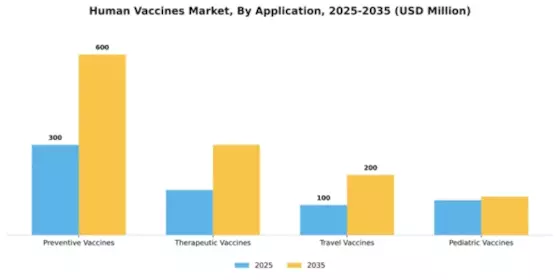
Preventive Vaccines (Dominant) vs. Therapeutic Vaccines (Emerging)
Preventive Vaccines represent the cornerstone of the Human Vaccines Market, characterized by their focus on prevention through immunization against infectious diseases. Their established nature and strong public health mandates make them the most significant segment. On the other hand, Therapeutic Vaccines are emerging as a transformative segment, aimed at treating diseases rather than preventing them. With advancements in biopharmaceuticals, these vaccines are gaining traction, particularly in cancer therapy. This diversification allows for a broader range of treatment options, thereby boosting interest and investment in research and development within this dynamic field.
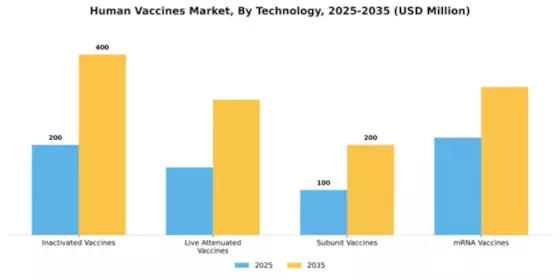
The human vaccines market is currently dominated by live attenuated vaccines, which hold the largest share due to their proven efficacy and long-term immunity benefits. Inactivated vaccines also have a significant presence, but live attenuated vaccines surpass them in market penetration. Subunit vaccines, while effective, occupy a smaller slice of the market, as do mRNA vaccines, which are gaining traction due to their groundbreaking approach to infection prevention.
Live Attenuated Vaccines (Dominant) vs. mRNA Vaccines (Emerging)
Live attenuated vaccines represent a traditional yet powerful category, often delivering robust immune responses through weakened forms of pathogens. Their efficacy in long-lasting immunity makes them the go-to choice for diseases like measles and mumps. In contrast, mRNA vaccines, although newer, are rapidly becoming a significant player; their quick development and adaptability have positioned them at the forefront, especially highlighted during global health crises like the COVID-19 pandemic. As research continues, the versatility and rapid production timeline of mRNA vaccines indicate their potential for future dominance in the market.
The Human Vaccines Market exhibits a diverse distribution across the various routes of administration. Intramuscular vaccinations continue to hold the largest share in the market due to their effectiveness and widespread acceptance among healthcare providers. Subcutaneous administration is also significant, yet its growing adoption highlights a notable trend in the market. Oral and intranasal routes are less common but are gradually gaining traction in specific vaccine applications, catering to patient preferences and enhancing compliance.
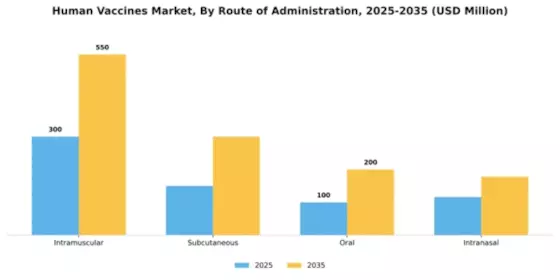
Intramuscular (Dominant) vs. Subcutaneous (Emerging)
Intramuscular administration of vaccines remains the dominant method in the Human Vaccines Market, known for its robust immune response and reliable delivery mechanisms. This route allows for deeper tissue penetration, which is crucial for vaccines that require strong systemic effects. In contrast, subcutaneous administration is emerging as a key player due to its advantages in patient comfort and potential for self-administration, appealing to populations that prioritize ease and accessibility. As innovations in formulations and devices continue, subcutaneous vaccines are expected to occupy a more substantial market share, particularly in pediatric and adult immunization campaigns.
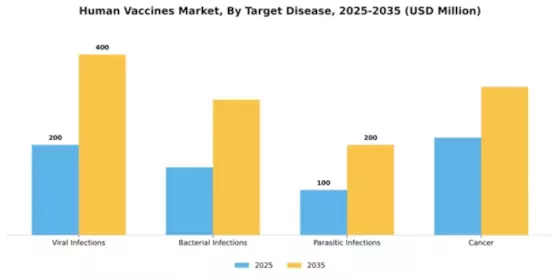
In the Human Vaccines Market, the segment distribution reveals viral infections as the dominant shareholder, primarily due to the high prevalence of diseases like influenza and hepatitis. Bacterial infections also hold a significant portion, with vaccines for diseases such as pneumococcal and meningococcal contributing to the market’s stability. Parasitic infections, although critical, represent a smaller fraction, while cancer vaccines are gaining traction, reflecting a dynamic shift in focus towards immunotherapeutic strategies.
Viral Infections (Dominant) vs. Cancer (Emerging)
Viral infections dominate the Human Vaccines Market largely because they address widespread and challenging infectious diseases like influenza and HPV. Established vaccines in this category maintain a strong market position due to continuous immunization programs and public health initiatives. Conversely, cancer vaccines are emerging strongly, driven by advancements in biotechnology and personalized medicine. This segment is characterized by innovative therapies that harness the immune system to combat various cancers, indicating a shift towards prophylactic and therapeutic vaccines. As research and development intensify in the oncology sector, the popularity and market share of cancer vaccines are expected to see exponential growth.
In the Human Vaccines Market, the distribution of market share among end users reveals Hospitals as the leading segment. They account for a significant portion of vaccine administration due to their established infrastructure and access to a large patient base. Clinics follow as a crucial segment, experiencing rapid growth as they shift toward more personalized care approaches. The convenience and accessibility offered by clinics are enhancing their role in the vaccination ecosystem, making them integral to future market dynamics.
Hospitals (Dominant) vs. Clinics (Emerging)
Hospitals represent the dominant end user segment in the Human Vaccines Market, primarily due to their comprehensive healthcare services and capacity to handle large patient volumes, particularly in urban areas. They are equipped with extensive facilities for vaccination, including specialized staff and technology, which helps in efficient vaccine distribution. On the other hand, Clinics are emerging as vital contributors to the market. They are adapting swiftly to changing healthcare demands, focusing on patient-centric approaches and community outreach. Their growth is driven by increased public awareness of vaccination benefits and a greater emphasis on preventive healthcare within local communities.
Get more detailed insights about Human Vaccines Market Request Free Sample
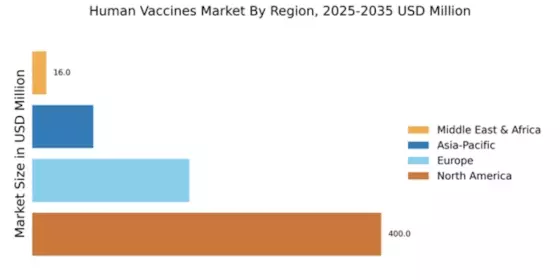
North America continues to lead the Human Vaccines Market, holding a significant share of 400.0M in 2024. The region's growth is driven by advanced healthcare infrastructure, high R&D investments, and a robust regulatory framework that supports vaccine development and distribution. Increasing vaccination rates and public health initiatives further bolster demand, ensuring a steady market expansion. The competitive landscape is characterized by major players such as Pfizer, Moderna, and Johnson & Johnson, which dominate the market with innovative vaccine solutions. The U.S. remains the largest contributor, supported by favorable government policies and funding for vaccine research. This environment fosters collaboration between public and private sectors, enhancing the region's position as a global leader in vaccine production and distribution.
Europe's Human Vaccines Market is projected to reach 180.0M by 2025, driven by increasing healthcare investments and a strong focus on vaccine innovation. Regulatory bodies like the European Medicines Agency (EMA) play a crucial role in facilitating the approval of new vaccines, ensuring safety and efficacy. The region's commitment to public health initiatives and vaccination campaigns further enhances market demand, particularly in response to emerging infectious diseases. Leading countries such as Germany, France, and the UK are at the forefront of vaccine development, hosting major pharmaceutical companies like Sanofi and GlaxoSmithKline. The competitive landscape is marked by collaborations between governments and private entities, fostering innovation and ensuring a diverse vaccine portfolio. As Europe continues to prioritize health security, the market is expected to grow steadily, supported by regulatory advancements and public health strategies.
The Asia-Pacific region is witnessing a significant surge in the Human Vaccines Market, projected to reach 70.0M by 2025. This growth is fueled by increasing healthcare expenditures, rising awareness of vaccination benefits, and government initiatives aimed at improving public health. Countries are focusing on expanding their immunization programs, which is critical in combating infectious diseases and enhancing overall health outcomes. Key players in this region include major pharmaceutical companies like Merck & Co. and AstraZeneca, which are actively involved in vaccine development and distribution. Countries such as China and India are leading the charge, supported by favorable regulatory environments and growing investments in healthcare infrastructure. The competitive landscape is evolving, with local manufacturers also emerging to meet the increasing demand for vaccines, ensuring a diverse market offering.
The Middle East and Africa (MEA) region is gradually developing its Human Vaccines Market, projected to reach 16.04M by 2025. The growth is driven by increasing healthcare investments and a rising awareness of vaccination importance. However, challenges such as limited access to healthcare and varying regulatory frameworks across countries can hinder market expansion. Governments are working to improve vaccination rates, which is essential for public health and disease prevention. Countries like South Africa and the UAE are leading the market, with efforts to enhance vaccine accessibility and affordability. The presence of key players such as Novartis and Bayer is crucial in addressing local health needs. Collaborative efforts between governments and international organizations are vital for overcoming barriers and ensuring that vaccines reach underserved populations, paving the way for a more robust market in the future.
The Human Vaccines Market is characterized by a dynamic competitive landscape, driven by innovation, strategic partnerships, and a focus on addressing emerging health threats. Key players such as Pfizer (US), Moderna (US), and Johnson & Johnson (US) are at the forefront, leveraging their extensive research capabilities and established market presence to enhance their operational focus. Pfizer (US) has been particularly aggressive in expanding its vaccine portfolio through collaborations and acquisitions, while Moderna (US) emphasizes mRNA technology to develop next-generation vaccines. Johnson & Johnson (US) continues to prioritize global access and affordability, which shapes its strategic positioning in various regions.The market structure appears moderately fragmented, with several players vying for market share. Key business tactics include localizing manufacturing to reduce costs and optimize supply chains, which is crucial in maintaining competitive pricing and ensuring timely delivery. The collective influence of these major companies fosters a competitive environment where innovation and operational efficiency are paramount.
In November Pfizer (US) announced a strategic partnership with a leading biotechnology firm to co-develop a novel vaccine targeting emerging viral strains. This collaboration is expected to enhance Pfizer's research capabilities and accelerate the development timeline, reflecting a broader trend of companies seeking synergies to bolster their R&D efforts. Such partnerships may significantly impact market dynamics by enabling faster responses to public health challenges.
In October Moderna (US) unveiled plans to expand its manufacturing facilities in Europe, aiming to increase production capacity for its mRNA vaccines. This move is strategically important as it positions Moderna to better serve the European market and respond to potential surges in vaccine demand. The expansion underscores the company's commitment to scaling operations and enhancing supply chain resilience, which is increasingly vital in the current market.
In September Johnson & Johnson (US) launched a new initiative focused on equitable vaccine distribution in low-income countries. This initiative not only aligns with global health goals but also enhances the company's reputation and market presence in regions where access to vaccines is limited. By prioritizing social responsibility, Johnson & Johnson is likely to strengthen its competitive edge and foster long-term loyalty among healthcare providers and governments.
As of December current trends in the Human Vaccines Market indicate a shift towards digitalization, sustainability, and the integration of AI technologies in vaccine development and distribution. Strategic alliances are increasingly shaping the competitive landscape, allowing companies to pool resources and expertise. Looking ahead, competitive differentiation is expected to evolve, with a greater emphasis on innovation and technology rather than solely on price. Companies that can reliably deliver high-quality vaccines while embracing sustainable practices are likely to emerge as leaders in this rapidly changing market.






Recent developments in the Global Human Vaccines Market have been significantly influenced by various factors, including the ongoing response to infectious diseases and advancements in vaccine technology. In October 2023, Pfizer announced a collaboration with Moderna to enhance mRNA vaccine production efficiency, reflecting an industry trend toward partnerships for rapid vaccine development. Meanwhile, Merck and Co confirmed their investment in next-generation vaccine platforms to combat emerging pathogens, showcasing a commitment to innovation in vaccine efficacy and safety.
Currently, companies like Gilead Sciences and Johnson and Johnson are focusing on expanding their pipeline, especially in therapeutic vaccines targeting HIV and cancer, while Roche and Novartis are investing in biopharmaceuticals to enhance immunogenicity. Notably, GlaxoSmithKline has reported a substantial increase in vaccine sales, attributing this to rising vaccination rates globally.
In the past two to three years, the market has seen significant growth due to increased vaccination campaigns, particularly against COVID-19, with AstraZeneca and Sanofi making strides in vaccine distribution. The combined efforts of these leading firms illustrate a dynamic landscape in the Global Human Vaccines Market, emphasizing innovation and strategic collaborations to address public health challenges.
The Human Vaccines Market is projected to grow at a 5.72% CAGR from 2025 to 2035, driven by technological advancements, increasing vaccination awareness, and expanding healthcare access.
New opportunities lie in:
By 2035, the Human Vaccines Market is expected to be robust, driven by innovation and strategic investments.
| MARKET SIZE 2024 | 666.04(USD Million) |
| MARKET SIZE 2025 | 704.14(USD Million) |
| MARKET SIZE 2035 | 1228.11(USD Million) |
| COMPOUND ANNUAL GROWTH RATE (CAGR) | 5.72% (2025 - 2035) |
| REPORT COVERAGE | Revenue Forecast, Competitive Landscape, Growth Factors, and Trends |
| BASE YEAR | 2024 |
| Market Forecast Period | 2025 - 2035 |
| Historical Data | 2019 - 2024 |
| Market Forecast Units | USD Million |
| Key Companies Profiled | Pfizer (US), Moderna (US), Johnson & Johnson (US), Sanofi (FR), GlaxoSmithKline (GB), Merck & Co. (US), AstraZeneca (GB), Novartis (CH), Bayer (DE) |
| Segments Covered | Application, Technology, Route of Administration, Target Disease, End User |
| Key Market Opportunities | Advancements in mRNA technology enhance vaccine development speed and efficacy in the Human Vaccines Market. |
| Key Market Dynamics | Rising demand for innovative vaccines drives competitive forces and regulatory adaptations in the Human Vaccines Market. |
| Countries Covered | North America, Europe, APAC, South America, MEA |
The Human Vaccines Market was valued at 666.04 USD Million in 2024.
The market is projected to reach a valuation of 1228.11 USD Million by 2035.
The expected CAGR for the Human Vaccines Market during the forecast period 2025 - 2035 is 5.72%.
Key players in the market include Pfizer, Moderna, Johnson & Johnson, Sanofi, GlaxoSmithKline, Merck & Co., AstraZeneca, Novartis, and Bayer.
The main segments by application include Preventive Vaccines, Therapeutic Vaccines, Travel Vaccines, and Pediatric Vaccines.
Preventive Vaccines are valued between 300.0 and 600.0 USD Million, whereas Therapeutic Vaccines are valued between 150.0 and 300.0 USD Million.
The market includes Live Attenuated Vaccines, Inactivated Vaccines, Subunit Vaccines, and mRNA Vaccines.
mRNA Vaccines are valued between 216.04 and 328.11 USD Million.
The prevalent routes of administration include Intramuscular, Subcutaneous, Oral, and Intranasal.
The market addresses Viral Infections, Bacterial Infections, Parasitic Infections, and Cancer.



Kindly complete the form below to receive a free sample of this Report

“This is really good guys. Excellent work on a tight deadline. I will continue to use you going forward and recommend you to others. Nice job”


“Thanks. It’s been a pleasure working with you, please use me as reference with any other Intel employees.”


“Thanks for sending the report it gives us a good global view of the Betaïne market.”


“Thank you, this will be very helpful for OQS.”


“We found the report very insightful! we found your research firm very helpful. I'm sending this email to secure our future business.”


“I am very pleased with how market segments have been defined in a relevant way for my purposes (such as "Portable Freezers & refrigerators" and "last-mile"). In general the report is well structured. Thanks very much for your efforts.”


“I have been reading the first document or the study, ,the Global HVAC and FP market report 2021 till 2026. Must say, good info! I have not gone in depth at all parts, but got a good indication of the data inside!”


“We got the report in time, we really thank you for your support in this process. I also thank to all of your team as they did a great job.”


“The Automotive 48V ECU Components Procurement Intelligence Study” was a complex project, but the Market Research Future (MRFR) team handled it with quality, agility, and customer-centricity. They delivered all requested data on time and within the agreed scope. The team, including Shubhendra Anand and Rahul Gotadki, was always readily available to clarify questions and swiftly implement necessary adjustments, driving the project to a successful conclusion within a very demanding timeframe.
I would also like to specifically commend Akshay Agarwal for his responsiveness and support at every stage—from our initial inquiry on May 6th through to final delivery on June 18th. His dedication made the entire process seamless.”



