Download Free Sample
Kindly complete the form below to receive a free sample of this Report
Maternity & Personal Care Market Size, Share, Industry Trend & Analysis Research Report: Information By Product (Skin Care, Hair Care, Oral Care, Cosmetics and Others), By End User (Male, Female and Children & Infants), By Distribution Channel (Online and Offline) And By Region (North America, Europe, Asia-Pacific, And Rest Of The World) – Forecast Till 2035
As per Market Research Future analysis, the Maternity & Personal Care Market was estimated at 62.5 USD Billion in 2024. The Maternity & Personal Care industry is projected to grow from 66.81 USD Billion in 2025 to 130.23 USD Billion by 2035, exhibiting a compound annual growth rate (CAGR) of 6.9% during the forecast period 2025 - 2035
The Maternity and Personal Care Market is experiencing a transformative shift towards natural and personalized products, driven by evolving consumer preferences.
| 2024 Market Size | 62.5 (USD Billion) |
| 2035 Market Size | 130.23 (USD Billion) |
| CAGR (2025 - 2035) | 6.9% |
Procter & Gamble (US), Johnson & Johnson (US), Unilever (GB), Kimberly-Clark (US), Nestle (CH), Burt's Bees (US), Earth Mama Organics (US), Huggies (US), Lansinoh (US)
Our Impact
Enabled $4.3B Revenue Impact for Fortune 500 and Leading Multinationals
Partnering with 2000+ Global Organizations Each Year
30K+ Citations by Top-Tier Firms in the Industry
The Maternity & Personal Care Market is currently experiencing a dynamic evolution, driven by changing consumer preferences and an increasing awareness of health and wellness. As more individuals prioritize natural and organic products, brands are adapting their offerings to meet these demands. This shift is evident in the growing popularity of eco-friendly and sustainable options, which appeal to environmentally conscious consumers. Furthermore, the rise of digital platforms has transformed how products are marketed and sold, allowing for greater accessibility and convenience. Companies are leveraging social media and e-commerce to reach a broader audience, enhancing their visibility and engagement with potential customers. In addition, the Maternity & Personal Care Market is witnessing a surge in innovation, with brands investing in research and development to create advanced formulations that cater to specific needs. This includes products designed for sensitive skin, hypoallergenic options, and those enriched with vitamins and minerals. The emphasis on personalization is also becoming more pronounced, as consumers seek tailored solutions that address their unique requirements. Overall, the Maternity & Personal Care Market appears poised for continued growth, driven by evolving consumer expectations and a commitment to quality and sustainability.
There is a noticeable trend towards the use of natural and organic ingredients in maternity and personal care products. Consumers are increasingly seeking items that are free from harmful chemicals, which has prompted brands to reformulate their offerings to align with these preferences.
The Maternity & Personal Care Market is undergoing a significant digital transformation. Brands are utilizing online platforms and social media to enhance their marketing strategies, allowing for direct engagement with consumers and a more personalized shopping experience.
Personalization is becoming a key focus within the Maternity & Personal Care Market. Companies are developing products that cater to individual needs, offering customized solutions that resonate with consumers seeking specific benefits and tailored experiences.
The maternity & personal care Market is significantly influenced by the rise of e-commerce and online shopping platforms. As consumers increasingly prefer the convenience of purchasing products online, brands are adapting their strategies to enhance their digital presence. Market data suggests that online sales in the personal care sector are projected to account for over 30% of total sales by 2026. This shift not only provides consumers with greater access to a wider range of products but also allows for personalized shopping experiences through targeted marketing. Consequently, the Maternity & Personal Care Market is evolving to meet the demands of a digitally-savvy consumer base.
The Maternity & Personal Care Market is experiencing a notable surge in awareness regarding maternal health. This heightened consciousness is largely driven by educational campaigns and the proliferation of information through digital platforms. As a result, expectant mothers are increasingly seeking products that cater to their specific needs, such as prenatal vitamins and skincare designed for sensitive skin. Market data indicates that the maternal health segment is projected to grow at a compound annual growth rate of approximately 6% over the next five years. This growth reflects a broader trend where consumers prioritize health and wellness, thereby influencing their purchasing decisions in the Maternity & Personal Care Market.
The Maternity & Personal Care Market is witnessing a significant shift towards eco-friendly and sustainable products. Consumers are becoming more environmentally conscious, leading to an increased demand for organic and natural ingredients in maternity and personal care items. This trend is reflected in market data, which shows that the organic personal care segment is expected to grow at a rate of 8% annually. Brands that prioritize sustainability in their product offerings are likely to gain a competitive edge, as consumers are more inclined to support companies that align with their values. This movement towards eco-friendliness is reshaping the landscape of the Maternity & Personal Care Market.
Cultural shifts in parenting styles and family dynamics are playing a crucial role in shaping the Maternity & Personal Care Market. As societal norms evolve, there is a growing emphasis on shared parenting responsibilities and the importance of mental health for mothers. This change is reflected in the increasing demand for products that support both physical and emotional well-being, such as postpartum recovery items and mental health resources. Market trends indicate that products catering to these evolving needs are likely to see substantial growth, as families seek comprehensive solutions that address the multifaceted aspects of maternity. This cultural evolution is redefining the landscape of the Maternity & Personal Care Market.
Technological innovations are reshaping the Maternity & Personal Care Market, leading to the development of advanced products that cater to the unique needs of mothers and infants. Innovations such as smart wearables for monitoring maternal health and AI-driven personalized skincare solutions are becoming increasingly prevalent. These advancements not only enhance product efficacy but also improve user experience. For instance, the integration of technology in baby monitoring devices has seen a rise in demand, with the market for such products expected to reach several billion dollars in the coming years. This trend indicates a shift towards more sophisticated offerings within the Maternity & Personal Care Market.
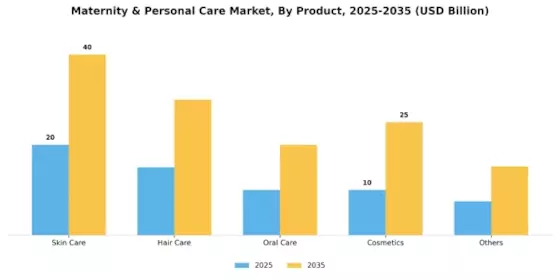
In the Maternity & Personal Care Market, the product segment reveals a diverse distribution, with Skin Care emerging as the largest share holder. It is closely followed by hair care, which is quickly gaining traction owing to the rising awareness of maternal health during pregnancy. Oral Care and Cosmetics hold smaller portions of the market share, while the 'Others' segment which comprises niche products, reflects the adaptability and evolving needs of consumers.
Skin Care (Dominant) vs. hair care (Emerging)
Skin Care continues to dominate the Maternity & Personal Care Market, catering to the specific needs of expecting and new mothers with products designed for sensitivity and hydration. Items like stretch mark creams and soothing lotions are prevalent, addressing skin changes during pregnancy. On the other hand, Hair Care is considered an emerging segment, experiencing rapid growth fueled by increased marketing and awareness. Consumers prioritize products that promote healthy hair growth and reduce postpartum hair loss, leading to innovative formulations tailored for maternal concerns.
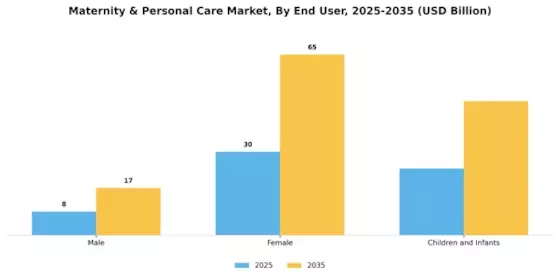
In the Maternity & Personal Care Market, the distribution of market share among end users is clearly tilted towards females, who represent the largest segment. This demographic accounts for a significant portion of overall sales, driven by the variety of personal care products tailored specifically for expectant and new mothers. Female consumers prioritize quality and safety, making them highly responsive to brands that emphasize natural and organic ingredients in their offerings. Conversely, children and infants represent the fastest-growing segment within this market. The increasing awareness of the importance of gentle and hypoallergenic products for young skin has led to a surge in demand, capturing the attention of brands focusing on this category.
Female (Dominant) vs. Children and Infants (Emerging)
The female segment in the Maternity & Personal Care Market is characterized by a strong demand for specialized products, including skincare, hygiene, and wellness items designed for expecting and new mothers. Females are often brand loyal and tend to spend more on premium products that promise safety and efficacy. In contrast, the children and infants segment is emerging rapidly, cultivated by rising parental concern about product safety and the growing trend towards eco-friendly and non-toxic formulations. Brands are innovating with formulations that cater to the delicate needs of infants, thus positioning themselves to seize market share. As parents become more discerning, the children's category is increasingly becoming a focal point of growth within the maternity sector.
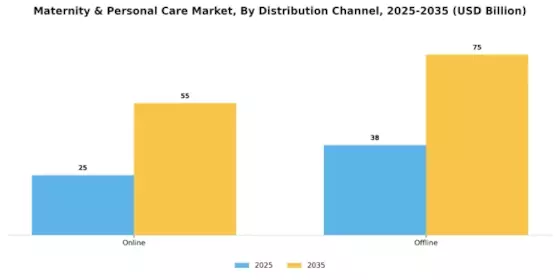
In the Maternity & Personal Care Market, the distribution channel landscape is primarily dominated by online sales, which have gained significant traction in recent years. This trend can be attributed to increased internet penetration and the convenience offered by e-commerce platforms. Consumers are increasingly turning to online shopping for maternity and personal care products, enjoying the ease of comparison shopping, home delivery, and access to a wider range of products. Conversely, offline channels have experienced a resurgence, particularly as personalized shopping experiences in brick-and-mortar stores become more appealing. This segment is recognized as the fastest-growing, driven by a desire for immediate access to products, personalized service from retail staff, and the tactile experience of shopping. Retailers are adapting to consumer preferences by enhancing in-store experiences and offering exclusive products, further fueling growth in this channel.
Online (Dominant) vs. Offline (Emerging)
The online distribution channel in the Maternity & Personal Care Market stands out as the dominant force, characterized by a vast selection of products and accessibility for consumers at different times of the day. The channel thrives on the convenience of shopping from home and often features promotional offers that attract price-sensitive customers. In contrast, the offline distribution channel is emerging vibrantly, focusing on creating engaging shopping experiences that emphasize customer service and product interaction. Retailers are adapting to consumer desires by providing specialized sections for maternity products and hosting in-store events. This adaptation leverages the strengths of personal touch and instant gratification, appealing to customers looking for immediate purchase solutions.
Get more detailed insights about Maternity & Personal Care Market Request Free Sample
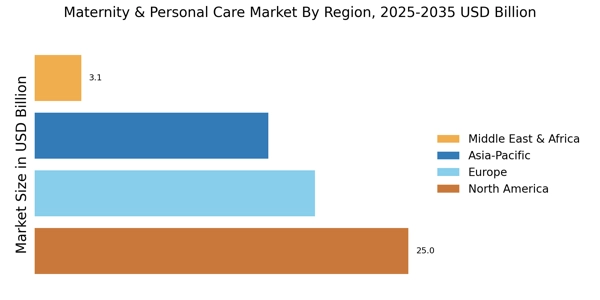
North America is the largest market for maternity and personal care products, holding approximately 40% of the global market share. Key growth drivers include increasing awareness of maternal health, rising disposable incomes, and a growing trend towards organic and natural products. Regulatory support from agencies like the FDA ensures product safety and efficacy, further boosting consumer confidence. The United States is the leading country in this region, with significant contributions from Canada. Major players such as Procter & Gamble, Johnson & Johnson, and Kimberly-Clark dominate the landscape, offering a wide range of products. The competitive environment is characterized by continuous innovation and marketing strategies aimed at new parents, ensuring a robust market presence for these key players.
Europe is the second-largest market for maternity and personal care products, accounting for approximately 30% of the global share. The region is witnessing a shift towards sustainable and eco-friendly products, driven by increasing consumer awareness and stringent regulations on product safety and environmental impact. The EU's REACH regulation plays a crucial role in ensuring that products meet high safety standards, fostering consumer trust. Leading countries in this market include Germany, France, and the UK, where brands are increasingly focusing on organic and natural ingredients. Key players like Unilever and Burt's Bees are adapting their offerings to meet the growing demand for sustainable products. The competitive landscape is marked by innovation and collaboration among brands to enhance product offerings and market reach.
Asia-Pacific is rapidly emerging as a significant player in the maternity and personal care market, holding about 25% of the global market share. The region's growth is driven by increasing birth rates, rising disposable incomes, and a growing middle class. Additionally, government initiatives aimed at improving maternal health and wellness are catalyzing demand for quality products. Countries like China and India are at the forefront of this growth, with supportive policies enhancing market dynamics. China is the largest market in the region, followed closely by India, where local and international brands are competing to capture the growing consumer base. Key players such as Huggies and Lansinoh are expanding their product lines to cater to diverse consumer needs. The competitive landscape is characterized by a mix of established brands and emerging local players, driving innovation and market penetration.
The Middle East and Africa region is witnessing a gradual increase in the maternity and personal care market, currently holding about 5% of the global share. Key growth drivers include rising awareness of maternal health, urbanization, and increasing disposable incomes. Government initiatives aimed at improving healthcare access and maternal welfare are also contributing to market growth, creating a favorable environment for new entrants and established brands alike. Leading countries in this region include South Africa and the UAE, where there is a growing demand for high-quality maternity products. The competitive landscape is evolving, with both local and international brands vying for market share. Companies like Earth Mama Organics are gaining traction by focusing on organic and natural product offerings, appealing to health-conscious consumers.
Leading market players are investing hugely in research and development in order to expand their product lines, which will help the Maternity & Personal Care market grow even more. Market players are also undertaking a variety of strategic activities to spread their footprint, with important market developments including contractual agreements, new product launches, mergers and acquisitions, higher investments, and collaboration with other organizations. To spread and survive in a more competitive and rising market climate, the Maternity & Personal Care industry must offer cost-effective items.Manufacturing locally to reduce the operational costs is one of the key business tactics used by the manufacturers in the Maternity and personal Care industry to benefit clients and grows the market sector. In recent years, the Maternity & Personal Care industry has offered some of the most significant advantages to the healthcare industry.Major players in the Maternity & Personal Care market, including Edgewell Personal Care, Kaya Ltd, Johnson & Johnson, Seraphine, Jubiliant Ingrevea, Proctor & Gamble Co., Destination Maternity Corporation, Amoralia, Mama Mio Inc., Unilever plc., and others, are trying to increase market demand by investing in research and development operations.Johnson & Johnson is a multinational corporation operating in the healthcare industry. It is one of the largest and most well-known healthcare companies in the world. Founded in the year 1886 and headquartered in New Brunswick, New Jersey, United States, it operates in the healthcare sector, encompassing pharmaceuticals, medical devices and consumer health products. The company has a significant presence globally, with operations in more than sixty countries and products sold in nearly every country around the world.In March Johnson & Johnson announced the acquisition of Baby2Baby, a non-profit organization that provides essential items to children living in poverty. The acquisition is expected to help Johnson & Johnson expand its reach to families in need and accelerate its efforts to promote equity in maternal and child deaths.Kimberly-Clark Corporation is a multinational conglomerate that operates in the consumer goods and healthcare industries. The company is known for producing a wide range of products, including personal care, hygiene and professional products. Kimberly-Clark, founded in the year 1872 and headquartered in Dallas, Texas, United States, operates primarily in the consumer goods and healthcare sectors, with a focus on personal and healthcare products. It has a significant presence, with the operations in more than 175 countries and products sold in nearly every country worldwide.In January the company declared the acquisition of Softex Indonesia, a leading personal care company in Indonesia. The acquisition is anticipated to help Kimberly-Clark expand its presence in the Indonesian market and strengthen its portfolio of personal care products.



May 2023: Unilever announced a partnership with Motherkind, a company that provides personalized postpartum care products and services. The partnership will allow Unilever to offer new postpartum care products and services to its consumers.
July 2022: Procter & Gamble announced a partnership with Bloomlife, a company that develops remote patient monitoring solutions for pregnant women. The partnership will allow Procter & Gamble to integrate Bloomlife’s technology into its own maternity care products, such as prenatal vitamins and diapers.
February 2021: New creation of Hydroxycut, CUT Energy, a delectable clean energy drink, was introduced. This powerful mix was carefully formulated for the regular energy drink consumers, the exercise enthusiasts, and dieters looking to lose weight.
The Maternity & Personal Care Market is projected to grow at a 6.9% CAGR from 2025 to 2035, driven by increasing consumer awareness and demand for organic products.
New opportunities lie in:
By 2035, the market is expected to achieve substantial growth, reflecting evolving consumer preferences and innovative product offerings.
| MARKET SIZE 2024 | 62.5(USD Billion) |
| MARKET SIZE 2025 | 66.81(USD Billion) |
| MARKET SIZE 2035 | 130.23(USD Billion) |
| COMPOUND ANNUAL GROWTH RATE (CAGR) | 6.9% (2025 - 2035) |
| REPORT COVERAGE | Revenue Forecast, Competitive Landscape, Growth Factors, and Trends |
| BASE YEAR | 2024 |
| Market Forecast Period | 2025 - 2035 |
| Historical Data | 2019 - 2024 |
| Market Forecast Units | USD Billion |
| Key Companies Profiled | Procter & Gamble (US), Johnson & Johnson (US), Unilever (GB), Kimberly-Clark (US), Nestle (CH), Burt's Bees (US), Earth Mama Organics (US), Huggies (US), Lansinoh (US) |
| Segments Covered | Product, End User, Distribution Channel, Region |
| Key Market Opportunities | Integration of sustainable materials in Maternity and Personal Care Market products enhances consumer appeal and market growth. |
| Key Market Dynamics | Rising consumer demand for organic and natural products drives innovation in the Maternity and Personal Care Market. |
| Countries Covered | North America, Europe, APAC, South America, MEA |
The Skin Care segment had the highest valuation, ranging from 20.0 to 40.0 USD Billion.
The Hair Care segment is valued between 15.0 and 30.0 USD Billion, while the Oral Care segment ranges from 10.0 to 20.0 USD Billion.
The Offline distribution channel is projected to have a valuation between 37.5 and 75.23 USD Billion in 2035.



Kindly complete the form below to receive a free sample of this Report

“This is really good guys. Excellent work on a tight deadline. I will continue to use you going forward and recommend you to others. Nice job”


“Thanks. It’s been a pleasure working with you, please use me as reference with any other Intel employees.”


“Thanks for sending the report it gives us a good global view of the Betaïne market.”


“Thank you, this will be very helpful for OQS.”


“We found the report very insightful! we found your research firm very helpful. I'm sending this email to secure our future business.”


“I am very pleased with how market segments have been defined in a relevant way for my purposes (such as "Portable Freezers & refrigerators" and "last-mile"). In general the report is well structured. Thanks very much for your efforts.”


“I have been reading the first document or the study, ,the Global HVAC and FP market report 2021 till 2026. Must say, good info! I have not gone in depth at all parts, but got a good indication of the data inside!”


“We got the report in time, we really thank you for your support in this process. I also thank to all of your team as they did a great job.”


“The Automotive 48V ECU Components Procurement Intelligence Study” was a complex project, but the Market Research Future (MRFR) team handled it with quality, agility, and customer-centricity. They delivered all requested data on time and within the agreed scope. The team, including Shubhendra Anand and Rahul Gotadki, was always readily available to clarify questions and swiftly implement necessary adjustments, driving the project to a successful conclusion within a very demanding timeframe.
I would also like to specifically commend Akshay Agarwal for his responsiveness and support at every stage—from our initial inquiry on May 6th through to final delivery on June 18th. His dedication made the entire process seamless.”



