
Top Industry Leaders in the Netherlands Sustainable Chemicals Market
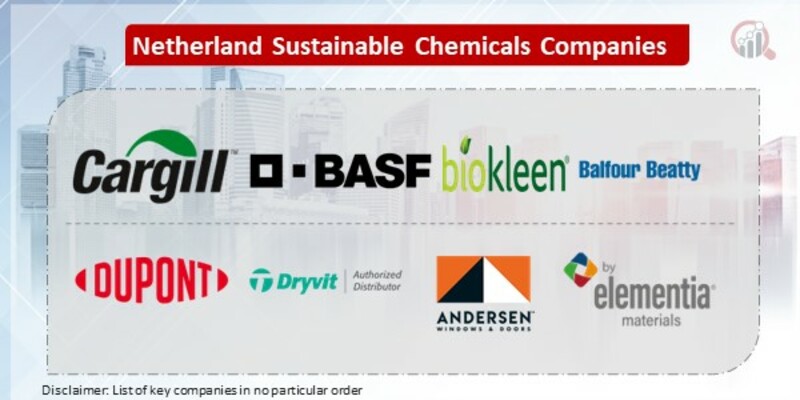
The Netherlands is emerging as a global leader in the sustainable chemicals market, fueled by a combination of factors: ambitious sustainability goals, strong government support, a robust chemical industry, and a thriving innovation ecosystem. This dynamic market landscape fosters intense competition, with players adopting diverse strategies to secure market share and drive growth.
Strategies for Success:
Companies operating in the Netherlands are employing a variety of strategies to gain a competitive edge. Some key approaches include:
- Research and Development: Investing in R&D is crucial for developing novel sustainable chemicals and processes. DSM, for example, has established a dedicated Bio-based Building Blocks and Chemicals platform, while AkzoNobel is focusing on bio-based paints and coatings.
- Partnerships and Collaborations: Collaboration with universities, research institutes, and other companies fosters innovation and accelerates the development of sustainable solutions. Biofaction, for instance, has partnered with Shell to develop a bio-based solvent for the petrochemical industry.
- Circular Economy: Transitioning to a circular economy model, where waste is minimized and resources are reused, is a key driver of sustainability. Companies like Avantium are developing bio-based polymers that can be readily recycled and reused.
- Sustainable Supply Chains: Building sustainable supply chains ensures the ethical and environmentally responsible sourcing of raw materials. Royal DSM, for instance, has established partnerships with farmers to secure sustainable feedstocks for its bio-based chemicals production.
Market Share Drivers:
- Product Portfolio: Offering a diverse range of sustainable chemicals catering to various applications like bio-based polymers, bio-solvents, and bio-alcohols is crucial. Companies like Royal DSM and Avantium excel in this aspect.
- Technology & Innovation: Continuous investment in R&D and development of innovative production processes like biocatalysis and fermentation allows players like Corbion and Green Chemistry to stay ahead of the curve.
- Circular Economy Integration: Integrating waste streams and bio-based feedstocks into production cycles creates a closed-loop system and boosts sustainability credentials. Neste and EnerChem are leading the charge in this area.
- Partnerships & Collaborations: Building strategic partnerships with universities, research institutes, and other stakeholders fosters knowledge sharing and accelerates innovation. Examples include AkzoNobel's collaboration with Wageningen University and LyondellBasell's partnership with Neste.
- Sustainability Certifications & Transparency: Demonstrating commitment to environmental and social responsibility through certifications like Cradle to Cradle and Ecolabel attracts eco-conscious consumers and businesses. Ecover and Bioplastics are known for their transparency in this regard.
- Cargill Inc
- BASF SE
- Bio-Kleen Products Inc.
- Balfour Beatty PLC
- DuPont Industrial
- Biosciences, Dryvit Systems Inc
- Anderson Corporation
- Palmer Industries Inc.
- Plycem USA Inc.
- Silver Line Building Products LLC
Recent Developments
- July-August 2023: Increased focus on bio-based building blocks like bio-ethylene and bio-propylene, with companies like SABIC and Shell investing in expanding production capacities.
- September-October 2023: Growing demand for bio-based solvents from the cleaning and personal care industries, driving innovation in this segment by companies like Ecover and Green Chemistry.
- November-December 2023: Rise in collaborations between sustainable chemicals companies and downstream industries like textiles, food, and pharmaceuticals to develop and integrate sustainable solutions into their value chains.



















