Oral Care Market (2026 - 2035)

Global Oral Care Market Size, Share, Industry Trend & Analysis Research Report: By Product Type (Toothpaste, Mouthwash/Rinses, Toothbrushes (Manual & Powered), Dental Accessories, Others), By Ingredient (Conventional, Natural/Organic), By End User (Adults, Kids/Children), By Distribution Channel (Supermarkets/Hypermarkets, Drug Stores/Pharmacies, Online Retail Stores, Others), By Geography (North America, Europe, Asia-Pacific, South America, Middle East & Africa) - Forecast to 2035

Forecast Period
2026-2035
CAGR
5.82%
2025 Market Size
USD 52.80 billion
2035 Market Size
USD 93.00 billion
Consumer and Retail ● Updated July 14, 2026 Report ID: MRFR/CG/5064-HCR | Pages: 128 | Author: Snehal Singh

Oral Care Market Summary

The Oral Care Market reached an estimated USD 52.80 billion in 2025 and is projected to grow from USD 55.87 billion in 2026 to USD 93.00 billion by 2035, registering a CAGR of 5.82% during the forecast period. This expansion is anchored in rising global awareness of preventive healthcare and WHO initiatives linking oral hygiene to systemic health outcomes, including cardiovascular and respiratory disease prevention [1]. Government-backed public health campaigns across more than 130 countries have shifted consumer spending from reactive dental treatments toward daily prevention routines, creating sustained demand across product categories.

The Oral Care Market is seeing a major shift as technology-enhanced options are replacing old manual hygiene products. Smart-connected devices, AI-enabled diagnostic apps and improved formulation science are changing the game on what consumers want. According to the World Health Organization, the world’s yearly spend on dental care is more than USD 550 billion, and a significant share of this spend is moving away from professional interventions alone and into over-the-counter oral care items [2]. This movement is being driven by ingredient transparency and clean-label formulations, especially among millennial and Gen Z consumers.


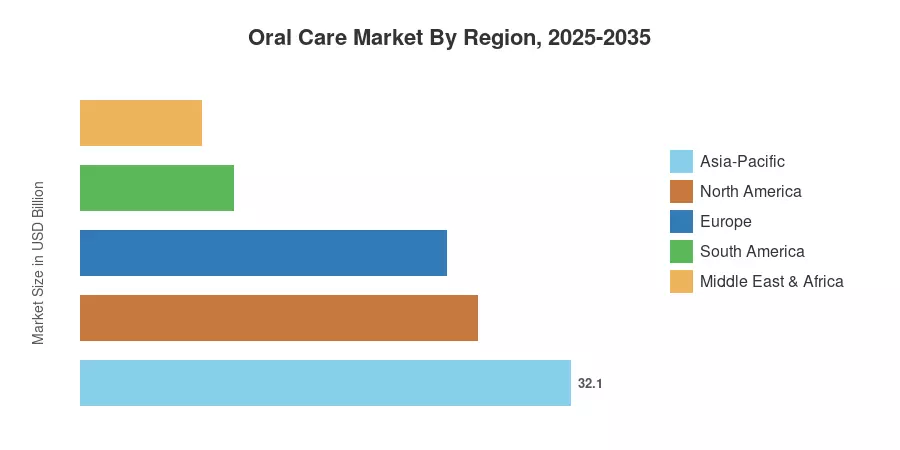
Asia-Pacific holds the highest part of the Oral Care Market, accounting for almost 32.1% of global sales, owing to population scale and increasing disposable incomes across China and India. It also has the fastest CAGR of 8.39% for the forecast period until 2035. North America is the second largest contributor with about 26.0%, due to developed retail infrastructure and high per capita expenditure. Europe, with a 24.0% share, is expected to rise steadily into 2035, driven by premiumization tendencies.


Key Report Takeaways

• By Product Type

  • Toothpaste accounted for 46.3% of the global Oral Care Market revenue in 2025, reflecting its status as the foundational hygiene product across all demographics.
  • Mouthwash and rinses are forecast to register a 7.24% CAGR through 2035, the fastest among product segments.

• By Ingredient & End User

  • Conventional formulations controlled approximately 85.0% of the Oral Care Market in 2025, although natural and organic variants are projected to expand at a 7.62% CAGR.
  • The kids and children segment is poised to grow at an 8.18% CAGR through 2035, outpacing adult segment growth.

• By Geography

  • Asia-Pacific captured 32.1% of the Oral Care Market value in 2025 and is anticipated to deliver the highest regional CAGR of 8.39%.
  • Online retail stores will register the fastest distribution channel CAGR at 8.82% through 2035.


Market Size and Forecast (2021–2035)

The estimations are based on primary interviews with industry stakeholders, annual reports of listed oral care manufacturers and trade data from national statistics agencies. 2021-2024 historical data are based on actual market performance, and 2025 is the calibrated base year. Forecast forecasts (2026-2035) are based on a unique econometric model that considers population growth, income elasticity and category penetration rates.
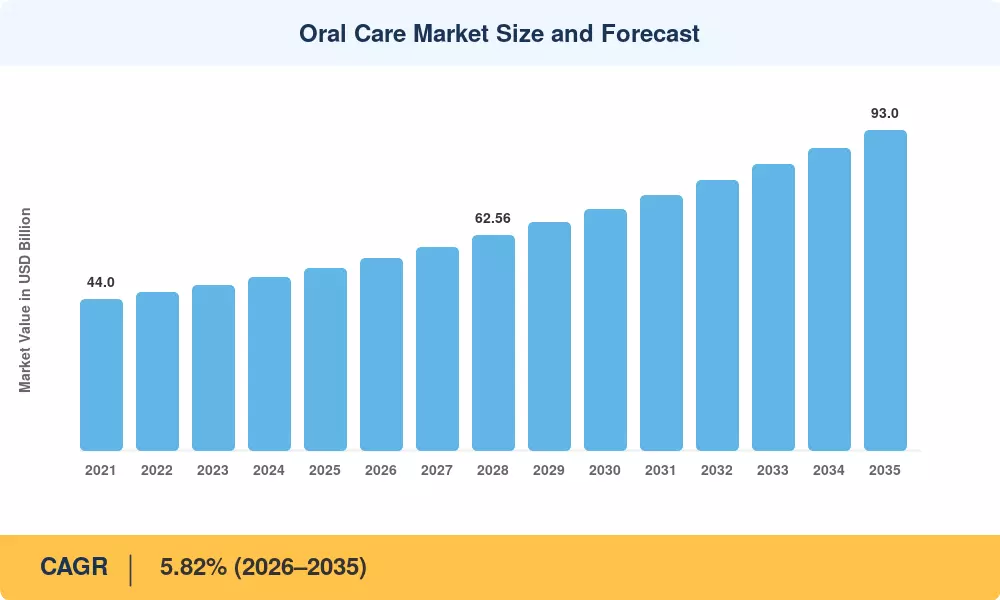
Oral Care Market Size and Forecast
Our Impact
Enabled $4.3B Revenue Impact for Fortune 500 and Leading Multinationals
Partnering with 2000+ Global Organizations Each Year
30K+ Citations by Top-Tier Firms in the Industry

Driver Impact Analysis

Driver ~% Impact on CAGR Geographic Relevance Impact Timeline
Rising oral-systemic health awareness +1.4% Global Short-term (≤2 yr)
Premiumization and ingredient innovation +1.1% North America, Europe Medium-term (2–4 yr)
E-commerce and DTC channel expansion +0.9% Global Short-term (≤2 yr)
Urbanization in emerging economies +0.8% Asia-Pacific, South America Long-term (≥4 yr)
Pediatric oral health mandates +0.5% Europe, Asia-Pacific Medium-term (2–4 yr)
Smart oral care device proliferation +0.6% North America, Europe Medium-term (2–4 yr)
Natural and organic product demand +0.5% Global Long-term (≥4 yr)


Oral-Systemic Health Awareness

The connection between periodontal disease and conditions such as diabetes, cardiovascular disease, and adverse pregnancy outcomes has moved from clinical journals into mainstream consumer consciousness. The WHO's Global Oral Health Action Plan (2023–2030) set targets for member states to integrate oral health into primary care frameworks, directly expanding the addressable consumer base for the Oral Care Market [1]. Insurance providers in North America and parts of Europe have begun bundling dental prevention products into wellness benefit packages, stimulating demand beyond discretionary spending.

E-Commerce and Direct-to-Consumer Expansion

Online retail is reshaping how consumers discover and purchase oral care products. Subscription models — pioneered by digitally native brands and now adopted by legacy players — reduce purchase friction and improve customer lifetime value. Amazon's oral care category alone grew over 18% year-over-year in 2024, according to marketplace analytics from Edge by Ascential [8]. Social commerce in Southeast Asia and India adds another layer of acceleration to the Oral Care Market.

Premiumization and Ingredient Innovation

Consumers are trading up from basic products to advanced formulations featuring hydroxyapatite, activated charcoal, and probiotic compounds. The average selling price of toothpaste in the U.S. rose by approximately 11% between 2022 and 2024, reflecting a willingness to pay for clinical-grade performance at home. This premiumization trend extends to mouthwash, where alcohol-free and microbiome-friendly variants command shelf-space premiums of 30–45% over conventional alternatives.


Restraints Impact Analysis

Restraint ~% Impact on CAGR Geographic Relevance Impact Timeline
Price sensitivity in low-income markets –0.7% South America, MEA, South Asia Long-term (≥4 yr)
Regulatory fragmentation on ingredient claims –0.5% Global Medium-term (2–4 yr)
Counterfeit product proliferation –0.4% Asia-Pacific, Africa Long-term (≥4 yr)
Raw material cost volatility –0.3% Global Short-term (≤2 yr)
Consumer skepticism toward novel ingredients –0.2% Europe, Japan Medium-term (2–4 yr)


Price Sensitivity in Emerging Economies

Despite rising incomes, a large share of consumers in Sub-Saharan Africa, South Asia, and parts of Latin America still rely on sachet-format or economy-tier products. The average per-capita oral care expenditure in these regions remains below USD 5 annually, compared to USD 40–55 in North America [12]. This price ceiling limits manufacturers' ability to migrate consumers toward higher-margin SKUs and constrains overall Oral Care Market revenue growth in these geographies.

Regulatory Fragmentation on Claims

Oral care products sit at the intersection of cosmetic and therapeutic regulation, and standards vary sharply by jurisdiction. The EU's Cosmetic Products Regulation classifies most toothpaste as cosmetic, while the U.S. FDA treats fluoride-based products as over-the-counter drugs [13]. This fragmentation increases compliance costs and delays product launches, particularly for multinational brands seeking simultaneous rollouts across the Oral Care Market.


Oral Care Market Opportunities

Oral Microbiome-Based Product Lines

Advances in microbiome science are opening a new product category within the Oral Care Market. Probiotic toothpaste and prebiotic rinses designed to promote beneficial bacteria — rather than indiscriminate antimicrobial action — represent a USD 2+ billion incremental opportunity by 2032 [17]. Early movers, including Blis Technologies and several private-label entrants, have demonstrated strong clinical validation.

Rural Penetration in India and Southeast Asia

India's Ayushman Bharat health initiative and Indonesia's JKN national insurance scheme are expanding dental awareness in rural populations that historically lacked access to branded oral care. With over 900 million potential consumers in rural India alone, brands that develop affordable sachets and regional flavor profiles stand to gain a meaningful share in the Oral Care Market.

Smart Oral Care Ecosystems

Connected toothbrushes that sync with mobile apps and tele-dentistry platforms create opportunities for recurring revenue models. Sensor-equipped devices can recommend replacement heads, complementary products, and professional check-ups — transforming a transactional purchase into a platform relationship. The smart oral care segment is projected to surpass USD 5 billion globally by 2033 [10].

Sustainability and Refillable Packaging

Circular packaging models — refillable toothpaste tubes, compostable brush handles, and waterless formulations — address both regulatory pressure and consumer demand. The EU's Packaging and Packaging Waste Regulation (PPWR), effective from 2025, mandates recycled content thresholds that will push the Oral Care Market toward packaging innovation [18].

Data Monetization via Dental Health Platforms

Aggregated and anonymized brushing behavior data collected through smart devices offers commercial value to dental insurers, public health agencies, and clinical researchers. Platform-based data licensing models could generate ancillary revenue streams exceeding USD 800 million by 2034.


Oral Care Market Future Outlook

AI-Enabled Personalized Oral Health

Artificial intelligence will increasingly power personalized oral care recommendations. Smart toothbrushes equipped with pressure sensors and camera modules can already detect early-stage plaque buildup and gingival inflammation [10]. By 2030, AI-integrated platforms are expected to connect real-time brushing data with tele-dentistry consultations, creating feedback loops that improve outcomes and strengthen brand loyalty across the Oral Care Market.

Sustainability as a Competitive Imperative

The PPWR regulation in Europe and similar Extended Producer Responsibility frameworks in Canada and parts of Asia will force the Oral Care Market to overhaul packaging strategies by 2028 [18]. Brands that invest early in refillable systems, plastic-negative pledges, and waterless formulation technologies will capture the growing segment of environmentally conscious consumers willing to pay 15–20% premiums for sustainable alternatives.

Convergence of Beauty and Oral Care

The blurring boundary between beauty and oral health — visible in the growth of whitening products, aesthetic aligners, and oral cosmetics — positions the Oral Care Market at the intersection of two high-growth consumer categories. South Korean brands have already pioneered "oral beauty" lines that package breath fresheners and lip treatments alongside dental hygiene products, a trend now spreading to Western markets [21].

Platform Economics and Subscription Models

Subscription-based oral care services have grown from niche experiments to a meaningful channel, with brands like Quip, Burst, and Colgate's direct programs demonstrating retention rates above 70% after 12 months [22]. The recurring revenue model reduces customer acquisition cost, amortization periods and provides steady demand visibility — a structural advantage that will shape competitive dynamics in the Oral Care Market through 2035.


Oral Care Market Segmentation

By Product Type

Segment Key Metric Primary Demand Driver
Toothpaste 46.3% revenue share (2025) Daily-use essential across all demographics
Mouthwash/Rinses CAGR 7.24% (2026–2035) Therapeutic positioning and fresh breath demand
Toothbrushes (Manual & Powered) USD 11.20 billion (2025) Replacement cycle and smart device upgrades
Dental Accessories CAGR 6.90% (2026–2035) Interdental cleaning awareness
Others 5.8% revenue share (2025) Denture care, specialty treatments


Toothpaste remains the anchor segment of the Oral Care Market, generating nearly half of all revenue through a combination of universal daily usage and continuous premiumization. Formulations incorporating hydroxyapatite, charcoal, and sensitivity-relief compounds command price points 2–3x higher than basic variants. Mouthwash and rinses represent the fastest-growing product category, fueled by consumer interest in whole-mouth hygiene and therapeutic formulations targeting gum health and antiseptic mouthwash functionality.

By Ingredient

Segment Key Metric Primary Demand Driver
Conventional 85.0% revenue share (2025) Established clinical efficacy, price accessibility
Natural/Organic CAGR 7.62% (2026–2035) Clean-label demand, ingredient transparency


Conventional formulations dominate the Oral Care Market by a wide margin, benefiting from decades of clinical evidence and dentist endorsements. Natural and organic products, while still a fraction of total revenue, are growing nearly two percentage points faster. Brands like Tom's of Maine, Hello Products, and Himalaya Herbals have demonstrated that consumers will adopt plant-based alternatives when efficacy parity is communicated effectively [11].

By End User

Segment Key Metric Primary Demand Driver
Adults USD 50.71 billion (2025) Broad demographic coverage
Kids/Children CAGR 8.18% (2026–2035) Parental health consciousness, pediatric mandates


The adult segment generates the vast majority of Oral Care Market revenue, but the kids and children category is emerging as the fastest-growing end-user cohort. Pediatric dental programs in the EU and government school-based brushing initiatives in Southeast Asia are expanding the addressable child consumer base [9].

By Distribution Channel

Segment Key Metric Primary Demand Driver
Supermarkets/Hypermarkets 38.7% revenue share (2025) Convenience, promotional bundling
Drug Stores/Pharmacies USD 10.03 billion (2025) Professional credibility, therapeutic positioning
Online Retail Stores CAGR 8.82% (2026–2035) Subscription models, mobile commerce
Others 9.5% revenue share (2025) Convenience stores, specialty retailers


Supermarkets and hypermarkets retain the largest share of the Oral Care Market distribution mix, though online retail is closing the gap rapidly. The e-commerce channel benefits from algorithm-driven product discovery, consumer review ecosystems, and subscription auto-replenishment models that lock in recurring purchases [8].


Regional Market Share Analysis

Region Key Metric Primary Investment Themes
Asia-Pacific 32.1% market share (2025) Population scale, urbanization and rising disposable income
North America 26.0% market share (2025) Premiumization, smart devices, DTC channels
Europe 24.0% market share (2025) Regulatory standards, sustainability and natural formulations
South America 10.0% market share (2025) Urban middle-class growth, organized retail expansion
Middle East & Africa 7.9% market share (2025) Government health programs, unmet hygiene needs
Total 100%

The Oral Care Market exhibits distinct regional profiles shaped by income levels, regulatory frameworks, cultural hygiene practices, and retail infrastructure. Asia-Pacific leads both in absolute size and growth velocity, while North America commands the highest per-capita spending.


North America

Country Key Metric Key Driver
US 78.4% of regional revenue Insurance-linked dental benefits
Canada 13.8% of regional revenue Public health campaigns
Mexico 7.8% of regional revenue Expanding middle class


The United States anchors North American demand for the Oral Care Market, with consumers spending an average of USD 53 per capita annually on oral hygiene products. Professional dental associations' endorsement programs and insurance-integrated wellness benefits sustain high product penetration. Canada mirrors many U.S. trends but with a stronger tilt toward natural and organic products, while Mexico's growth is fueled by organized retail expansion and rising brand awareness in tier-2 cities [19].

Europe

Country Key Metric Key Driver
Germany CAGR 4.9% Pharmacy-led distribution strength
UK 22.1% of regional revenue Premiumization and whitening trends
France 16.3% of regional revenue Pharmacie channel dominance
Italy CAGR 4.6% Herbal and natural product growth
Spain 8.2% of regional revenue Private-label penetration
Nordic Countries CAGR 4.4% Sustainability-focused consumers
Russia 7.1% of regional revenue Domestic brand substitution
Rest of Europe 11.8% of regional revenue Mixed regulatory environments


European consumers exhibit the highest propensity for natural and organic oral care products. EU cosmetic safety regulations create a high compliance bar that favors established multinationals, though specialty brands are gaining share through pharmacy and parapharmacy channels. The Oral Care Market in Europe is increasingly shaped by sustainability mandates and clean-label demand [18].

Asia-Pacific

Country Key Metric Key Driver
China 34.6% of regional revenue Urbanization and e-commerce
India CAGR 9.2% Rural penetration and Ayurvedic brands
Japan 18.3% of regional revenue Aging population, advanced formulations
South Korea CAGR 7.8% K-beauty crossover into oral aesthetics
ASEAN 12.4% of regional revenue Youth demographics, sachet-format distribution
Rest of Asia-Pacific 7.5% of regional revenue Gradual modernization


Asia-Pacific represents the most dynamic region for the Oral Care Market, combining massive population bases with rapidly improving hygiene awareness. China's e-commerce platforms — particularly Tmall, JD.com, and Douyin — have become primary launch channels for premium oral care brands. India's Oral Care Market benefits from both Ayurvedic heritage brands like Dabur and multinational investment in rural distribution networks [5].

South America

Country Key Metric Key Driver
Brazil 62.5% of regional revenue Large population, dental aesthetic culture
Argentina CAGR 5.4% Economic recovery spending
Rest of South America 17.8% of regional revenue Uneven market maturation


Brazil dominates the South American Oral Care Market owing to its population of over 215 million and a deeply embedded cultural emphasis on dental aesthetics. Colgate-Palmolive and Procter & Gamble together hold over 55% of the Brazilian market. Inflationary pressures in Argentina have periodically compressed consumer spending, but the category demonstrates resilience due to its essential nature [20].

Middle East & Africa

Country Key Metric Key Driver
Saudi Arabia 24.1% of regional revenue Government Vision 2030 healthcare spending
UAE CAGR 6.3% Premium retail and expatriate demand
South Africa 18.7% of regional revenue Organized retail chain expansion
Egypt CAGR 7.1% Population growth and urbanization
Rest of MEA 31.4% of regional revenue NGO health programs, sachet distribution


The Middle East and Africa region presents a bifurcated Oral Care Market profile. Gulf states display premium purchasing patterns comparable to European markets, while Sub-Saharan Africa remains underpenetrated with significant growth headroom. WHO-backed community health worker programs in East Africa are expanding basic oral hygiene product access beyond urban centers [12].


Oral Care Market By Region, 2025-2035

Competitive Benchmarking

The Oral Care Market is moderately concentrated, and the top five players are projected to possess 55-62% of the worldwide revenue. The Herfindahl-Hirschman Index (HHI) for this market is assessed to be between 1,200 and 1,600, indicating a moderate level of competitiveness. Big multinationals compete on brand equity, R&D, and distribution reach. Digitally native rivals differentiate via DTC channels, ingredient transparency and subscription models.

Company Est. Revenue Share Range Key Offerings for the Oral Care Market Strategic Positioning
Colgate-Palmolive ~18–22% Toothpaste, toothbrushes, mouthwash Global mass-market leader with a clinical endorsement focus
Procter & Gamble (Oral-B/Crest) ~16–20% Powered brushes, toothpaste and whitening Technology-led innovation and premium positioning
Unilever (Signal/Close Up) ~8–11% Toothpaste, mouthwash Emerging market penetration and value positioning
Haleon (Sensodyne/Parodontax) ~7–10% Sensitivity and gum health brands Therapeutic specialization and clinical credibility
Church & Dwight (Arm & Hammer) ~3–5% Baking soda toothpaste, whitening Differentiated ingredient platform
Lion Corporation ~3–5% Toothpaste, toothbrushes Japan-centric with regional Asian expansion
Henkel ~2–4% Oral care brands in select European markets Niche European positioning
Sunstar Group (G.U.M) ~2–3% Interdental care, toothbrushes Professional-grade positioning
Dabur India ~2–3% Ayurvedic toothpaste (Dabur Red, Meswak) Herbal/traditional medicine credibility in South Asia
Prestige Consumer Healthcare ~1–2% Denture care, specialty oral products Niche therapeutic and seniors market focus


Recent News & Developments


  • European Commission (June 2023): Published final rules under the PPWR mandating a minimum 30% recycled content in plastic packaging by 2030, directly impacting the Oral Care Market supply chain [18].
  • Davids Health Sciences, Inc. (June 2025): Davids Health Sciences, Inc. introduced a new Hydroxi-Powered Fresh Breath Mouthwash, a fluoride-free and alcohol-free formula designed to provide long-lasting freshness, support gum health, combat plaque, and promote enamel strength.


Oral Care Market Report Scope

Parameter Detail
Market Scope Global Oral Care Market — toothpaste, mouthwash/rinses, toothbrushes, dental accessories
Study Period 2021–2035
CAGR (Forecast Period) 5.82% (2026–2035)
Market Size (2025) USD 52.80 billion
Market Size (2035) USD 93.00 billion
Fastest Growing Segment Online retail (distribution), Kids/Children (end user)
Companies Profiled 10
Valuation Currency USD billion


FAQs

How do subscription oral care brands sustain retention against legacy competitors in the Oral Care Market?
Subscription brands sustain retention through auto-replenishment convenience and personalized product bundles, achieving 12-month retention rates above 70% [22]. Legacy competitors are responding by launching their own direct subscription platforms.
What role does AI-powered brushing diagnostics play in the Oral Care Market?
AI-enabled toothbrushes provide real-time feedback on brushing coverage and pressure, improving compliance and clinical outcomes. These devices generate behavioral data that brands use to drive cross-sell recommendations [10].
How are sustainability certifications influencing procurement decisions in the Oral Care Market?
Retailers increasingly require suppliers to meet recycled-content and carbon-disclosure thresholds before granting shelf space. The PPWR regulation in Europe is accelerating this gating mechanism across the Oral Care Market [18].
What integration challenges exist when expanding private-label oral care lines?
Private-label expansion requires meeting clinical efficacy standards comparable to branded products while maintaining price gaps of 25–35%. Regulatory compliance across multiple jurisdictions adds cost and lead-time complexity [13].
How does the Oral Care Market address growing antibiotic resistance concerns?
Manufacturers are reformulating products to reduce broad-spectrum antimicrobial agents in favor of targeted biofilm-disruption technologies. Probiotic and enzyme-based alternatives are gaining clinical traction [17].
What financial metrics should investors evaluate when assessing Oral Care Market opportunities?
Key metrics include gross margin stability above 55%, organic volume growth versus pricing contribution, and e-commerce channel mix as a percentage of total revenue. Category leaders typically sustain ROIC above 20% [19].
How are tele-dentistry platforms creating new dynamics in the Oral Care Market?
Tele-dentistry platforms connect product recommendations directly to virtual consultations, shortening the path from diagnosis to purchase. This integration benefits brands with clinical positioning and professional endorsement portfolios [6].    
Author
Author
Author Profile
Snehal Singh LinkedIn
Manager - Research
High acumen in analyzing complex macro & micro markets with more than 6 years of work experience in the field of market research. By implementing her analytical skills in forecasting and estimation into market research reports, she has expertise in Packaging, Construction, and Equipment domains. She handles a team size of 20-25 resources and ensures smooth running of the projects, associated marketing activities, and client servicing.
Share::
Request Free Sample

Research Approach


Secondary Research

The secondary research process involved comprehensive analysis of regulatory databases, peer-reviewed dental journals, clinical publications, and authoritative oral health organizations. Key sources included the US Food & Drug Administration (FDA) Center for Devices and Radiological Health, European Medicines Agency (EMA) Medical Device Coordination Group, World Health Organization (WHO) Oral Health Programme, FDI World Dental Federation, American Dental Association (ADA), European Regional Organization of the FDI (ERO), National Institute of Dental and Craniofacial Research (NIDCR), Centers for Disease Control and Prevention (CDC) Division of Oral Health, American Dental Hygienists' Association (ADHA), Oral Health Foundation (UK), National Center for Health Statistics (NCHS) Oral Health Surveillance, EU Eurostat Health Database, and national dental health surveillance reports from key markets.

These sources were employed to gather data on oral hygiene prevalence, dental product regulatory approval databases, clinical efficacy studies on fluoride and antimicrobial formulations, demographic brushing patterns, and competitive landscape analysis with respect to manual/electric toothbrushes, therapeutic mouthwashes, interdental cleaning devices, and cosmetic whitening technologies.


Primary Research

Qualitative and quantitative insights were obtained by interviewing supply-side and demand-side stakeholders during the primary research process. From toothpaste/toothbrush manufacturers, private label OEMs, and dental device companies, supply-side sources comprised CEOs, VPs of Marketing, R&D leaders for oral care formulations, and commercial directors. Practiced dentists, dental hygienists, pharmacy vendors, category managers from supermarket chains, e-commerce platform merchandising leads, and procurement directors from dental clinics and hospitals comprised demand-side sources. Market segmentation was validated across product forms (liquid mouthwashes vs. solid toothpaste tablets) through primary research. This also confirmed the innovation pipeline timelines for smart toothbrushes and sustainable packaging, and it gathered insights on private label penetration rates, promotional pricing strategies, and the adoption of DTC (direct-to-consumer) subscription models.

Primary Respondent Breakdown:

By Designation: C-level Primaries (32%), Director Level (30%), Others (38%)

By Region: North America (32%), Europe (30%), Asia-Pacific (28%), Rest of World (10%)


Market Size Estimation

Revenue mapping and consumption volume analysis were employed to determine the global market valuation. The methodology comprised the following:

Identification of over 50 prominent manufacturers in North America, Europe, Asia-Pacific, Latin America, and the Middle East and Africa, including multinational conglomerates, regional specialists (e.g., herbal toothpaste leaders in India/China), and emerging natural/organic brands

Product mapping is conducted across five core categories: toothpastes (therapeutic vs. cosmetic), toothbrushes (manual vs. battery-operated vs. rechargeable smart devices), mouthwashes/rinses (cosmetic vs. therapeutic fluoride/antiseptic formulations), dental floss/interdental cleaners (nylon vs. PTFE vs. water flossers), and whitening products (strips, gels, LED devices).

An examination of the reported annual revenues and segment-specific growth rates for oral care portfolios, as determined by company filings, trade disclosures, and industry association estimates

Weighted toward dominant participants in the concentrated toothpaste and toothbrush sectors, the coverage of manufacturers represents approximately 75-80% of the global market share in 2024.

Derive segment-specific valuations across distribution channels (supermarkets/hypermarkets, pharmacies, e-commerce, convenience stores, dental professional channels) through extrapolation using bottom-up (household penetration rates × frequency of purchase × average selling price by country/region) and top-down (manufacturer revenue validation minus estimated intra-company transfers) approaches.

Share::
Request Free Sample
Download Free Sample

Kindly complete the form below to receive a free sample of this Report

Share::
Request Free Sample
Download PDF ×

We do not share your information with anyone. However, we may send you emails based on your report interest from time to time. You may contact us at any time to opt-out.
















