Patient Monitoring Devices Market (2025 - 2035)

Patient Monitoring Devices Market Research Report: Size, Share, Trend Analysis By Device Type (Wireless Monitoring Devices, Wired Monitoring Devices, Portable Monitoring Devices, Implantable Monitoring Devices), By Applications (Cardiac Monitoring, Respiratory Monitoring, Neuro Monitoring, Fetal Monitoring), By End Use (Hospitals, Ambulatory Surgical Centers, Home Care Settings, Diagnostic Centers), By Patient Condition (Chronic Diseases, Acute Diseases, Post-Operative Monitoring) and By Regional (North America, Europe, South America, Asia Pacific, Middle East and Africa) - Growth Outlook & Industry Forecast 2025 To 2035
ID: MRFR/HC/1845-HCR
200 Pages
Satyendra Maurya, Rahul Gotadki
Last Updated: July 08, 2026
Patient Monitoring Devices Market
Market Size
Forecast Period2025-2035
CAGR (2025-2035)6.88%
2025 Market SizeUSD 54.07 Billion
2035 Market SizeUSD 105.22 Billion
Key Players
Philips
GE HealthCare
Medtronic
Siemens Healthineers
Masimo
Nihon Kohden
Opportunities
  • Hospital-at-Home Program Scaling
  • AI-Powered Predictive Deterioration Scoring
  • Emerging-Market Greenfield Expansion

Patient Monitoring Devices Market Summary

The Patient Monitoring Devices Market size was valued at USD 54.07 Billion in 2025, and the market is projected to grow from USD 57.79 Billion in 2026 to USD 105.22 Billion by 2035, registering a CAGR of 6.88% during the forecast period 2026–2035. Two policy catalysts anchor this trajectory: CMS's expanded reimbursement codes for remote therapeutic monitoring (RPM codes 98975–98981), which unlocked approximately USD 2.1 billion in new billable services since 2022 [1], and the EU Medical Device Regulation (MDR 2017/745) transition deadline, which compelled device manufacturers to invest heavily in post-market surveillance infrastructure [2]. These regulatory tailwinds continue to reshape how clinical data flows between care settings.

A generational technology transition is displacing legacy freestanding displays. Proprietary bedside units that required human charting are being replaced by cloud-connected platforms that can transmit physiological data via disposable biosensor patches, edge-computing hubs and smartphone-paired wearables. From 2021 to 2024, the FDA’s Digital Health Center of Excellence approved over 200 AI-enabled monitoring algorithms [3]. In 2024, global hospital IT capital investment on linked monitoring infrastructure alone exceeded USD 8.4 billion [4].

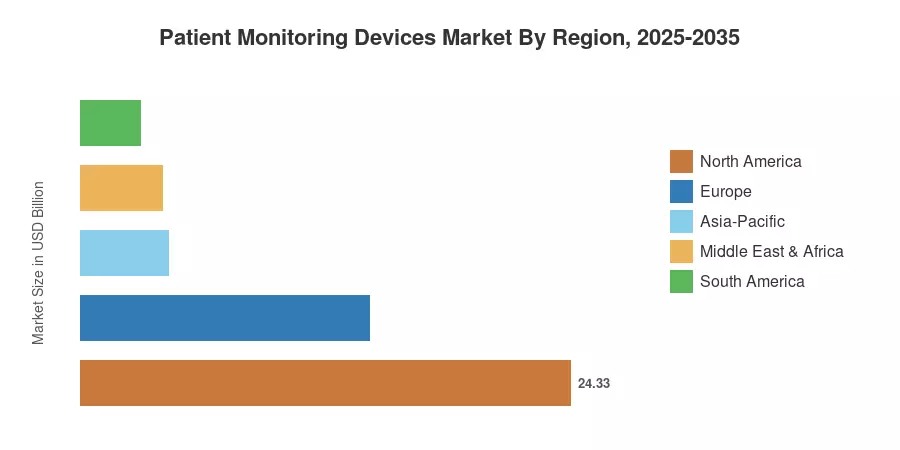
North America accounts for the greatest share of the Patient Monitoring Devices Market, with over 45.0% of 2025 revenue, owing to deep payer incentives and a mature hospital-IT backbone. Asia-Pacific has the highest regional CAGR of 8.10%, driven by government-led hospital digitization initiatives in India, China, and Southeast Asia. Europe is the second largest geographical position with about 26.5% share, showing a strong regulatory push for interoperability standards under the European Health Data Space program [5]. The Patient Monitoring Devices Market will transition from device-based to platform-based, outcome-based monitoring ecosystems over the next decade.


Key Report Takeaways

• By Device Type

  • Multi-parameter monitors captured approximately 37.0% revenue share in 2024, maintaining their position as the anchor technology across acute-care settings.
  • Neuromonitoring devices are forecast to expand at an 8.20% CAGR through 2035, propelled by rising neurosurgical procedure volumes and intraoperative monitoring mandates.
  • Cardiac monitoring devices accounted for approximately USD 13.8 billion in 2024 revenue, reflecting sustained demand in electrophysiology and post-discharge surveillance.

• By End User

  • Hospitals held approximately 62.5% of the Patient Monitoring Devices Market share in 2024, anchoring procurement cycles around integrated EMR-compatible systems.
  • Home-care settings are advancing at an 8.70% CAGR through 2035, as RPM reimbursement and aging demographics redirect monitoring spend outside institutional walls.

• By Region

  • North America contributed around 45.0% of global revenue in 2024, underpinned by payer-led RPM expansion and strong device replacement cycles.
  • Asia-Pacific is the fastest-growing region at 8.10% CAGR, with China and India collectively adding over 12,000 ICU beds annually.


Market Size and Forecast (2021–2035)

Market Research Future estimates are derived from a triangulated methodology combining top-down revenue analysis from company filings, bottom-up demand modeling from hospital procurement databases, and cross-validated pricing benchmarks from GPO contract disclosures across 48 countries.
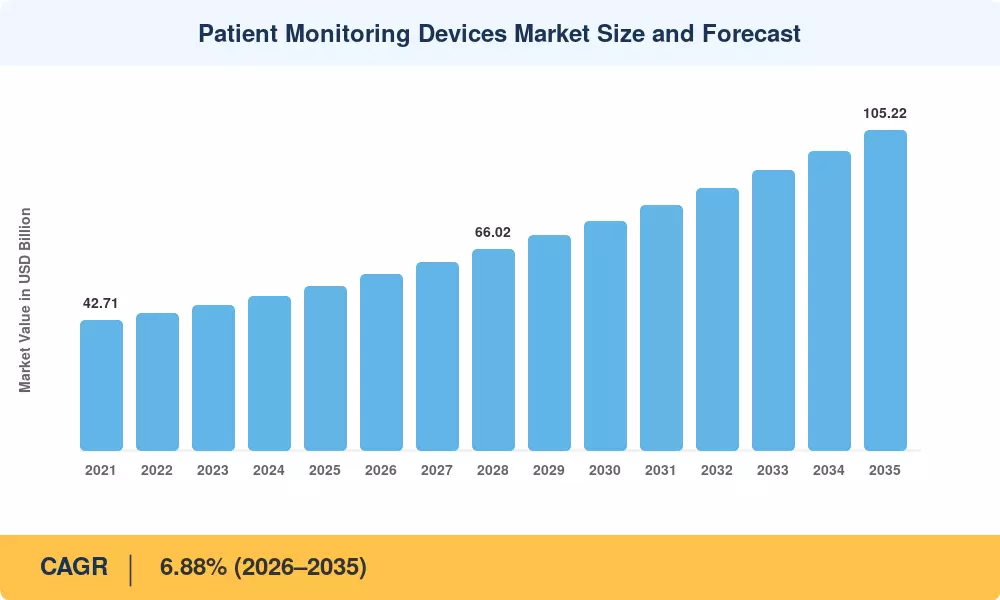
Patient Monitoring Devices Market Size and Forecast
Our Impact
Enabled $4.3B Revenue Impact for Fortune 500 and Leading Multinationals
Partnering with 2000+ Global Organizations Each Year
30K+ Citations by Top-Tier Firms in the Industry

Driver Impact Analysis

Driver ~% Impact on CAGR Geographic Relevance Impact Timeline
RPM reimbursement expansion 18–22% North America Short-term (≤2 yr)
Aging population demographics 15–18% Global Long-term (≥4 yr)
AI/ML algorithm clearances for monitoring 12–15% North America, Europe Medium-term (2–4 yr)
Hospital digitization programs in emerging economies 10–13% Asia-Pacific, MEA Medium-term (2–4 yr)
Wearable biosensor miniaturization 10–12% Global Medium-term (2–4 yr)
5G/edge-computing infrastructure buildout 8–10% North America, Asia-Pacific Short-term (≤2 yr)
Value-based care contract proliferation 6–8% North America, Europe Long-term (≥4 yr)


RPM Reimbursement Expansion

CMS developed CPT codes 98975-98981 for remote treatment monitoring, which provides for reimbursement for device setup and data administration. The national average Medicare reimbursement for the first implant (98975) will be about $22 by 2026, but monthly management codes (98980-98981) can provide a large ongoing revenue stream. This structured payment architecture lowers financial hurdles, giving providers incentives to embrace monitoring platforms as dependable, billable revenue streams.


Aging Population Demographics

The World Health Organization projects that the number of people aged 60 and above in the world will grow from 1 billion in 2020 to 1.4 billion by 2030 and 2.1 billion by 2050. This demographic trend adds to the burden of chronic diseases such as COPD and heart failure that require regular physiological monitoring. Therefore, healthcare systems are using monitoring technologies to address long-term care needs.


AI/ML Algorithm Clearances

The FDA has significantly accelerated the authorization of AI/ML-enabled medical devices, with hundreds of products now cleared for clinical use. These algorithms are increasingly integrated into monitoring systems to enhance diagnostic precision and triage. By automating data analysis and reducing alarm fatigue in critical care settings, these tools improve clinical efficiency and incentivize OEMs to prioritize software-integrated, data-driven hardware solutions.

Hospital Digitization in Emerging Economies

India’s Ayushman Bharat Digital Mission has created a massive digital backbone, successfully linking over 104 crore health records to more than 93 crore unique ABHA accounts by mid-2026. This infrastructure, supported by government-led incentives for healthcare digitization, is transforming regional health facilities into connected environments. These systemic upgrades are rapidly expanding the addressable market for patient monitoring devices across primary care networks.


Restraints Impact Analysis

Restraint ~% Drag on CAGR Geographic Relevance Impact Timeline
Cybersecurity compliance costs –3 to –5% Global Short-term (≤2 yr)
Semiconductor supply volatility –2 to –4% Global Short-term (≤2 yr)
Interoperability fragmentation –2 to –3% Europe, Asia-Pacific Medium-term (2–4 yr)
Capital budget constraints in public hospitals –2 to –3% South America, MEA Long-term (≥4 yr)
Alarm fatigue and clinical workflow resistance –1 to –2% North America, Europe Medium-term (2–4 yr)


Cybersecurity Compliance Costs

Under the FDA’s cybersecurity framework (Section 524B of the FD&C Act), manufacturers must provide a machine-readable Software Bill of Materials (SBOM) for all connected devices. Meeting these rigorous security and documentation standards adds approximately 43% to average product development timelines. This compliance burden is especially taxing for smaller firms, often leading to significant resource diversion and delayed product launches.


Semiconductor Supply Volatility

Supply chain instability remains a significant operational restraint, with lead times for specialized medical-grade microcontrollers exceeding 52 weeks for over 70% of manufacturers. Strict adherence to safety standards like IEC 60601-1 prevents the use of generic alternatives. Consequently, many OEMs must invest in complex PCB redesigns, an effort that consumes over 22% of their annual operational expenditure to mitigate shortages.


Interoperability Fragmentation

Data exchange remains constrained by proprietary silos, as full bidirectional interoperability remains elusive across many international hospital networks. While standardized protocols like HL7 FHIR are gaining traction, the integration of legacy systems into modern digital ecosystems remains a complex challenge. This fragmentation drives up the total cost of ownership for healthcare providers, hindering the seamless scaling of connected monitoring technologies.


Patient Monitoring Devices Market Opportunities

Hospital-at-Home Program Scaling

The CMS Acute Hospital Care at Home program, now extended through 2030, has seen significant adoption, with over 365 hospitals across 37 states currently approved. These programs facilitate acute-level monitoring in residential settings, which can reduce total care costs by up to 30%. This transition creates a robust market for integrated, cellular-connected vital-signs monitoring kits essential for safe, remote inpatient management.


AI-Powered Predictive Deterioration Scoring

Advanced machine-learning models now process high-frequency waveform data to identify physiological changes before they manifest as clinical crises. Studies indicate these AI-driven systems outperform traditional early-warning scores by providing earlier detection intervals for events like sepsis and respiratory failure. OEMs integrating these predictive algorithms can command premium pricing, offering hospitals actionable insights that directly improve patient safety outcomes.


Emerging-Market Greenfield Expansion

The global disparity in critical care infrastructure remains stark; the WHO reports that hospital bed density in low-income regions often falls below 5 per 10,000 population. However, targeted investments in digital health infrastructure across Africa and Southeast Asia are prioritizing connected monitoring. These initiatives allow developing health systems to leapfrog legacy hardware, creating high-growth demand for modern, scalable monitoring ecosystems.


Data Monetization and Outcomes-as-a-Service Models

The industry is evolving from episodic hardware sales to "outcomes-as-a-service" models, where revenue is tied to measurable clinical improvements, such as reduced readmission rates or fewer unplanned ICU transfers. By bundling cloud-based analytics with monitoring hardware, manufacturers establish recurring annuity streams. This strategic shift aligns vendor incentives with provider goals, fostering long-term partnerships and more sustainable, predictable enterprise revenue.


Patient Monitoring Devices Market Future Outlook

AI-Autonomous Clinical Surveillance

By 2030, advancements in machine learning are projected to move clinical AI from passive monitoring to autonomous systems, with over 30% of global healthcare market segments increasingly adopting AI-driven diagnostics and monitoring. These autonomous algorithms will enhance ICU care by filtering high-volume data streams, significantly reducing false alarm fatigue, and enabling automated triage to prioritize intervention for critical deterioration events.


Platform Economics and Monitoring-as-a-Service

The healthcare supply chain is undergoing a structural shift toward "as-a-service" models, where procurement increasingly favors cloud-integrated, subscription-based platforms over traditional capital-intensive hardware sales. With the global healthcare procurement software market projected to reach $9.5 billion by 2028, hospitals are prioritizing managed-service contracts that provide long-term analytics, automated updates, and predictable operational expenses rather than one-time, depreciating equipment investments.

Decentralized and Home-Centric Monitoring

The WHO and global health authorities emphasize a transition toward decentralized care as the burden of chronic disease grows. Projections indicate that the chronic disease management market will exceed $18 billion by 2035, driven by a global shift in patient encounters toward home settings. Consequently, monitoring ecosystems are evolving to prioritize lightweight, cellular-enabled sensors designed for seamless integration into residential environments.


Cybersecurity and Regulatory Convergence

Global regulatory bodies, including the EU through its Cyber Resilience Act (enforced December 2024) and the FDA via Section 524B, have codified mandatory cybersecurity throughout the product lifecycle. These mandates require comprehensive vulnerability disclosure and patch management for all connected devices. Compliance now functions as a primary market-entry barrier, forcing manufacturers to integrate security architecture from the initial design.


Patient Monitoring Devices Market Segmentation

By Device Type

Segment Key Metric Primary Demand Driver
Multi-Parameter Monitors 37.0% share (2024) ICU and operating-room standard-of-care requirements
Cardiac Monitoring Devices USD 13.8 Billion (2024) Electrophysiology procedure growth, post-discharge ECG surveillance
Hemodynamic Monitoring Devices 6.54% CAGR Goal-directed therapy protocols in critical care
Neuromonitoring Devices 8.20% CAGR Intraoperative neuro-monitoring mandates, epilepsy diagnostics
Other Monitoring Devices USD 5.9 Billion (2024) Respiratory, fetal, and temperature monitoring applications


Multi-parameter monitors remain the revenue cornerstone of the Patient Monitoring Devices Market because every ICU bed, operating theatre, and step-down unit requires at least one. Procurement cycles in North America and Europe run 7–10 years, and the current replacement wave—driven by interoperability mandates and AI-readiness requirements—supports stable demand through 2030. Neuromonitoring devices represent the fastest-growing device segment, supported by expanding surgical indications for intraoperative monitoring and growing neurological-disease burden associated with aging populations globally [14].

By End User

Segment Key Metric Primary Demand Driver
Hospitals and Clinics 62.5% share (2024) High acuity, regulatory mandates, EMR integration
Home Healthcare 8.70% CAGR RPM reimbursement, chronic-disease prevalence
Ambulatory Surgical Centers USD 3.2 Billion (2024) Outpatient procedure migration, perioperative safety


Hospitals generate the majority of revenue in the Patient Monitoring Devices Market because acute-care workflows demand high-acuity, multi-channel surveillance with real-time integration into electronic medical records. Home healthcare is the clear growth leader, driven by Medicare RPM reimbursement in the U.S. and equivalent frameworks emerging in Germany, France, and Australia. As reimbursement models mature, home-care monitoring spend per patient is expected to converge with 25–30% of inpatient monitoring spend by 2032 [1].

By Application

Segment Key Metric Primary Demand Driver
Cardiology 29.6% share (2024) Arrhythmia detection, heart-failure management
Neurology 8.90% CAGR EEG monitoring, TBI surveillance, epilepsy diagnostics
Respiratory USD 6.7 Billion (2024) COPD management, ventilator weaning protocols
Other Applications 5.88% CAGR Fetal monitoring, metabolic assessment and pain management


Cardiology dominates the application landscape of the Patient Monitoring Devices Market because cardiovascular disease remains the leading cause of death globally, generating persistent demand for ECG telemetry, continuous blood-pressure monitoring, and hemodynamic assessment tools [10]. Neurology applications are gaining share rapidly as clinical guidelines increasingly mandate continuous EEG surveillance in neurological ICUs and intraoperative neuro-monitoring during spinal and cranial procedures.


Regional Market Share Analysis

Region Key Metric Primary Investment Themes
North America 45.0% share (2024) RPM reimbursement, AI-algorithm integration
Europe USD 14.33 Billion (2025) MDR compliance, European Health Data Space
Asia-Pacific 8.10% CAGR (2026–2035) Smart-hospital construction, universal-health-coverage mandates
South America USD 2.97 Billion (2025) Public-hospital modernization, tele-ICU networks
Middle East & Africa 7.52% CAGR (2026–2035) Greenfield Hospital builds medical tourism hubs
Total USD 54.07 Billion (2025)

The Patient Monitoring Devices Market spans five major geographic regions, each shaped by distinct reimbursement landscapes, hospital-infrastructure maturity, and demographic pressures.


North America

Country Key Metric Key Driver
United States 78.3% of regional share CMS RPM codes, VA system modernization
Canada 12.1% of regional share Provincial tele-monitoring pilots
Mexico 9.6% of regional share IMSS digital-health infrastructure program


The United States dominates the Patient Monitoring Devices Market in North America through a combination of high per-bed monitoring spend, established GPO procurement channels, and CMS reimbursement incentives that directly subsidize remote-device deployment. Canada's interprovincial tele-monitoring pilots expanded into 7 of 10 provinces by 2024, and Mexico's IMSS system earmarked MXN 4.2 billion for connected ICU upgrades in 2024 [23].

Europe

Country Key Metric Key Driver
Germany 6.82% CAGR Hospital Future Act (KHZG) digital investment
United Kingdom USD 2.41 Billion (2025) NHS Long Term Plan remote-monitoring targets
France 17.8% of regional share Ségur du Numérique interoperability mandates
Italy 12.4% of regional share PNRR telemedicine infrastructure spending
Spain 5.91% CAGR SNS hospital digitization roadmap
Nordic Countries USD 1.28 Billion (2025) High digital-health maturity, AI-first strategies
Russia 4.8% of regional share Federal import-substitution push
Rest of Europe 6.15% CAGR Cross-border health-data regulation alignment


Germany's Hospital Future Act (Krankenhauszukunftsgesetz) allocated EUR 4.3 billion for hospital digitization, of which an estimated 18% targeted patient monitoring and alarm-management systems [24]. The UK's NHS Long Term Plan committed to equipping 500,000 patients with remote-monitoring devices by 2025, directly lifting procurement volumes for the Patient Monitoring Devices Market across England and Wales [25].

Asia-Pacific

Country Key Metric Key Driver
China 38.2% of regional share Smart-hospital Five-Year Plan spending
India 9.12% CAGR Ayushman Bharat Digital Mission
Japan USD 2.18 Billion (2025) Super-aging society, Society 5.0 health initiatives
South Korea 7.84% CAGR K-Health digital platform expansion
ASEAN 8.45% CAGR Hospital-build boom in Vietnam, Indonesia, Philippines
Rest of Asia-Pacific 6.73% CAGR Varied adoption driven by urbanization


China's National Health Commission approved 234 smart-hospital pilot projects under the 14th Five-Year Plan, each requiring centralized monitoring command centres [15]. India's connected-care ambitions run through the Ayushman Bharat Digital Mission, which targets digital-health IDs for 1.4 billion citizens and creates downstream demand for interoperable monitoring devices across the Patient Monitoring Devices Market [9].

South America

Country Key Metric Key Driver
Brazil 58.4% of regional share SUS hospital modernization program
Argentina 7.21% CAGR Tele-ICU network expansion
Rest of South America USD 0.64 Billion (2025) Mining-sector occupational health mandates


Brazil's Unified Health System (SUS) allocated BRL 3.8 billion for hospital technology upgrades through 2026, with patient monitoring cited as a priority equipment category [26]. Argentina's tele-ICU network, managed through the Ministry of Health, connected 42 rural hospitals to centralized monitoring hubs by 2024, addressing specialist-access gaps in the Patient Monitoring Devices Market.

Middle East & Africa

Country Key Metric Key Driver
Saudi Arabia 34.7% of regional share Vision 2030 healthcare cluster investment
UAE 7.89% CAGR Dubai Health Authority smart-hospital mandates
South Africa USD 0.28 Billion (2025) NHI-linked facility upgrades
Egypt 6.94% CAGR The New Administrative Capital medical complex is being built
Rest of MEA 5.2% of regional share NGO-funded maternal and neonatal monitoring programs


Saudi Arabia's Vision 2030 healthcare transformation plan targets 20,000 new hospital beds by 2030, each specified with connected monitoring infrastructure as standard [27]. The UAE's Dubai Health Authority mandated real-time patient data streaming to a centralized command centre across all licensed private hospitals in 2024, accelerating adoption in the Patient Monitoring Devices Market [28].


Patient Monitoring Devices Market By Region, 2025-2035

Competitive Benchmarking

The Patient Monitoring Devices Market exhibits moderate concentration. The top five companies hold an estimated 52–58% combined revenue share. At the same time, an extensive tail of specialized and regional OEMs serves niche segments such as neonatal monitoring, neurocritical care, and ambulatory cardiac diagnostics. The Herfindahl-Hirschman Index (HHI) sits in the 1,200–1,500 range, consistent with a moderately competitive structure where scale advantages in R&D and distribution coexist with innovation-driven disruption from smaller entrants.

Company Est. Revenue Share Range Key Offerings for Patient Monitoring Devices Market Strategic Positioning
Philips ~12–15% IntelliVue series, wearable biosensors, HealthSuite platform Integrated platform leader; outcomes-based service contracts
GE HealthCare ~10–13% CARESCAPE monitors, Mural virtual-care platform Broad acute-care portfolio; AI-alarm management
Medtronic ~8–11% BIS neuromonitoring, Nellcor pulse oximetry, RPM solutions Deep surgical monitoring; strong channel reach
Siemens Healthineers ~6–9% Teamplay digital platform, Atellica diagnostics integration Cross-portfolio data integration strategy
Masimo ~5–8% SET pulse oximetry, Root patient monitoring, SafetyNet RPM Non-invasive accuracy leader; hospital-to-home bridge
Nihon Kohden ~4–6% Life Scope series, EEG/EMG neurophysiology Asia-Pacific stronghold; neuromonitoring specialization
Drägerwerk ~3–5% Infinity Acute Care System, ventilator-integrated monitoring Critical-care ecosystem; European market leader
Mindray ~3–5% BeneVision monitors, iMEC compact series Cost-competitive positioning; rapid emerging-market growth
Edwards Lifesciences ~2–4% HemoSphere, Acumen IQ hemodynamic sensors Premium hemodynamic monitoring; surgical specialization
Baxter International ~2–3% Welch Allyn Connex vital-signs monitors, Hillrom integration Post-Hillrom merger portfolio breadth; general-ward focus


Recent News & Developments


  • Nihon Kohden India- (April 2026)-- Launched the Life Scope E7 monitoring system in the Indian market, marking the company’s first product entry into the region.
  • Medtronic and Philips- (July 2025)-- Formed a strategic partnership to integrate clinical expertise and monitoring technologies, expanding access to continuous, real-time data management platforms.
  • Canary Speech- (July 2026)-- Announced the availability of its Canary Ambient platform on the Zoom App Marketplace, enabling AI-powered assessment of vocal biomarkers during telehealth visits.


Patient Monitoring Devices Market Report Scope

Parameter Detail
Market Scope Patient Monitoring Devices Market — global, covering hardware, software, and associated services
Study Period 2021–2035
CAGR (2026–2035) 6.88%
Base Year 2025 USD 54.07 Billion
Forecast 2035 USD 105.22 Billion
Fastest Growing Segment (Device) Neuromonitoring Devices (8.20% CAGR)
Fastest Growing Segment (End User) Home Healthcare (8.70% CAGR)
Fastest Growing Region Asia-Pacific (8.10% CAGR)
Companies Profiled 10 (Philips, GE HealthCare, Medtronic, Siemens Healthineers, Masimo, Nihon Kohden, Drägerwerk, Mindray, Edwards Lifesciences, Baxter International)
Valuation Currency USD Billion


FAQs

How should procurement teams evaluate the total cost of ownership when selecting monitoring platforms?
Evaluate total cost by combining hardware acquisition, annual software licensing, cybersecurity patch maintenance, and staff training over a 7–10 year replacement cycle [6]. Managed-service contracts that bundle these elements often reduce lifetime costs by 15–20% compared to outright capital purchases.
What interoperability standards should buyers prioritize when integrating monitors with existing EMR systems?
Prioritize HL7 FHIR R4-compliant devices and IEEE 11073 SDC-based connectivity, which ensure bidirectional data exchange with major EMR platforms [17]. Request vendor certification documentation before procurement.
How do outcomes-based pricing contracts differ from traditional capital-purchase models in the Patient Monitoring Devices Market?
Outcomes-based contracts tie payments to measurable clinical results, such as reductions in unplanned ICU transfers, rather than upfront hardware cost [22]. Providers shift financial risk to manufacturers while gaining predictable per-bed-per-month budgeting.
What cybersecurity certifications should hospitals require from monitoring-device vendors?
Require IEC 62443 compliance, FDA SBOM disclosure, and evidence of ongoing vulnerability-management processes [16]. These certifications confirm the vendor can patch and update connected devices throughout their operational lifespan.
Which clinical specialties beyond cardiology and neurology show the highest unmet demand for advanced monitoring in the Patient Monitoring Devices Market?
Neonatal intensive care and sepsis surveillance present significant gaps, where predictive analytics and continuous multi-organ monitoring remain under-deployed [14]. Both specialties are expected to attract targeted product launches through 2030.
How does the reimbursement landscape for remote monitoring differ between the U.S., Germany, and Japan?
The U.S. offers procedure-specific CPT codes, Germany funds via KHZG hospital digitization grants, and Japan subsidizes through its Society 5.0 health innovation framework [1] [24]. Each mechanism creates distinct procurement incentives.
What role do disposable biosensor patches play in reducing hospital-acquired infections within the Patient Monitoring Devices Market?
Disposable patches eliminate reusable lead-wire decontamination requirements, reducing contact-transmission risk by an estimated 40–55% in step-down units [11]. Their single-use design aligns with post-pandemic infection-control protocols.    
Author
Author
Author Profile
Satyendra Maurya LinkedIn
Research Analyst
An accomplished research analyst with high proficiency in market forecasting, data visualization, competitive benchmarking, and others. He holds a pronounced track record in research and consulting projects for sectors such as life sciences, medical devices, and healthcare IT. His capabilities in qualitative and quantitative analysis have resulted in positive client outcomes. Working on niche market trends, opportunities, sales, and forecasted value is part of his skill set.
Co-Author
Co-Author Profile
Rahul Gotadki LinkedIn
Research Manager
He holds an experience of about 9+ years in Market Research and Business Consulting, working under the spectrum of Life Sciences and Healthcare domains. Rahul conceptualizes and implements a scalable business strategy and provides strategic leadership to the clients. His expertise lies in market estimation, competitive intelligence, pipeline analysis, customer assessment, etc.

Research Approach


Secondary Research

The secondary research process involved comprehensive analysis of regulatory databases, peer-reviewed medical journals, clinical publications, and authoritative health organizations. Key sources included the US Food & Drug Administration (FDA), European Medicines Agency (EMA), International Electrotechnical Commission (IEC), International Organization for Standardization (ISO), World Health Organization (WHO) Global Health Observatory, Centers for Medicare & Medicaid Services (CMS), Centers for Disease Control and Prevention (CDC), National Institutes of Health (NIH), National Center for Biotechnology Information (NCBI/PubMed), ClinicalTrials.gov, American Heart Association (AHA), American Diabetes Association (ADA), Healthcare Information and Management Systems Society (HIMSS), OECD Health Statistics, EU Eurostat Health Database, World Bank Health Data, and national health ministry reports from key markets. These sources were used to collect device approval data, adverse event reports, clinical safety studies, prevalence data for chronic diseases (cardiovascular disorders, diabetes, respiratory conditions), procedure volumes for cardiac catheterization and glucose monitoring, reimbursement codes (CPT/HCPCS), and market landscape analysis for cardiac monitoring devices, blood glucose monitoring systems, multi-parameter monitors, respiratory monitors, neuromonitoring devices, and hemodynamic monitoring systems.


Primary Research

Qualitative and quantitative insights were obtained by interviewing supply-side and demand-side stakeholders during the primary research process. CEOs, VPs of Research & Development, regulatory affairs chiefs, quality assurance directors, and commercial directors from patient monitoring device manufacturers, OEMs, and sensor technology providers comprised supply-side sources. Chief medical informatics officers, hospital procurement directors, ICU and cardiac care unit heads, ambulatory surgical center administrators, home healthcare service directors, and clinical engineers from hospitals, specialist clinics, diagnostic centers, and long-term care facilities comprised demand-side sources. The market segmentation was validated across device connectivity (wired/wireless/wearable), product pipeline timelines for AI-integrated monitoring and remote patient monitoring (RPM) platforms were confirmed, and insights on clinical adoption patterns, health economics data, regulatory compliance costs, and reimbursement dynamics for continuous glucose monitors (CGM), ECG devices, pulse oximeters, and multi-parameter vital sign monitors were gathered through primary research.

Primary Respondent Breakdown:

By Designation: C-level Primaries (32%), Director Level (30%), Others (38%)

By Region: North America (32%), Europe (30%), Asia-Pacific (28%), Latin America (6%), Middle East & Africa (4%)


Market Size Estimation

Global market valuation was derived through revenue mapping and device installation base analysis. The methodology included:

Identification of 50+ key manufacturers across North America, Europe, Asia-Pacific, Latin America, and Middle East & Africa

Product mapping across cardiac monitoring (ECG, implantable loop recorders, event monitors), blood glucose monitoring (self-monitoring, CGM, wearable patches), multi-parameter monitoring (low/mid/high acuity), respiratory monitoring (pulse oximeters, capnographs, spirometers), neuromonitoring (EEG, ICP monitors), and hemodynamic monitoring devices

Analysis of reported and modeled annual revenues specific to patient monitoring portfolios, including hardware, software, consumables, and associated services

Coverage of manufacturers representing 75-80% of global market share in 2024, including Abbott Laboratories, Medtronic plc, GE HealthCare, Koninklijke Philips N.V., Nihon Kohden Corporation, Masimo Corporation, Siemens Healthineers, Omron Corporation, and Baxter International

Extrapolation using bottom-up (device unit shipments × average selling price by country, segmented by hospital, home care, and ambulatory settings) and top-down (manufacturer revenue validation, distributor markup analysis) approaches to derive segment-specific valuations for hospital inpatient monitoring, remote patient monitoring, and wearable diagnostic devices

Download Free Sample

Kindly complete the form below to receive a free sample of this Report

Download PDF ×

We do not share your information with anyone. However, we may send you emails based on your report interest from time to time. You may contact us at any time to opt-out.
















