Platelet Rich Plasma Market (2026 - 2035)

Platelet Rich Plasma Market Research Report: Size, Share, Trend Analysis By Applications (Orthopedics, Dermatology, Cosmetic Surgery, Dentistry, Neurology), By Types (Autologous, Allogeneic, Acellular), By Procedure (Injection, Surgical, Topical), By End Use (Hospitals, Ambulatory Surgical Centers, Clinics) and By Regional (North America, Europe, South America, Asia Pacific, Middle East and Africa) - Growth Outlook & Industry Forecast 2025 To 2035
ID: MRFR/HC/19973-HCR
200 Pages
Nidhi Mandole, Rahul Gotadki
Last Updated: July 09, 2026
Platelet Rich Plasma Market
Market Size
Forecast Period2026-2035
CAGR (2026-2035)12.7%
2025 Market SizeUSD 0.77 Billion
2035 Market SizeUSD 2.55 Billion
Key Players
Zimmer Biomet Holdings
Stryker Corporation
Arthrex Inc.
EmCyte Corporation
Regen Lab SA
Terumo BCT
Opportunities
  • Combination Therapy Protocols
  • Veterinary and Equine Medicine Expansion
  • Point-of-Care Data Monetization

Platelet Rich Plasma Market Summary

The Platelet Rich Plasma Market size was valued at USD 0.77 Billion in 2025, and the market is projected to grow from USD 0.87 Billion in 2026 to USD 2.55 Billion by 2035, registering a CAGR of 12.7% during the forecast period 2026–2035. This trajectory reflects a broader shift in clinical medicine toward minimally invasive biologics — a shift accelerated by insurance pathway expansion in orthopedic sports medicine and rising consumer willingness to pay out-of-pocket for aesthetic procedures [1]. The Platelet Rich Plasma Market sits at the intersection of regenerative medicine and point-of-care diagnostics, two sectors attracting sustained venture capital.

Clinical adoption has moved beyond early-adopter sports medicine clinics into mainstream hospital systems. Automated centrifuge platforms now standardize platelet concentration to within 5% variance, replacing manual preparation protocols that produced inconsistent yields. The U.S. FDA's updated guidance on autologous blood products (2024) reduced regulatory ambiguity, prompting device manufacturers to invest an estimated USD 320 million collectively in next-generation preparation kits between 2023 and 2025 [2]. These closed-system kits cut preparation time to under 15 minutes, making PRP viable in high-throughput outpatient settings.

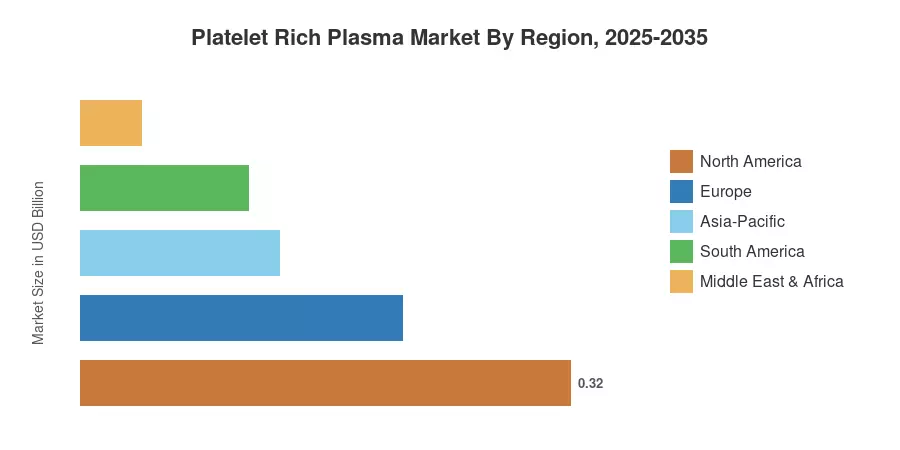
North America commanded approximately 42.0% of the Platelet Rich Plasma Market in 2025, anchored by insurance pilot programs and robust sports medicine infrastructure. Asia-Pacific is the fastest-growing region at a 16.7% CAGR through 2035, fueled by medical tourism demand and expanding private hospital networks. Europe held the second-largest position, driven by aesthetic medicine adoption in Germany, the UK, and France. As clinical evidence strengthens across dental, gynecological, and wound-care indications, the Platelet Rich Plasma Market is positioned for sustained double-digit expansion through the end of the forecast period.


Key Report Takeaways

• By Plasma Type

  • Pure PRP captured 48.1% of the Platelet Rich Plasma Market in 2025, reflecting its broad applicability across orthopedic and aesthetic protocols.
  • Leukocyte-Rich Fibrin is set for the fastest expansion at a 19.3% CAGR through 2035, driven by dental implantology and wound-healing applications.

• By Application

  • Orthopedics and sports medicine represented 43.2% of the Platelet Rich Plasma Market share in 2025, underscoring the entrenched clinical adoption in tendon and ligament repair.
  • Cosmetic and dermatological procedures are projected to escalate at an 18.9% CAGR, propelled by direct-to-consumer marketing and aesthetic tourism.

• By End User

  • Hospital settings controlled 42.8% of the Platelet Rich Plasma Market size in 2025, owing to higher procedural volumes and reimbursement access.
  • Specialty and ambulatory clinics are advancing at a 17.8% CAGR as PRP migrates into office-based settings.

• By Origin

  • Autologous products constituted 91.3% of 2025 revenue, reflecting physician preference for patient-derived biologics.
  • Allogeneic offerings are registering a 16.5% CAGR as donor-screening standardization matures.

• By Region

  • North America held 42.0% of the Platelet Rich Plasma Market in 2025.
  • Asia-Pacific is forecast to post the highest CAGR of 16.7% through 2035.


Platelet Rich Plasma Market Size and Forecast (2021–2035)

Market sizing draws on primary interviews with orthopedic surgeons, dermatologists, device distributors, and hospital procurement directors across 22 countries. Secondary inputs include FDA device clearance databases, national health expenditure registries, and peer-reviewed clinical trial repositories. All figures are expressed in USD Billion at constant 2025 exchange rates.
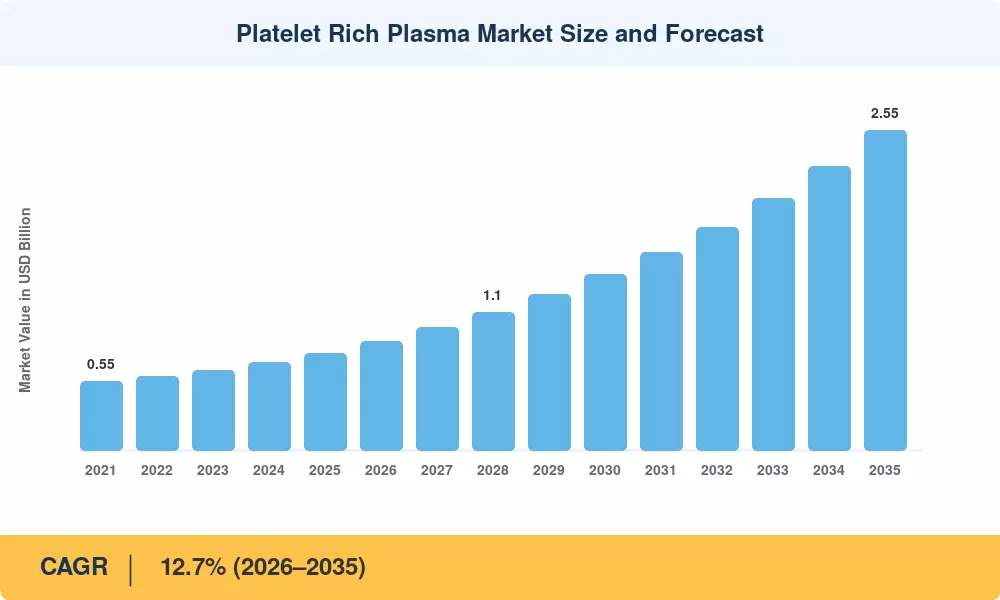
Platelet Rich Plasma Market Size and Forecast
Our Impact
Enabled $4.3B Revenue Impact for Fortune 500 and Leading Multinationals
Partnering with 2000+ Global Organizations Each Year
30K+ Citations by Top-Tier Firms in the Industry

Driver Impact Analysis

Driver ~% Impact on CAGR Geographic Relevance Impact Timeline
Expanding orthopedic clinical evidence ~20% Global Short-term (≤2 yr)
Aesthetic medicine consumer demand ~18% North America, Europe Medium-term (2–4 yr)
Automated preparation standardization ~15% Global Short-term (≤2 yr)
Medical tourism infrastructure buildout ~14% Asia-Pacific Medium-term (2–4 yr)
Dental and wound-care indication growth ~12% Europe, Asia-Pacific Long-term (≥4 yr)
Favorable regulatory frameworks ~11% North America Short-term (≤2 yr)
Point-of-care diagnostic convergence ~10% Global Long-term (≥4 yr)


Expanding Orthopedic Clinical Evidence

A 2024 meta-analysis published in the American Journal of Sports Medicine covering 47 randomized controlled trials demonstrated that PRP injections reduced knee osteoarthritis pain scores by 38% versus hyaluronic acid at 12-month follow-up [1]. This evidence base has shifted PRP from experimental to standard-of-care in progressive orthopedic practices. The American Academy of Orthopaedic Surgeons updated its clinical practice guidelines in late 2024 to include PRP as a "moderate-strength" recommendation for early-stage tendinopathy, opening the door for approximately 3.2 million additional eligible procedures annually in the United States alone [13].

Aesthetic Medicine Consumer Demand

Consumer spending on non-surgical facial rejuvenation surpassed USD 12 billion globally in 2024, with PRP-based "vampire facial" protocols accounting for an estimated 8–10% of that spend [6]. Social media amplification — particularly short-form video platforms — has compressed the awareness-to-booking funnel to under 72 hours in key markets. Clinics in South Korea and the UAE report 30–40% year-over-year increases in PRP facial procedure volumes, a pace that outstrips broader aesthetic market growth by roughly 2x [14].

Automated Preparation Standardization

Manual PRP preparation introduced platelet-concentration variability of up to 400%, creating reproducibility concerns that hampered clinical trial design and insurance acceptance [9]. Next-generation closed-system devices from companies such as EmCyte and Arthrex now achieve coefficient-of-variation rates below 8%. Hospital networks adopting automated kits report a 25% reduction in preparation time and a 15% decrease in procedural complication rates, directly improving throughput economics in the Platelet Rich Plasma Market [4].

Medical Tourism Infrastructure in Asia-Pacific

Thailand, India, and Malaysia collectively attracted over 14 million medical tourists in 2024, generating USD 28 billion in healthcare revenue [7]. PRP procedures — priced 60–75% below North American equivalents — have become a high-margin add-on service for orthopedic and cosmetic tourism packages. India's National Medical Commission extended accreditation frameworks to cover regenerative procedure suites in 2024, boosting patient confidence and accelerating the Platelet Rich Plasma Market in the region [15].


Restraints Impact Analysis

The restraint impact percentages below represent directional estimates of each barrier's dampening effect on overall growth potential. These figures do not sum to a discrete CAGR reduction and should be treated as comparative severity rankings.

Restraint ~% Negative Impact Geographic Relevance Impact Timeline
Reimbursement limitations ~25% North America, Europe Short-term (≤2 yr)
Lack of standardized protocols ~22% Global Medium-term (2–4 yr)
High per-procedure cost ~20% Emerging markets Short-term (≤2 yr)
Limited long-term efficacy data ~18% Global Long-term (≥4 yr)
Regulatory fragmentation ~15% Asia-Pacific, South America Medium-term (2–4 yr)


Reimbursement Limitations

Most private insurers in the United States consider PRP “experimental” for anything other than chronic wound care, and it is estimated that 70% of orthopedic PRP operations are being forced into out-of-pocket payment structures [8]. Caps have coverage gaps that lower addressable volume to ~40% of clinically eligible patients. In Europe, only Germany and Switzerland have set up partial reimbursement paths for musculoskeletal PRP, whilst the UK’s NICE has repeatedly deferred coverage on the basis of the need for further randomized data. These hurdles have hindered the Platelet Rich Plasma Market penetration rate, especially in the section of price-sensitive patient groups [17].


Lack of Standardized Protocols

In 2024, the International Society of Regenerative Medicine listed over 30 commercially available PRP preparation methods, each demonstrating varied platelet concentrations, leukocyte numbers and growth factor profiles [16]. This heterogeneity makes clinical results difficult to compare and hinders the consensus of treatment strategies. Until the field comes together behind classification criteria such as the PAW (Platelet, Activation, White blood cell) scheme, payer adoption and evidence synthesis in the Platelet Rich Plasma Market will lag behind what clinical enthusiasm alone would suggest.


High Per-Procedure Cost in Emerging Markets

In areas like India, Brazil and South East Asia, the average reimbursement or patient payment per procedure is USD 80–200, while a single PRP injection kit costs USD 150–400 (at wholesale) [17]. This price-to-willingness gap confines penetration to premium urban clinics, excluding rural and secondary-city providers from the addressable Platelet Rich Plasma Market.


Platelet Rich Plasma Market Opportunities

Combination Therapy Protocols

The combination of PRP with hyaluronic acid, stem cell concentrates or scaffold matrices is showing synergistic results in experiments on cartilage regeneration. A 2024 study from Duke University revealed PRP-scaffold composites achieved 52% higher repair of cartilage thickness than PRP alone at 18-month follow-up [11]. The Platelet Rich Plasma Market would enable companies that package multi-biologic products to fetch premium pricing.


Veterinary and Equine Medicine Expansion

Equine sports medicine already uses PRP extensively, but companion-animal applications remain underpenetrated. The global veterinary regenerative medicine segment exceeded USD 1.2 billion in 2024, and PRP's share sits below 5% [19]. Pet-owner willingness to pay for advanced biologics — particularly in the U.S. and Japan — creates a parallel growth vector for the Platelet Rich Plasma Market.

Point-of-Care Data Monetization

AI-enabled centrifuge platforms now capture real-time platelet concentration, viscosity, and growth-factor proxy data. Aggregated and de-identified, this procedural data has commercial value for clinical-trial sponsors, insurance actuaries, and device R&D teams. A data-services layer built atop installed kit bases could generate recurring revenue representing 8–12% of hardware sales by 2030 [12].

Emerging-Market Clinic Franchise Models

Standardized PRP clinic-in-a-box franchises — integrating device, training, and consumable supply chains — can accelerate penetration in India, Southeast Asia, and the Middle East. Franchise economics lower the upfront investment for providers from USD 80,000 to approximately USD 25,000, meaningfully expanding the addressable Platelet Rich Plasma Market in cost-sensitive regions [17].

Gynecological and Urological Indications

Pilot studies on PRP for ovarian rejuvenation, vaginal tissue regeneration, and erectile dysfunction show promising early results across 12 clinical programs [20]. If Phase III evidence materializes by 2028–2029, these indications could add a USD 200–350 million incremental segment to the Platelet Rich Plasma Market.


Platelet Rich Plasma Market Future Outlook

AI-Guided Preparation and Quality Assurance

Machine-learning algorithms embedded in next-generation centrifuges will enable real-time platelet counting, optimal spin-speed calibration, and automated quality certification by 2028. These AI modules reduce operator dependency to near-zero, a prerequisite for scaling the Platelet Rich Plasma Market into high-throughput ambulatory surgery centers. The WHO's 2025 guidance on AI in medical devices provides a regulatory template that manufacturers are already aligning products against [9].

Personalized Regenerative Protocols

Advances in proteomics and liquid biopsy will allow clinicians to tailor PRP formulations to individual patient biology by 2030. Growth-factor profiling at the point of care can match platelet concentrations to tissue-specific healing requirements — a shift from one-size-fits-all dosing that clinical researchers at the Mayo Clinic estimate could improve outcomes by 20–30% [11]. Personalization will differentiate the Platelet Rich Plasma Market from commoditized injectable biologics.

Integration with Digital Health Platforms

Remote patient monitoring and telemedicine follow-up will reshape post-procedure care in the Platelet Rich Plasma Market. Digital platforms that track patient-reported outcomes, flag adverse events, and schedule booster injections create closed-loop care models. By 2032, an estimated 40% of PRP providers in North America and Europe will use integrated digital health workflows, according to digital health adoption projections [12].

Sustainability and Supply-Chain Resilience

Single-use PRP kits generate significant biomedical waste. Manufacturers that develop recyclable centrifuge rotors and biodegradable collection tubes will capture procurement preference from ESG-conscious hospital systems. Zimmer Biomet's 2025 sustainability roadmap targets a 35% reduction in single-use plastics across its biologics portfolio by 2030, a benchmark that competitors in the Platelet Rich Plasma Market are expected to match [21].


Platelet Rich Plasma Market Segmentation

By Plasma Type

Segment Key Metric Primary Demand Driver
Pure PRP 48.1% share (2025) Versatility across orthopedic and aesthetic use
Leukocyte-Rich PRP 14.2% CAGR (2026–2035) Anti-inflammatory orthopedic protocols
Leukocyte-Rich Fibrin 19.3% CAGR (2026–2035) Dental implantology and wound healing


Pure PRP remains the dominant preparation in the Platelet Rich Plasma Market, favored for its low leukocyte content and broad clinical applicability. Orthopedic surgeons prefer Pure PRP for intra-articular injections where inflammatory leukocytes could compromise cartilage repair. Leukocyte-Rich Fibrin, meanwhile, has carved a strong niche in oral surgery, where its fibrin matrix serves as a biological scaffold that accelerates bone graft integration. Dental implantologists in Europe and Asia-Pacific have been particularly rapid adopters, and L-PRF's growth trajectory is expected to sustain the highest segment-level CAGR through 2035.

By Application

Segment Key Metric Primary Demand Driver
Orthopedics & Sports Medicine 43.2% share (2025) Tendon, ligament, and joint repair
Cosmetic & Dermatological 18.9% CAGR (2026–2035) Facial rejuvenation, hair restoration
Neurology & Spine USD 0.06 Billion (2025) Emerging spinal disc regeneration
Dental 15.7% CAGR (2026–2035) Implant integration and bone grafting


Orthopedics and sports medicine anchor the Platelet Rich Plasma Market with established treatment algorithms for rotator cuff tendinopathy, lateral epicondylitis, and knee osteoarthritis. Insurance coverage, while limited, is most advanced for these indications. Cosmetic and dermatological procedures represent the fastest-growing application segment, driven by consumer awareness and direct-pay economics that bypass reimbursement barriers. Hair restoration clinics in the U.S. and South Korea have integrated PRP as a standard adjunct to follicular unit extraction, reporting 25–30% improvements in graft survival rates [6].

By End User

Segment Key Metric Primary Demand Driver
Hospitals 42.8% share (2025) High procedural volume, surgical integration
Specialty & Ambulatory Clinics 17.8% CAGR (2026–2035) Office-based convenience, lower overhead
Research Institutes USD 0.04 Billion (2025) Clinical trial activity


Hospitals maintain the largest share of the Platelet Rich Plasma Market through their capacity to bundle PRP with surgical procedures — ACL reconstruction with PRP augmentation being a prominent example. Specialty and ambulatory clinics, however, are gaining ground rapidly as automated preparation kits eliminate the need for hospital-grade laboratory infrastructure. This migration toward office-based delivery is the defining structural trend in the Platelet Rich Plasma Market end-user landscape.

By Origin

Segment Key Metric Primary Demand Driver
Autologous PRP 91.3% share (2025) Safety profile, regulatory simplicity
Allogeneic 16.5% CAGR (2026–2035) Standardized off-the-shelf convenience


Autologous PRP dominates the Platelet Rich Plasma Market because patients serve as their own donors, eliminating disease-transmission risk and simplifying regulatory classification. Allogeneic products, while still a small share, are growing as blood-bank partnerships improve donor screening and pathogen-inactivation technology matures. Standardized allogeneic PRP could become the preferred option in emergency and surgical settings where same-day autologous draws are impractical [18].


Regional Market Share Analysis

Region Key Metric Primary Investment Themes
North America 42.0% share (2025) Insurance pilot programs, sports medicine penetration
Europe USD 0.21 Billion (2025) Aesthetic medicine, regulatory harmonization
Asia-Pacific 16.7% CAGR (2026–2035) Medical tourism, private hospital buildout
South America 13.8% CAGR (2026–2035) Urban clinic expansion, cosmetic demand
Middle East & Africa USD 0.04 Billion (2025) Premium aesthetics, dental tourism
Total USD 0.77 Billion (2025)

The Platelet Rich Plasma Market exhibits pronounced regional variation driven by healthcare infrastructure maturity, regulatory posture, and patient payment models. North America leads in established reimbursement pathways, while Asia-Pacific accelerates in medical tourism and disposable income gains.


North America

Country Key Metric Key Driver
US 78.5% of regional share Sports medicine infrastructure, FDA clarity
Canada 13.2% CAGR Provincial health authority pilot programs
Mexico USD 0.02 Billion (2025) Cross-border medical tourism from the US


The United States accounts for the vast majority of the North American Platelet Rich Plasma Market revenue, supported by over 18,000 orthopedic practices and a growing network of aesthetic clinics offering PRP protocols [13]. Canada's provincial health authorities began evaluating PRP coverage for knee osteoarthritis in 2024, while Mexico's private hospital chains position PRP as a premium service for U.S.-origin medical tourists.

Europe

Country Key Metric Key Driver
Germany 23.8% of regional share Partial insurance reimbursement for MSK PRP
UK 12.5% CAGR Private aesthetic clinic proliferation
France USD 0.03 Billion (2025) Dental implantology adoption
Italy 11.8% CAGR Orthopedic sports medicine culture
Spain USD 0.02 Billion (2025) Medical tourism from Northern Europe
Nordic Countries 13.1% CAGR University hospital research programs
Russia USD 0.01 Billion (2025) Private clinic investment
Rest of Europe 11.4% CAGR Varied regulatory maturity


Germany leads Europe's Platelet Rich Plasma Market with its partial reimbursement framework for musculoskeletal PRP, a policy that boosted annual procedure volumes by approximately 22% between 2022 and 2024 [8]. The UK's private aesthetic sector has grown aggressively, with Harley Street clinics reporting PRP facial treatments as their second-highest-revenue non-surgical procedure.

Asia-Pacific

Country Key Metric Key Driver
China 28.2% of regional share Public hospital system adoption
India 18.5% CAGR Medical tourism and private clinic networks
Japan USD 0.03 Billion (2025) Regenerative medicine regulatory sandbox
South Korea 17.2% CAGR Aesthetic medicine industry cluster
ASEAN USD 0.02 Billion (2025) Thailand and Malaysia tourism corridors
Rest of Asia-Pacific 15.8% CAGR Infrastructure catch-up


Asia-Pacific's Platelet Rich Plasma Market growth reflects both supply-side capacity expansion and demand-side willingness to pay. Japan's 2023 regenerative medicine regulatory sandbox allowed PRP clinics to operate under expedited approval, while South Korea's cosmetic-surgery ecosystem has integrated PRP into over 60% of facial rejuvenation packages [14].

South America

Country Key Metric Key Driver
Brazil 62.4% of regional share Aesthetic and dental clinics
Argentina 14.1% CAGR Orthopedic sports medicine adoption
Rest of South America USD 0.01 Billion (2025) Early-stage market development


Brazil dominates South America's Platelet Rich Plasma Market through its established aesthetic medicine culture and a dense network of private dental clinics. The country performed an estimated 1.8 million PRP-adjacent aesthetic procedures in 2024, positioning it among the top five global markets by procedure volume [6].

Middle East & Africa

Country Key Metric Key Driver
Saudi Arabia 30.5% of regional share Vision 2030 healthcare investment
UAE 17.6% CAGR Premium aesthetic tourism hub
South Africa USD 0.005 Billion (2025) Private orthopedic clinics
Egypt 15.2% CAGR Emerging dental tourism
Rest of MEA 12.3% CAGR Early infrastructure development


Saudi Arabia's Vision 2030 program has channeled over USD 65 billion into healthcare infrastructure, with regenerative medicine centers featuring prominently in new hospital plans [15]. The UAE's position as a luxury medical tourism destination ensures premium pricing for PRP aesthetic procedures, supporting above-average revenue per procedure for the Platelet Rich Plasma Market in the region.


Platelet Rich Plasma Market By Region, 2025-2035

Competitive Benchmarking

The Platelet Rich Plasma Market exhibits medium concentration with an estimated top-five revenue share of 38–45%. Competitive differentiation centers on preparation-system automation, consumable lock-in economics, and clinical-evidence portfolios. The estimated Herfindahl-Hirschman Index sits between 850 and 1,100, confirming a moderately fragmented landscape where mid-tier specialists compete alongside diversified orthopedic majors.

Company Est. Revenue Share Range Key Offerings Strategic Positioning
Zimmer Biomet Holdings ~8–11% GPS III Platelet Concentration System Integrated orthopedic ecosystem
Stryker Corporation ~7–10% RegenKit THT Autologous PRP Sports medicine surgical bundles
Arthrex Inc. ~6–9% Angel cPRP & sPRP System Surgeon-centric innovation
EmCyte Corporation ~5–8% PurePRP II Supraphysiologic System High-concentration PRP specialist
Regen Lab SA ~5–7% RegenKit-BCT European market leadership
Terumo BCT ~4–6% Harvest SmartPrep Multicellular Processing Blood-management integration
Exactech Inc. ~3–5% Accelerate PRP System Joint replacement adjacency
Nuo Therapeutics ~2–4% CelluTome, PRP adjunct platforms Wound-care niche positioning
Celling Biosciences ~2–3% ART PRP System Cost-competitive closed systems
Eclipse MedCorp ~2–3% Eclipse PRP Kits Aesthetic-focused distribution


Recent News & Developments

  • Leukocyte-poor PRP systems continued to be a major focus for Arthrex’s orthobiologics portfolio in April 2025, with the company highlighting clinician preference for Pure PRP formulations in musculoskeletal applications requiring a decreased inflammatory response and compatibility with repeat therapy.


  • EmCyte (February 2020), the worldwide leader in platelet rich plasma and progenitor stem cell biologics, announced FDA 510(k) clearance for its PurePRP® Supraphysiologic Concentrating System for platelet rich plasma. The device is approved for the safe and quick synthesis of autologous Platelet Rich Plasma retrieved from a sample of blood at the patient’s point of care.


Platelet Rich Plasma Market Report Scope

Parameter Detail
Market Scope Global Platelet Rich Plasma Market — preparation devices, kits, consumables, and associated services
Study Period 2021–2035
CAGR 12.7% (2026–2035)
Base Year Market Size USD 0.77 Billion (2025)
Forecast Endpoint USD 2.55 Billion (2035)
Fastest Growing Segment Leukocyte-Rich Fibrin (by Plasma Type); Cosmetic & Dermatological (by Application)
Companies Profiled 10 (Zimmer Biomet, Stryker, Arthrex, EmCyte, Regen Lab, Terumo BCT, Exactech, Nuo Therapeutics, Celling Biosciences, Eclipse MedCorp)
Valuation Currency USD Billion


FAQs

How does PRP concentration variability affect treatment outcomes across different preparation systems?
Platelet concentration can vary by 2–5x between devices, directly influencing growth-factor dosing and clinical response. Clinicians should request certificate-of-analysis data from their kit supplier before standardizing on a system [16].
What is the typical return-on-investment timeline for a PRP practice adding a new preparation device?
Most orthopedic and aesthetic clinics recoup device costs within 4–6 months at 15–20 procedures per month. Consumable margins of 60–70% drive profitability after the initial capital outlay [5].
Which emerging PRP indications have the strongest near-term clinical pipeline?
Ovarian rejuvenation and chronic wound care have the most active Phase II/III trial programs globally. Positive data from these programs could unlock USD 200–350 million in incremental demand by 2030 [20].
How does the Platelet Rich Plasma Market differ in reimbursement between the US and Europe?
The US limits coverage mostly to chronic wound indications, while Germany and Switzerland offer partial musculoskeletal reimbursement. Most aesthetic PRP remains self-pay in both regions [8].
What procurement criteria should hospitals prioritize when selecting a PRP system for the Platelet Rich Plasma Market?
Prioritize closed-system designs with validated platelet-yield consistency, single-use disposable kits, and FDA 510(k) or CE Mark clearance. Post-sale training and clinical support contracts matter equally [4].
How is the Platelet Rich Plasma Market adapting to single-use plastics and sustainability pressures?
Leading manufacturers are introducing recycled-polymer rotors and biodegradable collection tubes. ESG-driven hospital procurement policies will increasingly favor suppliers with verified sustainability roadmaps [21].
What distinguishes leukocyte-rich PRP from pure PRP in clinical decision-making?
Leukocyte-rich formulations contain white blood cells that amplify initial inflammation, suiting tendon and wound applications. Pure PRP minimizes inflammation, making it preferred for intra-articular joint injections [1].    
What is the current size of the platelet rich plasma market?
The platelet rich plasma market reached USD 0.77 billion in 2025 and is projected to reach USD 2.55 billion by 2035.
What is the CAGR of the platelet rich plasma market?
The platelet rich plasma market is projected to grow at a CAGR of 12.7% during the forecast period 2026–2035.
Which region leads the platelet rich plasma market?
North America holds the largest share at 42.0%, while Asia-Pacific is the fastest-growing region at 16.7% CAGR.
Author
Author
Author Profile
Nidhi Mandole LinkedIn
Senior Research Analyst
She is an extremely curious individual currently working in Healthcare and Medical Devices Domain. Nidhi is comfortably versed in data centric research backed by healthcare educational background. She leverages extensive data mining and analytics tools such as Primary and Secondary Research, Statistical Analysis, Machine Learning, Data Modelling. Her key role also involves Technical Sales Support, Client Interaction and Project management within the Healthcare team. Lastly, she showcases extensive affinity towards learning new skills and remain fascinated in implementing them.
Co-Author
Co-Author Profile
Rahul Gotadki LinkedIn
Research Manager
He holds an experience of about 9+ years in Market Research and Business Consulting, working under the spectrum of Life Sciences and Healthcare domains. Rahul conceptualizes and implements a scalable business strategy and provides strategic leadership to the clients. His expertise lies in market estimation, competitive intelligence, pipeline analysis, customer assessment, etc.

Research Approach


Secondary Research

The secondary research process involved comprehensive analysis of regulatory databases, peer-reviewed medical journals, clinical publications, and authoritative health organizations. Key sources included:

Regulatory & Government Authorities:

US Food & Drug Administration (FDA) - 21 CFR Part 1271 (Human Cells, Tissues, and Cellular and Tissue-Based Products)

European Medicines Agency (EMA) - Advanced Therapy Medicinal Products (ATMP) guidelines

Pharmaceuticals and Medical Devices Agency (PMDA) - Japan regenerative medicine regulations

Health Canada - Medical Device Licensing for PRP systems

Therapeutic Goods Administration (TGA) - Australia biologicals framework

UK Medicines and Healthcare products Regulatory Agency (MHRA)

Clinical & Professional Organizations:

International Society for Cellular Therapy (ISCT)

American Academy of Orthopaedic Surgeons (AAOS)

American Society of Plastic Surgeons (ASPS)

International Society of Aesthetic Plastic Surgery (ISAPS)

American Academy of Dermatology (AAD)

International Association for the Study of Pain (IASP)

American Dental Association (ADA)

Academic & Research Databases:

National Institutes of Health (NIH) - ClinicalTrials.gov registry

National Center for Biotechnology Information (NCBI/PubMed)

Cochrane Library - Systematic reviews on PRP efficacy

World Health Organization (WHO) Global Health Observatory

CDC National Center for Health Statistics - Outpatient procedure data

OECD Health Statistics - Medical technology utilization trends

Market & Industry Intelligence:

GlobalData Medical Device Database

EvaluateMedTech - Orthopedic and regenerative medicine sector analysis

Eurostat Health Database - Medical procedure volumes (EU)

National health ministry reports from Germany (Bundesministerium für Gesundheit), France (Ministère de la Santé), UK (NHS Digital), Japan (MHLW), and Australia (AIHW)

These sources were used to collect procedure statistics, regulatory approval data, clinical safety studies, reimbursement policies, demographic trends, and competitive landscape analysis for autologous PRP systems, allogeneic platelet products, and acellular preparations across orthopedics, dermatology, cosmetic surgery, dentistry, and emerging neurology applications.


Primary Research

In order to gather both qualitative and quantitative insights, supply-side and demand-side stakeholders were interviewed during the primary research process. CEOs, VPs of business development, heads of regulatory affairs, R&D directors, and business executives from PRP device producers, blood processing technology suppliers, and regenerative medicine firms were examples of supply-side sources. Orthopedic surgeons, sports medicine doctors, dermatologists, cosmetic surgeons, dental surgeons, pain management specialists, hospital system procurement officials, managers of ambulatory surgical centers, and clinical directors of aesthetic medicine clinics were among the demand-side sources. Market segmentation, product pipeline timelines, clinical adoption trends, pricing strategies, reimbursement dynamics, and physician preferences for preparation systems (single-spin vs. double-spin, leukocyte-rich vs. leukocyte-poor) were all validated by primary research.

Primary Respondent Breakdown:

By Designation: C-level Primaries (28%), Director Level (35%), Others (37%)

By Region: North America (38%), Europe (25%), Asia-Pacific (27%), Rest of World (10%)


Market Size Estimation

Revenue mapping and procedure volume analysis across injectable, surgical, and topical administration routes were used to determine the global market valuation. The methodology comprised:

Finding more than fifty important manufacturers in North America, Europe, Asia-Pacific, Latin America, the Middle East, and Africa

Product mapping for acellular formulations, allogeneic platelet products, autologous PRP preparation systems, and related centrifugation equipment

Examination of stated and projected yearly income for PRP and regenerative medicine portfolios

Coverage of producers accounting for 72–77% of the world market in 2024

Analysis of procedure volume by therapeutic area: dermatology (scar revision, wound healing), orthopedics (joint injections, sports medicine, spine), cosmetic surgery (facial rejuvenation, hair restoration), dentistry (implantology, periodontal regeneration), and neurology (emerging applications)

Extrapolation of segment-specific valuations for hospitals, ambulatory surgical centers, and specialty clinics utilizing top-down (manufacturer revenue validation) and bottom-up (procedure volume × ASP by country/setting) techniques

Download Free Sample

Kindly complete the form below to receive a free sample of this Report

Download PDF ×

We do not share your information with anyone. However, we may send you emails based on your report interest from time to time. You may contact us at any time to opt-out.
















