×
Hero Background
English
Chinese
French
Japanese
Korean
German
Spanish

Seborrheic Dermatitis Treatment Market Trends

ID: MRFR/HC/7027-HCR
90 Pages
Kinjoll Dey
October 2025

Seborrheic Dermatitis Treatment Market Research Report Information By Treatment Type (Antifungal Products, Corticosteroid Lotions, Sulfur Products), Route of Administration (Oral, Topical) and End-User (Hospital Pharmacies, Retail Pharmacies, Others) – Forecast to 2035

Share:
Download PDF ×

We do not share your information with anyone. However, we may send you emails based on your report interest from time to time. You may contact us at any time to opt-out.

Seborrheic Dermatitis Treatment Market Infographic
Purchase Options

Market Trends

Key Emerging Trends in the Seborrheic Dermatitis Treatment Market

There are some market trends observed in the seborrheic dermatitis treatment market, which are inspired by growing awareness about skin conditions, advances in dermatological research, and an increased demand for effective treatments. Among them is one prominent trend that emphasizes topical therapies addressing the root causes of this disease. As a result of these changes, pharmaceutical firms have focused on alternative formulations of topical drugs such as creams, shampoos, and foams with ingredients like antifungal agents, corticosteroids, and keratolytics. Besides, there has been an increasing interest in natural remedies for those with seborrheic dermatitis. Customers are currently looking for products containing botanical extracts, essential oils, or other naturally sourced ingredients known to reduce inflammation and kill fungi. It shows that more people want gentler, holistic ways of caring for their skin while minimizing side effects. The use of medicated shampoos as the primary treatment option for scalp-based seborrheic dermatitis is also on the rise within the market. Medicated shampoos with active ingredients such as ketoconazole, zinc pyrithione, and coal tar have become popular due to their ability to control flakes, redness, and itchiness related to these symptoms when they affect the head region. Additionally, there is an emerging OTC focus in the Seborrheic Dermatitis Treatment market. Patients with mild to moderate cases of seborrheic dermatitis can now access over-the-counter medications without necessarily seeking formal prescriptions from doctors or pharmacists. Conversely, it conforms to increased healthcare consumer involvement, where patients make decisions on how they treat themselves. Digital health technologies are also playing a role in shaping the Seborrheic Dermatitis Treatment market. In a bid to minimize trips to hospitals, online platforms allow virtual meetings between patients and medics, giving personalized therapy suggestions after consultation sessions through telemedicine services or even apps developed specifically for resolving skin infections. This change in approach to digital technology has made it easy for anyone to have an expert opinion, especially those who live far distances from dermatological centers or where they are limited. The other thing that is noteworthy about this market is the appreciation of lifestyle factors that influence seborrheic dermatitis. Stress management techniques, dietary changes, and the use of mild skin care products are some of the lifestyle modification strategies that can be used as complementary approaches to seborrheic dermatitis prevention and improvement in such cases. This means that skin problems are treated as a whole rather than just symptoms without considering the causal agents.
Author
Kinjoll Dey
Research Analyst Level I

He is an extremely curious individual currently working in Healthcare and Medical Devices Domain. Kinjoll is comfortably versed in data centric research backed by healthcare educational background. He leverages extensive data mining and analytics tools such as Primary and Secondary Research, Statistical Analysis, Machine Learning, Data Modelling. His key role also involves Technical Sales Support, Client Interaction and Project management within the Healthcare team. Lastly, he showcases extensive affinity towards learning new skills and remain fascinated in implementing them.

Leave a Comment

FAQs

At what CAGR is the seborrheic dermatitis market projected to grow in the forecast period (2023-2032)?

seborrheic dermatitis market is projected grow at approximately 12.3% CAGR during the assessment period (2023-2032).

How much is the seborrheic dermatitis market in the worth in the future?

The valuation of the seborrheic dermatitis market is estimated to increase to USD 4.12 Billion by the end of 2032.

Which is the major segment in the seborrheic dermatitis market?

The corticosteroid lotions segment by treatment type holds the majority shares in the seborrheic dermatitis market.

Which region holds the largest share in the seborrheic dermatitis market?

North America holds the largest share in the seborrheic dermatitis market, followed by Europe and the Asia Pacific, respectively.

Who are the top players in theseborrheic dermatitis market?

Merck (US), Sonoma Pharmaceuticals (US), Hikma Pharmaceuticals (UK), GlaxoSmithKline (UK), Allen and Hanburys (UK), Bausch Health (Canada), West-Ward Pharmaceutical Corp. (US), and Valent Pharmaceutical (UK), are some of the major players operating in the seborrheic dermatitis market.

Market Summary

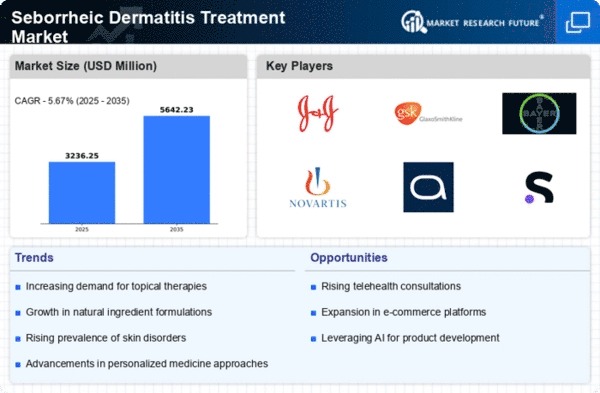
As per MRFR analysis, the Seborrheic Dermatitis Treatment Market Size was estimated at 3062.6 USD Million in 2024. The Seborrheic Dermatitis Treatment industry is projected to grow from 3271.34 USD Million in 2025 to 5642.23 USD Million by 2035, exhibiting a compound annual growth rate (CAGR) of 5.67 during the forecast period 2025 - 2035.

Key Market Trends & Highlights

The Seborrheic Dermatitis Treatment Market is experiencing a dynamic shift towards natural and technologically advanced solutions.

  • The market is witnessing a rise in the use of natural ingredients, reflecting a broader consumer trend towards organic products.
  • Technological advancements in treatment options are enhancing efficacy and patient compliance, particularly in North America.
  • Increased awareness and education about seborrheic dermatitis are driving demand for effective treatments across various demographics.
  • The growing prevalence of seborrheic dermatitis and rising consumer awareness are key drivers propelling market growth, especially in topical treatments.

Market Size & Forecast

2024 Market Size 3062.6 (USD Million)
2035 Market Size 5642.23 (USD Million)
CAGR (2025 - 2035) 5.67%
Largest Regional Market Share in 2024 North America

Major Players

<p>Johnson & Johnson (US), GlaxoSmithKline (GB), Bayer (DE), Novartis (CH), AbbVie (US), Sanofi (FR), Mylan (US), Teva Pharmaceutical Industries (IL), Haleon (GB)</p>

Market Trends

The Seborrheic Dermatitis Treatment Market is currently experiencing a notable evolution, driven by a combination of increasing awareness regarding skin health and the growing prevalence of seborrheic dermatitis among diverse populations. This condition, characterized by red, flaky patches on the skin, has prompted a surge in demand for effective treatment options. As consumers become more informed about available therapies, there is a discernible shift towards products that not only alleviate symptoms but also promote long-term skin health. This trend is further supported by advancements in dermatological research, which have led to the development of innovative formulations and delivery systems that enhance treatment efficacy. Moreover, the market landscape is being shaped by the rising inclination towards natural and organic ingredients in skincare products. Consumers are increasingly seeking treatments that align with their preferences for sustainability and holistic health. This shift is prompting manufacturers to explore and incorporate botanical extracts and other natural components into their offerings. As a result, the Seborrheic Dermatitis Treatment Market is likely to witness a diversification of product lines, catering to a broader audience with varying preferences and needs. The interplay of these factors suggests a dynamic market environment, where adaptability and consumer-centric approaches will be crucial for success.

Rise of Natural Ingredients

There is a growing trend towards the incorporation of natural and organic ingredients in seborrheic dermatitis treatments. Consumers are increasingly favoring products that utilize botanical extracts and sustainable components, reflecting a broader shift in skincare preferences.

Technological Advancements in Treatment

Innovations in dermatological research are leading to the development of new treatment formulations and delivery systems. These advancements aim to enhance the effectiveness of therapies, providing patients with improved outcomes and experiences.

Increased Awareness and Education

As awareness regarding skin health rises, more individuals are seeking information about seborrheic dermatitis and its treatments. This trend is driving demand for effective solutions and encouraging manufacturers to provide educational resources alongside their products.

Seborrheic Dermatitis Treatment Market Market Drivers

Market Growth Projections

The Global Seborrheic Dermatitis Treatment Market Industry is poised for substantial growth, with projections indicating a market value of 1.41 USD Billion in 2024 and an anticipated increase to 5.83 USD Billion by 2035. This growth trajectory reflects a compound annual growth rate of 13.8% from 2025 to 2035. Such projections underscore the increasing recognition of seborrheic dermatitis as a significant health concern, prompting both healthcare providers and patients to seek effective treatment solutions. The market's expansion is likely to be driven by a combination of factors, including rising prevalence, advancements in treatment options, and growing consumer awareness.

Impact of Lifestyle Changes

Shifts in lifestyle and environmental factors are influencing the Global Seborrheic Dermatitis Treatment Market Industry. Factors such as increased stress levels, dietary changes, and urbanization are believed to exacerbate skin conditions, including seborrheic dermatitis. As individuals face these lifestyle challenges, the incidence of the condition may rise, leading to greater demand for effective treatments. Furthermore, the growing trend of self-care and wellness among consumers is likely to drive interest in products that address skin health. This evolving landscape suggests that the market will continue to adapt to the changing needs of consumers, potentially leading to sustained growth.

Growing Awareness and Education

Increased awareness and education regarding seborrheic dermatitis play a pivotal role in shaping the Global Seborrheic Dermatitis Treatment Market Industry. Public health campaigns and educational initiatives by dermatological associations have led to a better understanding of the condition among both patients and healthcare professionals. This heightened awareness encourages individuals to seek timely treatment, thereby driving market growth. As more people recognize the symptoms and seek appropriate care, the market is expected to expand significantly. The projected compound annual growth rate of 13.8% from 2025 to 2035 reflects the positive impact of these awareness initiatives on treatment adoption.

Advancements in Treatment Options

Innovations in treatment modalities significantly influence the Global Seborrheic Dermatitis Treatment Market Industry. The introduction of novel therapies, including topical antifungals, corticosteroids, and newer formulations, enhances treatment efficacy and patient compliance. For instance, the development of combination therapies that address multiple symptoms simultaneously has shown promising results. These advancements not only improve patient outcomes but also stimulate market growth as healthcare providers adopt more effective treatment protocols. As the market evolves, the anticipated growth to 5.83 USD Billion by 2035 underscores the importance of continuous innovation in addressing seborrheic dermatitis.

Rising Demand for Over-the-Counter Products

The Global Seborrheic Dermatitis Treatment Market Industry is witnessing a surge in demand for over-the-counter (OTC) products. Many patients prefer accessible and convenient treatment options that do not require a prescription. The availability of various OTC shampoos, creams, and lotions formulated specifically for seborrheic dermatitis has empowered consumers to manage their symptoms effectively. This trend is particularly pronounced in regions with limited access to healthcare professionals. As the market adapts to consumer preferences, the growth trajectory appears promising, with OTC products likely contributing significantly to the overall market expansion.

Increasing Prevalence of Seborrheic Dermatitis

The Global Seborrheic Dermatitis Treatment Market Industry experiences growth driven by the rising prevalence of seborrheic dermatitis. This skin condition affects millions worldwide, with estimates suggesting that approximately 3% to 5% of the global population is impacted. The condition is particularly common among adults aged 30 to 60 years, leading to increased demand for effective treatment options. As awareness of the condition grows, more individuals seek medical advice and treatment, contributing to the market's expansion. The projected market value of 1.41 USD Billion in 2024 reflects this trend, indicating a robust demand for therapeutic solutions.

Market Segment Insights

By Treatment Type: Topical Treatment (Largest) vs. Oral Treatment (Fastest-Growing)

<p>The treatment type segment of the Seborrheic Dermatitis Treatment Market showcases a diverse range of options, with topical treatments capturing the largest market share. Topical therapies are favored for their direct application and immediate relief, making them the go-to choice for many patients. In contrast, oral treatments are emerging as the fastest-growing segment due to their convenience and effectiveness for patients who may not respond adequately to topical applications. These trends indicate a shift in treatment approaches as patient preferences and clinical outcomes evolve. As awareness of seborrheic dermatitis increases, so does the demand for effective treatment options. Topical treatments remain popular due to their accessibility and ease of use, driven by a growing number of patients seeking relief. Oral treatments are gaining traction, enabled by advancements in pharmaceutical formulations that enhance efficacy. This supportive landscape for both treatment types is bolstered by ongoing research and development, regulatory approvals, and the introduction of innovative therapies that cater to diverse patient needs.</p>

<p>Topical Treatment: Dominant vs. Oral Treatment: Emerging</p>

<p>Topical treatments represent the dominant category in the seborrheic dermatitis treatment landscape, characterized by a wide variety of formulations, including corticosteroids, antifungals, and medicated shampoos. Their ability to provide quick relief and localized effectiveness makes them highly preferred among patients. Leading brands continually innovate their product offerings to enhance efficacy and patient adherence. Conversely, oral treatments are becoming an emerging segment driven by growing clinical evidence supporting their use for refractory cases. These treatments are gaining acceptance due to their systemic action, which can address underlying causes more effectively compared to topical solutions alone. Both segments reflect a dynamic market responding to patient needs and advancements in scientific research.</p>

By Patient Demographics: Age Group (Largest) vs. Severity of Condition (Fastest-Growing)

<p>In the Seborrheic Dermatitis Treatment Market, the distribution among patient demographics showcases that individuals aged 30-50 represent the largest segment. This age group typically experiences more severe symptoms due to increased oil production associated with hormonal changes. In contrast, the growth within the 'Severity of Condition' segment highlights that mild to moderate cases are rapidly emerging, driven by increased awareness and diagnosis among healthcare providers and patients alike, leading to a more significant market share for treatments targeting these severity levels.</p>

<p>Age Group (Dominant) vs. Severity of Condition (Emerging)</p>

<p>The dominant age group in the Seborrheic Dermatitis Treatment Market is primarily comprised of adults aged 30 to 50, as they are more prone to experiencing the inflammatory and oily skin conditions associated with seborrheic dermatitis. This demographic often seeks effective treatment options, which is why they constitute a substantial portion of the market. Conversely, the severity of condition segment is emerging rapidly, reflecting a growing trend where patients with mild to moderate cases are increasingly seeking treatment options. This shift is fueled by heightened awareness of skin health and improved access to dermatological treatment, marking a notable evolution in patient demographics in this market.</p>

By Formulation Type: Creams (Largest) vs. Shampoos (Fastest-Growing)

<p>The Seborrheic Dermatitis Treatment Market presents a varied distribution of formulation types. Creams are currently the largest segment, favored for their effective moisturizing properties that alleviate symptoms. Shampoos, however, are emerging as the fastest-growing formulation, becoming increasingly popular due to their ease of use and targeted action in treating scalp conditions. This dual dynamic indicates a shift in consumer preference and treatment methodology within the market. Growth trends in the formulation type segment are influenced by evolving consumer lifestyles and increasing awareness of seborrheic dermatitis. Creams are seeing steady demand, while shampoos are gaining traction thanks to advancements in formulation technologies that enhance efficiency. Factors such as increased availability of products, changes in regulatory frameworks, and growing acceptance of topical treatments over systemic options are driving this growth.</p>

<p>Creams (Dominant) vs. Shampoos (Emerging)</p>

<p>Creams for seborrheic dermatitis are widely regarded as the dominant formulation due to their high efficacy in treating inflamed and itchy skin. They provide substantial moisturization, which is essential for alleviating symptoms of the condition. These products often contain active ingredients like corticosteroids and antifungal agents, contributing to their effectiveness. In contrast, shampoos are an emerging segment, appealing to those looking for convenient solutions to scalp-related issues. With innovative formulations incorporating natural extracts and targeted deliverability, shampoos are increasingly recognized for their capacity to both cleanse and treat seborrheic dermatitis. The growing inclination toward user-friendly treatment options places this segment on an upward trajectory.</p>

By Distribution Channel: Pharmacies (Largest) vs. Online Retail (Fastest-Growing)

<p>The distribution channels for the Seborrheic Dermatitis Treatment Market showcase a diverse landscape, with pharmacies holding the largest market share due to their widespread presence and accessibility for consumers. Pharmacies not only offer a range of over-the-counter treatment options but also provide guidance from pharmacists, making them a preferred choice for many patients. Online retail has emerged as a significant player, particularly in recent years, driven by the growing reliance on e-commerce and increased consumer comfort with purchasing health products online. Growth trends indicate that while pharmacies remain dominant, online retail is rapidly expanding, catering to a tech-savvy population looking for convenience. Additionally, the rise of telemedicine and online consultations has encouraged patients to explore treatment options via the internet. The combination of a busy lifestyle and the desire for discreet purchasing options are significant factors behind the surge in online retail for seborrheic dermatitis treatments.</p>

<p>Pharmacies (Dominant) vs. Online Retail (Emerging)</p>

<p>Pharmacies serve as the dominant channel for the distribution of seborrheic dermatitis treatments, benefiting from established consumer trust and accessibility. They provide a wide variety of products, including topical treatments and medicated shampoos, facilitating face-to-face interactions with knowledgeable pharmacy staff who can offer advice on product selection. In contrast, online retail, while still emerging, is rapidly gaining traction, particularly among younger demographics. This channel offers the convenience of home delivery and often features competitive pricing. As digital platforms continue to optimize user experience, online retailers are likely to attract more customers seeking privacy and ease of access to seborrheic dermatitis treatments, positioning themselves as a formidable presence in the market.</p>

Get more detailed insights about Seborrheic Dermatitis Treatment Market Research Report - Forecast till 2035

Regional Insights

North America : Market Leader in Treatments

North America is poised to maintain its leadership in the Seborrheic Dermatitis Treatment Market, with a market size of $1537.04M in 2025. The region benefits from a high prevalence of skin disorders, increasing awareness, and advanced healthcare infrastructure. Regulatory support for innovative treatments and a growing demand for over-the-counter solutions are key growth drivers. The market is expected to expand as more patients seek effective management options for this chronic condition. The United States is the primary contributor to this market, hosting major players like Johnson & Johnson and AbbVie. The competitive landscape is characterized by a mix of established pharmaceutical companies and emerging biotech firms. With a focus on research and development, these companies are introducing new formulations and delivery methods, enhancing treatment efficacy and patient compliance. The presence of a robust distribution network further strengthens market accessibility.

Europe : Emerging Market Dynamics

Europe's Seborrheic Dermatitis Treatment Market is projected to reach $1022.0M by 2025, driven by increasing incidences of skin conditions and a growing aging population. Regulatory bodies are actively promoting awareness and access to effective treatments, which is expected to boost market growth. The rise in dermatological consultations and the demand for both prescription and OTC products are significant factors contributing to this upward trend. Leading countries in this region include Germany, France, and the UK, where major players like GlaxoSmithKline and Bayer are prominent. The competitive landscape is evolving, with a focus on innovative therapies and personalized medicine. Collaborations between pharmaceutical companies and research institutions are fostering advancements in treatment options, ensuring that patients have access to the latest therapies. The European Medicines Agency continues to support these developments, enhancing market confidence.

Asia-Pacific : Rapid Growth Potential

The Asia-Pacific region is witnessing significant growth in the Seborrheic Dermatitis Treatment Market, projected to reach $410.0M by 2025. Factors such as rising urbanization, changing lifestyles, and increased awareness of skin health are driving demand. Additionally, the region's expanding healthcare infrastructure and the introduction of new treatment modalities are expected to catalyze market growth. Regulatory frameworks are becoming more supportive, facilitating the entry of innovative products into the market. Countries like China, Japan, and India are leading the charge, with a growing number of local and international players entering the market. Companies such as Novartis and Teva Pharmaceutical Industries are focusing on expanding their product portfolios to cater to diverse consumer needs. The competitive landscape is characterized by a mix of established brands and emerging players, all vying for market share in this rapidly evolving environment.

Middle East and Africa : Untapped Market Opportunities

The Middle East and Africa region is gradually emerging in the Seborrheic Dermatitis Treatment Market, with a market size of $93.56M projected for 2025. The growth is driven by increasing awareness of skin health and the rising prevalence of dermatological conditions. Efforts by local governments to improve healthcare access and the introduction of new treatment options are expected to enhance market dynamics. Regulatory bodies are beginning to recognize the importance of dermatological treatments, which is a positive sign for future growth. Countries like South Africa and the UAE are at the forefront of this market, with a growing number of healthcare facilities and dermatology specialists. The competitive landscape is still developing, with both local and international companies exploring opportunities. Key players are focusing on education and awareness campaigns to promote effective treatment options, thereby increasing patient engagement and market penetration.

Key Players and Competitive Insights

The Seborrheic Dermatitis Treatment Market is characterized by a competitive landscape that is increasingly shaped by innovation, strategic partnerships, and a focus on patient-centric solutions. Key players such as Johnson & Johnson (US), AbbVie (US), and GlaxoSmithKline (GB) are actively engaged in enhancing their product offerings and expanding their market reach. Johnson & Johnson (US) has positioned itself as a leader through continuous investment in research and development, focusing on novel formulations that improve efficacy and patient compliance. AbbVie (US), on the other hand, emphasizes its robust pipeline of dermatological therapies, which includes treatments specifically targeting seborrheic dermatitis, thereby reinforcing its competitive edge. GlaxoSmithKline (GB) appears to be leveraging its extensive global distribution network to enhance accessibility to its products, which is crucial in a market that demands both efficacy and availability.

The market structure is moderately fragmented, with a mix of established pharmaceutical giants and emerging players. Key business tactics such as localizing manufacturing and optimizing supply chains are becoming increasingly prevalent among these companies. This approach not only reduces operational costs but also enhances responsiveness to regional market demands. The collective influence of major players is significant, as they drive innovation and set industry standards, thereby shaping the overall competitive dynamics.

In November 2025, AbbVie (US) announced a strategic partnership with a leading biotechnology firm to co-develop a new topical treatment for seborrheic dermatitis. This collaboration is expected to accelerate the development timeline and enhance the therapeutic profile of the product, potentially positioning AbbVie as a frontrunner in the market. The strategic importance of this partnership lies in its potential to leverage combined expertise and resources, thereby increasing the likelihood of successful market entry.

In October 2025, Johnson & Johnson (US) launched a new digital platform aimed at providing personalized treatment plans for patients suffering from seborrheic dermatitis. This initiative reflects a growing trend towards digital health solutions, which not only improve patient engagement but also facilitate better adherence to treatment regimens. The strategic significance of this move is underscored by the increasing demand for tailored healthcare solutions, which could enhance patient outcomes and loyalty to the brand.

In September 2025, GlaxoSmithKline (GB) expanded its product line by introducing a new formulation of its existing seborrheic dermatitis treatment, which incorporates sustainable ingredients. This initiative aligns with the broader industry trend towards sustainability and reflects a commitment to environmentally responsible practices. The strategic importance of this development is twofold: it addresses consumer demand for eco-friendly products while also differentiating GlaxoSmithKline in a competitive market.

As of December 2025, the competitive trends in the Seborrheic Dermatitis Treatment Market are increasingly defined by digitalization, sustainability, and the integration of artificial intelligence in product development. Strategic alliances are playing a pivotal role in shaping the current landscape, enabling companies to pool resources and expertise. Looking ahead, competitive differentiation is likely to evolve from traditional price-based competition to a focus on innovation, technological advancements, and supply chain reliability. This shift suggests that companies that prioritize these aspects will be better positioned to thrive in an increasingly complex market.

Key Companies in the Seborrheic Dermatitis Treatment Market market include

Industry Developments

Future Outlook

Seborrheic Dermatitis Treatment Market Future Outlook

<p>The Seborrheic Dermatitis Treatment Market is projected to grow at a 5.67% CAGR from 2024 to 2035, driven by increasing prevalence and innovative treatment options.</p>

New opportunities lie in:

  • <p>Development of personalized topical formulations for targeted treatment.</p>
  • <p>Expansion of telehealth services for remote consultations and prescriptions.</p>
  • <p>Investment in clinical trials for novel therapeutic agents and delivery systems.</p>

<p>By 2035, the market is expected to achieve substantial growth, reflecting evolving treatment paradigms.</p>

Market Segmentation

Seborrheic Dermatitis Treatment Market Treatment Type Outlook

  • Topical Treatment
  • Oral Treatment
  • Phototherapy
  • Surgical Treatment

Seborrheic Dermatitis Treatment Market Formulation Type Outlook

  • Creams
  • Shampoos
  • Lotions
  • Ointments

Seborrheic Dermatitis Treatment Market Distribution Channel Outlook

  • Pharmacies
  • Online Retail
  • Hospitals
  • Dermatology Clinics

Seborrheic Dermatitis Treatment Market Patient Demographics Outlook

  • Age Group
  • Gender
  • Skin Type
  • Severity of Condition

Report Scope

MARKET SIZE 20243062.6(USD Million)
MARKET SIZE 20253271.34(USD Million)
MARKET SIZE 20355642.23(USD Million)
COMPOUND ANNUAL GROWTH RATE (CAGR)5.67% (2024 - 2035)
REPORT COVERAGERevenue Forecast, Competitive Landscape, Growth Factors, and Trends
BASE YEAR2024
Market Forecast Period2025 - 2035
Historical Data2019 - 2024
Market Forecast UnitsUSD Million
Key Companies ProfiledJohnson & Johnson (US), GlaxoSmithKline (GB), Bayer (DE), Novartis (CH), AbbVie (US), Sanofi (FR), Mylan (US), Teva Pharmaceutical Industries (IL), Haleon (GB)
Segments CoveredTreatment Type, Patient Demographics, Formulation Type, Distribution Channel
Key Market OpportunitiesEmerging natural ingredients and personalized treatments drive growth in the Seborrheic Dermatitis Treatment Market.
Key Market DynamicsRising consumer demand for effective treatments drives innovation and competition in the Seborrheic Dermatitis Treatment Market.
Countries CoveredNorth America, Europe, APAC, South America, MEA

FAQs

At what CAGR is the seborrheic dermatitis market projected to grow in the forecast period (2023-2032)?

seborrheic dermatitis market is projected grow at approximately 12.3% CAGR during the assessment period (2023-2032).

How much is the seborrheic dermatitis market in the worth in the future?

The valuation of the seborrheic dermatitis market is estimated to increase to USD 4.12 Billion by the end of 2032.

Which is the major segment in the seborrheic dermatitis market?

The corticosteroid lotions segment by treatment type holds the majority shares in the seborrheic dermatitis market.

Which region holds the largest share in the seborrheic dermatitis market?

North America holds the largest share in the seborrheic dermatitis market, followed by Europe and the Asia Pacific, respectively.

Who are the top players in theseborrheic dermatitis market?

Merck (US), Sonoma Pharmaceuticals (US), Hikma Pharmaceuticals (UK), GlaxoSmithKline (UK), Allen and Hanburys (UK), Bausch Health (Canada), West-Ward Pharmaceutical Corp. (US), and Valent Pharmaceutical (UK), are some of the major players operating in the seborrheic dermatitis market.

  1. REPORT PROLOGUE
  2. MARKET INTRODUCTION
    1. Definition
    2. Scope of the Study
      1. Research Objective
      2. Assumptions
      3. Limitations
  3. RESEARCH METHODOLOGY
    1. Overview
    2. Primary Research
    3. Secondary Research
    4. Market Size Estimation
  4. MARKET DYNAMICS
    1. Overview
    2. Drivers
    3. Restraints
    4. Opportunities
  5. MARKET FACTOR ANALYSIS
    1. Porter’s Five Forces Analysis
      1. Bargaining Power of Suppliers
      2. Bargaining Power of Buyers
      3. Threat of New Entrants
      4. Threat of Substitutes
      5. Intensity of Rivalry
    2. Value Chain Analysis
  6. GLOBAL SEBORRHEIC DERMATITIS TREATMENT MARKET, BY TREATMENT TYPE
    1. Overview
    2. Antifungal Product
  7. Market Estimates & Forecast, by Region, 2020-2027
  8. Market Estimates & Forecast, by Country, 2020-2027
    1. Corticosteroid Lotions
  9. Market Estimates & Forecast, by Region, 2020-2027
  10. Market Estimates & Forecast, by Country, 2020-2027
    1. Sulfur Products
  11. Market Estimates & Forecast, by Region, 2020-2027
  12. Market Estimates & Forecast, by Country, 2020-2027
  13. GLOBAL SEBORRHEIC DERMATITIS TREATMENT MARKET, BY ROUTE OF ADMINISTRATION
    1. Overview
    2. Oral
  14. Market Estimates & Forecast, by Region, 2020-2027
  15. Market Estimates & Forecast, by Country, 2020-2027
    1. Topical
  16. Market Estimates & Forecast, by Region, 2020-2027
  17. Market Estimates & Forecast, by Country, 2020-2027
  18. GLOBAL SEBORRHEIC DERMATITIS TREATMENT MARKET, BY END USER
    1. Overview
    2. Hospital Pharmacies
  19. Market Estimates & Forecast, by Region, 2020-2027
  20. Market Estimates & Forecast, by Country, 2020-2027
    1. Retail Pharmacies
  21. Market Estimates & Forecast, by Region, 2020-2027
  22. Market Estimates & Forecast, by Country, 2020-2027
    1. Others
  23. Market Estimates & Forecast, by Region, 2020-2027
  24. Market Estimates & Forecast, by Country, 2020-2027
  25. GLOBAL SEBORRHEIC DERMATITIS TREATMENT MARKET, BY REGION
    1. Overview
    2. Americas
      1. North America
      2. Latin America
    3. Europe
      1. Western Europe
      2. Eastern Europe
    4. Asia-Pacific
      1. Japan
      2. China
      3. India
      4. Australia
      5. South Korea
      6. Rest of Asia-Pacific
    5. Middle East & Africa
      1. Middle East
      2. Africa
  26. COMPANY LANDSCAPE
  27. Overview
  28. Competitive Analysis
  29. COMPANY PROFILES
    1. Sonoma Pharmaceuticals
      1. Company Overview
      2. Financial Overview
      3. Key Developments
      4. SWOT Analysis
      5. Key Strategies
    2. Merck
      1. Company Overview
      2. Financial Overview
      3. Key Developments
      4. SWOT Analysis
      5. Key Strategies
    3. Hikma Pharmaceuticals
      1. Company Overview
      2. Financial Overview
      3. Key Developments
      4. SWOT Analysis
      5. Key Strategies
    4. Allen and Hanburys
      1. Company Overview
      2. Financial Overview
      3. Key Developments
      4. SWOT Analysis
      5. Key Strategies
    5. GlaxoSmithKline
      1. Company Overview
      2. Financial Overview
      3. Key Developments
      4. SWOT Analysis
      5. Key Strategies
    6. Bausch Health
      1. Company Overview
      2. Financial Overview
      3. Key Developments
      4. SWOT Analysis
      5. Key Strategies
    7. Valent Pharmaceutical
      1. Company Overview
      2. Financial Overview
      3. Key Developments
      4. SWOT Analysis
      5. Key Strategies
    8. West-Ward Pharmaceutical Corp.
      1. Company Overview
      2. Financial Overview
      3. Key Developments
      4. SWOT Analysis
      5. Key Strategies
    9. Others
  30. APPENDIX
    1. References
    2. Related Reports 
  31. LIST OF TABLES
  32. GLOBAL SEBORRHEIC DERMATITIS TREATMENT MARKET SYNOPSIS, 2020-2027
  33. GLOBAL SEBORRHEIC DERMATITIS TREATMENT MARKET ESTIMATES & FORECAST, 2020-2027 (USD MILLION)
  34. GLOBAL SEBORRHEIC DERMATITIS TREATMENT MARKET, BY TREATMENT TYPE, 2020-2027 (USD MILLION)
  35. GLOBAL SEBORRHEIC DERMATITIS TREATMENT MARKET, BY ROUTE OF ADMINISTRATION, 2020-2027 (USD MILLION)
  36. GLOBAL SEBORRHEIC DERMATITIS TREATMENT MARKET, BY END USER, 2020-2027 (USD MILLION)
  37. GLOBAL SEBORRHEIC DERMATITIS TREATMENT MARKET, BY REGION, 2020-2027 (USD MILLION)
  38. NORTH AMERICA: SEBORRHEIC DERMATITIS TREATMENT MARKET, BY TREATMENT TYPE, 2020-2027 (USD MILLION)
  39. NORTH AMERICA: SEBORRHEIC DERMATITIS TREATMENT MARKET, BY ROUTE OF ADMINISTRATION, 2020-2027 (USD MILLION)
  40. NORTH AMERICA: SEBORRHEIC DERMATITIS TREATMENT MARKET, BY END USER, 2020-2027 (USD MILLION)
  41. US: SEBORRHEIC DERMATITIS TREATMENT MARKET, BY TREATMENT TYPE, 2020-2027 (USD MILLION)
  42. US: SEBORRHEIC DERMATITIS TREATMENT MARKET, BY ROUTE OF ADMINISTRATION, 2020-2027 (USD MILLION)
  43. US: SEBORRHEIC DERMATITIS TREATMENT MARKET, BY END USER, 2020-2027 (USD MILLION)
  44. CANADA: SEBORRHEIC DERMATITIS TREATMENT MARKET, BY TREATMENT TYPE, 2020-2027 (USD MILLION)
  45. CANADA: SEBORRHEIC DERMATITIS TREATMENT MARKET, BY ROUTE OF ADMINISTRATION, 2020-2027 (USD MILLION)
  46. CANADA: SEBORRHEIC DERMATITIS TREATMENT MARKET, BY END USER, 2020-2027 (USD MILLION)
  47. LATIN AMERICA: SEBORRHEIC DERMATITIS TREATMENT MARKET, BY TREATMENT TYPE, 2020-2027 (USD MILLION)
  48. LATIN AMERICA: SEBORRHEIC DERMATITIS TREATMENT MARKET, BY ROUTE OF ADMINISTRATION, 2020-2027 (USD MILLION)
  49. LATIN AMERICA: SEBORRHEIC DERMATITIS TREATMENT MARKET, BY END USER, 2020-2027 (USD MILLION)
  50. EUROPE: SEBORRHEIC DERMATITIS TREATMENT MARKET, BY TREATMENT TYPE, 2020-2027 (USD MILLION)
  51. EUROPE: SEBORRHEIC DERMATITIS TREATMENT MARKET, BY ROUTE OF ADMINISTRATION, 2020-2027 (USD MILLION)
  52. EUROPE: SEBORRHEIC DERMATITIS TREATMENT MARKET, BY END USER, 2020-2027 (USD MILLION)
  53. WESTERN EUROPE: SEBORRHEIC DERMATITIS TREATMENT MARKET, BY TREATMENT TYPE, 2020-2027 (USD MILLION)
  54. WESTERN EUROPE: SEBORRHEIC DERMATITIS TREATMENT MARKET, BY ROUTE OF ADMINISTRATION, 2020-2027 (USD MILLION)
  55. WESTERN EUROPE: SEBORRHEIC DERMATITIS TREATMENT MARKET, BY END USER, 2020-2027 (USD MILLION)
  56. EASTERN EUROPE: SEBORRHEIC DERMATITIS TREATMENT MARKET, BY TREATMENT TYPE, 2020-2027 (USD MILLION)
  57. EASTERN EUROPE: SEBORRHEIC DERMATITIS TREATMENT MARKET, BY ROUTE OF ADMINISTRATION, 2020-2027 (USD MILLION)
  58. EASTERN EUROPE: SEBORRHEIC DERMATITIS TREATMENT MARKET, BY END USER, 2020-2027 (USD MILLION)
  59. ASIA-PACIFIC: SEBORRHEIC DERMATITIS TREATMENT MARKET, BY TREATMENT TYPE, 2020-2027 (USD MILLION)
  60. ASIA-PACIFIC: SEBORRHEIC DERMATITIS TREATMENT MARKET, BY ROUTE OF ADMINISTRATION, 2020-2027 (USD MILLION)
  61. ASIA-PACIFIC: SEBORRHEIC DERMATITIS TREATMENT MARKET, BY END USER, 2020-2027 (USD MILLION)
  62. MIDDLE EAST & AFRICA: SEBORRHEIC DERMATITIS TREATMENT MARKET, BY TREATMENT TYPE, 2020-2027 (USD MILLION)
  63. MIDDLE EAST & AFRICA: SEBORRHEIC DERMATITIS TREATMENT MARKET, BY ROUTE OF ADMINISTRATION, 2020-2027 (USD MILLION)
  64. MIDDLE EAST & AFRICA: SEBORRHEIC DERMATITIS TREATMENT MARKET, BY END USER, 2020-2027 (USD MILLION)
  65. LIST OF FIGURES
  66. RESEARCH PROCESS
  67. MARKET STRUCTURE FOR THE GLOBAL SEBORRHEIC DERMATITIS TREATMENT MARKET
  68. MARKET DYNAMICS FOR THE GLOBAL SEBORRHEIC DERMATITIS TREATMENT MARKET
  69. GLOBAL SEBORRHEIC DERMATITIS TREATMENT MARKET SHARE, BY TREATMENT TYPE, 2020 (%)
  70. GLOBAL SEBORRHEIC DERMATITIS TREATMENT MARKET SHARE, BY ROUTE OF ADMINISTRATION, 2020 (%)
  71. GLOBAL SEBORRHEIC DERMATITIS TREATMENT MARKET SHARE, BY END USER, 2020 (%)
  72. GLOBAL SEBORRHEIC DERMATITIS TREATMENT MARKET SHARE, BY REGION, 2020 (%)
  73. AMERICAS: SEBORRHEIC DERMATITIS TREATMENT MARKET SHARE BY REGION, 2020 (%)
  74. NORTH AMERICA: SEBORRHEIC DERMATITIS TREATMENT MARKET SHARE, BY COUNTRY, 2020 (%)
  75. EUROPE: SEBORRHEIC DERMATITIS TREATMENT MARKET SHARE, BY REGION, 2020 (%)
  76. WESTERN EUROPE: SEBORRHEIC DERMATITIS TREATMENT MARKET SHARE, BY COUNTRY, 2020 (%)
  77. ASIA-PACIFIC: SEBORRHEIC DERMATITIS TREATMENT MARKET SHARE, BY COUNTRY, 2020 (%)
  78. MIDDLE EAST & AFRICA: SEBORRHEIC DERMATITIS TREATMENT MARKET SHARE, BY COUNTRY, 2020 (%)
  79. GLOBAL SEBORRHEIC DERMATITIS TREATMENT MARKET: COMPANY SHARE ANALYSIS, 2020 (%)
  80. SONOMA PHARMACEUTICALS.: KEY FINANCIALS
  81. SONOMA PHARMACEUTICALS: SEGMENTAL REVENUE
  82. SONOMA PHARMACEUTICALS: REGIONAL REVENUE
  83. MERCK: KEY FINANCIALS
  84. MERCK: SEGMENTAL REVENUE
  85. MERCK: REGIONAL REVENUE
  86. HIKMA PHARMACEUTICALS: KEY FINANCIALS
  87. HIKMA PHARMACEUTICALS: SEGMENTAL REVENUE
  88. HIKMA PHARMACEUTICALS: REGIONAL REVENUE
  89. ALLEN AND HANBURYS: KEY FINANCIALS
  90. ALLEN AND HANBURYS: SEGMENTAL REVENUE
  91. ALLEN AND HANBURYS: REGIONAL REVENUE
  92. GLAXOSMITHKLINE: KEY FINANCIALS
  93. GLAXOSMITHKLINE: SEGMENTAL REVENUE
  94. GLAXOSMITHKLINE: REGIONAL REVENUE
  95. BAUSCH HEALTH: KEY FINANCIALS
  96. BAUSCH HEALTH: SEGMENTAL REVENUE
  97. BAUSCH HEALTH: REGIONAL REVENUE
  98. VALENT PHARMACEUTICAL: KEY FINANCIALS
  99. VALENT PHARMACEUTICAL: SEGMENTAL REVENUE
  100. VALENT PHARMACEUTICAL: REGIONAL REVENUE
  101. WEST-WARD PHARMACEUTICAL CORP: KEY FINANCIALS
  102. WEST-WARD PHARMACEUTICAL CORP: SEGMENTAL REVENUE
  103. WEST-WARD PHARMACEUTICAL CORP: REGIONAL REVENUE

Seborrheic Dermatitis Treatment Market Segmentation

Market Segmentation Overview

  • Detailed segmentation data will be available in the full report
  • Comprehensive analysis by multiple parameters
  • Regional and country-level breakdowns
  • Market size forecasts by segment
Infographic

Free Sample Request

Kindly complete the form below to receive a free sample of this Report

Get Free Sample

Customer Strories

Compare Licence

×
Features License Type
Single User Multiuser License Enterprise User
Price $4,950 $5,950 $7,250
Maximum User Access Limit 1 User Upto 10 Users Unrestricted Access Throughout the Organization
Free Customization
Direct Access to Analyst
Deliverable Format
Platform Access
Discount on Next Purchase 10% 15% 15%
Printable Versions