

Market Trends
Introduction
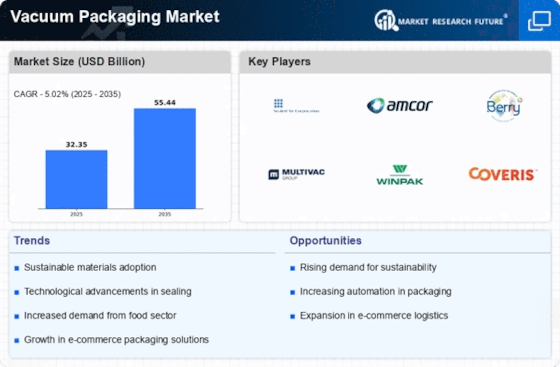
In 2023, the vacuum-packaging market is experiencing significant transformation driven by a confluence of macro-economic factors, such as technological advancements, regulatory pressures, and changes in the consumer behavior. In particular, the innovations in the packaging technology are expected to increase the efficiency and sustainability of the packaging process, while the regulations on food safety and waste management will force the manufacturers to adopt vacuum packaging solutions. In addition, the changing preferences of the consumers towards convenience and shelf-life will reshape the product offerings and the vacuum-packaging strategies. These trends will have strategic importance for the vacuum-packaging market players as they navigate the competitive landscape, ensure compliance, and optimize their operations.
Top Trends
-
Sustainability Initiatives
The vacuum-packaging industry is increasingly turning to sustainable materials, driven by the demand for green solutions from consumers. For instance, Amcor has invested in biodegradable films, while governments are implementing regulations to reduce plastic waste. In 2022, 60% of consumers would prefer to buy products in sustainable packaging. This trend is likely to spur innovation in material science and increase market competition. -
Technological Advancements
The vacuum-packaging industry is also being transformed by the development of vacuum-packaging technology, which has incorporated intelligent automation and smart packaging. Schneider, for example, has developed an automatic vacuum-packaging system. By 2025, 45 per cent of companies plan to implement smart-packaging technology in their supply chains, which will have a positive effect on both cost and productivity. -
Health and Safety Regulations
Health and safety regulations are affecting the vacuum packaging market, especially in the food sector. The FDA is focusing on the use of packaging materials, forcing companies to look for safer alternatives. In 2023, 70% of food manufacturers reported compliance challenges, leading to increased investments in regulatory compliance technology. This trend may drive innovation in safer packaging solutions. -
E-commerce Growth
The development of e-commerce has a considerable impact on the vacuum packaging market. Companies such as Sealed Air develop vacuum packaging that is suited to shipping. By 2022, e-commerce will represent twenty per cent of all retail sales. The products must therefore be packed in a way that ensures their quality during transport. This trend will probably continue to shape the design of packaging and logistics. -
Customization and Personalization
Customized vacuum packaging is required to meet the preferences of different consumers. Multivac and other companies have already started to offer a variety of vacuum packaging for different products. Surveys show that 55% of consumers are willing to pay more for a variety of vacuum packaging. This trend will lead to innovations in product design and production methods, which will greatly enhance customer engagement. -
Expansion in Emerging Markets
Vacuum packaging is an industry with great potential in the developing countries, with the rising income of the population and the growing number of cities. Companies like Winpak are expanding their activities in Asia and Africa. It is estimated that by 2023 the demand for packaging in these regions will amount to 30 per cent of the total. This development could lead to increased competition and localised products. -
Food Preservation Techniques
In recent years, vacuum-packaging technology has made great strides. It is a means of preserving food and of reducing food waste. KHS has developed new vacuum systems that can extend the shelf life of products. Studies show that vacuum-packed products have a shelf life that is five times longer than that of the conventionally packed ones. This trend is likely to influence consumers’ purchasing decisions. -
Integration of Smart Features
Among the features being increasingly included in the vacuum packaging of foodstuffs are the bar code, the QR code and the sensors. In this way, for example, the TNA group can include technology in its packages which allows consumers to monitor the freshness of the product. According to a survey, 40% of consumers find such a feature appealing. In future, this trend will presumably lead to a greater degree of interaction between consumers and producers. -
Increased Focus on Food Safety
Concerns for food hygiene have given rise to an increasing emphasis on vacuum packaging solutions that reduce contamination risks. Coveris has responded to this trend by introducing a range of packaging that meets the most exacting safety standards. In 2023, some 65 per cent of consumers were said to be concerned about food hygiene, which was affecting their buying habits. This trend may lead to tighter quality controls and innovations in the field of packaging materials. -
Collaboration and Partnerships
It is becoming more and more common for the packaging industry and the food industry to work together strategically to offer a more complete range of products. For example, Berry has worked with food companies to develop new solutions in the field of vacuum packaging. In 2022, 50 per cent of companies reported an increase in collaboration. This trend will encourage innovation and will also improve supply chain efficiencies.
Conclusion: Navigating the Vacuum Packaging Landscape
In 2023 the vacuum packaging market is characterized by intense competition and significant fragmentation. Both established and new entrants compete for a share of the market. The regional trend is a growing demand for sustainable packaging solutions, which leads suppliers to develop and adapt their products. The main difference between the established companies and the newcomers is that the established ones are able to draw on their established distribution channels and customer loyalty. The newcomers, on the other hand, can rely on new developments, such as the automation of robots and the development of flexible packaging solutions. Adapting to the changing market will require the ability to integrate sustainable practices, improve operational efficiency through automation, and respond quickly to changing consumer preferences. These abilities must be developed to meet the challenges of the market and seize the opportunities.





















Leave a Comment