Veterinary Surgical Instruments Market (2025 - 2035)

Global Veterinary Surgical Instruments Market Research Report By Type (Surgical Scissors, Scalpels, Needle Holders, Forceps, Electrosurgical Devices), By Application (Soft Tissue Surgery, Orthopedic Surgery, Ophthalmic Surgery, Dental Surgery, Emergency Surgery), By End Use (Veterinary Hospitals, Veterinary Clinics, Research Laboratories, Animal Shelters), By Material (Stainless Steel, Titanium, Plastic, Carbon Steel) and By Regional (North America, Europe, South America, Asia Pacific, Middle East and Africa) -Forecast to 2035
ID: MRFR/HC/2068-CR
200 Pages
Satyendra Maurya, Rahul Gotadki
Last Updated: July 12, 2026
Veterinary Surgical Instruments Market
Market Size
Forecast Period2025-2035
CAGR (2025-2035)6.90%
2025 Market SizeUSD 1.74 Billion
2035 Market SizeUSD 3.37 Billion
Key Players
B. Braun Vet Care
Ethicon
Medtronic
Integra LifeSciences
Henry Schein Animal Health
Covetrus
Opportunities
  • Tele-Mentored and Robotic-Assisted Surgery
  • Single-Use Instrument Kits for High-Volume Clinics
  • Emerging-Market Veterinary Infrastructure Build-Out

Veterinary Surgical Instruments Market Summary

The Veterinary Surgical Instruments Market was valued at USD 1.74 Billion in 2025 and is projected to reach USD 1.85 Billion in 2026 before climbing to USD 3.37 Billion by 2035, expanding at a 6.90% CAGR during 2026–2035. Rising pet ownership rates across developed economies, combined with the widening scope of pet health insurance — now covering surgical procedures in over 40% of policies in the US and UK — are injecting sustained capital into the Veterinary Surgical Instruments Market [1]. Government livestock health programs, including the USDA's National Animal Health Monitoring System and the EU's Farm to Fork Strategy, are creating parallel demand channels for farm-animal surgical upgrades [2].

A technology shift is reshaping how veterinary clinics approach surgery. Legacy stainless-steel instrument sets, once considered lifetime purchases, are giving way to single-use sterilized kits and electrosurgical platforms with integrated smoke-evacuation systems. The global veterinary care services sector attracted over USD 7.2 Billion in private-equity investment between 2022 and 2024, accelerating equipment modernization cycles across corporate veterinary hospital chains [3]. High-definition endoscopic systems and AI-assisted surgical planning software are moving from university teaching hospitals into mid-tier referral practices, compressing adoption timelines that previously spanned a decade.

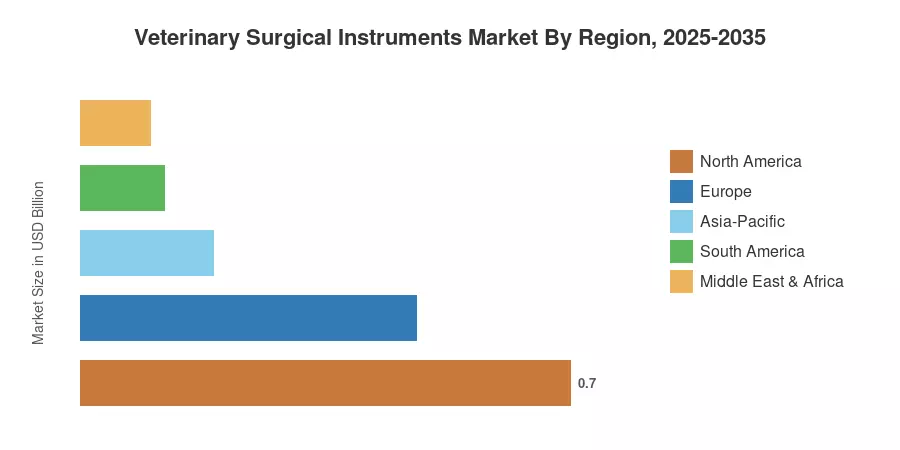
North America commands the largest share of the Veterinary Surgical Instruments Market at roughly 40.2% of 2025 revenue, anchored by mature companion-animal spending and a dense network of specialty referral centers. Asia-Pacific is the fastest-growing region, forecast to expand at a 10.80% CAGR through 2035, fueled by urbanization and government veterinary infrastructure investment across China and India. Europe holds the second-largest position with a 27.8% share, driven by stringent animal welfare mandates. The decade ahead will see precision-guided orthopedic procedures and tele-surgery platforms redefine Veterinary Surgical Instruments Market dynamics across all five regions.


Key Report Takeaways

• By Product

  • Sutures and staplers accounted for a 35.5% revenue share in 2025, reflecting their universal use across virtually every surgical procedure type.
  • Electrosurgery instruments are projected to grow at a 10.30% CAGR through 2035, outpacing every other product category in the Veterinary Surgical Instruments Market.
  • Handheld instruments remain essential across all veterinary practice tiers, generating approximately USD 0.49 Billion in 2025 revenue.

• By Application

  • Soft-tissue surgery held a 42.5% share of the Veterinary Surgical Instruments Market in 2025, driven by high-volume spay/neuter and tumor-removal caseloads.
  • Orthopedic surgery is advancing at an 8.90% CAGR through 2035, propelled by custom implant adoption and aging pet populations.

• By Region

  • North America generated 40.2% of 2025 revenue across the Veterinary Surgical Instruments Market.
  • Asia-Pacific is forecast to grow at 10.80% CAGR to 2035, the highest of any region.


Market Size and Forecast (2021–2035)

Market Research Future employs a triangulated methodology combining top-down revenue analysis from manufacturer filings, bottom-up procedural volume models from veterinary associations, and cross-validation against distributor channel data. Historical figures (2021–2024) reflect actual reported values, while forecast projections (2026–2035) apply the calibrated 6.90% CAGR with adjustments for anticipated regulatory and technology inflection points.
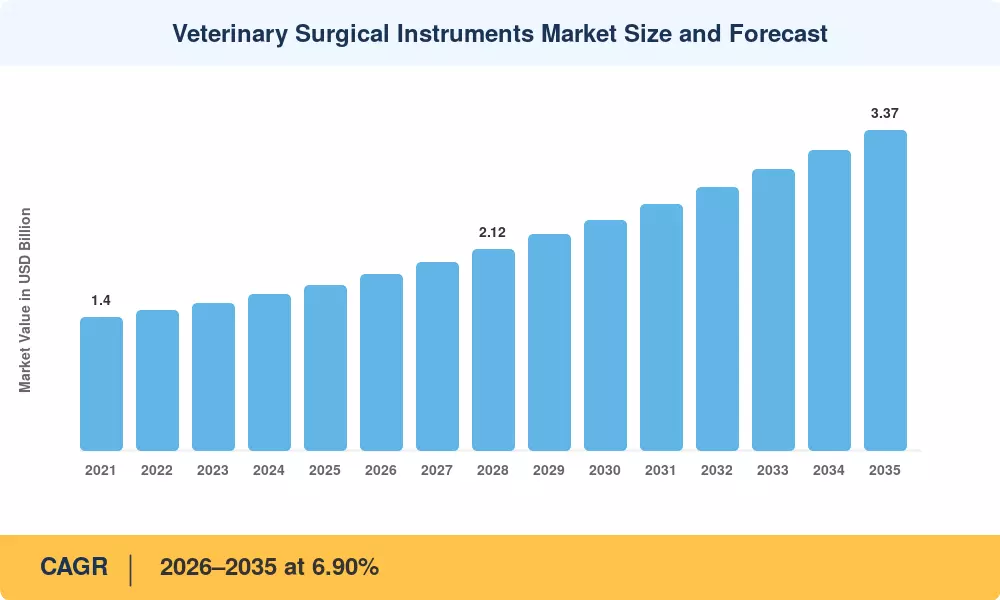
Veterinary Surgical Instruments Market Size and Forecast
Our Impact
Enabled $4.3B Revenue Impact for Fortune 500 and Leading Multinationals
Partnering with 2000+ Global Organizations Each Year
30K+ Citations by Top-Tier Firms in the Industry

Driver Impact Analysis

Driver ~% Impact on CAGR Geographic Relevance Impact Timeline
Rising companion-animal ownership and humanization ~22% Global Short-term (≤2 yr)
Pet insurance coverage expansion ~18% North America, Europe Short-term (≤2 yr)
Electrosurgery and minimally invasive platforms ~16% Global Medium-term (2–4 yr)
Corporate veterinary chain consolidation ~14% North America, Europe Medium-term (2–4 yr)
Government livestock health programs ~12% Asia-Pacific, South America Long-term (≥4 yr)
3D-printed orthopedic implant innovation ~10% North America, Europe Long-term (≥4 yr)
Veterinary education and surgical training investment ~8% Global Long-term (≥4 yr)


Rising Companion-Animal Ownership

According to the American Pet Products Association, the percentage of US homes with pets increased from 56% ten years prior to 67% in 2024 [1]. Pet owners now choose elective and life-extending surgery, such as cardiac procedures, splenectomy, and cruciate ligament repair, which were infrequently carried out outside of university facilities a generation before. This structural shift drives surgical caseloads. Higher caseloads translate directly into equipment purchasing cycles at both general-practice and referral-hospital levels across the Veterinary Surgical Instruments Market.


Pet Insurance Coverage Expansion

By the end of 2024, the penetration of pet insurance was about 4.8% in the US and 28% in Sweden [5]. Insured pet owners are 3.2 times more likely to approve sophisticated surgical operations, according to the North American Pet Health Insurance Association. Because clinics may justify capital spending when reimbursement rates are predictable, this multiplier effect raises demand for specialist devices, especially expensive electrosurgical units and endoscopic towers.


Electrosurgery and Minimally Invasive Platforms

Bipolar electrosurgery units reduce tissue trauma and operative time by 25–40% compared with traditional cold-steel techniques, according to a 2024 study in the Journal of Veterinary Surgery [7]. Manufacturers have introduced compact, veterinary-specific units priced 30–45% below human-medicine equivalents, removing a key barrier for mid-tier practices. This price compression is accelerating the Veterinary Surgical Instruments Market toward broader electrosurgery adoption across all regions.

Corporate Veterinary Chain Consolidation

Private-equity-backed veterinary consolidators — including Mars Veterinary Health, NVA, and IVC Evidensia — collectively operate over 5,000 hospitals globally and standardize procurement through group-purchasing organizations [3]. Bulk procurement cycles accelerate instrument replacement timelines from 8–10 years to 4–5 years, generating recurring revenue for manufacturers and reshaping competitive dynamics within the Veterinary Surgical Instruments Market.


Restraints Impact Analysis

Restraint ~% Negative Impact on CAGR Geographic Relevance Impact Timeline
High capital cost of advanced surgical systems ~28% Global Short-term (≤2 yr)
Global shortage of board-certified veterinary surgeons ~25% Global Long-term (≥4 yr)
Regulatory fragmentation across emerging markets ~20% Asia-Pacific, MEA Medium-term (2–4 yr)
Instrument reprocessing and sterilization compliance burdens ~15% Europe, North America Medium-term (2–4 yr)
Limited reimbursement infrastructure for farm-animal surgery ~12% South America, MEA Long-term (≥4 yr)


High Capital Cost of Advanced Surgical Systems

The cost of a complete veterinary endoscopic surgery suite, which includes an instrument set, insufflator, and high-definition camera stack, ranges from USD 85,000 to USD 150,000 [14]. Independent single-doctor practices, which comprise over 40% of veterinary businesses in the US and over 60% in emerging nations, generally lack the cash reserves or lending arrangements to finance such purchases. The Veterinary Surgical Instruments Market's near-term adoption is limited by the emergence of equipment-as-a-service programs and flexible leasing arrangements, which are still in their infancy.


Shortage of Board-Certified Veterinary Surgeons

Only 98 new diplomates were certified by the American College of Veterinary Surgeons in 2024, despite an anticipated 400+ open posts in North America alone [13]. Even well-equipped clinics underutilize cutting-edge equipment in the absence of skilled surgeons, which lowers return on investment and deters future purchases. It will take five years or longer for training pipeline expansions to address this structural challenge in the veterinary surgical instruments market.


Veterinary Surgical Instruments Market Opportunities

Tele-Mentored and Robotic-Assisted Surgery

Tele-mentoring platforms allow board-certified surgeons to guide general practitioners through complex procedures in real time. Pilot programs at Colorado State University and the Royal Veterinary College have demonstrated 30% reductions in complication rates during remote-guided orthopedic repairs [10]. Scaling these platforms would unlock demand for standardized instrument kits compatible with camera-guided workflows.

Single-Use Instrument Kits for High-Volume Clinics

Pre-packaged, sterilized single-use surgical kits eliminate reprocessing costs and reduce surgical-site infection rates. The model has gained traction in human surgery and is now entering the Veterinary Surgical Instruments Market through partnerships between instrument manufacturers and veterinary group-purchasing organizations [11].

Emerging-Market Veterinary Infrastructure Build-Out

India's National Livestock Mission allocated USD 1.8 Billion for 2023–2028 to upgrade veterinary hospitals and mobile clinics [8]. China's 14th Five-Year Plan earmarks similar investments for animal disease-control facilities. These government-led programs create greenfield demand for surgical instrument packages, particularly in regions where existing inventory is outdated or absent.

Data-Enabled Surgical Instrument Lifecycle Management

IoT-enabled surgical instruments with embedded usage counters and sterilization-cycle trackers allow hospitals to optimize replacement schedules and document regulatory compliance digitally. Manufacturers offering lifecycle-management subscriptions alongside instruments can capture recurring SaaS revenue streams, shifting business models from one-time sales to annuity-style contracts.

Veterinary Dental Surgery Specialization

Dental procedures now represent the fastest-growing surgical category in companion-animal practice, with an estimated 80% of dogs showing periodontal disease by age three [17]. Dedicated dental instrument sets — including high-speed drills, extraction elevators, and piezoelectric scalers — represent a high-margin sub-segment within the Veterinary Surgical Instruments Market.


Veterinary Surgical Instruments Market Future Outlook

AI-Guided Surgical Planning and Navigation

Machine-learning algorithms trained on thousands of veterinary CT and MRI datasets are enabling pre-operative planning tools that recommend optimal implant sizes, screw trajectories, and surgical approaches. By 2030, an estimated 35% of orthopedic veterinary procedures in North America and Europe will incorporate some form of AI-assisted planning, according to veterinary technology forecasts [12]. This trend will shift procurement toward integrated instrument-and-software platforms rather than standalone tool purchases across the Veterinary Surgical Instruments Market.

Sustainability and Circular-Economy Instrument Models

Environmental reporting requirements under the EU's Corporate Sustainability Reporting Directive are reaching downstream healthcare and veterinary supply chains. Manufacturers are responding with instrument take-back programs, refurbishment services, and biodegradable packaging. Carbon-neutral manufacturing commitments from leading players are expected to become a procurement differentiator by 2028, influencing purchasing decisions across the Veterinary Surgical Instruments Market [15].

Platform Economics in Veterinary Procurement

Group-purchasing organizations and digital procurement platforms are consolidating veterinary instrument buying. These platforms aggregate demand across hundreds of clinics, enabling volume-based pricing and automated replenishment. By 2032, an estimated 45% of veterinary instrument purchases in mature markets will flow through digital procurement channels, compressing distributor margins and rewarding manufacturers with direct-to-platform sales capabilities [3].

Expanding Scope of Veterinary Surgical Specialization

The number of ACVS-recognized surgical subspecialties has grown from three to five over the past decade, with neurosurgery and cardiothoracic surgery now requiring dedicated instrument inventories. This specialization trend multiplies the instrument sets each referral hospital must maintain, driving per-facility spending upward even in markets where the total hospital count plateaus. The Veterinary Surgical Instruments Market will benefit from this deepening specialization through 2035 [13].


Veterinary Surgical Instruments Market Segmentation

By Product

Segment Key Metric Primary Demand Driver
Sutures & Staplers 35.5% share (2025) Universal applicability across all surgical types
Handheld Instruments USD 0.49 Billion (2025) Core surgical toolkit replacement cycles
Electrosurgery Instruments 10.30% CAGR (2026–2035) Minimally invasive procedure adoption
Other Products 18.5% share (2025) Specialty and single-use disposable instruments


Sutures and staplers remain the revenue backbone of the Veterinary Surgical Instruments Market, driven by their non-discretionary role in wound closure across every surgical discipline. Absorbable suture materials now account for over 60% of this sub-segment, with synthetic polymers displacing traditional catgut formulations due to predictable absorption timelines and lower tissue reactivity [11].

Electrosurgery instruments represent the standout growth story. Vessel-sealing devices and bipolar platforms reduce operative blood loss and enable procedures — such as laparoscopic splenectomy — that were previously limited to university settings. Manufacturer investment in compact, portable electrosurgical units designed for field and mobile veterinary clinics is broadening the addressable Veterinary Surgical Instruments Market beyond fixed-facility settings [7].

By Application

Segment Key Metric Primary Demand Driver
Soft-Tissue Surgery 42.5% share (2025) High-volume spay/neuter and oncological procedures
Dental Surgery 7.80% CAGR (2026–2035) Growing awareness of companion-animal periodontal disease
Orthopedic Surgery 8.90% CAGR (2026–2035) Custom implants and aging pet demographics
Ophthalmic Surgery USD 0.17 Billion (2025) Specialty referral growth
Other Applications 7.5% share (2025) Cardiovascular, neurological, and urogenital procedures


Soft-tissue surgery dominates the Veterinary Surgical Instruments Market by application because it encompasses the highest-frequency procedures: spays, neuters, mass removals, and gastrointestinal interventions. These procedures are performed across all practice tiers, ensuring broad instrument demand from general practitioners to specialty hospitals [17].

Orthopedic surgery is gaining momentum as the fastest-growing application, driven by tibial plateau leveling osteotomy (TPLO) and total hip replacement in large-breed dogs. The availability of patient-specific 3D-printed surgical guides and titanium implants has reduced complication rates and expanded the pool of veterinarians comfortable performing these procedures, further supporting growth within the Veterinary Surgical Instruments Market [9].

By Animal Type

Segment Key Metric Primary Demand Driver
Companion Animals 72.8% share (2025) Pet humanization and insurance-driven procedure approval
Farm Animals 27.2% share (2025) Livestock health mandates and export-quality compliance


Companion animals dominate the Veterinary Surgical Instruments Market by animal type, reflecting the higher per-procedure instrument value and growing willingness of pet owners to finance advanced surgeries. Farm-animal demand, while smaller in share, remains stable due to regulatory requirements around food-safety inspections and livestock welfare standards in export-oriented economies [1] [16].


Regional Market Share Analysis

Region Key Metric Primary Investment Themes
North America 40.2% share (2025) Companion-animal specialty expansion, corporate chain procurement
Europe USD 0.48 Billion (2025) Animal welfare regulation, single-use instrument adoption
Asia-Pacific 10.80% CAGR (2026–2035) Government infrastructure programs, urban pet ownership growth
South America USD 0.12 Billion (2025) Livestock export modernization, mobile veterinary services
Middle East & Africa 5.5% share (2025) Equine surgery centers, government veterinary hospital upgrades
Total USD 1.74 Billion (2025)

The Veterinary Surgical Instruments Market spans five major regions, each shaped by distinct regulatory frameworks, pet-ownership patterns, and livestock-industry structures.


North America

Country Key Metric Key Driver
US 78.5% of regional share Largest companion-animal surgical market globally
Canada 6.80% CAGR (2026–2035) Expanding pet insurance adoption
Mexico USD 0.04 Billion (2025) Growing urban middle class and pet humanization


The United States alone accounts for the vast majority of North American revenue in the Veterinary Surgical Instruments Market, supported by over 32,000 veterinary practices and a mature referral-hospital network. Canada's market benefits from provincial veterinary modernization grants, while Mexico is experiencing early-stage growth tied to rising disposable income in metropolitan areas [1] [3].

Europe

Country Key Metric Key Driver
Germany 24.3% of regional share Strong companion-animal culture, advanced surgical training infrastructure
UK 7.20% CAGR (2026–2035) Referral-hospital chain expansion
France USD 0.06 Billion (2025) Equine surgery specialization
Italy 8.8% of regional share Growing pet-care expenditure
Spain 6.50% CAGR (2026–2035) Tourism-driven equine services
Nordic Countries USD 0.04 Billion (2025) High per-capita veterinary spending
Russia 5.2% of regional share Livestock modernization programs
Rest of Europe 6.10% CAGR (2026–2035) EU animal welfare harmonization


EU Regulation 2019/6 on veterinary medicinal products has tightened post-surgical antimicrobial use, incentivizing clinics to adopt precision surgical instruments that minimize tissue trauma and infection risk. Germany's veterinary education system produces a steady pipeline of trained surgeons, keeping advanced instrument utilization rates high. The UK's corporate veterinary chains, including CVS Group and Linnaeus, continue to drive centralized procurement across the Veterinary Surgical Instruments Market in the region [2] [15].

Asia-Pacific

Country Key Metric Key Driver
China 32.4% of regional share Urban pet population exceeding 120 million
India 12.20% CAGR (2026–2035) National Livestock Mission infrastructure investment
Japan USD 0.05 Billion (2025) Aging pet population driving surgical demand
South Korea 10.50% CAGR (2026–2035) Companion-animal welfare legislation
ASEAN 8.5% of regional share Livestock-export quality mandates
Rest of Asia-Pacific 9.80% CAGR (2026–2035) Emerging veterinary hospital networks


Asia-Pacific is the fastest-growing region in the Veterinary Surgical Instruments Market, propelled by China's booming urban pet economy and India's government-backed veterinary infrastructure expansion. China's pet industry surpassed USD 50 Billion in 2024, with surgical services growing at roughly twice the overall market rate [8]. India's allocation under the National Livestock Mission is building 3,200 new veterinary hospitals and upgrading 12,000 existing facilities through 2028.

South America

Country Key Metric Key Driver
Brazil 62.5% of regional share Largest livestock herd globally
Argentina 7.30% CAGR (2026–2035) Beef-export veterinary compliance requirements
Rest of South America USD 0.02 Billion (2025) Emerging companion-animal markets


Brazil's cattle herd of over 230 million head generates consistent demand for farm-animal surgical instruments, particularly for cesarean sections and rumenotomy procedures. Argentina's beef-export sector is subject to increasingly stringent animal welfare audits, pushing abattoir-adjacent veterinary facilities to upgrade surgical equipment [16].

Middle East & Africa

Country Key Metric Key Driver
Saudi Arabia 28.0% of regional share Equine and camel veterinary centers
UAE 8.90% CAGR (2026–2035) Premium companion-animal care
South Africa USD 0.02 Billion (2025) Wildlife and livestock surgical services
Egypt 6.40% CAGR (2026–2035) Government veterinary hospital expansion
Rest of MEA 18.5% of regional share Livestock disease-control programs


The Middle East's equine industry — centered on thoroughbred and Arabian horse breeding — supports high-value orthopedic and arthroscopic surgery, creating niche demand for premium instrument sets within the Veterinary Surgical Instruments Market. Saudi Arabia's Vision 2030 includes veterinary sector modernization targets, while the UAE's companion-animal spending per capita ranks among the highest in the region [16].


Veterinary Surgical Instruments Market By Region, 2025-2035

Competitive Benchmarking

The Veterinary Surgical Instruments Market exhibits medium concentration, with the top five companies holding an estimated 38–44% combined revenue share. The Herfindahl-Hirschman Index falls in the moderate range, reflecting a mix of diversified medical-device multinationals and specialized veterinary instrument manufacturers. Competition centers on product breadth, distribution partnerships with veterinary GPOs, and after-sales sterilization support.

Company Est. Revenue Share Range Key Offerings Strategic Positioning
B. Braun Vet Care ~8–11% Suture materials, electrosurgical units, sterilization systems Full-spectrum surgical supply with integrated sterilization
Ethicon (Johnson & Johnson) ~7–10% Absorbable sutures, wound-closure devices, energy platforms Leveraging human-surgery R&D for veterinary crossover
Medtronic ~5–8% Advanced energy instruments, surgical stapling Technology transfer from human minimally invasive surgery
Integra LifeSciences ~4–7% Orthopedic implants, surgical instruments, regenerative products Specialty focus on reconstructive and orthopedic solutions
Henry Schein Animal Health ~6–9% Broad instrument distribution, digital procurement platform Largest veterinary distributor with GPO integration
Covetrus (Patterson Companies) ~4–6% Instrument kits, practice-management software bundles Combining instrument supply with veterinary software
Neogen Corporation ~3–5% Diagnostics-adjacent surgical instruments, safety products Diagnostics-to-surgery portfolio expansion
Jorgensen Laboratories ~3–5% Veterinary-specific handheld instruments, specialty surgical kits Pure-play veterinary instrument focus
Veterinary Instrumentation Ltd ~2–4% Orthopedic instruments, custom implant tools UK-based specialist with global orthopedic distribution
Dispomed ~2–3% Surgical tables, anesthesia equipment, instrument packages Integrated surgical-suite solutions for veterinary clinics


Recent News & Developments

  • B. Braun Vet Care (March 2025): Launched a next-generation bipolar electrosurgical platform designed specifically for veterinary soft-tissue procedures, featuring integrated smoke evacuation and a footprint 40% smaller than its predecessor [7].
  • Ethicon / Johnson & Johnson (January 2025): Expanded its veterinary suture portfolio with a barbed absorbable suture line targeting high-tension wound closures in large-breed orthopedic cases [9].
  • Henry Schein Animal Health (October 2024): Acquired a veterinary e-procurement startup to build a digital marketplace for surgical instrument purchasing, targeting 5,000 connected clinics by end-2025 [3].
  • Integra LifeSciences (July 2024): Received FDA 510(k) clearance for a titanium locking-plate system adapted for veterinary orthopedic use, enabling direct crossover from human surgical applications [9].
  • USDA APHIS (April 2024): Published updated guidelines for surgical instrument sterilization in interstate livestock transport, raising compliance requirements for mobile veterinary units [2].
  • Covetrus (February 2024): Partnered with a 3D-printing company to offer custom-printed orthopedic surgical guides integrated into its instrument-kit subscription service [11].
  • Mars Veterinary Health (September 2023): Standardized its surgical instrument procurement across 2,800+ hospitals globally through a centralized GPO contract, influencing manufacturer pricing strategies across the Veterinary Surgical Instruments Market [3].


Veterinary Surgical Instruments Market Report Scope

Parameter Details
Market Scope Veterinary Surgical Instruments Market — global coverage across five regions
Study Period 2021–2035
CAGR 6.90%
Base Year 2025 USD 1.74 Billion
Forecast 2035 USD 3.37 Billion
Fastest Growing Segment Electrosurgery Instruments (by product); Orthopedic Surgery (by application)
Companies Profiled 10 major players
Valuation Currency USD Billion


FAQs

What sterilization validation protocols should clinics follow when reprocessing reusable veterinary surgical instruments?
Clinics should follow AAMI ST79 guidelines, which mandate biological indicator testing with each sterilization load and chemical indicator use inside every instrument pack. Quarterly spore testing and documented load records are minimum compliance standards [15].
How do veterinary group-purchasing organizations influence instrument pricing and availability?
GPOs aggregate purchasing volume across hundreds of clinics, negotiating 15–25% discounts from manufacturers in exchange for committed annual volumes. This model favors larger manufacturers with broad portfolios [3].
What total cost of ownership should a clinic expect for an entry-level electrosurgical platform?
Expect USD 12,000–18,000 for the generator unit, plus USD 2,500–4,000 annually for disposable electrodes, tips, and preventive maintenance. Five-year TCO typically reaches USD 28,000–38,000 [14].
How are veterinary instrument manufacturers adapting products for mobile and field-surgery settings?
Manufacturers are developing lightweight, battery-powered units with ruggedized cases rated for field transport. Compact kits under 15 kg now cover most common farm-animal procedures [16].
What role do veterinary teaching hospitals play in shaping instrument adoption trends?
Teaching hospitals serve as evaluation sites where manufacturers trial new instruments. Positive clinical outcomes published from these institutions drive adoption at private referral hospitals within 18–24 months [13].
How does instrument ergonomic design affect surgeon fatigue and procedural outcomes?
Ergonomic handles with reduced grip force requirements lower surgeon hand fatigue by up to 35% during procedures exceeding 90 minutes. Reduced fatigue correlates with fewer intraoperative errors [19].
What financing structures are available for independent practices acquiring advanced surgical equipment?
Leasing, equipment-as-a-service subscriptions, and manufacturer-backed deferred-payment plans are the primary options. Lease terms of 36–60 months with buyout clauses are most common for instruments above USD 25,000 [14].    
Author
Author
Author Profile
Satyendra Maurya LinkedIn
Research Analyst
An accomplished research analyst with high proficiency in market forecasting, data visualization, competitive benchmarking, and others. He holds a pronounced track record in research and consulting projects for sectors such as life sciences, medical devices, and healthcare IT. His capabilities in qualitative and quantitative analysis have resulted in positive client outcomes. Working on niche market trends, opportunities, sales, and forecasted value is part of his skill set.
Co-Author
Co-Author Profile
Rahul Gotadki LinkedIn
Research Manager
He holds an experience of about 9+ years in Market Research and Business Consulting, working under the spectrum of Life Sciences and Healthcare domains. Rahul conceptualizes and implements a scalable business strategy and provides strategic leadership to the clients. His expertise lies in market estimation, competitive intelligence, pipeline analysis, customer assessment, etc.

Research Approach


Secondary Research

The secondary research process involved comprehensive analysis of veterinary regulatory databases, peer-reviewed veterinary journals, clinical publications, and authoritative animal health organizations. Key sources included the US Food & Drug Administration Center for Veterinary Medicine (FDA-CVM), US Department of Agriculture (USDA-APHIS), European Medicines Agency Veterinary Medicines Sector (EMA-VMS), World Organisation for Animal Health (WOAH), American Veterinary Medical Association (AVMA), Royal College of Veterinary Surgeons (RCVS), World Veterinary Association (WVA), American Animal Hospital Association (AAHA), National Institute of Food and Agriculture (NIFA), National Center for Biotechnology Information (NCBI/PubMed Veterinary Database), Centers for Disease Control and Prevention (CDC) Companion Animal Health Division, EU Eurostat Agriculture & Veterinary Statistics, and national veterinary ministry reports from key markets.

The following sources were employed to compile veterinary procedure statistics, regulatory approval data for surgical devices, clinical safety studies, zoonotic disease trends affecting surgical interventions, and market landscape analysis for surgical scissors, scalpels, electrosurgical devices, needle holders, and forceps across stainless steel, titanium, and composite material categories.


Primary Research

Qualitative and quantitative insights were obtained by interviewing supply-side and demand-side stakeholders during the primary research process. The supply-side sources consisted of CEOs, VPs of Product Development, regulatory affairs chiefs, and commercial directors from veterinary surgical instrument manufacturers and veterinary device OEMs. Board-certified veterinary surgeons (DVMs), veterinary clinic owners, medical directors of veterinary hospitals, procurement leads from specialty veterinary clinics, emergency animal hospitals, and academic veterinary medical centers constituted demand-side sources. Primary research has confirmed the product pipeline timelines for electrosurgical innovations, validated market segmentation across soft tissue, orthopedic, ophthalmic, and dental surgery applications, and gathered insights on clinical adoption patterns of titanium versus stainless steel instruments, pricing strategies for disposable versus reusable tools, and procurement dynamics in corporate veterinary consolidation environments.

Primary Respondent Breakdown:

By Designation: C-level Primaries (40%), Director Level (25%), Others (35%)

By Region: North America (40%), Europe (25%), Asia-Pacific (28%), Rest of World (7%)


Market Size Estimation

Revenue mapping and veterinary procedure volume analysis were employed to determine the global market valuation. The methodology comprised the following:

Identification of over 50 significant manufacturers in North America, Europe, Asia-Pacific, and Latin America who specialize in surgical instruments that are both human-medical crossover and veterinary-specific.

Material segmentation for stainless steel, titanium, and polymer-based instruments, as well as product mapping for surgical shears, scalpels, needle holders, forceps, and electrosurgical devices.

An examination of the annual revenues reported and modeled for veterinary surgical instrument portfolios, with a focus on the distinction between livestock and companion animal applications.

Coverage of manufacturers that account for 75-80% of the global market share in 2024, including diversified medical device conglomerates and specialized veterinary instrument pure-plays

Derive segment-specific valuations for powered surgical devices versus handheld instruments by extrapolating using bottom-up (veterinary procedure volume × ASP by country, segmented by soft tissue versus orthopedic surgery) and top-down (manufacturer revenue validation across hospital and clinic channels) approaches.

Download Free Sample

Kindly complete the form below to receive a free sample of this Report

Download PDF ×

We do not share your information with anyone. However, we may send you emails based on your report interest from time to time. You may contact us at any time to opt-out.
















