×
Request Free Sample ×

Kindly complete the form below to receive a free sample of this Report

* Please use a valid business email

Leading companies partner with us for data-driven Insights

clients tt-cursor
Hero Background

Adenoid Cystic Carcinoma Market

ID: MRFR/HC/38145-HCR
128 Pages
Rahul Gotadki
October 2025

Marktforschungsbericht über Adenoidzystisches Karzinom nach Behandlungsart (Chirurgie, Strahlentherapie, Chemotherapie, gezielte Therapie), nach Diagnosemethoden (Bildgebende Verfahren, Biopsie, Körperliche Untersuchung, Blutuntersuchungen), nach Patientendemografie (Altersgruppe, Geschlecht, Ethnie), nach Endbenutzer (Krankenhäuser, Kliniken, Forschungslabore) und nach Region (Nordamerika, Europa, Südamerika, Asien-Pazifik, Naher Osten und Afrika) - Prognose bis 2035

Teilen
Download PDF ×

We do not share your information with anyone. However, we may send you emails based on your report interest from time to time. You may contact us at any time to opt-out.

Adenoid Cystic Carcinoma Market Infographic
Purchase Options

Adenoid Cystic Carcinoma Market Zusammenfassung

As per MRFR analysis, the Adenoid Cystic Carcinoma Market Size was estimated at 0.7901 USD Billion in 2024. The Adenoid Cystic Carcinoma industry is projected to grow from 0.839 USD Billion in 2025 to 1.528 USD Billion by 2035, exhibiting a compound annual growth rate (CAGR) of 6.18 during the forecast period 2025 - 2035.

Wichtige Markttrends & Highlights

The Adenoid Cystic Carcinoma Market is experiencing a transformative shift towards innovative treatment approaches and enhanced diagnostic capabilities.

  • The market is witnessing the emergence of targeted therapies that offer more personalized treatment options.
  • North America remains the largest market, driven by advanced healthcare infrastructure and research initiatives.
  • Surgery continues to dominate as the largest treatment segment, while targeted therapy is rapidly gaining traction as the fastest-growing segment.
  • The rising incidence of adenoid cystic carcinoma and advancements in treatment modalities are key drivers propelling market growth.

Marktgröße & Prognose

2024 Market Size 0,7901 (USD Milliarden)
2035 Market Size 1.528 (USD Milliarden)
CAGR (2025 - 2035) 6,18 %

Hauptakteure

Bristol Myers Squibb (US), Merck & Co (US), Novartis (CH), Roche (CH), Amgen (US), Eli Lilly and Company (US), AstraZeneca (GB), Pfizer (US), Bayer (DE)

Adenoid Cystic Carcinoma Market Trends

The Adenoid Cystic Carcinoma Market is currently experiencing a notable evolution, driven by advancements in treatment modalities and increasing awareness among healthcare professionals. This rare form of cancer, primarily affecting the salivary glands, has garnered attention due to its unique biological behavior and potential for late recurrence. As research progresses, innovative therapeutic approaches, including targeted therapies and immunotherapies, are emerging, which may enhance patient outcomes and survival rates. Furthermore, the growing emphasis on personalized medicine appears to be shaping treatment strategies, allowing for more tailored interventions based on individual patient profiles. In addition to therapeutic advancements, the Adenoid Cystic Carcinoma Market is influenced by the rising incidence of this malignancy, prompting healthcare systems to allocate more resources for research and treatment. Collaborative efforts among academic institutions, pharmaceutical companies, and healthcare providers are likely to foster a more comprehensive understanding of the disease. This collaborative approach may lead to the development of novel diagnostic tools and treatment protocols, ultimately improving patient care. As the market continues to evolve, stakeholders must remain vigilant in monitoring trends and adapting strategies to meet the changing landscape of adenoid cystic carcinoma management.

Emergence of Targeted Therapies

The Adenoid Cystic Carcinoma Market is witnessing a shift towards targeted therapies, which aim to specifically attack cancer cells while minimizing damage to healthy tissues. This approach is gaining traction as it potentially offers improved efficacy and reduced side effects compared to traditional treatments. As research progresses, the development of new agents targeting specific molecular pathways may enhance treatment options for patients.

Increased Focus on Early Diagnosis

There is a growing emphasis on the importance of early diagnosis in the Adenoid Cystic Carcinoma Market. Enhanced awareness among healthcare professionals and the public may lead to earlier detection of this malignancy, which is crucial for improving patient outcomes. Efforts to develop advanced diagnostic tools and screening methods are likely to play a pivotal role in this trend.

Integration of Multidisciplinary Care

The trend towards multidisciplinary care in the Adenoid Cystic Carcinoma Market is becoming increasingly prominent. This approach involves collaboration among various specialists, including oncologists, surgeons, and radiologists, to provide comprehensive treatment plans. Such integration may enhance the overall management of patients, ensuring that all aspects of care are addressed.

Adenoid Cystic Carcinoma Market Treiber

Erhöhte Forschungsfinanzierung

Die erhöhte Forschungsfinanzierung ist ein entscheidender Treiber für den Markt für adenoidzystisches Karzinom. Regierungen und private Organisationen erkennen die Notwendigkeit für mehr Forschung zu seltenen Krebserkrankungen, einschließlich adenoidzystischem Karzinom. Dieser Zustrom von Mitteln erleichtert die Erforschung neuer Behandlungsoptionen, diagnostischer Werkzeuge und das Verständnis der Biologie der Krankheit. Beispielsweise haben Finanzierungsinitiativen, die sich auf seltene Krebserkrankungen konzentrieren, zur Gründung spezialisierter Forschungszentren und kollaborativer Netzwerke geführt, die entscheidend für den Fortschritt des Wissens und der Behandlungsstrategien sind. Mit dem Fortschreiten der Forschung ist es wahrscheinlich, dass Durchbrüche erzielt werden, die die Patientenergebnisse erheblich beeinflussen können, wodurch die Wachstumsdynamik des Marktes für adenoidzystisches Karzinom gestärkt wird.

Wachsende Bewusstheit und Bildung

Das wachsende Bewusstsein und die Aufklärung über das adenoidzystische Karzinom sind wesentliche Treiber für den Markt für adenoidzystisches Karzinom. Erhöhte Bemühungen von Gesundheitsorganisationen, sowohl die Öffentlichkeit als auch medizinische Fachkräfte über diese seltene Krebsart aufzuklären, führen zu einer früheren Diagnose und Behandlung. Kampagnen zur Sensibilisierung sind entscheidend, um sicherzustellen, dass Symptome rechtzeitig erkannt werden, was die Prognose erheblich beeinflussen kann. Darüber hinaus werden Bildungsinitiativen, die sich an Gesundheitsdienstleister richten, voraussichtlich die Überweisungsraten an Spezialisten verbessern, wodurch die Patientenzahl steigt. Mit dem wachsenden Bewusstsein wird auch die Nachfrage nach diagnostischen und therapeutischen Lösungen im Markt für adenoidzystisches Karzinom voraussichtlich entsprechend steigen.

Fortschritte in den Behandlungsmodalitäten

Fortschritte in den Behandlungsmodalitäten stellen einen bedeutenden Treiber für den Markt für adenoidzystisches Karzinom dar. Die Entwicklung von zielgerichteten Therapien und Immuntherapien hat die Landschaft der Krebsbehandlung verändert und bietet neue Hoffnung für Patienten mit adenoidzystischem Karzinom. Jüngste Studien haben gezeigt, dass diese innovativen Ansätze zu verbesserten Überlebensraten und einer besseren Lebensqualität führen können. So hat die Einführung neuartiger Wirkstoffe, die gezielt Krebszellen angreifen, in klinischen Studien vielversprechende Ergebnisse gezeigt, was auf einen Wandel hin zu personalisierten Behandlungsregimen hinweist. Da diese Therapien die behördliche Genehmigung erhalten und auf dem Markt verfügbar werden, wird erwartet, dass sie beträchtliche Investitionen und Interesse anziehen und somit das Wachstum im Markt für adenoidzystisches Karzinom ankurbeln.

Rising Incidence of Adenoid Cystic Carcinoma

The increasing incidence of adenoid cystic carcinoma is a notable driver for the Adenoid Cystic Carcinoma Market. Recent data indicates that this rare form of cancer, primarily affecting the salivary glands, has been on the rise, with an estimated annual incidence rate of 0.4 to 1.0 cases per 100,000 individuals. This trend suggests a growing patient population, which in turn fuels demand for innovative treatment options and therapies. As awareness of this malignancy increases among healthcare professionals and the public, more cases are likely to be diagnosed, further propelling the market. The need for effective management strategies and therapeutic interventions is becoming increasingly critical, thereby enhancing the overall growth potential of the Adenoid Cystic Carcinoma Market.

Integration of Advanced Diagnostic Technologies

Die Integration fortschrittlicher Diagnosetechnologien ist ein entscheidender Treiber für den Markt für adenoidzystisches Karzinom. Innovationen wie Next-Generation-Sequencing und fortschrittliche Bildgebungstechniken verbessern die Fähigkeit, adenoidzystisches Karzinom in früheren Stadien zu erkennen und zu charakterisieren. Diese Technologien verbessern nicht nur die diagnostische Genauigkeit, sondern erleichtern auch personalisierte Behandlungsansätze, indem sie spezifische genetische Mutationen und Biomarker identifizieren, die mit der Krankheit assoziiert sind. Da diese fortschrittlichen Diagnosetools in der klinischen Praxis zunehmend eingesetzt werden, ist zu erwarten, dass sie zu verbesserten Patientenergebnissen und erweiterten Behandlungsoptionen führen. Folglich wird erwartet, dass die Nachfrage nach diesen Technologien das Wachstum des Marktes für adenoidzystisches Karzinom stärkt.

Einblicke in Marktsegmente

Nach Behandlungsart: Chirurgie (größter) vs. gezielte Therapie (schnellstwachsende)

In the Adenoid Cystic Carcinoma Market, the treatment types are predominantly led by Surgery, which commands the largest share due to its established effectiveness in tumor removal. Following Surgery, Radiation Therapy and Chemotherapy hold significant but smaller portions of the market. Targeted Therapy, while still developing, is gaining attention due to advancements in personalized medicine and improved patient outcomes, carving out a niche within the treatment landscape.

Chirurgie (dominant) vs. gezielte Therapie (aufkommend)

Die Chirurgie bleibt die dominierende Behandlung für das Adenoidzystisches Karzinom, da sie oft die erste Verteidigungslinie darstellt, die darauf abzielt, Tumore vollständig zu entfernen. Ihre etablierten Techniken und die Wirksamkeit haben sie zur bevorzugten Option für viele Praktiker gemacht. Im Gegensatz dazu stellt die gezielte Therapie einen aufkommenden Behandlungsansatz dar, der das Verständnis spezifischer molekularer Ziele in Krebszellen nutzt. Diese Therapie gewinnt an Bedeutung, insbesondere da klinische Studien vielversprechende Ergebnisse liefern, die Hoffnung auf weniger Nebenwirkungen und eine verbesserte Wirksamkeit in Fällen bieten, in denen traditionelle Behandlungsoptionen weniger effektiv sind.

Nach Diagnosemethode: Bildgebende Tests (Größter) vs. Biopsie (Schnellstwachsende)

Im Adenoidzystischen Karzinom-Markt sind die Diagnosemethoden entscheidend für die effektive Identifizierung und Stadieneinteilung des Krebses. Bildgebende Verfahren stellen das größte Segment dar und spielen eine wesentliche Rolle bei der Visualisierung des Standorts und der Größe des Tumors, wodurch sie die Behandlungsentscheidungen leiten. Die Biopsie entwickelt sich schnell zu einer bevorzugten Diagnosetechnik, da sie eine definitive Bestätigung der Bösartigkeit liefert. Jede Methode erfüllt unterschiedliche Bedürfnisse und trägt zum umfassenden Verständnis und Management der Erkrankung bei. Die Wachstumstrends bei den Diagnosemethoden zeigen eine zunehmende Akzeptanz fortschrittlicher bildgebender Technologien und minimalinvasiver Biopsietechniken. Dieser Wandel wird teilweise durch die Nachfrage nach schnelleren, genaueren Diagnosen und verbesserten Patientenergebnissen vorangetrieben. Mit der Weiterentwicklung der Forschung und der Verbesserung der Gesundheitsinfrastruktur wird erwartet, dass die Integration innovativer Werkzeuge in die routinemäßigen Diagnosepraktiken beschleunigt wird, was insbesondere dem Biopsiesegment zugutekommt, da es zu einer Standardpraxis in den Bewertungen des Adenoidzystischen Karzinom-Marktes wird.

Imaging Tests: Dominant vs. Biopsy: Emerging

Imaging tests, including CT scans and MRIs, are considered the dominant diagnosis method in the Adenoid Cystic Carcinoma Market, known for their effectiveness in detecting tumors and guiding treatment strategies. They are widely accepted in clinical settings due to their ability to provide detailed anatomical information, crucial for accurate diagnosis and staging of cancer. In contrast, biopsy, particularly fine-needle aspiration and core needle biopsies, is gaining traction as an emerging method. Its rapid growth stems from the increasing necessity for tissue samples for precise diagnosis, particularly as personalized medicine approaches take center stage in oncology. Together, these methods provide a comprehensive diagnostic framework essential for effective management of Adenoid Cystic Carcinoma Market.

Nach Patientendemografie: Altersgruppe (größte) vs. Geschlecht (schnellstwachsende)

Im Markt für adenoidzystisches Karzinom zeigen die demografischen Altersgruppen, dass der größte Anteil von Personen im Alter von 45-64 Jahren gehalten wird, die einen signifikanten Prozentsatz der diagnostizierten Fälle ausmachen. Diese Altersgruppe weist tendenziell eine höhere Prävalenz der Krankheit auf, wahrscheinlich aufgrund einer Kombination aus biologischen und umweltbedingten Faktoren, die das Krebsrisiko im Laufe der Zeit beeinflussen. Im Gegensatz dazu stellen jüngere Patienten im Alter von 25-44 Jahren ein kleineres Segment dar, das jedoch kontinuierlich wächst, was auf einen Wandel im Bewusstsein und mögliche Verbesserungen bei der Diagnostik innerhalb der jüngeren Bevölkerung hinweist. Die Geschlechterdemografie zeigt, dass Männer im Markt für adenoidzystisches Karzinom stärker vertreten sind. Allerdings steigt der Wachstumstrend bei weiblichen Patienten schnell an, was auf einen möglichen Anstieg der Diagnosen dieser Krankheit bei Frauen hindeutet. Soziale Faktoren, erhöhtes Bewusstsein und verbesserte Screening-Methoden könnten zu diesem Aufwärtstrend in der weiblichen Demografie beitragen, was auf einen Paradigmenwechsel in der Diagnostik und den Behandlungsansätzen hinweist, die beiden Geschlechtern gleichermaßen gerecht werden.

Age Group: 45-64 (Dominant) vs. Gender: Female (Emerging)

Die Altersgruppe der 45-64-Jährigen stellt die dominierende demografische Gruppe im Adenoidzystischen Karzinom-Markt dar, was einen signifikanten Anteil der diagnostizierten Fälle widerspiegelt, der auf eine höhere Anfälligkeit aufgrund altersbedingter biologischer Faktoren zurückzuführen ist. Diese demografische Gruppe wird oft für maßgeschneiderte Behandlungsoptionen und Unterstützungssysteme angesprochen, die für das Management chronischer Erkrankungen notwendig sind. Auf der anderen Seite ist das weibliche Geschlecht, obwohl traditionell kleiner, als bemerkenswerte demografische Gruppe in Bezug auf Diagnose und Behandlungsengagement auf dem Vormarsch. Die zunehmende Präsenz von Frauen in diesem Markt kann auf Faktoren wie steigendes Bewusstsein, verbesserte Zugänglichkeit der Gesundheitsversorgung und gezielte Kampagnen zurückgeführt werden, die den Zugang von Frauen zu zeitgerechten Krebsvorsorgeuntersuchungen und Behandlungen ansprechen.

Durch Endbenutzer: Krankenhäuser (Größte) vs. Kliniken (Schnellstwachsende)

In the Adenoid Cystic Carcinoma Market, hospitals emerge as the largest end user, significantly contributing to overall demand. Their comprehensive services, equipped with advanced technology and specialized medical staff, facilitate the diagnosis and treatment of this rare malignancy. Conversely, clinics have been gaining traction, driven by an increase in outpatient procedures and the convenience they offer to patients seeking less invasive treatment options. Research laboratories contribute to a smaller share but play a crucial role in developing innovative therapies and conducting essential research to better understand this cancer type. Growth trends in the Adenoid Cystic Carcinoma Market are predominantly influenced by the rising prevalence of this cancer and an increased emphasis on early diagnosis and treatment. Hospitals continue to expand their oncology departments, reflecting a sustained investment in resources to manage cancer cases effectively. Meanwhile, clinics are experiencing rapid growth as they adopt new treatment modalities and facilitate faster patient access to care. Research laboratories are also in a vital position as collaborations with pharmaceutical companies heighten, emphasizing the importance of research in drug development and clinical trials.

Hospitals have established themselves as the dominant end user in the Adenoid Cystic Carcinoma Market, primarily due to their extensive infrastructure, access to multidisciplinary teams, and ability to provide comprehensive care that encompasses surgery, chemotherapy, and radiation. This holistic approach attracts patients who require specialized treatment for complex conditions. In contrast, clinics represent the emerging segment, capitalizing on the growing trend of outpatient care and offering convenient, tailored services for early-stage patients. Their ability to provide targeted and minimally invasive treatments allows them to cater to a demographic that prefers accessible and efficient care solutions. Both segments play essential roles in advancing treatment protocols and patient outcomes.

Erhalten Sie detailliertere Einblicke zu Adenoid Cystic Carcinoma Market

Regionale Einblicke

North America : Leading Market Innovators

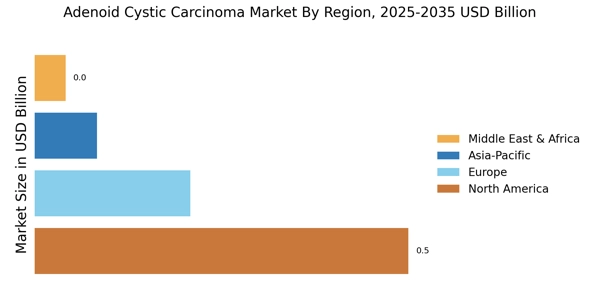
The North American market for Adenoid Cystic Carcinoma Market (ACC) is driven by advanced healthcare infrastructure, high R&D investments, and increasing awareness of rare cancers. The region holds approximately 60% of the global market share, with the United States being the largest contributor, followed by Canada. Regulatory support for innovative therapies and a growing patient population are key growth catalysts. In North America, the competitive landscape is dominated by major pharmaceutical companies such as Bristol Myers Squibb, Merck & Co, and Pfizer. These companies are actively involved in developing targeted therapies and immunotherapies for ACC. The presence of leading research institutions and clinical trials further enhances the market dynamics, fostering innovation and improving patient outcomes.

Europe : Emerging Regulatory Frameworks

Europe is witnessing a significant rise in the Adenoid Cystic Carcinoma Market, driven by increasing investments in healthcare and a robust regulatory framework. The region accounts for approximately 25% of the global market share, with Germany and the UK being the largest markets. The European Medicines Agency (EMA) is actively promoting research and development in oncology, which is expected to further boost market growth. Leading countries in Europe, such as Germany, France, and the UK, are home to several key players including Novartis and Roche. The competitive landscape is characterized by collaborations between pharmaceutical companies and research institutions, focusing on innovative treatment options. The emphasis on personalized medicine and patient-centric approaches is shaping the future of ACC therapies in the region.

Asia-Pacific : Rapidly Expanding Market

The Asia-Pacific region is emerging as a significant player in the Adenoid Cystic Carcinoma Market, driven by increasing healthcare expenditure and a growing patient population. The region holds about 10% of the global market share, with countries like Japan and China leading the way. The rising prevalence of cancer and government initiatives to improve healthcare access are key factors driving market growth. In Asia-Pacific, the competitive landscape is evolving, with local and international players vying for market share. Companies such as Amgen and Eli Lilly are expanding their presence in the region, focusing on innovative therapies and clinical trials. The collaboration between governments and private sectors is fostering a conducive environment for research and development, paving the way for advancements in ACC treatment options.

Middle East and Africa : Untapped Market Opportunities

The Middle East and Africa region presents untapped opportunities in the Adenoid Cystic Carcinoma Market, driven by increasing awareness and improving healthcare infrastructure. The region currently holds about 5% of the global market share, with South Africa and the UAE being the most prominent markets. Government initiatives aimed at enhancing cancer care and treatment accessibility are expected to drive growth in this sector. In this region, the competitive landscape is still developing, with a few key players beginning to establish their presence. Local pharmaceutical companies are increasingly collaborating with international firms to bring innovative therapies to market. The focus on improving healthcare systems and increasing patient awareness is crucial for the growth of ACC treatment options in the Middle East and Africa.

Adenoid Cystic Carcinoma Market Regional Image

Hauptakteure und Wettbewerbseinblicke

The Adenoid Cystic Carcinoma Market is characterized by a competitive landscape that is increasingly shaped by innovation, strategic partnerships, and a focus on personalized medicine. Key players such as Bristol Myers Squibb (US), Merck & Co (US), and Novartis (CH) are actively engaged in developing targeted therapies and enhancing treatment protocols. Their operational focus appears to be on leveraging advanced research capabilities and expanding their product portfolios to address unmet medical needs, thereby influencing the overall market dynamics. The collective strategies of these companies suggest a trend towards a more integrated approach to cancer treatment, emphasizing collaboration and technological advancement.

In terms of business tactics, companies are increasingly localizing manufacturing and optimizing supply chains to enhance efficiency and reduce costs. The Adenoid Cystic Carcinoma Market is moderately fragmented, with several players vying for market share. However, the influence of major companies is substantial, as they often set the standards for innovation and treatment protocols. This competitive structure indicates that while there is room for smaller entities, the dominance of key players shapes the market's direction and growth potential.

In August 2025, Merck & Co (US) announced a strategic collaboration with a leading biotechnology firm to develop a novel immunotherapy specifically targeting adenoid cystic carcinoma. This partnership is significant as it not only enhances Merck's research capabilities but also positions the company at the forefront of innovative treatment options, potentially leading to improved patient outcomes and market share.

In September 2025, Novartis (CH) launched a new clinical trial for a targeted therapy aimed at patients with advanced adenoid cystic carcinoma. This initiative underscores Novartis's commitment to addressing specific patient needs and reflects a broader trend towards personalized medicine. The trial's outcomes could significantly influence treatment protocols and establish Novartis as a leader in this niche market.

In July 2025, Bristol Myers Squibb (US) expanded its oncology portfolio by acquiring a smaller biotech firm specializing in rare cancers, including adenoid cystic carcinoma. This acquisition is indicative of a strategic move to bolster its research and development capabilities, allowing for a more robust pipeline of therapies. Such actions may enhance Bristol Myers Squibb's competitive positioning and contribute to a more diverse treatment landscape.

As of October 2025, current competitive trends in the Adenoid Cystic Carcinoma Market are increasingly defined by digitalization, sustainability, and the integration of artificial intelligence in drug development. Strategic alliances are becoming more prevalent, facilitating knowledge sharing and resource optimization among companies. Looking ahead, the competitive differentiation is likely to evolve from traditional price-based competition to a focus on innovation, technological advancements, and the reliability of supply chains. This shift may redefine how companies approach market entry and product development, ultimately benefiting patients through improved treatment options.

Zu den wichtigsten Unternehmen im Adenoid Cystic Carcinoma Market-Markt gehören

Branchenentwicklungen

Recent developments in the Adenoid Cystic Carcinoma Market have highlighted increasing collaboration among major pharmaceutical companies such as Sanofi, Bayer, Merck Co, and Novartis. These companies are actively involved in research initiatives aimed at developing targeted therapies to improve patient outcomes. AstraZeneca and Bristol Myers Squibb have also made strides in clinical trials that focus on novel treatment regimens for this rare cancer, reflecting a growing investment in oncology research. Furthermore, there have been noteworthy mergers and acquisitions. 

For instance, Amgen's acquisition of specific biotech firms has broadened its portfolio in cancer therapeutics, while Teva Pharmaceuticals is collaborating with Roche to enhance the distribution of innovative treatments. The market has seen a significant rise in valuations, influenced by the promising results from ongoing clinical trials and the introduction of advanced treatment modalities. This growth trajectory suggests a robust competitive landscape, with companies such as Eli Lilly and Company, Genentech and GSK continuously adapting their strategies to harness emerging opportunities within the adenoid cystic carcinoma sector.

The focus remains on expanding access to innovative therapies and addressing unmet medical needs in this niche market.

Zukunftsaussichten

Adenoid Cystic Carcinoma Market Zukunftsaussichten

Der Markt für adenoidzystisches Karzinom wird von 2024 bis 2035 voraussichtlich mit einer durchschnittlichen jährlichen Wachstumsrate (CAGR) von 6,18 % wachsen, angetrieben durch Fortschritte in der gezielten Therapie und zunehmendes Bewusstsein.

Neue Möglichkeiten liegen in:

  • Entwicklung von personalisierten Medizinansätzen zur Optimierung der Behandlung.

Bis 2035 wird ein erhebliches Marktwachstum erwartet, das sich in verbesserten Behandlungsoptionen und einer stärkeren Patientenbeteiligung widerspiegelt.

Marktsegmentierung

Adenoid Cystic Carcinoma Market End User Outlook

  • Krankenhäuser
  • Kliniken
  • Forschungslabore

Adenoid Cystic Carcinoma Market Treatment Type Outlook

  • Chirurgie
  • Strahlentherapie
  • Chemotherapie
  • Gezielte Therapie

Adenoid Cystic Carcinoma Market Diagnosis Method Outlook

  • Imaging Tests
  • Biopsy
  • Physical Examination
  • Blood Tests

Adenoid Cystic Carcinoma Market Patient Demographics Outlook

  • Age Group
  • Gender
  • Ethnicity

Berichtsumfang

MARKTGRÖSSE 20240,7901 (Milliarden USD)
MARKTGRÖSSE 20250,839 (Milliarden USD)
MARKTGRÖSSE 20351,528 (Milliarden USD)
Durchschnittliche jährliche Wachstumsrate (CAGR)6,18 % (2024 - 2035)
BERICHTSABDECKUNGUmsatzprognose, Wettbewerbslandschaft, Wachstumsfaktoren und Trends
GRUNDJAHR2024
Marktprognosezeitraum2025 - 2035
Historische Daten2019 - 2024
MarktprognoseeinheitenMilliarden USD
Wichtige Unternehmen profiliertMarktanalyse in Bearbeitung
Abgedeckte SegmenteMarktsegmentierungsanalyse in Bearbeitung
Wichtige MarktchancenFortschritte in gezielten Therapien und Immuntherapien erweitern die Behandlungsoptionen im Markt für adenoidzystisches Karzinom.
Wichtige MarktdynamikenDie steigende Nachfrage nach gezielten Therapien treibt Innovation und Wettbewerb im Behandlungsumfeld für adenoidzystisches Karzinom voran.
Abgedeckte LänderNordamerika, Europa, APAC, Südamerika, MEA

Einen Kommentar hinterlassen

FAQs

What is the projected market valuation for Adenoid Cystic Carcinoma by 2035?

The projected market valuation for Adenoid Cystic Carcinoma is expected to reach 1.528 USD Billion by 2035.

What was the market valuation for Adenoid Cystic Carcinoma in 2024?

The overall market valuation for Adenoid Cystic Carcinoma was 0.7901 USD Billion in 2024.

What is the expected CAGR for the Adenoid Cystic Carcinoma market during the forecast period?

The expected CAGR for the Adenoid Cystic Carcinoma market from 2025 to 2035 is 6.18%.

Welches Behandlungssegment hatte 2024 die höchste Bewertung?

In 2024, the Surgery segment had the highest valuation at 0.6154 USD Billion.

What are the projected values for the Imaging Tests segment by 2035?

The Imaging Tests segment is projected to reach 0.4695 USD Billion by 2035.

Which key players are leading the Adenoid Cystic Carcinoma market?

Key players in the Adenoid Cystic Carcinoma market include Bristol Myers Squibb, Merck & Co, and Novartis.

What is the projected valuation for the Targeted Therapy segment by 2035?

The Targeted Therapy segment is projected to reach 0.44 USD Billion by 2035.

How does the market for Blood Tests compare to other diagnosis methods in 2024?

In 2024, the Blood Tests segment was valued at 0.236 USD Billion, indicating a competitive position among diagnosis methods.

What is the expected growth for the Clinics segment by 2035?

The Clinics segment is expected to grow to 0.4742 USD Billion by 2035.

What demographic segment shows the highest projected growth by 2035?

The Ethnicity demographic segment shows the highest projected growth, reaching 0.6368 USD Billion by 2035.

Kostenloses Muster herunterladen

Bitte füllen Sie das folgende Formular aus, um ein kostenloses Muster dieses Berichts zu erhalten

Compare Licence

×
Features License Type
Single User Multiuser License Enterprise User
Price $4,950 $5,950 $7,250
Maximum User Access Limit 1 User Upto 10 Users Unrestricted Access Throughout the Organization
Free Customization
Direct Access to Analyst
Deliverable Format
Platform Access
Discount on Next Purchase 10% 15% 15%
Printable Versions