Digital Transformation Market Summary
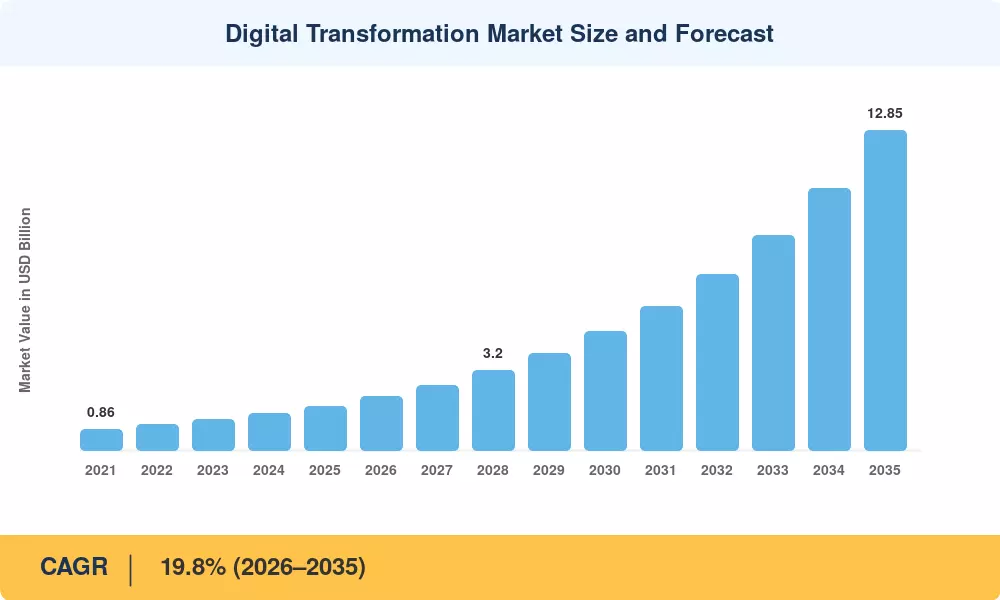
Der Markt für digitale Transformation wurde im Jahr 2025 auf etwa 1,76 Billionen USD geschätzt und soll 2026 2,15 Billionen USD erreichen, bevor er bis 2035 auf 12,85 Billionen USD ansteigt, mit einer CAGR von 19,8 % im Prognosezeitraum 2026–2035. Die Unternehmensausgaben für Cloud- und KI-gesteuerte digitale Geschäftsprozesse nahmen nach der Festlegung des Zeitplans für die Durchsetzung des EU-KI-Gesetzes im Jahr 2024 stark zu, was multinationale Unternehmen dazu zwang, governance-fähige Architekturen in jede Initiative zur Einführung digitaler Betriebsmodelle zu integrieren. Sovereign-AI-Vorgaben in über 40 Ländern erhöhten den Druck, da Regierungen die Eignung für öffentliche Beschaffungen an lokale Recheninfrastrukturen knüpften[2].
Legacy-ERP-Monolithen, lokale Datenlager und papierbasierte Compliance-Workflows weichen komposierbaren Microservices-Stacks, Echtzeit-Datengeweben und generativen KI-Co-Piloten. Das US CHIPS and Science Act stellte über 52 Milliarden USD für Halbleiter und fortschrittliche Rechenkapazitäten bereit — Kapital, das direkt die IT-Modernisierung und den Migrationsprozess von Altsystemen unterstützt, der die breit angelegte Digitalisierung untermauert. Low-Code- und No-Code-Plattformen ermöglichen es nun den Geschäftseinheiten, Prozessautomatisierungsanwendungen ohne tiefes Entwicklerengagement zu erstellen, was die Bereitstellungszeit laut einer Umfrage von Gartner im Jahr 2024 um 60–70 % verkürzt.
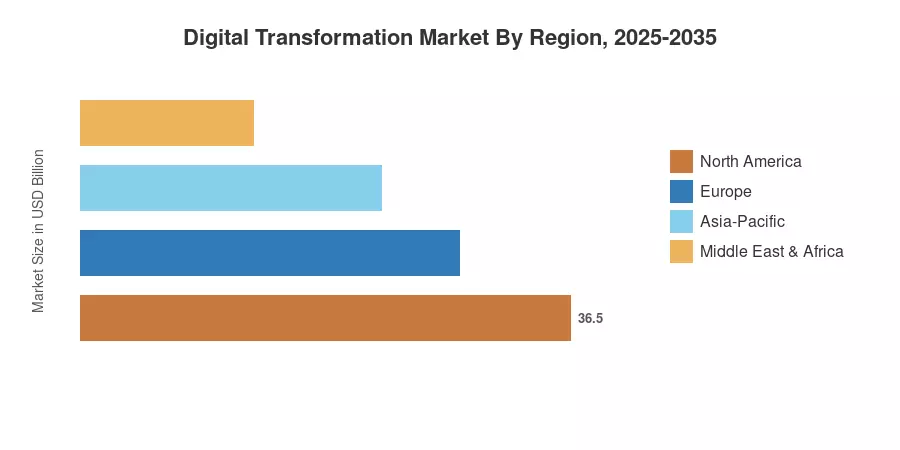
Nordamerika hielt 2025 etwa 34 % des Marktes für digitale Transformation, gestützt durch Hyperscaler Investitionsausgaben und bundesstaatliche digitale Regierungsrichtlinien. Der asiatisch-pazifische Raum ist die am schnellsten wachsende Region mit einer geschätzten CAGR von 20,4 % bis 2035, angetrieben durch Indiens Digital India-Programm und Chinas Infrastrukturaufbau "East Data, West Computing". Europa hielt mit fast 26 % den zweitgrößten Anteil, unterstützt durch das europäische Datenrecht und beschleunigte Anforderungen an die Digitalisierung von ESG-Berichten [5][6]. Das kommende Jahrzehnt wird Organisationen belohnen, die die digitale Unternehmensstrategie und die Planung des Transformationsfahrplans als kontinuierliche Fähigkeit und nicht als einmaliges Projekt betrachten.
Wichtige Erkenntnisse des Berichts• Nach Technologie
- KI- und ML-Lösungen erfassten 2025 etwa 26 % des Marktes für digitale Transformation, was die schnelle Unternehmensakzeptanz von generativen KI-Assistenten und prädiktiven Analyse-Engines widerspiegelt
- Erweiterte Realität (VR/AR) Technologien werden mit einer CAGR von 22,5 % bis 2035 wachsen, da immersive Schulungen und digitale Zwillingssimulationen in der Fertigung und im Gesundheitswesen an Bedeutung gewinnen
• Nach Bereitstellungsmodell & Unternehmensgröße
- Cloud-basierte Bereitstellungen machten den dominierenden Anteil am Markt für digitale Transformation aus, angetrieben durch Multi-Cloud-Strategien und Prioritäten der digitalen Geschäftsprozessdigitalisierung mit Cloud und KI
- Große Unternehmen machten 2025 etwa 66 % der Ausgaben aus, während KMUs schneller wachsen, da Low-Code-Plattformen die Hürden für die Einführung digitaler Betriebsmodelle senken
• Nach Geografie
- Nordamerika führte den Markt für digitale Transformation mit einem Anteil von 34 % im Jahr 2025 an, gestützt durch Budgets für die bundesstaatliche IT-Modernisierung und die Migration von Altsystemen
- Der asiatisch-pazifische Raum ist auf dem besten Weg, die höchste CAGR bis 2035 zu verzeichnen, während BFSI der größte vertikale Beitrag mit einem geschätzten Anteil von 22 % weltweit blieb
Die Marktschätzmethodik von MRFR trianguliert die Schätzungen der Einnahmen von oben nach unten aus öffentlichen Unterlagen von über 50 führenden Technologieanbietern mit der Nachfragemodellierung von unten nach oben über 22 Branchenvertikale und 48 Länder. Historische Zahlen (2021–2024) basieren auf geprüften Jahresberichten, während die Prognosewerte (2026–2035) Wachstumsregressionen auf Segmentebene anwenden, die an makroökonomische Indikatoren, Unternehmens-IT-Budgetumfragen und politische Katalysatoren angepasst sind.