Research Methodology on Speech Recognition Market
1. Introduction:
The Market Research Future report on the global Speech Recognition Market shares an overview and a study of the current and future industry impact of the trends and key market drivers. An assessment is also offered for the potential influence of the growth drivers, restraining factors and encouraging policies on the global Speech Recognition Market. Also, the trends that are expected to drive the market from 2023 to 2030 are addressed in the study.
2. Research Objectives:
The Research Objectives of this report are:
- To analyze the market size and growth rate of the global Speech Recognition Market from 2023 to 2030.
- To analyze and forecast the market size and trends in terms of revenue and volume.
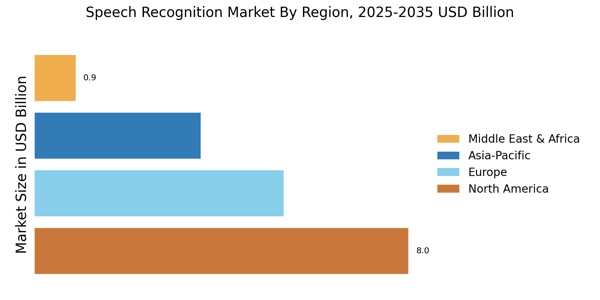
- To assess the demand for Speech Recognition and its usage patterns, by region.
- To identify various technology trends associated with the Speech Recognition market.
- To identify the key drivers and restraints impacting the growth of the Speech Recognition market.
- To identify strategies adopted by market players to strengthen their position in the Speech Recognition market.
- To analyze and assess the overall competitive landscape of the Speech Recognition market.
3. Research Scope:
This report focuses on the current and future impact of the trends and key market drivers influencing the global Speech Recognition market. It comprises a comprehensive analysis of key aspects such as industry size and market share, current growth factors, and expected growth trends.
4. Research Type:
This study employs both primary and secondary research techniques to produce a comprehensive market study. The primary research comprised interviews and surveys with officials in the industry and experts, while secondary research comprised databases including published journals, trade reports, media releases, and the internet.
5. Data Collection:
Data collection is based on both primary and secondary sources. The primary sources include interviews and surveys with people involved in the Speech Recognition market. The secondary sources included industry databases and various published journals, trade reports and other grey literature.
6. Data Validation:
The data validation process include triangulation of the primary and secondary sources and was used to verify the accuracy and completeness of the collected data.
7. Data Analysis:
The data analysis is conducted using SPSS software. The data was analyzed using statistical methods such as HCA, PCA, and correlations. In addition, regression analysis is used to compare the differences in the independent variables and their influence on the dependent variable.
8. Conclusion:
With the help of this research, we are able to analyze the global Speech Recognition market in detail and gain a better understanding of the emerging trends and key drivers that are likely to shape its future. The report also highlights the current challenges faced by the industry and the strategies adopted by the players to strengthen their position. Finally, the report has offered conclusions on the current state of the market and suggestions to help the industry players move forward.