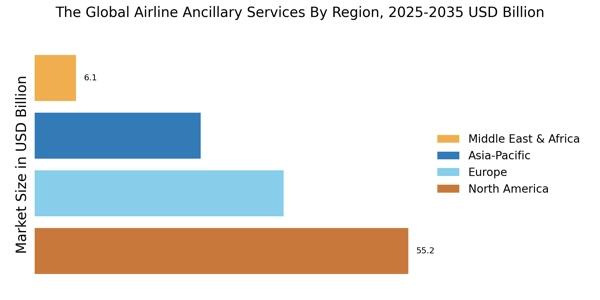
Airline Ancillary Services Market
A combination of both qualitative and quantitative approaches was employed in the research process to analyze the global market for airline ancillary services. It was conducted to understand the current and evolving market trends and future prospects of the market. The research process for this report utilized secondary and primary research. For secondary research, information for market understanding was procured from publicly available data sources, such as industry white papers, websites, and company reports. Primary research focused on conducting interviews with industry and market experts across the globe.
Secondary Research
In secondary research, the sources include industry journals and periodicals, historical data, and directories. Publicly available industry documents such as IRCTC documents, industry-specific reports, and global and regional reports related to airline ancillary services were procured in the primary research process. These reports provide an in-depth market understanding and data related to the market for airline ancillary services. Additionally, publicly available industry portals and directories were also used to identify and source industry-related data.
Primary Research
Primary research is the key component of the research process. This research focuses on conducting interviews with industry experts, including CEOs, VPs, directors, and marketing executives. The primary purpose of primary research is to obtain an in-depth understanding of the market’s dynamics. The process also enabled the sharing of detailed and accurate information directly from the source. A total of 22 experts were interviewed for this research report. These participants belonged to the key business segments across the globe to obtain an in-depth understanding of the airline ancillary services market.
Data Collection
Data collection is an important part of the research process. The Market Research Future (MRFR) research team collected information from secondary sources to collect industry data, market estimates, and industry forecasts. Data collected from the secondary sources was used to validate the data derived through the primary methods.
Research Methodology
Various research methodologies, such as the top-down approach, bottom-up approach, time series analysis, and factor analysis, were used to collect and analyze the data. The top-down approach was used to estimate the global market size for airline ancillary services by considering various micro and macroeconomic factors. The bottom-up approach was used to derive the price of the airline's ancillary services. Time series analysis was conducted to analyze historical and future trends in the market. Factor analysis was used to identify the various models and their applications.
Data Validation
Data was validated by performing data comparison and triangulation. This detailed process allowed the research team to identify inconsistencies or discrepancies in the information. The collected data was cross-checked with different sources to ensure accuracy. During the validation process, discrepancies were identified and removed.
Data Triangulation
Data triangulation was performed by different types of data sources, analysing the global market size, pricing, trends, drivers, limitations, and shares. Data derived from the primary and secondary sources was validated through this process.
Information Procurement Process
The information procurement process involved collecting data from primary and secondary sources. The primary sources included leading industry journals, industry channels, and stakeholder interviews. The secondary sources included industry white papers, published articles, Stock Exchange Filings, Internal and External Regulatory Filings, etc. Furthermore, the research team tracked, monitored, and studied the macroeconomic factors, which have an impact on the market. The primary and secondary sources helped the research team in meeting the objectives by providing data needed to arrive at an informed market understanding.