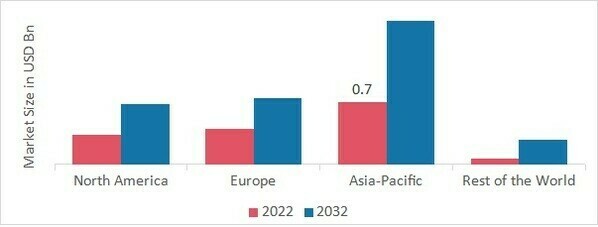
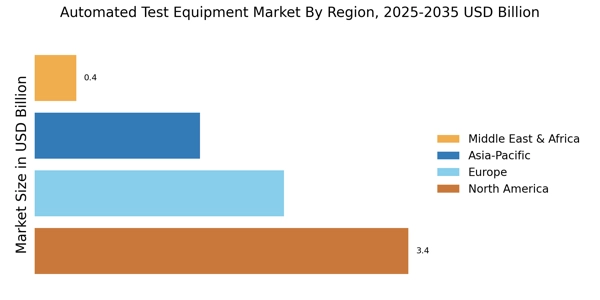
Les principaux acteurs du marché investissent massivement dans la recherche et le développement pour élargir leurs gammes de produits, ce qui contribuera à la croissance encore plus importante du marché des équipements de test automatisés. Les participants au marché entreprennent également diverses activités stratégiques pour étendre leur empreinte, avec des développements importants sur le marché, notamment des lancements de nouveaux produits, des accords contractuels, des fusions et acquisitions, des investissements accrus et des collaborations avec d'autres organisations. Pour se développer et survivre dans un climat de marché plus compétitif et en pleine expansion, l'industrie des équipements de test automatisés doit proposer des produits rentables.
La fabrication locale pour minimiser les coûts opérationnels est l'une des principales stratégies commerciales que les fabricants utilisent dans l'industrie des équipements de test automatisés pour bénéficier aux clients et accroître le secteur du marché. Au cours des dernières années, l'industrie des équipements de test automatisés a offert certains des avantages médicaux les plus significatifs.
Les principaux acteurs du marché des équipements de test automatisés, y compris Chroma ATE Inc. (Taïwan), Cobham Plc (R.-U.), Astronics Test Systems (États-Unis), Agilent Technologies Inc. (États-Unis), Teradyne Inc. (États-Unis), Advantest Corporation (Japon), LTX-Credence Corporation (États-Unis), Roos Instrument Inc. (États-Unis), National Instrument Corporation (États-Unis), Marvin Test Solution Inc. (États-Unis) et d'autres, tentent d'augmenter la demande du marché en investissant dans des opérations de recherche et développement.
National Instruments Corporation, ou NI, est une entreprise multinationale américaine avec des opérations internationales. Basée à Austin, au Texas, elle produit des équipements de test automatisés et des logiciels d'instrumentation virtuelle. Les applications courantes incluent l'acquisition de données, le contrôle d'instruments et la vision par ordinateur. En avril 2022, National Instruments (NI) a acquis Kratzer Automation. NI élargit ses capacités de test pour véhicules électriques avec l'acquisition de Kratzer Automation. L'entreprise peut tester tous les composants importants des véhicules électriques, tels que les batteries, les onduleurs et les contrôles de moteur, en fournissant des logiciels de test pour véhicules électriques et des équipements de test entièrement intégrés.
Selon NI, la combinaison de la plateforme de test matérielle et logicielle flexible de NI pour véhicules électriques avec les logiciels et capacités d'intégration dédiés de Kratzer Automation permettra une réponse plus rapide aux besoins de test changeants, accélérera le délai de mise sur le marché et réduira le coût global des tests pour une gamme de clients plus large.
Chroma ATE Inc. est une entreprise taïwanaise d'instruments de test et de mesure électroniques fondée en 1984. L'entreprise développe et fabrique divers équipements de test et de mesure électroniques, des équipements de test automatisés (ATE), des générateurs de signaux, des alimentations et des systèmes d'exécution de fabrication intelligents (MES). L'entreprise fait partie du groupe Chroma, un conglomérat taïwanais.