Soutien réglementaire et conformité
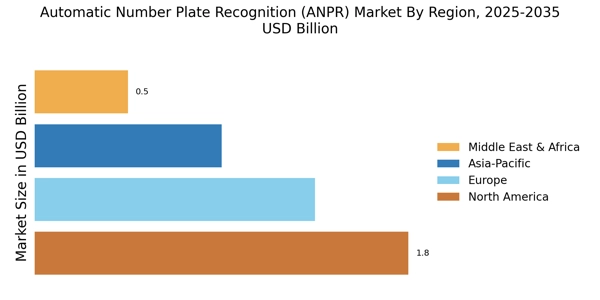
Le marché de la reconnaissance automatique des plaques d'immatriculation (ANPR) bénéficie d'un soutien réglementaire croissant et d'exigences de conformité. Les gouvernements et les organismes de réglementation reconnaissent le potentiel de la technologie ANPR pour améliorer la sécurité publique et les capacités d'application de la loi. En conséquence, il y a une emphase croissante sur la mise en œuvre de systèmes ANPR dans diverses applications, y compris la surveillance du trafic et la prévention de la criminalité. Cette poussée réglementaire est susceptible de créer un environnement favorable à la croissance du marché, alors que les organisations cherchent à se conformer aux normes légales tout en tirant parti des avantages de la technologie ANPR. Les données du marché suggèrent que les régions avec des cadres réglementaires stricts connaissent une adoption accélérée des solutions ANPR, indiquant une forte corrélation entre le soutien réglementaire et l'expansion du marché.
Adoption croissante dans la gestion du stationnement
Le marché de la reconnaissance automatique des plaques d'immatriculation (ANPR) connaît une augmentation notable de l'adoption au sein des systèmes de gestion de stationnement. Alors que les zones urbaines font face à des défis liés à la disponibilité des places de stationnement et à la congestion du trafic, la technologie ANPR offre une solution viable pour des opérations de stationnement efficaces. En automatisant le processus d'identification des véhicules et de collecte des paiements, les systèmes ANPR rationalisent la gestion du stationnement, réduisent les coûts opérationnels et améliorent l'expérience utilisateur. Des statistiques récentes indiquent que le segment de la gestion du stationnement devrait connaître une croissance significative, les solutions ANPR jouant un rôle clé dans l'optimisation des ressources de stationnement. Cette tendance reflète un mouvement plus large vers l'automatisation et l'efficacité dans l'infrastructure urbaine, propulsant davantage le marché de l'ANPR.
Demande accrue de solutions de sécurité
Le marché de la reconnaissance automatique des plaques d'immatriculation (ANPR) connaît une demande accrue de solutions de sécurité dans divers secteurs. Alors que l'urbanisation continue d'augmenter, le besoin de systèmes de surveillance et de monitoring efficaces devient de plus en plus critique. La technologie ANPR est adoptée par les agences de la loi, les systèmes de gestion de stationnement et les services de péage pour améliorer les mesures de sécurité. La capacité d'identifier rapidement les véhicules d'intérêt et de surveiller les schémas de circulation stimule l'adoption des systèmes ANPR. Les données du marché suggèrent que le segment de la sécurité devrait représenter une part substantielle du marché de l'ANPR, alors que les organisations priorisent la sécurité et la prévention de la criminalité. Cette tendance indique une reconnaissance croissante de l'importance d'intégrer la technologie ANPR dans des cadres de sécurité plus larges.
Intégration avec les initiatives de ville intelligente
Le marché de la reconnaissance automatique des plaques d'immatriculation (ANPR) est étroitement lié au développement des initiatives de ville intelligente. Alors que les villes évoluent pour incorporer des technologies avancées pour une meilleure gestion urbaine, les systèmes ANPR deviennent des composants intégrés de ces cadres. La capacité de collecter et d'analyser des données sur les véhicules soutient la gestion du trafic, la réduction de la congestion et l'amélioration de la sécurité publique. De plus, l'intégration de l'ANPR avec d'autres technologies intelligentes, telles que les feux de circulation et les systèmes de transport public, est susceptible de créer un environnement urbain plus cohérent. L'analyse du marché indique que les investissements dans des projets de ville intelligente devraient stimuler la demande de solutions ANPR, alors que les municipalités cherchent à tirer parti des informations basées sur les données pour une meilleure prise de décision et allocation des ressources.
Avancées technologiques dans les systèmes ANPR
Le marché de la reconnaissance automatique des plaques d'immatriculation (ANPR) connaît une augmentation des avancées technologiques qui améliorent l'efficacité et la précision de la reconnaissance des plaques d'immatriculation. Des innovations telles que l'intelligence artificielle et les algorithmes d'apprentissage automatique sont intégrées dans les systèmes ANPR, permettant un traitement des données en temps réel et des capacités améliorées de reconnaissance d'images. Cette évolution devrait stimuler la croissance du marché, alors que les organisations cherchent à adopter des solutions de pointe capables de gérer diverses conditions environnementales. De plus, l'introduction de caméras haute résolution et de technologies avancées de reconnaissance de caractères optiques devrait renforcer la performance des systèmes ANPR. Selon des données récentes, le marché de la technologie ANPR devrait croître à un taux de croissance annuel composé de plus de 10 % dans les années à venir, indiquant une demande robuste pour ces systèmes avancés.