Research Methodology on Scaffolding Market
Introduction
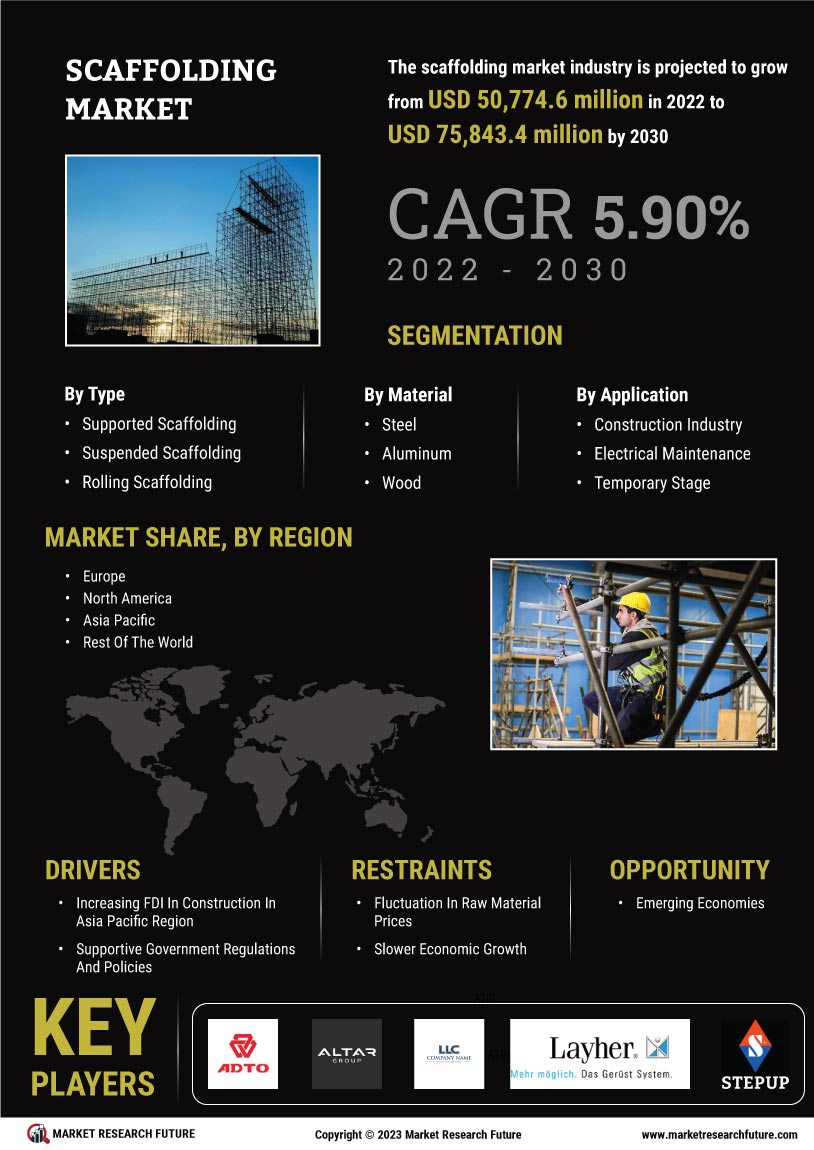
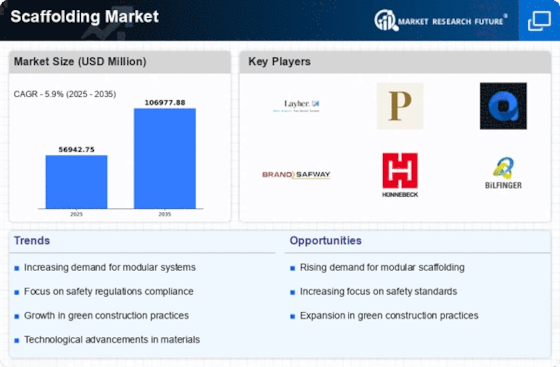
The global scaffolding market is growing with the rising applications of scaffolding in the construction and oil & gas domains. The need for safer and more efficient structures is driving market demand for scaffolding. According to a new report from Market Research Future (MRFR), the global scaffolding market is projected to register a healthy growth rate over the review period.
The chief factors driving the growth of this market are the escalating construction activities in residential, commercial and industrial sectors and the rapid technological advancements in scaffolding products. The construction industry is undergoing a rapid transformation characterized by the adoption of new scaffolding technologies to improve the quality of buildings, reduce the time taken for construction projects, and meet the demand for eco-friendly and sustainable infrastructure.
Research Objectives
The objective of this research is to study the current market scenario of the scaffolding industry, identify the key market trends, opportunities and challenges, analyze the key drivers and restraints of the industry, and make forecasts on the growth of the industry over the period from 2023 to 2030 and is focused on market size estimation and its forecast at a global level.
Research Methodology
The research for this market report is conducted primarily through primary and secondary research. Primary research includes interviews with scaffolding industry experts and leaders, while secondary research included data and information gathered from external and internal sources, such as trade journals, industry white papers and annual reports of the companies in the global scaffolding market.
Primary research is conducted through telephone and online interviews with key industry players. A total of 10 interviews are conducted, which includes 5 interviews with industry experts and 5 interviews with industry leaders. The primary research focuses on understanding the current market situation, customer preferences and trends, industry strategies and dynamics, and factors influencing the market over the coming years.
Secondary research includes trade journals and annual reports of the leading companies in the industry. Additionally, other sources such as industry associations, government websites and databases, third-party research and news articles are also studied. Various parameters used for the research are product type, application, region, country, and company size.
Data Collection and Analysis
The main data sources for the global scaffolding market include manufacturers, suppliers, distributors, and end-users. The major data sources used for primary and secondary research are:
- Industry reports and publications
- Government websites
- Company websites and databases
- Trade associations and industry councils
- Key opinion leaders (KOL)
- Market Size Estimation
The market size is estimated using the bottom-up approach. This approach involves the aggregation of data obtained from the demand side and the supply side. The demand side data is collected through interviews and participant observation. The supply-side data is collected using a combination of primary and secondary sources.
Data Triangulation
Data triangulation is used to ensure the accuracy of the market share and size estimates by comparing the bottom-up and top-down approaches. The market share and size estimates are compared with the demand-side and supply-side data.
Market Breakdown & Data Validation
The market research methodology employed in the analysis focuses on quantitative and qualitative information about the scaffolding market. The main frameworks for market estimation are prepared and validated using Porter’s Five Forces model. The market share and size estimates are further validated using interviews with industry experts and leaders.
- Assumptions for Market Sizing
- Global annual sales of scaffolding products and services are assumed to reach an all-time high valuation
- Increasing demand for housing and infrastructure development in emerging economies is considered the major driving factor for scaffolding market growth.
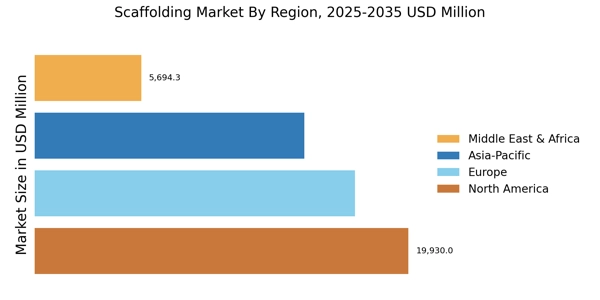
- The demand for scaffolding products in the Asia-Pacific region will remain the major driver of the overall market share over the forecast period.
- Conclusion
The global scaffolding market is expected to register a healthy CAGR over the review period (2023–2030). This can be attributed to the rising construction activities in residential, commercial and industrial sectors and the rapid technological advancements in scaffolding products. Major players in the global scaffolding market are focusing on partnerships, mergers and acquisitions, and new product launches to strengthen their market presence.