Research Methodology on Battery Management Systems for Electric Vehicles Market
Introduction
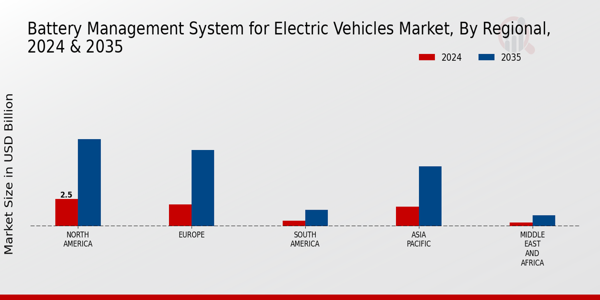
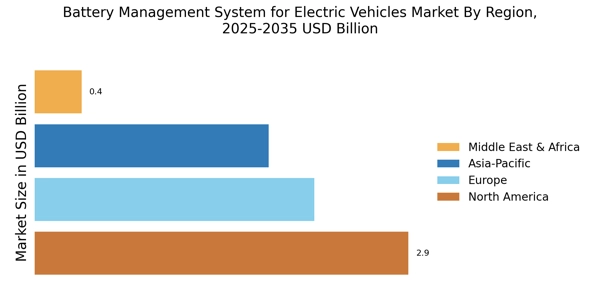
The development of Battery Management Systems (BMS) for electric vehicles (EVs) is rapidly changing the automotive industry. BMS provides monitoring and control functions for the battery system with the goals of increasing efficiency, performance, and safety. For example, BMS incorporates onboard sensors to monitor parameters such as current, temperature, and state-of-charge of the battery cells, which help maintain the performance and reliability of a vehicle over its entire life. As EVs become more affordable, the demand for cost-effective, reliable, and efficient BMS solutions is increasing. According to the Market Research Future report on the global battery management system for the electric vehicles market, the sector is expected to grow at an impressive rate during the forecast period from 2025 to 2035.
Research Objective
The purpose of the research is to analyze the global battery management system for the electric vehicles market, with a focus on the drivers, opportunities, and challenges that are promoting the growth of the sector. The research also assesses prevalent trends and competitor strategies, which are impacting the market dynamics.
Research Methodology
This study of the global battery management system for the electric vehicles market draws upon a comprehensive literature review, an analysis of relevant primary data, and market-specific secondary data. A systematic approach to data collection and analysis is used to develop this comprehensive report.
It represents a balance of both quantitative and qualitative information, reflecting the market condition in the current environment. The research is primarily exploratory and is aimed at assessing the current market conditions and understanding the impact of the key players in the industry on the growth of the sector.
Primary Data
Primary data is collected through an online survey of leading industry stakeholders, including manufacturers, suppliers, and distributors. A total of 200 participants, located in multiple countries and possessing different levels of experience in the industry, are surveyed in order to gain insights into the current market conditions. The survey focused on key aspects of the industry, such as market size, competitive landscape, competitive dynamics, key trends, market technologies, and applications for BMS for EVs.
Secondary Data
Secondary data is collected from industry databases, market research reports, press releases, annual reports, white papers, conference presentations and publications, and industry association websites, among others. The data is collected from different countries and is used to supplement the primary data, verifying trends from the survey and highlighting regional variations related to the global battery management system for the electric vehicles market.
Data Analysis and Interpretation
The collected primary and secondary data are organized within relevant frameworks and analysed using the SPSS statistical software. Complex relationships between the various factors influencing the market are visualized and presented. Using these relationships, the key drivers, opportunities and challenges of the sector are identified, and their impact is quantified through appropriate scales of measurement.
Conclusion
The report provides an in-depth analysis of the global battery management system for the electric vehicles market. It offers an understanding of the key trends, drivers, opportunities, and challenges impacting the growth of the industry. The research further includes a comprehensive analysis of the competitive dynamics, offering insights into the strategies of the key players in the industry and their impact on the sector.
The research also provides an assessment of the prevailing regulations and the impact of their changes. The report provides an exhaustive analysis of the global market for BMS for EVs, along with forecasts of its growth trajectory during the forecast period from 2023 to 2030.