Qualitative and quantitative insights were obtained by interviewing supply-side and demand-side stakeholders during the primary research process. The supply-side sources consist of CEOs, VPs of Product Development, Heads of Sustainability & Regulatory Affairs, and Commercial Directors from bio-based surfactant manufacturers, oleochemical producers, and fermentation technology OEMs. The procurement leads from household detergent formulators, industrial & institutional cleaning chemical manufacturers, cosmetic & personal care R&D directors, textile chemical specialists, oilfield chemical service providers, and agricultural adjuvant formulators were the demand-side sources. The primary research validated market segmentation across foam types (anionic, cationic, non-ionic, amphoteric), product categories, and end-use industries. It also confirmed product pipeline timelines and capacity expansion plans, and it gathered insights on feedstock pricing volatility, formulation adoption patterns, sustainability premium pricing strategies, and regulatory compliance dynamics (e.g., EU Green Deal, EPA Safer Choice).
Primary Respondent Breakdown:
By Designation: C-level Primaries (32%), Director Level (30%), Others (38%)
By Region: North America (32%), Europe (30%), Asia-Pacific (28%), Rest of World (10%)
Global market valuation was derived through revenue mapping and production volume analysis. The methodology included:
Identification of 50+ key manufacturers and technology developers across North America, Europe, Asia-Pacific, Latin America, and the Middle East & Africa
Product mapping across rhamnolipids, methyl glucoside esters, alkyl polyglucosides (APG), sucrose esters, anionic APG derivatives, methyl ester sulfonates (MES), and other emerging bio-based surfactant categories
Analysis of reported and modeled annual revenues specific to bio-based surfactant portfolios, including green chemistry divisions of diversified chemical conglomerates
Coverage of manufacturers representing 72–78% of global market share in 2024
Extrapolation using bottom-up (production volume × average selling price by country/region, adjusted for purity and application grade) and top-down (manufacturer revenue validation and cross-verification with trade data) approaches to derive segment-specific valuations by foam type, product type, industry vertical, and geography
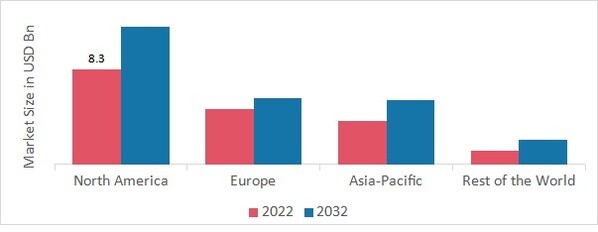 出典:二次研究、一次研究、Market Research Futureデータベースおよびアナリストレビュー