Author

Snehal Singh

リジン市場調査レポート 情報 タイプ別(リジン塩酸塩、リジン一水和物、その他)、グレード別(飼料グレード、食品グレード、医薬品グレード)、形状別(粉末、液体、顆粒)、用途別(食品・飲料、医薬品・栄養補助食品、パーソナルケア、動物飼料)、地域別(北米、ヨーロッパ、アジア太平洋、その他の地域) – 2035年までの市場予測
MRFRの分析によると、リジン市場の規模は2024年に2042.16億米ドルと推定されています。リジン産業は、2025年に2181.27億米ドルから2035年には4216.1億米ドルに成長すると予測されており、2025年から2035年の予測期間中に年平均成長率(CAGR)は6.81を示しています。
リジン市場は、栄養における多様な用途と生産技術の進展により、堅調な成長を遂げています。
| 2024 Market Size | 2042.16 (米ドル百万) |
| 2035 Market Size | 4216.1 (米ドル百万) |
| CAGR (2025 - 2035) | 6.81% |
味の素(JP)、カーギル(US)、アーチャー・ダニエルズ・ミッドランド(US)、エボニック・インダストリーズ(DE)、ロイヤルDSM(NL)、中国国家化学工業株式会社(CN)、BASF(DE)、メイファグループ(CN)、グローバル・バイオケム・テクノロジー・グループ・カンパニー・リミテッド(HK)
Our Impact
Enabled $4.3B Revenue Impact for Fortune 500 and Leading Multinationals
Partnering with 2000+ Global Organizations Each Year
30K+ Citations by Top-Tier Firms in the Industry
リジン市場は、消費者の嗜好の変化とさまざまな分野での需要の増加によって特徴づけられるダイナミックな段階を迎えています。このアミノ酸は主に動物飼料に利用されており、家畜の成長と健康を促進する重要な役割を果たすため、注目を集めています。さらに、リジンの人間の食事における栄養的利点に対する認識の高まりが、食品製品や栄養補助食品におけるその応用の拡大に寄与しています。世界の人口が増加し続ける中で、効率的なタンパク質源の必要性がリジンへのさらなる関心を引き起こすと考えられ、この市場の将来は堅調であることが示唆されています。さらに、リジン市場は生産技術の進歩と持続可能な慣行の影響を受けています。製造業者は、収量を向上させ、環境への影響を減少させるために生産プロセスの最適化にますます注力しています。この持続可能性へのシフトは、環境に配慮した消費者にとって魅力的であるだけでなく、エコフレンドリーな慣行を支持する規制のトレンドとも一致しています。その結果、市場は成長の準備が整っているように見え、リジンの生産とその多様な産業への応用における革新から生じる潜在的な機会が期待されています。
動物飼料におけるリジンの需要は、家畜生産における高品質なタンパク質源の必要性によって増加しています。農家が飼料効率と動物の健康を向上させようとする中で、リジンの重要なアミノ酸としての役割がますます顕著になっています。この傾向は、より栄養バランスの取れた飼料配合へのシフトを示しています。
人間の栄養補助食品や機能性食品におけるリジンの取り入れが顕著に増加しています。消費者は健康意識が高まり、全体的な健康をサポートする栄養製品に対する関心が高まっています。この傾向は、リジンの応用が従来の用途を超えて多様化していることを示唆しています。
リジン市場は、持続可能な生産方法と革新的な技術への推進を目の当たりにしています。製造業者は、規制基準と消費者の期待に応えるために、環境に優しい慣行や効率的な生産技術を模索しています。この傾向は、製品の品質を維持しながら環境への影響を減少させるという業界のコミットメントを強調しています。
リジン市場は、養殖業において重要なタンパク源としての拡大を目の当たりにしています。魚の養殖方法が進化するにつれて、リジンのような必須アミノ酸を含む高品質な飼料の需要が高まっています。養殖業界は、今後数年間で約5%の年平均成長率で成長すると予測されており、リジンの必要性をさらに高めています。この成長は、魚の消費に関連する健康上の利点に対する意識の高まりと、持続可能な食料源の必要性に起因しています。その結果、養殖飼料の配合にリジンを統合することは、成長性能と飼料転換率を向上させ、リジン市場全体の成長を支える可能性が高いです。
リジン市場は、消費者の健康意識の高まりによっても影響を受けており、栄養補助食品への関心が高まっています。リジン市場は、免疫機能のサポートや筋肉の回復促進などの潜在的な健康効果が認識されています。より多くの人々が栄養摂取の向上を求める中で、リジンを基にしたサプリメントの需要は増加することが予想されます。2023年には、栄養補助食品セグメントがリジン市場全体の約15%を占めており、成長傾向を示しています。この予防医療とウェルネスへのシフトは、健康意識の高い消費者の進化する嗜好に応じて製品を適応させるリジン製造業者に新たな機会を生み出す可能性があります。
リジン市場は、主に成長する家畜部門によって、動物飼料の需要が著しく増加しています。世界の人口が増加し続ける中、タンパク質が豊富な食品源の必要性が高まり、肉や乳製品の消費が増加しています。リジン市場は、必須アミノ酸であり、動物栄養において重要な役割を果たし、成長率や飼料効率を向上させます。2023年には、動物飼料セグメントがリジン消費の約80%を占めており、業界におけるその重要な役割を示しています。さらに、発展途上地域での肉の消費の増加は、動物飼料におけるリジンの需要を高め、リジン市場を前進させると考えられます。
リジン市場は、生産プロセスにおける技術革新の恩恵を受けており、効率が向上し、コストが削減されています。発酵技術や遺伝子工学の進歩により、製造業者はより持続可能で低価格でリジンを生産できるようになっています。例えば、高収量の微生物株の開発により、リジンの生産率が向上し、さまざまな分野でのアクセスが容易になっています。2023年には、リジンの生産能力が約150万メトリックトンに達し、これらの革新の影響を反映しています。生産方法が進化し続ける中で、リジン市場は競争が激化し、より幅広い用途が見込まれ、市場の成長をさらに促進するでしょう。
リジン市場は、動物飼料および人間の栄養における栄養基準に対する規制の支援によって好影響を受けています。政府や規制機関は、健康と生産性を促進するためのアミノ酸、特にリジンの重要性をますます認識しています。この支援により、飼料配合に必須栄養素を含めることを奨励するガイドラインが確立されています。たとえば、いくつかの国では、動物の食事におけるリジンの最小レベルを義務付ける規制が実施されており、これにより飼料セクターでの需要が高まっています。これらの規制がより厳格になるにつれて、リジン市場は成長する可能性が高く、製造業者はこれらの基準に準拠し、自社製品の栄養品質を向上させるために努力しています。
リジン市場の主要なセグメントには、リジン塩酸塩市場とリジン一水和物市場が含まれ、前者は動物飼料や栄養補助食品に広く使用されているため、より大きな市場シェアを占めています。リジン塩酸塩市場は、成長する家畜産業によって推進される、タンパク質豊富な動物飼料の需要の高まりに応えることで、市場での優位性を確立しています。一方、リジン一水和物市場は、現在はシェアが小さいものの、医薬品や栄養製品への応用により急速に成長しており、その独自の特性を重視するニッチ市場に対応しています。
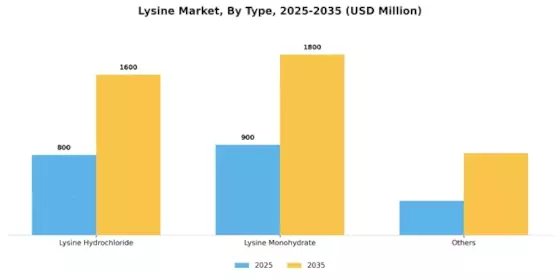
リジン市場塩酸塩(主流)対リジン市場一水和物(新興)
リジン市場の塩酸塩は、主に動物栄養に利用されているため、リジン市場の支配的なセグメントであり、世界的な肉消費の増加に伴い有利な位置を占めています。その化学的安定性と飼料品質の向上における効果により、製造業者の間での好まれる選択肢となっています。一方、リジン市場のモノハイドレートは、高純度レベルと人間の栄養用途への適合性から、競争力のあるセグメントとして浮上しています。この高まる関心は、栄養補助食品やオーガニック製品に対する意識の高まりによって促進されており、より多くの消費者が健康志向のソリューションに目を向ける中で、リジン市場のモノハイドレートは安定した成長軌道を描いています。
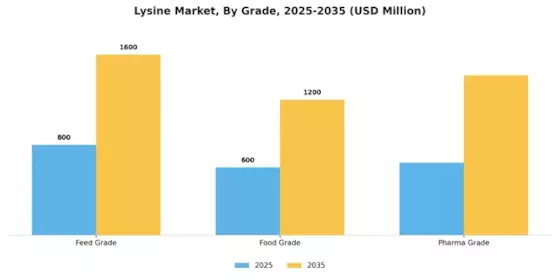
リジン市場では、グレードセグメントは主に飼料グレードが支配しており、これは特に家畜飼料における動物栄養セクターにサービスを提供しています。このセグメントは、高品質な動物性タンパク質の需要の高まりと、世界的な家畜生産の増加により、最大の市場シェアを保持しています。食品グレードと医薬品グレードは比較的小さいですが、リジンのさまざまな産業における多様な用途に貢献しています。
飼料グレード(主流)対製薬グレード(新興)
フィードグレードのリジンは、市場で支配的なセグメントと見なされており、動物飼料に広く利用されて成長率と飼料効率を向上させます。これは、家畜の適切な栄養を確保する上で重要な役割を果たし、肉や乳製品の需要と直接関連しています。一方、ファーマグレードのリジンは、新たに登場しているものの、医療製品やサプリメントへの応用により上昇傾向を示しています。このセグメントは、健康志向の消費者や医療業界が人間の健康におけるアミノ酸の重要性を認識するにつれて注目を集めており、ファーマグレードのリジンは重要な成長分野として位置付けられています。
リジン市場において、「形状別」セグメントは多様な製品タイプの分布を示しており、パウダーがその仲間の中で最大の市場シェアを占めています。このセグメントは、さまざまな用途における汎用性と使いやすさから恩恵を受けており、その支配的な地位を確立しています。一方、液体形状は、溶解性と利便性が評価されている動物飼料セクターでの需要の高まりにより急速に成長しています。これが業界内での成長に大きく寄与しています。
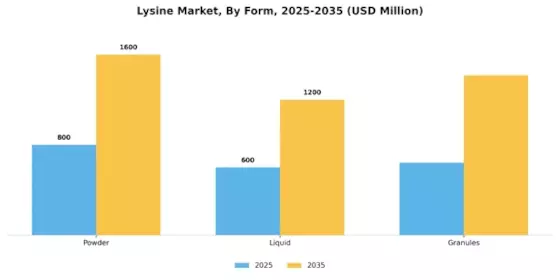
粉末(支配的)対 液体(新興)
粉末型リジンは、長い保存期間、安定性、取り扱いやすさといった有利な特性により、市場での主流な形態として確立されています。動物飼料や人間の栄養の配合に広く利用されており、業界のタンパク質強化の推進に沿っています。一方、液体リジンは新たな競争者として注目を集めており、特に既存のプロセスに簡単に組み込むことを好むセクターにアピールしています。液体形態の利便性は、より良い吸収と迅速な効果を可能にし、栄養用途にとって非常に魅力的です。さまざまな供給方法への需要が高まる中、両セグメントは利益を得ることができ、粉末型はその強固な地位を維持しつつ、液体型は急速に支持を得ています。
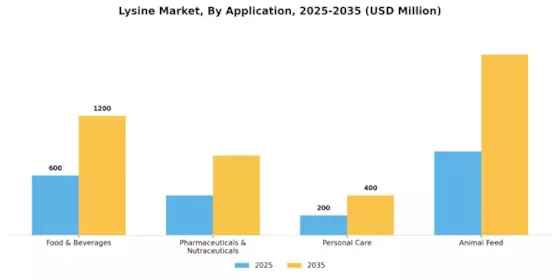
リジン市場において、食品・飲料セグメントは最大の市場シェアを占めており、リジンが必須アミノ酸として多くの加工食品に使用されることから、消費が増加しています。このセグメントは、栄養価を高めることを目指す製造業者に主に対応しており、高タンパク製品を求める健康志向の消費者に向けています。一方、飼料セグメントは急速に成長しており、肉や乳製品の需要の増加に支えられています。リジンを含む家畜飼料は動物の健康にとって重要であり、農業ビジネスにおける使用が拡大しています。
食品・飲料(主流)対製薬・栄養補助食品(新興)
食品および飲料セグメントは、消費者の食事における高品質なタンパク質源への強い好みが特徴のリジン市場における主要なプレーヤーです。消費者が健康意識を高め、栄養価の高い製品を求める中で、リジンの食品製品への使用は増加し続けており、その味を改善し栄養価を高める能力によって推進されています。一方、製薬および栄養補助食品セグメントは、リジンの栄養補助食品や医療用途における利点に焦点を当てて新たに台頭しています。このセグメントは、食事の向上を求める健康志向の個人にアピールし、消費者がますますウェルネスや予防的健康戦略を優先する中で新たな市場機会を創出しています。
リジン市場に関する詳細な洞察を得る 無料サンプルを請求する
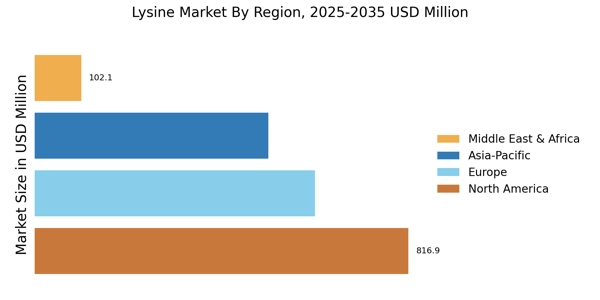
北米はリジンの最大市場であり、世界シェアの約40%を占めています。この地域は、先進的な農業慣行、強力な飼料産業、高タンパク質の食事に対する需要の増加から恩恵を受けています。動物飼料の安全性と品質基準に対する規制の支援が市場の成長をさらに促進しています。アメリカ合衆国が主要な貢献者であり、カナダもリジンの生産と消費において重要な役割を果たしています。 北米の競争環境は、CargillやArcher Daniels Midlandなどの主要プレーヤーによって特徴付けられ、彼らは広範な流通ネットワークと革新的な生産技術を活用しています。これらの主要企業の存在は、リジン生産における継続的な進歩を促すダイナミックな市場環境を育んでいます。さらに、この地域の持続可能性と環境に優しい慣行への焦点が、さまざまな分野におけるリジンの応用の未来を形作っています。
ヨーロッパはリジン市場での重要な成長を目の当たりにしており、世界シェアの約30%を占めています。肉消費の増加と飼料添加物に対する厳しい規制によって推進される高品質な動物飼料の需要の増加が市場の拡大を促進しています。ドイツやフランスなどの国々が先頭に立ち、有利な農業政策とバイオテクノロジーへの投資によって支えられています。 ヨーロッパの競争環境には、Evonik IndustriesやRoyal DSMなどの主要企業が登場し、イノベーションと持続可能性に焦点を当てています。これらの企業の存在は、増大するリジン需要に応える地域の能力を高めています。さらに、欧州連合の飼料の安全性と品質基準に関する規制は、市場のダイナミクスを形成する上で重要であり、製品が厳しい安全要件を満たすことを保証しています。
アジア太平洋地域はリジン市場で重要なプレーヤーとして急速に台頭しており、世界シェアの約25%を占めています。この地域の成長は、肉消費の増加、可処分所得の上昇、そして成長する水産養殖産業によって推進されています。中国やインドなどの国々が市場をリードしており、農業生産性と食料安全保障を向上させることを目的とした政府の取り組みに支えられています。 アジア太平洋の競争環境は、中国国家化学工業株式会社や美華グループなどの主要企業の存在によって特徴付けられています。これらの企業は、リジン生産の効率を改善するために研究開発に多大な投資を行っています。さらに、この地域の家畜部門の拡大への焦点は、リジン需要をさらに押し上げると期待されており、グローバル市場における将来の成長の重要な分野となっています。
中東およびアフリカ地域は、リジン市場において徐々に台頭しており、現在、世界シェアの約5%を占めています。この成長は、主に家畜生産の増加とタンパク質豊富な食事に対する需要の高まりによって推進されています。南アフリカやエジプトなどの国々は、食料安全保障と持続可能性を向上させることを目的とした政府の取り組みに支えられ、農業部門の強化に注力しています。 この地域の競争環境はまだ発展途上であり、地元のプレーヤーがリジン生産に投資を始めています。国際企業の存在も増加しており、彼らは市場の未開発の可能性を活用しようとしています。この地域が農業能力を発展させ続けるにつれて、リジンの需要は大幅に増加すると予想されており、成長のための多くの機会を提供しています。
リジン市場は、動物飼料や栄養補助食品に対する需要の高まりによって、現在、ダイナミックな競争環境が特徴となっています。味の素(日本)、カーギル(アメリカ)、エボニックインダストリーズ(ドイツ)などの主要企業は、革新と持続可能性に焦点を当てた広範な研究開発能力を活用するために戦略的に位置付けられています。これらの企業は、製品の提供を強化するだけでなく、市場での存在感を高めるために合併や買収を模索しています。これらの企業の戦略は、数社の支配的なプレーヤーが価格設定やサプライチェーンのダイナミクスに大きな影響を与える、やや集中した市場構造に寄与しています。
ビジネス戦略に関しては、企業はコストを削減し、サプライチェーンの効率を向上させるために製造のローカライズを進めています。このアプローチにより、市場の需要に迅速に対応でき、物流の課題を最小限に抑えることができます。リジン市場の競争構造はやや断片化しているようで、複数のプレーヤーが市場シェアを争っています。しかし、主要企業の影響力は依然として大きく、業界基準を設定し、運営戦略を通じて革新を推進しています。
2025年8月、カーギル(アメリカ)は、南アメリカでの需要の高まりに応えるため、ブラジルにおけるリジン市場の生産施設の拡張を発表しました。この戦略的な動きは、カーギルの生産能力を向上させるだけでなく、地元市場により良く対応できるようにし、輸送コストを削減し、サプライチェーンの信頼性を向上させます。このような拡張は、企業が特定の市場ニーズに応えるために地域能力に投資しているという広範なトレンドを示しています。
2025年9月、味の素(日本)は、非遺伝子組み換え源から派生した新しいリジン市場製品ラインを発表しました。これは、持続可能で倫理的に生産された成分に対する消費者の好みの高まりを反映しています。この取り組みは、持続可能性と革新に対する味の素のコミットメントを強調しており、環境に優しい製品を重視する新しい顧客層を引き付ける可能性があります。これらの製品の導入は、持続可能性にますます焦点を当てた市場において、同社の競争力を高めるかもしれません。
2025年10月、エボニックインダストリーズ(ドイツ)は、リジン市場の生産のための先進的な発酵技術を開発するために、主要なバイオテクノロジー企業と戦略的パートナーシップを結びました。このコラボレーションは、生産効率を向上させ、環境への影響を削減することが期待されており、グローバルな持続可能性目標に沿っています。このようなパートナーシップは、企業が競争の激しい市場で差別化を図るために技術革新を活用しようとする中で、ますます一般的になっています。
2025年10月現在、リジン市場はデジタル化、持続可能性、そして生産プロセスにおける人工知能の統合に向けた重要なトレンドを目撃しています。戦略的アライアンスは、企業がリソースと専門知識をプールすることを可能にし、競争環境を形成する上で重要な役割を果たしています。今後を見据えると、競争の差別化は、価格だけでなく、革新と技術にますます依存するようになると思われます。サプライチェーンの信頼性と持続可能な実践を優先する企業が、この進化する市場でリーダーとして浮上する可能性が高いです。




リジン市場は、2024年から2035年までの間に年平均成長率6.81%で成長すると予測されており、動物飼料、健康補助食品、食品加工における需要の高まりがその要因です。
新しい機会は以下にあります:
2035年までに、リジン市場は堅調な成長を遂げ、グローバル市場における重要なプレーヤーとしての地位を確立することが期待されています。
| 市場規模 2024 | 2042.16(百万米ドル) |
| 市場規模 2025 | 2181.27(百万米ドル) |
| 市場規模 2035 | 4216.1(百万米ドル) |
| 年平均成長率 (CAGR) | 6.81% (2024 - 2035) |
| レポートの範囲 | 収益予測、競争環境、成長要因、トレンド |
| 基準年 | 2024 |
| 市場予測期間 | 2025 - 2035 |
| 過去データ | 2019 - 2024 |
| 市場予測単位 | 百万米ドル |
| 主要企業のプロファイル | 市場分析進行中 |
| カバーされるセグメント | 市場セグメンテーション分析進行中 |
| 主要市場機会 | 植物由来のタンパク質に対する需要の高まりがリジン市場の革新を促進します。 |
| 主要市場ダイナミクス | 動物飼料に対する需要の高まりがリジン市場の競争と革新を促進し、価格と供給チェーンに影響を与えます。 |
| カバーされる国 | 北米、ヨーロッパ、アジア太平洋、南米、中東・アフリカ |


The secondary research process involved comprehensive analysis of agricultural databases, peer-reviewed animal nutrition journals, feed industry publications, and authoritative food and agriculture organizations. Key sources included the US Food & Drug Administration (FDA), Food and Agriculture Organization of the United Nations (FAOSTAT), United States Department of Agriculture (USDA) National Agricultural Statistics Service, European Food Safety Authority (EFSA), European Commission Directorate-General for Agriculture and Rural Development (EU Feed Database), China's Ministry of Agriculture and Rural Affairs, Brazilian Ministry of Agriculture Livestock and Food Supply (MAPA), International Feed Industry Federation (IFIF), American Feed Industry Association (AFIA), European Compound Feed Manufacturers' Federation (FEFAC), National Grain and Feed Association (NGFA), National Institutes of Health (NIH) Office of Dietary Supplements, National Center for Biotechnology Information (NCBI/PubMed) for amino acid metabolism studies, Feed Technology journals, Journal of Animal Science, Poultry Science, and OECD-FAO Agricultural Outlook. These sources were used to collect livestock population statistics, feed production data, amino acid consumption figures, regulatory approval status for feed additives, pricing trends, and trade flow analysis for L-lysine hydrochloride, liquid lysine, and specialty lysine formulations.
Qualitative and quantitative insights were obtained by interviewing supply-side and demand-side stakeholders during the primary research process. From amino acid suppliers, biotechnology fermentation companies, and lysine manufacturers, supply-side sources comprised CEOs, VPs of Strategic Planning, fermentation technology leaders, and commercial directors. Chief nutritionists, feed formulation scientists, procurement directors from compound feed manufacturers, swine and poultry integration managers, and R&D heads from dietary supplement and pharmaceutical formulation companies constituted demand-side sources. The primary research validated market segmentation by livestock type and product form, confirmed capacity expansion timelines, and garnered insights on feed conversion efficiency trends, spot vs. contract pricing dynamics, and substitution patterns with other amino acids.
Primary Respondent Breakdown:
By Designation: C-level Primaries (28%), Director Level (32%), Others (40%)
By Region: North America (28%), Europe (32%), Asia-Pacific (35%), Rest of World (5%)
Global market valuation was derived through production capacity mapping and consumption volume analysis across swine, poultry, ruminant, and aquaculture feed applications. The methodology included:
Identification of over 50 significant lysine manufacturers and fermentation technology providers in North America, Europe, Asia-Pacific, China, and Latin America
Product mapping across L-lysine HCl, L-lysine liquid/sulfate, granulated, and microencapsulated formulations for feed, food, and pharmaceutical grades
Analysis of installed fermentation capacities, utilization rates, and reported annual revenues specific to amino acid portfolios
Coverage of manufacturers representing 75-80% of global lysine production capacity in 2024
Extrapolation using bottom-up (livestock population × feed inclusion rates × regional pricing by country) and top-down (manufacturer revenue validation and trade data triangulation) approaches to derive segment-specific valuations for swine feed, poultry feed, and nutritional supplement applications
Structural adaptations made for lysine market:
Secondary sources: Shifted from medical/aesthetic organizations (ISAPS, ASPS) to agricultural/feed industry bodies (IFIF, FEFAC, AFIA) and government agriculture departments (USDA, FAO, Chinese Ministry of Agriculture)
Primary stakeholders: Changed from dermatologists/plastic surgeons to animal nutritionists, feed formulators, and livestock production managers
Market coverage: Focused on fermentation capacity, livestock demographics, and feed inclusion rates rather than aesthetic procedure volumes
Geographic emphasis: Increased Asia-Pacific weighting (35% vs 30%) reflecting China's dominance in amino acid production, adjusted other regions accordingly
このレポートの無料サンプルを受け取るには、以下のフォームにご記入ください

“This is really good guys. Excellent work on a tight deadline. I will continue to use you going forward and recommend you to others. Nice job”


“Thanks. It’s been a pleasure working with you, please use me as reference with any other Intel employees.”


“Thanks for sending the report it gives us a good global view of the Betaïne market.”


“Thank you, this will be very helpful for OQS.”


“We found the report very insightful! we found your research firm very helpful. I'm sending this email to secure our future business.”


“I am very pleased with how market segments have been defined in a relevant way for my purposes (such as "Portable Freezers & refrigerators" and "last-mile"). In general the report is well structured. Thanks very much for your efforts.”


“I have been reading the first document or the study, ,the Global HVAC and FP market report 2021 till 2026. Must say, good info! I have not gone in depth at all parts, but got a good indication of the data inside!”


“We got the report in time, we really thank you for your support in this process. I also thank to all of your team as they did a great job.”


“The Automotive 48V ECU Components Procurement Intelligence Study” was a complex project, but the Market Research Future (MRFR) team handled it with quality, agility, and customer-centricity. They delivered all requested data on time and within the agreed scope. The team, including Shubhendra Anand and Rahul Gotadki, was always readily available to clarify questions and swiftly implement necessary adjustments, driving the project to a successful conclusion within a very demanding timeframe.
I would also like to specifically commend Akshay Agarwal for his responsiveness and support at every stage—from our initial inquiry on May 6th through to final delivery on June 18th. His dedication made the entire process seamless.”



