Author

Rahul Gotadki

髄膜炎診断検査市場調査報告書 テストタイプ別(ポリメラーゼ連鎖反応、酵素結合免疫吸着測定法、培養検査、腰椎穿刺、血清学的検査)、サンプルタイプ別(脳脊髄液、血液、尿、組織生検)、エンドユーザー別(病院、診断検査室、学術研究)、病原体タイプ別(細菌、ウイルス、真菌、寄生虫)、地域別(北米、ヨーロッパ、南米、アジア、アジア太平洋、中東およびアフリカ) - 2035年までの予測
MRFRの分析によると、髄膜炎診断検査市場は2024年に9.897億米ドルと推定されています。髄膜炎診断検査業界は、2025年に10.5億米ドルから2035年までに18.87億米ドルに成長すると予測されており、2025年から2035年の予測期間中に年平均成長率(CAGR)は6.04を示します。
髄膜炎診断検査市場は、技術の進歩と意識の高まりにより成長が期待されています。
| 2024 Market Size | 0.9897 (米ドル十億) |
| 2035 Market Size | 1.887 (米ドル十億) |
| CAGR (2025 - 2035) | 6.04% |
ロシュ(スイス)、アボット(アメリカ)、サーモフィッシャーサイエンティフィック(アメリカ)、シーメンスヘルスケア(ドイツ)、バイオメリュー(フランス)、ホロジック(アメリカ)、セフィエド(アメリカ)、クイデルオルソ(アメリカ)
Our Impact
Enabled $4.3B Revenue Impact for Fortune 500 and Leading Multinationals
Partnering with 2000+ Global Organizations Each Year
30K+ Citations by Top-Tier Firms in the Industry
髄膜炎診断テスト市場は、現在、技術の進歩とこの病気が公衆衛生に与える影響に対する認識の高まりによって顕著な進化を遂げています。特に乳幼児や高齢者などの脆弱な集団における髄膜炎の症例の増加は、医療提供者がより効率的で正確な診断方法を求めるきっかけとなっています。ポリメラーゼ連鎖反応(PCR)技術を含む分子診断の革新は、テストの速度と精度を向上させ、適時の治療を促進しています。さらに、ポイントオブケアテストデバイスの統合は、従来のラボ施設が不足している遠隔地でのアクセス向上に寄与する可能性があります。技術の進歩に加えて、髄膜炎診断テスト市場は、新しいバイオマーカーやテストプロトコルの開発を目指す研究イニシアチブの影響を受けています。学術機関と医療機関の協力は、この病気に対するより強固な理解を促進しており、これが改善された診断ツールにつながる可能性があります。規制機関も、新しいテストが安全性と有効性の基準を満たすことを保証する上で重要な役割を果たしています。髄膜炎に関する認識キャンペーンが続く中、信頼できる診断ソリューションの需要は高まると予想されており、今後数年でこの市場の風景を再形成する可能性があります。
最近の診断技術の革新は、髄膜炎診断テスト市場を変革しています。特に分子技術を利用した迅速なテスト方法の出現は、診断の精度と速度を向上させています。これらの進歩は、急性の症例における適時の介入にとって重要です。
髄膜炎に関する公衆の認識が高まっており、これが診断テストの需要を促進する可能性があります。教育キャンペーンは、コミュニティにこの病気に関連する症状やリスクについて情報を提供しており、早期の発見と治療につながる可能性があります。
髄膜炎診断テスト市場は、進化する規制フレームワークによっても形作られています。診断テストに対する厳格なコンプライアンス要件が出現しており、これによりテスト方法の質と信頼性が向上する可能性があります。この傾向は、医療提供者と患者の間での信頼を高めることができるでしょう。
髄膜炎の症例が増加していることは、髄膜炎診断検査市場の主要な推進要因です。報告によると、細菌性髄膜炎は依然として重要な健康問題であり、世界中で年間約120万件の症例が発生しています。この増加する有病率は、効果的な診断検査方法の開発と実施を必要としています。医療提供者が患者の転帰を改善しようとする中で、迅速かつ正確な診断ツールの需要は急増する可能性があります。さらに、新しい病原体の株の出現は診断の複雑さに寄与する可能性があり、これにより高度な検査ソリューションの必要性が高まります。その結果、医療システムがこれらの課題に適応するにつれて、髄膜炎診断検査市場は成長する見込みです。
診断テストにおける技術革新は、髄膜炎診断テスト市場に大きな影響を与えています。ポリメラーゼ連鎖反応(PCR)や次世代シーケンシング(NGS)などの革新は、髄膜炎の診断の速度と精度を革命的に向上させました。これらの技術は、病原体を高い感度と特異度で検出することを可能にし、迅速な治療にとって重要です。市場では、これらの技術を活用した新しい診断キットが続々と登場しており、全体的なテスト環境が向上しています。医療提供者がこれらの先進的な方法論をますます採用する中で、髄膜炎診断テスト市場は、より効率的で信頼性の高い診断ソリューションへの需要に駆動されて拡大することが期待されています。
感染症対策を目的とした政府の取り組みは、髄膜炎診断テスト市場の形成において重要な役割を果たしています。さまざまな健康機関や政府機関が、髄膜炎診断の研究開発に対して多額の資金を割り当てています。例えば、監視システムの強化や、サービスが行き届いていない地域での診断テストへのアクセス向上を目指す取り組みが進展しています。これらの努力は、髄膜炎の負担を軽減することを目的とするだけでなく、診断技術の革新を促進することによって市場の成長を刺激します。政府からの財政支援は、公共部門と民間部門の協力を促進し、髄膜炎診断テスト市場の進展をさらに推進することが期待されます。
髄膜炎ワクチン接種に関する意識の高まりが、髄膜炎診断検査市場に影響を与えています。公衆衛生キャンペーンがワクチン接種の重要性を強調するにつれて、ワクチンの有効性を監視し、ブレークスルー感染を検出するための診断検査の需要が増加しています。この意識の高まりは、ワクチン接種率を促進するだけでなく、効果的な疾病管理を確保するための堅牢な診断ソリューションを必要とします。その結果、髄膜炎診断検査市場は、この傾向から恩恵を受けると予想されており、医療提供者はワクチン接種の取り組みに沿った包括的な検査戦略を実施しようとしています。
ポイントオブケア(POC)テストの需要の増加は、髄膜炎診断テスト市場の重要な推進要因として浮上しています。POCテストは迅速な結果を提供し、医療提供者が治療に関するタイムリーな決定を下すことを可能にします。これは、診断の遅れが深刻な合併症を引き起こす可能性がある髄膜炎のケースにおいて特に重要です。POCテストの便利さと効率性は、医療専門家と患者の両方にとって魅力的であり、診断慣行の変化をもたらしています。より多くの医療施設がPOCテストソリューションを採用するにつれて、髄膜炎診断テスト市場は substantial growth を経験する可能性が高く、診断方法の変化する風景を反映するでしょう。
髄膜炎診断検査市場は多様な検査タイプを示しており、ポリメラーゼ連鎖反応(PCR)法が細菌DNAの迅速かつ正確な同定により最大の貢献者として浮上し、迅速な介入を可能にしています。PCRに続いて、培養検査は病原体の培養を促進し、徹底的な分析を行うために重要な位置を占めています。一方、酵素結合免疫吸着測定法(ELISA)や血清学的検査も堅実に貢献していますが、前述の方法論ほどの支配的な地位にはありません。腰椎穿刺は髄液の分析において重要ですが、分子技術の台頭の中でより伝統的なアプローチとして残っています。
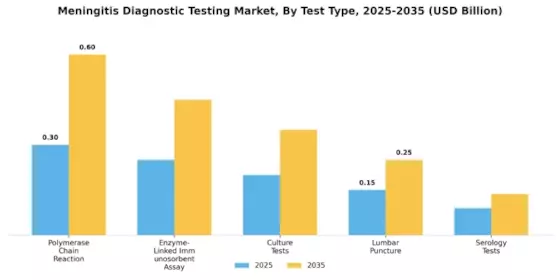
検査方法:PCR(主流)対培養検査(新興)
ポリメラーゼ連鎖反応(PCR)法は、その比類のない感度と迅速なターンアラウンドタイムによって、髄膜炎診断テスト市場において主導的な力を持っています。この技術は、診断のスピードを向上させるだけでなく、迅速かつ正確な治療判断を可能にすることで、患者の転帰を大幅に改善します。それに対して、培養検査は遅く、病原体の成長に依存していますが、最も急成長している方法として地位を確立しつつあります。生きた病原体の存在を確認する能力により、詳細な抗菌感受性試験が可能となり、分子検査の登場にもかかわらず、非常に貴重なものとなっています。このように、両方の方法は診断の風景において重要な役割を果たし、スピードと包括的な分析のバランスを取っています。
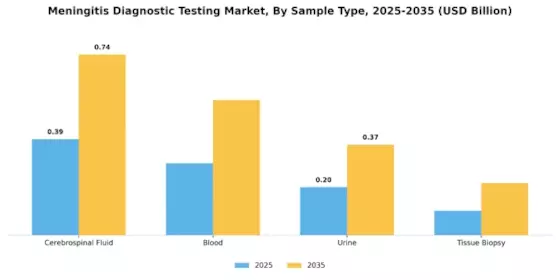
髄膜炎診断検査市場において、サンプルタイプは検査の精度と信頼性を決定する上で重要な役割を果たします。髄液(CSF)は、髄膜炎の診断に直接関連しているため、病原体の中枢神経系における存在についての決定的な洞察を提供することから、最大のセグメントとなっています。一方、血液サンプルは、その非侵襲的な性質とサンプル収集の便利さから、ますます人気が高まっています。これにより、多くのケースで迅速な診断が可能になります。
サンプルタイプ:CSF(優位)対血液(新興)
脳脊髄液(CSF)検査は、髄膜炎の診断において主要な方法であり、中央神経系の状態を直接反映します。病原体に関する情報の高い収集率により、侵襲的な採取手順にもかかわらず、CSF検査は不可欠です。一方で、血液サンプル検査は、髄膜炎マーカーの検出精度を向上させる技術の進歩により、重要な代替手段として浮上しています。血液検査は、患者や医療提供者を惹きつける侵襲性の低い採取方法を誇りますが、必ずしも決定的な結果を提供するわけではありません。このように、これらの二つのセグメントは、確立された診断方法と、患者の快適さと診断効率に配慮した革新的なアプローチとのバランスを示しています。
髄膜炎診断検査市場は、さまざまなエンドユーザーにおいて多様な利用が見られ、病院が市場シェアの重要な部分を占めています。これらの機関は、髄膜炎の症状を示す患者に対する最初のケアのポイントとして重要であり、迅速な診断と治療を可能にします。診断ラボは、病院に比べて紹介件数は少ないものの、より多くの施設が高度な診断方法や技術に特化することで、患者ケアの向上に向けてますます注目を集めています。
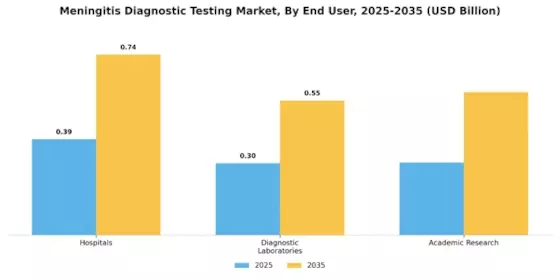
病院(支配的)対診断検査室(新興)
病院は髄膜炎診断検査市場における主要なエンドユーザーセグメントを代表しており、主に患者に対する即時のケアと診断サービスを提供する重要な役割を担っています。彼らは髄膜炎を迅速に特定するために高いボリュームの検査を処理できる包括的な施設を備えています。一方、診断ラボは分子診断の進展と正確な検査に対する需要の増加に支えられ、急成長セグメントとして浮上しています。これらのラボはしばしば病院と協力して、診断を迅速化する専門的なサービスを提供し、髄膜炎の症例管理における全体的な効率を向上させています。
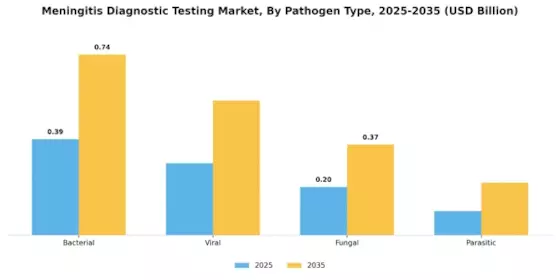
髄膜炎診断検査市場において、細菌病原体のセグメントは、細菌性髄膜炎の症例の高い有病率と重篤性により、最大の市場シェアを占めています。このセグメントは、重要な症例を管理し、死亡率を低下させるための正確で迅速な検査方法への需要によって主に推進されています。ウイルス病原体は、歴史的に細菌性のものと比較して死亡率が低いとされていましたが、診断検査技術の向上に伴い、注目を集めており、このカテゴリーの市場での存在感を大きく高めています。ウイルス性髄膜炎に対する認識が高まるにつれて、ウイルス病原体検査における研究開発が強化されており、最も成長しているセグメントとなっています。この成長は、診断技術の革新と医療インフラへの投資の増加に起因しています。さらに、ウイルス性髄膜炎はしばしば未診断のままであり、市場内で包括的な検査ソリューションを提供する新たな機会を生み出しており、このセグメントの継続的な拡大に寄与しています。
細菌(優勢)対真菌(新興)
細菌病原体セグメントは、細菌性髄膜炎に関連する重要な健康上の影響により、髄膜炎診断検査市場での主要なプレーヤーです。このセグメントは、PCRや培養法などの高度な診断ツールを活用して、病原体を迅速に特定し、適時の治療を促進します。それに対して、真菌病原体セグメントは、特に免疫不全のある集団において真菌感染が独自の課題を呈するため、注目の重要な分野として浮上しています。現在は市場シェアが小さいものの、真菌性髄膜炎の発生率の増加と診断技術の進展により、このセグメントは大きな成長が見込まれています。精度と速度を重視した真菌診断の進化する状況は、臨床意識の向上とターゲットを絞った研究努力によって推進される市場浸透の可能性を示しています。
髄膜炎診断検査市場に関する詳細な洞察を得る 無料サンプルを請求する
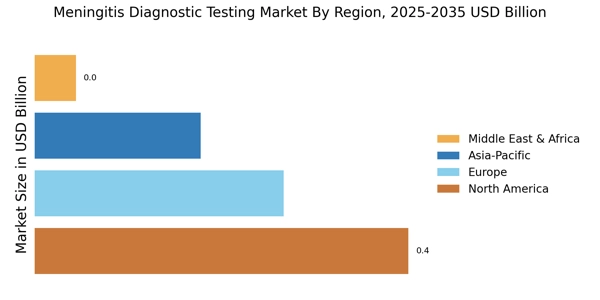
北米は髄膜炎診断テストの最大市場であり、世界市場シェアの約45%を占めています。この地域の成長は、先進的な医療インフラ、髄膜炎に対する意識の高まり、厳格な規制枠組みによって推進されています。迅速かつ正確な診断テストの需要は、髄膜炎の発生率の上昇や、ワクチン接種と早期発見を促進する政府の取り組みによってさらに高まっています。アメリカ合衆国とカナダはこの地域の主要国であり、アボットやサーモフィッシャーサイエンティフィックなどの主要プレーヤーからの重要な貢献があります。競争環境は、主要企業間の継続的な革新とパートナーシップによって特徴づけられています。確立された医療システムと研究機関の存在は、市場の成長ポテンシャルを高め、髄膜炎診断の進展の焦点となっています。
ヨーロッパは髄膜炎診断テストの第二の市場であり、世界市場シェアの約30%を占めています。この地域の成長は、厳格な健康規制と公衆衛生イニシアチブへの強い重点によって支えられています。髄膜炎に対する意識の高まりと迅速な診断の必要性が主要な推進要因です。欧州医薬品庁(EMA)は、新しい診断技術の規制と承認において重要な役割を果たし、医療提供における高い基準を確保しています。この地域の主要国にはドイツ、フランス、イギリスがあり、シーメンスヘルスケアやバイオメリューなどの主要プレーヤーが積極的に関与しています。競争環境は、先進的な診断ソリューションを開発するための企業間の革新と協力によって特徴づけられています。堅牢な医療システムと研究への資金提供の存在は、市場をさらに強化し、ヨーロッパを髄膜炎診断のリーダーとして位置づけています。
アジア太平洋は髄膜炎診断テスト市場における新興の強国であり、世界市場シェアの約20%を占めています。この地域の成長は、医療支出の増加、感染症に対する意識の高まり、医療アクセスを改善するための政府の取り組みによって推進されています。特に人口密度が高く、髄膜炎の発生率が増加している国々では、先進的な診断ソリューションの需要が高まっています。この地域の主要国には中国、インド、日本があり、地元および国際的なプレーヤーが存在感を拡大しています。ロシュやホロジックなどの企業は、増大する需要に応えるために研究開発に投資しています。競争環境は進化しており、診断テストの手頃さとアクセスの向上に焦点が当てられており、アジア太平洋は髄膜炎診断における将来の成長の重要な市場となっています。
中東およびアフリカ(MEA)地域は、髄膜炎診断テスト市場を徐々に発展させており、現在、世界市場シェアの約5%を占めています。この成長は、髄膜炎に対する認識の高まり、医療インフラの改善、病気予防と制御を強化することを目的とした国際的な支援プログラムによって推進されています。政府は医療システムの強化に注力しており、これは髄膜炎の早期診断と治療にとって重要です。この地域の主要国には南アフリカとナイジェリアがあり、診断能力の向上に向けた取り組みが行われています。競争環境は、地元および国際的な組織間の協力によって特徴づけられ、テスト施設の向上が図られています。セフィエドやクイデルオルソなどの主要プレーヤーは、手頃な診断ソリューションの導入に取り組んでおり、この地域で直面する医療課題に対処するために前進しています。
髄膜炎診断テスト市場は、髄膜炎の発生率の増加と迅速かつ正確な診断ソリューションの需要の高まりによって、現在、動的な競争環境が特徴づけられています。ロシュ(スイス)、アボット(米国)、およびサーモフィッシャーサイエンティフィック(米国)などの主要企業は、技術革新と広範な製品ポートフォリオを活用するために戦略的に位置しています。ロシュ(スイス)は分子診断の革新に焦点を当てており、アボット(米国)はポイントオブケアテスト能力の向上に対するコミットメントを強調しています。サーモフィッシャーサイエンティフィック(米国)は、診断製品の拡充を目指してパートナーシップを積極的に追求しており、髄膜炎診断における技術革新とアクセスの優先を重視した競争環境を形成しています。
ビジネス戦略に関して、企業は製造のローカライズとサプライチェーンの最適化を進め、効率を高め、コストを削減しています。市場は中程度に分散しているようで、いくつかの企業が市場シェアを争っています。しかし、シーメンスヘルスケア(ドイツ)やバイオメリュー(フランス)などの大手企業の集団的影響は注目に値し、業界参加者間の革新と協力を促進する競争構造に寄与しています。
2025年8月、シーメンスヘルスケア(ドイツ)は、先進的なバイオマーカー検出技術を利用した新しい髄膜炎の迅速診断テストの発売を発表しました。この戦略的な動きは、診断のスピードを向上させるだけでなく、革新的なテストソリューションの市場でのリーダーとしてのシーメンスヘルスケアの地位を確立する重要な意味を持っています。この製品の導入は、効率的な診断ツールを求める医療提供者を引き付ける可能性が高く、シーメンスの市場シェアを増加させるでしょう。
2025年9月、バイオメリュー(フランス)は、アジアの主要な医療提供者との戦略的パートナーシップを結ぶことで、グローバルなリーチを拡大しました。このコラボレーションは、新興市場におけるバイオメリューの髄膜炎診断製品の流通を強化することを目的としています。このパートナーシップの戦略的重要性は、新しい顧客セグメントにアクセスし、髄膜炎の発生率が高い地域での重要な診断ツールへのアクセスを増加させる可能性にあります。これにより、バイオメリューの競争力が強化されます。
2025年10月、アボット(米国)は、髄膜炎診断テストを電子健康記録と統合するために設計された新しいデジタルプラットフォームを発表しました。この取り組みは、医療におけるデジタル化の広範な傾向を反映しており、データのシームレスな共有を可能にし、患者の結果を改善します。アボットの診断ソリューションへの技術統合への焦点は、より包括的な医療アプローチへのシフトを示しており、市場での競争力を高める可能性があります。
2025年10月現在、髄膜炎診断テスト市場における現在の競争トレンドは、デジタル化、持続可能性、人工知能の統合によってますます定義されています。戦略的アライアンスは、企業が技術能力を強化し、市場での存在感を拡大するために協力する中で、風景を形成する上で重要な役割を果たしています。今後、競争の差別化は、従来の価格競争から革新、先進技術、信頼できるサプライチェーンへの焦点に進化する可能性が高く、企業が市場でのポジショニングを変革するシフトを示唆しています。




髄膜炎診断検査市場は、2024年から2035年までの間に6.04%のCAGRで成長すると予測されており、これは技術の進歩、認知度の向上、発生率の上昇によって推進されます。
新しい機会は以下にあります:
2035年までに、市場は革新とアクセスの向上により、堅調な成長が期待されています。
| 市場規模 2024 | 0.9897(億米ドル) |
| 市場規模 2025 | 1.05(億米ドル) |
| 市場規模 2035 | 1.887(億米ドル) |
| 年平均成長率 (CAGR) | 6.04% (2024 - 2035) |
| レポートの範囲 | 収益予測、競争環境、成長要因、トレンド |
| 基準年 | 2024 |
| 市場予測期間 | 2025 - 2035 |
| 過去データ | 2019 - 2024 |
| 市場予測単位 | 億米ドル |
| 主要企業のプロファイル | 市場分析進行中 |
| カバーされるセグメント | 市場セグメンテーション分析進行中 |
| 主要市場機会 | 迅速な分子診断の統合により、髄膜炎診断検査市場における早期発見が強化されます。 |
| 主要市場ダイナミクス | 診断検査における技術革新が、髄膜炎の検出と治療の精度と速度を向上させています。 |
| カバーされる国 | 北米、ヨーロッパ、アジア太平洋、南米、中東・アフリカ |


The secondary research process involved comprehensive analysis of regulatory databases, peer-reviewed medical journals, clinical publications, epidemiological surveillance data, and authoritative health organizations. Key sources included the US Centers for Disease Control and Prevention (CDC), World Health Organization (WHO) Department of Control of Neglected Tropical Diseases, European Centre for Disease Prevention and Control (ECDC), US Food & Drug Administration (FDA) Center for Devices and Radiological Health, European Medicines Agency (EMA), National Institute for Health and Care Excellence (NICE) UK, National Institutes of Health (NIH) National Institute of Neurological Disorders and Stroke, National Center for Biotechnology Information (NCBI/PubMed), Cochrane Library, ClinicalTrials.gov, WHO Global Health Observatory, UNICEF Child Health Statistics, Gavi, the Vaccine Alliance, Meningitis Research Foundation, Confederation of Meningitis Organizations (CoMO), American Society for Microbiology (ASM), Clinical and Laboratory Standards Institute (CLSI), College of American Pathologists (CAP), Association of Public Health Laboratories (APHL), Health Protection Agency (HPA) UK, Robert Koch Institute (RKI) Germany, National Institute of Infectious Diseases (NIID) Japan, China CDC, Indian Council of Medical Research (ICMR), Brazilian Ministry of Health SVS, African CDC, and national health ministry surveillance reports from the Meningitis Belt countries (Nigeria, Niger, Chad, Ethiopia). These sources were used to collect epidemiological data, regulatory approval pathways for molecular diagnostic assays, clinical validation studies for PCR and ELISA platforms, antimicrobial resistance patterns, vaccination coverage statistics, healthcare infrastructure assessments, and market landscape analysis for bacterial, viral, fungal, and parasitic meningitis diagnostics.
In order to gather both qualitative and quantitative insights, supply-side and demand-side stakeholders were interviewed during the primary research process. CEOs, VPs of R&D, heads of regulatory affairs, commercial directors, and product managers from molecular diagnostics firms, in-vitro diagnostic manufacturers, and laboratory equipment OEMs with a focus on infectious disease testing were examples of supply-side sources. Infectious disease specialists, clinical microbiologists, laboratory directors, hospital administrators, procurement managers from tertiary care hospitals, directors of reference laboratories, and principal investigators from academic medical centers and public health institutes were among the demand-side sources. Primary research verified product pipeline timelines for multiplex molecular platforms, validated market segmentation across test types (PCR, ELISA, culture tests, lumbar puncture procedures, serology assays), and acquired information on clinical adoption patterns of rapid diagnostic tests, pricing strategies for CSF analysis, and reimbursement dynamics for molecular meningitis panels.
Primary Respondent Breakdown:
By Designation: C-level Primaries (28%), Director Level (35%), Others (37%)
By Region: North America (32%), Europe (30%), Asia-Pacific (28%), Rest of World (10%)
Global market valuation was derived through revenue mapping, test volume analysis, and procedure frequency assessment. The methodology included:
Identification of 40+ key diagnostic manufacturers and technology providers across North America, Europe, Asia-Pacific, Latin America, and the Meningitis Belt regions
Product mapping across PCR-based molecular assays, ELISA/serology platforms, automated culture systems, lumbar puncture kits and accessories, and rapid antigen detection tests
Analysis of reported and modeled annual revenues specific to CNS infection and meningitis diagnostic portfolios
Coverage of manufacturers representing 72-77% of global market share in 2024
Extrapolation using bottom-up (test volume × ASP by country/region, procedure rates per 100,000 population, hospital admission data) and top-down (manufacturer revenue validation, distributor channel analysis) approaches to derive segment-specific valuations for bacterial meningitis diagnostics, viral meningitis panels, and fungal/parasitic testing protocols
このレポートの無料サンプルを受け取るには、以下のフォームにご記入ください

“This is really good guys. Excellent work on a tight deadline. I will continue to use you going forward and recommend you to others. Nice job”


“Thanks. It’s been a pleasure working with you, please use me as reference with any other Intel employees.”


“Thanks for sending the report it gives us a good global view of the Betaïne market.”


“Thank you, this will be very helpful for OQS.”


“We found the report very insightful! we found your research firm very helpful. I'm sending this email to secure our future business.”


“I am very pleased with how market segments have been defined in a relevant way for my purposes (such as "Portable Freezers & refrigerators" and "last-mile"). In general the report is well structured. Thanks very much for your efforts.”


“I have been reading the first document or the study, ,the Global HVAC and FP market report 2021 till 2026. Must say, good info! I have not gone in depth at all parts, but got a good indication of the data inside!”


“We got the report in time, we really thank you for your support in this process. I also thank to all of your team as they did a great job.”


“The Automotive 48V ECU Components Procurement Intelligence Study” was a complex project, but the Market Research Future (MRFR) team handled it with quality, agility, and customer-centricity. They delivered all requested data on time and within the agreed scope. The team, including Shubhendra Anand and Rahul Gotadki, was always readily available to clarify questions and swiftly implement necessary adjustments, driving the project to a successful conclusion within a very demanding timeframe.
I would also like to specifically commend Akshay Agarwal for his responsiveness and support at every stage—from our initial inquiry on May 6th through to final delivery on June 18th. His dedication made the entire process seamless.”


.png?v=1778851805)
