Veterinary Telehealth Market

獣医テレヘルス市場調査報告書:サービスタイプ別のサイズ、シェア、トレンド分析(相談サービス、リモートモニタリングサービス、診断サービス、緊急ケアサービス)、エンドユーザー別(ペットオーナー、獣医クリニック、動物病院、研究機関)、動物タイプ別(伴侶動物、家畜、エキゾチックアニマル、馬)、展開モード別(クラウドベース、オンプレミス)および地域別(北米、ヨーロッパ、南米、アジア太平洋、中東およびアフリカ) - 成長見通しと業界予測2025年から2035年
ID: MRFR/HC/40742-HCR
200 Pages
Rahul Gotadki
Last Updated: July 28, 2026
Veterinary Telehealth Market
Market Size
Forecast Period2025 - 2035
CAGR (2025 - 2035)13.24%
2024 Market Size$ 1.25 Billion
2025 Market Size$ 1.42 Billion
2035 Market Size$ 4.91 Billion
Key Players
Vetster
TeleVet
Petriage
VetNOW
WhiskerCloud
Pawp
Opportunities
  • Rising Pet Ownership
  • Increased Focus on Convenience
  • Cost-Effectiveness of Telehealth Services

Veterinary Telehealth Market 概要

マーケットリサーチフューチャーの分析によると、獣医テレヘルス市場の規模は2024年に12.5億米ドルと推定されています。獣医テレヘルス業界は、2025年に14.16億米ドルから2035年までに49.08億米ドルに成長すると予測されており、2025年から2035年の予測期間中に年平均成長率(CAGR)は13.24%となる見込みです。

主要な市場動向とハイライト

獣医テレヘルス市場は、技術の進歩と消費者の嗜好の変化により、堅調な成長を遂げています。

市場規模と予測

2024年の市場規模 1.25(米ドル十億)
2035年の市場規模 4.908(米ドル十億)
CAGR(2025 - 2035) 13.24%

主要なプレーヤー

Vetster(CA)、TeleVet (US)、Petriage (US)、VetNOW (US)、WhiskerCloud (US)、Pawp (US)、Fuzzy Pet Health (US)、VetConnect (AU)

Veterinary Telehealth Market 運転手

ペット所有の増加

獣医テレヘルス市場は、ペット所有率の増加によって需要の急増を経験しているようです。より多くの家庭がペットを迎えるにつれて、アクセス可能な獣医療の必要性が重要になります。近年、ペット所有は大幅に増加しており、67%以上の家庭がペットを飼っているとの推定があります。この傾向は、テレヘルスオプションを含む獣医サービスの市場が成長していることを示しています。ペットの健康ニーズに対して便利な解決策を求めるペットオーナーが増えており、テレヘルスサービスがそれを提供できます。獣医テレヘルス市場は、この傾向から利益を得る可能性が高く、ペットオーナーが対面での訪問なしに獣医と相談するための柔軟で効率的な方法を提供します。このテレヘルスへのシフトは、獣医療の風景を再構築し、ペットオーナーのニーズによりアクセス可能で応答的なものにする可能性があります。

便利さへの注目の高まり

便利さは、獣医テレヘルス市場の成長を促進する原動力です。ペットオーナーは、生活を簡素化する方法をますます探しており、テレヘルスサービスは実用的な解決策を提供します。自宅の快適さから獣医と相談できる能力は、移動や待機時間の必要性を排除し、特に忙しいペットオーナーにとって有益です。この傾向は、さまざまな分野におけるオンデマンドサービスに対する消費者の広範な好みと一致しています。獣医テレヘルス市場が進化し続ける中で、便利さへの強調は、より多くのペットオーナーをテレヘルスオプションに引き付ける可能性が高いです。テレヘルスプラットフォームを通じて獣医療への24時間365日のアクセスの可能性は、この魅力をさらに高め、ペットオーナーが自分の都合でアドバイスや治療を求めることを可能にします。この便利さへのシフトは、獣医療におけるテレヘルスサービスの採用率に大きな影響を与える可能性があります。

テレヘルスサービスのコスト効果

コストの考慮は、獣医テレヘルス市場において重要な役割を果たします。テレヘルスサービスは、従来の獣医訪問に対するより手頃な代替手段を提供することが多く、これはペットオーナーにとって重要な要素となります。獣医訪問の平均コストは、必要なサービスに応じて50ドルから250ドルの範囲です。それに対して、テレヘルス相談は通常、より低コストであり、予算を気にするペットオーナーにとって魅力的な選択肢となります。このコスト効果は、ペットの医療費が増加している市場において特に魅力的です。ペットオーナーが予算を管理しつつ、ペットに質の高いケアを受けさせる方法を探しているため、獣医テレヘルス市場はテレヘルスサービスの採用が増加する可能性が高いです。この傾向は、コスト削減が獣医療におけるテレヘルスソリューションの成長を促進する可能性があることを示唆しており、より広いオーディエンスにとって実行可能な選択肢となります。

テレヘルスサービスへの規制支援

規制の枠組みは、獣医テレヘルス市場を支援するために進化しており、これが成長を促進する可能性があります。政府や獣医団体は、アクセス可能な獣医療を提供する上でのテレヘルスの重要性をますます認識しています。最近の政策変更は、テレヘルスサービスのライセンスおよび実施規制を簡素化することを目的としており、獣医がリモート相談を提供しやすくしています。この規制支援は、ペットケアの実行可能な選択肢としてテレヘルスを正当化する上で重要です。これらの枠組みがより確立されるにつれて、獣医テレヘルス市場には新しいプロバイダーが市場に参入する可能性が高く、競争とサービス提供が強化されるでしょう。さらに、規制政策と技術の進歩の整合性は、獣医療におけるテレヘルスサービスの拡大に適した環境を作り出す可能性があります。この支援的な環境は、獣医テレヘルス市場の将来の軌道に大きな影響を与える可能性があります。

獣医実践における技術統合

先進技術の獣医実践への統合は、獣医テレヘルス市場の顕著な推進力です。モバイルアプリケーション、ビデオ会議ツール、人工知能などの革新が、獣医療の提供方法を変革しています。これらの技術はリアルタイムの相談を促進し、獣医がペットをリモートで監視できるようにし、全体的なケアの質を向上させます。獣医テレヘルス市場は、これらの進歩から利益を得る可能性が高く、テレヘルスサービスの効率と効果を向上させます。さらに、ペットオーナーが技術に慣れていることは、テレヘルスソリューションの受け入れが高まっていることを示唆しています。獣医実践がこれらの技術を採用するにつれて、患者の結果の改善やクライアントの満足度の向上が、テレヘルスセクターのさらなる成長を促進する可能性があります。この技術の進化は、獣医療の基準を再定義し、テレヘルスを獣医療の風景の不可欠な部分にする可能性があります。

市場セグメントの洞察

By Service Type: Consultation Services (Largest) vs. Remote Monitoring Services (Fastest-Growing)

In the Veterinary Telehealth Market, Consultation Services hold the largest market share, driven by their widespread adoption for routine check-ups and consultations. These services facilitate direct communication between veterinarians and pet owners, ensuring prompt attention to pet health issues. Remote Monitoring Services, while currently smaller, are rapidly gaining traction as technology advances and pet owners seek continuous health monitoring solutions for their animals. This dynamic segment leverages wearable devices and telemonitoring tools to track pets' vital signs and overall well-being, showing significant growth potential in the coming years.

Consultation Services: Dominant vs. Remote Monitoring Services: Emerging

Consultation Services remain the dominant force within the Veterinary Telehealth Market due to their established presence and trusted nature among pet owners. They enable seamless interaction, allowing veterinarians to provide timely advice and diagnoses through virtual platforms. On the other hand, Remote Monitoring Services are emerging as a promising avenue within the veterinary telehealth market. These services offer innovative solutions for ongoing health oversight, appealing to tech-savvy pet owners who prioritize comprehensive care and early detection of potential health issues. With the growing availability of smart devices that monitor various health parameters, Remote Monitoring Services are poised for rapid expansion, focusing on improving the quality of life for pets and facilitating proactive veterinary interventions.

By End User: Pet Owners (Largest) vs. Veterinary Clinics (Fastest-Growing)

The Veterinary Telehealth Market is primarily driven by the demand from various end users, including pet owners, veterinary clinics, animal hospitals, and research institutions. Among these, pet owners hold the largest market share, reflecting their increasing reliance on telehealth services for pet care. Veterinary clinics follow closely, leveraging this technology to enhance service delivery and client engagement. The adoption of telehealth solutions by these end users demonstrates a significant shift towards convenient and accessible care options for animals.

Pet Owners (Dominant) vs. Veterinary Clinics (Emerging)

Pet owners are emerging as the dominant force in the Veterinary Telehealth Market, driven by their need for convenient healthcare solutions for their pets. They seek immediate access to veterinary advice and consultations, showcasing a trend towards digital health management. In contrast, veterinary clinics are in an emerging position, increasingly adopting telehealth to amplify their service offerings. Their role is pivotal in shaping the market; as veterinary clinics integrate telehealth into their practices, they not only attract a broader client base but also streamline operations, enhancing overall veterinary care.

By Animal Type: Companion Animals (Largest) vs. Livestock (Fastest-Growing)

In the Veterinary Telehealth Market, Companion Animals account for the largest share, reflecting the growing trend of pet ownership and the increasing awareness among pet owners about the availability of telehealth services. Livestock also plays a significant role, and while it currently has a smaller market share, it is showing remarkable growth as farmers and livestock owners are increasingly adopting telehealth solutions to enhance animal health and reduce veterinary costs. Exotic and equine animals are noteworthy segments, but their contribution to the overall market is comparatively smaller.

Companion Animals: Dominant vs. Livestock: Emerging

Companion Animals remain the dominant sector within the Veterinary Telehealth Market, largely driven by high pet ownership rates and a strong precedent for preventive care through technology. This segment encompasses household pets like dogs and cats, for which owners are eager to utilize digital health solutions for routine check-ups and immediate consultations. On the other hand, Livestock is characterized as an emerging sector, growing rapidly due to the demand for cost-effective health management solutions. Farmers are leveraging telehealth to monitor the health of their animals remotely, improving productivity while reducing the strain on traditional veterinary services. This trend is indicative of a broader shift in agricultural practices toward technology adoption.

By Deployment Mode: Cloud-Based (Largest) vs. On-Premises (Fastest-Growing)

In the Veterinary Telehealth Market, the deployment mode is crucial for determining the accessibility and efficiency of telehealth solutions. The cloud-based deployment has emerged as the predominant choice among veterinary practices, enabling flexible access to healthcare data and teleconsultation tools from anywhere. In contrast, the on-premises model, although smaller in market share, is gaining traction as it offers greater control over data security and patient privacy, particularly in regions with stringent data regulations. The growth trends in this segment reveal a significant shift towards cloud-based solutions driven by the increasing demand for remote veterinary services. Veterinarians and pet owners seek seamless communication and record access without geographical constraints. Meanwhile, the on-premises deployment is expanding rapidly as veterinary practices prioritize data security and control, indicating a strong market interest in hybrid solutions that combine advantages of both deployment types.

Cloud-Based (Dominant) vs. On-Premises (Emerging)

Cloud-based deployment in the Veterinary Telehealth Market has established itself as the dominant approach, providing enhanced flexibility, scalability, and efficiency for veterinary practices. This model empowers veterinarians to deliver remote care efficiently while minimizing overhead costs associated with IT infrastructure. In contrast, the on-premises deployment is identified as an emerging choice among a subset of practices that prefer localized control over their data and telehealth operations. This segment's growth is fueled by increased awareness of data privacy concerns and a desire for customized telehealth solutions. As cybersecurity threats become more prevalent, practices that opt for on-premises solutions often prioritize their data's integrity and confidentiality, indicating a distinctive trend toward tailored telehealth applications.

Veterinary Telehealth Marketに関する詳細な洞察を得る

地域の洞察

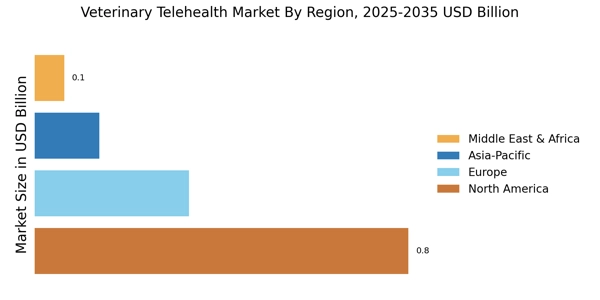
グローバル獣医テレヘルス市場は、さまざまな地域での成長の可能性を示しており、この業界の多様な風景を反映しています。2024年には、北米が市場収益5億米ドルでリードし、2035年までに20億米ドルに達する見込みで、先進技術の採用と高いペット飼育率により業界での大多数を占めています。

ヨーロッパは、2024年に3.5億米ドルの評価を受け、獣医療とリモート相談の需要の高まりにより、13.5億米ドルに成長する見込みです。APAC地域は、2024年に2.5億米ドルの評価を受け、ペット飼育の増加と新興の医療技術を反映して、10億米ドルに成長することが期待されています。

南米とMEAは、それぞれ2024年に1億米ドルと0.5億米ドルの小規模ながら注目すべき市場シェアを持ち、2035年までに4億米ドルと1.5億米ドルに成長する見込みです。これらの地域は初めは支配的ではないかもしれませんが、獣医セクターが進化し、テレヘルスサービスがよりアクセス可能になるにつれて、市場拡大の重要な機会を示しています。全体として、グローバル獣医テレヘルス市場のセグメンテーションは、北米とヨーロッパが収益生成で先頭を切る中、世界中での成長の有望なスペクトルを示しています。

Veterinary Telehealth Market Regional Image

主要企業と競争の洞察

グローバル獣医テレヘルス市場は、リモート相談の需要の増加、技術の進歩、アクセス可能な獣医療の必要性によって、著しい成長を遂げています。この分野には、多くのプレイヤーが参入しており、ペットの飼い主や獣医専門家に対応する革新的なソリューションを提供することで市場シェアを獲得しようとしています。競争環境は、確立された企業から新規参入者まで多様な企業によって特徴付けられ、独自の機能、価格戦略、技術統合を通じてサービスを差別化しようとしています。より多くのペットの飼い主がテレヘルスオプションの便利さやコスト効果の高いケアソリューションを求める中、市場参加者間の競争は激化し、彼らは革新を促進し、ペットとその飼い主のニーズにより良く応えるために提供を強化することを促しています。この環境の中で、TeleVetは、リモート相談プロセスを簡素化するユーザーフレンドリーなプラットフォームの提供に焦点を当て、グローバル獣医テレヘルス市場で注目されるプロバイダーとして浮上しています。彼らの強みは、顧客体験とエンゲージメントを向上させることへのコミットメントにあります。TeleVetの革新的なソリューションは、ペットの飼い主が獣医と簡単かつ効率的にデジタルインターフェースを通じて接続できるようにします。同社は、予約の促進だけでなく、フォローアップ、処方、クライアントコミュニケーションをすべて一つの場所で管理するために設計された包括的なツールのスイートを構築しています。顧客満足と使いやすさに焦点を当てることで、TeleVetは強力な市場プレゼンスと競争優位性を維持し、獣医テレヘルス分野での技術を進化させ、リーチを拡大し続けています。VETetcは、アクセス性とパーソナライズされたサービスを強調する独自のアプローチを提供することで、グローバル獣医テレヘルス市場で際立っています。彼らのプラットフォームは、ペットの飼い主を獣医の専門家と迅速に結びつけるように設計されており、ルーチンの相談から緊急ケアまで幅広い問題をカバーするサービスを提供しています。VETetcの強みは、迅速な対応と高い顧客サービスレベルを提供できる能力にあり、即時の支援を求めるペットの飼い主と患者基盤を拡大しようとする獣医師の両方にアピールします。ユーザーエクスペリエンスを優先し、強力なコミュニケーションチャネルを維持することで、VETetcは獣医テレヘルス業界内で信頼できるリソースとして位置づけられ、患者のエンゲージメントと満足度を促進しながら、獣医診療の運営ニーズを効果的に管理しています。

Veterinary Telehealth Market市場の主要企業には以下が含まれます

業界の動向

グローバル獣医テレヘルス市場では、TeleVetやVetsterなどの企業がサービス提供を拡大し、ペットの飼い主や獣医師にとってのアクセス性を向上させる重要な発展が見られます。一方、VETetcやDVM360は、獣医専門家のテレヘルス実践におけるスキルを向上させるための新しい教育リソースやプラットフォームを導入しています。

FurEver VetsやPawpも、ペットの飼い主のためのバーチャル相談プロセスを簡素化するユーザーフレンドリーなインターフェースに焦点を当てて注目を集めています。合併や買収に関しては、Veterinary TelemedicineとVet2Petが戦略的パートナーシップを結び、技術能力を向上させていますが、詳細は不明です。

市場評価の最近の成長は強力で、特にパンデミック後のリモート獣医ケアの需要の高まりに起因しています。Lifelong Pet CareやVetNOWは、このトレンドを利用して、増加するテレヘルス相談をサポートするために技術インフラを拡大しています。

Animal Health Connectedは、ユーザーエンゲージメントの大幅な増加を報告しており、ペットの飼い主の間でテレヘルスソリューションの受け入れが広がっていることを反映しています。全体として、グローバルな獣医テレヘルスの風景は急速に進化しており、これらの企業が革新を推進し、市場プレゼンスを拡大する上で重要な役割を果たしています。

今後の見通し

Veterinary Telehealth Market 今後の見通し

獣医テレヘルス市場は、2025年から2035年の間に13.24%のCAGRで成長する見込みで、技術の進歩、ペットの飼育数の増加、リモート相談の需要が推進要因です。

2035年までに、獣医テレヘルス市場は堅調であり、 substantialな成長と革新を反映することが期待されています。

市場セグメンテーション

獣医テレヘルス市場のエンドユーザーの展望

  • ペットの飼い主
  • 獣医クリニック
  • 動物病院
  • 研究機関

獣医テレヘルス市場の動物タイプの展望

  • 伴侶動物
  • 家畜
  • エキゾチックアニマル

獣医テレヘルス市場のサービスタイプの展望

  • 相談サービス
  • リモートモニタリングサービス
  • 診断サービス
  • 緊急ケアサービス

獣医テレヘルス市場の展開モードの展望

  • クラウドベース
  • オンプレミス

レポートの範囲

市場規模 2024 12.5(億米ドル)
市場規模 2025 14.16(億米ドル)
市場規模 2035 49.08(億米ドル)
年平均成長率 (CAGR) 13.24% (2024 - 2035)
レポートの範囲 収益予測、競争環境、成長要因、トレンド
基準年 2024
市場予測期間 2025 - 2035
歴史的データ 2019 - 2024
市場予測単位 億米ドル
主要企業のプロファイル Vetster (CA)、TeleVet (US)、Petriage (US)、VetNOW (US)、WhiskerCloud (US)、Pawp (US)、Fuzzy Pet Health (US)、VetConnect (AU)
カバーされるセグメント サービスの種類、エンドユーザー、動物の種類、展開モード、地域
主要市場機会 人工知能の統合が獣医テレヘルス市場における診断精度を向上させます。
主要市場ダイナミクス リモート獣医相談の需要の高まりが獣医テレヘルス市場における革新と競争を促進します。
カバーされる国 北米、ヨーロッパ、APAC、南米、MEA

FAQs

獣医テレヘルス市場の現在の評価額はどのくらいですか?

2024年時点で、獣医テレヘルス市場は12.5億米ドルと評価されています。

2035年までの獣医テレヘルス市場の予測市場規模はどのくらいですか?

市場は2035年までに約49.08億米ドルに達すると予測されています。

予測期間中の獣医テレヘルス市場の期待CAGRはどのくらいですか?

2025年から2035年までの獣医テレヘルス市場の期待CAGRは13.24%です。

獣医テレヘルス市場で最も成長が期待されるサービスタイプセグメントはどれですか?

2035年までに1.95億米ドルと評価される相談サービスが最も成長が早いセグメントであると見込まれています。

エンドユーザーセグメントの市場評価はどのように比較されますか?

2035年までにペットオーナーが1.95億米ドルの評価でエンドユーザーセグメントを支配すると予想されています。

獣医テレヘルス市場におけるリモートモニタリングサービスの予測成長はどのくらいですか?

リモートモニタリングサービスは2035年までに10.2億米ドルに成長すると予測されています。

獣医テレヘルス市場で最も高い評価が見込まれる動物タイプセグメントはどれですか?

伴侶動物は2035年までに29.5億米ドルの評価に達すると予想されています。

獣医テレヘルス市場をリードする展開モードはどれですか?

クラウドベースの展開が2035年までに29.5億米ドルの評価で支配すると予測されています。

獣医テレヘルス市場の主要なプレーヤーは誰ですか?
獣医テレヘルス市場の主要なプレーヤーには、Vetster、TeleVet、Petriage、VetNOW、WhiskerCloud、Pawp、Fuzzy Pet Health、VetConnectが含まれます。
獣医テレヘルス市場の成長に影響を与えているトレンドは何ですか?

ペットオーナーや獣医クリニックによるテレヘルスサービスの採用が増加していることが、市場の成長を促進している可能性があります。

著者
Author
Author Profile
Rahul Gotadki LinkedIn
Research Manager
He holds an experience of about 9+ years in Market Research and Business Consulting, working under the spectrum of Life Sciences and Healthcare domains. Rahul conceptualizes and implements a scalable business strategy and provides strategic leadership to the clients. His expertise lies in market estimation, competitive intelligence, pipeline analysis, customer assessment, etc.

Research Approach

Secondary Research

The secondary research process involved comprehensive analysis of regulatory databases, peer-reviewed veterinary journals, clinical publications, and authoritative animal health organizations. Key sources included the US Food & Drug Administration (FDA) Center for Veterinary Medicine, US Department of Agriculture (USDA) Animal and Plant Health Inspection Service (APHIS), European Medicines Agency (EMA) Veterinary Medicines Division, American Veterinary Medical Association (AVMA), American Animal Hospital Association (AAHA), National Center for Biotechnology Information (NCBI/PubMed) Veterinary Science Database, World Organisation for Animal Health (WOAH), Centers for Disease Control and Prevention (CDC) One Health Initiative, National Institutes of Health (NIH) Comparative Medicine Program, Health Canada Veterinary Drugs Directorate, UK Veterinary Medicines Directorate (VMD), Australian Pesticides and Veterinary Medicines Authority (APVMA), EU Eurostat Agriculture and Animal Health Statistics, Food and Agriculture Organization (FAO) Animal Health and Production Division, and national veterinary regulatory authority reports from key markets. These sources were used to collect telehealth adoption statistics, regulatory framework data, clinical efficacy studies, veterinary workforce trends, pet ownership demographics, and market landscape analysis for consultation services, remote monitoring services, diagnostic services, and emergency care services across cloud-based and on-premises deployment modes.

Primary Research

In order to gather both qualitative and quantitative insights, supply-side and demand-side stakeholders were interviewed during the primary research process. CEOs, VPs of Product Development, Chief Technology Officers, heads of regulatory affairs, and commercial directors from veterinary software developers, veterinary telehealth platform providers, and animal health technology companies were examples of supply-side sources. Licensed veterinarians, owners of veterinary practices, medical directors from veterinary clinics and animal hospitals, procurement leads from large veterinary hospital networks, pet owners, and managers of agricultural livestock were examples of demand-side sources. Primary research acquired information on technology adoption trends, pricing models, reimbursement dynamics, and platform integration problems. It also verified product development timetables and validated market segmentation across service kinds and animal categories.

Primary Respondent Breakdown:

By Designation: C-level Primaries (32%), Director Level (31%), Others (37%)

By Region: North America (32%), Europe (30%), Asia-Pacific (28%), Rest of World (10%)

Market Size Estimation

Global market valuation was derived through revenue mapping and service volume analysis. The methodology included:

Identification of 40+ key veterinary telehealth platform providers across North America, Europe, Asia-Pacific, and Latin America

Service mapping across consultation services, remote monitoring services, diagnostic services, and emergency care service categories

Analysis of reported and modeled annual revenues specific to veterinary telehealth portfolios

Coverage of platform providers representing 70-75% of global market share in 2024

Extrapolation using bottom-up (consultation volume × ASP by country/region) and top-down (platform provider revenue validation) approaches to derive segment-specific valuations across companion animals, livestock, exotic animals, and equines

無料サンプルをダウンロード

このレポートの無料サンプルを受け取るには、以下のフォームにご記入ください

Download PDF ×

We do not share your information with anyone. However, we may send you emails based on your report interest from time to time. You may contact us at any time to opt-out.