Addiction Treatment Market

Addiction Treatment Market Research Report Information By Treatment Type (Alcohol Addiction Treatment, Tobacco/Nicotine Addiction Treatment, Opioid Addiction Treatment, and Other Substances Addiction Treatment), By Drug Type (Bupropion, Varenicline, Acamprosate, Disulfiram, Naltrexone, Methadone, Buprenorphine, Nicotine Replacement Products, and Others), By Treatment Center (Outpatient Treatment Centers, Residential Treatment Centers, and Inpatient Treatment Centers), By Distribution Channel (Hospitals Pharmacies, Medical Stores, and Others), And By Region (North America, Europe, Asia-Pacific, And Rest of The World) –Market Forecast Till 2035
ID: MRFR/HC/10092-HCR
128 Pages
Rahul Gotadki
Last Updated: July 07, 2026
Addiction Treatment Market
Market Size
Forecast Period2025 - 2035
CAGR (2025 - 2035)5.61%
2024 Market Size$ 9.85 Billion
2025 Market Size$ 10.5 Billion
2035 Market Size$ 18.03 Billion
Key Players
Companies such as Acadia Healthcare
American Addiction Centers
Caron Treatment Centers
Hazelden Betty Ford Foundation
Lifeworks
Prominence Treatment Center
Opportunities
  • Market Growth Projections
  • Growing Awareness and Education
  • Advancements in Treatment Modalities

Addiction Treatment Market Summary

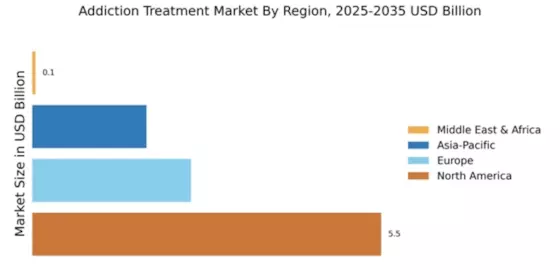
Global Addiction Treatment Market Size was valued at USD 9.85 Billion in 2024 & the market is projected to grow from USD 10.5 Billion in 2025 to USD 18.03 Billion by 2035, registering a CAGR of 5.61% during the forecast period 2025–2035. North America led the market with over 55.84% share, generating around USD 5.5 billion in revenue.
 
The rising prevalence of substance use disorders and growing recognition of addiction as a chronic medical condition are driving the Addiction Treatment Market. Increasing public awareness, expanded access to rehabilitation services, and integration of evidence-based therapies are accelerating demand for comprehensive addiction treatment solutions.
 
According to the WHO, approximately 296 million people aged 15–64 used drugs globally in 2021, while nearly 39.5 million people were living with drug use disorders, highlighting the growing need for accessible and effective addiction treatment services worldwide.

Key Market Trends & Highlights

The Addiction Treatment Market is evolving towards more personalized and technology-driven solutions.

  • North America led the Addiction Treatment Market in 2024, accounting for over 55.84% of global revenue.
  • Europe generated approximately USD 2.5 billion in 2024, representing 25.38% of the global Addiction Treatment Market.
  • Medication-Assisted Treatment accounted for approximately 44% of market revenue in 2024, remaining the leading treatment modality worldwide.
  • Alcohol addiction represented nearly 49% of treatment demand in 2024, maintaining the largest substance segment across rehabilitation programs.
  • WHO estimates 39.5 million people globally live with drug use disorders, supporting sustained investment in addiction treatment services.
  • The market is projected to expand at a 5.61% CAGR during 2025–2035, driven by integrated behavioral health and digital treatment innovations.

Market Size & Forecast

2024 Market Size 9.85 (USD Billion)
2035 Market Size 18.03 (USD Billion)
CAGR (2025 - 2035) 5.61%

Major Players

Companies such as Acadia Healthcare (US), American Addiction Centers (US), Caron Treatment Centers (US), Hazelden Betty Ford Foundation (US), Lifeworks (GB), Prominence Treatment Center (US), Recovery Centers of America (US), Sunrise Recovery Ranch (US) are some of the major participants in the market.

Our Impact
Enabled $4.3B Revenue Impact for Fortune 500 and Leading Multinationals
Partnering with 2000+ Global Organizations Each Year
30K+ Citations by Top-Tier Firms in the Industry

Addiction Treatment Market Drivers

Market Growth Projections

The Global Addiction Treatment Market Industry is poised for substantial growth, with projections indicating a market value of 7.14 USD Billion in 2024 and an anticipated increase to 18.6 USD Billion by 2035. This growth trajectory suggests a compound annual growth rate of 9.1% from 2025 to 2035. Such projections highlight the increasing recognition of addiction as a critical public health issue and the corresponding demand for effective treatment solutions. As the market evolves, stakeholders are likely to invest in innovative treatment approaches, further driving market expansion.

  • According to World Bank health expenditure data, global healthcare investment continues to rise, supporting expansion of behavioral healthcare infrastructure and long-term development of addiction treatment services.

Growing Awareness and Education

Awareness and education regarding addiction and its consequences are pivotal drivers of the Global Addiction Treatment Market Industry. Public health campaigns and educational programs are increasingly informing communities about the signs of addiction and available treatment options. This heightened awareness encourages individuals to seek help earlier, thus increasing the demand for treatment services. As more people become educated about addiction, the stigma surrounding it diminishes, leading to a greater willingness to pursue recovery. Consequently, this trend is expected to bolster market growth, as more individuals access treatment services that were previously overlooked.

  • According to IHME, substance use disorders remain a significant contributor to global years lived with disability (YLDs), encouraging governments to strengthen public education, prevention, and early intervention initiatives.

Advancements in Treatment Modalities

The Global Addiction Treatment Market Industry benefits significantly from advancements in treatment modalities. Innovations in pharmacological therapies, behavioral therapies, and holistic approaches are transforming the landscape of addiction treatment. For example, the introduction of medications that assist in managing withdrawal symptoms and cravings has shown promising results. Furthermore, the integration of technology, such as telehealth services, enhances accessibility for individuals in remote areas. These advancements not only improve treatment outcomes but also attract investments into the sector, thereby contributing to the overall growth of the market. As treatment options diversify, the industry is likely to expand further.

  • According to PubMed, medication-assisted treatment combined with behavioral therapies significantly improves long-term recovery outcomes and reduces relapse rates compared with standalone interventions.


Emerging Trends in Mental Health Integration

The integration of mental health services with addiction treatment is an emerging trend that significantly influences the Global Addiction Treatment Market Industry. Recognizing the co-occurrence of mental health disorders and substance use disorders, treatment providers are increasingly adopting a holistic approach. This integration allows for comprehensive care that addresses both addiction and underlying mental health issues. As a result, treatment programs are evolving to include psychological support alongside traditional addiction therapies. This shift not only enhances recovery outcomes but also expands the market by attracting a broader range of individuals seeking help.

  • According to IHME, integrated treatment addressing both mental health disorders and substance use conditions improves healthcare utilization and supports better long-term recovery outcomes.

Increased Government Initiatives and Funding

Government initiatives play a crucial role in shaping the Global Addiction Treatment Market Industry. Various countries are implementing policies aimed at reducing the stigma associated with addiction and enhancing access to treatment services. Increased funding for rehabilitation centers and community-based programs is evident, as governments recognize the societal impact of addiction. For instance, national health departments are allocating substantial budgets to support prevention and treatment initiatives. This proactive approach not only fosters a supportive environment for individuals seeking help but also stimulates market growth, as more resources become available for innovative treatment methodologies.

  • According to World Bank, increasing public healthcare investments are strengthening behavioral healthcare systems and improving accessibility to addiction prevention and rehabilitation programs.

Rising Prevalence of Substance Use Disorders

The Global Addiction Treatment Market Industry experiences a notable increase in demand due to the rising prevalence of substance use disorders. According to government health statistics, millions of individuals worldwide grapple with addiction, prompting a need for effective treatment solutions. This growing concern has led to increased funding and resources allocated towards addiction treatment programs. In 2024, the market is valued at approximately 7.14 USD Billion, reflecting the urgent need for comprehensive treatment options. As awareness of addiction issues expands, the market is likely to see further growth, potentially reaching 18.6 USD Billion by 2035, with a projected CAGR of 9.1% from 2025 to 2035.

  • According to PubMed, opioid and alcohol use disorders continue to increase globally, reinforcing demand for evidence-based addiction treatment programs and integrated rehabilitation services.

Market Segment Insights

By Treatment Type: Medication-Assisted Treatment (Largest) vs. Behavioral Therapy (Fastest-Growing)

In the Addiction Treatment Market, the segment of Treatment Type showcases a diverse landscape with Medication-Assisted Treatment (MAT) holding the largest market share of 44%. This approach integrates medication with counseling and behavioral therapies, providing a comprehensive solution for individuals facing addiction. Other significant players include Detoxification and Counseling, which also play vital roles in the initial recovery stages, while Support Groups provide essential peer support throughout the recovery journey. As the market evolves, Behavioral Therapy emerges as the fastest-growing segment, driven by an increasing recognition of mental health's role in addiction recovery. With the rise of telehealth services and personalized treatment plans, there's a growing demand for therapeutic interventions that address the psychological aspects of addiction, leading to enhanced recovery outcomes.

Acadia Healthcare continues expanding medication-assisted treatment programs across its behavioral healthcare network, supporting comprehensive addiction recovery through integrated pharmacological and behavioral treatment approaches for thousands of patients annually.

By Substance Type: Alcohol (Largest) vs. Opioids (Fastest-Growing)

In the Addiction Treatment Market, Alcohol has historically been the largest segment, holding 49% share of treatment protocols and facilities. Its prevalence is driven by societal acceptance and legal status, resulting in widespread accessibility and a larger patient population seeking treatment. This has led to numerous established programs and resources focused on alcohol addiction, making it a dominant player in the market. Conversely, the Opioids segment has emerged as the fastest-growing category, largely attributed to rising addiction rates linked to prescription painkillers and illicit opioids. The urgent need for innovative treatment solutions has led to increased funding and research into opioid-specific interventions, setting the stage for a rapid market expansion. As public health initiatives intensify to combat this crisis, opportunities for new treatment modalities are likely to proliferate.

American Addiction Centers continues expanding specialized alcohol rehabilitation services across multiple treatment facilities, reflecting sustained demand for evidence-based interventions addressing alcohol dependence, the largest substance treatment category.

By Patient Demographics: Age (Largest) vs. Gender (Fastest-Growing)

In the Addiction Treatment Market, the age group of patients shows a significant 41% market share distribution, with adults aged 25-34 being the largest demographic . This demographic often seeks treatment due to increased substance abuse associated with stress and lifestyle factors. Following closely, the 18-24 age group is also substantial, reflecting a concerning trend of rising addiction among younger individuals, highlighting the need for targeted interventions and support. Alongside age, gender is emerging as a crucial factor in the landscape of addiction treatment, with increasing numbers of women seeking help. Societal norms surrounding addiction treatment are evolving, fostering a more welcoming environment for diverse genders. This change is driving a faster growth rate within the female patient demographic, reshaping treatment approaches to better address their unique needs.

Age: 25-34 (Dominant) vs. Gender: Female (Emerging)

The age group of 25-34 stands as the dominant demographic segment in the Addiction Treatment Market, characterized by a higher prevalence of opioid and alcohol dependency. This age group frequently presents with co-occurring mental health disorders, making integrated treatment approaches crucial. On the other hand, the emerging female demographic is gaining traction, with an increasing number of women gravitating towards addiction treatment services. This trend can be attributed to greater awareness and destigmatization of addiction issues among women. Strategies tailored to address the unique challenges they face, such as familial obligations and societal pressures, are now vital in ensuring effective treatment and recovery.

By Treatment Setting: Inpatient (Largest) vs. Outpatient (Fastest-Growing)

In the Addiction Treatment Market, the treatment settings are diverse, with Inpatient settings holding the largest market share of 47%. This segment provides intensive care in a structured environment, often preferred for severe addiction cases. Outpatient settings are rapidly gaining traction, characterized by flexibility and a lower commitment level, appealing to patients seeking to balance treatment with everyday life. Residential and Partial Hospitalization programs also contribute significantly, catering to individuals who need a supportive environment while still enjoying some independence. Telehealth, although a smaller segment currently, is gaining interest as technology enables remote access to treatment services.

Inpatient (Dominant) vs. Telehealth (Emerging)

Inpatient treatment remains the dominant force in the Addiction Treatment Market, providing comprehensive care and 24/7 monitoring, which is crucial for individuals with severe addictions. These facilities often have a higher staff-to-patient ratio, ensuring tailored treatment plans and immediate support. Conversely, Telehealth represents an emerging trend, driven by advancements in technology and the need for accessible care solutions. This approach allows patients to engage in therapy and counseling from the comfort of their homes, thus breaking down geographical barriers to treatment. The convenience of Telehealth appeals particularly to younger demographics and those with mobility challenges, positioning it as a significant player in the evolving landscape of addiction services.

By Duration of Treatment: Long-term (Largest) vs. Continuous Care (Fastest-Growing)

In the Addiction Treatment Market, the distribution of treatment duration segments reveals that long-term treatment options hold a significant share, catering to individuals who require extensive rehabilitation and support. Short-term treatments and crisis interventions also present notable but smaller shares, reflecting more immediate care needs. Continuous care is becoming increasingly relevant, accommodating those who need ongoing management and support in their recovery journey. This market distribution indicates a balanced approach, addressing both immediate and long-term treatment needs for individuals struggling with addiction. Market growth within the duration of treatment segment is driven by several factors, including rising awareness of the complexities of addiction and the importance of tailored treatment options. Long-term treatments continue to thrive as they are recognized for their efficacy in supporting sustained recovery. Simultaneously, continuous care is emerging as a fast-growing sub-segment, reflecting the shift toward holistic approaches that prioritize not just initial treatment but also long-term support. Increasingly, healthcare systems are adopting integrated models that combine intermittent care with ongoing management, highlighting a dynamic evolution in addiction treatment strategies.

Long-term (Dominant) vs. Intermittent Care (Emerging)

The long-term treatment segment in the Addiction Treatment Market is recognized as the dominant approach, focusing on comprehensive rehabilitation over extended periods. This method allows for personalized treatment plans that adapt to individual progress, fostering stronger recovery outcomes. Long-term programs often include a combination of therapy, medication management, and support systems, which are vital for individuals dealing with chronic addiction issues. Conversely, intermittent care is emerging as a flexible alternative, offering periodic treatment sessions to address acute needs without the commitment to continuous treatment. This approach often attracts individuals who may be hesitant to engage in prolonged therapy or are navigating recovery in stages. Both segments underscore a growing recognition of the need for adaptable treatment solutions in addressing addiction.

Get more detailed insights about Addiction Treatment Market

Regional Insights

North America : Market Leader in Treatment

North America leads in the Addiction Treatment Market size, accounting for over 55.84% of the global revenue in 2024 The region's growth is driven by increasing awareness of mental health issues, rising substance abuse rates, and supportive regulatory frameworks. Government initiatives and funding for addiction treatment programs are also pivotal in enhancing service accessibility and quality. The demand for innovative treatment modalities is on the rise, further propelling market expansion.

  • According to the CDC, more than 107,000 drug overdose deaths occurred in the United States during 2023, reinforcing continued investment in addiction prevention, treatment infrastructure, and recovery services.

The competitive landscape in North America is robust, featuring key players such as Acadia Healthcare, American Addiction Centers, and Hazelden Betty Ford Foundation. These organizations are at the forefront of providing comprehensive treatment solutions, including inpatient and outpatient services. The U.S. remains the largest market, with Canada also showing significant growth potential. The presence of established healthcare systems and a focus on integrated care models are expected to sustain market momentum.

  • GE HealthCare invests approximately USD 1 billion annually in research and development, supporting advanced diagnostic technologies, behavioral healthcare innovation, and digital health solutions that strengthen addiction treatment delivery.

Europe : Emerging Treatment Solutions

Europe Addiction Treatment Market size was valued at USD 2.5 Billion in 2024, making it the second-largest regional market with a 25.38% share. The region is witnessing increased investment in treatment facilities and innovative therapies, driven by rising substance abuse rates and changing societal attitudes towards addiction. Regulatory support from the European Union and national governments is enhancing treatment accessibility, with a focus on harm reduction strategies and mental health integration. Leading countries in this market include the UK, Germany, and France, where organizations like Lifeworks and Caron Treatment Centers are making significant contributions.

  • The EMA oversees medicines serving more than 450 million people across the European Union, facilitating regulatory evaluation of innovative therapies supporting mental health and addiction treatment programs.

The competitive landscape is characterized by a mix of private and public providers, with a growing emphasis on personalized treatment plans. The European market is evolving, with a shift towards holistic approaches that address both physical and psychological aspects of addiction. "The European Commission emphasizes the need for comprehensive strategies to tackle addiction effectively," European Commission.

Asia-Pacific : Rapidly Growing Market

The Asia-Pacific region, with a market size of 1.85, is experiencing rapid growth in addiction treatment services. This growth is fueled by increasing awareness of mental health issues, rising substance abuse, and a shift towards more holistic treatment approaches. Governments are beginning to implement policies aimed at improving access to treatment, which is crucial for addressing the rising demand for services in this diverse region. The China addiction treatment market is expanding significantly as the government increases investment in specialized rehabilitation facilities and modernizes its approach to substance use disorders. 

Countries like Australia, Japan, and India are leading the charge, with a mix of traditional and modern treatment methodologies. The competitive landscape includes both local and international players, with a focus on integrating technology into treatment solutions. This region's unique cultural dynamics also influence treatment approaches, making it a complex but promising market for addiction services.

Middle East and Africa : Emerging Market Potential

The Middle East and Africa Addiction Treatment Market is valued at 0.05 billion, indicating significant growth potential. The region is gradually recognizing addiction as a critical public health issue, leading to increased investments in treatment facilities and awareness campaigns. Factors such as rising substance abuse rates and a growing understanding of mental health are driving demand for effective treatment solutions. Regulatory frameworks are slowly evolving to support addiction treatment initiatives, although challenges remain.

Countries like South Africa and the UAE are at the forefront of this emerging market, with a focus on developing comprehensive treatment programs. The competitive landscape is characterized by a mix of local and international providers, with an emphasis on culturally sensitive approaches. As awareness grows, there is potential for increased collaboration between governments and private organizations to enhance treatment accessibility and effectiveness.
Addiction Treatment Market Regional Image

Key Players and Competitive Insights

The Addiction Treatment Market is currently characterized by a dynamic competitive landscape, driven by increasing awareness of mental health issues and the rising prevalence of substance use disorders. Key players are actively engaging in strategic initiatives to enhance their service offerings and expand their market presence. To differentiate themselves in a crowded marketplace, many leading facilities are investing heavily in addiction treatment branding to build trust and clearly communicate their specialized recovery philosophies to prospective patients. For instance, Acadia Healthcare (US) has focused on expanding its network of facilities, which appears to be a response to the growing demand for accessible treatment options. Similarly, the Hazelden Betty Ford Foundation (US) emphasizes a holistic approach to recovery, integrating evidence-based practices with innovative therapies, thereby positioning itself as a leader in comprehensive addiction treatment.
 
In terms of business tactics, companies are increasingly localizing their services to better meet the needs of diverse populations. Furthermore, providers are increasingly investing in specialized digital marketing for treatment centers to reach vulnerable populations more effectively and navigate the complex regulatory environment of healthcare advertising. This localization strategy, coupled with supply chain optimization, is essential in a moderately fragmented market where numerous players vie for consumer attention. The collective influence of these key players shapes a competitive structure that encourages innovation and responsiveness to market demands, ultimately benefiting patients seeking treatment. As competition intensifies, major providers are increasingly investing in sophisticated digital marketing and SEO strategies to capture drug rehab leads, ensuring they reach individuals at the exact moment they begin searching for help online. 
 
In November 2025, American Addiction Centers (US) announced a partnership with a leading telehealth provider to enhance its digital treatment offerings. This strategic move is likely to improve access to care, particularly for individuals in remote areas, and reflects a broader trend towards integrating technology into addiction treatment. The partnership may also position American Addiction Centers to capture a larger share of the market by appealing to tech-savvy consumers seeking flexible treatment options.
In October 2025, Cleveland Clinic (US) launched a new outpatient program specifically designed for young adults struggling with addiction. This initiative underscores the clinic's commitment to addressing the unique challenges faced by this demographic. By tailoring its services to meet the specific needs of young adults, Cleveland Clinic may enhance its competitive edge and foster long-term recovery outcomes.
 
In September 2025, Recovery Centers of America (US) expanded its operations by opening a new facility in a high-need area, which indicates a strategic focus on geographic expansion. This move not only increases the company's footprint but also demonstrates a commitment to providing accessible treatment options in underserved communities. Such expansions are crucial in a market where accessibility can significantly influence treatment outcomes. 
As of December 2025, the Addiction Treatment Market is witnessing trends such as digitalization, sustainability, and the integration of artificial intelligence (AI) into treatment protocols. Strategic alliances among key players are increasingly shaping the competitive landscape, fostering innovation and enhancing service delivery. The shift from price-based competition to a focus on technological advancements and reliable supply chains is evident, suggesting that future differentiation will hinge on the ability to innovate and adapt to evolving consumer needs.

Key Companies in the Addiction Treatment Market include

Industry Developments

In February 2024, the Union Council of Ministers reported the opening of 41 free-standing addiction treatment centers for narcotic addicts in the capital, New Delhi. These centers will be providing free drug dependence treatment, counseling, and medications to those who are drug or substance-dependent.

The secretary of the United States Department of Health and Human Services (HHS) made a public statement regarding two new grant opportunities to be administered by the Substance Abuse and Mental Health Services Administration (SAMHSA) that aim to add new funding to modernize SUD treatment services.

In May 2023, Swedish science-focused biopharma company Camurus AB announced that Brixadi (buprenorphine) extended-release subcutaneous injection for use in patients with moderate to severe Obsessive-Compulsive Disorder (OUD) was approved by the FDA.

In January 2023, Tempero Bio received notice from the FDA allowing them to start clinical trials for TMP-301. TMP-301 is an investigational metabotropic glutamate receptor 5 (mGluR5) negative allosteric modulator (NAM), which is being developed to treat cocaine use disorders (CUD). Source:

In June 2021,  AELIS FARMA, a biotechnology company focused on treating certain brain disorders, announced a strategic collaboration and option licensing agreement with INDIVIOR PLC to cover the more severe manifestations of cannabis-use disorders (CUD), such as cannabis-induced psychotic disorders (CIP).

Future Outlook

Addiction Treatment Market Future Outlook

The Addiction Treatment Industry size is projected to reach USD 18.03 Billion by 2035, growing at a CAGR of 5.61%, driven by increasing awareness, technological advancements, and evolving treatment methodologies.

New opportunities lie in:

  • Expansion of telehealth services for remote patient monitoring. Development of personalized treatment plans using AI analytics. Integration of holistic therapies into traditional treatment programs.

By 2035, the Addiction Treatment Market is expected to be robust, reflecting substantial growth and innovation.

Market Segmentation

Addiction Treatment Market Demographic Outlook

  • Age
  • Gender
  • Income Level
  • Education Level
  • Employment Status

Addiction Treatment Market Substance Type Outlook

  • Alcohol
  • Opioids
  • Stimulants
  • Cannabis
  • Nicotine

Addiction Treatment Market Treatment Type Outlook

  • Detoxification
  • Rehabilitation
  • Counseling
  • Medication-Assisted Treatment
  • Support Groups

Addiction Treatment Market Treatment Setting Outlook

  • Inpatient
  • Outpatient
  • Residential
  • Partial Hospitalization
  • Telehealth

Addiction Treatment Market Duration of Treatment Outlook

  • Short-term
  • Long-term
  • Continuous Care
  • Intermittent Care
  • Crisis Intervention

Report Scope

MARKET SIZE 2024 9.85(USD Billion)
MARKET SIZE 2025 10.5(USD Billion)
MARKET SIZE 2035 18.03(USD Billion)
COMPOUND ANNUAL GROWTH RATE (CAGR) 5.61% (2025 - 2035)
REPORT COVERAGE Revenue Forecast, Competitive Landscape, Growth Factors, and Trends
BASE YEAR 2024
Market Forecast Period 2025 - 2035
Historical Data 2019 - 2024
Market Forecast Units USD Billion
Key Companies Profiled Acadia Healthcare (US), American Addiction Centers (US), Caron Treatment Centers (US), Hazelden Betty Ford Foundation (US), Lifeworks (GB), Prominence Treatment Center (US), Recovery Centers of America (US), Sunrise Recovery Ranch (US)
Segments Covered Treatment Type, Substance Type, Demographic, Treatment Setting, Duration of Treatment
Key Market Opportunities Integration of telehealth services enhances accessibility in the Addiction Treatment Market.
Key Market Dynamics Rising demand for personalized treatment approaches drives innovation and competition in the addiction treatment sector.
Countries Covered North America, Europe, APAC, South America, MEA

FAQs

What is the current valuation of the Addiction Treatment Market?

The Addiction Treatment Market was valued at 9.85 USD Billion in 2024.

What is the projected market size for the Addiction Treatment Market by 2035?

The market is projected to reach 18.03 USD Billion by 2035.

What is the expected CAGR for the Addiction Treatment Market from 2025 to 2035?

The expected CAGR for the Addiction Treatment Market during the forecast period 2025 - 2035 is 5.61%.

Which treatment types are leading in the Addiction Treatment Market?

The leading treatment types include Medication-Assisted Treatment, valued at 2.5 USD Billion in 2024, projected to grow to 4.5 USD Billion by 2035.

How does the market perform in terms of substance types treated?

In 2024, the market for Opioids was valued at 3.0 USD Billion, with projections indicating growth to 5.5 USD Billion by 2035.

What demographic factors influence the Addiction Treatment Market?

In 2024, the market segment by Age was valued at 2.5 USD Billion, expected to increase to 4.5 USD Billion by 2035.

What are the different treatment settings available in the market?
In 2024, the Telehealth segment was valued at 3.85 USD Billion, with projections suggesting it could reach 5.95 USD Billion by 2035.
What is the market outlook for long-term treatment options?
The long-term treatment segment was valued at 3.14 USD Billion in 2024, with expectations of growth to 5.67 USD Billion by 2035.
Which companies are key players in the Addiction Treatment Market?
Key players include Acadia Healthcare, American Addiction Centers, and the Hazelden Betty Ford Foundation, among others.
What is the market's performance in terms of outpatient treatment?
The outpatient treatment segment was valued at 2.0 USD Billion in 2024, projected to grow to 3.5 USD Billion by 2035.
Author
Author
Author Profile
Rahul Gotadki LinkedIn
Research Manager
He holds an experience of about 9+ years in Market Research and Business Consulting, working under the spectrum of Life Sciences and Healthcare domains. Rahul conceptualizes and implements a scalable business strategy and provides strategic leadership to the clients. His expertise lies in market estimation, competitive intelligence, pipeline analysis, customer assessment, etc.
Leave a Comment

Research Approach


Secondary Research

The secondary research process involved comprehensive analysis of regulatory databases, peer-reviewed medical journals, clinical publications, and authoritative health organizations. Key sources included the US Substance Abuse and Mental Health Services Administration (SAMHSA), National Institute on Drug Abuse (NIDA), National Institute on Alcohol Abuse and Alcoholism (NIAAA), Centers for Disease Control and Prevention (CDC), US Food & Drug Administration (FDA), European Monitoring Centre for Drugs and Drug Addiction (EMCDDA), European Medicines Agency (EMA), World Health Organization (WHO) Department of Mental Health and Substance Abuse, United Nations Office on Drugs and Crime (UNODC), National Center for Health Statistics (NCHS), Agency for Healthcare Research and Quality (AHRQ), American Society of Addiction Medicine (ASAM), National Association of Addiction Treatment Providers (NAATP), Substance Abuse and Mental Health Services Administration National Survey on Drug Use and Health (NSDUH), Monitoring the Future (MTF) Study, Treatment Episode Data Set (TEDS), National Survey of Substance Abuse Treatment Services (N-SSATS), state-level health department reports from key markets, clinicaltrials.gov, PubMed/MEDLINE, and industry association databases.

Regulatory approval data for pharmaceutical therapies (buprenorphine, methadone, naltrexone, varenicline, acamprosate, disulfiram, and bupropion), clinical safety and efficacy studies, demographic trends, treatment center capacity metrics, and market landscape analysis for alcohol addiction, tobacco/nicotine addiction, opioid addiction, and other substance use disorders were all gathered from these sources.


Primary Research

In order to gather both qualitative and quantitative insights, supply-side and demand-side stakeholders were interviewed during the primary research process. CEOs, chief medical officers, vice presidents of clinical development, heads of regulatory affairs, and commercial directors from pharmaceutical companies that specialize in addiction treatments, operators of addiction treatment facilities, and suppliers of healthcare IT solutions were examples of supply-side sources. Addiction medicine specialists, psychiatrists who specialize in substance use disorders, clinical and program directors from inpatient hospitals, residential treatment facilities, and outpatient treatment centers, as well as procurement leads from hospital systems, health insurers, and managed care organizations, were examples of demand-side sources.

Market segmentation by treatment type (alcohol, tobacco/nicotine, opioid, other substances), drug class (bupropion, varenicline, acamprosate, disulfiram, naltrexone, methadone, buprenorphine, nicotine replacement therapies), treatment center category (outpatient, residential, inpatient), and distribution channel (hospital pharmacies, medical stores, others) was confirmed by primary research. Additionally, primary research gathered information on clinical adoption patterns for medication-assisted treatment (MAT), pricing strategies for branded and generic addiction medications, reimbursement dynamics across public and private payers, and confirmed product pipeline timelines for novel addiction therapeutics and digital therapeutics.

Primary Respondent Breakdown:

By Designation: C-level Executives (32%), Director Level (30%), Others (38%)

By Region: North America (32%), Europe (30%), Asia-Pacific (28%), Rest of World (10%)


Market Size Estimation

Pharmaceutical sales data, treatment admission volume analysis, and revenue mapping were used to determine the global market valuation. The methodology comprised:

Identification of more than fifty important stakeholders in North America, Europe, Asia-Pacific, and Latin America, including providers of digital therapies, treatment facility operators (Acadia Healthcare, American Addiction Centers, Universal Health Services), and pharmaceutical manufacturers (Indivior, Alkermes, Orexo, Camurus, Titan Pharmaceuticals).

Product mapping for behavioral therapies, digital health solutions, and pharmaceutical interventions (opioid antagonists, partial agonists, nicotine replacement therapies, and drugs for alcohol use disorders)

Examination of stated and projected yearly income related to facility operations and addiction treatment portfolios

Coverage of producers and suppliers who will account for 75–80% of the world market in 2024

Segment-specific valuations are obtained through extrapolation utilizing top-down (manufacturer revenue validation, facility revenue aggregation) and bottom-up (treatment admission volumes × average revenue per admission by country/region, prescription volumes × average selling price by medicine class) methods.

Download Free Sample

Kindly complete the form below to receive a free sample of this Report

Download PDF ×

We do not share your information with anyone. However, we may send you emails based on your report interest from time to time. You may contact us at any time to opt-out.