Shift Towards Remote Work
The AI Productivity Tools Market is witnessing a transformative shift towards remote work arrangements. As organizations adapt to flexible work environments, the need for tools that facilitate collaboration and productivity from various locations becomes paramount. Data indicates that 70% of companies are investing in AI productivity tools to support remote teams. These tools provide features such as real-time collaboration, task management, and performance tracking, which are essential for maintaining productivity in a dispersed workforce. This trend is expected to continue, as remote work becomes a permanent fixture in many industries, thereby driving sustained growth in the AI productivity tools market.
Rising Demand for Efficiency
The AI Productivity Tools Market experiences a notable surge in demand for efficiency across various sectors. Organizations are increasingly seeking solutions that streamline operations and enhance productivity. According to recent data, companies utilizing AI-driven tools report a 30% increase in operational efficiency. This trend is driven by the need to optimize resources and reduce operational costs. As businesses face mounting pressure to deliver results swiftly, the adoption of AI productivity tools becomes imperative. The integration of these tools allows for automation of repetitive tasks, enabling employees to focus on higher-value activities. Consequently, the AI Productivity Tools Market is poised for substantial growth as organizations prioritize efficiency in their strategic initiatives.
Focus on Data-Driven Decision Making
The AI Productivity Tools Market is increasingly characterized by a focus on data-driven decision making. Organizations are recognizing the value of leveraging data analytics to inform strategic choices and enhance productivity. AI tools that provide insights into performance metrics and operational efficiency are becoming indispensable. Research suggests that companies utilizing data-driven approaches experience a 20% improvement in decision-making speed. As businesses strive to remain competitive, the demand for AI productivity tools that facilitate data analysis and visualization is likely to rise. This trend underscores the importance of integrating AI solutions into everyday business processes, thereby fostering growth in the market.
Integration of Advanced Technologies
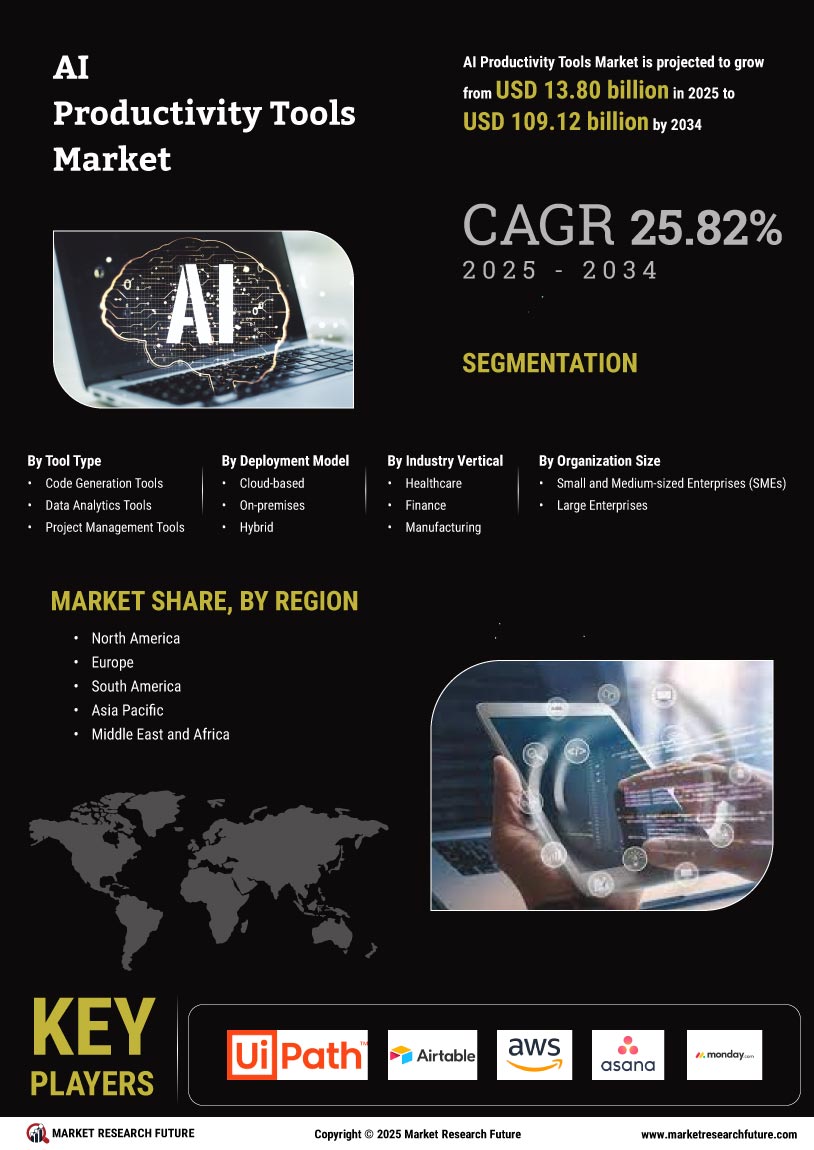
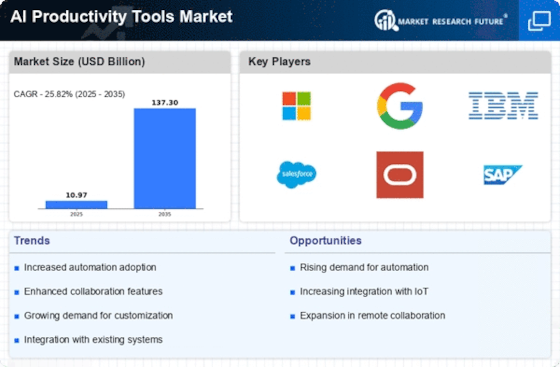
The AI Productivity Tools Market is significantly influenced by the integration of advanced technologies such as machine learning and natural language processing. These technologies enhance the capabilities of productivity tools, making them more intuitive and user-friendly. For instance, tools that leverage machine learning can analyze user behavior and adapt functionalities accordingly, leading to improved user satisfaction. The market is projected to grow at a compound annual growth rate of 25% over the next five years, driven by the increasing sophistication of AI technologies. As organizations seek to harness the power of these advancements, the demand for AI productivity tools is likely to escalate, further propelling the market forward.
Growing Emphasis on Employee Well-being
The AI Productivity Tools Market is also shaped by a growing emphasis on employee well-being and work-life balance. Organizations are increasingly aware that productivity is closely linked to employee satisfaction. AI tools that promote well-being, such as those offering time management and stress reduction features, are gaining traction. Studies indicate that companies prioritizing employee well-being see a 15% increase in productivity. As businesses seek to create healthier work environments, the demand for AI productivity tools that support mental health and work-life balance is expected to rise. This trend not only enhances employee morale but also contributes to the overall growth of the AI productivity tools market.























Leave a Comment