North America : Market Leader in Innovation
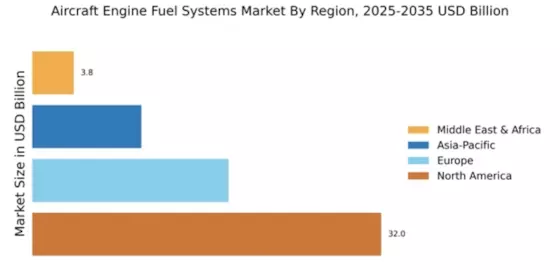
North America continues to lead the Aircraft Engine Fuel Systems market, holding a significant share of 32.0% in 2024. The region's growth is driven by advancements in aerospace technology, increasing air travel demand, and stringent regulatory standards aimed at enhancing fuel efficiency and reducing emissions. Government initiatives and investments in R&D further catalyze market expansion, ensuring compliance with evolving environmental regulations. The competitive landscape is robust, with key players like Honeywell, General Electric, and Pratt & Whitney dominating the market. The U.S. remains the largest contributor, supported by a strong manufacturing base and innovation ecosystem. The presence of major aerospace companies fosters collaboration and technological advancements, positioning North America as a hub for cutting-edge fuel system solutions.
Europe : Emerging Regulatory Frameworks
Europe's Aircraft Engine Fuel Systems market is poised for growth, with a market size of 18.0% in 2024. The region is increasingly focused on sustainability, driven by regulatory frameworks aimed at reducing carbon emissions and enhancing fuel efficiency. The European Union's Green Deal and other initiatives are pivotal in shaping market dynamics, encouraging investments in innovative fuel technologies and sustainable aviation practices. Leading countries such as Germany, France, and the UK are at the forefront of this transformation, hosting major players like Rolls-Royce and Safran. The competitive landscape is characterized by collaborations between manufacturers and regulatory bodies, fostering innovation. As Europe transitions to greener technologies, the demand for advanced fuel systems is expected to rise significantly, aligning with the region's sustainability goals.
Asia-Pacific : Rapidly Growing Aviation Sector
The Asia-Pacific region is witnessing a burgeoning Aircraft Engine Fuel Systems market, with a share of 10.0% in 2024. The growth is primarily fueled by the rapid expansion of the aviation sector, increasing passenger traffic, and rising investments in airport infrastructure. Countries like China and India are leading this growth, supported by government initiatives to enhance air travel connectivity and modernize aviation technologies. The competitive landscape is evolving, with both local and international players vying for market share. Companies such as Woodward and Eaton are establishing a presence in the region, capitalizing on the growing demand for efficient fuel systems. As the aviation market continues to expand, the need for advanced fuel technologies will become increasingly critical, driving innovation and investment in the sector.
Middle East and Africa : Emerging Aviation Hub
The Middle East and Africa region is gradually emerging in the Aircraft Engine Fuel Systems market, holding a market share of 3.8% in 2024. The growth is driven by increasing air travel demand, investments in aviation infrastructure, and a focus on enhancing operational efficiency. Countries like the UAE and South Africa are leading the charge, with government initiatives aimed at boosting the aviation sector and attracting foreign investments. The competitive landscape is characterized by a mix of established players and new entrants. Companies are focusing on partnerships and collaborations to enhance their market presence. As the region continues to develop its aviation capabilities, the demand for advanced fuel systems is expected to rise, aligning with global trends towards efficiency and sustainability.