Regulatory Compliance
Regulatory compliance plays a crucial role in shaping the Global aircraft modernization Market Industry. Governments worldwide impose stringent safety and environmental regulations that necessitate the modernization of aging aircraft fleets. For example, the Federal Aviation Administration in the United States mandates upgrades to meet new safety standards, which drives airlines to invest in modernization efforts. This regulatory pressure is expected to contribute to the market's growth, as operators seek to avoid penalties and ensure compliance. By 2035, the market is projected to reach 541.32 USD Billion, indicating a robust response to evolving regulatory landscapes.
Market Growth Projections
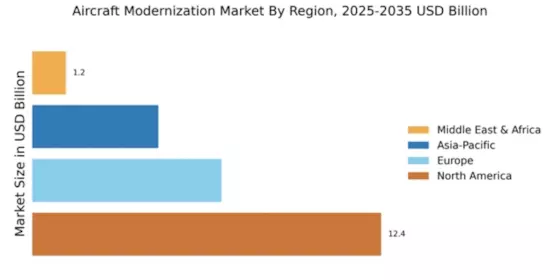
Market growth projections indicate a robust future for the Global Aircraft Modernization Market Industry. With a valuation of 235.94 USD Billion in 2024, the market is anticipated to expand significantly, reaching approximately 541.32 USD Billion by 2035. This growth is underpinned by a compound annual growth rate of 7.84% from 2025 to 2035, reflecting increasing investments in modernization initiatives across commercial and military sectors. Factors such as technological advancements, regulatory compliance, and rising demand for fuel efficiency are expected to drive this expansion, making modernization a strategic priority for operators worldwide.
Increased Defense Spending
Safety remains a paramount concern within the Aircraft Modernization Market. Regulatory bodies are continuously updating safety standards, compelling operators to modernize their aircraft to comply with these evolving regulations. Enhanced safety features, such as improved collision avoidance systems and advanced weather radar, are becoming standard in modern aircraft. The market for safety systems is expected to grow significantly, with estimates suggesting a compound annual growth rate of 5% through 2027. This focus on safety not only protects passengers and crew but also mitigates operational risks, thereby making modernization a critical investment for airlines and operators.
Technological Advancements
The Aircraft Modernization Market is experiencing a surge in demand due to rapid technological advancements. Innovations in avionics, materials, and propulsion systems are driving modernization efforts. For instance, the integration of advanced navigation systems and enhanced cockpit displays is becoming increasingly prevalent. These technologies not only improve operational efficiency but also enhance safety and reduce maintenance costs. As a result, many operators are compelled to upgrade their fleets to remain competitive. The market for avionics alone is projected to reach USD 10 billion by 2026, indicating a robust growth trajectory. This trend suggests that modernization is not merely an option but a necessity for operators aiming to leverage the latest technologies.
Rising Demand for Fuel Efficiency
The rising demand for fuel efficiency is a significant factor influencing the Global Aircraft Modernization Market Industry. Airlines are under constant pressure to reduce operational costs, and fuel expenses represent a substantial portion of these costs. Modernization initiatives, such as retrofitting older aircraft with more efficient engines and aerodynamic enhancements, can lead to considerable fuel savings. As the market evolves, operators are likely to prioritize upgrades that improve fuel efficiency, thereby aligning with environmental sustainability goals. This trend is expected to contribute to the market's growth trajectory, particularly as global fuel prices fluctuate.