×
Request Free Sample ×

Kindly complete the form below to receive a free sample of this Report

* Please use a valid business email

Leading companies partner with us for data-driven Insights

clients tt-cursor
Hero Background

Aldehyde Tanning Agents Market

ID: MRFR/CnM/21640-HCR
100 Pages
Priya Nagrale
October 2025

Aldehyde Tanning Agents Market Research Report By Product Type (Glutaraldehyde, Formaldehyde, Acetaldehyde, Other Aldehyde Tanning Agents), By Application (Leather Tanning, Textile Finishing, Wood Treatment, Papermaking), By End-Use Industry (Automotive, Furniture, Footwear, Clothing, Other Industries), By Form (Liquid, Powder, Granules) and By Regional (North America, Europe, South America, Asia Pacific, Middle East and Africa) - Forecast to 2035

Share:
Download PDF ×

We do not share your information with anyone. However, we may send you emails based on your report interest from time to time. You may contact us at any time to opt-out.

Aldehyde Tanning Agents Market  Infographic
Purchase Options

Aldehyde Tanning Agents Market Summary

As per MRFR analysis, the Aldehyde Tanning Agents Market Size was estimated at 0.4812 USD Billion in 2024. The Aldehyde Tanning Agents industry is projected to grow from 0.5076 in 2025 to 0.8655 by 2035, exhibiting a compound annual growth rate (CAGR) of 5.48 during the forecast period 2025 - 2035.

Key Market Trends & Highlights

The Aldehyde Tanning Agents Market is poised for growth driven by sustainability and technological advancements.

  • The market is witnessing a pronounced shift towards sustainability, influencing production practices across the industry.
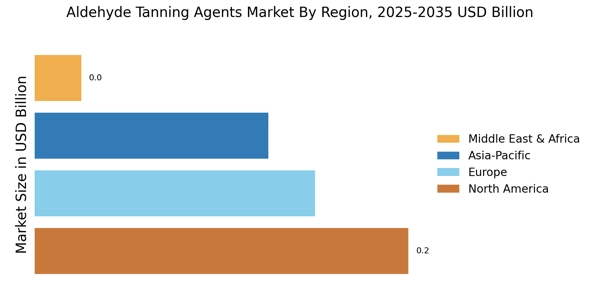
  • North America remains the largest market for aldehyde tanning agents, while Asia-Pacific is emerging as the fastest-growing region.
  • Glutaraldehyde continues to dominate the market, whereas formaldehyde is experiencing rapid growth due to its efficiency in tanning processes.
  • Rising demand for leather products and increasing consumer awareness of sustainable practices are key drivers propelling market expansion.

Market Size & Forecast

2024 Market Size 0.4812 (USD Billion)
2035 Market Size 0.8655 (USD Billion)
CAGR (2025 - 2035) 5.48%

Major Players

BASF SE (DE), Huntsman Corporation (US), Solvay S.A. (BE), Lanxess AG (DE), Tannery Group (IT), Kraton Corporation (US), Tosoh Corporation (JP), Wacker Chemie AG (DE), Eastman Chemical Company (US)

Aldehyde Tanning Agents Market Trends

The Aldehyde Tanning Agents Market is currently experiencing a notable transformation, driven by evolving consumer preferences and increasing demand for sustainable practices in the leather industry. As environmental concerns gain prominence, manufacturers are exploring alternatives to traditional tanning methods, which often involve harmful chemicals. This shift towards eco-friendly solutions appears to be influencing the development of new aldehyde-based agents that offer both efficiency and reduced environmental impact. Furthermore, the market is witnessing a rise in the adoption of innovative technologies that enhance the performance of these agents, potentially leading to improved product quality and durability. In addition to sustainability, the Aldehyde Tanning Agents Market is also shaped by changing regulatory frameworks that emphasize safety and environmental protection. Governments worldwide are implementing stricter regulations regarding chemical usage in various industries, including leather production. This regulatory landscape may compel manufacturers to invest in research and development to create compliant and safer tanning agents. As a result, the market could see a diversification of product offerings, catering to both traditional and modern leather processing needs, while ensuring adherence to safety standards. Overall, the Aldehyde Tanning Agents Market appears poised for growth, driven by innovation and a commitment to sustainability.

Sustainability Focus

The emphasis on eco-friendly practices is reshaping the Aldehyde Tanning Agents Market. Manufacturers are increasingly prioritizing sustainable alternatives to conventional tanning methods, which often involve toxic substances. This trend suggests a growing awareness among consumers and businesses regarding environmental impact, leading to the development of greener tanning agents.

Technological Advancements

Innovative technologies are playing a crucial role in enhancing the performance of aldehyde tanning agents. These advancements may lead to improved product quality, efficiency, and durability, thereby attracting more manufacturers to adopt these modern solutions in their tanning processes.

Regulatory Compliance

The evolving regulatory landscape is influencing the Aldehyde Tanning Agents Market significantly. Stricter regulations regarding chemical usage are prompting manufacturers to invest in research and development, resulting in a wider range of compliant and safer tanning agents that meet both industry standards and consumer expectations.

Aldehyde Tanning Agents Market Drivers

Growth of the Footwear Industry

The growth of the footwear industry is a significant driver for the Aldehyde Tanning Agents Market. As consumer preferences shift towards stylish and durable footwear, the demand for high-quality leather shoes is on the rise. This trend is particularly pronounced in regions where fashion and functionality are paramount. The footwear market is projected to expand at a robust rate, with leather footwear accounting for a substantial share. Aldehyde tanning agents play a crucial role in enhancing the quality and longevity of leather used in footwear production. As manufacturers strive to meet the evolving demands of consumers, the reliance on effective tanning agents is expected to increase, thereby bolstering the Aldehyde Tanning Agents Market. This growth trajectory suggests a promising outlook for the market in the coming years.

Increasing Regulatory Standards

The Aldehyde Tanning Agents Market is influenced by the increasing regulatory standards concerning environmental and health safety. Governments and regulatory bodies are implementing stricter guidelines on the use of chemicals in the tanning process, which directly impacts the formulation and application of tanning agents. Aldehyde-based agents, while effective, are subject to scrutiny due to potential health risks associated with their use. Consequently, manufacturers are compelled to innovate and adapt their products to comply with these regulations. This shift not only drives the demand for safer alternatives but also encourages the development of more sustainable tanning practices. As compliance becomes a critical factor in the industry, the Aldehyde Tanning Agents Market is likely to witness a transformation, with a focus on safer and more environmentally friendly tanning solutions.

Rising Demand for Leather Products

The Aldehyde Tanning Agents Market is experiencing a notable increase in demand for leather products, driven by the growing consumer preference for high-quality and durable materials. This trend is particularly evident in sectors such as automotive, fashion, and furniture, where leather is often perceived as a premium choice. According to recent data, the leather goods market is projected to grow at a compound annual growth rate of approximately 5% over the next few years. This surge in demand for leather products directly influences the Aldehyde Tanning Agents Market, as these agents are essential for producing leather that meets the quality standards expected by consumers. As manufacturers seek to enhance the properties of leather, the reliance on effective tanning agents, including aldehydes, is likely to increase, thereby propelling market growth.

Innovations in Tanning Technologies

Innovations in tanning technologies are significantly shaping the Aldehyde Tanning Agents Market. The introduction of advanced tanning processes, which utilize aldehyde-based agents, has led to improved efficiency and reduced environmental impact. For instance, the development of eco-friendly aldehyde formulations is gaining traction, as they offer effective tanning solutions while minimizing harmful emissions. This shift towards sustainable practices is not only appealing to environmentally conscious consumers but also aligns with regulatory trends favoring greener production methods. As a result, the market for aldehyde tanning agents is expected to expand, with manufacturers increasingly adopting these innovative technologies to meet both consumer demands and regulatory requirements. The ongoing research and development in this area suggest a promising future for the Aldehyde Tanning Agents Market.

Consumer Awareness of Sustainable Practices

Consumer awareness of sustainable practices is increasingly influencing the Aldehyde Tanning Agents Market. As more consumers prioritize eco-friendly products, there is a growing demand for leather that is produced using sustainable tanning methods. This shift in consumer behavior is prompting manufacturers to explore and adopt aldehyde tanning agents that align with sustainability goals. The market is witnessing a rise in the development of biodegradable and less harmful tanning agents, which cater to the environmentally conscious consumer. This trend not only enhances the appeal of leather products but also positions the Aldehyde Tanning Agents Market favorably in a competitive landscape. As sustainability becomes a key purchasing criterion, the market is likely to evolve, with a stronger emphasis on environmentally responsible tanning solutions.
Market Segment Insights

By Type: Glutaraldehyde (Largest) vs. Formaldehyde (Fastest-Growing)

In the Aldehyde Tanning Agents Market, Glutaraldehyde holds the largest market share among the segment values, attributed to its widespread use in various tanning applications due to its effectiveness. On the other hand, Formaldehyde, while historically significant, has recently started to gain attention for its potential in emerging applications, particularly in eco-friendly tanning processes. Acetaldehyde and other aldehyde tanning agents are also present, but they account for a smaller portion of the market, focusing on niche applications that require specific properties.

Aldehyde Tanning Agents: Glutaraldehyde (Dominant) vs. Acetaldehyde (Emerging)

Glutaraldehyde is recognized as the dominant player in the Aldehyde Tanning Agents Market due to its superior cross-linking properties and effectiveness, which make it a preferred choice among manufacturers. It provides superior performance in leather quality and processing speed. In contrast, Acetaldehyde represents an emerging segment, often sought after for its lighter environmental impact and improved safety profile. As the market shifts towards sustainable practices, Acetaldehyde is beginning to carve out a dedicated space, especially among brands that prioritize eco-conscious materials. Both agents illustrate the diverse approaches within the market, catering to different customer needs and preferences.

By Application: Leather Tanning (Largest) vs. Textile Finishing (Fastest-Growing)

In the Aldehyde Tanning Agents Market, the 'By Application' segment is characterized by a significant share of leather tanning, which dominates the market due to its extensive use in the production of high-quality leather goods. Following closely is the textile finishing application, which is gaining traction owing to the increasing demand for treated fabrics that enhance durability and performance. Other segments like wood treatment and papermaking also contribute, but to a lesser extent, showcasing the divergent applicability of aldehyde tannins across industries.

Leather Tanning (Dominant) vs. Textile Finishing (Emerging)

Leather tanning represents the dominant application of aldehyde tanning agents, primarily due to its ability to produce leather products with superior qualities such as texture, strength, and longevity. This application thrives in the luxury fashion and automotive sectors, where high-quality leather is essential. Conversely, the textile finishing application is emerging rapidly, driven by innovations that enhance textile performance, such as water resistance and fabric strength. As sustainability becomes a priority, the textile segment is evolving with eco-friendly finishing processes, making it an attractive area for investment and growth, while also complementing the traditional leather tanning market.

By End-Use Industry: Footwear (Largest) vs. Automotive (Fastest-Growing)

The Aldehyde Tanning Agents Market showcases a diverse distribution among end-use industries, with the footwear sector holding the largest share. This segment is driven by the increasing consumer preference for comfortable and durable leather products, which has led to robust demand for high-quality tanning agents. On the other hand, the automotive industry is rapidly gaining traction, characterized by its innovative approach to materials and processes that enhance vehicle aesthetics and functionality. As sustainability becomes a central theme in various industries, the Aldehyde Tanning Agents Market reflects a shift in growth trends. The automotive segment is evolving with advancements in eco-friendly practices, fostering a surge in demand for greener tanning solutions. Additionally, the furniture and clothing segments are also contributing to positive growth, although at a steadier pace compared to the aggressive expansion observed in automotive applications. The overall drive towards quality and sustainability is reshaping market dynamics in favor of aldehyde tanning agents.

Footwear (Dominant) vs. Automotive (Emerging)

In the Aldehyde Tanning Agents Market, the footwear segment emerges as the dominant force, reflecting robust consumer demand for stylish and durable leather products. This sector enjoys significant market attention due to the essential role played by high-quality tanning agents in ensuring product longevity and comfort. Materials utilized in footwear are increasingly being sourced with sustainability in mind, which resonates with consumer preferences for eco-friendly products. Conversely, the automotive segment is an emerging contender, driven by the industry's quest for innovation and enhanced vehicle design. As automotive manufacturers look to improve interior aesthetics and add value to their offerings, aldehyde tanning agents are becoming a crucial component in their production processes, leading to a growing market presence.

By Form: Liquid (Largest) vs. Powder (Fastest-Growing)

In the Aldehyde Tanning Agents Market, the segment distribution reveals that liquid forms dominate significantly due to their ease of application and effectiveness in the tanning process. Liquid aldehyde tanning agents constitute the largest share, appealing to manufacturers seeking efficiency and quality in leather production. Powder forms constitute a smaller but notable portion of the market, primarily catering to specialized applications where precise measurements are required. Growth trends indicate an increasing preference for powder forms, projected to be the fastest-growing segment as more manufacturers recognize the advantages of powdered agents, including longer shelf life and reduced transportation costs. Innovations in processing methods and the introduction of eco-friendly formulations further enhance the attractiveness of both liquid and powder segment values, driving overall market expansion.

Liquid (Dominant) vs. Powder (Emerging)

Liquid aldehyde tanning agents are the backbone of the tanning process, known for their versatility and superior penetration in leather. Their dominant market position stems from their widespread use in various tanning applications, particularly in producing high-quality finished leather. Conversely, powder forms are emerging as a viable alternative for manufacturers seeking more eco-conscious options. This segment offers improved stability and the convenience of storage while maintaining effectiveness in tanning. As sustainability continues to influence market dynamics, the growth of powdered aldehyde agents is driven by the rising demand for cleaner and more efficient production methods, making them an attractive alternative alongside their liquid counterparts.

Get more detailed insights about Aldehyde Tanning Agents Market

Regional Insights

North America : Innovation and Sustainability Focus

North America is the largest market for aldehyde tanning agents, holding approximately 40% of the global market share. The region's growth is driven by increasing demand for sustainable leather products and stringent environmental regulations. The U.S. and Canada are the primary contributors, with a growing emphasis on eco-friendly tanning processes and innovations in chemical formulations. Regulatory catalysts, such as the EPA's initiatives on chemical safety, further bolster market growth. The competitive landscape in North America is characterized by the presence of major players like BASF SE, Huntsman Corporation, and Eastman Chemical Company. These companies are investing in research and development to enhance product offerings and meet evolving consumer preferences. The market is also witnessing collaborations and partnerships aimed at improving sustainability in tanning processes, positioning North America as a leader in the aldehyde tanning agents market.

Europe : Regulatory Compliance and Innovation

Europe is the second-largest market for aldehyde tanning agents, accounting for approximately 30% of the global market share. The region's growth is propelled by stringent regulations on chemical usage and a strong focus on sustainable practices. Countries like Germany and Italy lead the market, driven by their advanced leather industries and commitment to eco-friendly solutions. The European Union's REACH regulations play a significant role in shaping market dynamics, encouraging innovation in safer tanning agents. Leading players in Europe include Solvay S.A., Lanxess AG, and Tannery Group, which are actively engaged in developing new formulations that comply with regulatory standards. The competitive landscape is marked by a blend of established companies and emerging startups focusing on sustainable practices. The emphasis on reducing environmental impact while maintaining product quality is a key driver for innovation in the European aldehyde tanning agents market.

Asia-Pacific : Emerging Market with Growth Potential

Asia-Pacific is witnessing rapid growth in the aldehyde tanning agents market, holding approximately 25% of the global market share. The region's expansion is driven by increasing leather production, particularly in countries like China and India, where demand for leather goods is surging. The growing middle class and rising disposable incomes are significant factors contributing to this demand. Additionally, favorable government policies supporting the leather industry are acting as catalysts for market growth. The competitive landscape in Asia-Pacific features key players such as Tosoh Corporation and Kraton Corporation, which are focusing on expanding their product portfolios to cater to the growing demand. The region is also seeing an influx of foreign investments aimed at enhancing production capabilities and adopting advanced tanning technologies. As the market matures, the focus on sustainable practices is expected to increase, aligning with global trends in the leather industry.

Middle East and Africa : Resource-Rich with Emerging Demand

The Middle East and Africa region is gradually emerging in the aldehyde tanning agents market, holding about 5% of the global market share. The growth is primarily driven by the increasing demand for leather products in countries like South Africa and the UAE. The region's rich natural resources and expanding manufacturing capabilities are contributing to this growth. Additionally, government initiatives aimed at boosting the leather industry are fostering a conducive environment for market expansion. Key players in this region include local manufacturers and international companies looking to tap into the growing market. The competitive landscape is evolving, with a focus on enhancing production efficiency and sustainability. As the region continues to develop its leather industry, the demand for aldehyde tanning agents is expected to rise, presenting opportunities for both local and global players.

Aldehyde Tanning Agents Market  Regional Image

Key Players and Competitive Insights

Major players in the Aldehyde Tanning Agents Market are continuously striving to expand their presence and product portfolio. Strategic mergers and acquisitions are common in the industry to gain a competitive advantage. For instance, in 2023, LANXESS acquired the Leather Chemicals business of TFL Ledertechnik GmbH, a leading provider of tanning and finishing chemicals in Europe. This acquisition strengthened LANXESS's position in the leather chemicals market and expanded its product portfolio to include a wider range of aldehyde tanning agents. Leading Aldehyde Tanning Agents Market players are investing heavily in research and development (R&D) to develop innovative products and technologies.

They are focusing on developing an Aldehyde Tanning Agents Market that is more sustainable, efficient, and cost-effective. For instance, Evonik Industries, a leading Aldehyde Tanning Agents Market player, has invested in developing sustainable tanning agents that reduce environmental impact and improve the quality of leather.BASF, a leader in the Aldehyde Tanning Agents Market industry, offers a wide range of aldehyde tanning agents under the brand name Basotec. Basotec tanning agents are known for their high quality, consistency, and reliability.

BASF has a strong presence and a well-established distribution network, which enables it to reach customers in various regions around the world. The company is committed to providing innovative and sustainable solutions to the leather industry. Evonik Industries, another leading player in the Aldehyde Tanning Agents Market, offers a portfolio of aldehyde tanning agents under the brand name Leotan. Leotan tanning agents are known for their excellent performance and durability. Evonik Industries has a strong focus on sustainability and environmental protection, and its tanning agents are designed to meet the highest environmental standards.

The company has a presence and a strong customer base in various industries, including automotive, furniture, and fashion.Lanxess, a leading specialty chemicals company, offers a range of aldehyde tanning agents under the brand name Aqualon. Aqualon tanning agents are known for their high quality and efficiency. Lanxess has a strong presence and a well-established distribution network, which enables it to reach customers in various regions around the world. The company is committed to providing innovative and sustainable solutions to the leather industry.

Stahl, a leading manufacturer of leather chemicals, offers a portfolio of aldehyde tanning agents under the brand name Stahltan. Stahltan tanning agents are known for their high performance and reliability. Stahl has a strong presence and a well-established distribution network, which enables it to reach customers in various regions around the world. The company is committed to providing innovative and sustainable solutions to the leather industry.

Key Companies in the Aldehyde Tanning Agents Market market include

Industry Developments

Rising demand for leather products in various end-use industries, such as automotive, furniture, and fashion, is a key factor driving market growth. Additionally, increasing awareness about the sustainability and durability of aldehyde-tanned leather is contributing to market expansion. Recent developments include the launch of eco-friendly aldehyde tanning agents by manufacturers, such as Lanxess' Levafix range, which offers improved biodegradability and reduced environmental impact. Moreover, advancements in tanning technologies, such as the use of ultrasound and microwave-assisted tanning, are enhancing efficiency and reducing the processing time of aldehyde tanning, further supporting market growth.

Future Outlook

Aldehyde Tanning Agents Market Future Outlook

The Aldehyde Tanning Agents Market is projected to grow at a 5.48% CAGR from 2024 to 2035, driven by increasing demand for sustainable leather products and technological advancements in tanning processes.

New opportunities lie in:

  • Development of eco-friendly aldehyde formulations for sustainable tanning solutions.

  • Expansion into emerging markets with tailored product offerings for local industries.
  • Investment in automation technologies for enhanced production efficiency and cost reduction.

By 2035, the Aldehyde Tanning Agents Market is expected to achieve robust growth, reflecting evolving consumer preferences and industry innovations.

Market Segmentation

Aldehyde Tanning Agents Market Form Outlook

  • Liquid
  • Powder
  • Granules

Aldehyde Tanning Agents Market Type Outlook

  • Glutaraldehyde
  • Formaldehyde
  • Acetaldehyde
  • Other Aldehyde Tanning Agents

Aldehyde Tanning Agents Market Application Outlook

  • Leather Tanning
  • Textile Finishing
  • Wood Treatment
  • Papermaking

Aldehyde Tanning Agents Market End-Use Industry Outlook

  • Automotive
  • Furniture
  • Footwear
  • Clothing
  • Other Industries

Report Scope

MARKET SIZE 20240.4812(USD Billion)
MARKET SIZE 20250.5076(USD Billion)
MARKET SIZE 20350.8655(USD Billion)
COMPOUND ANNUAL GROWTH RATE (CAGR)5.48% (2024 - 2035)
REPORT COVERAGERevenue Forecast, Competitive Landscape, Growth Factors, and Trends
BASE YEAR2024
Market Forecast Period2025 - 2035
Historical Data2019 - 2024
Market Forecast UnitsUSD Billion
Key Companies ProfiledMarket analysis in progress
Segments CoveredMarket segmentation analysis in progress
Key Market OpportunitiesGrowing demand for sustainable and eco-friendly tanning solutions in the Aldehyde Tanning Agents Market.
Key Market DynamicsRising demand for sustainable leather products drives innovation in aldehyde tanning agents and regulatory compliance.
Countries CoveredNorth America, Europe, APAC, South America, MEA

Leave a Comment

FAQs

What is the projected market valuation of the Aldehyde Tanning Agents Market by 2035?

The projected market valuation for the Aldehyde Tanning Agents Market is expected to reach 0.8655 USD Billion by 2035.

What was the market valuation of the Aldehyde Tanning Agents Market in 2024?

The overall market valuation of the Aldehyde Tanning Agents Market was 0.4812 USD Billion in 2024.

What is the expected CAGR for the Aldehyde Tanning Agents Market during the forecast period 2025 - 2035?

The expected CAGR for the Aldehyde Tanning Agents Market during the forecast period 2025 - 2035 is 5.48%.

Which companies are considered key players in the Aldehyde Tanning Agents Market?

Key players in the Aldehyde Tanning Agents Market include BASF SE, Huntsman Corporation, Solvay S.A., and Lanxess AG.

What are the main types of aldehyde tanning agents and their market values?

The main types of aldehyde tanning agents include Glutaraldehyde and Formaldehyde, each valued at approximately 0.2611 USD Billion in 2025.

How does the leather tanning application segment perform in the Aldehyde Tanning Agents Market?

The leather tanning application segment is projected to reach a valuation of 0.3483 USD Billion by 2035.

What is the market value of the footwear end-use industry in the Aldehyde Tanning Agents Market?

The footwear end-use industry is expected to have a market value of approximately 0.261 USD Billion in 2035.

What forms of aldehyde tanning agents are available in the market?

Aldehyde tanning agents are available in various forms, including liquid, powder, and granules, with liquid valued at 0.3483 USD Billion in 2025.

What is the projected market value for textile finishing applications in the Aldehyde Tanning Agents Market?

The projected market value for textile finishing applications is expected to reach 0.1741 USD Billion by 2035.

Download Free Sample

Kindly complete the form below to receive a free sample of this Report

Compare Licence

×
Features License Type
Single User Multiuser License Enterprise User
Price $4,950 $5,950 $7,250
Maximum User Access Limit 1 User Upto 10 Users Unrestricted Access Throughout the Organization
Free Customization
Direct Access to Analyst
Deliverable Format
Platform Access
Discount on Next Purchase 10% 15% 15%
Printable Versions