×
Request Free Sample ×

Kindly complete the form below to receive a free sample of this Report

* Please use a valid business email

Leading companies partner with us for data-driven Insights

clients tt-cursor
Hero Background

Alpha Glucosidase Inhibitors Market

ID: MRFR/Pharma/7397-HCR
100 Pages
Rahul Gotadki
October 2025

Alpha Glucosidase Inhibitor Market Research Report By Types (Acarbose, Miglitol, Voglibose), By Applications (Type 1 Diabetes, Type 2 Diabetes, Gestational Diabetes), By Delivery Mode (Oral, Injections), By Distribution Channel (Hospital Pharmacies, Retail Pharmacies, Online Pharmacies) and By Regional (North America, Europe, South America, Asia Pacific, Middle East and Africa) - Forecast to 2035

Share:
Download PDF ×

We do not share your information with anyone. However, we may send you emails based on your report interest from time to time. You may contact us at any time to opt-out.

Alpha Glucosidase Inhibitors Market Infographic
Purchase Options

Alpha Glucosidase Inhibitors Market Summary

As per MRFR analysis, the Alpha Glucosidase Inhibitors Market Size was estimated at 2166.87 USD Million in 2024. The Alpha Glucosidase Inhibitors industry is projected to grow from 2280.02 in 2025 to 3793.2 by 2035, exhibiting a compound annual growth rate (CAGR) of 5.22 during the forecast period 2025 - 2035.

Key Market Trends & Highlights

The Alpha Glucosidase Inhibitors Market is experiencing robust growth driven by increasing demand for innovative diabetes management solutions.

  • The market is witnessing a rising demand for oral antidiabetic medications, particularly in North America, which remains the largest market.
  • Advancements in drug formulation are enhancing the efficacy and patient compliance of alpha glucosidase inhibitors, especially in the Asia-Pacific region.
  • Integration of digital health technologies is transforming diabetes management, making it more accessible and efficient for patients.
  • The increasing prevalence of diabetes and a shift towards preventive healthcare are major drivers propelling market growth, particularly in the diabetes management segment.

Market Size & Forecast

2024 Market Size 2166.87 (USD Million)
2035 Market Size 3793.2 (USD Million)
CAGR (2025 - 2035) 5.22%

Major Players

Boehringer Ingelheim (DE), Merck & Co. (US), AstraZeneca (GB), Novartis (CH), Sanofi (FR), Pfizer (US), Bristol-Myers Squibb (US), Eli Lilly and Company (US), Takeda Pharmaceutical Company (JP)

Alpha Glucosidase Inhibitors Market Trends

The Alpha Glucosidase Inhibitors Market is currently experiencing notable developments driven by increasing awareness of diabetes management and the growing prevalence of type two diabetes globally. These inhibitors, which function by delaying carbohydrate absorption in the intestines, are gaining traction among healthcare professionals and patients alike. The market appears to be influenced by a rising demand for effective oral antidiabetic medications, as individuals seek alternatives to insulin therapy. Furthermore, the ongoing research into the long-term benefits and safety profiles of these agents suggests a potential for expanded usage in various patient populations. In addition, the Alpha Glucosidase Inhibitors Market is likely to benefit from advancements in drug formulation and delivery methods. Pharmaceutical companies are focusing on enhancing the efficacy and tolerability of these medications, which may lead to increased patient adherence. Moreover, the integration of digital health technologies into diabetes management is emerging as a trend, potentially facilitating better monitoring and personalized treatment plans. As the market evolves, stakeholders must remain vigilant to emerging trends and regulatory changes that could impact the landscape of diabetes care.

Rising Demand for Oral Antidiabetic Medications

The Alpha Glucosidase Inhibitors Market is witnessing a surge in demand for oral medications as patients increasingly prefer non-injectable options for diabetes management. This trend reflects a broader shift towards more convenient treatment modalities.

Advancements in Drug Formulation

Innovations in drug formulation are enhancing the effectiveness and safety of alpha glucosidase inhibitors. These advancements may lead to improved patient outcomes and greater acceptance among healthcare providers.

Integration of Digital Health Technologies

The incorporation of digital health solutions into diabetes management is becoming more prevalent. This trend may facilitate better patient engagement and adherence to treatment regimens, ultimately benefiting the Alpha Glucosidase Inhibitors Market.

Alpha Glucosidase Inhibitors Market Drivers

Rising Prevalence of Diabetes

The increasing prevalence of diabetes globally serves as a primary driver for the Global Alpha Glucosidase Inhibitor Market Industry. As per recent statistics, diabetes affects millions worldwide, with projections indicating that by 2035, approximately 700 million individuals may be diagnosed. This surge in diabetes cases necessitates effective management strategies, including pharmacological interventions such as alpha-glucosidase inhibitors. These medications help control postprandial blood glucose levels, making them essential in diabetes treatment regimens. Consequently, the demand for these inhibitors is expected to rise, contributing to the market's growth, which is projected to reach 2.17 USD Billion in 2024.

Market Segment Insights

By Application: Diabetes Management (Largest) vs. Postprandial Hyperglycemia (Fastest-Growing)

In the Alpha Glucosidase Inhibitors Market, the application segment is predominantly led by Diabetes Management, which captures the largest share due to the rising prevalence of diabetes globally. Postprandial Hyperglycemia follows as an emerging segment, experiencing rapid growth as awareness around post-meal glucose spikes increases among healthcare professionals and patients. Other segments, such as Weight Management and Cardiovascular Health, also contribute to the market but with comparatively smaller shares.

Diabetes Management: Dominant vs. Postprandial Hyperglycemia: Emerging

Diabetes Management remains the dominant application segment within the Alpha Glucosidase Inhibitors Market, fueled by a significant rise in diabetes cases and the corresponding demand for effective treatment options. This segment often garners attention due to its established protocols and extensive research backing these therapies, ensuring a strong patient and healthcare provider preference. In contrast, Postprandial Hyperglycemia is considered an emerging segment, driven by a growing recognition of the impact of meal-related glucose levels on overall health, highlighting the need for targeting glucose spikes specifically after meals. Both segments reflect a broader trend towards individualized treatment and lifestyle changes, spurred by an increase in chronic lifestyle diseases.

By Formulation Type: Tablets (Largest) vs. Capsules (Fastest-Growing)

In the Alpha Glucosidase Inhibitors Market, the formulation type segment reveals a dynamic landscape, with tablets commanding the largest share due to their established acceptance among patients and healthcare providers. This familiarity contributes to a higher market penetration as healthcare practitioners often prefer these reliable and easy-to-administer options over newer or less-used formulations. Meanwhile, capsules represent the fastest-growing segment, fueled by increasing consumer preference for dosage forms perceived as more convenient and easier to swallow, particularly among the elderly population who often experience difficulty with tablets.

Tablets (Dominant) vs. Capsules (Emerging)

Tablets are currently the dominant formulation type within the Alpha Glucosidase Inhibitors Market, praised for their stability, shelf-life, and cost-effectiveness. Their widespread use is bolstered by the simplicity of dosing, making them a preferred choice for managing conditions that require alpha-glucosidase inhibition. Conversely, capsules are emerging as a significant player due to their growing popularity amongst patients seeking more palatable and less abrasive dosages. Capsules often provide a better gastrointestinal tolerability, making them attractive to a diverse demographic, particularly those who are sensitive to taste or have swallowing difficulties. As pharmaceutical innovation continues, both formulations will likely adapt to evolving patient needs, further shaping their market trajectories.

By Mechanism of Action: Alpha Glucosidase Inhibition (Largest) vs. Carbohydrate Absorption Reduction (Fastest-Growing)

The Alpha Glucosidase Inhibitors market showcases a significant market share distribution, with Alpha Glucosidase Inhibition leading as the largest segment. This mechanism plays a vital role in delaying carbohydrate digestion and absorption in the small intestine, thus influencing postprandial blood sugar levels. Conversely, the Carbohydrate Absorption Reduction segment demonstrates the fastest growth, attracting attention due to rising diabetes prevalence and increasing awareness of non-insulin therapies.

Alpha Glucosidase Inhibition (Dominant) vs. Insulin Sensitization (Emerging)

Alpha Glucosidase Inhibition serves as the dominant mechanism within the market, effectively targeting carbohydrate breakdown, which prevents glucose spikes after meals. This mechanism is well-accepted among healthcare professionals for its efficacy in glycemic control, making it a preferred choice for many patients. On the other hand, Insulin Sensitization is emerging as a competitive and complementary mechanism, focusing on improving the body's response to insulin. This segment is gaining traction as new therapeutic options explore dual-action mechanisms, appealing to a broader patient demographic.

By Distribution Channel: Retail Pharmacies (Largest) vs. Online Pharmacies (Fastest-Growing)

In the Alpha Glucosidase Inhibitors Market, distribution channels play a crucial role in reaching patients and healthcare providers. Retail pharmacies hold the largest share, primarily due to their established presence and the trust they have built with consumers over the years. Hospital pharmacies also contribute significantly but to a lesser extent, reflecting their focus on inpatient care and limited outpatient engagement. Online pharmacies are emerging as a key player, gaining traction among tech-savvy consumers seeking convenience and accessibility.

Retail Pharmacies (Dominant) vs. Online Pharmacies (Emerging)

Retail pharmacies are the dominant distribution channel for Alpha Glucosidase Inhibitors, offering a broad range of medications with personalized service and immediate access. Their strategic locations enhance patient accessibility, contributing to higher sales volumes. In contrast, online pharmacies are rapidly emerging as a preferred option for consumers that value the convenience of home delivery and the ability to compare products easily. This segment is particularly appealing to younger demographics who favor e-commerce. Both segments complement each other, allowing for a comprehensive reach in this therapeutic area.

Get more detailed insights about Alpha Glucosidase Inhibitors Market

Regional Insights

North America : Market Leader in Innovation

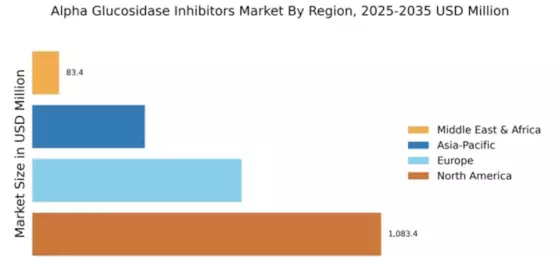
North America continues to lead the Alpha Glucosidase Inhibitors market, holding a significant share of approximately 1083.44 million. The growth is driven by increasing diabetes prevalence, rising healthcare expenditure, and robust regulatory support for innovative therapies. The region's focus on research and development, along with favorable reimbursement policies, further fuels demand for these inhibitors. The United States is the primary market contributor, with major pharmaceutical companies like Merck & Co., Pfizer, and Eli Lilly leading the competitive landscape. The presence of advanced healthcare infrastructure and a strong emphasis on diabetes management strategies enhance market dynamics. Additionally, collaborations between key players and healthcare providers are expected to drive further growth in this sector.

Europe : Emerging Market with Growth Potential

Europe's Alpha Glucosidase Inhibitors market is valued at approximately €650 million, reflecting a growing demand driven by increasing diabetes cases and a shift towards preventive healthcare. Regulatory bodies are actively promoting the use of these inhibitors through guidelines that encourage their integration into treatment protocols, thus enhancing market growth. The region's commitment to improving patient outcomes through innovative therapies is a key growth driver. Leading countries such as Germany, France, and the UK are at the forefront of this market, with significant contributions from local and international players like Sanofi and AstraZeneca. The competitive landscape is characterized by strategic partnerships and collaborations aimed at enhancing product offerings. The European Medicines Agency continues to support the market through favorable regulations, ensuring a steady supply of innovative treatments.

Asia-Pacific : Rapidly Growing Market Segment

The Asia-Pacific region is witnessing a burgeoning Alpha Glucosidase Inhibitors market, valued at around $350 million. This growth is primarily driven by increasing diabetes prevalence, urbanization, and rising disposable incomes. Governments are implementing policies to improve healthcare access, which is expected to further boost demand for these inhibitors. The region's focus on enhancing healthcare infrastructure is also a significant catalyst for market expansion. Countries like Japan, China, and India are leading the market, with a growing presence of key players such as Takeda Pharmaceutical Company. The competitive landscape is evolving, with local manufacturers increasingly entering the market to meet rising demand. Collaborations between international and regional companies are also becoming common, enhancing the availability of innovative treatment options.

Middle East and Africa : Emerging Market with Challenges

The Middle East and Africa region represents a nascent market for Alpha Glucosidase Inhibitors, valued at approximately $83.43 million. The growth is hindered by limited healthcare infrastructure and access to medications. However, increasing awareness of diabetes and government initiatives aimed at improving healthcare access are expected to drive market growth. The region's diverse healthcare needs present both challenges and opportunities for market players. Countries like South Africa and the UAE are leading the market, with a growing interest from international pharmaceutical companies. The competitive landscape is characterized by a mix of local and global players, with efforts to enhance distribution networks and improve access to innovative therapies. As healthcare systems evolve, the demand for effective diabetes management solutions is anticipated to rise.

Key Players and Competitive Insights

The Alpha Glucosidase Inhibitors Market is characterized by a competitive landscape that is increasingly shaped by innovation, strategic partnerships, and regional expansion. Key players such as Boehringer Ingelheim (DE), Merck & Co. (US), and AstraZeneca (GB) are actively pursuing strategies that enhance their market positioning. Boehringer Ingelheim (DE) focuses on research and development to introduce novel formulations, while Merck & Co. (US) emphasizes strategic collaborations to broaden its product portfolio. AstraZeneca (GB) is leveraging its global presence to optimize distribution channels, thereby enhancing accessibility to its offerings. Collectively, these strategies contribute to a dynamic competitive environment, where innovation and collaboration are paramount.

In terms of business tactics, companies are increasingly localizing manufacturing to reduce costs and improve supply chain efficiency. The market structure appears moderately fragmented, with several players vying for market share. However, the influence of major companies is substantial, as they set trends in product development and market strategies. This competitive structure fosters an environment where smaller firms may struggle to keep pace with the rapid advancements made by industry leaders.

In November 2025, Merck & Co. (US) announced a strategic partnership with a leading biotechnology firm to co-develop a new alpha-glucosidase inhibitor aimed at enhancing patient compliance through improved dosing regimens. This collaboration is significant as it not only expands Merck's product pipeline but also positions the company to leverage cutting-edge biotechnological advancements, potentially leading to a competitive edge in the market.

In October 2025, AstraZeneca (GB) launched a new digital health initiative aimed at integrating AI-driven analytics into its clinical trials for alpha-glucosidase inhibitors. This initiative is crucial as it enhances the efficiency of drug development processes and may lead to faster time-to-market for new therapies. By adopting digital solutions, AstraZeneca is likely to improve its operational efficiency and strengthen its market position.

In September 2025, Boehringer Ingelheim (DE) expanded its manufacturing capabilities in Europe, focusing on sustainable practices and reducing its carbon footprint. This move is indicative of a broader trend towards sustainability within the pharmaceutical industry, as companies recognize the importance of environmentally responsible practices. By investing in sustainable manufacturing, Boehringer Ingelheim not only enhances its corporate image but also aligns with the growing consumer demand for eco-friendly products.

As of December 2025, the competitive trends in the Alpha Glucosidase Inhibitors Market are increasingly defined by digitalization, sustainability, and the integration of AI technologies. Strategic alliances are becoming more prevalent, as companies seek to pool resources and expertise to drive innovation. The competitive differentiation is likely to evolve from traditional price-based competition to a focus on technological advancements, innovative product offerings, and reliable supply chains. This shift underscores the importance of adaptability and forward-thinking strategies in maintaining a competitive edge in the market.

Key Companies in the Alpha Glucosidase Inhibitors Market market include

Industry Developments

The growth is attributed to the increasing prevalence of diabetes, rising demand for effective diabetes management solutions, and growing awareness of alpha-glucosidase inhibitors as a safe and effective treatment option. Recent developments in the market include the launch of new products, such as acarbose and voglibose, and the expansion of existing product portfolios.

Key players in the market are focusing on research and development activities to enhance the efficacy and safety of alpha-glucosidase inhibitors. Strategic collaborations and partnerships between pharmaceutical companies and research institutions are also expected to drive market growth in the coming years.

Future Outlook

Alpha Glucosidase Inhibitors Market Future Outlook

The Alpha Glucosidase Inhibitors Market is projected to grow at a 5.22% CAGR from 2024 to 2035, driven by increasing diabetes prevalence and innovative drug development.

New opportunities lie in:

  • Expansion into emerging markets with tailored marketing strategies.
  • Development of combination therapies to enhance efficacy and patient adherence.
  • Investment in digital health platforms for remote patient monitoring and support.

By 2035, the market is expected to solidify its position as a key player in diabetes management.

Market Segmentation

Alpha Glucosidase Inhibitors Market Application Outlook

  • Diabetes Management
  • Postprandial Hyperglycemia
  • Weight Management
  • Cardiovascular Health

Alpha Glucosidase Inhibitors Market Formulation Type Outlook

  • Tablets
  • Capsules
  • Oral Solutions

Alpha Glucosidase Inhibitors Market Mechanism of Action Outlook

  • Alpha Glucosidase Inhibition
  • Carbohydrate Absorption Reduction
  • Insulin Sensitization

Alpha Glucosidase Inhibitors Market Distribution Channel Outlook

  • Hospital Pharmacies
  • Retail Pharmacies
  • Online Pharmacies

Report Scope

MARKET SIZE 20242166.87(USD Million)
MARKET SIZE 20252280.02(USD Million)
MARKET SIZE 20353793.2(USD Million)
COMPOUND ANNUAL GROWTH RATE (CAGR)5.22% (2024 - 2035)
REPORT COVERAGERevenue Forecast, Competitive Landscape, Growth Factors, and Trends
BASE YEAR2024
Market Forecast Period2025 - 2035
Historical Data2019 - 2024
Market Forecast UnitsUSD Million
Key Companies ProfiledBoehringer Ingelheim (DE), Merck & Co. (US), AstraZeneca (GB), Novartis (CH), Sanofi (FR), Pfizer (US), Bristol-Myers Squibb (US), Eli Lilly and Company (US), Takeda Pharmaceutical Company (JP)
Segments CoveredApplication, Formulation Type, Mechanism of Action, Distribution Channel
Key Market OpportunitiesRising demand for diabetes management solutions drives growth in the Alpha Glucosidase Inhibitors Market.
Key Market DynamicsRising demand for diabetes management drives innovation and competition in the Alpha Glucosidase Inhibitors market.
Countries CoveredNorth America, Europe, APAC, South America, MEA

Leave a Comment

FAQs

What is the projected growth of the Alpha Glucosidase Inhibitor market?

The Alpha Glucosidase Inhibitor market is the expected increase in total market value of 3.79 USD billion over a defined forecast period 2025–2035. It is driven by factors such as demand trends, technological advances, regulatory changes, and geographic expansion.

What is the size of the Alpha Glucosidase Inhibitor market?

Alpha Glucosidase Inhibitor market size was valued at approximately 2.17 billion USD in 2024. This figure will reach 3.79 billion USD covering all regions (America, Europe, Asia, MEA and ROW), focusing its segments / services / distribution channels till 2035.

What is the CAGR of the Alpha Glucosidase Inhibitor market?

Alpha Glucosidase Inhibitor market is expected to grow at a CAGR of 5.22% between 2025 and 2035.

How much will the Alpha Glucosidase Inhibitor market be worth by 2035?

Alpha Glucosidase Inhibitor market is expected to be worth of 3.79 billion USD, reflecting growth driven by usage, technology and global demands by the end of 2035.

How will the Alpha Glucosidase Inhibitor market perform over the next 10 years?

Over the next 10 years the Alpha Glucosidase Inhibitor market is expected to shift from usd billion 2.17 to 3.79 billion USD, led by adoption of advanced tech, demographic trends, regulatory approvals, with potential headwinds from 2025 to 2035.

What was the market size of the Alpha Glucosidase Inhibitor Market in 2024?

The Alpha Glucosidase Inhibitor Market reached USD 1.96 billion in 2024.

Which region held the largest share of the Alpha Glucosidase Inhibitor Market in 2024?

North America held the largest share of the Alpha Glucosidase Inhibitor Market in 2024.

Which application segment held the largest share of the Alpha Glucosidase Inhibitor Market in 2024?

The Type 1 Diabetes segment held the largest share of the Alpha Glucosidase Inhibitor Market in 2024.

Who are some of the key competitors in the Alpha Glucosidase Inhibitor Market?

Some of the key competitors in the Alpha Glucosidase Inhibitor Market include Bayer AG, Novartis AG, and Roche.

What are the key factors driving the growth of the Alpha Glucosidase Inhibitor Market?

The key factors driving the growth of the Alpha Glucosidase Inhibitor Market include the increasing prevalence of diabetes and the rising demand for effective treatments.

Download Free Sample

Kindly complete the form below to receive a free sample of this Report

Compare Licence

×
Features License Type
Single User Multiuser License Enterprise User
Price $4,950 $5,950 $7,250
Maximum User Access Limit 1 User Upto 10 Users Unrestricted Access Throughout the Organization
Free Customization
Direct Access to Analyst
Deliverable Format
Platform Access
Discount on Next Purchase 10% 15% 15%
Printable Versions