×
Request Free Sample ×

Kindly complete the form below to receive a free sample of this Report

* Please use a valid business email

Leading companies partner with us for data-driven Insights

clients tt-cursor
Hero Background

Alumina Trihydrate Flame Retardant Market

ID: MRFR/CnM/38572-HCR
111 Pages
Chitranshi Jaiswal
October 2025

Alumina Trihydrate Flame Retardant Market Research Report: By Application (Automotive, Construction, Electrical & Electronics, Furniture, Paints & Coatings, Textiles), By Flame Retardant Type (hydrate, anhydrous (calcined)), By End Use Industry (Automotive, Construction, Electrical & Electronics, Furniture, Paints & Coatings, Textiles), By Form (Powder, Granular, Slurry), By Grade (Standard, High-purity, Specialty) and By Regional (North America, Europe, South America, Asia Pacific, Middle East and Africa) - Forecast to 2035.

Share:
Download PDF ×

We do not share your information with anyone. However, we may send you emails based on your report interest from time to time. You may contact us at any time to opt-out.

Alumina Trihydrate Flame Retardant Market
 Infographic
Purchase Options

Alumina Trihydrate Flame Retardant Market Summary

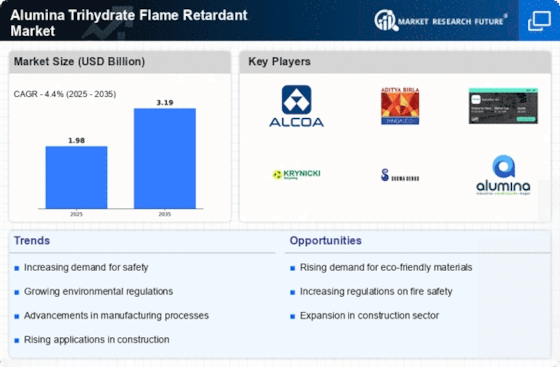
As per MRFR analysis, the Alumina Trihydrate Flame Retardant Market Size was estimated at 1.984 USD Billion in 2024. The Alumina Trihydrate Flame Retardant industry is projected to grow from 2.071 USD Billion in 2025 to 3.185 USD Billion by 2035, exhibiting a compound annual growth rate (CAGR) of 4.4 during the forecast period 2025 - 2035.

Key Market Trends & Highlights

The Alumina Trihydrate Flame Retardant Market is poised for growth driven by sustainability and safety demands.

  • The market is witnessing a pronounced shift towards sustainability, influencing product development and consumer preferences.
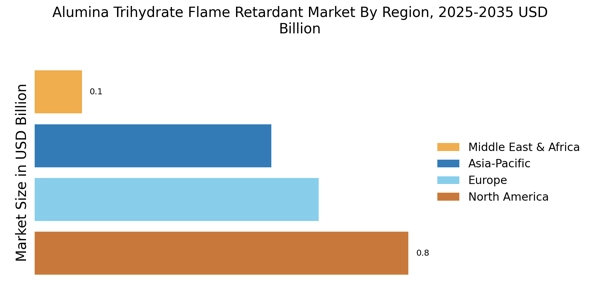
  • North America remains the largest market, while the Asia-Pacific region is emerging as the fastest-growing area for alumina trihydrate flame retardants.
  • In the construction segment, alumina trihydrate is the predominant choice, whereas the automotive segment is experiencing rapid growth.
  • Rising demand for fire safety materials and stringent environmental regulations are key drivers propelling market expansion.

Market Size & Forecast

2024 Market Size 1.984 (USD Billion)
2035 Market Size 3.185 (USD Billion)
CAGR (2025 - 2035) 4.4%

Major Players

Alcoa Corporation (US), Hindalco Industries Limited (IN), Nabaltec AG (DE), Sibelco (BE), Showa Denko K.K. (JP), Jiangxi Deyu New Material Co., Ltd. (CN), Alumina Limited (AU), Bodal Chemicals Limited (IN)

Alumina Trihydrate Flame Retardant Market Trends

The Alumina Trihydrate Flame Retardant Market is currently experiencing a notable evolution, driven by increasing regulatory pressures and a growing emphasis on safety standards across various industries. This market segment is characterized by its application in diverse sectors, including construction, automotive, and electronics, where fire safety is paramount. The demand for environmentally friendly and non-toxic flame retardants is also on the rise, as manufacturers seek to comply with stringent environmental regulations. As a result, the market is witnessing a shift towards innovative formulations that enhance performance while minimizing ecological impact. In addition, advancements in technology are facilitating the development of more efficient flame retardant solutions. Companies are investing in research and development to create products that not only meet safety requirements but also improve the overall performance of materials. This trend indicates a potential for growth in the Alumina Trihydrate Flame Retardant Market, as stakeholders increasingly prioritize sustainability and safety in their product offerings. Furthermore, The Alumina Trihydrate Flame Retardant dynamics, encouraging the adoption of alumina trihydrate as a preferred choice for flame retardancy in various applications.

Sustainability Focus

There is a growing emphasis on sustainable practices within the Alumina Trihydrate Flame Retardant Market. Manufacturers are increasingly prioritizing eco-friendly formulations that align with global environmental standards. This trend reflects a broader shift towards reducing the ecological footprint of industrial processes.

Technological Advancements

Innovations in technology are driving the development of more effective flame retardant solutions. Enhanced formulations are being created to improve performance while ensuring compliance with safety regulations. This trend suggests a competitive landscape where companies strive to differentiate their products through advanced technology.

Regulatory Compliance

The market is influenced by stringent regulations aimed at improving fire safety across various sectors. As industries adapt to these evolving standards, the demand for reliable flame retardants, such as alumina trihydrate, is likely to increase. This trend indicates a proactive approach to safety and compliance in product development.

Alumina Trihydrate Flame Retardant Market Drivers

Growth in the Construction Sector

The ongoing growth in the construction sector is likely to significantly influence the Alumina Trihydrate Flame Retardant Market. With urbanization and infrastructure development on the rise, the demand for flame retardant materials in building applications is expected to increase. In 2025, the construction industry is anticipated to grow at a rate of 4.5%, which could lead to a corresponding rise in the use of alumina trihydrate. This material is favored for its ability to enhance the fire resistance of various building materials, thus making it a critical component in modern construction practices.

Increased Awareness of Fire Hazards

The heightened awareness of fire hazards among consumers and industries is likely to propel the Alumina Trihydrate Flame Retardant Market. As incidents of fire-related accidents continue to garner attention, there is a growing demand for materials that can mitigate fire risks. This awareness is prompting manufacturers to incorporate flame retardants like alumina trihydrate into their products. The market is expected to witness a surge in demand as industries prioritize safety and seek to enhance the fire resistance of their offerings, thereby contributing to the overall growth of the alumina trihydrate market.

Rising Demand for Fire Safety Materials

The increasing emphasis on fire safety across various industries appears to be a primary driver for the Alumina Trihydrate Flame Retardant Market. As construction and manufacturing sectors expand, the need for materials that enhance fire resistance is becoming more pronounced. In 2025, the market for flame retardants is projected to reach approximately USD 5 billion, with alumina trihydrate accounting for a substantial share due to its effectiveness and non-toxic nature. This trend is likely to continue as industries seek to comply with stringent safety regulations, thereby propelling the demand for alumina trihydrate as a preferred flame retardant.

Environmental Regulations and Compliance

The stringent environmental regulations regarding the use of hazardous materials are influencing the Alumina Trihydrate Flame Retardant Market. Governments are increasingly mandating the use of non-toxic and environmentally friendly flame retardants in various applications. Alumina trihydrate, being a naturally occurring mineral, aligns well with these regulatory requirements, making it a preferred choice among manufacturers. As compliance with these regulations becomes more critical, the demand for alumina trihydrate is expected to rise, thereby driving market growth in the coming years.

Technological Innovations in Flame Retardants

Technological advancements in the formulation and application of flame retardants are shaping the Alumina Trihydrate Flame Retardant Market. Innovations such as improved processing techniques and enhanced performance characteristics are making alumina trihydrate more effective in various applications. The introduction of new manufacturing processes could potentially lower production costs and improve the material's performance, thereby increasing its adoption across multiple sectors. As industries continue to seek more efficient and effective flame retardant solutions, the role of technological innovation in driving market growth cannot be understated.


Market Segment Insights

By Application: Construction (Largest) vs. Automotive (Fastest-Growing)

Within the Alumina Trihydrate Flame Retardant Market, the application segment showcases diverse end-user industries that significantly contribute to its growth. The construction sector holds the largest market share, driven by increased demand for building materials that provide fire resistance and safety. This is followed by the automotive industry, which is experiencing substantial growth as manufacturers seek to enhance safety and performance by incorporating flame retardants into materials used in vehicles.

Construction: Dominant vs. Automotive: Emerging

The construction industry stands out as the dominant application for alumina trihydrate flame retardants, primarily due to stringent fire safety regulations and the increasing use of fire-resistant materials in buildings. As urbanization continues globally, the demand for safe and durable construction is rising, solidifying this segment's position. Conversely, the automotive sector, while currently emerging, is anticipated to expand rapidly as electric and hybrid vehicle technologies evolve. With a growing focus on lightweight, heat-resistant materials for electric vehicles, alumina trihydrate flame retardants are becoming increasingly essential, making this sector one to watch in the coming years.

By Flame Retardant Type: Hydrate (Largest) vs. Anhydrous (Fastest-Growing)

In the Alumina Trihydrate Flame Retardant Market, the segment dominated by Hydrate holds the largest market share due to its widespread application in various industries such as construction, automotive, and electronics. Its effective flame-retardant properties coupled with environmental compliance are driving its demand, positioning it as the cornerstone of this sector. On the other hand, the Anhydrous (calcined) variant is emerging rapidly as a notable contender, with its unique characteristics appealing to applications requiring high-performance standards and efficiency.

Hydrate (Dominant) vs. Anhydrous (Emerging)

Hydrate, as the dominant segment, is recognized for its superior fire-resistant capabilities and eco-friendly properties, making it suitable for a wide range of applications. Its inherent moisture content enhances performance, providing an effective barrier against flames. Conversely, Anhydrous (calcined) is gaining traction as an emerging player, characterized by its high thermal stability and efficiency in flame retardation, making it particularly attractive for advanced applications in the aerospace and automotive sectors. This segment is positioned to grow rapidly due to increasing demand for high-performance materials.

By End Use Industry: Construction (Largest) vs. Automotive (Fastest-Growing)

In the Alumina Trihydrate Flame Retardant Market, the distribution of market share among various end-use industries exhibits significant variance. The construction industry currently holds the largest share, driven by stringent fire safety regulations and the increasing demand for flame-retardant materials in building applications. Automotive follows, witnessing a growing share as manufacturers incorporate flame retardants in response to safety standards. Other notable segments include electrical electronics and furniture that also contribute to the market's dynamics.

Construction (Dominant) vs. Automotive (Emerging)

The construction segment is dominant in the Alumina Trihydrate Flame Retardant Market due to its essential role in ensuring the safety and compliance of building materials against fire hazards. As government policies increasingly mandate the use of effective flame retardants, construction firms prioritize materials that enhance safety without sacrificing performance. In contrast, the automotive segment is emerging rapidly, driven by innovations in vehicle design and the heightened emphasis on safety and regulatory compliance. Automakers are adopting alumina trihydrate for its efficacy in providing fire resistance while maintaining lightweight properties, ideal for modern vehicles. This evolving trend indicates a shift towards integrating advanced, flame-retardant solutions in the automotive supply chain.

By Form: Powder (Largest) vs. Granular (Fastest-Growing)

In the Alumina Trihydrate Flame Retardant Market, the form segment demonstrates a diverse landscape characterized by powdered, granular, and slurry forms. Currently, the powder segment holds the largest share, renowned for its versatility and effective flame retardancy in a range of applications. Following closely, the granular form has been gaining traction owing to its convenience and reduced dust emissions, appealing to lots of manufacturers aiming for cleaner operational conditions. The slurry form, while also relevant, takes a smaller portion of the overall market due to its specific usage scenarios and unique packaging requirements. Over recent years, the growth dynamics of the Alumina Trihydrate Flame Retardant Market have shifted notably, with granular forms surfacing as the fastest-growing segment. This rapid advancement can be attributed to growing regulations around environmental sustainability and safety in manufacturing processes, promoting the adoption of low-dust alternatives. Additionally, the ongoing development of innovative formulations has led to improvements in performance and application versatility, thereby enhancing the competitive advantage of granular flame retardants within the market.

Form: Powder (Dominant) vs. Granular (Emerging)

The powdered form of alumina trihydrate flame retardant remains the dominant choice within the market, revered for its broad applicability across various sectors including construction, automotive, and electronics. Its inherent properties, such as excellent thermal stability and non-toxic characteristics, make it a preferred option for manufacturers aiming to enhance fire safety in their products. Conversely, the granular form is emerging as a highly sought-after alternative, particularly in applications where dust control is paramount. With attributes like reduced airborne particles and enhanced handling characteristics, granular flame retardants are capturing the attention of industries that prioritize occupational health and safety, supporting its rapid growth in the market.

By Grade: Standard (Largest) vs. High-purity (Fastest-Growing)

In the Alumina Trihydrate Flame Retardant Market, the market share distribution reveals that the Standard grade dominates the segment, being widely used due to its cost-effectiveness and adequate performance in flame retardancy applications. In comparison, the High-purity grade, while smaller in share, is gaining traction, particularly in highly technical fields that demand higher purity levels and performance standards for enhanced safety and compliance.

Standard (Dominant) vs. High-purity (Emerging)

The Standard grade alumina trihydrate is celebrated for its optimal balance between performance and cost, making it the go-to choice for various industrial applications. Its versatility allows it to meet the needs of sectors ranging from construction to consumer goods, maintaining a stronghold in the market. On the other hand, the High-purity grade is emerging as a preferred choice in specialized industries such as electronics and automotive, where stringent safety standards and efficiency requirements are in demand. This grade enhances flame retardancy while ensuring minimal impurities, allowing manufacturers to produce safer, high-performance materials.

Get more detailed insights about Alumina Trihydrate Flame Retardant Market

Regional Insights

North America : Market Leader in Flame Retardants

North America is the largest market for Alumina Trihydrate Flame Retardants, holding approximately 40% of the global market share. The region's growth is driven by stringent fire safety regulations and increasing demand from construction and automotive sectors. The U.S. is the primary contributor, supported by a robust manufacturing base and innovation in flame retardant technologies. Canada follows as the second-largest market, accounting for around 15% of the share, with a focus on sustainable building materials. The competitive landscape in North America features key players like Alcoa Corporation and Sibelco, which are investing in R&D to enhance product performance. The presence of established industries in construction, automotive, and electronics further fuels demand. Regulatory bodies are also pushing for higher safety standards, which is expected to drive the adoption of flame retardants in various applications.

Europe : Regulatory-Driven Market Growth

Europe is witnessing significant growth in the Alumina Trihydrate Flame Retardant market, driven by stringent EU regulations on fire safety and environmental sustainability. The region holds approximately 30% of the global market share, with Germany and France being the largest contributors. Germany leads with about 12% of the market, focusing on innovative materials, while France follows closely with 10%, emphasizing eco-friendly solutions in construction and automotive sectors. The competitive landscape is characterized by key players like Nabaltec AG and Sibelco, who are actively involved in developing advanced flame retardant solutions. The European market is also influenced by the REACH regulation, which mandates the safe use of chemicals. This regulatory framework encourages manufacturers to innovate and comply with safety standards, thereby enhancing market growth.

Asia-Pacific : Emerging Market Potential

The Asia-Pacific region is emerging as a significant player in the Alumina Trihydrate Flame Retardant market, holding around 25% of the global share. The growth is primarily driven by rapid industrialization, urbanization, and increasing safety regulations in countries like China and India. China is the largest market in the region, accounting for approximately 15%, while India follows with about 7%, focusing on enhancing fire safety in construction and electrical applications. The competitive landscape is becoming increasingly dynamic, with local players like Jiangxi Deyu New Material Co., Ltd. and Hindalco Industries Limited gaining traction. The region's market is characterized by a growing demand for sustainable and high-performance materials, prompting manufacturers to invest in R&D. Additionally, government initiatives aimed at improving fire safety standards are expected to further boost market growth in the coming years.

Middle East and Africa : Resource-Rich Market Dynamics

The Middle East and Africa region is gradually expanding its presence in the Alumina Trihydrate Flame Retardant market, holding approximately 5% of the global share. The growth is driven by increasing construction activities and a rising focus on fire safety regulations, particularly in the Gulf Cooperation Council (GCC) countries. The UAE and South Africa are the leading markets, with the UAE accounting for about 3% of the share, driven by its booming construction sector and stringent safety standards. The competitive landscape is characterized by a mix of local and international players, with companies like Alumina Limited and Bodal Chemicals Limited making significant inroads. The region's market is also influenced by the need for sustainable building materials, prompting manufacturers to innovate. As regulatory frameworks evolve, the demand for flame retardants is expected to grow, particularly in construction and automotive applications.

Alumina Trihydrate Flame Retardant Market
 Regional Image

Key Players and Competitive Insights

Major players in Alumina Trihydrate Flame Retardant Market industry are constantly striving to gain a competitive edge by implementing various strategies such as mergers and acquisitions, partnerships, and product innovations. Leading Alumina Trihydrate Flame Retardant Market players are focusing on expanding their presence by establishing new production facilities and distribution channels. Additionally, they are investing in research and development to enhance the performance and functionality of their products. Intense competition in the Alumina Trihydrate Flame Retardant Market is driving industry players to adopt customer-centric approaches, offering tailored solutions to meet specific requirements.

The competitive landscape is expected to remain dynamic as new entrants emerge and existing players expand their market reach through strategic initiatives.A notable competitor in the Alumina Trihydrate Flame Retardant Market is Albemarle Corporation. The company possesses a footprint with production facilities strategically located to cater to various regional demands. Albemarle Corporation is known for its commitment to innovation and has a strong portfolio of products that meet industry standards. The company emphasizes sustainable practices and strives to reduce its environmental impact through responsible manufacturing processes.Another key competitor in the Alumina Trihydrate Flame Retardant Market is Huber Engineered Materials.

The company is recognized for its expertise in the production of high-performance flame retardants. Huber Engineered Materials maintains a strong customer focus, collaborating closely with clients to develop customized solutions. The company leverages its network to ensure efficient supply chain management and timely delivery. It continuously invests in research and development to stay at the forefront of industry advancements and meet evolving customer needs.

Key Companies in the Alumina Trihydrate Flame Retardant Market market include

Industry Developments

The Alumina Trihydrate Flame Retardant market is poised to expand at a CAGR of 4.4% from 2024 to 2032, reaching a valuation of USD 2.8 billion by 2032. Rising demand for flame retardants in various end-use industries, including construction, transportation and electronics, is driving market growth. Government regulations mandating the use of flame retardants in consumer products further contribute to market expansion. Key industry participants are focusing on developing eco-friendly and halogen-free flame retardants to meet growing environmental concerns.

Recent developments include LANXESS's introduction of its new halogen-free flame retardant, Disflamoll AT 412, and Albemarle Corporation's expansion of its ATH production capacity in India to cater to the growing demand in the Asia-Pacific region.

Future Outlook

Alumina Trihydrate Flame Retardant Market Future Outlook

The Alumina Trihydrate Flame Retardant Market is projected to grow at a 4.4% CAGR from 2024 to 2035, driven by increasing safety regulations and demand for sustainable materials.

New opportunities lie in:

  • Development of high-performance composites incorporating alumina trihydrate
  • Expansion into emerging markets with tailored flame retardant solutions
  • Investment in R&D for innovative applications in construction and automotive sectors

By 2035, the market is expected to solidify its position as a leader in flame retardant solutions.

Market Segmentation

Alumina Trihydrate Flame Retardant Market Form Outlook

  • Powder
  • Granular
  • Slurry

Alumina Trihydrate Flame Retardant Market Grade Outlook

  • Standard
  • High-purity
  • Specialty

Alumina Trihydrate Flame Retardant Market Application Outlook

  • Automotive
  • Construction
  • Electrical Electronics
  • Furniture
  • Paints Coatings
  • Textiles

Alumina Trihydrate Flame Retardant Market End Use Industry Outlook

  • Automotive
  • Construction
  • Electrical Electronics
  • Furniture
  • Paints Coatings
  • Textiles

Alumina Trihydrate Flame Retardant Market Flame Retardant Type Outlook

  • Hydrate
  • Anhydrous (calcined)

Report Scope

MARKET SIZE 20241.984(USD Billion)
MARKET SIZE 20252.071(USD Billion)
MARKET SIZE 20353.185(USD Billion)
COMPOUND ANNUAL GROWTH RATE (CAGR)4.4% (2024 - 2035)
REPORT COVERAGERevenue Forecast, Competitive Landscape, Growth Factors, and Trends
BASE YEAR2024
Market Forecast Period2025 - 2035
Historical Data2019 - 2024
Market Forecast UnitsUSD Billion
Key Companies ProfiledMarket analysis in progress
Segments CoveredMarket segmentation analysis in progress
Key Market OpportunitiesGrowing demand for eco-friendly materials enhances opportunities in the Alumina Trihydrate Flame Retardant Market.
Key Market DynamicsRising demand for fire-resistant materials drives innovation and competition in the Alumina Trihydrate Flame Retardant Market.
Countries CoveredNorth America, Europe, APAC, South America, MEA

Leave a Comment

FAQs

What is the projected market valuation of the Alumina Trihydrate Flame Retardant Market by 2035?

The projected market valuation for the Alumina Trihydrate Flame Retardant Market is expected to reach 3.185 USD Billion by 2035.

What was the market valuation of the Alumina Trihydrate Flame Retardant Market in 2024?

The overall market valuation of the Alumina Trihydrate Flame Retardant Market was 1.984 USD Billion in 2024.

What is the expected CAGR for the Alumina Trihydrate Flame Retardant Market during the forecast period 2025 - 2035?

The expected CAGR for the Alumina Trihydrate Flame Retardant Market during the forecast period 2025 - 2035 is 4.4%.

Which companies are considered key players in the Alumina Trihydrate Flame Retardant Market?

Key players in the market include Alcoa Corporation, Hindalco Industries Limited, Nabaltec AG, Sibelco, Showa Denko K.K., Jiangxi Deyu New Material Co., Ltd., Alumina Limited, and Bodal Chemicals Limited.

What are the projected valuations for the Automotive segment in the Alumina Trihydrate Flame Retardant Market by 2035?

The projected valuation for the Automotive segment is expected to increase from 0.3968 USD Billion in 2024 to 0.6345 USD Billion by 2035.

How does the Construction segment's valuation change from 2024 to 2035?

The Construction segment's valuation is projected to rise from 0.7928 USD Billion in 2024 to 1.267 USD Billion by 2035.

What is the expected valuation for the Electrical Electronics segment by 2035?

The Electrical Electronics segment is anticipated to grow from 0.2976 USD Billion in 2024 to 0.476 USD Billion by 2035.

What are the projected valuations for the different forms of Alumina Trihydrate Flame Retardants by 2035?

By 2035, the projected valuations for forms are 1.2675 USD Billion for Powder and Granular, and 0.634 USD Billion for Slurry.

What is the expected growth in the Hydrate type of Alumina Trihydrate Flame Retardant by 2035?

The Hydrate type is projected to grow from 0.9936 USD Billion in 2024 to 1.5775 USD Billion by 2035.

What is the anticipated market trend for the Specialty grade of Alumina Trihydrate Flame Retardant by 2035?

The Specialty grade is expected to increase from 0.3968 USD Billion in 2024 to 0.7114 USD Billion by 2035.

Download Free Sample

Kindly complete the form below to receive a free sample of this Report

Compare Licence

×
Features License Type
Single User Multiuser License Enterprise User
Price $4,950 $5,950 $7,250
Maximum User Access Limit 1 User Upto 10 Users Unrestricted Access Throughout the Organization
Free Customization
Direct Access to Analyst
Deliverable Format
Platform Access
Discount on Next Purchase 10% 15% 15%
Printable Versions