×
Request Free Sample ×

Kindly complete the form below to receive a free sample of this Report

* Please use a valid business email

Leading companies partner with us for data-driven Insights

clients tt-cursor
Hero Background

Aminoglycoside Antibiotics Market

ID: MRFR/Pharma/7407-HCR
128 Pages
Rahul Gotadki
October 2025

Aminoglycoside Antibiotics Market Research Report Information By Type (Neomycin, Tobramycin, Gentamicin, Amikacin, Etimicin, and Others), By Application (Hospital, Clinic, Post Care Facility, Government and Military, and Others) And By Region (North America, Europe, Asia-Pacific, And Rest Of The World) –Market Forecast Till 2035

Share:
Download PDF ×

We do not share your information with anyone. However, we may send you emails based on your report interest from time to time. You may contact us at any time to opt-out.

Aminoglycoside Antibiotics Market Infographic
Purchase Options

Aminoglycoside Antibiotics Market Summary

As per MRFR analysis, the Aminoglycoside Antibiotics Market Size was estimated at 223.31 USD Billion in 2024. The Aminoglycoside Antibiotics industry is projected to grow from 259.62 USD Billion in 2025 to 1171.45 USD Billion by 2035, exhibiting a compound annual growth rate (CAGR) of 16.26 during the forecast period 2025 - 2035.

Key Market Trends & Highlights

The Aminoglycoside Antibiotics Market is poised for growth driven by rising resistance to conventional antibiotics and advancements in drug formulation.

  • North America remains the largest market for aminoglycoside antibiotics, reflecting a robust healthcare infrastructure.
  • The Asia-Pacific region is emerging as the fastest-growing market, driven by increasing healthcare investments and rising bacterial infections.
  • Bacterial infections represent the largest segment, while tuberculosis is noted as the fastest-growing segment within the market.
  • Key market drivers include the increasing incidence of bacterial infections and the growing awareness of antibiotic stewardship.

Market Size & Forecast

2024 Market Size 223.31 (USD Billion)
2035 Market Size 1171.45 (USD Billion)
CAGR (2025 - 2035) 16.26%

Major Players

Bristol-Myers Squibb (US), Novartis (CH), Pfizer (US), AstraZeneca (GB), Merck & Co. (US), Sanofi (FR), Teva Pharmaceutical Industries (IL), Hikma Pharmaceuticals (GB), Mylan (US)

Aminoglycoside Antibiotics Market Trends

The Aminoglycoside Antibiotics Market is currently experiencing notable developments driven by various factors. The increasing prevalence of bacterial infections, particularly those resistant to conventional antibiotics, has led to a heightened demand for aminoglycosides. These antibiotics are recognized for their effectiveness against a range of gram-negative bacteria, making them a critical component in the treatment of severe infections. Furthermore, the ongoing research and development efforts aimed at enhancing the efficacy and safety profiles of these drugs are likely to contribute to market growth. Pharmaceutical companies are investing in innovative formulations and delivery methods, which may improve patient compliance and therapeutic outcomes. In addition, The Aminoglycoside Antibiotics. Healthcare providers are increasingly focusing on optimizing antibiotic use to combat resistance, which may lead to a more judicious application of aminoglycosides. This trend suggests a potential shift in prescribing patterns, with an emphasis on utilizing these antibiotics in specific clinical scenarios where they can provide the most benefit. Overall, the market appears poised for growth, driven by both clinical needs and evolving healthcare practices.

Rising Resistance to Conventional Antibiotics

The growing incidence of antibiotic resistance is prompting healthcare professionals to seek alternative treatment options. Aminoglycosides are gaining attention due to their effectiveness against resistant strains, positioning them as a viable choice in critical care settings.

Advancements in Drug Formulation

Innovative approaches in drug formulation are enhancing the delivery and effectiveness of aminoglycosides. These advancements may lead to improved patient outcomes and increased adoption in clinical practice, as healthcare providers seek more effective treatment modalities.

Focus on Antibiotic Stewardship

The emphasis on responsible antibiotic use is shaping prescribing practices. As healthcare systems prioritize antibiotic stewardship, aminoglycosides may be utilized more strategically, ensuring their effectiveness while minimizing the risk of resistance.

Aminoglycoside Antibiotics Market Drivers

Expansion of Generic Drug Market

The expansion of the generic drug market plays a pivotal role in the Global Aminoglycoside Antibiotics Market Industry. As patents for various aminoglycoside antibiotics expire, generic versions become available, offering cost-effective alternatives for healthcare providers and patients. This trend is particularly beneficial in low- and middle-income countries, where affordability is a critical factor in accessing essential medications. The availability of generics is expected to increase the overall consumption of aminoglycosides, thereby contributing to market growth. With the projected market size reaching 1171.4 USD Billion by 2035, generics will likely play a significant role in shaping the future landscape of antibiotic therapy.

Rising Prevalence of Bacterial Infections

The Global Aminoglycoside Antibiotics Market Industry is witnessing a surge in demand due to the increasing prevalence of bacterial infections. According to health statistics, antibiotic-resistant infections are becoming more common, necessitating effective treatment options. Aminoglycosides, known for their efficacy against Gram-negative bacteria, are increasingly prescribed in clinical settings. This trend is likely to drive market growth, as healthcare providers seek reliable antibiotics to combat resistant strains. The market is projected to reach 223.3 USD Billion in 2024, reflecting the urgent need for effective antimicrobial therapies in the face of rising infection rates.

Growing Awareness of Antibiotic Stewardship

There is a rising awareness regarding antibiotic stewardship programs, which aim to optimize the use of antibiotics and combat resistance. The Global Aminoglycoside Antibiotics Market Industry is influenced by initiatives promoting the responsible use of these medications. Healthcare providers are increasingly educated about the appropriate prescribing practices for aminoglycosides, ensuring their effective use in treating infections. This awareness not only helps in preserving the efficacy of these antibiotics but also drives their demand as part of comprehensive treatment regimens. As stewardship programs gain traction, the market is likely to experience sustained growth.

Technological Advancements in Drug Development

Innovations in pharmaceutical technology are significantly impacting the Global Aminoglycoside Antibiotics Market Industry. Advances in drug formulation and delivery systems enhance the efficacy and safety profiles of aminoglycosides. For instance, the development of liposomal formulations improves the pharmacokinetics of these antibiotics, allowing for better patient outcomes. Such technological progress not only boosts the effectiveness of existing drugs but also facilitates the introduction of new aminoglycoside products. As a result, the market is expected to grow at a CAGR of 16.26% from 2025 to 2035, reaching an estimated 1171.4 USD Billion by 2035.

Increasing Investment in Healthcare Infrastructure

The Global Aminoglycoside Antibiotics Market Industry benefits from increased investments in healthcare infrastructure across various regions. Governments and private entities are allocating substantial resources to enhance healthcare facilities, particularly in developing nations. This investment leads to improved access to essential medications, including aminoglycoside antibiotics, thereby expanding their market reach. Enhanced healthcare infrastructure facilitates better diagnosis and treatment of bacterial infections, further driving demand for these antibiotics. As healthcare systems evolve, the market is poised for growth, reflecting the critical role of aminoglycosides in modern medicine.

Market Segment Insights

By Application: Bacterial Infections (Largest) vs. Tuberculosis (Fastest-Growing)

In the Aminoglycoside Antibiotics Market, the application of these drugs in treating bacterial infections holds the largest share, predominantly driven by the widespread prevalence of various bacterial diseases worldwide. The significant reliance on aminoglycosides for empirical therapy in severe infections bolsters their dominance in this segment. Meanwhile, tuberculosis is emerging as the fastest-growing application area, especially with the rising incidence of resistant strains, necessitating effective treatment options to tackle this global health crisis.

Bacterial Infections: Dominant vs. Tuberculosis: Emerging

The application of aminoglycoside antibiotics in bacterial infections is a dominant force in the market, characterized by a broad range of efficacy against various gram-negative bacteria. This segment benefits from established clinical protocols and a greater understanding of aminoglycoside pharmacology. Conversely, the tuberculosis application is emerging rapidly as a focus area due to an increase in multi-drug resistant tuberculosis cases. The demand for innovative treatment strategies drives research and development efforts, leading to increased usage of aminoglycosides in conjunction with other antitubercular drugs, thereby enhancing overall treatment regimens.

By Route of Administration: Intravenous (Largest) vs. Intramuscular (Fastest-Growing)

The Aminoglycoside Antibiotics Market has a diverse distribution in its route of administration segment, with intravenous (IV) delivery being the dominant method due to its quick onset of action and effectiveness in treating severe infections. Intravenous administration holds the largest market share, reflecting its critical role in hospital settings where immediate action is vital. In contrast, intramuscular (IM) and oral routes serve as significant alternatives, with IM gaining traction among healthcare providers for its ease of use and effectiveness in outpatient therapies.

Route of Administration: Intravenous (Dominant) vs. Intramuscular (Emerging)

Intravenous administration of aminoglycoside antibiotics remains the dominant choice due to its rapid absorption and therapeutic effectiveness in critical care scenarios. This method allows for precise dosing and immediate therapeutic effects, making it essential for treating severe bacterial infections. On the other hand, intramuscular administration is emerging as a preferred option in outpatient settings, driven by its ease of administration and reducing the risks associated with IV lines, such as infection or phlebitis. The trend towards IM use is also supported by ongoing advancements in drug formulations that enhance absorption and reduce pain at the injection site, positioning IM as a flexible alternative in the aminoglycoside antibiotic market.

By End User: Hospitals (Largest) vs. Clinics (Fastest-Growing)

In the Aminoglycoside Antibiotics Market, hospitals represent the largest end user segment, reflecting their substantial reliance on these antibiotics for treating severe infections. This segment has consistently captured the highest market share due to their comprehensive facilities and access to advanced medical technologies. Clinics, on the other hand, although smaller in share compared to hospitals, are rapidly expanding their usage of aminoglycosides, especially in outpatient settings as preventative measures or for specific infections. The growth trends within this segment are influenced by an increase in the treatment of infectious diseases and the rising prevalence of antibiotic-resistant bacteria. Clinics are emerging as key players in the market, driven by advancements in diagnostic techniques and a growing awareness of antibiotic stewardship. As healthcare trends evolve, both segments are likely to see a continuous shift towards the adoption of aminoglycoside antibiotics, fueled by innovations in treatment protocols and a push for better patient outcomes.

Hospitals (Dominant) vs. Clinics (Emerging)

Hospitals remain a dominant force in the Aminoglycoside Antibiotics Market, characterized by their high patient volume and comprehensive healthcare services. Their extensive use of aminoglycosides stems from the need to address complex infections that require hospitalization, which drives their significance in antibiotic usage. With robust procurement processes and well-established relationships with pharmaceutical suppliers, hospitals ensure swift access to these medications. Conversely, clinics represent an emerging segment, rapidly increasing their adoption of aminoglycosides as they broaden their scope of treatment offerings. This segment focuses on outpatient care and preventative treatments, and as such, the use of these antibiotics is adapted to cater to specific patient needs and conditions, marking a shift in the traditional dynamics of antibiotic distribution.

By Formulation Type: Injectable (Largest) vs. Oral Tablets (Fastest-Growing)

In the Aminoglycoside Antibiotics Market, the formulation type is a critical determinant of product accessibility and patient compliance. Injectable formulations currently hold the largest market share due to their effectiveness in delivering high concentrations of antibiotics rapidly, particularly in severe infections. Meanwhile, oral tablets, while less potent in immediate action, are increasingly preferred due to their ease of administration, gradually increasing their market presence.

Injectable (Dominant) vs. Oral Tablets (Emerging)

Injectable aminoglycoside antibiotics are widely used in clinical settings, delivering critical therapies for serious bacterial infections. Their dominance in the market can be attributed to their ability to ensure precise dosing and rapid onset of action, appealing particularly to hospitals and acute care settings. On the other hand, oral tablets represent an emerging segment, capitalizing on the growing demand for at-home care, providing convenient alternatives for mild to moderate infections. This shift towards oral forms illustrates a broader trend towards patient-centered care, balancing efficacy with convenience.

Get more detailed insights about Aminoglycoside Antibiotics Market

Regional Insights

North America : Market Leader in Antibiotics

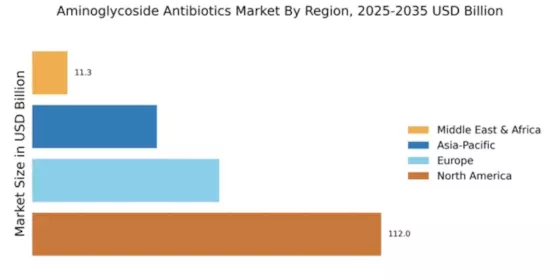
North America continues to lead the Aminoglycoside Antibiotics Market, holding a significant share of 112.0 million. The region's growth is driven by increasing antibiotic resistance, rising healthcare expenditures, and a robust regulatory framework that supports drug development. The demand for effective treatments against bacterial infections is propelling market expansion, with a focus on innovative therapies and generics. The United States is the primary contributor, with major players like Pfizer, Merck & Co., and Bristol-Myers Squibb dominating the landscape. The competitive environment is characterized by strategic partnerships and mergers aimed at enhancing product portfolios. The presence of advanced healthcare infrastructure further supports the growth of the market, ensuring accessibility to these essential medications.

Europe : Emerging Market Dynamics

Europe's Aminoglycoside Antibiotics Market is valued at 60.0 million, reflecting a growing demand for effective treatments amid rising antibiotic resistance. Regulatory bodies are increasingly focusing on stringent guidelines to ensure drug safety and efficacy, which is driving innovation in the sector. The region's healthcare systems are adapting to the challenges posed by resistant bacteria, leading to increased investments in research and development. Leading countries such as Germany, France, and the UK are at the forefront of this market, with key players like Novartis and Sanofi actively involved. The competitive landscape is marked by collaborations between pharmaceutical companies and research institutions, aimed at developing new formulations and delivery methods. This dynamic environment is expected to foster growth and enhance the availability of aminoglycoside antibiotics across Europe.

Asia-Pacific : Rapidly Growing Market Potential

The Asia-Pacific region, with a market size of 40.0 million, is witnessing rapid growth in the Aminoglycoside Antibiotics Market. Factors such as increasing healthcare access, rising awareness about antibiotic treatments, and government initiatives to combat infectious diseases are driving this expansion. The region is also experiencing a surge in antibiotic prescriptions, which is further fueling demand for aminoglycosides. Countries like China, India, and Japan are leading the market, with a mix of local and international players such as Teva Pharmaceutical Industries and Hikma Pharmaceuticals. The competitive landscape is evolving, with companies focusing on expanding their product offerings and enhancing distribution networks. This growth trajectory is expected to continue as the region addresses healthcare challenges and improves patient access to essential medications.

Middle East and Africa : Emerging Market Opportunities

The Middle East and Africa (MEA) region, with a market size of 11.31 million, is gradually emerging as a significant player in the Aminoglycoside Antibiotics Market. The growth is driven by increasing healthcare investments, rising prevalence of bacterial infections, and a growing awareness of antibiotic treatments. Regulatory bodies are also enhancing their frameworks to ensure the availability of effective medications, which is crucial for market development. Countries like South Africa and the UAE are leading the market, with a focus on improving healthcare infrastructure and access to essential medicines. The competitive landscape includes both local and international companies, with efforts directed towards expanding product availability and addressing the unique healthcare challenges in the region. This evolving market presents numerous opportunities for growth and innovation.

Key Players and Competitive Insights

The Aminoglycoside Antibiotics Market is characterized by a competitive landscape that is increasingly shaped by innovation, strategic partnerships, and a focus on addressing antibiotic resistance. Key players such as Bristol-Myers Squibb (US), Novartis (CH), and Pfizer (US) are actively engaged in enhancing their product portfolios and expanding their market reach. Bristol-Myers Squibb (US) has recently emphasized its commitment to research and development, particularly in the area of antibiotic resistance, which appears to be a growing concern among healthcare providers. Meanwhile, Novartis (CH) is focusing on strategic collaborations with biotech firms to accelerate the development of novel aminoglycoside formulations, thereby positioning itself as a leader in innovative antibiotic solutions. Pfizer (US) continues to leverage its extensive distribution network to enhance accessibility to its aminoglycoside products, indicating a strategic focus on market penetration and customer engagement.

The business tactics employed by these companies reflect a concerted effort to optimize supply chains and localize manufacturing processes. This approach not only reduces operational costs but also enhances responsiveness to regional market demands. The competitive structure of the market is moderately fragmented, with several players vying for market share. However, the collective influence of major companies like AstraZeneca (GB) and Merck & Co. (US) is notable, as they continue to invest in advanced manufacturing technologies and digital transformation initiatives, thereby reshaping the competitive dynamics.

In November 2025, AstraZeneca (GB) announced a strategic partnership with a leading technology firm to develop AI-driven solutions for antibiotic discovery. This collaboration is expected to streamline the drug development process, potentially reducing time-to-market for new aminoglycoside antibiotics. The integration of AI into their research framework suggests a forward-thinking approach that could enhance AstraZeneca's competitive edge in the market.

In October 2025, Merck & Co. (US) launched a new aminoglycoside antibiotic aimed at treating multi-drug resistant infections. This product introduction is significant as it addresses a critical need in the healthcare sector, reflecting Merck's commitment to tackling antibiotic resistance. The launch not only strengthens Merck's product portfolio but also positions the company as a key player in the fight against resistant bacterial strains.

In September 2025, Teva Pharmaceutical Industries (IL) expanded its manufacturing capabilities in Europe to enhance the production of its aminoglycoside antibiotics. This move is indicative of Teva's strategy to localize production and improve supply chain efficiency, which is increasingly vital in a market where timely access to medications is paramount. The expansion is likely to bolster Teva's market presence and operational resilience.

As of December 2025, the competitive trends in the Aminoglycoside Antibiotics Market are heavily influenced by digitalization, sustainability, and the integration of advanced technologies such as AI. Strategic alliances are becoming more prevalent, as companies recognize the value of collaboration in driving innovation. The competitive differentiation is expected to evolve, shifting from traditional price-based competition to a focus on technological advancements, product innovation, and supply chain reliability. This transition underscores the importance of agility and responsiveness in meeting the evolving needs of healthcare providers and patients alike.

Key Companies in the Aminoglycoside Antibiotics Market market include

Industry Developments

  • Q2 2024: FDA approves Cipla’s generic Amikacin injection for US market Cipla received US FDA approval for its generic version of Amikacin injection, an aminoglycoside antibiotic, expanding its injectable antibiotics portfolio in the United States.
  • Q1 2024: Pfizer announces $150 million expansion of Kalamazoo facility to boost antibiotic production Pfizer announced a $150 million investment to expand its Kalamazoo, Michigan facility, aiming to increase production capacity for key antibiotics, including aminoglycoside formulations.
  • Q2 2024: Xellia Pharmaceuticals receives FDA approval for new manufacturing line for aminoglycoside antibiotics Xellia Pharmaceuticals received FDA approval for a new manufacturing line at its Cleveland, Ohio site, dedicated to the production of aminoglycoside antibiotics for the US market.
  • Q3 2024: Aurobindo Pharma launches Tobramycin injection in the US Aurobindo Pharma announced the launch of its generic Tobramycin injection, an aminoglycoside antibiotic, in the US market following ANDA approval.
  • Q2 2024: Lupin receives US FDA approval for generic Gentamicin Sulfate injection Lupin received approval from the US FDA to market its generic Gentamicin Sulfate injection, expanding its injectable antibiotics offerings in the United States.
  • Q1 2025: Pfizer appoints new Head of Global Antibiotics Business Unit Pfizer announced the appointment of Dr. Maria Lopez as the new Head of its Global Antibiotics Business Unit, overseeing the company’s aminoglycoside antibiotic portfolio.
  • Q2 2025: Xellia Pharmaceuticals signs supply agreement with US Department of Defense for aminoglycoside antibiotics Xellia Pharmaceuticals entered into a multi-year supply agreement with the US Department of Defense to provide aminoglycoside antibiotics for military healthcare facilities.
  • Q1 2024: Novartis sells antibiotics manufacturing plant in Austria to CordenPharma Novartis completed the sale of its antibiotics manufacturing facility in Kundl, Austria, to CordenPharma, including production lines for aminoglycoside antibiotics.
  • Q3 2024: Teva launches Amikacin sulfate injection in European markets Teva Pharmaceuticals launched its generic Amikacin sulfate injection, an aminoglycoside antibiotic, in several European countries after receiving regulatory approval.
  • Q2 2025: Aurobindo Pharma receives European Medicines Agency approval for new aminoglycoside antibiotic facility Aurobindo Pharma received EMA approval for its new manufacturing facility in Hyderabad, India, dedicated to the production of aminoglycoside antibiotics for the European market.

Aminoglycoside Antibiotics Market Segment Insights

Aminoglycoside Antibiotics Market Type Insights

The Aminoglycoside Antibiotics Market segmentation, based on type, includes Neomycin, Tobramycin, Gentamicin, Amikacin, Etimicin, and Others. In 2023, Gentamicin dominates the Aminoglycoside Antibiotics Market, owing to its broad spectrum of activity against Gram-negative bacteria and wide applicability in treating a variety of illnesses, including urinary tract infections, respiratory tract infections, and sepsis. Gentamicin's expansion is fueled by reasons such as its lengthy history in clinical practice, low cost relative to newer alternatives, and proven efficacy in fighting bacterial infections. Furthermore, Gentamicin's ongoing research and development efforts to improve its formulation and delivery mechanisms contribute to its long-term market leadership.

Aminoglycoside Antibiotics Market Application Insights

The Aminoglycoside Antibiotics Market segmentation, based on Application, includes Hospitals, Clinics, Post Care Facilities, Government and Military, and Others. In 2023, the hospital segment dominated the Aminoglycoside Antibiotics Market in terms of application. This dominance is primarily due to a number of factors, including the higher prevalence of severe infections in hospitalized patients, the frequent presence of multidrug-resistant bacterial strains in healthcare settings, and the critical need for potent antimicrobial therapy to manage such infections effectively. Hospitals are the key locations for diagnosing and treating a wide range of infectious disorders, including those caused by antibiotic-resistant bacteria.

This drives demand for aminoglycoside antibiotics in this market.

Figure 1: Aminoglycoside Antibiotics Market, by Application, 2023 & 2032 (USD Billion)
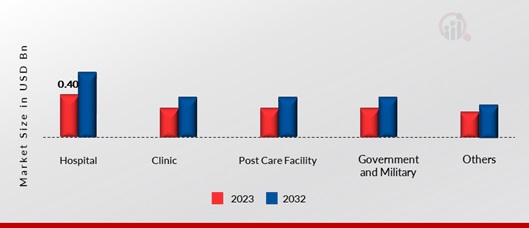
Aminoglycoside Antibiotics Market, by Application, 2023 & 2032

Source: Secondary Research, Primary Research, Market Research Future Database and Analyst Review

Aminoglycoside Antibiotics Market Regional Insights

The study provides market insights into North America, Europe, Asia-Pacific, and the Rest of the World by region. North America is the largest regional market for aminoglycoside antibiotics. A high prevalence of bacterial illnesses, a well-established healthcare infrastructure, extensive research and development activities, and favorable government antibiotic resistance management programs are all significant factors in its expansion. Furthermore, the existence of significant pharmaceutical companies dedicated to the discovery and marketing of aminoglycoside antibiotics drives market expansion in this region.

Further, the major countries studied in the market report are the US, Canada, Germany, France, the UK, Italy, Spain, China, Japan, India, Australia, South Korea, and Brazil.

Figure 2: AMINOGLYCOSIDE ANTIBIOTICS MARKET SHARE BY REGION 2023 (USD Billion)
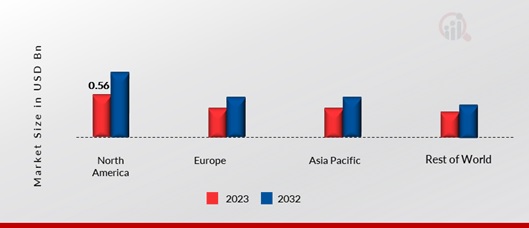
 AMINOGLYCOSIDE ANTIBIOTICS MARKET SHARE BY REGION 2023

Source: Secondary Research, Primary Research, Market Research Future Database and Analyst Review

Europe's Aminoglycoside Antibiotics Market accounts for the second-largest market share due to rising healthcare spending, increased awareness of the significance of antibiotic stewardship, and an aging population that is more susceptible to infections—furthermore, strict regulatory frameworks ensuring antibiotic safety and efficacy help drive market growth in Europe. Further, the German Aminoglycoside Antibiotics Market held the largest market share, and the UK Aminoglycoside Antibiotics Market was the fastest-growing market in the European region.

The Asia-Pacific Aminoglycoside Antibiotics Market is expected to grow at the fastest CAGR from 2024 to 2032. Factors contributing to its rapid expansion include a large patient population, particularly in densely populated nations like China and India, increased antibiotic-resistant illness rates, improved healthcare infrastructure, and rising healthcare costs. Furthermore, improved pharmaceutical production capabilities and increased spending in healthcare programs drive market expansion in the Asia-Pacific region. Moreover, China’s Aminoglycoside Antibiotics Market held the largest market share, and the Indian Aminoglycoside Antibiotics Market was the fastest-growing market in the Asia-Pacific region.

Aminoglycoside Antibiotics Market Key Market Players & Competitive Insights

The Aminoglycoside Antibiotics Market is characterized by fierce rivalry among Leading market players that seek to grow their market presence through strategic initiatives such as mergers and acquisitions, product launches, and collaborations. Established pharmaceutical corporations dominate the market due to their diverse product portfolios and large investments in R&D. These firms in the Aminoglycoside Antibiotics industry are focused on creating innovative formulations of aminoglycoside antibiotics with enhanced efficacy and safety profiles to meet the changing needs of healthcare providers and patients.

Furthermore, the industry is seeing the emergence of smaller biopharmaceutical companies and generic medication producers, increasing competition and spurring innovation in the global Aminoglycoside Antibiotics industry. In recent years, the Aminoglycoside Antibiotics industry players have frequently used their agility and niche expertise to propose cost-effective alternatives and seize unexplored opportunities in growing markets. Major players in the Aminoglycoside Antibiotics Market include Jemicare, Teva, Novartis, Fangyuan-pharma, Aike Pharmaceutical, Cipla, Pfizer, Fresenius Kabi, Sun Pharma, and Hikma.

Jemicare is a pharmaceutical business known for its commitment to creating breakthrough healthcare solutions. Jemicare's focus on antibiotic research and development aims to solve the global challenge of antimicrobial resistance by developing innovative aminoglycoside antibiotics with increased efficacy and lower toxicity. Using cutting-edge technology and a team of competent researchers, Jemicare seeks to produce high-quality pharmaceutical solutions that satisfy the changing needs of healthcare professionals and patients around the world.

Jemicare is committed to excellence and integrity, and it continues to make substantial contributions to the field of infectious diseases, with the goal of improving patient outcomes and promoting worldwide public health.

Novartis is a renowned international pharmaceutical business based in Switzerland. Novartis, known for its commitment to innovation and excellence, operates in a variety of therapeutic areas, including pharmaceuticals, generics, eye care, and oncology. With a varied portfolio of ground-breaking pharmaceuticals and a strong emphasis on research and development, Novartis aspires to solve unmet medical needs and enhance patient outcomes globally. The company's commitment to advancing healthcare is demonstrated by its cutting-edge therapies for chronic diseases, novel drug delivery technology, and ongoing investment in revolutionary healthcare solutions.

Novartis stays at the vanguard of the pharmaceutical business, propelling development and creating the future of medicine via its unwavering pursuit of innovation and scientific excellence.

Key Companies in the Aminoglycoside Antibiotics Market include

  • Jemicare
  • Teva
  • Novartis
  • Fangyuan-pharma
  • Aike Pharmaceutical
  • Cipla
  • Pfizer
  • Fresenius Kabi
  • Sun Pharma
  • Hikma
.webp

Future Outlook

Aminoglycoside Antibiotics Market Future Outlook

The Aminoglycoside Antibiotics Market is projected to grow at a 16.26% CAGR from 2024 to 2035, driven by rising antibiotic resistance and increasing healthcare expenditure.

New opportunities lie in:

  • Development of novel aminoglycoside formulations for resistant infections.
  • Expansion into emerging markets with tailored distribution strategies.
  • Investment in advanced manufacturing technologies for cost efficiency.

By 2035, the market is expected to achieve substantial growth, positioning itself as a leader in antibiotic solutions.

Market Segmentation

Aminoglycoside Antibiotics Market End User Outlook

  • Hospitals
  • Clinics
  • Pharmaceutical Companies
  • Research Laboratories

Aminoglycoside Antibiotics Market Application Outlook

  • Bacterial Infections
  • Tuberculosis
  • Sepsis
  • Endocarditis

Aminoglycoside Antibiotics Market Formulation Type Outlook

  • Injectable
  • Oral Tablets
  • Topical

Aminoglycoside Antibiotics Market Route of Administration Outlook

  • Intravenous
  • Intramuscular
  • Oral

Report Scope

MARKET SIZE 2024223.31(USD Billion)
MARKET SIZE 2025259.62(USD Billion)
MARKET SIZE 20351171.45(USD Billion)
COMPOUND ANNUAL GROWTH RATE (CAGR)16.26% (2024 - 2035)
REPORT COVERAGERevenue Forecast, Competitive Landscape, Growth Factors, and Trends
BASE YEAR2024
Market Forecast Period2025 - 2035
Historical Data2019 - 2024
Market Forecast UnitsUSD Billion
Key Companies ProfiledBristol-Myers Squibb (US), Novartis (CH), Pfizer (US), AstraZeneca (GB), Merck & Co. (US), Sanofi (FR), Teva Pharmaceutical Industries (IL), Hikma Pharmaceuticals (GB), Mylan (US)
Segments CoveredApplication, Route of Administration, End User, Formulation Type
Key Market OpportunitiesEmerging antibiotic resistance drives demand for innovative Aminoglycoside Antibiotics solutions and therapies.
Key Market DynamicsRising demand for aminoglycoside antibiotics driven by increasing bacterial resistance and evolving treatment protocols.
Countries CoveredNorth America, Europe, APAC, South America, MEA

Leave a Comment

FAQs

What is the projected growth of the Aminoglycoside Antibiotics market?

The Aminoglycoside Antibiotics market is the expected increase in total market value of 1171.45 USD billion over a defined forecast period 2025–2035. It is driven by factors such as demand trends, technological advances, regulatory changes, and geographic expansion.

What is the size of the Aminoglycoside Antibiotics market?

Aminoglycoside Antibiotics market size was valued at approximately 223.31 billion USD in 2024. This figure will reach 1171.45 billion USD covering all regions (America, Europe, Asia, MEA and ROW), focusing its segments / services / distribution channels till 2035.

What is the CAGR of the Aminoglycoside Antibiotics market?

Aminoglycoside Antibiotics market is expected to grow at a CAGR of 16.26% between 2025 and 2035.

How much will the Aminoglycoside Antibiotics market be worth by 2035?

Aminoglycoside Antibiotics market is expected to be worth of 1171.45 billion USD, reflecting growth driven by usage, technology and global demands by the end of 2035.

How will the Aminoglycoside Antibiotics market perform over the next 10 years?

Over the next 10 years the Aminoglycoside Antibiotics market is expected to shift from usd billion 223.31 to 1171.45 billion USD, led by adoption of advanced tech, demographic trends, regulatory approvals, with potential headwinds from 2025 to 2035.

Which region held the largest market share in the Aminoglycoside Antibiotics market?

North America had the largest share of the global market

Download Free Sample

Kindly complete the form below to receive a free sample of this Report

Compare Licence

×
Features License Type
Single User Multiuser License Enterprise User
Price $4,950 $5,950 $6,250
Maximum User Access Limit 1 User Upto 10 Users Unrestricted Access Throughout the Organization
Free Customization
Direct Access to Analyst
Deliverable Format
Platform Access
Discount on Next Purchase 10% 15% 15%
Printable Versions