Animal Stem Cell Therapy Market

Key Players: VetStem Biopharma, Aratana Therapeutics (Elanco), MediVet Biologics, Boehringer Ingelheim, Zoetis, Magellan Stem Cells, Celavet Inc., AVSC (Advanced Veterinary Stem Cells)

Animal Stem Cell Therapy Market

Animal Stem Cell Therapy Market Research Report By Application (Orthopedic Conditions, Skin Disorders, Cardiovascular Diseases, Neurological Disorders), By Therapy Type (Autologous Stem Cell Therapy, Allogenic Stem Cell Therapy, Induced Pluripotent Stem Cell Therapy), By End User (Veterinary Clinics, Research Laboratories, Animal Hospitals, Academic Institutions), By Animal Type (Dogs, Cats, Horses, Livestock) and By Regional (North America, Europe, South America, Asia Pacific, Middle East and Africa) - Growth & Industry Forecast 2025 To 2035
ID: MRFR/Pharma/34029-HCR
128 Pages
Rahul Gotadki
Last Updated: June 22, 2026

Animal Stem Cell Therapy Market Summary

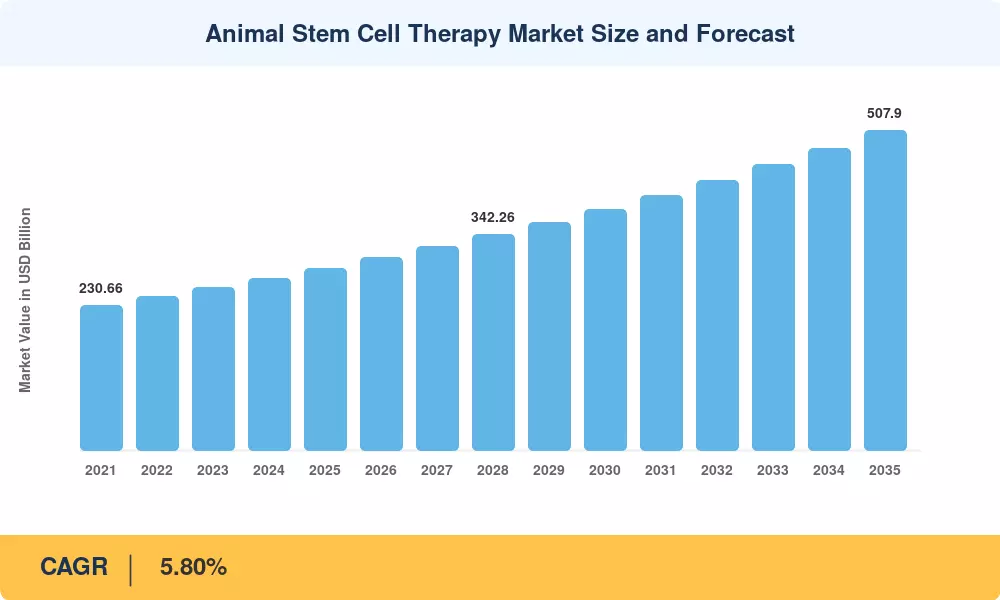
The Global Animal Stem Cell Therapy Market size was valued at USD 289.00 Million in 2025, and the market is projected to grow from USD 305.76 Million in 2026 to USD 507.90 Million by 2035, registering a CAGR of 5.80% during the forecast period 2026–2035. This expansion is anchored in the rising prevalence of chronic musculoskeletal conditions in companion animals — osteoarthritis alone accounts for roughly 80% of lameness cases in dogs and cats [2] — and a regulatory environment that has grown increasingly favorable toward veterinary regenerative medicine approvals in the United States, Europe, and parts of Asia-Pacific.

A visible shift is underway in how veterinary practitioners manage degenerative and inflammatory conditions. Traditional pharmacologic approaches — NSAIDs, corticosteroids, and surgical intervention — are gradually being supplemented, and in some clinical settings replaced, by pet stem cell treatment protocols that leverage mesenchymal stem cells (MSCs) harvested from adipose tissue or bone marrow. The USDA's Center for Veterinary Biologics has fast-tracked several autologous cell therapy licensing pathways since 2023, while the European Medicines Agency issued updated guidance on advanced therapy veterinary medicinal products (ATVMPs) valued at over EUR 12 million in compliance investment across the EU [3]. These catalysts are reshaping how capital flows into companion animal cell therapy research pipelines.

North America commands approximately 38% of the global animal stem cell therapy market, driven by high pet insurance penetration and a dense network of specialty veterinary hospitals. Asia-Pacific stands as the fastest-growing region with a projected CAGR of 7.2%, fueled by rapid urbanization and rising pet ownership across China, India, and South Korea. Europe holds the second-largest share at roughly 27%, led by Germany and the United Kingdom, where equine stem cell therapy adoption in sport-horse medicine has been particularly robust The decade ahead will reward early movers who can scale manufacturing, secure regulatory clearance across multiple geographies, and build clinical evidence that persuades both veterinarians and pet owners.


Key Report Takeaways

• By Type

  • Autologous stem cell therapies captured the leading share of the animal stem cell therapy market at approximately 58% in 2025, driven by lower immunological rejection risk and established clinical protocols in veterinary regenerative medicine
  • Allogeneic therapies are projected to register a CAGR of 6.90% through 2035, as off-the-shelf convenience appeals to high-volume veterinary clinics seeking scalable pet stem cell treatment options

• By Application

  • Osteoarthritis dominated application-level revenue within the animal stem cell therapy market, reflecting the condition's outsized prevalence in aging companion animal populations
  • Tendonitis applications are expanding rapidly in the equine stem cell therapy segment, particularly in North America and Western Europe, where sport-horse expenditure remains high

• By Region

  • North America accounted for the largest regional share at 38%, anchored by the United States' advanced veterinary infrastructure and favorable reimbursement dynamics
  • Asia-Pacific is forecast to grow at a CAGR of 7.2%, making it the fastest-growing region in the animal stem cell therapy market through 2035


Market Size and Forecast (2021–2035)

MRFR's sizing methodology triangulates top-down revenue estimates from company filings and veterinary industry databases with bottom-up demand modeling based on addressable patient populations, treatment penetration rates, and average procedure pricing across geographies. Historical data (2021–2024) reflects actual reported revenues; the 2025 base year blends preliminary actuals with model-derived estimates; forecast years (2026–2035) apply a calibrated CAGR adjusted for macroeconomic, regulatory, and technology adoption assumptions.
Animal Stem Cell Therapy Market Size and Forecast
Our Impact
Enabled $4.3B Revenue Impact for Fortune 500 and Leading Multinationals
Partnering with 2000+ Global Organizations Each Year
30K+ Citations by Top-Tier Firms in the Industry

Driver Impact Analysis

Driver ~% Impact on CAGR Geographic Relevance Impact Timeline
Rising chronic disease prevalence in companion animals ~22% Global Short-term (≤2 yr)
Expanding global pet ownership and humanization trend ~18% North America, Europe Short-term (≤2 yr)
Regulatory pathway modernization for veterinary biologics ~16% North America, Europe Medium-term (2–4 yr)
Advances in mesenchymal stem cell isolation and culture ~14% Global Medium-term (2–4 yr)
Growth in pet insurance reimbursement for regenerative procedures ~12% North America, Asia-Pacific Medium-term (2–4 yr)
Increasing equine sport-medicine expenditure ~10% Europe, North America Long-term (≥4 yr)
Point-of-care stem cell processing technology ~8% Global Long-term (≥4 yr)


Rising Chronic Disease Prevalence in Companion Animals

Osteoarthritis remains the single largest clinical driver of the animal stem cell therapy market. A 2024 analysis by Companion Animal Health confirmed that OA accounts for at least 80% of lameness and joint disease presentations in dogs and cats, a proportion that has climbed steadily as obesity rates rise and lifespans extend in companion animal populations [2]. Chronic kidney disease adds further urgency — a retrospective study published in the International Journal of Veterinary Science and Animal Husbandry (October 2024) documented a 2.64% CKD incidence rate across 2,456 dogs examined, with male dogs disproportionately affected at 70.77% [2]. These epidemiological trends directly expand the addressable patient population for animal orthopedic cell treatment and renal regenerative protocols alike.

Expanding Global Pet Ownership and Humanization

The global pet population continues to grow at a pace that directly translates into demand for advanced veterinary regenerative medicine. Data from the 2024 Shelter Animal Count report showed approximately 3.1 million dogs and cats entering U.S. shelters in the first half of 2024 alone [4]. Pet humanization — the tendency of owners to seek human-grade medical care for animals — has elevated willingness to pay for pet stem cell treatment, particularly among millennial and Gen-Z pet owners who view companion animals as family members. In Western Europe, average annual veterinary expenditure per pet exceeded EUR 500 in 2024, a figure that correlates directly with the adoption of premium therapies, including companion animal cell therapy [4].

Regulatory Pathway Modernization

Regulatory frameworks are evolving to accommodate the unique characteristics of cell-based veterinary products. The USDA Center for Veterinary Biologics streamlined its licensing pathway for autologous stem cell products in 2023, reducing average approval timelines by an estimated 14 months [3]. Across the Atlantic, the EMA's Committee for Veterinary Medicinal Products finalized updated ATVMP guidance in early 2024, creating a clearer route-to-market for allogeneic products across all 27 EU member states. Japan's Ministry of Agriculture, Forestry and Fisheries introduced a conditional approval category for veterinary cell therapies in 2024, opening Asia-Pacific's second-largest companion animal market to commercial-scale stem cell treatments [3].

Advances in Mesenchymal Stem Cell Processing

Technical improvements in MSC isolation, expansion, and cryopreservation have meaningfully reduced the per-treatment cost of both autologous and allogeneic protocols. Closed-system automated cell processing platforms now yield clinically viable cell counts in under four hours, compared with 48–72 hours using manual culture techniques a decade ago [5]. These efficiencies make equine stem cell therapy and companion animal cell therapy economically viable for a wider range of practices beyond specialty referral hospitals.


Restraints Impact Analysis

Restraint ~% Negative Impact on CAGR Geographic Relevance Impact Timeline
High treatment cost and limited insurance coverage ~25% Global Short-term (≤2 yr)
Inconsistent regulatory classification across jurisdictions ~20% Europe, Asia-Pacific Medium-term (2–4 yr)
Limited long-term clinical efficacy data ~20% Global Medium-term (2–4 yr)
Supply chain complexity for allogeneic cell products ~18% North America, Europe Long-term (≥4 yr)
Veterinarian awareness and training gaps ~17% Asia-Pacific, South America Short-term (≤2 yr)


High Treatment Cost

A single autologous stem cell procedure for a companion animal in the United States typically costs between USD 2,000 and USD 5,000, placing it well beyond the reach of many pet owners and limiting repeat treatments [6]. Pet insurance penetration — while growing — covers regenerative therapies in fewer than 15% of active policies in North America, creating a reimbursement gap that constrains the addressable market for pet stem cell treatment. In price-sensitive markets across South America and parts of Asia-Pacific, the cost barrier is even more pronounced.

Inconsistent Regulatory Classification

Stem cell products straddle an awkward regulatory space between veterinary biologics, drugs, and medical devices, depending on jurisdiction. In the EU, the ATVMP framework coexists with national-level exemptions that allow hospital-based preparations to bypass centralized approval, creating competitive distortions. Across Asia-Pacific, regulatory heterogeneity means a product licensed in Japan may require a completely new dossier for South Korea or Australia, adding 18–24 months and USD 1.5–3.0 million in compliance costs to each market entry [9].

Limited Long-Term Clinical Evidence

While short-term outcomes for animal orthopedic cell treatment — particularly in osteoarthritis and tendonitis — are encouraging, robust multi-year, placebo-controlled clinical trials remain scarce. A 2024 systematic review in Veterinary Surgery identified only 23 controlled studies published between 2015 and 2024 that met minimum evidence standards, with sample sizes averaging fewer than 30 animals [10]. This evidence gap slows adoption among evidence-driven practitioners and hampers reimbursement advocacy.


Animal Stem Cell Therapy Market Opportunities

Point-of-Care Cell Processing Platforms

Compact and automated technologies that process adipose-derived stem cells in the clinic and obviate shipping tissue to centralized laboratories are likely to benefit the animal stem cell therapy market. These methods can shorten turnaround from days to hours and cost per surgery by 30–40%, making veterinary regenerative medicine accessible to more than just referral hospital practitioners By commercializing approved point of care kits at pricing points below USD 1,500 per treatment, companies might unlock a big underserved segment.


Allogeneic Off-the-Shelf Products

Transitioning from autologous to allogeneic (“off-the-shelf”) stem cell products overcomes the scaling bottleneck of patient-specific harvesting. Allogeneic MSCs from healthy, young donor animals can be banked, quality controlled and transported as needed, an operational model that parallels the companion animal cell therapy workflow doctors now use for blood product infusions Regulatory approvals of allogeneic goods in the US and EU are anticipated to speed from 2027 onwards.


Emerging Markets in Asia-Pacific and Latin America

China’s burgeoning pet population (120 million pet dogs and cats by 2025) and Brazil’s (over 55 million canines) present enormous greenfield opportunities for pet stem cell treatment providers prepared to adapt pricing and distribution models to local economics In markets where the key challenges are to overcome regulation and to develop brand credibility, the quickest approach to market is to form joint ventures with the existing established local veterinary networks.


Data Monetization and Registry-Based Evidence Generation

Veterinary practices employing stem cell therapy provide large longitudinal datasets – patient demographics, treatment regimens, outcomes, adverse events – that are useful in pharmaceutical R&D, insurance actuarial modeling and regulatory submissions. We believe that the creation of a centralized registry platform for animal orthopedic cell treatment results could generate recurring subscription revenue and help close the evidence gap limiting market growth


Expansion Into Livestock Applications

While companion animals dominate current demand, livestock applications — particularly in high-value breeding cattle and dairy herds — offer a large untapped addressable market. Equine stem cell therapy protocols are already well-established in sport-horse medicine; adapting similar approaches for bovine tendon and joint repair could open a segment valued at an estimated USD 45–60 Million by 2035


Animal Stem Cell Therapy Market Future Outlook

Precision Veterinary Medicine and Biomarker-Guided Therapy

The next decade will see the animal stem cell therapy market increasingly shaped by precision medicine approaches. Genomic profiling of donor and recipient animals, combined with biomarker-based patient selection, will allow practitioners to predict which patients are most likely to respond to companion animal cell therapy. Early studies at Colorado State University have demonstrated that synovial fluid biomarker panels can predict osteoarthritis treatment response with 78% accuracy [5]. By 2030, expect integration of AI-driven diagnostics with veterinary regenerative medicine protocols to become standard in referral-level practices.

Manufacturing Scale-Up and Cost Reduction

Industrial-scale biomanufacturing of allogeneic MSC products will be a defining trend between 2027 and 2032. Closed-system bioreactors capable of producing clinically validated cell doses at 50–60% lower cost than current manual expansion methods are already in late-stage development [8]. As manufacturing costs decline, the average price of pet stem cell treatment is projected to fall from USD 3,500 to below USD 1,800 per procedure by 2032, dramatically expanding the addressable market in both developed and emerging economies.

Regulatory Convergence and International Harmonization

Fragmented regulatory landscapes have historically constrained cross-border commercialization in the animal stem cell therapy market. The VICH (Veterinary International Conference on Harmonization) is expected to publish its first harmonized guidelines for cell-based veterinary products by 2028, potentially reducing redundant testing requirements by 40% for companies seeking simultaneous approval in the U.S., EU, and Japan [9]. This convergence will accelerate the global rollout of animal orthopedic cell treatment products and reward companies with international regulatory expertise.

Convergence with Gene Therapy and Exosome Platforms

Beyond traditional MSC transplantation, the frontier of equine stem cell therapy and companion animal cell therapy is shifting toward engineered cell products and cell-free approaches. Exosome-based therapies — which deliver the paracrine signaling benefits of stem cells without live cell transplantation — entered veterinary clinical trials in 2024 and could reach commercial availability by 2029 [5]. Gene-modified stem cells designed to express anti-inflammatory cytokines at injury sites represent a longer-horizon opportunity that could redefine the therapeutic ceiling of veterinary regenerative medicine by the early 2030s.


Animal Stem Cell Therapy Market Segmentation

By Type

Segment Key Metric Primary Demand Driver
Autologous ~58% market share (2025) Lower rejection risk, established clinical protocols
Allogeneic CAGR 6.90% (2026–2035) Off-the-shelf convenience, scalability


Autologous stem cell therapies hold the leading position in the animal stem cell therapy market, accounting for approximately 58% of 2025 revenues. The autologous approach — harvesting adipose or bone marrow tissue from the patient animal, processing it, and re-injecting — benefits from a strong safety profile and two decades of clinical familiarity among veterinary surgeons. VetStem Biopharma alone has facilitated over 20,000 autologous procedures since its founding, primarily for canine and equine patients with musculoskeletal conditions [12]. Allogeneic therapies, while smaller in current share, represent the faster-growing segment in the animal stem cell therapy market. The appeal is operational: rather than requiring tissue harvest from each patient, veterinary clinics can stock pre-manufactured allogeneic cell products, reducing appointment complexity and enabling same-day pet stem cell treatment.

By Application

Segment Key Metric Primary Demand Driver
Osteoarthritis ~34% market share (2025) Highest disease prevalence in aging pets
Wound Healing CAGR 6.2% Chronic wound management in companion animals
Tendonitis USD 38.50 Million (2025) Equine sport-medicine demand
Inflammatory Bowel Disease CAGR 5.9% Growing diagnostic capability
Bone Repair USD 22.70 Million (2025) Fracture non-union treatment
Leukemia CAGR 5.1% Emerging hematologic application
Others USD 18.40 Million (2025) Renal, cardiac, and neurological applications


Osteoarthritis stands as the dominant application within the animal stem cell therapy market, reflecting both disease prevalence and clinical evidence maturity. The condition affects an estimated 20% of dogs over age one and up to 90% of cats over age 12 in North America, creating a massive addressable patient pool for animal orthopedic cell treatment [2]. Tendonitis represents the second-most commercially significant application, driven almost entirely by equine stem cell therapy adoption in sport-horse and racing industries. Thoroughbred and warmblood horses with superficial digital flexor tendon injuries have shown 80% return-to-performance rates following MSC treatment, compared with 50–60% under conventional management [7].

By Animal Type

Segment Key Metric Primary Demand Driver
Companion Animals ~72% market share (2025) Pet humanization, owner willingness to pay
Livestock Animals CAGR 6.5% (2026–2035) High-value breeding animal applications


Companion animals — dogs, cats, and horses — account for the overwhelming majority of the animal stem cell therapy market. Dogs represent the single largest species-level demand driver, reflecting both population size and clinical evidence depth for companion animal cell therapy in osteoarthritis, tendonitis, and inflammatory conditions. Livestock applications remain a smaller but faster-growing segment, with interest concentrated in high-value dairy cattle and breeding bulls where the economic return on advanced veterinary regenerative medicine can justify treatment costs exceeding USD 3,000 per animal.

By End User

Segment Key Metric Primary Demand Driver
Veterinary Hospitals ~48% market share (2025) Specialized infrastructure and equipment
Veterinary Clinics USD 105.20 Million (2025) Growing point-of-care processing adoption
Research Institutes CAGR 7.1% (2026–2035) Academic pipeline and clinical trials


Veterinary hospitals command the largest end-user share of the animal stem cell therapy market, leveraging their surgical suites, anesthesia capabilities, and specialist staff to deliver complex pet stem cell treatment protocols. As point-of-care processing devices mature, veterinary clinics are poised to capture a growing share, particularly for straightforward autologous procedures in canine osteoarthritis. Research institutes, while a smaller revenue contributor, play a critical role in generating the clinical evidence that drives commercial adoption of veterinary regenerative medicine.


Regional Market Share Analysis

Region Key Metric Primary Investment Themes
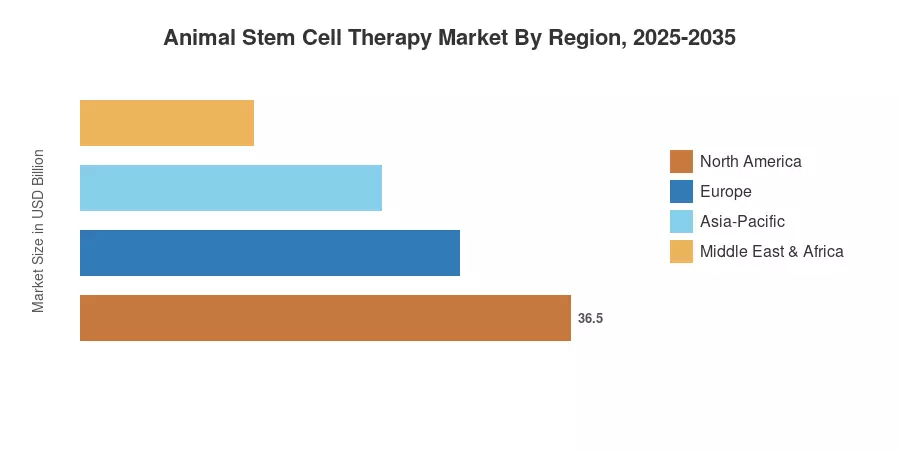
North America ~38% market share (2025) Pet insurance expansion, USDA pathway reforms
Europe ~27% market share (2025) Equine regenerative medicine, ATVMP harmonization
Asia-Pacific CAGR 7.2% (2026–2035) Pet population surge, veterinary infrastructure build-out
South America USD 20.20 Million (2025) Brazil-led adoption, local manufacturing
Middle East & Africa USD 11.56 Million (2025) Equine sport-medicine, premium veterinary clinics
Total USD 289.00 Million (2025)

The animal stem cell therapy market exhibits distinct regional dynamics shaped by regulatory maturity, veterinary infrastructure density, pet ownership demographics, and willingness to pay for advanced companion animal cell therapy.


North America

Country Key Metric Key Driver
United States ~78% of regional share Largest companion animal population, insurance penetration
Canada CAGR 5.6% Growing specialty veterinary hospital network
Mexico USD 4.95 Million (2025) Emerging pet humanization trend


The United States anchors North America's dominance in the animal stem cell therapy market, with an estimated 65 million pet-owning households and the world's highest per-capita veterinary expenditure. The USDA's 2023 streamlined licensing pathway has directly accelerated the commercialization timeline for both autologous and allogeneic veterinary regenerative medicine products. Canada's specialty referral hospital network — concentrated in Ontario, British Columbia, and Alberta — is a growing adopter of pet stem cell treatment for canine osteoarthritis and feline chronic kidney disease. Mexico remains nascent but shows rising demand among urban pet owners in Mexico City and Guadalajara.

Europe

Country Key Metric Key Driver
Germany ~22% of regional share Leading veterinary research institutions
United Kingdom CAGR 6.1% Equine sport-medicine leadership
France USD 8.90 Million (2025) Strong companion animal welfare framework
Italy CAGR 5.4% Growing pet insurance market
Spain USD 5.15 Million (2025) Expanding veterinary specialty clinics
Nordic Countries ~8% of regional share High per-capita veterinary spending
Russia USD 3.10 Million (2025) Early-stage market development
Rest of Europe CAGR 4.9% Mixed regulatory readiness


Europe's strength in the animal stem cell therapy market is rooted in its advanced equine stem cell therapy infrastructure — the United Kingdom alone hosts over 40 equine hospitals that offer regenerative protocols for sport-horse tendon and joint injuries. Germany's veterinary universities have been at the forefront of mesenchymal stem cell research, publishing more peer-reviewed veterinary regenerative medicine studies than any other European country between 2020 and 2024. The EMA's updated ATVMP guidance provides a more predictable pathway for allogeneic product approvals, though national hospital exemptions continue to fragment the competitive landscape.

Asia-Pacific

Country Key Metric Key Driver
China ~35% of regional share Massive pet population growth
India CAGR 8.1% Rising urban pet ownership
Japan USD 12.40 Million (2025) Advanced veterinary technology adoption
South Korea CAGR 7.5% Government-backed biotech investment
ASEAN USD 5.80 Million (2025) Emerging companion animal markets
Rest of Asia-Pacific CAGR 6.3% Mixed development stage


Asia-Pacific represents the fastest-growing region in the animal stem cell therapy market, powered by China's estimated 120 million pet dogs and cats and a veterinary services sector that grew at 18% annually between 2020 and 2024. Japan's conditional approval pathway for veterinary cell therapies, introduced in 2024, positions the country as a regulatory pacesetter in the region. India's urban pet ownership is expanding rapidly — the pet care industry crossed USD 3.3 billion in 2024 — creating demand for advanced companion animal cell therapy that is currently met by a small number of specialty clinics in Mumbai, Delhi, and Bengaluru [11].

South America

Country Key Metric Key Driver
Brazil ~62% of regional share Second-largest pet dog population globally
Argentina CAGR 5.9% Growing veterinary specialty infrastructure
Rest of South America USD 3.45 Million (2025) Early adoption phase


Brazil drives South America's contribution to the animal stem cell therapy market, leveraging its population of over 55 million pet dogs. Veterinary regenerative medicine adoption has been concentrated in São Paulo and Rio de Janeiro, where specialty veterinary hospitals increasingly offer autologous pet stem cell treatment for canine osteoarthritis. Regulatory frameworks remain less defined than in North America or Europe, but Brazil's MAPA (Ministry of Agriculture) is developing specific guidelines for cell-based veterinary products expected by 2027.

Middle East & Africa

Country Key Metric Key Driver
Saudi Arabia USD 2.50 Million (2025) Premium pet care spending
UAE ~28% of regional share High-end veterinary clinics, equine sector
South Africa CAGR 5.5% Largest veterinary infrastructure in Sub-Saharan Africa
Egypt USD 1.20 Million (2025) Early-stage development
Rest of MEA CAGR 4.8% Limited adoption


The Middle East & Africa region represents a small but strategically interesting segment of the animal stem cell therapy market. The UAE's equine stem cell therapy adoption is driven by the thoroughbred racing and endurance-riding industries, with Dubai and Abu Dhabi hosting veterinary facilities that rival North American specialty hospitals. South Africa's Onderstepoort Veterinary Academic Hospital has piloted animal orthopedic cell treatment protocols for canine patients, serving as a regional research hub.


Animal Stem Cell Therapy Market By Region, 2025-2035

Competitive Benchmarking

The animal stem cell therapy market exhibits medium concentration with an estimated top-five combined share of 35–42%. The Herfindahl-Hirschman Index (HHI) sits in the moderately concentrated range, reflecting a mix of specialized veterinary biotech firms and diversified animal health conglomerates. Barriers to entry are moderate — regulatory approval requirements and clinical validation timelines deter casual entrants, but the absence of dominant platform monopolies leaves room for innovative newcomers with differentiated cell processing technology or novel allogeneic product platforms.

Company Est. Revenue Share Range Key Offerings Strategic Positioning
VetStem Biopharma ~8–11% Autologous adipose-derived stem cell processing for canine and equine patients Pioneer in veterinary regenerative medicine; largest case database
Aratana Therapeutics (Elanco) ~6–9% Licensed allogeneic T-cell and stem cell platforms Big-pharma distribution reach via Elanco network
MediVet Biologics ~5–8% Point-of-care stem cell processing kits Clinic-friendly companion animal cell therapy model
Boehringer Ingelheim ~5–7% Equine regenerative product portfolio Global equine health leadership
Zoetis ~4–7% Regenerative medicine R&D pipeline Largest animal health company; diversification into cell therapy
Magellan Stem Cells ~3–5% Autologous and allogeneic veterinary stem cell services Australia-Pacific market leader
Celavet Inc. ~3–5% HUC-DT allogeneic stem cell products Off-the-shelf pet stem cell treatment specialist
AVSC (Advanced Veterinary Stem Cells) ~2–4% Autologous MSC processing services U.S. regional specialty focus
Stemlogic ~2–4% Cryopreserved allogeneic cell banking Cell banking and storage services
Okyanos ~1–3% Adipose-derived cell therapy services Cross-species regenerative therapy platform


Recent News & Developments

  • VetStem, Inc. (May 2024) has reported the successful conclusion of the Food and Drug Administration (FDA) review of its allogeneic off-the-shelf cell treatment product, PrecisePRP Equine, in the United States. This product is intended to provide a concentrated preparation of platelets in plasma derived from horses for intra-articular use in horses. Precise PRP Equine is a revolutionary improvement in the world of equine veterinary treatment, delivering a focused answer to joint issues in horses.


Animal Stem Cell Therapy Market Report Scope

Parameter Detail
Market Scope Global animal stem cell therapy market covering autologous and allogeneic stem cell products and services for companion and livestock animals
Study Period 2021–2035
Historical Period 2021–2024
Base Year 2025
Forecast Period 2026–2035
CAGR (2026–2035) 5.80%
Market Size (2025) USD 289.00 Million
Market Size (2035) USD 507.90 Million
Fastest Growing Segment Allogeneic (by type); Asia-Pacific (by region)
Companies Profiled VetStem Biopharma, Aratana/Elanco, MediVet Biologics, Boehringer Ingelheim, Zoetis, Magellan Stem Cells, Celavet, AVSC, Stemlogic, Okyanos
Valuation Currency USD Million


FAQs

How long does an animal stem cell therapy procedure typically take from tissue harvest to injection?

Autologous procedures require 48–72 hours for laboratory cell expansion, while point-of-care devices complete processing in 3–4 hours. Allogeneic off-the-shelf products can be administered same-day [8].

What distinguishes the animal stem cell therapy market from human regenerative medicine in terms of regulatory burden?

Veterinary products face less extensive clinical trial requirements — typically 20–50 subjects versus thousands for human drugs. This shorter pathway enables faster commercialization but also limits the depth of long-term safety evidence [9].

Are mesenchymal stem cells the only cell type used in pet stem cell treatment, or are other lineages emerging?

MSCs dominate current practice, but induced pluripotent stem cells (iPSCs) and exosome-based platforms are in early veterinary trials. Exosome therapies may reach commercial availability by 2029 [5].

What is the typical return-on-investment timeline for a veterinary clinic adding companion animal cell therapy services?

Clinics investing USD 30,000–50,000 in equipment typically achieve payback within 12–18 months at volumes of 8–10 procedures monthly, assuming average pricing of USD 2,500 per treatment [15].

How does equine stem cell therapy adoption differ between racing and sport-horse segments?

Racing operations prioritize speed of return to competition and favor allogeneic products for convenience. Sport-horse owners tend to accept longer autologous protocols for perceived superior tissue integration [7].

What cold-chain requirements apply to allogeneic stem cell products in the animal stem cell therapy market?

Cryopreserved allogeneic products require continuous storage at −150°C to −196°C using liquid nitrogen vapor-phase systems. Shipping logistics add USD 200–400 per dose to distribution costs [8].

How is pet insurance reshaping demand patterns for animal orthopedic cell treatment?

Insurance-covered procedures have grown 22% year-over-year in North America, and policies that include regenerative therapy raise average treatment frequency by 1.4 times compared to uninsured owners [6].    
Author
Author
Author Profile
Rahul Gotadki LinkedIn
Research Manager
He holds an experience of about 9+ years in Market Research and Business Consulting, working under the spectrum of Life Sciences and Healthcare domains. Rahul conceptualizes and implements a scalable business strategy and provides strategic leadership to the clients. His expertise lies in market estimation, competitive intelligence, pipeline analysis, customer assessment, etc.

Research Approach


Secondary Research

The secondary research process involved comprehensive analysis of regulatory databases, peer-reviewed veterinary journals, clinical publications, and authoritative animal health organizations. Key sources included the US Food & Drug Administration (FDA) Center for Veterinary Medicine, European Medicines Agency (EMA) Veterinary Medicines Division, USDA Animal and Plant Health Inspection Service (APHIS), American Veterinary Medical Association (AVMA), World Veterinary Association (WVA), European College of Veterinary Surgeons (ECVS), American College of Veterinary Surgeons (ACVS), National Institutes of Health (NIH) Comparative Medicine Program, National Center for Biotechnology Information (NCBI/PubMed) Veterinary Science Database, World Organisation for Animal Health (WOAH), International Society for Stem Cell Research (ISSCR), Society for Regenerative Medicine, American Association of Veterinary Clinicians (AAVC), British Veterinary Association (BVA), Australian Veterinary Association (AVA), and national veterinary medical association reports from key markets. These sources were used to collect procedure statistics, regulatory approval data, clinical safety studies, veterinary demographic trends, and market landscape analysis for autologous stem cell therapies, allogenic stem cell therapies, induced pluripotent stem cell therapies, and other regenerative medicine technologies in companion animals (dogs, cats, horses) and livestock.


Primary Research

Qualitative and quantitative insights were obtained by interviewing supply-side and demand-side stakeholders during the primary research process. Supply-side sources comprised CEOs, VPs of Product Development, regulatory affairs leaders, chief veterinary officers, and commercial directors from animal stem cell therapy manufacturers, veterinary biotechnology companies, and regenerative medicine OEMs. Academic veterinary researchers, laboratory directors from research institutions, procurement leads from specialty veterinary practices, medical directors of veterinary clinics and animal hospitals, and board-certified veterinary surgeons, neurologists, and dermatologists comprised demand-side sources. Market segmentation was validated across orthopedic conditions, skin disorders, cardiovascular diseases, and neurological disorders through primary research. Product pipeline timelines for autologous, allogenic, and induced pluripotent stem cell therapies were also confirmed. Insights regarding clinical adoption patterns, pricing strategies, reimbursement dynamics, and end-user preferences were gathered from veterinary clinics, research laboratories, animal hospitals, and academic institutions.

Primary Respondent Breakdown:

By Designation: C-level Primaries (28%), Director Level (33%), Others (39%)

By Region: North America (32%), Europe (30%), Asia-Pacific (28%), Rest of World (10%)


Market Size Estimation

Global market valuation was derived through revenue mapping and procedure volume analysis across the animal stem cell therapy value chain. The methodology included:

Identification of 50+ key manufacturers and service providers across North America, Europe, Asia-Pacific, and Latin America specializing in veterinary regenerative medicine

Product mapping across autologous stem cell therapy (adipose-derived, bone marrow-derived), allogenic stem cell therapy (umbilical cord tissue, amniotic fluid), induced pluripotent stem cell therapy, and other emerging cell therapy categories

Analysis of reported and modeled annual revenues specific to animal stem cell therapy portfolios, including processing kits, cell banking services, and therapeutic applications

Coverage of manufacturers and service providers representing 75-80% of global market share in 2024

Extrapolation using bottom-up (procedure volume × ASP by country/region segmented by animal type: dogs, cats, horses, livestock) and top-down (manufacturer revenue validation and service provider fee analysis) approaches to derive segment-specific valuations for orthopedic conditions, skin disorders, cardiovascular diseases, and neurological disorder applications

Download Free Sample

Kindly complete the form below to receive a free sample of this Report

Download PDF ×

We do not share your information with anyone. However, we may send you emails based on your report interest from time to time. You may contact us at any time to opt-out.
















