Download Free Sample
Kindly complete the form below to receive a free sample of this Report
Global Antibiotic Stewardship Biomarkers Market Research Report: Size, Share, Trend Analysis By Biomarker Type (Molecular Biomarkers, Microbiological Biomarkers, Host Response Biomarkers, Pharmacokinetic/Pharmacodynamic Biomarkers, Imaging Biomarkers), By Applications (Diagnosis of Bacterial Infections, Prediction of Antibiotic Resistance, Optimization of Antibiotic Therapy, Monitoring of Antibiotic Exposure, Evaluation of New Antibiotic Therapies), By Indication (Urinary Tract Infections, Pneumonia, Sepsis, Meningitis, Infective Endocarditis), By Technology (Polymerase Chain Reaction (PCR), Next-Generation Sequencing (NGS), Mass Spectrometry, Immunoassays, Biosensors) and By Region (North America, Europe, South America, Asia Pacific, Middle East and Africa) - Growth Outlook & Industry Forecast 2025 To 2035
As per Market Research Future analysis, the Antibiotic Stewardship Biomarkers Market was estimated at 19.36 USD Billion in 2024. The Antibiotic Stewardship Biomarkers industry is projected to grow from 20.97 USD Billion in 2025 to 46.55 USD Billion by 2035, exhibiting a compound annual growth rate (CAGR) of 8.3% during the forecast period 2025 - 2035
The Antibiotic Stewardship Biomarkers Market is poised for substantial growth driven by technological advancements and increasing awareness of antibiotic resistance.
| 2024 Market Size | 19.36 (USD Billion) |
| 2035 Market Size | 46.55 (USD Billion) |
| CAGR (2025 - 2035) | 8.3% |
The Antibiotic Stewardship Biomarkers Market is currently experiencing a notable evolution, driven by the increasing awareness of antibiotic resistance and the need for effective management strategies. Stakeholders in healthcare are recognizing the critical role that biomarkers play in guiding antibiotic therapy, thereby enhancing patient outcomes and minimizing unnecessary antibiotic use. This market appears to be influenced by a growing emphasis on personalized medicine, where biomarkers can help tailor treatments to individual patient profiles. Furthermore, advancements in diagnostic technologies are likely to facilitate the rapid identification of infections, enabling timely and appropriate antibiotic administration. In addition, regulatory bodies are increasingly advocating for the integration of stewardship programs within healthcare systems, which may further propel the demand for biomarkers. The Antibiotic Stewardship Biomarkers Market seems poised for growth as healthcare providers seek to implement evidence-based practices that align with global health initiatives. As the landscape evolves, collaboration among pharmaceutical companies, diagnostic firms, and healthcare institutions could foster innovation and enhance the development of novel biomarkers. This collaborative approach may ultimately lead to improved strategies for combating antibiotic resistance and optimizing antibiotic use across various healthcare settings.
There is a growing recognition of the dangers posed by antibiotic resistance, prompting healthcare professionals to seek effective solutions. This trend indicates a shift towards the adoption of biomarkers that can assist in determining the necessity of antibiotic therapy, thereby reducing misuse.
Innovations in diagnostic tools are enhancing the ability to quickly identify pathogens and their resistance profiles. This development suggests that the Antibiotic Stewardship Biomarkers Market may benefit from more precise and timely interventions, ultimately improving patient care.
Healthcare systems are increasingly incorporating antibiotic stewardship programs, driven by regulatory support. This integration appears to create a favorable environment for the adoption of biomarkers, as they are essential for monitoring and optimizing antibiotic use.
The rising incidence of infections caused by antibiotic-resistant bacteria is a critical driver for the Antibiotic Stewardship Biomarkers Market. As healthcare systems grapple with the challenges posed by these infections, the need for effective diagnostic tools becomes paramount. Reports indicate that antibiotic resistance contributes to approximately 700,000 deaths annually, a figure that could escalate if not addressed. This alarming trend underscores the necessity for biomarkers that can guide appropriate antibiotic use, thereby enhancing patient outcomes and reducing healthcare costs. The Antibiotic Stewardship Biomarkers Market is thus positioned to grow as healthcare providers seek innovative solutions to combat this pressing issue.
The shift towards personalized medicine is a significant driver for the Antibiotic Stewardship Biomarkers Market. As healthcare moves away from a one-size-fits-all approach, there is a growing recognition of the need for individualized treatment strategies. Biomarkers play a crucial role in this paradigm shift by enabling clinicians to select the most appropriate antibiotics based on a patient's specific infection profile. This trend is expected to enhance treatment efficacy and reduce the risk of adverse effects associated with broad-spectrum antibiotics. Consequently, the market for antibiotic stewardship biomarkers is likely to flourish as personalized medicine becomes increasingly mainstream.
The escalating costs associated with antibiotic resistance and ineffective treatments are driving the Antibiotic Stewardship Biomarkers Market. Healthcare systems face substantial economic burdens due to prolonged hospital stays, increased morbidity, and the need for more expensive alternative therapies. Estimates suggest that antibiotic-resistant infections could cost the economy over 20 billion dollars annually in direct healthcare expenses. This financial strain compels healthcare providers to seek effective solutions, such as biomarkers that can optimize antibiotic use and reduce unnecessary expenditures. As a result, the market for antibiotic stewardship biomarkers is poised for growth as stakeholders aim to mitigate these economic challenges.
Regulatory bodies are increasingly advocating for antibiotic stewardship programs, which significantly influences the Antibiotic Stewardship Biomarkers Market. Initiatives such as the Centers for Disease Control and Prevention's (CDC) Core Elements of Antibiotic Stewardship provide frameworks that encourage healthcare facilities to implement effective stewardship practices. This regulatory support not only promotes the adoption of biomarkers but also fosters collaboration among stakeholders, including healthcare providers and diagnostic companies. As a result, the market is likely to witness a surge in demand for biomarkers that can facilitate the monitoring and optimization of antibiotic therapy, ultimately improving patient care.
Technological advancements in biomarker development are propelling the Antibiotic Stewardship Biomarkers Market forward. Innovations such as next-generation sequencing and advanced proteomics are enabling the identification of novel biomarkers that can accurately predict bacterial infections and their susceptibility to antibiotics. These technologies enhance the precision of diagnostics, allowing for tailored treatment plans that minimize unnecessary antibiotic use. The market is projected to expand as healthcare providers increasingly adopt these cutting-edge technologies to improve patient outcomes and combat antibiotic resistance effectively. The integration of such innovations is likely to redefine the landscape of antibiotic stewardship.
In the Antibiotic Stewardship Biomarkers Market, Molecular Biomarkers account for a significant share, reflecting their prominent role in optimizing antibiotic usage through advanced testing methodologies. These biomarkers are primarily utilized for their high specificity and sensitivity in diagnosing infections, which ensures effective treatment pathways while minimizing unnecessary antibiotic prescriptions. Conversely, Microbiological Biomarkers, while currently smaller in share, are gaining traction due to their ability to directly relate to the pathology of infectious diseases and provide rapid identification of pathogens, thus driving a greater need for their application in clinical settings. The growth trends within this segment indicate a shifting paradigm towards more personalized medicine in antibiotic stewardship. As healthcare systems globally focus on reducing antibiotic resistance, the demand for accurate and efficient diagnostic tools is surging. Furthermore, advancements in technology, alongside increasing investments in research and development, are catalyzing the adoption of Microbiological Biomarkers as integral components of antibiotic prescription and monitoring practices, indicating a bright future for both segments.
Molecular Biomarkers (Dominant) vs. Pharmacokinetic/Pharmacodynamic Biomarkers (Emerging)
Molecular Biomarkers are currently the dominant force in the Antibiotic Stewardship Biomarkers Market, owing to their ability to provide precise and reliable diagnostic information essential for effective treatment strategies. Their application fosters enhanced antibiotic stewardship by minimizing the risks associated with misdiagnosis and treatment delays. Meanwhile, Pharmacokinetic/Pharmacodynamic Biomarkers represent an emerging segment, characterized by their focus on understanding the drug's behavior in the body and its direct impact on microbial pathogens. They are gaining importance as healthcare providers increasingly seek to tailor antibiotic therapies to individual patient needs, thereby optimizing treatment outcomes and reducing the overarching issue of antibiotic resistance. As research expands, both segments are expected to play pivotal roles in advancing antibiotic stewardship.
In the Antibiotic Stewardship Biomarkers Market, the application segment shows diverse values contributing to a broad range of healthcare solutions. The Diagnosis of Bacterial Infections segment occupies the largest share, illustrating the critical need for precise and timely identification of infections to guide antibiotic use effectively. Meanwhile, the Prediction of Antibiotic Resistance segment is rapidly gaining traction, attributed to rising concerns regarding antibiotic resistance, leading to more proactive strategies in treatment protocols.
Diagnosis of Bacterial Infections (Dominant) vs. Optimization of Antibiotic Therapy (Emerging)
The Diagnosis of Bacterial Infections segment remains a dominant force in the Antibiotic Stewardship Biomarkers Market due to its essential role in addressing clinical needs with accurate diagnostics. Innovative technologies are enhancing the speed and accuracy of bacterial identification, thus facilitating timely therapeutic decisions. Conversely, the Optimization of Antibiotic Therapy segment is emerging with substantial potential to reshape treatment strategies. It focuses on tailoring antibiotic regimens based on individual patient profiles, aiming to maximize efficacy while minimizing resistance, thus reflecting progressive insights into personalized medicine and evidence-based practices.
In the Antibiotic Stewardship Biomarkers Market, Urinary Tract Infections (UTIs) hold the largest share among various indications due to the high prevalence and constant need for effective management strategies. UTIs often lead to antibiotic resistance issues, thereby driving the demand for biomarkers that can guide appropriate antibiotic use. Meanwhile, other indications such as pneumonia, sepsis, meningitis, and infective endocarditis are also significant, but their market share remains lower in comparison to UTIs, which dominate the space currently. The growth trends within this segment are influenced by an increasing focus on antibiotic stewardship programs and the rising incidence of antibiotic-resistant infections. Sepsis, in particular, is emerging rapidly, becoming the fastest-growing indication, driven by heightened awareness and early detection measures. Consequently, advancements in biomarker technologies are set to revolutionize how these conditions are diagnosed and treated, ensuring effective patient management and reduced antibiotic misuse.
Urinary Tract Infections: Dominant vs. Sepsis: Emerging
Urinary Tract Infections represent the dominant force in the Antibiotic Stewardship Biomarkers Market, characterized by their widespread impact and the necessity for effective diagnosis and treatment protocols. This segment has established itself as critical due to rising patient numbers and the complexity surrounding antibiotic resistance. On the other hand, sepsis is an emerging segment, gaining momentum through increasing hospital protocols for rapid identification and treatment. The advancements in biomarker technologies specifically tailored to sepsis are transforming clinical approaches, making this segment one to watch as healthcare providers emphasize timely intervention to mitigate severe outcomes. The interplay between these two segments illustrates the shifting landscape of antibiotic stewardship, with UTIs currently leading the charge while sepsis rapidly catches up.
In the Antibiotic Stewardship Biomarkers Market, the distribution of market share among technology segments reveals a competitive landscape. Polymerase Chain Reaction (PCR) technology continues to hold the largest share, favored for its reliability and efficiency in diagnosing bacterial infections. Following closely is Next-Generation Sequencing (NGS), which is rapidly gaining traction due to its ability to identify a broader range of pathogens, and is set to revolutionize antibiotic resistance profiling.
Technology: PCR (Dominant) vs. NGS (Emerging)
In the current Antibiotic Stewardship Biomarkers Market, Polymerase Chain Reaction (PCR) technologies dominate the landscape owing to their established efficacy in rapid bacterial identification and resistance detection. Recognized for providing quick and accurate results, PCR plays a crucial role in guiding appropriate antibiotic therapy. Conversely, Next-Generation Sequencing (NGS) is emerging as a disruptive force, offering comprehensive genomic insights that are highly valuable for antibiotic stewardship. NGS's ability to analyze vast sequences simultaneously allows for a more nuanced understanding of resistance patterns, making it a vital tool for future research and clinical applications in managing antibiotic resistance.
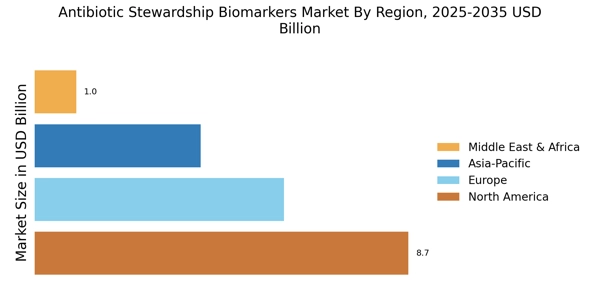
North America is the largest market for antibiotic stewardship biomarkers, holding approximately 45% of the global market share. The region benefits from advanced healthcare infrastructure, increasing awareness of antibiotic resistance, and supportive regulatory frameworks. The demand for rapid diagnostic tools is driving growth, with initiatives from the CDC and FDA promoting stewardship programs to combat antibiotic misuse. The United States is the primary contributor, with significant investments from key players like Thermo Fisher Scientific and Abbott Laboratories. The competitive landscape is characterized by innovation and collaboration among leading companies, ensuring a robust pipeline of new products. Canada and Mexico are also emerging markets, contributing to the overall growth in North America, focusing on improving healthcare outcomes through effective antibiotic stewardship.
Europe is a significant player in the antibiotic stewardship biomarkers market, accounting for approximately 30% of the global share. The region's growth is driven by stringent regulations aimed at combating antibiotic resistance, such as the European Commission's Action Plan on Antimicrobial Resistance. Increased funding for research and development in diagnostics is also a key factor, alongside rising public awareness of antibiotic misuse. Leading countries include Germany, France, and the UK, where major players like bioMerieux and Siemens Healthineers are actively involved. The competitive landscape is marked by collaborations between public health organizations and private companies, enhancing the development of innovative biomarkers. The European Medicines Agency continues to support initiatives that promote effective antibiotic stewardship, ensuring a sustainable approach to healthcare.
Asia-Pacific is an emerging powerhouse in the antibiotic stewardship biomarkers market, holding about 20% of the global market share. The region is witnessing rapid growth due to increasing healthcare expenditures, rising awareness of antibiotic resistance, and government initiatives aimed at improving healthcare systems. Countries like China and India are leading the charge, with significant investments in healthcare infrastructure and diagnostic technologies. China is the largest market in the region, followed by India and Japan. The competitive landscape is evolving, with both local and international players, such as Roche Diagnostics and Hologic, expanding their presence. The region's diverse healthcare needs present unique opportunities for innovation in antibiotic stewardship, as governments focus on enhancing diagnostic capabilities to combat resistance effectively.
The Middle East and Africa (MEA) region is gradually emerging in the antibiotic stewardship biomarkers market, currently holding about 5% of the global share. The growth is driven by increasing healthcare investments, rising awareness of antibiotic resistance, and the need for improved diagnostic solutions. However, challenges such as limited healthcare infrastructure and regulatory hurdles remain significant barriers to market expansion. Countries like South Africa and the UAE are leading the market, with efforts to enhance healthcare systems and promote antibiotic stewardship initiatives. The competitive landscape is characterized by a mix of local and international players, including Becton Dickinson and GenMark Diagnostics. As governments prioritize healthcare improvements, the MEA region presents untapped potential for growth in antibiotic stewardship biomarkers, paving the way for future advancements.
Major players in the antibiotic stewardship biomarkers market are actively involved in strategic collaborations, acquisitions, and partnerships to expand their market reach and strengthen their position. For instance, in 2021, Accelerate Diagnostics, Inc. and BD (Becton, Dickinson and Company) entered a strategic partnership to develop and commercialize a rapid diagnostic test for the detection of antibiotic resistance genes. Leading market players are investing heavily in research and development activities to enhance their product offerings and develop innovative solutions. Key players are focusing on developing biomarkers that can accurately predict antibiotic efficacy and identify patients who are at high risk of developing antibiotic resistance. This increased investment in R&D is expected to drive the Antibiotic Stewardship Biomarkers Market development and expand the range of available diagnostic tests. The competitive landscape of the Antibiotic Stewardship Biomarkers Market is expected to remain dynamic, with new entrants and established players striving to gain a competitive edge. BioMérieux is a global leader in the field of in vitro diagnostics. The company offers a range of Antibiotic Stewardship Biomarkers Market products, including the VITEK 2 and VITEK MS systems. These systems are used to identify bacteria and determine their antibiotic susceptibility. BioMérieux has a strong presence in both developed and emerging markets, and it is well positioned to benefit from the growing demand for Antibiotic Stewardship Biomarkers Market products. Thermo Fisher Scientific is another major player in the Antibiotic Stewardship Biomarkers Market. The company offers a range of products, including the Sensititre ARIS system. This system is used to determine the antibiotic susceptibility of bacteria, and it is used by hospitals and other healthcare providers around the world. Thermo Fisher Scientific has a strong R&D pipeline, and it is expected to launch new products in the coming years. QIAGEN is a leading provider of sample preparation and analysis technologies. The company offers a range of products for the Antibiotic Stewardship Biomarkers Market, including the QIAamp DNA Mini Kit. This kit is used to extract DNA from bacteria, and it is used by researchers and clinicians around the world. QIAGEN has a strong presence in both developed and emerging markets, and it is well-positioned to benefit from the growing demand for Antibiotic Stewardship Biomarkers Market products.





The global antibiotic stewardship biomarkers market size was valued at USD 17.16 billion in 2023 and is projected to reach USD 35.0 billion by 2032, exhibiting a CAGR of 8.24% during the forecast period 2024-2032. This growth can be attributed to the rising prevalence of antibiotic resistance, increasing demand for personalized medicine, and technological advancements in biomarker discovery.
Key market players are focusing on developing innovative biomarker tests to improve antibiotic selection and reduce the risk of antimicrobial resistance. Recent developments in the market include the launch of novel biomarker tests, such as the Accelerate PhenoTest BC Kit by Accelerate Diagnostics, and the ongoing research on AI-powered biomarker discovery platforms. These advancements are expected to further drive market growth in the coming years.
The Antibiotic Stewardship Biomarkers Market is projected to grow at an 8.3% CAGR from 2025 to 2035, driven by increasing antibiotic resistance and demand for rapid diagnostics.
New opportunities lie in:
By 2035, the market is expected to be robust, driven by innovation and strategic partnerships.
| MARKET SIZE 2024 | 19.36(USD Billion) |
| MARKET SIZE 2025 | 20.97(USD Billion) |
| MARKET SIZE 2035 | 46.55(USD Billion) |
| COMPOUND ANNUAL GROWTH RATE (CAGR) | 8.3% (2025 - 2035) |
| REPORT COVERAGE | Revenue Forecast, Competitive Landscape, Growth Factors, and Trends |
| BASE YEAR | 2024 |
| Market Forecast Period | 2025 - 2035 |
| Historical Data | 2019 - 2024 |
| Market Forecast Units | USD Billion |
| Key Companies Profiled | bioMerieux (FR), Thermo Fisher Scientific (US), Roche Diagnostics (CH), Abbott Laboratories (US), Siemens Healthineers (DE), Cepheid (US), Hologic (US), Becton Dickinson (US), GenMark Diagnostics (US) |
| Segments Covered | Biomarker Type, Applications, Indication, Technology, Region |
| Key Market Opportunities | Integration of advanced diagnostic tools enhances precision in the Antibiotic Stewardship Biomarkers Market. |
| Key Market Dynamics | Rising regulatory pressures drive innovation in antibiotic stewardship biomarkers, enhancing diagnostic accuracy and treatment efficacy. |
| Countries Covered | North America, Europe, APAC, South America, MEA |
The projected market valuation is expected to reach 46.55 USD Billion by 2035.
The overall market valuation was 19.36 USD Billion in 2024.
The expected CAGR for the market during this period is 8.3%.
Key players include bioMerieux, Thermo Fisher Scientific, Roche Diagnostics, and Abbott Laboratories.
The main segments include Biomarker Type, Application, Indication, and Technology.
The projected valuation for Molecular Biomarkers is expected to reach 9.12 USD Billion by 2035.
The Optimization of Antibiotic Therapy segment is projected to be valued at 12.0 USD Billion by 2035.
The expected valuation for the Sepsis indication is anticipated to reach 12.0 USD Billion by 2035.
The Next-Generation Sequencing (NGS) technology segment is projected to reach 10.73 USD Billion by 2035.
The projected valuation for the Monitoring of Antibiotic Exposure application is expected to be 9.0 USD Billion by 2035.


Kindly complete the form below to receive a free sample of this Report

“This is really good guys. Excellent work on a tight deadline. I will continue to use you going forward and recommend you to others. Nice job”


“Thanks. It’s been a pleasure working with you, please use me as reference with any other Intel employees.”


“Thanks for sending the report it gives us a good global view of the Betaïne market.”


“Thank you, this will be very helpful for OQS.”


“We found the report very insightful! we found your research firm very helpful. I'm sending this email to secure our future business.”


“I am very pleased with how market segments have been defined in a relevant way for my purposes (such as "Portable Freezers & refrigerators" and "last-mile"). In general the report is well structured. Thanks very much for your efforts.”


“I have been reading the first document or the study, ,the Global HVAC and FP market report 2021 till 2026. Must say, good info! I have not gone in depth at all parts, but got a good indication of the data inside!”


“We got the report in time, we really thank you for your support in this process. I also thank to all of your team as they did a great job.”


“The Automotive 48V ECU Components Procurement Intelligence Study” was a complex project, but the Market Research Future (MRFR) team handled it with quality, agility, and customer-centricity. They delivered all requested data on time and within the agreed scope. The team, including Shubhendra Anand and Rahul Gotadki, was always readily available to clarify questions and swiftly implement necessary adjustments, driving the project to a successful conclusion within a very demanding timeframe.
I would also like to specifically commend Akshay Agarwal for his responsiveness and support at every stage—from our initial inquiry on May 6th through to final delivery on June 18th. His dedication made the entire process seamless.”



