Download Free Sample
Kindly complete the form below to receive a free sample of this Report
Athletic Sock Market Size, Share, Industry Trend & Analysis Research Report By Material (Cotton, Synthetic, Merino Wool, Nylon, Spandex), By Cushioning Level (Low, Medium, High, Ultra-Thick), By Sport (Running, Basketball, Football, Tennis, Golf), By Length (No-Show, Ankle, Crew, Mid-Calf, Over-The-Calf), By Moisture Management (Wicking, Moisture-Resistant, Breathable, Water-Resistant) and By Regional (North America, Europe, South America, Asia Pacific, Middle East and Africa) - Forecast to 2035
As per Market Research Future analysis, the Athletic Sock Market Size was estimated at 9.705 USD Billion in 2024. The Athletic Sock industry is projected to grow from 10.11 USD Billion in 2025 to 15.18 USD Billion by 2035, exhibiting a compound annual growth rate (CAGR) of 4.15% during the forecast period 2025 - 2035
The Athletic Sock Market is experiencing a dynamic shift towards sustainability and technological innovation.
| 2024 Market Size | 9.705 (USD Billion) |
| 2035 Market Size | 15.18 (USD Billion) |
| CAGR (2025 - 2035) | 4.15% |
The Athletic Sock Market is currently experiencing a dynamic evolution, driven by a confluence of consumer preferences and technological advancements. As individuals increasingly prioritize comfort and performance in their athletic endeavors, manufacturers are responding by innovating materials and designs that enhance functionality. This shift appears to be influenced by a growing awareness of the importance of specialized gear in optimizing athletic performance. Furthermore, the rise of athleisure culture has blurred the lines between sportswear and everyday apparel, leading to a broader acceptance of athletic socks in various settings. In addition, sustainability has emerged as a pivotal factor in consumer decision-making. Many brands are now focusing on eco-friendly materials and ethical production practices, which resonate with environmentally conscious consumers. This trend suggests a potential shift in the market landscape, as companies that prioritize sustainability may gain a competitive edge. Overall, the Athletic Sock Market seems poised for continued growth, with evolving consumer demands shaping its trajectory.
The emphasis on eco-friendly materials and ethical manufacturing processes is becoming increasingly prevalent. Brands are exploring sustainable options to appeal to environmentally aware consumers, potentially reshaping market dynamics.
Innovations in fabric technology are enhancing the performance characteristics of athletic socks. Features such as moisture-wicking, cushioning, and breathability are being prioritized, indicating a shift towards more functional products.
The blending of athletic wear with casual fashion is driving demand for athletic socks in everyday settings. This trend suggests that consumers are seeking versatility in their apparel, further expanding the market's reach.
The increasing awareness of health and fitness among consumers appears to be a primary driver for the athletic sock Market. As individuals prioritize physical activity, the demand for specialized athletic gear, including socks, has surged. Reports indicate that the fitness apparel market is projected to grow at a compound annual growth rate of approximately 6.5% over the next few years. This trend suggests that consumers are not only investing in gym memberships but also in high-quality athletic wear that enhances performance. Athletic socks, designed for comfort and support, are becoming essential for athletes and fitness enthusiasts alike. The focus on health and wellness is likely to continue influencing purchasing decisions, thereby propelling the Athletic Sock Market forward.
The rise of e-commerce platforms is transforming the retail landscape for the Athletic Sock Market. With the convenience of online shopping, consumers are increasingly turning to digital channels to purchase athletic socks. Data suggests that online sales of athletic apparel, including socks, have seen a significant uptick, with estimates indicating a growth rate of over 15% in the coming years. This shift towards e-commerce is driven by factors such as ease of access, a wider variety of products, and competitive pricing. Retailers are adapting their strategies to enhance online visibility and improve customer experience, which is likely to further boost sales in the Athletic Sock Market. As more consumers embrace online shopping, the dynamics of the market are evolving, presenting new opportunities for brands.
The growing popularity of athleisure wear is reshaping consumer preferences within the Athletic Sock Market. Athleisure, which blends athletic and leisure apparel, has gained traction among consumers seeking versatile clothing options. This trend has led to an increased demand for stylish and functional athletic socks that can be worn both during workouts and in casual settings. Market analysis indicates that the athleisure segment is expected to grow at a rate of approximately 8% annually, reflecting a shift in lifestyle choices. As consumers prioritize comfort and style, brands are responding by offering a diverse range of athletic socks that cater to this demand. The influence of athleisure trends is likely to continue driving innovation and sales within the Athletic Sock Market.
Technological advancements in materials and manufacturing processes are significantly impacting the Athletic Sock Market. Innovations such as moisture-wicking fabrics, anti-blister technology, and enhanced cushioning systems are becoming increasingly prevalent. These advancements not only improve performance but also enhance comfort, which is crucial for athletes. The market for performance-enhancing fabrics is expected to expand, with projections indicating a growth rate of around 7% annually. As brands invest in research and development to create superior products, consumers are likely to gravitate towards socks that offer these advanced features. This trend underscores the importance of innovation in driving the Athletic Sock Market, as consumers seek products that align with their performance needs.
The rising participation in sports and fitness activities is a crucial driver for the Athletic Sock Market. As more individuals engage in various sports, from running to team sports, the need for specialized athletic socks has become apparent. Reports indicate that participation rates in recreational sports have increased, with a notable rise in running and cycling activities. This trend suggests a growing market for products that enhance performance and comfort during physical activities. Athletic socks designed for specific sports are gaining popularity, as they provide targeted support and protection. The increasing involvement in fitness and sports is likely to sustain demand for athletic socks, thereby propelling growth in the Athletic Sock Market.
In the Athletic Sock Market, the material segment displays a diverse landscape with cotton emerging as the largest segment due to its widespread acceptance for comfort and breathability. Following closely are synthetic materials, which have significantly gained traction among consumers looking for moisture-wicking and durability. Other materials such as Merino wool, nylon, and spandex also have their respective shares, contributing to an interesting mix of offerings that cater to various athlete preferences.
Cotton (Dominant) vs. Synthetic (Emerging)
Cotton remains a dominant material in the Athletic Sock Market, valued for its natural properties, which include breathability, comfort, and hypoallergenic qualities. It is favored by a wide range of consumers, especially for casual and everyday wear. On the other hand, synthetic materials, often combined with technologies that enhance performance, are emerging rapidly. They provide essential features such as moisture management and enhanced durability, appealing to athletes looking for high-performance gear. As the demand for functional athletic wear increases, synthetic options are positioned to take a larger share of the market.
The Athletic Sock Market demonstrates a diverse segmentation in cushioning levels, with the Medium cushioning variant holding the largest market share. This preference among consumers is largely driven by its versatile performance, accommodating various athletic activities while providing comfort. Following closely are the Low and High cushioning levels, which cater to specific user preferences, although they command lesser shares compared to Medium. On the other hand, the Ultra-Thick cushioning level is the fastest-growing segment, appealing to athletes seeking maximum comfort and support during high-impact activities. Recent trends indicate a growing appreciation for enhanced cushioning in athletic socks, particularly among fitness enthusiasts who participate in prolonged training sessions. This emphasis on comfort and performance continues to shape consumer preferences in the market.
Cushioning: Medium (Dominant) vs. Ultra-Thick (Emerging)
Medium cushioning athletic socks excel in providing an optimal balance of support and comfort, making them the go-to choice for many athletes across different sports. This segment remains dominant in the market due to its adaptability, effectively serving runners, gym-goers, and recreational athletes alike. Conversely, Ultra-Thick cushioning socks have emerged as a popular trend among athletes focused on maximizing comfort, particularly in rigorous physical activities. They offer enhanced protection, reducing the risk of blisters and providing necessary shock absorption. As performance and comfort become paramount, the rise of Ultra-Thick cushioning reflects changing consumer priorities, suggesting a shift towards more specialized products within the athletic sock market.
The Athletic Sock Market is largely driven by the Running segment, which holds the largest share among sports. This segment appeals to a vast demographic, encompassing casual joggers to professional athletes, emphasizing comfort and performance. Meanwhile, the Basketball segment is rapidly gaining traction, known for its unique requirements that combine cushioning and support during extensive play. As brands innovate, the market share dynamics continue to evolve, reflecting the varying preferences and needs of athletes in these sports.
Running: Dominant vs. Basketball: Emerging
The Running segment dominates the Athletic Sock Market, characterized by specialized designs that enhance breathability, cushioning, and moisture-wicking capabilities tailored for diverse running conditions. These socks are often equipped with features such as arch support and reinforced heels to cater to all levels of athletes, from marathons to casual runs. In contrast, the Basketball segment, although emerging, is quickly making its mark with socks designed for high performance on the court, incorporating advanced materials for support and durability. Players require socks that bolster their agility and provide comfort during intense games. This has led to increased innovation and competition within this segment, making it one of the fastest-growing areas in the market.
In the Athletic Sock Market, the crew socks hold the largest share thanks to their versatility and comfort. With a balanced rise in popularity among various age groups and activities, crew socks have become a preferred option for both competitive athletes and casual wearers. Conversely, no-show socks are gaining traction due to the growing trend of minimalist footwear and athleisure styles, appealing especially to younger consumers seeking discreet support. Growth trends in this segment are significantly influenced by fashion and performance preferences. The rise of no-show socks as the fastest-growing segment is largely driven by changing consumer lifestyles, where people favor stylish yet functional options. Increasing participation in fitness and outdoor activities has also amplified the demand for specialized athletic socks that cater to specific needs, including moisture-wicking properties and cushioning, enhancing overall performance and comfort.
Crew (Dominant) vs. No-Show (Emerging)
Crew socks are recognized as the dominant segment in the Athletic Sock Market, valued for their balance of coverage, comfort, and style. These socks are designed to provide ample support for various athletic activities, ranging from running to gym workouts, making them a staple in athletes' wardrobes. Their popularity is further bolstered by a wide range of materials and designs, allowing customization for different preferences and performance needs. On the other hand, no-show socks are emerging as a significant player in the market, particularly among fashion-conscious consumers who prefer the look of bare ankles. While they may offer less coverage, their increasing appeal lies in their lightweight design, breathability, and seamless construction, making them ideal for warmer climates and casual wear.
The Athletic Sock Market's moisture management segment showcases a diverse range of values, with wicking technology holding the largest share. Wicking socks have become a staple among athletes as they efficiently draw moisture away from the skin, keeping feet dry and comfortable during high-intensity activities. Following closely are moisture-resistant socks, which are gaining traction for their ability to deter moisture absorption, thus extending sock durability and comfort for the consumer. The trend of greater consumer awareness regarding the benefits of moisture management technologies is driving growth in this segment. Factors such as increased participation in sports, the proliferation of outdoor activities, and the demand for specialized athletic gear are contributing to the rising adoption of moisture-resistant socks, making them the fastest-growing choice among consumers.
Wicking (Dominant) vs. Breathable (Emerging)
Wicking socks are recognized as the dominant choice in the Athletic Sock Market due to their advanced moisture-drawing capabilities. These socks are engineered with specialized fabrics that enhance breathability and accelerate moisture evaporation, ensuring athlete comfort during strenuous activities. On the other hand, breathable socks, while emerging, are making waves for their lightweight construction and enhanced airflow features. They are designed to maintain a comfortable temperature by allowing heat and moisture to escape while still catering to the needs of active individuals. As athletes increasingly seek performance-driven products, the balance between insulation and breathability positions both wicking and breathable socks uniquely within this robust market.
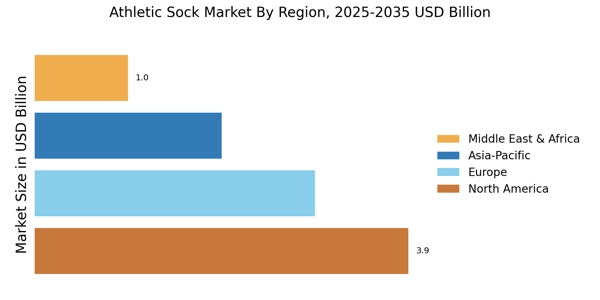
North America is the largest market for athletic socks, holding approximately 40% of the global share. The growth is driven by increasing health consciousness, rising participation in sports, and a growing trend towards athleisure wear. Regulatory support for sports and fitness initiatives further catalyzes demand, making it a vibrant market for athletic apparel. The United States leads this region, with significant contributions from Canada. Key players like Nike, Under Armour, and Hanesbrands dominate the competitive landscape, offering innovative products tailored to consumer preferences. The presence of major retail chains and e-commerce platforms enhances market accessibility, driving sales and brand visibility.
Europe is the second-largest market for athletic socks, accounting for around 30% of the global market share. The region is witnessing a shift towards sustainable and eco-friendly products, driven by increasing consumer awareness and stringent regulations on environmental impact. Countries like Germany and the UK are at the forefront of this trend, promoting green initiatives that encourage the use of sustainable materials in athletic apparel. Germany and the UK are leading countries in this market, with brands like Adidas and Puma spearheading innovation. The competitive landscape is characterized by a mix of established players and emerging brands focusing on sustainability. The presence of various sporting events and a strong culture of fitness further bolster demand for athletic socks in this region.
Asia-Pacific is rapidly emerging as a significant player in the athletic sock market, holding approximately 20% of the global share. The growth is fueled by increasing disposable incomes, a rising middle class, and a growing interest in sports and fitness activities. Countries like China and India are witnessing a surge in demand for athletic apparel, supported by government initiatives promoting sports participation and healthy lifestyles. China and Japan are the leading countries in this region, with a competitive landscape featuring both international brands and local manufacturers. Key players like Asics and Nike are expanding their presence, catering to the diverse preferences of consumers. The rise of e-commerce platforms is also enhancing market reach, making athletic socks more accessible to a broader audience.
The Middle East and Africa represent an emerging frontier for the athletic sock market, holding about 10% of the global share. The region is characterized by a growing youth population and increasing interest in sports, driven by government initiatives promoting health and fitness. Countries like South Africa and the UAE are leading this growth, with rising disposable incomes contributing to increased spending on athletic apparel. South Africa and the UAE are key players in this market, with a competitive landscape that includes both local and international brands. The presence of major sporting events and a growing fitness culture are driving demand for athletic socks. However, the market remains relatively untapped, presenting significant opportunities for growth and investment in the coming years.
The Athletic Sock Market is currently characterized by a dynamic competitive landscape, driven by innovation, sustainability, and consumer demand for performance-enhancing products. Major players such as Nike (US), Adidas (DE), and Under Armour (US) are at the forefront, each employing distinct strategies to capture market share. Nike (US) continues to emphasize technological advancements in its sock designs, focusing on moisture-wicking materials and ergonomic fits, which appeal to both amateur and professional athletes. Adidas (DE), on the other hand, has been actively pursuing sustainability initiatives, integrating recycled materials into its sock production, thereby aligning with the growing consumer preference for eco-friendly products. Under Armour (US) has adopted a strategy centered around digital transformation, enhancing its online presence and utilizing data analytics to better understand consumer preferences, which collectively shapes a competitive environment that is increasingly focused on innovation and consumer engagement.In terms of business tactics, companies are localizing manufacturing to reduce lead times and optimize supply chains, which is particularly crucial in the current global economic climate. The market structure appears moderately fragmented, with a mix of established brands and emerging players vying for consumer attention. The collective influence of key players like Puma (DE) and New Balance (US) further intensifies competition, as they also explore unique selling propositions to differentiate their offerings.
In August Puma (DE) announced a partnership with a leading sports technology firm to develop smart socks that monitor athletic performance metrics. This strategic move not only positions Puma as a pioneer in the integration of technology into athletic wear but also caters to the increasing consumer interest in performance tracking. Such innovations could potentially redefine consumer expectations and set new benchmarks in the athletic sock segment.
In September New Balance (US) launched a new line of performance socks designed specifically for marathon runners, featuring advanced cushioning and support. This initiative underscores New Balance's commitment to catering to niche markets within the athletic sector, thereby enhancing brand loyalty among serious athletes. By focusing on specialized products, New Balance may strengthen its competitive edge in a crowded marketplace.
In July Hanesbrands (US) unveiled a sustainability initiative aimed at reducing its carbon footprint by 50% by 2030, which includes the introduction of a new line of eco-friendly athletic socks. This strategic focus on sustainability not only aligns with global trends but also appeals to environmentally conscious consumers, potentially enhancing brand reputation and market share.
As of October the Athletic Sock Market is witnessing trends that emphasize digitalization, sustainability, and the integration of artificial intelligence in product development. Strategic alliances among companies are increasingly shaping the competitive landscape, fostering innovation and collaboration. The shift from price-based competition to a focus on technological advancements and supply chain reliability is evident, suggesting that future differentiation will hinge on the ability to innovate and respond to evolving consumer demands.

In 2023, the athletic sock market was valued at USD 8.94 billion, and it is projected to reach USD 12.9 billion by 2032, exhibiting a CAGR of 4.15% during the forecast period. This growth can be attributed to the increasing popularity of sports and fitness activities, coupled with the rising disposable income of consumers worldwide. Moreover, the growing awareness of the importance of foot health is expected to drive market growth.Key industry events include the launch of innovative products by leading manufacturers, such as Nike's Dri-FIT ADV Flyknit Crew Socks and Adidas' Alphaskin 360 Socks.
Additionally, strategic partnerships and collaborations between market players are shaping the competitive landscape. For instance, in 2023, Puma partnered with First Mile to produce sustainable athletic socks made from recycled materials.Emerging trends in the market include the adoption of advanced technologies such as moisture-wicking and anti-odor fabrics. Additionally, the growing popularity of e-commerce platforms is providing new avenues for market growth.
The Athletic Sock Market is projected to grow at a 4.15% CAGR from 2025 to 2035, driven by increasing health awareness, technological advancements, and rising participation in sports activities.
New opportunities lie in:
By 2035, the market is expected to achieve robust growth, solidifying its position as a key segment in the athletic apparel industry.
| MARKET SIZE 2024 | 9.705(USD Billion) |
| MARKET SIZE 2025 | 10.11(USD Billion) |
| MARKET SIZE 2035 | 15.18(USD Billion) |
| COMPOUND ANNUAL GROWTH RATE (CAGR) | 4.15% (2025 - 2035) |
| REPORT COVERAGE | Revenue Forecast, Competitive Landscape, Growth Factors, and Trends |
| BASE YEAR | 2024 |
| Market Forecast Period | 2025 - 2035 |
| Historical Data | 2019 - 2024 |
| Market Forecast Units | USD Billion |
| Key Companies Profiled | Nike (US), Adidas (DE), Under Armour (US), Puma (DE), New Balance (US), Reebok (GB), Asics (JP), Hanesbrands (US), Balega (US) |
| Segments Covered | Material, Cushioning Level, Sport, Length, Moisture Management, Regional |
| Key Market Opportunities | Integration of smart textiles and sustainability trends in the Athletic Sock Market. |
| Key Market Dynamics | Rising consumer demand for performance-enhancing materials drives innovation and competition in the athletic sock market. |
| Countries Covered | North America, Europe, APAC, South America, MEA |
The Athletic Sock Market was valued at 9.705 USD Billion in 2024.
The market is projected to reach 15.18 USD Billion by 2035.
The expected CAGR for the Athletic Sock Market during 2025 - 2035 is 4.15%.
Synthetic materials lead the market, with a valuation of 5.5 USD Billion projected, followed by Nylon at 3.0 USD Billion.
The Medium cushioning level segment is anticipated to grow significantly, with a projected valuation of 5.5 USD Billion.
Running socks are expected to generate the highest revenue, with a projected valuation of 4.0 USD Billion.
Key players include Nike, Adidas, Under Armour, and Puma, which are recognized for their market leadership.
Moisture management features, particularly Water-Resistant socks, are projected to reach a valuation of 4.1 USD Billion.
Crew length socks dominate the market, with a projected valuation of 4.5 USD Billion.
Trends indicate a growing preference for synthetic materials and advanced moisture management technologies.



Kindly complete the form below to receive a free sample of this Report

“This is really good guys. Excellent work on a tight deadline. I will continue to use you going forward and recommend you to others. Nice job”


“Thanks. It’s been a pleasure working with you, please use me as reference with any other Intel employees.”


“Thanks for sending the report it gives us a good global view of the Betaïne market.”


“Thank you, this will be very helpful for OQS.”


“We found the report very insightful! we found your research firm very helpful. I'm sending this email to secure our future business.”


“I am very pleased with how market segments have been defined in a relevant way for my purposes (such as "Portable Freezers & refrigerators" and "last-mile"). In general the report is well structured. Thanks very much for your efforts.”


“I have been reading the first document or the study, ,the Global HVAC and FP market report 2021 till 2026. Must say, good info! I have not gone in depth at all parts, but got a good indication of the data inside!”


“We got the report in time, we really thank you for your support in this process. I also thank to all of your team as they did a great job.”


“The Automotive 48V ECU Components Procurement Intelligence Study” was a complex project, but the Market Research Future (MRFR) team handled it with quality, agility, and customer-centricity. They delivered all requested data on time and within the agreed scope. The team, including Shubhendra Anand and Rahul Gotadki, was always readily available to clarify questions and swiftly implement necessary adjustments, driving the project to a successful conclusion within a very demanding timeframe.
I would also like to specifically commend Akshay Agarwal for his responsiveness and support at every stage—from our initial inquiry on May 6th through to final delivery on June 18th. His dedication made the entire process seamless.”



