Automotive Hose Market
Automotive Hose Market Summary
As per Market Research Future analysis, the Automotive Hose Market Size was estimated at 2.6 USD Billion in 2024. The Automotive Hose industry is projected to grow from 2.769 USD Billion in 2025 to 5.199 USD Billion by 2035, exhibiting a compound annual growth rate (CAGR) of 6.5% during the forecast period 2025 - 2035
Key Market Trends & Highlights
The Automotive Hose Market is poised for growth driven by sustainability and technological advancements.
- North America remains the largest market for automotive hoses, driven by high vehicle production rates.
- The Asia-Pacific region is emerging as the fastest-growing market, fueled by increasing demand for vehicles and infrastructure development.
- Passenger vehicles dominate the market, while heavy commercial vehicles are experiencing the fastest growth due to rising logistics needs.
- Key market drivers include stringent emission regulations and the increase in electric vehicle adoption, which are shaping the future of automotive hoses.
Market Size & Forecast
| 2024 Market Size | 2.6 (USD Billion) |
| 2035 Market Size | 5.199 (USD Billion) |
| CAGR (2025 - 2035) | 6.5% |
Major Players
Continental AG (DE), Gates Corporation (US), Hose Master LLC (US), Parker Hannifin Corporation (US), Trelleborg AB (SE), Dayco Products LLC (US), Eaton Corporation (US), Sumitomo Riko Company Limited (JP), Mackay Consolidated Industries (AU)
Automotive Hose Market Trends
The Automotive Hose Market is currently experiencing a dynamic evolution, driven by various factors including technological advancements and increasing consumer demand for efficient automotive systems. The integration of innovative materials and manufacturing processes appears to enhance the durability and performance of hoses, which are critical components in vehicles. Furthermore, the growing emphasis on sustainability and environmental considerations is likely to influence the production and design of automotive hoses, as manufacturers seek to reduce their carbon footprint and comply with stringent regulations. This shift towards eco-friendly solutions may also open new avenues for market growth, as consumers increasingly favor products that align with their values. In addition, the Automotive Hose Market seems to be benefiting from the rise of electric and hybrid vehicles, which require specialized hoses to manage fluids and gases effectively. As the automotive industry transitions towards electrification, the demand for high-performance hoses that can withstand varying temperatures and pressures is expected to increase. This trend indicates a potential shift in the types of materials and technologies utilized in hose production, as manufacturers adapt to the evolving needs of modern vehicles. Overall, the Automotive Hose Market is poised for continued growth, driven by innovation, sustainability, and the changing landscape of the automotive sector.
Sustainability Initiatives
The Automotive Hose Market is witnessing a notable shift towards sustainable practices. Manufacturers are increasingly focusing on eco-friendly materials and production methods to meet consumer demand for greener products. This trend not only aligns with global environmental goals but also enhances brand reputation among environmentally conscious consumers.
Technological Advancements
Innovations in materials and manufacturing techniques are transforming the Automotive Hose Market. The introduction of advanced polymers and composites is enhancing the performance and longevity of hoses. These technological improvements are crucial for meeting the demands of modern vehicles, which require high-performance components.
Electrification of Vehicles
The rise of electric and hybrid vehicles is reshaping the Automotive Hose Market. As these vehicles require specialized hoses for efficient fluid management, manufacturers are adapting their product lines to cater to this growing segment. This trend indicates a shift in design and functionality to accommodate the unique needs of electrified automotive systems.
Automotive Hose Market Drivers
Rising Vehicle Production
The increasing production of vehicles is a primary driver for the Automotive Hose Market. As manufacturers ramp up output to meet consumer demand, the need for various hoses, including coolant, fuel, and air conditioning hoses, escalates. In 2025, the automotive production is projected to reach approximately 90 million units, which indicates a robust demand for automotive components. This surge in vehicle production not only boosts the sales of automotive hoses but also encourages innovation in hose materials and designs to enhance performance and durability. Consequently, manufacturers are likely to invest in advanced technologies to produce high-quality hoses that can withstand the rigors of modern vehicles, thereby propelling the Automotive Hose Market forward.
Growth of Aftermarket Services
The growth of aftermarket services is emerging as a significant driver for the Automotive Hose Market. As vehicles age, the need for replacement parts, including hoses, becomes critical. The aftermarket segment is projected to account for a substantial share of the automotive hose market, driven by the increasing number of vehicles on the road. In 2025, the aftermarket for automotive components is expected to reach a valuation of over 300 billion dollars, indicating a lucrative opportunity for hose manufacturers. This trend highlights the importance of quality and reliability in hose products, as consumers seek durable replacements that can withstand the demands of everyday use. Consequently, the Automotive Hose Market is likely to see a shift towards providing high-quality aftermarket solutions.
Stringent Emission Regulations
Stringent emission regulations imposed by governments worldwide are significantly influencing the Automotive Hose Market. These regulations necessitate the use of high-performance hoses that can effectively manage exhaust gases and fluids, thereby reducing emissions. As automakers strive to comply with these regulations, the demand for specialized hoses, such as those used in exhaust systems, is likely to increase. The market for automotive hoses is expected to grow as manufacturers develop innovative solutions that not only meet regulatory standards but also enhance vehicle efficiency. This trend suggests that the Automotive Hose Market will continue to evolve, focusing on sustainability and environmental responsibility, which could lead to the introduction of new materials and technologies.
Increase in Electric Vehicle Adoption
The increase in electric vehicle adoption is emerging as a transformative driver for the Automotive Hose Market. As the automotive landscape shifts towards electrification, the demand for specialized hoses that cater to electric and hybrid vehicles is likely to grow. These vehicles require unique cooling systems and fluid management solutions, which in turn necessitate the development of new hose technologies. The electric vehicle market is projected to expand rapidly, with estimates suggesting that by 2025, electric vehicles could account for over 20% of total vehicle sales. This shift presents a significant opportunity for hose manufacturers to innovate and create products tailored to the specific needs of electric vehicles, thereby influencing the trajectory of the Automotive Hose Market.
Technological Innovations in Materials
Technological innovations in materials are playing a pivotal role in shaping the Automotive Hose Market. The development of advanced materials, such as thermoplastic elastomers and reinforced composites, enhances the performance and longevity of automotive hoses. These innovations allow for hoses that are lighter, more flexible, and resistant to extreme temperatures and pressures. As vehicle manufacturers increasingly prioritize weight reduction and efficiency, the demand for these advanced hoses is expected to rise. In 2025, the market for high-performance automotive hoses is projected to grow significantly, driven by the need for improved fuel efficiency and reduced emissions. This trend indicates that the Automotive Hose Market will continue to adapt and innovate in response to evolving automotive technologies.
Market Segment Insights
By Vehicle Type: Passenger Vehicle (Largest) vs. Heavy Commercial Vehicle (HCVs) (Fastest-Growing)
The Automotive Hose Market is broadly segmented by vehicle type, prominently showcasing Passenger Vehicles as the leading segment, holding the largest market share. This segment benefits from widespread consumer demand and the increasing production of personal vehicles globally. On the other hand, Heavy Commercial Vehicles (HCVs) are rapidly gaining traction, driven by the growing logistics and transportation sector, demanding advanced solutions for durability and operational efficiency.
Passenger Vehicle (Dominant) vs. Heavy Commercial Vehicle (HCVs) (Emerging)
Passenger Vehicles dominate the Automotive Hose Market, characterized by high production volumes and extensive distribution networks. They showcase a variety of hose types needed for engine cooling, fuel delivery, and air conditioning systems. As travel and mobility needs increase, this segment thrives significantly. In contrast, Heavy Commercial Vehicles (HCVs) are emerging in response to the booming e-commerce and freight transport industries, necessitating more robust and high-performance hose solutions. HCVs require specialized hoses for their larger engines and complex systems, which are designed to withstand harsher operating conditions, reflecting the dynamic evolution in vehicle manufacturing and operations.
By Material Type: Rubber Automotive Hoses (Largest) vs. Plastic Automotive Hoses (Fastest-Growing)
In the Automotive Hose Market, rubber automotive hoses hold the largest market share, owing to their excellent durability and resistance to extreme temperatures and pressures. This segment has been a long-standing leader in the industry, utilized across various applications in automotive engineering, ensuring reliability and performance. Plastic automotive hoses, while constituting a smaller portion of the market currently, are gaining traction due to their lightweight properties and resistance to corrosion, appealing to manufacturers aiming to enhance vehicle efficiency and reduce weight. The growth trends in the automotive hose segment indicate a rising preference for plastic automotive hoses as manufacturers shift towards lightweight materials to improve fuel efficiency and reduce emissions. The increasing implementation of stringent environmental regulations and the demand for electric vehicles are catalyzing innovation in materials used for automotive hoses. This transition presents opportunities for manufacturers to invest in the development of advanced plastic materials, further driving both the growth and adoption of plastic automotive hoses in the market.
Rubber Automotive Hoses (Dominant) vs. Plastic Automotive Hoses (Emerging)
Rubber automotive hoses have long dominated the Automotive Hose Market due to their exceptional resilience and ability to withstand harsh conditions. These hoses are designed to endure high pressures, extreme temperatures, and various chemicals, making them ideal for the rigorous demands of automotive applications. With a proven track record in performance, rubber hoses are commonly found in coolant systems and fuel lines. On the other hand, plastic automotive hoses represent an emerging segment characterized by innovations in polymer technology. Their advantages include lower weight, which can lead to improved vehicle performance, and resistance to corrosion. As manufacturers increasingly prioritize sustainability and efficiency, the shift towards plastic hoses as a viable alternative is gaining momentum, making this segment key to future developments.
By Applications: Fuel Hoses (Largest) vs. Brake Hoses (Fastest-Growing)
The Automotive Hose Market is characterized by varied applications, with fuel hoses holding the largest share due to their critical role in vehicle functionality. Following closely are brake hoses, which are increasingly gaining traction as safety and performance standards rise. Other significant segments include coolant hoses and turbo charger hoses, each catering to specific automotive functions and contributing to a robust market share distribution among these applications. Growth trends in the Automotive Hose Market are primarily driven by technological advancements and increasing demand for fuel-efficient vehicles. As the automotive industry evolves towards sustainability, the need for reliable and durable hoses, such as brake hoses, is expected to surge. Innovations in materials and design, aimed at enhancing performance and safety, are also fueling growth across various hose segments, paving the way for emerging applications.
Fuel Hoses (Dominant) vs. Brake Hoses (Emerging)
Fuel hoses are a dominant segment in the Automotive Hose Market, known for their essential function in transporting fuel from the tank to the engine. They are manufactured using materials that withstand high temperatures and pressures, ensuring efficiency and safety. On the other hand, brake hoses are quickly becoming an emerging segment as they are crucial for vehicle safety and performance. With advancements in technology, the focus is shifting toward developing flexible yet durable brake hoses that can sustain severe stress. As safety regulations tighten and consumers demand higher performance standards, both segments are poised for growth, though fuel hoses will continue to lead in market significance.
By Sales Channel: OEM (Largest) vs. Aftermarket (Fastest-Growing)
In the Automotive Hose Market, the sales channel distribution is predominantly tilted towards OEM, which commands the largest share due to its extensive integration into vehicle manufacturing processes. OEMs focus on providing high-quality hoses that meet the stringent requirements of vehicle manufacturers, thereby ensuring reliability and safety in vehicles. On the other hand, the aftermarket segment, though smaller in share, is rapidly gaining traction as vehicle owners increasingly seek replacement and upgrade options for their vehicles, thanks to the rising trend of vehicle personalization and the growing demand for high-performance components.
Sales Channels: OEM (Dominant) vs. Aftermarket (Emerging)
The OEM segment remains dominant in the Automotive Hose Market, characterized by established relationships with automotive manufacturers and a focus on original equipment production standards. OEM hoses are designed specifically for new vehicles, ensuring they meet the high-performance requirements and durability standards set by manufacturers. In contrast, the aftermarket segment is emerging, driven by the increased age of vehicles on the road and a consumer shift towards DIY maintenance and upgrades. This segment offers a broader range of products, including specialized hoses that cater to diverse performance requirements and consumer preferences, allowing for customization and enhanced vehicle performance.
Regional Insights
North America : Automotive Innovation Hub
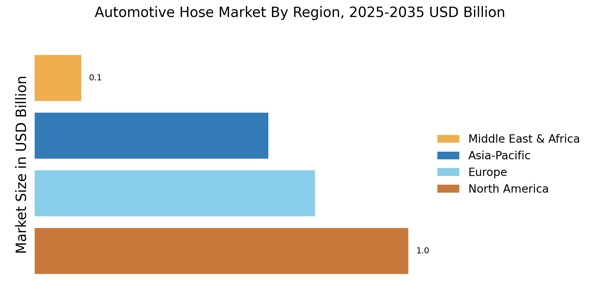
North America is the largest market for automotive hoses, holding approximately 40% of the global share. The region's growth is driven by increasing vehicle production, stringent emission regulations, and a shift towards electric vehicles. The demand for high-performance hoses is also rising due to advancements in automotive technology and materials. Regulatory catalysts, such as the Clean Air Act, further enhance market growth by promoting environmentally friendly automotive solutions. The United States leads the North American market, followed by Canada. Key players like Gates Corporation and Parker Hannifin Corporation dominate the competitive landscape, focusing on innovation and quality. The presence of major automotive manufacturers in the region fosters a robust supply chain, ensuring a steady demand for automotive hoses. The market is characterized by continuous technological advancements and strategic partnerships among leading companies.
Europe : Regulatory-Driven Market
Europe is the second-largest market for automotive hoses, accounting for approximately 30% of the global share. The region's growth is propelled by stringent environmental regulations and a strong focus on sustainability. The European Union's Green Deal aims to reduce carbon emissions, driving demand for innovative automotive solutions. Additionally, the increasing adoption of electric vehicles and hybrid technologies is expected to further boost the market for automotive hoses in the coming years. Germany, France, and the UK are the leading countries in this market, with Germany being the largest. The competitive landscape features key players like Continental AG and Trelleborg AB, who are investing in R&D to develop advanced hose technologies. The presence of a well-established automotive industry and a growing emphasis on eco-friendly products contribute to the region's dynamic market environment. The European market is characterized by collaboration among manufacturers and regulatory bodies to meet evolving standards.
Asia-Pacific : Emerging Powerhouse in Automotive
Asia-Pacific is witnessing rapid growth in the automotive hose market, holding approximately 25% of the global share. The region's expansion is driven by increasing vehicle production, rising disposable incomes, and urbanization. Countries like China and India are leading the charge, with significant investments in automotive manufacturing and infrastructure. Additionally, government initiatives to promote electric vehicles are expected to further enhance market growth in the coming years. China is the largest market in the region, followed by Japan and India. The competitive landscape is marked by the presence of key players such as Sumitomo Riko Company Limited and Mackay Consolidated Industries. These companies are focusing on innovation and expanding their product offerings to cater to the growing demand. The Asia-Pacific market is characterized by a mix of local and international players, fostering a competitive environment that drives technological advancements and cost efficiencies.
Middle East and Africa : Resource-Rich Frontier
The Middle East and Africa (MEA) region is emerging as a significant market for automotive hoses, holding approximately 5% of the global share. The growth is driven by increasing vehicle sales, urbanization, and government initiatives to enhance transportation infrastructure. Countries like South Africa and the UAE are leading the market, with investments in automotive manufacturing and a growing demand for high-quality automotive components. The region's strategic location also facilitates trade and access to global markets. South Africa is the largest market in the MEA region, followed by the UAE. The competitive landscape features both local and international players, with companies focusing on quality and innovation to meet the rising demand. The presence of key players and a growing automotive industry contribute to the region's potential for future growth. The MEA market is characterized by a focus on sustainability and the adoption of advanced technologies in automotive manufacturing.
Key Players and Competitive Insights
Key Companies in the Automotive Hose Market include
Future Outlook
Automotive Hose Market Future Outlook
The Automotive Hose Market is projected to grow at a 6.5% CAGR from 2025 to 2035, driven by increasing vehicle production, technological advancements, and rising demand for fuel-efficient vehicles.
New opportunities lie in:
- Expansion into electric vehicle cooling systems Development of biodegradable hoses for sustainability Integration of smart technology in hose monitoring systems
By 2035, the market is expected to achieve robust growth, driven by innovation and evolving consumer preferences.
Market Segmentation
Automotive Hose Market Applications Outlook
- Coolant Hoses
- Turbo Charger Hoses
- Air Conditioning Hoses
- Windshield Washer Fluid Hoses
- Fuel Hoses
- Brake Hoses
Automotive Hose Market Vehicle Type Outlook
- Passenger Vehicle
- Heavy Commercial Vehicle (HCVs)
- Light Commercial Vehicle (LCVs)
- Two Wheelers
Automotive Hose Market Material Type Outlook
- Plastic Automotive Hoses
- Metal Automotive Hoses
- Rubber Automotive Hoses
Automotive Hose Market Sales Channel Outlook
- OEM
- Aftermarket
Report Scope
| MARKET SIZE 2024 | 2.6(USD Billion) |
| MARKET SIZE 2025 | 2.769(USD Billion) |
| MARKET SIZE 2035 | 5.199(USD Billion) |
| COMPOUND ANNUAL GROWTH RATE (CAGR) | 6.5% (2025 - 2035) |
| REPORT COVERAGE | Revenue Forecast, Competitive Landscape, Growth Factors, and Trends |
| BASE YEAR | 2024 |
| Market Forecast Period | 2025 - 2035 |
| Historical Data | 2019 - 2024 |
| Market Forecast Units | USD Billion |
| Key Companies Profiled | Continental AG (DE), Gates Corporation (US), Hose Master LLC (US), Parker Hannifin Corporation (US), Trelleborg AB (SE), Dayco Products LLC (US), Eaton Corporation (US), Sumitomo Riko Company Limited (JP), Mackay Consolidated Industries (AU) |
| Segments Covered | Vehicle Type, Material Type, Applications, Sales Channel, Region |
| Key Market Opportunities | Integration of advanced materials for enhanced durability and performance in the Automotive Hose Market. |
| Key Market Dynamics | Rising demand for lightweight materials in automotive hoses driven by fuel efficiency and environmental regulations. |
| Countries Covered | North America, Europe, APAC, South America, MEA |
FAQs
What is the projected market valuation of the Automotive Hose Market by 2035?
The Automotive Hose Market is projected to reach a valuation of 5.199 USD Billion by 2035.
What was the market valuation of the Automotive Hose Market in 2024?
In 2024, the Automotive Hose Market was valued at 2.6 USD Billion.
What is the expected CAGR for the Automotive Hose Market during the forecast period 2025 - 2035?
The expected CAGR for the Automotive Hose Market during the forecast period 2025 - 2035 is 6.5%.
Which segment of the Automotive Hose Market had the highest valuation in 2024?
In 2024, the Rubber Automotive Hoses segment had the highest valuation at 1.3 USD Billion.
What are the key applications of automotive hoses in the market?
Key applications of automotive hoses include Coolant Hoses, Fuel Hoses, and Brake Hoses, among others.
Which company is a leading player in the Automotive Hose Market?
Continental AG is one of the leading players in the Automotive Hose Market.
What is the projected valuation for the Heavy Commercial Vehicle segment by 2035?
How does the valuation of Plastic Automotive Hoses compare to Metal Automotive Hoses in 2024?
What is the projected growth for the Aftermarket sales channel in the Automotive Hose Market?
What is the valuation of the Two Wheelers segment in 2024?
Kindly complete the form below to receive a free sample of this Report
Customer Stories
“This is really good guys. Excellent work on a tight deadline. I will continue to use you going forward and recommend you to others. Nice job”
“Thanks. It’s been a pleasure working with you, please use me as reference with any other Intel employees.”
“Thanks for sending the report it gives us a good global view of the Betaïne market.”
“Thank you, this will be very helpful for OQS.”
“We found the report very insightful! we found your research firm very helpful. I'm sending this email to secure our future business.”
“I am very pleased with how market segments have been defined in a relevant way for my purposes (such as "Portable Freezers & refrigerators" and "last-mile"). In general the report is well structured. Thanks very much for your efforts.”
“I have been reading the first document or the study, ,the Global HVAC and FP market report 2021 till 2026. Must say, good info! I have not gone in depth at all parts, but got a good indication of the data inside!”
“We got the report in time, we really thank you for your support in this process. I also thank to all of your team as they did a great job.”