×
Request Free Sample ×

Kindly complete the form below to receive a free sample of this Report

* Please use a valid business email

Leading companies partner with us for data-driven Insights

clients tt-cursor
Hero Background

Automotive Seat Belt Pretensioner Market

ID: MRFR/AT/3560-HCR
100 Pages
Swapnil Palwe
October 2025

Automotive Seat Belt Pretensioner Market Research Report Information, By Pretensioner Type (Retractor and Buckle), By Vehicle Type (Passenger Vehicles and Commercial Vehicles and by End Market (OEMs and Aftermarket) and By Region - Industry Size, Share, Trends & Forecast to 2035

Share:
Download PDF ×

We do not share your information with anyone. However, we may send you emails based on your report interest from time to time. You may contact us at any time to opt-out.

Automotive Seat Belt Pretensioner Market Infographic
Purchase Options

Automotive Seat Belt Pretensioner Market Summary

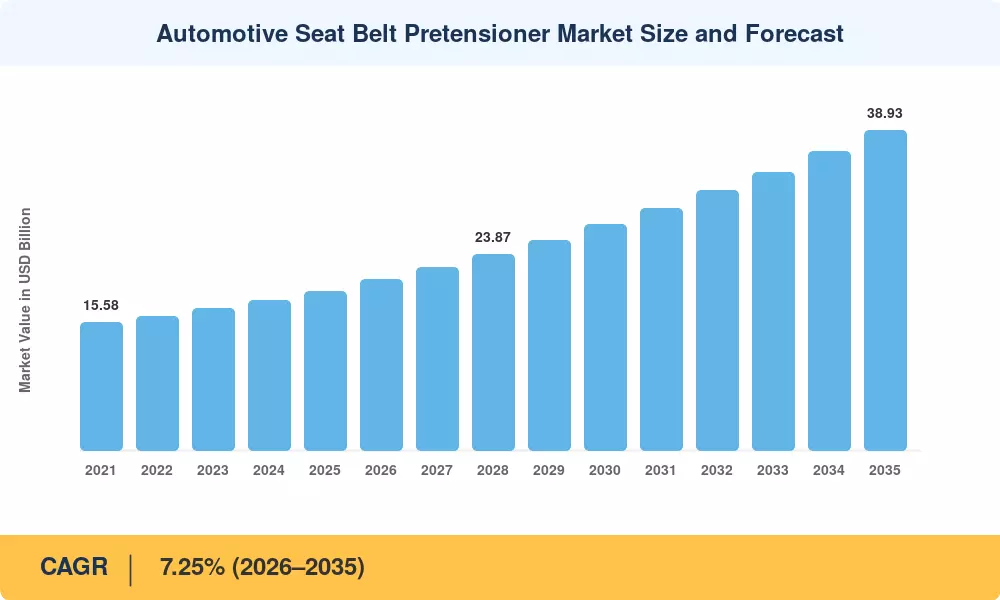
As per MRFR analysis, the Automotive Seat Belt Pretensioner Market Size was estimated at 1.1 USD Million in 2024. The Automotive Seat Belt Pretensioner industry is projected to grow from 1.2 in 2025 to 2.1 by 2035, exhibiting a compound annual growth rate (CAGR) of 5.76 during the forecast period 2025 - 2035.

Key Market Trends & Highlights

The Automotive Seat Belt Pretensioner Market is poised for growth driven by technological advancements and regulatory compliance.

  • Technological advancements in safety systems are reshaping the automotive landscape, particularly in North America.
  • The integration of seat belt pretensioners with electric and autonomous vehicles is gaining traction in the Asia-Pacific region.
  • Passenger vehicles remain the largest segment, while commercial vehicles are experiencing the fastest growth in demand.
  • Market drivers include stringent regulatory frameworks and rising consumer awareness of safety features, propelling the adoption of advanced pretensioner technologies.

Market Size & Forecast

2024 Market Size 1.1 (USD Million)
2035 Market Size 2.1 (USD Million)
CAGR (2025 - 2035) 5.76%

Major Players

Autoliv (SE), Takata (JP), ZF Friedrichshafen (DE), Joyson Safety Systems (CN), Continental (DE), Daimler AG (DE), TRW Automotive (US), Aisin Seiki (JP), Hyundai Mobis (KR)

Automotive Seat Belt Pretensioner Market Trends

The Automotive Seat Belt Pretensioner Market is currently experiencing a notable evolution, driven by advancements in safety technology and increasing consumer awareness regarding vehicle safety features. As manufacturers strive to enhance occupant protection, the integration of innovative pretensioner systems has become a focal point. These systems, designed to tighten seat belts during a collision, are gaining traction due to their effectiveness in reducing injury severity. Furthermore, regulatory bodies are imposing stricter safety standards, compelling automakers to adopt advanced pretensioner technologies to comply with these regulations. This trend indicates a shift towards prioritizing passenger safety in vehicle design, which is likely to influence market dynamics significantly. In addition to regulatory pressures, the Automotive Seat Belt Pretensioner Market is also influenced by the growing trend of electric and autonomous vehicles. As these vehicles become more prevalent, the demand for sophisticated safety systems, including pretensioners, is expected to rise. Manufacturers are likely to invest in research and development to create pretensioners that are compatible with new vehicle architectures. This evolution suggests a future where safety features are seamlessly integrated into the overall vehicle design, enhancing both functionality and user experience. Overall, the market appears poised for growth, driven by technological advancements and changing consumer expectations.

Technological Advancements in Safety Systems

The Automotive Seat Belt Pretensioner Market is witnessing a surge in technological innovations aimed at enhancing safety features. Manufacturers are increasingly focusing on developing advanced pretensioner systems that utilize sensors and smart technologies to respond more effectively during collisions. This trend reflects a broader commitment to improving occupant protection and reducing injury risks.

Regulatory Compliance and Safety Standards

Stricter safety regulations are shaping the Automotive Seat Belt Pretensioner Market. Governments worldwide are implementing more rigorous safety standards, compelling automakers to adopt advanced pretensioner technologies. This trend underscores the importance of compliance in driving market growth and ensuring passenger safety.

Integration with Electric and Autonomous Vehicles

The rise of electric and autonomous vehicles is influencing the Automotive Seat Belt Pretensioner Market. As these vehicles become more common, the demand for sophisticated safety systems, including pretensioners, is expected to increase. Manufacturers are likely to focus on developing pretensioners that align with the unique requirements of these new vehicle types.

Automotive Seat Belt Pretensioner Market Drivers

Increasing Vehicle Safety Regulations

The Global Automotive Seat Belt Pretensioner Market Industry is experiencing growth due to stringent vehicle safety regulations imposed by governments worldwide. Regulatory bodies are mandating the inclusion of advanced safety features in vehicles, including pretensioners, which enhance seat belt effectiveness during collisions. For instance, the European Union has implemented regulations that require all new vehicles to be equipped with advanced safety systems. This regulatory push is expected to contribute significantly to the market, as manufacturers strive to comply with these standards, thereby increasing the demand for seat belt pretensioners.

Projected Market Growth and Economic Factors

The Global Automotive Seat Belt Pretensioner Market Industry is poised for substantial growth, with projections indicating a market value of 3500 USD Million in 2024 and an anticipated increase to 6200 USD Million by 2035. This growth trajectory suggests a compound annual growth rate (CAGR) of 5.34% from 2025 to 2035. Economic factors, including rising disposable incomes and increased vehicle ownership, are likely to drive this growth. As consumers invest in new vehicles, the demand for advanced safety features, including seat belt pretensioners, is expected to rise, further propelling the market.

Rising Consumer Awareness of Safety Features

Consumer awareness regarding vehicle safety features is on the rise, driving the Global Automotive Seat Belt Pretensioner Market Industry forward. As individuals become more informed about the benefits of advanced safety technologies, they are increasingly prioritizing vehicles equipped with such features. This trend is particularly evident in regions with high vehicle ownership rates, where consumers are willing to invest in safety enhancements. The growing emphasis on personal safety is likely to propel the demand for seat belt pretensioners, as consumers seek vehicles that offer superior protection during accidents.

Technological Advancements in Pretensioner Systems

Technological advancements in automotive safety systems are significantly influencing the Global Automotive Seat Belt Pretensioner Market Industry. Innovations such as electronic pretensioners and adaptive systems that adjust tension based on collision severity are becoming more prevalent. These advancements not only improve passenger safety but also enhance the overall performance of seat belt systems. As manufacturers integrate these technologies into their vehicles, the market for seat belt pretensioners is expected to expand. The introduction of smart seat belt systems that can communicate with other vehicle safety features further illustrates the potential for growth in this sector.

Growth of the Automotive Industry in Emerging Markets

The expansion of the automotive industry in emerging markets is a key driver for the Global Automotive Seat Belt Pretensioner Market Industry. Countries such as India and Brazil are witnessing a surge in vehicle production and sales, leading to increased demand for safety features, including pretensioners. As these markets develop, the need for enhanced safety measures becomes more pronounced, prompting manufacturers to invest in advanced seat belt technologies. The projected growth of the automotive sector in these regions is expected to contribute to the market's overall expansion, with significant opportunities for pretensioner manufacturers.

Market Segment Insights

By Application: Passenger Vehicle (Largest) vs. Commercial Vehicle (Fastest-Growing)

In the Automotive Seat Belt Pretensioner Market, the primary application segment is dominated by passenger vehicles, accounting for a substantial portion of market share. This dominance is attributed to the increasing demand for passenger safety and comfort, alongside the regulatory requirements for advanced safety features. In contrast, commercial vehicles, which encompass trucks and vans, are gaining traction due to heightened regulations and the need for enhanced safety measures to protect drivers and passengers in these larger vehicles. Furthermore, with the rise in e-commerce and logistics, the demand for commercial vehicles is expected to grow, thus bolstering the sales of seat belt pretensioners. Moreover, key manufacturers are adapting their technologies to meet the specific requirements of commercial vehicles, making them a competitive focus in the market.

Passenger Vehicle (Dominant) vs. Motorcycle (Emerging)

The passenger vehicle segment remains the dominant force in the automotive seat belt pretensioner market, driven by a mix of consumer demand for safety and manufacturers' compliance with stringent automotive safety standards. In contrast, the motorcycle market is emerging as a new frontier for safety innovations. Although motorcycles are traditionally less equipped with complex safety systems compared to passenger vehicles, the growing awareness of safety and the introduction of advanced safety features are beginning to alter this landscape. Companies are increasingly focusing on integrating pretensioner systems into motorcycles to enhance rider safety. This burgeoning segment explores new materials and technologies to improve performance while maintaining lightweight designs, positioning motorcycle manufacturers to catch up with their passenger vehicle counterparts.

By Type: Mechanical Pretensioner (Largest) vs. Pyrotechnic Pretensioner (Fastest-Growing)

In the Automotive Seat Belt Pretensioner Market, the Mechanical Pretensioner currently holds the largest share, owing to its simplicity, reliability, and cost-effectiveness, making it a preferred choice among automotive manufacturers. Meanwhile, the Pyrotechnic Pretensioner, although smaller in market share, is rapidly gaining traction due to advancements in technology and increased emphasis on passenger safety features. As consumers demand more sophisticated safety systems, manufacturers are compelled to innovate, supporting the growth of pyrotechnic mechanisms in modern vehicles.

Pretensioner Types: Mechanical (Dominant) vs. Electronic (Emerging)

Mechanical Pretensioners dominate the automotive landscape due to their proven reliability and lower production costs. These devices utilize springs and mechanical components to tighten the seat belt in the event of a collision, ensuring effective occupant restraint. On the other hand, Electronic Pretensioners represent an emerging trend, incorporating advanced sensors and electronic controls to enhance performance and reaction times. While still developing market presence, Electronic Pretensioners are expected to gain popularity as vehicle safety technology evolves, reflecting the industry's shift toward more automated and responsive safety systems.

By End Use: Original Equipment Manufacturer (Largest) vs. Aftermarket (Fastest-Growing)

The Automotive Seat Belt Pretensioner Market reveals a clear distribution of market share between the Original Equipment Manufacturer (OEM) and Aftermarket segments. The OEM segment enjoys the largest share, driven primarily by the increasing production of vehicles and the growing focus of manufacturers on safety regulations. Meanwhile, the Aftermarket segment demonstrates notable growth, fueled by rising consumer awareness about vehicle safety and the increasing trend of retrofitting vehicles with advanced safety features, thereby enhancing demand for pretensioners.

End Use: OEM (Dominant) vs. Aftermarket (Emerging)

The Original Equipment Manufacturer (OEM) segment in the Automotive Seat Belt Pretensioner Market stands as the dominant player, characterized by its strong alignment with vehicle production cycles and partnerships with automobile manufacturers. This segment benefits from stringent regulations mandating advanced safety features in newly produced vehicles, ensuring a stable demand for pretensioners. In contrast, the Aftermarket segment has emerged as a rapidly growing area, fostering opportunities for independent suppliers and retailers. This growth is propelled by increasing consumer awareness regarding car safety and the availability of affordable replacement options, allowing vehicle owners to upgrade safety features or replace worn components in older models.

By Technology: Active Pretensioning (Largest) vs. Passive Pretensioning (Fastest-Growing)

In the Automotive Seat Belt Pretensioner Market, active pretensioning technology holds the largest market share. This technology is preferred by automakers due to its effectiveness in reducing seatbelt slack during a collision, providing enhanced passenger safety. Meanwhile, passive pretensioning technology, while currently smaller in share, is seeing significant traction due to growing awareness about its cost-effectiveness and reliability in everyday driving scenarios.

Technology: Active Pretensioning (Dominant) vs. Passive Pretensioning (Emerging)

Active pretensioning systems are characterized by their ability to automatically tighten seatbelts upon the detection of a collision, significantly minimizing occupant movement and increasing safety. They typically rely on sensors and advanced algorithms to react instantly in high-impact situations, making them the preferred choice among automakers focusing on safety innovations. On the other hand, passive pretensioning systems are observing rapid growth in the market, as they provide a more affordable solution without compromising essential safety functions. This technology engages in a standardized manner, tightening the seatbelt only when certain pre-determined parameters are met, thereby appealing to cost-conscious manufacturers and consumers who still prioritize safety.

By Material: Steel (Largest) vs. Aluminum (Fastest-Growing)

The Automotive Seat Belt Pretensioner Market is experiencing a significant division among materials, with steel leading the market share due to its strong mechanical properties and durability. It is extensively used in traditional pretensioners, offering superb resistance to various stresses. Aluminum, while currently a smaller segment, is rapidly gaining traction due to its lightweight properties, which enhance the fuel efficiency of vehicles and contribute to overall vehicle performance.

Steel (Dominant) vs. Aluminum (Emerging)

Steel remains the dominant material for seat belt pretensioners due to its strength and reliability, which are critical for safety applications. It provides excellent energy absorption and is widely favored by manufacturers for its cost-effectiveness and proven performance. In contrast, aluminum is emerging as a popular choice due to its lightweight nature, helping to reduce vehicle weight and improve fuel efficiency. Innovations in pre-assembly techniques and advancements in alloy compositions are driving the adoption of aluminum, alongside increasing consumer demand for more sustainable and efficient vehicle designs.

Get more detailed insights about Automotive Seat Belt Pretensioner Market

Regional Insights

North America : Market Leader in Safety Innovations

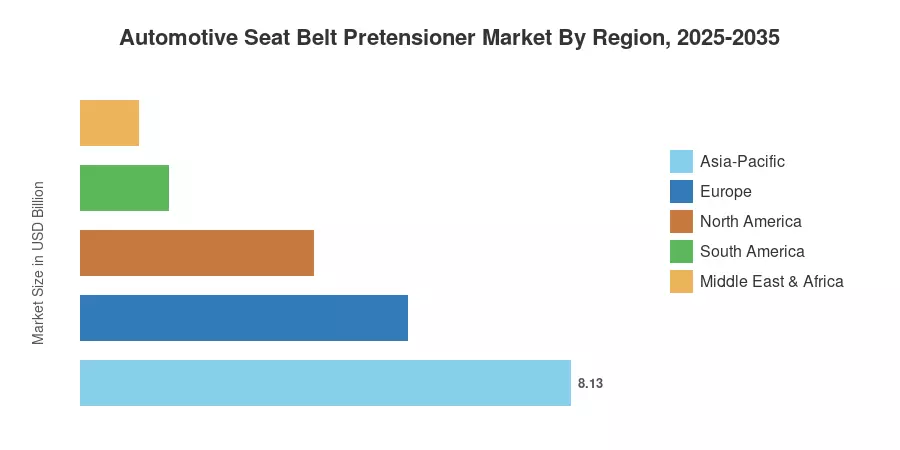
North America holds a significant 55% share of the automotive seat belt pretensioner market, driven by stringent safety regulations and a growing emphasis on vehicle safety features. The demand for advanced safety technologies is further fueled by increasing consumer awareness and government initiatives aimed at reducing road fatalities. Regulatory bodies are continuously updating safety standards, which propels manufacturers to innovate and enhance their product offerings. The competitive landscape in North America is robust, with key players like Autoliv, TRW Automotive, and ZF Friedrichshafen leading the market. The presence of major automotive manufacturers in the U.S. and Canada fosters collaboration with safety component suppliers. This synergy enhances the development of advanced pretensioner systems, ensuring compliance with evolving safety regulations and meeting consumer expectations for enhanced vehicle safety.

Europe : Regulatory-Driven Market Growth

Europe accounts for 25% of the automotive seat belt pretensioner market, driven by rigorous safety regulations and a strong automotive manufacturing base. The European Union has implemented stringent safety directives, compelling manufacturers to adopt advanced safety technologies. This regulatory environment fosters innovation, as companies strive to meet compliance while enhancing consumer safety. The growing trend towards electric vehicles also influences the demand for advanced safety systems, including pretensioners. Leading countries such as Germany, France, and the UK are at the forefront of this market, with major players like Continental and Daimler AG driving advancements. The competitive landscape is characterized by a mix of established firms and emerging players, all focused on developing cutting-edge safety solutions. The collaboration between automotive manufacturers and safety component suppliers is crucial for meeting the high safety standards set by regulatory bodies.

Asia-Pacific : Emerging Market with Growth Potential

Asia-Pacific holds a 15% share of the automotive seat belt pretensioner market, characterized by rapid industrialization and increasing vehicle production. Countries like China, Japan, and South Korea are witnessing a surge in demand for automotive safety features, driven by rising consumer awareness and government regulations aimed at enhancing road safety. The region's growing middle class is also contributing to increased vehicle ownership, further propelling the demand for advanced safety systems. The competitive landscape in Asia-Pacific is evolving, with key players such as Joyson Safety Systems and Hyundai Mobis leading the charge. The presence of numerous automotive manufacturers in the region fosters a dynamic environment for innovation. Collaborations between local and international firms are becoming more common, enhancing the development of advanced pretensioner technologies to meet the growing safety demands of consumers.

Middle East and Africa : Niche Market with Growth Opportunities

The Middle East and Africa represent a small but growing segment of the automotive seat belt pretensioner market, accounting for 5%. The region is experiencing a gradual increase in safety awareness, driven by government initiatives and a rising number of vehicles on the road. As urbanization accelerates, the demand for enhanced vehicle safety features is expected to grow, prompting manufacturers to invest in advanced safety technologies, including pretensioners. Countries like South Africa and the UAE are leading the market, with a focus on improving road safety standards. The competitive landscape is still developing, with opportunities for both local and international players to establish a foothold. As the region continues to evolve, the presence of key players and their commitment to safety innovation will be crucial in shaping the market's future.

Key Players and Competitive Insights

The Automotive Seat Belt Pretensioner Market is characterized by a competitive landscape that is increasingly shaped by innovation, strategic partnerships, and a focus on safety enhancements. Key players such as Autoliv (SE), ZF Friedrichshafen (DE), and Joyson Safety Systems (CN) are at the forefront, each adopting distinct strategies to bolster their market positions. Autoliv (SE) emphasizes technological advancements in safety systems, while ZF Friedrichshafen (DE) focuses on integrating smart technologies into their products. Joyson Safety Systems (CN) appears to be leveraging its manufacturing capabilities to expand its footprint in emerging markets, thereby enhancing its competitive edge. Collectively, these strategies contribute to a dynamic environment where innovation and safety are paramount.

In terms of business tactics, companies are increasingly localizing manufacturing to reduce costs and enhance supply chain efficiency. This trend is particularly evident in regions with burgeoning automotive industries, where proximity to customers can lead to faster response times and reduced logistics costs. The market structure is moderately fragmented, with several players vying for market share, yet the influence of major companies remains substantial. Their collective actions shape pricing strategies and product offerings, creating a competitive atmosphere that encourages continuous improvement and innovation.

In November 2025, Autoliv (SE) announced a partnership with a leading technology firm to develop next-generation seat belt pretensioners that utilize AI for enhanced performance. This strategic move is likely to position Autoliv (SE) as a pioneer in integrating artificial intelligence into safety systems, potentially setting new industry standards. The collaboration underscores the importance of technological innovation in maintaining a competitive advantage in the market.

In October 2025, ZF Friedrichshafen (DE) unveiled a new line of pretensioners designed specifically for electric vehicles (EVs), reflecting a strategic pivot towards the growing EV market. This initiative not only aligns with global trends towards electrification but also demonstrates ZF's commitment to adapting its product offerings to meet evolving consumer demands. Such foresight may enhance ZF's market share in a segment that is expected to expand significantly in the coming years.

In September 2025, Joyson Safety Systems (CN) expanded its manufacturing capabilities in Southeast Asia, aiming to cater to the increasing demand for automotive safety features in the region. This expansion is indicative of Joyson's strategy to localize production and reduce lead times, which could enhance its competitive positioning against other global players. By establishing a stronger presence in this high-growth market, Joyson is likely to capitalize on the rising demand for advanced safety systems.

As of December 2025, the competitive trends in the Automotive Seat Belt Pretensioner Market are increasingly defined by digitalization, sustainability, and the integration of advanced technologies. Strategic alliances are becoming more prevalent, as companies recognize the need to collaborate to drive innovation and enhance product offerings. The shift from price-based competition to a focus on technological differentiation and supply chain reliability is evident. Moving forward, companies that prioritize innovation and adaptability are likely to thrive in this evolving landscape, as consumer expectations continue to rise.

Key Companies in the Automotive Seat Belt Pretensioner Market market include

Industry Developments

  • Q2 2024: Autoliv inaugurates new seatbelt and airbag plant in Vietnam Autoliv, a global leader in automotive safety systems, opened a new manufacturing facility in Vietnam to expand its production capacity for seatbelt pretensioners and airbags, aiming to meet growing demand in the Asia-Pacific region.
  • Q2 2024: ZF secures major contract with Stellantis for next-generation seat belt pretensioners ZF announced it has won a multi-year supply contract with Stellantis to provide advanced seat belt pretensioner systems for several upcoming vehicle models, reinforcing its position as a key supplier of automotive safety technology.
  • Q1 2024: Joyson Safety Systems launches new pyrotechnic seat belt pretensioner for electric vehicles Joyson Safety Systems introduced a new line of pyrotechnic seat belt pretensioners specifically designed for electric vehicles, featuring enhanced energy efficiency and integration with advanced driver-assistance systems.
  • Q3 2024: Tokai Rika announces expansion of seat belt pretensioner production in Mexico Tokai Rika revealed plans to expand its manufacturing operations in Mexico, increasing output of seat belt pretensioners to support North American automotive OEMs and address rising safety regulation requirements.
  • Q2 2024: Hyundai Mobis partners with Bosch to co-develop smart seat belt pretensioner technology Hyundai Mobis and Bosch entered a strategic partnership to jointly develop next-generation smart seat belt pretensioners, aiming to enhance occupant safety through real-time crash detection and adaptive restraint systems.
  • Q1 2025: Autoliv appoints new Head of Seat Belt Systems Division Autoliv announced the appointment of a new executive to lead its global Seat Belt Systems Division, signaling a renewed focus on innovation and operational efficiency in its pretensioner product line.
  • Q4 2024: Continental wins contract to supply seat belt pretensioners for Ford’s 2026 EV lineup Continental secured a significant contract to supply advanced seat belt pretensioner systems for Ford’s upcoming electric vehicle models, with production set to begin in late 2025.
  • Q3 2024: Nissan receives regulatory approval for new seat belt pretensioner design in Japan Nissan obtained approval from Japanese safety regulators for its newly developed seat belt pretensioner, which incorporates improved pyrotechnic mechanisms for faster occupant restraint during collisions.
  • Q2 2025: Joyson Safety Systems opens R&D center for seat belt pretensioners in Germany Joyson Safety Systems inaugurated a new research and development center in Germany focused on advancing seat belt pretensioner technology, with an emphasis on integration with autonomous vehicle safety systems.
  • Q1 2024: TRW Automotive (ZF) launches next-gen micro-gas generator for seat belt pretensioners TRW Automotive, a ZF company, introduced a new micro-gas generator for seat belt pretensioners, offering improved performance and reduced weight for OEM customers worldwide.
  • Q4 2024: Toyota invests in new seat belt pretensioner production line at Kentucky plant Toyota announced a multi-million dollar investment to add a new seat belt pretensioner production line at its Kentucky manufacturing facility, aiming to localize supply for North American vehicle assembly.
  • Q3 2025: Faurecia wins contract to supply seat belt pretensioners for Volkswagen’s next-gen SUVs Faurecia secured a contract to provide seat belt pretensioner systems for Volkswagen’s upcoming SUV models, with deliveries scheduled to start in early 2026.

Future Outlook

Automotive Seat Belt Pretensioner Market Future Outlook

The Automotive Seat Belt Pretensioner Market is projected to grow at a 5.76% CAGR from 2024 to 2035, driven by increasing safety regulations and technological advancements.

New opportunities lie in:

  • Integration of smart sensors for enhanced safety features
  • Development of lightweight materials for cost reduction
  • Expansion into emerging markets with tailored solutions

By 2035, the market is expected to achieve robust growth, driven by innovation and strategic expansion.

Market Segmentation

Automotive Seat Belt Pretensioner Market Type Outlook

  • Mechanical Pretensioner
  • Pyrotechnic Pretensioner
  • Electronic Pretensioner

Automotive Seat Belt Pretensioner Market End Use Outlook

  • Original Equipment Manufacturer
  • Aftermarket

Automotive Seat Belt Pretensioner Market Material Outlook

  • Steel
  • Aluminum
  • Plastic
  • Composite

Automotive Seat Belt Pretensioner Market Technology Outlook

  • Active Pretensioning
  • Passive Pretensioning

Automotive Seat Belt Pretensioner Market Application Outlook

  • Passenger Vehicle
  • Commercial Vehicle
  • Motorcycle
  • Heavy-Duty Vehicle

Report Scope

MARKET SIZE 20241.1(USD Million)
MARKET SIZE 20251.2(USD Million)
MARKET SIZE 20352.1(USD Million)
COMPOUND ANNUAL GROWTH RATE (CAGR)5.76% (2024 - 2035)
REPORT COVERAGERevenue Forecast, Competitive Landscape, Growth Factors, and Trends
BASE YEAR2024
Market Forecast Period2025 - 2035
Historical Data2019 - 2024
Market Forecast UnitsUSD Million
Key Companies ProfiledAutoliv (SE), Takata (JP), ZF Friedrichshafen (DE), Joyson Safety Systems (CN), Continental (DE), Daimler AG (DE), TRW Automotive (US), Aisin Seiki (JP), Hyundai Mobis (KR)
Segments CoveredApplication, Type, End Use, Technology, Material
Key Market OpportunitiesIntegration of advanced sensors in Automotive Seat Belt Pretensioner Market enhances safety and compliance with evolving regulations.
Key Market DynamicsRising demand for advanced safety features drives innovation and competition in the automotive seat belt pretensioner market.
Countries CoveredNorth America, Europe, APAC, South America, MEA

Market Highlights

Author
Swapnil Palwe
Team Lead - Research

With a technical background as Bachelor's in Mechanical Engineering, with MBA in Operations Management , Swapnil has 6+ years of experience in market research, consulting and analytics with the tasks of data mining, analysis, and project execution. He is the POC for our clients, for their consulting projects running under the Automotive/A&D domain. Swapnil has worked on major projects in verticals such as Aerospace & Defense, Automotive and many other domain projects. He has worked on projects for fortune 500 companies' syndicate and consulting projects along with several government projects.

Leave a Comment

FAQs

At what rate is the automotive seat belt pretensioner market expected to register growth?

The automotive seat belt pretensioner market is poised to strike a CAGR of 7.2%.

Who are the key players of the automotive seat belt pretensioner market?

The players of the automotive seat belt pretensioner market are Autoliv Inc (Sweden), ZF Friedrichshafen (Germany), Delphi Automotive (UK), ITW Automotive Products Gmbh (Germany), Hyundai Motor (South Korea), Daimler-AG (Germany), Special Devices Inc (US), Tokai Rika Co. Ltd (Japan), Far Europe Holding Limited (China), and Iron Force Industrial Co (Taiwan).

Which region held the largest share in 2016?

Asia Pacific held the largest share of the automotive seat belt pretensioner market in 2016.

Name some of the key country-level markets of APAC.

China, South Korea, Japan and India are the key countries in the APAC market.

Why is the automotive seat belt pretensioner market expected to gain traction?

Increasing awareness about the rising road accidents and injuries is projected to drive the expansion of the automotive seat belt pretensioner market.

Download Free Sample

Kindly complete the form below to receive a free sample of this Report

Compare Licence

×
Features License Type
Single User Multiuser License Enterprise User
Price $4,950 $5,950 $7,250
Maximum User Access Limit 1 User Upto 10 Users Unrestricted Access Throughout the Organization
Free Customization
Direct Access to Analyst
Deliverable Format
Platform Access
Discount on Next Purchase 10% 15% 15%
Printable Versions